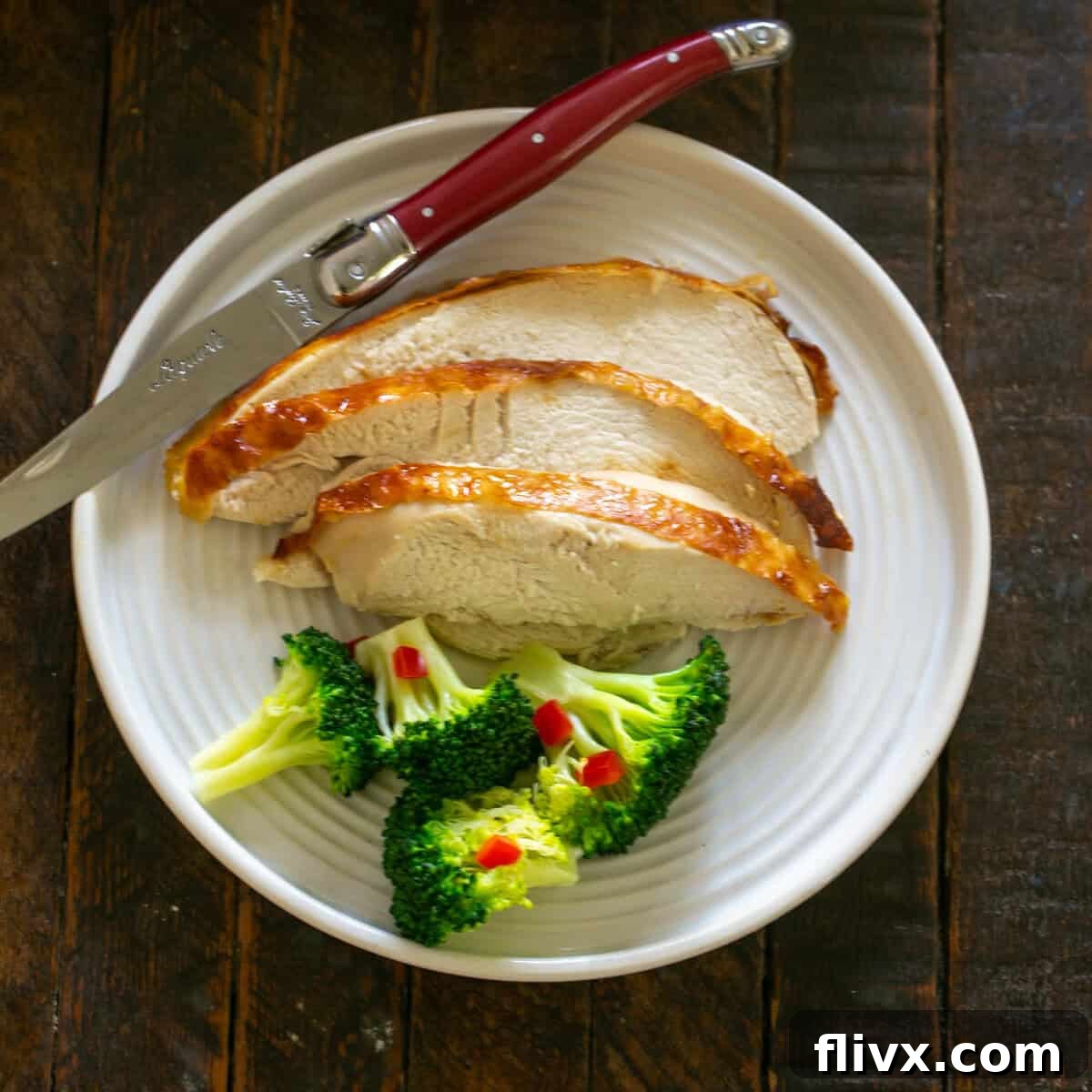
This exceptional Buttermilk Chicken Recipe delivers an incredibly tender and flavorful roast chicken with minimal effort. While preparation takes mere minutes, the magic truly happens during the marination, as the chicken transforms in its savory buttermilk bath, promising a moist and succulent result every time.
The secret lies in a surprisingly simple yet profoundly effective Buttermilk Marinade, requiring just two easy-to-find ingredients: high-quality buttermilk and coarse salt. Buttermilk, known for its slight acidity, works wonders as a natural tenderizer. The lactic acid gently breaks down the chicken’s muscle fibers, ensuring an unbelievably tender texture while infusing a subtle tang. Furthermore, the natural sugars (lactose) in buttermilk play a crucial role during roasting, caramelizing beautifully in the oven to create that coveted bronzed, crispy skin. Salt, the unsung hero, enhances the flavor intensity of both sweet and savory foods, drawing out the chicken’s natural deliciousness and ensuring every bite is perfectly seasoned.
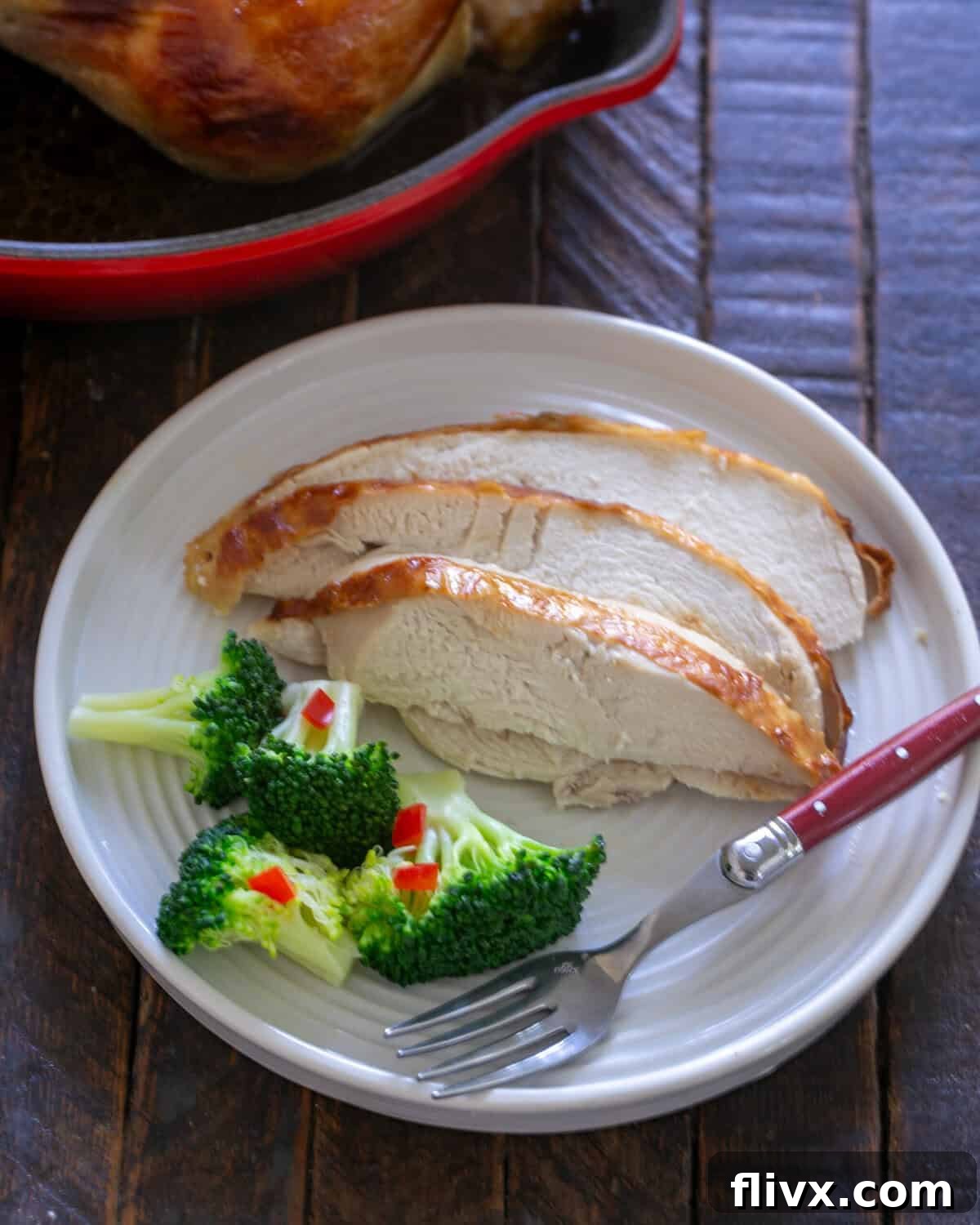
Why You Must Experience This Buttermilk Chicken
Discover the myriad reasons why this buttermilk chicken recipe will become a cherished staple in your culinary repertoire:
- Unbeatable Simplicity: You’ll be amazed that such a fabulous entree requires only three core ingredients! This recipe proves that extraordinary flavor doesn’t need a complicated list.
- Guaranteed Tenderness & Juiciness: An overnight (or at least 12-hour) marination period is the absolute key to achieving a chicken that is super moist, exceptionally tender, and practically falls off the bone. The buttermilk works its magic, breaking down tough fibers for an unparalleled texture.
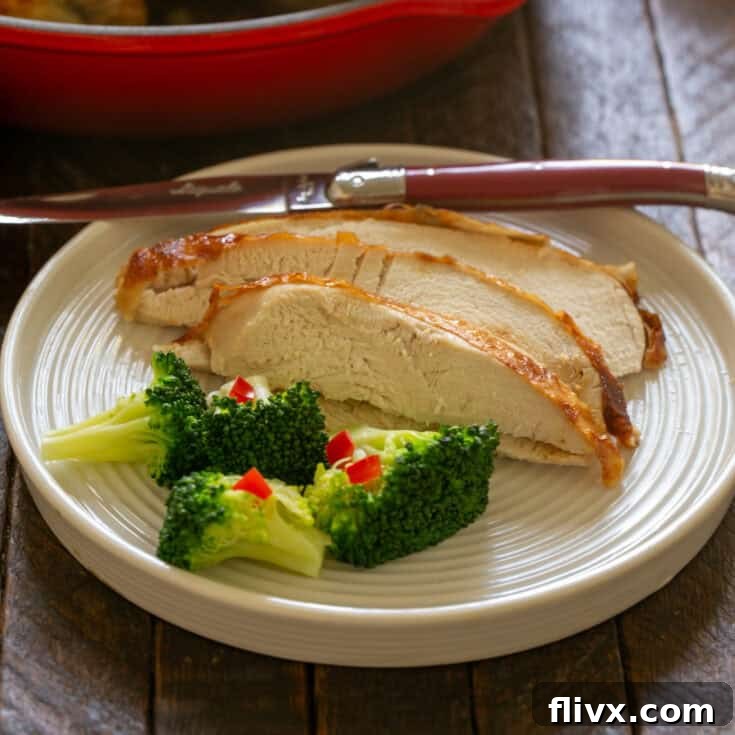
- Golden, Crispy Skin: The natural sugars in the buttermilk caramelize during roasting, creating a gorgeously bronzed, crispy skin that adds an irresistible textural contrast to the tender meat.
- Exceptional Flavor Profile: The subtle tang of the buttermilk, coupled with the deep seasoning from the salt, creates a wonderfully balanced and savory flavor that’s both comforting and gourmet.
- Versatile & Crowd-Pleasing: This dish is elegant enough for a special Sunday dinner but simple enough for a weeknight meal. It’s a guaranteed hit with family and guests alike.
- Delicious Leftovers: Any leftover chicken is absolutely perfect for sandwiches, salads, quesadillas, or as a flavorful addition to soups. You’ll look forward to repurposing every last shred!
The Magic of Buttermilk Marinade: Your Secret to Success
Understanding how the buttermilk marinade works is key to appreciating the brilliance of this recipe. Unlike harsher acidic marinades that can sometimes toughen the exterior of meat, buttermilk’s mild acidity, primarily from lactic acid, gently tenderizes the chicken. It works by causing the protein strands to unwind and relax, allowing the chicken to absorb and retain more moisture during cooking. This process results in meat that is incredibly succulent and resistant to drying out, even when roasted at higher temperatures.
The role of salt in this marinade cannot be overstated. It acts as a powerful flavor enhancer, penetrating deep into the meat and seasoning it from within. When salt interacts with the buttermilk, it also contributes to a process akin to a quick brine, further aiding in moisture retention and ensuring a uniformly seasoned, juicy bird. This combination means you get flavor in every single bite, not just on the surface.
Beyond tenderization and seasoning, buttermilk contributes to the chicken’s stunning visual appeal. The lactose (milk sugar) present in buttermilk, when exposed to high heat in the oven, undergoes caramelization. This Maillard reaction is responsible for creating that rich, deep golden-brown crust and crispy skin that makes this buttermilk chicken so visually appetizing and incredibly flavorful. It’s a natural browning agent that gives your roast a professional, mouth-watering finish.
Essential Ingredient Notes for the Perfect Roast Chicken
While the ingredient list is short, selecting quality components and understanding their nuances will elevate your Buttermilk Chicken to gourmet status.
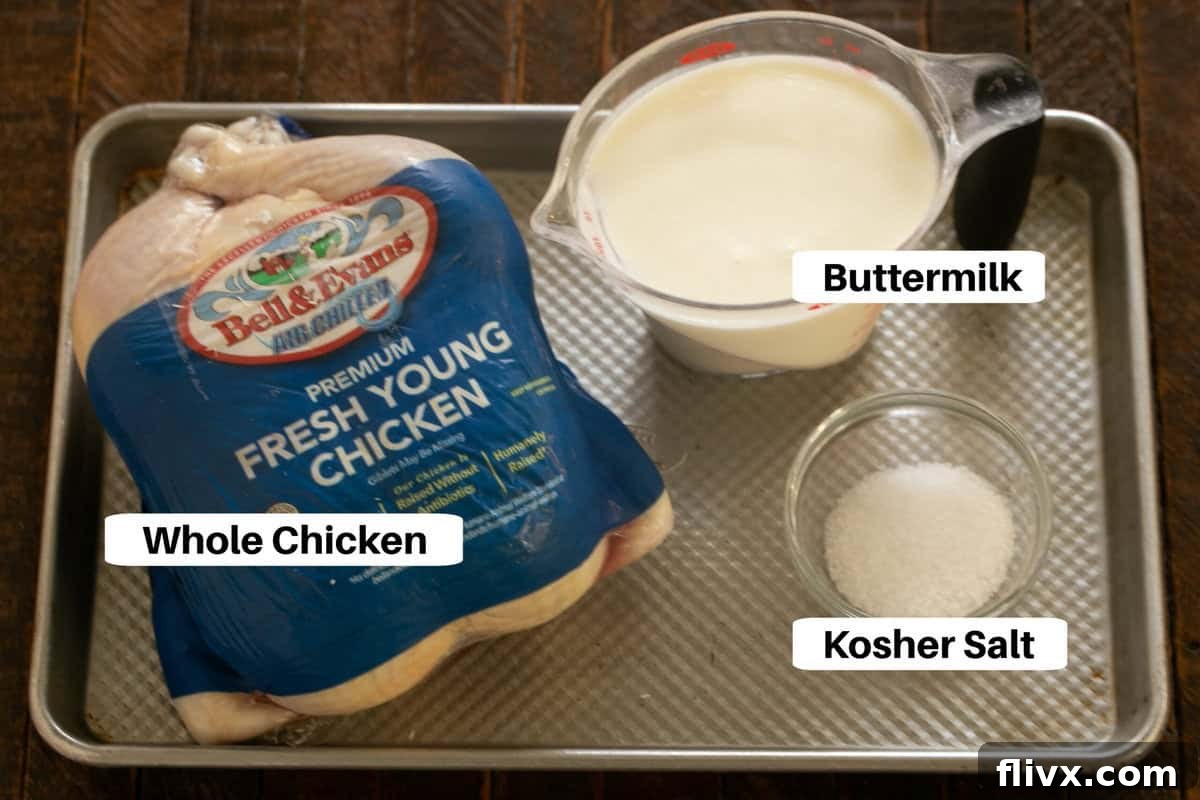
- Salt – For the best results, always use kosher salt or fine sea salt. These salts have larger crystals and a cleaner taste compared to table salt, which can contain anti-caking agents and iodine that alter flavor. Salt is a fundamental flavor enhancer; without it, dishes can taste flat and uninspired. It draws out the natural flavors of the chicken and contributes to its tenderization. Of course, if you have a medical reason for avoiding or limiting salt, please always follow your doctor’s orders and adjust accordingly.
- Buttermilk – Authentic buttermilk is preferable for its consistent acidity and tenderizing properties. If you find yourself without buttermilk, creating a substitute is straightforward:
- Measure out 1 tablespoon of fresh lemon juice or white vinegar into a 1-cup liquid measuring cup.
- Fill the remainder of the cup with regular milk (dairy or non-dairy options can work, though whole milk yields the best texture).
- Stir the mixture gently to combine and let it rest for about 5 to 10 minutes. During this time, the milk will visibly thicken and curdle slightly, signaling it’s ready to use as a buttermilk substitute.
- Remember to double this recipe for 2 cups of substitute, triple for 3 cups, and so on, to match the recipe’s requirement.
Additionally, plain yogurt or crème fraîche can be used as alternatives to buttermilk if desired. These will offer a slightly different, perhaps tangier or richer, flavor profile but will still provide the necessary acidity for tenderization.
- Roasting Chicken – A whole roasting chicken, typically weighing between 3½ to 4 pounds, is ideal for this recipe. Before marinating, always ensure you remove the neck and any organ meats (giblets) from the cavity of the chicken if they are included. While some chefs debate rinsing raw poultry, if you choose to rinse your chicken, do so thoroughly under cold water. More importantly, always pat the chicken thoroughly dry with paper towels afterward. A dry surface is crucial for achieving that desirable crispy skin during roasting.
Expert Tips for Roasting Buttermilk Chicken to Perfection
Mastering the art of roasting buttermilk chicken involves a few key techniques that guarantee a perfectly cooked, succulent bird every time:
- Monitor Internal Temperature Religiously: The most accurate way to ensure your chicken is safely cooked and perfectly juicy is by using a reliable meat thermometer. Insert it into the thickest part of the thigh, avoiding the bone, to monitor the internal temperature throughout the cooking process.
- Strategic Oven Temperature for Optimal Browning: Starting your oven at a higher temperature, such as 425°F (220°C), helps to achieve a beautiful initial browning on the exterior of the chicken, crisping the skin. You’ll then decrease the oven temperature to around 400°F (200°C) about halfway through the cooking time. This adjustment prevents the skin from becoming too dark or burnt while allowing the chicken to cook through gently and evenly.
- The Golden Internal Temperature: For food safety and optimal texture, your chicken should reach an internal temperature of 165°F (74°C) before it’s considered fully cooked and safe to eat.
- PRO-Tip: Embrace Carryover Cooking: You can confidently pull the chicken out of the oven when its internal temperature reaches 160-165°F (71-74°C). The phenomenon of “carryover cooking,” where residual internal heat continues to cook the chicken even after it’s removed from the oven, will naturally bring the temperature up by another 5-10 degrees during the resting period. Always make sure to place the roasted chicken on a cutting board or platter and cover it loosely with foil during this crucial resting time to allow juices to redistribute, ensuring maximum juiciness.
- PRO-Tip: The Science of Tenderization and Browning: The acidic nature of the buttermilk is fundamentally key to making the meat incredibly tender, as it gently breaks down tough muscle fibers. Furthermore, the natural sugar found in milk, lactose, is instrumental in creating that beautifully browned, caramelized exterior due to the Maillard reaction. As celebrated in Samin Nosrat’s “Salt Fat Acid Heat” cookbook, plain yogurt or crème fraîche can also effectively replace buttermilk, offering similar tenderizing and browning benefits.
- Prioritize Food Safety: If you choose to rinse your raw chicken in the kitchen sink before marinating, it is imperative to thoroughly sanitize your sink and surrounding countertop surfaces afterward. Raw chicken frequently harbors bacteria like Salmonella, so meticulous cleaning is essential to prevent any cross-contamination to other foods or surfaces. Always wash your hands thoroughly with soap and warm water for at least 20 seconds after handling raw poultry.
- Achieving Even Browning: If you notice one side of the chicken browning faster than the other, simply rotate your roasting pan halfway through the cooking process. This ensures uniform browning and a consistent crispy texture all around. If the chicken is browning too quickly, you can loosely tent it with aluminum foil to slow down the process without steaming the skin.
- To Truss or Not to Truss: While not strictly necessary, tying the legs of the chicken together with butcher’s twine (trussing) can help the chicken cook more evenly by keeping the dark meat parts tucked in. It also creates a more compact and aesthetically pleasing roast.
Step-by-Step Guide: Crafting Your Delicious Buttermilk Chicken
Frequently Asked Questions About Buttermilk Chicken
Salmonella is a common bacteria often found in raw eggs and poultry, and it’s particularly tricky because it typically has no obvious aroma or visible signs. To prevent contamination when cooking with raw chicken, extra precautions are paramount. Always handle raw chicken separately from other ingredients. After touching raw chicken, thoroughly wash your hands with warm water and soap for at least 20 seconds. Ensure all contaminated surfaces, including cutting boards, knives, and sinks, are immediately washed with hot soapy water or placed in a dishwasher. Using strong disinfectants on countertops after chicken preparation is also a wise practice to avoid any cross-contamination with ready-to-eat foods.
The ideal marination range for chicken in buttermilk is typically 6 to 24 hours. The beauty of a buttermilk marinade, compared to those with stronger acids like lemon juice or vinegar, is its mild acidity. This allows the chicken to marinate for a longer period – up to 24 hours – without the risk of the meat becoming mushy or developing an undesirable texture. Stronger acidic marinades can start to “cook” or denature the protein too much if left for too long, but buttermilk provides a gentle tenderization that’s perfect for extended soaking.
Proper storage is key for enjoying your delicious buttermilk chicken leftovers safely. As long as the cooked chicken hasn’t been left at room temperature (above 40°F/4°C) for longer than two hours, you can safely store any leftover buttermilk chicken in the refrigerator for 3 to 4 days. Always ensure it’s placed in an airtight container or wrapped tightly with plastic wrap or foil to prevent drying out and absorb any odors.
Absolutely! While this recipe highlights a whole roast chicken, the buttermilk marinade works beautifully with individual chicken pieces such as thighs, drumsticks, breasts, or wings. If using pieces, the marination time remains similar, but you will need to significantly adjust the roasting time. Bone-in, skin-on pieces will generally take 30-45 minutes at 400°F (200°C), while boneless, skinless breasts might cook in 20-30 minutes. Always use a meat thermometer to ensure individual pieces reach 165°F (74°C).
The versatility of Buttermilk Chicken means it pairs wonderfully with a vast array of side dishes. Classic choices include creamy mashed potatoes or roasted root vegetables like carrots, potatoes, and parsnips. For a lighter meal, a fresh green salad with a vinaigrette or steamed asparagus complement the richness of the chicken beautifully. Other excellent options include fluffy rice pilaf, quinoa, corn on the cob, or even a simple crusty bread to soak up any pan juices.
Stay in touch through social media @ Instagram, Facebook, and Pinterest. Don’t forget to tag me when you try one of my recipes! And if you love the results, please give it a 5-star rating in the recipe card.
Buttermilk Chicken Recipe
10 minutes
1 hour
10 minutes
1 hour 20 minutes
6 servings
An incredibly easy two-ingredient marinade that yields a beautifully tender, juicy, and flavorful roast chicken with a perfectly golden crust!
Ingredients
- 1 Roasting Chicken, 4 pounds, giblets and neck removed from cavity
- 2 tablespoons kosher salt or sea salt
- 2 cups buttermilk
Instructions
- Remove packaging from chicken, pat dry thoroughly with paper towels to ensure crispy skin, and place it in a large zip-top bag.
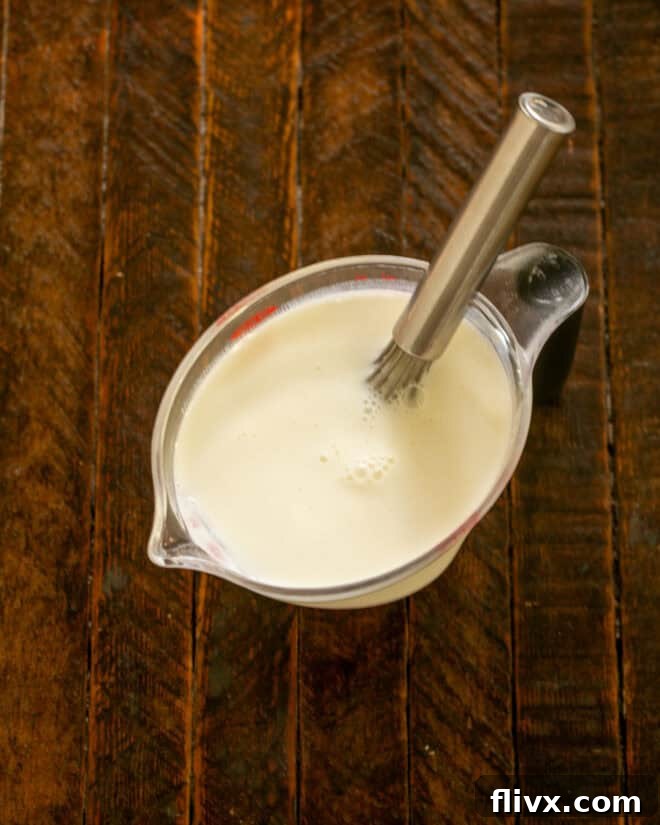
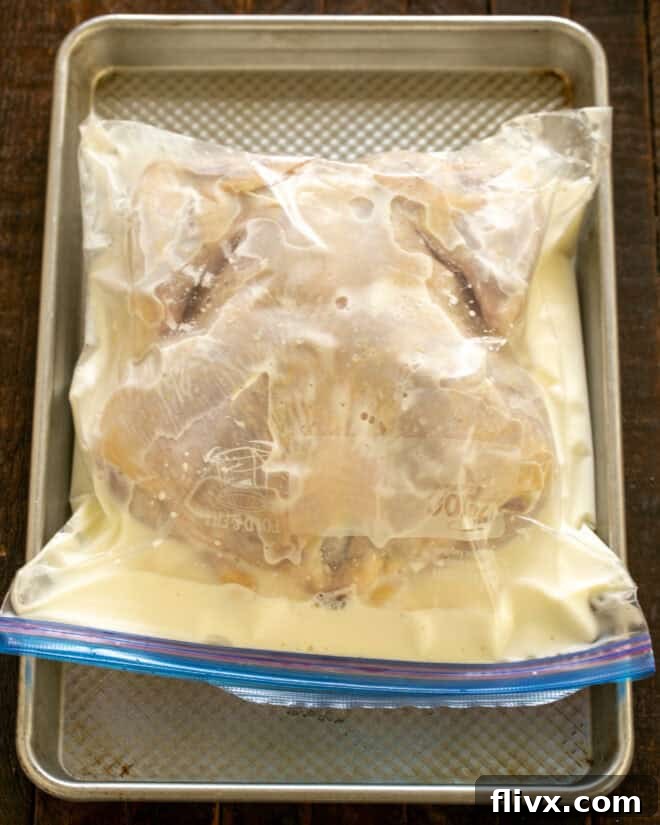
- In a separate bowl, mix the buttermilk with the salt until the salt is fully dissolved. Pour this marinade into the bag with the chicken. Seal the bag securely, pressing out as much air as possible, and place it in the refrigerator on a rimmed baking sheet (to catch any potential leaks).
- Chill and marinate for a minimum of 12 hours, and up to 24 hours, flipping the bag occasionally to ensure all parts of the chicken are exposed to the buttermilk.
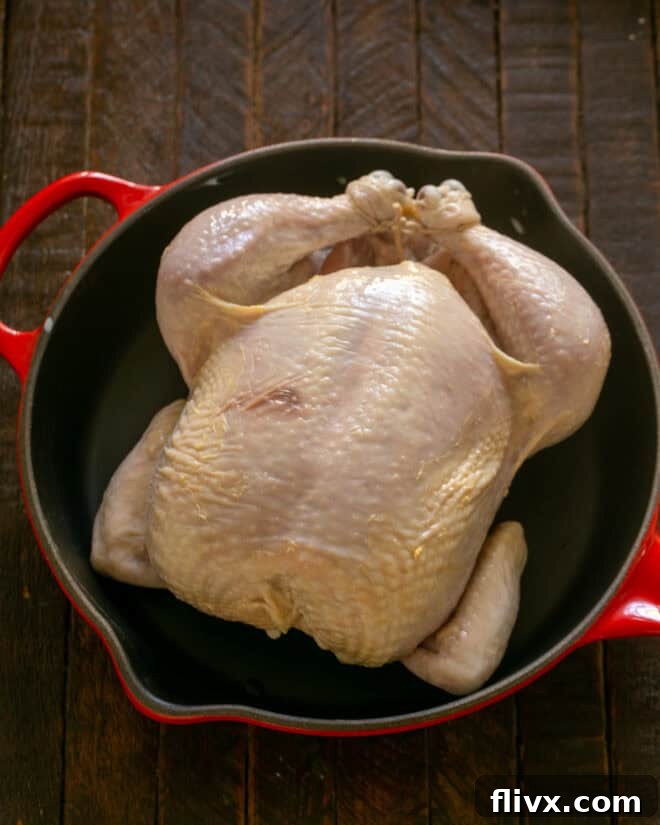
- One hour before you plan to roast, pull the chicken from the refrigerator. Remove it from the bag, letting any excess buttermilk drip off (do not rinse the chicken), and discard the bag and its contents. This allows the chicken to come closer to room temperature for more even cooking.
- Optionally, tie the legs of the chicken together with butcher’s twine for more even roasting and a neater presentation. Place the chicken into a sturdy roasting pan.
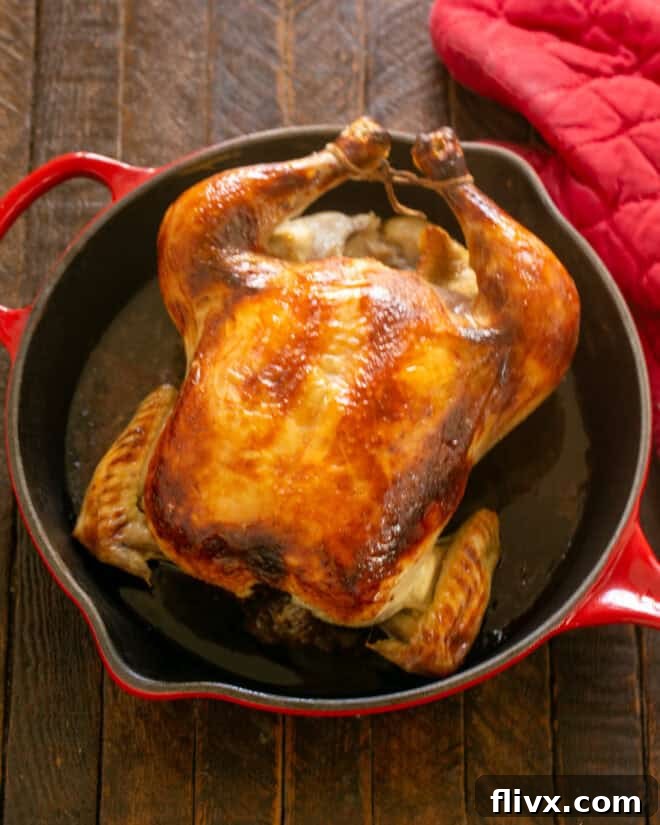
- Preheat your oven to 425°F (220°C). Roast the chicken for 20 minutes to achieve an initial golden-brown searing on the skin.
- After 20 minutes, reduce the oven temperature to 400°F (200°C).
- Continue roasting for an additional 30-40 minutes, or until the chicken is beautifully browned and the juices run clear when a knife is inserted into the thickest part of the thigh. The internal temperature of the chicken should reach 165°F (74°C) when measured with a meat thermometer. If one side is browning more quickly, rotate the pan.
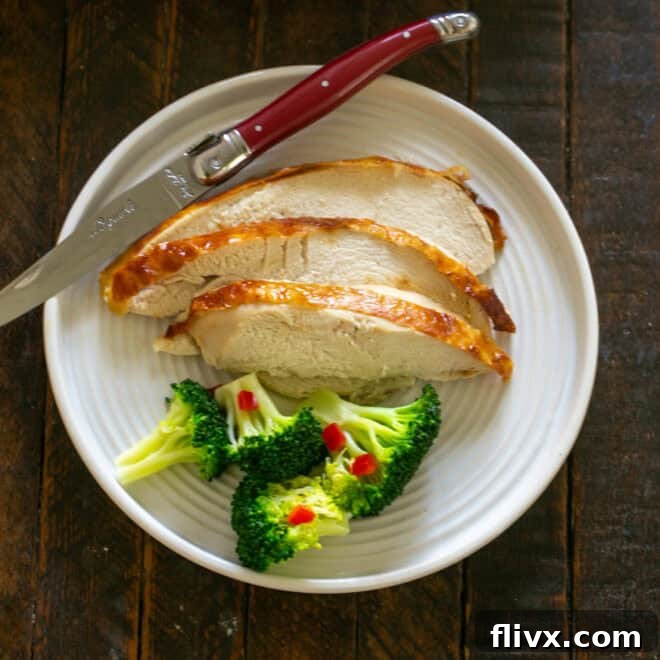
- Remove the roasted chicken from the oven and transfer it to a cutting board. Cover it loosely with foil and let it rest for 10-15 minutes before carving. This crucial resting period allows the juices to redistribute throughout the meat, ensuring a supremely juicy and tender chicken.
Notes
If your chicken appears to be browning too fast during the roasting process, you can loosely tent it with aluminum foil. However, this recipe is designed to produce a beautifully browned chicken without much intervention.
This recipe is adaptable; smaller or larger roasting chickens will also work well, just be sure to adjust your cooking times accordingly and always rely on an internal meat thermometer for doneness.
This fantastic recipe is adapted from the insightful cooking principles found in “Salt Fat Acid Heat” by Samin Nosrat.
Recommended Products
As an Amazon Associate and member of other affiliate programs, I earn from qualifying purchases.
- Kosher Salt
- Pyrex Measuring Cups
- Cuisinart 7117-16UR Chef’s Classic Stainless 16-Inch Rectangular Roaster with Rack, Roaster Rack
Nutrition Information:
Yield:
6
Serving Size:
1
Amount Per Serving:
Calories: 794Total Fat: 34gSaturated Fat: 9gTrans Fat: 0gUnsaturated Fat: 16gCholesterol: 1666mgSodium: 1946mgCarbohydrates: 4gFiber: 0gSugar: 4gProtein: 110g
Thatskinnychickcanbake.com occasionally offers nutritional information for recipes contained on this site. This information is provided as a courtesy and is an estimate only. This information comes from online calculators. Although thatskinnychickcanbake.com attempts to provide accurate nutritional information, these figures are only estimates.
Varying factors such as product types or brands purchased can change the nutritional information in any given recipe. Also, many recipes on thatskinnychickcanbake.bake.com recommend toppings, which may or may not be listed as optional and nutritional information for these added toppings is not listed. Other factors may change the nutritional information such as when the salt amount is listed “to taste,” it is not calculated into the recipe as the amount will vary. Also, different online calculators can provide different results.
To obtain the most accurate representation of the nutritional information in any given recipe, you should calculate the nutritional information with the actual ingredients used in your recipe. You are solely responsible for ensuring that any nutritional information obtained is accurate.
HOW MUCH DID YOU LOVE THIS RECIPE?
Please leave a comment on the blog or share a photo on Pinterest