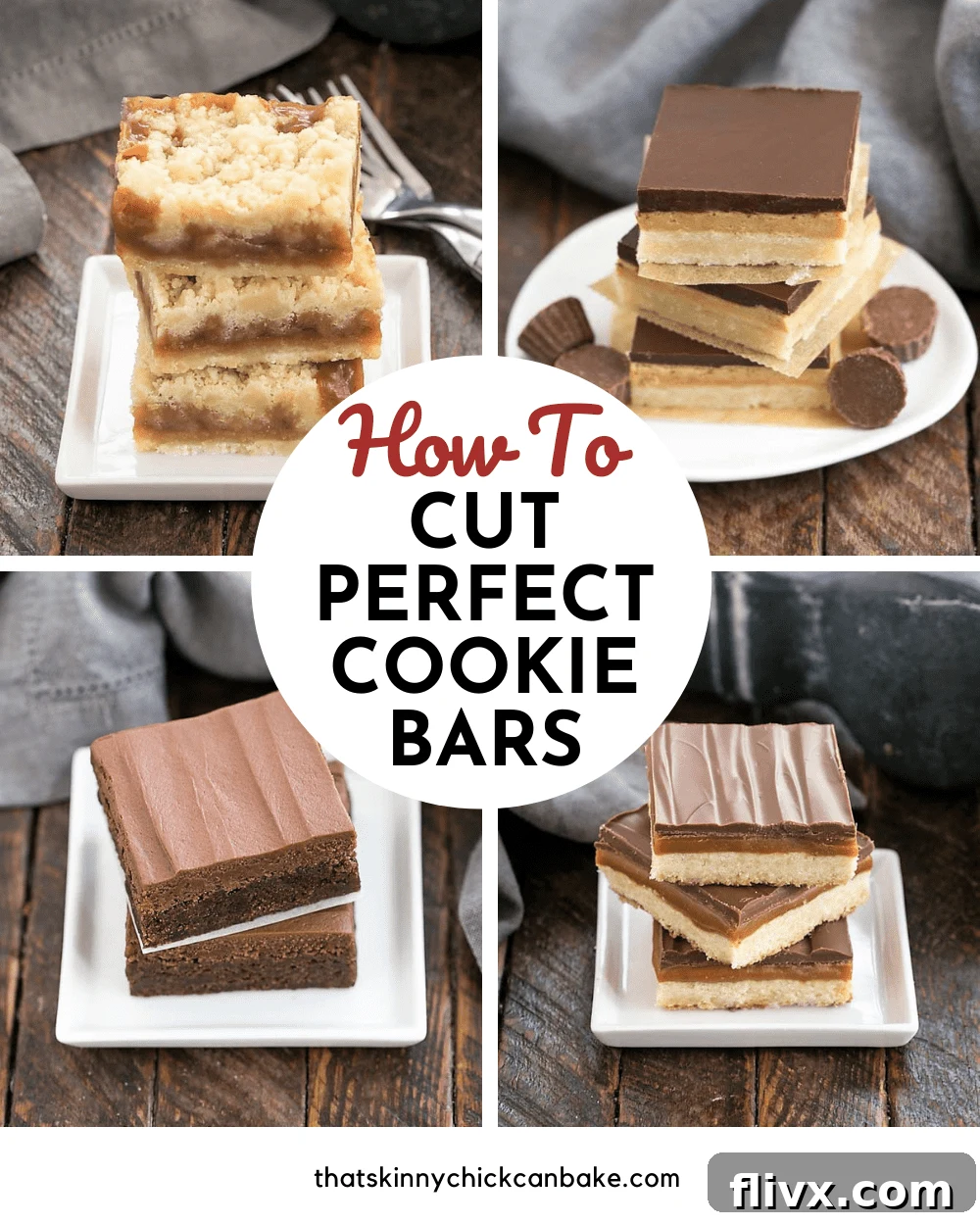
Have you ever admired a batch of perfectly cut dessert bars, looking as if they came straight from a professional bakery? Achieving those pristine, uniform squares and rectangles isn’t just for pastry chefs; it’s a skill you can master right in your own kitchen. Whether you’re slicing rich, fudgy brownies, delicate lemon bars, or hearty chocolate chip cookie bars, the right techniques can transform your homemade treats from delicious to dazzling. This comprehensive guide will walk you through every essential step, secret tip, and clever trick to help you cut perfect cookie bars, brownies, and other dessert squares with ease and precision. Get ready to impress your family and friends with beautifully presented, flawlessly portioned baked goods!
Mastering the Art of Cutting Dessert Bars
Achieving perfectly uniform dessert bars isn’t just about aesthetics; it’s about providing consistent portions and an enjoyable experience for everyone who indulges. With a few key strategies and some practice, you’ll be creating picture-perfect dessert squares every time. While I often rely on my eye, using a ruler in the beginning can significantly help you develop the muscle memory for consistent cuts. Here’s a detailed breakdown of my proven method for cutting perfect cookie bars and brownies.
Essential Prep: Laying the Foundation for Flawless Slices
- The Secret Weapon: Pan Lining
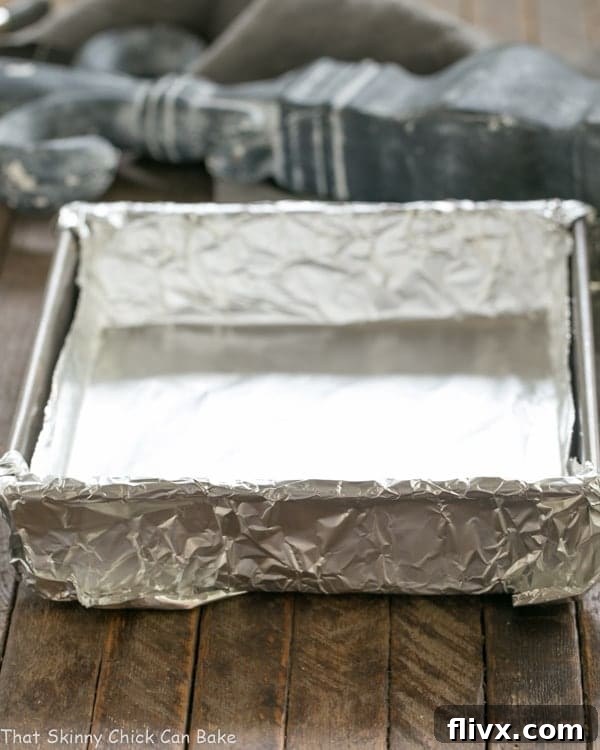
One of the most crucial steps begins before your bars even enter the oven. Line your baking pan with
non-stick foil
or parchment paper. This simple trick is a game-changer for effortless removal. Instead of wrestling the baked goods out of the pan, you’ll create a convenient “sling” that allows you to lift the entire batch onto a cutting board. This eliminates the awkwardness of trying to cut around the pan’s edges and ensures your bars remain intact.If non-stick foil isn’t readily available, regular aluminum foil can be used, provided you spray it thoroughly with a non-stick cooking spray. Parchment paper is another excellent alternative, offering similar non-stick properties and ease of removal.
- Achieving Uniform Thickness: Even Spreading
For professional-looking bars, consistency is key from start to finish. Use a
small offset spatula
to spread your cookie dough or brownie batter evenly across the prepared pan. This ensures that every part of your bar bakes uniformly and creates a level surface, making slicing much easier and results in bars that are equally thick from edge to center. This attention to detail elevates the final presentation significantly.
The Cooling Imperative: A Critical Step Before You Cut
- Cooling Rack First: Stabilize the Structure
Once your bars or brownies are out of the oven, resist the urge to cut them immediately. Allow them to cool completely on a wire rack while still in the pan. This allows the internal structure of the bars to set and solidify. Cutting warm bars can lead to crumbling, sticking, and an uneven, messy appearance. Patience here truly pays off.
- The Chilling Advantage: For the Cleanest Cuts
After reaching room temperature, cover the pan and transfer your dessert bars to the refrigerator. Chilling your bars for at least 30 minutes, or even a few hours, makes a profound difference in the cleanliness of your cuts. Cold bars are firm and less prone to sticking to the knife, resulting in sharper, more defined edges.
PRO-Tip: While cold bars cut beautifully, remember that many desserts, especially fudgy brownies, often taste best when served at room temperature. Plan to chill them for cutting, then allow them to come back to room temperature before serving for optimal flavor and texture.
Mastering the Slice: Techniques for Pristine Dessert Bars
- Seamless Removal to the Cutting Board
Once thoroughly chilled, use the foil or parchment paper lining as a “sling” to gently lift the entire slab of bars out of the pan and onto a sturdy cutting board. This allows you full access to all sides and makes cutting significantly easier and safer.
- Precision Cutting for Uniform Portions
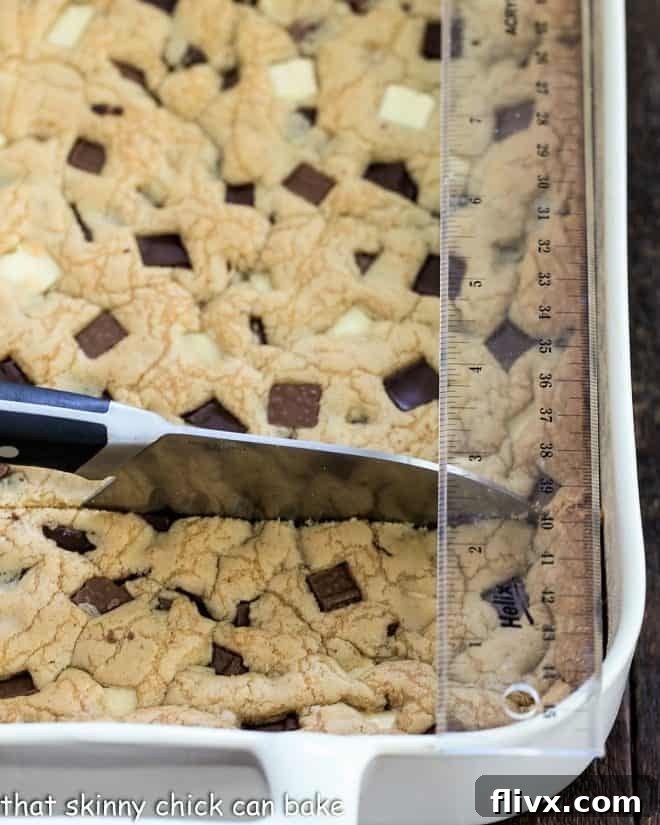
For an 8 x 8-inch pan, I typically aim for 16 bars, yielding squares slightly smaller than 2×2 inches. Here’s how to achieve this:
- Make your first cut straight down the middle of the slab, lengthwise.
- Rotate the slab 90 degrees, then make a second cut straight down the middle, perpendicular to the first. You now have four large, equal squares.
- Subdivide each of these four squares into four smaller squares by cutting them in half both lengthwise and widthwise. This method ensures all your bars are roughly the same size.
As you gain confidence, you can experiment with cutting into 25 (5×5) or even 36 (6×6) bars for smaller, bite-sized portions, though this requires a bit more finesse and precision. For larger pans, like a 9×13-inch, you might aim for 24 (4×6) or 32 (4×8) bars using a similar subdivision strategy.
- The Ruler Advantage: Your Guide to Straight Lines
PRO-Tip: Especially when you’re starting out, don’t hesitate to use a clean kitchen ruler as a guide. Press it firmly along your desired cutting line and slice directly alongside it. This will ensure the straightest possible cuts and uniform bar sizes, building your confidence and skill.
- Trimming Edges for a Polished Look
For a truly professional presentation, you may wish to trim a thin strip off each of the four outer edges of the baked slab. These “end pieces” often have slightly different textures or appearances due to contact with the pan. While perfectly delicious, removing them ensures that every single cut bar has four perfectly clean, neat sides, mirroring that bakery-quality finish. (And the trimmings are a chef’s treat!).
Tips for Cutting Brownies: Tackling Sticky Situations
Brownies, with their dense, fudgy, and often sticky texture, can present unique cutting challenges. However, with the right approach, you can achieve clean, crisp edges every time.
- Foundation First: Lining and Chilling
Just like with other bar cookies, lining your pan with non-stick foil or parchment paper is essential for easy removal. And, perhaps even more critically for brownies, chilling them for at least 30 minutes (or longer) before cutting will significantly minimize sticking to your knife, leading to much cleaner slices.
- Scoring for Precision: Guiding Your Blade
Before making your final cuts, gently score or mark the top of the brownies with the tip of your knife or a clean ruler. This creates a visual guide for where you intend to cut, helping you maintain straight lines and uniform spacing.
- The Magic of Plastic Knives
PRO-Tip: This is an old-school trick that truly works wonders for brownies! Purchase a dedicated large plastic knife, or even use one of those small, sturdy plastic knives from a picnic set. Brownies adhere far less to plastic than to metal, making for incredibly clean, smooth cuts without the usual sticking and dragging. There are even
specialized large plastic brownie knives
available that are perfectly designed for this task. - The “Clean Knife” Rule: Wipe After Every Cut
Regardless of the type of knife you use, this is paramount for clean brownie slices: wipe your knife blade clean after *every single cut*. Moist, fudgy brownie batter tends to build up on the knife, causing subsequent cuts to drag, tear, and become messy. A clean knife slides through smoothly, ensuring each piece is as perfect as the last. Keep a damp cloth or paper towel nearby for quick, efficient cleaning. You can also lightly spray your knife with non-stick cooking spray before cutting and wipe it clean between slices for an extra layer of non-stick power.
Knife Skills and Tools: Elevating Your Slicing Game
The right knife and a few specific techniques can make a significant difference in the quality of your dessert bar cuts.
- Choosing the Right Blade
A large, sharp, thin-bladed knife is generally ideal for cutting most dessert bars. I personally favor a knife like my
Wusthof Classic 7-Inch Santoku Knife.
Its broad blade and sharp edge allow for clean, decisive cuts. However, for certain types of bars, a serrated knife can also be very effective, particularly if your bars have a delicate or crumbly crust. Experiment with different knives to find what works best for each specific recipe. - The Heated Knife Technique: For Smooth Glides
For exceptionally clean cuts, especially through sticky chocolate toppings or chilled, firm bars, consider heating your knife blade. Run the blade under very hot tap water (or, if you have one, use a hot water dispenser for water around 190 degrees Fahrenheit). Immediately dry the blade thoroughly to prevent rust and water streaks. The warmth of the blade will help it glide smoothly through the dessert, melting through chocolate or softening firm textures for a perfectly clean slice.
PRO-Tip: When using a heated knife, you’ll need to repeat the heating and wiping process frequently—after every one or two cuts, depending on the stickiness of your bars. This ensures the blade stays warm and clean for consistent results. Always use paper toweling or a clean cloth to wipe the blade, especially if chocolate is involved, as it can be particularly stubborn.
- Tackling Crusted Tops: Prevent Cracking
If your dessert bars feature a firm or brittle crust on top (like many fruit bars or magic bars with a coconut crust), cutting them directly can lead to unsightly cracking across the surface. To prevent this, use the very tip of your sharp knife to gently poke a series of small holes or score a shallow line along where you plan to make your cut. This breaks the surface tension of the crust, allowing the knife to pass through more smoothly without causing widespread fracturing. In some cases, a serrated knife, used with a gentle sawing motion, can also be very effective for these types of crusts.
Troubleshooting Common Cutting Challenges
Even with the best techniques, sometimes challenges arise. Here’s how to address some common issues:
- Bars Sticking Excessively to the Knife:
- Ensure bars are thoroughly chilled. This is the #1 reason for sticky cuts.
- Use a plastic knife, especially for brownies.
- Wipe the knife clean after *every* cut.
- Lightly spray the knife with non-stick cooking spray before and between cuts.
- Try the heated knife technique for extra smoothness.
- Cracking or Crumbling Tops:
- If there’s a firm crust, score the line with the tip of your knife before cutting.
- Consider using a serrated knife with a gentle sawing motion for crusty toppings.
- Ensure your knife is very sharp. A dull knife will push and tear rather than slice.
- Uneven Slices:
- Start by using a ruler to guide your initial cuts until you develop an eye for straight lines.
- Make your first cuts in the middle, then subdivide. This helps maintain symmetry.
- Ensure the batter was spread evenly in the pan before baking.
- Messy Edges or Smudged Layers:
- This usually indicates the knife isn’t clean enough. Wipe thoroughly after each slice.
- If bars have multiple layers (like cheesecake brownies), ensure they are well-chilled so layers don’t smear.
- A heated, clean knife is excellent for layered bars or those with frosting/ganache.
I genuinely hope this detailed tutorial on how to cut perfect cookie bars and brownies empowers you to create dessert squares that are not only delicious but also visually stunning. With these tips and a little practice, your homemade treats will consistently look picture-perfect, ready for any occasion. Don’t hesitate to share your own cutting tips or ask any questions in the comments below!
Delicious Dessert Bar and Brownie Recipes to Try
Now that you’re armed with the knowledge to cut perfect bars, it’s time to put your skills to the test! Here are some of my favorite recipes for bar cookies and brownies that you’ll love making and, of course, perfectly slicing:
- Ricotta Cheesecake Brownies from That Skinny Chick Can Bake
- Ganache Topped Caramel Bars from That Skinny Chick Can Bake
- Candy Bar Blondies from That Skinny Chick Can Bake
- One Bowl Fudgy Brownies from That Skinny Chick Can Bake
- Simple Fudgy Brownies from That Skinny Chick Can Bake
- Apricot Bars from That Skinny Chick Can Bake
- Chocolate Chip Cookie Dough Brownies from That Skinny Chick Can Bake
- Explore 90+ Bar Cookie Recipes
- Discover 50+ Best Brownie Recipes
Frequently Asked Questions About Cutting Dessert Bars
To perfectly cut lemon bars, always bake them in a pan lined with non-stick foil or parchment paper. Once completely cooled, use the lining as a sling to transfer the chilled bars onto a cutting board. Dip a sharp, thin knife into a tall cup of very hot water, wipe it completely dry, and then make your first slice. Clean the knife thoroughly and repeat the heating, wiping, and slicing process for each subsequent cut to prevent sticking and ensure pristine edges.
For the cleanest brownie slices, bake them in a pan lined with non-stick foil or parchment for easy removal. The most critical step is to chill your brownies thoroughly for at least 30 minutes before cutting. A tried-and-true trick is to use a plastic knife, as brownie batter sticks less to plastic than metal; you can even find
specialized large plastic brownie knives
for this purpose. Alternatively, you can spray your metal knife with non-stick cooking spray, slice, wipe the knife clean, and then make another slice, repeating until all brownies are cut.
Similar to other layered dessert bars, start by baking your magic cookie bars in a pan lined with non-stick foil or parchment. Ensure the bars are thoroughly chilled before lifting them out of the pan with the lining and placing them on a cutting board. Slice with a sharp knife, making sure to clean the blade after each slice to prevent sticking from the various gooey layers. If they are particularly sticky, lightly spraying the clean knife with cooking spray before each cut can further assist.
To cut bars into elegant diamond shapes, especially from a 9 x 13-inch pan, follow these steps: First, cut the bars lengthwise into 4 equal-sized strips. Begin by making one cut down the middle from one short side to the other. Then, cut a slice halfway between each long edge of the pan and the center cut. This should give you four long, even strips. Next, to create the diamonds, make diagonal cuts across these strips, from one long side to the other. Repeat these diagonal cuts at consistent intervals across the entire slab until all the strips are transformed into beautiful diamond-shaped pieces.
You May Also Like: Essential Baking Guides
- How to Make Chocolate Ganache from Fifteen Spatulas
- How to Make Chocolate Shards from That Skinny Chick Can Bake
- How to Eat Salad Every Day and Like It from Barefeet in the Kitchen
- How to Make Simple Meringue Cookies from That Skinny Chick Can Bake
- How to Organize the Pantry in 5 Easy Steps from Comfortably Domestic