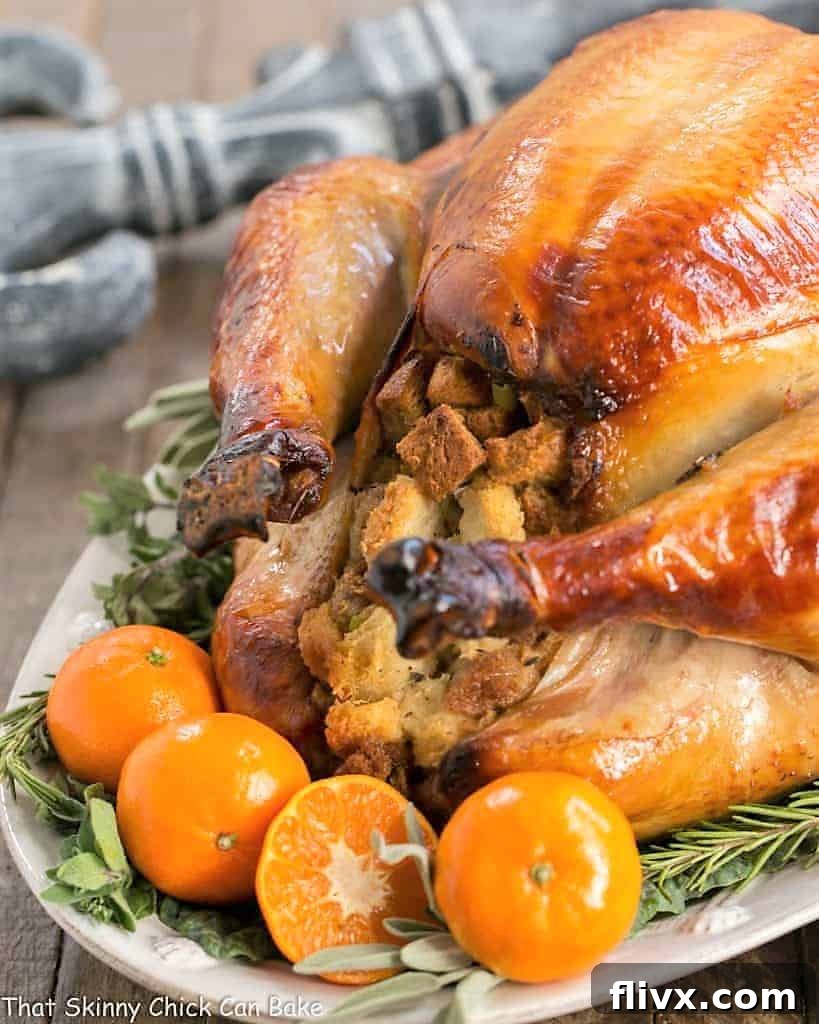
Years ago, a friend shared her secret to the most incredibly flavorful and succulent Thanksgiving turkey she had ever made – a delightful Honey Brined Turkey Recipe. She raved about how moist it was, from breast to thigh, a stark contrast to the dry birds so often served during the holidays. Intrigued by her glowing recommendation, I eagerly jotted down the details of her masterful Turkey Brine Recipe, determined to recreate that magic for my own festive feast.
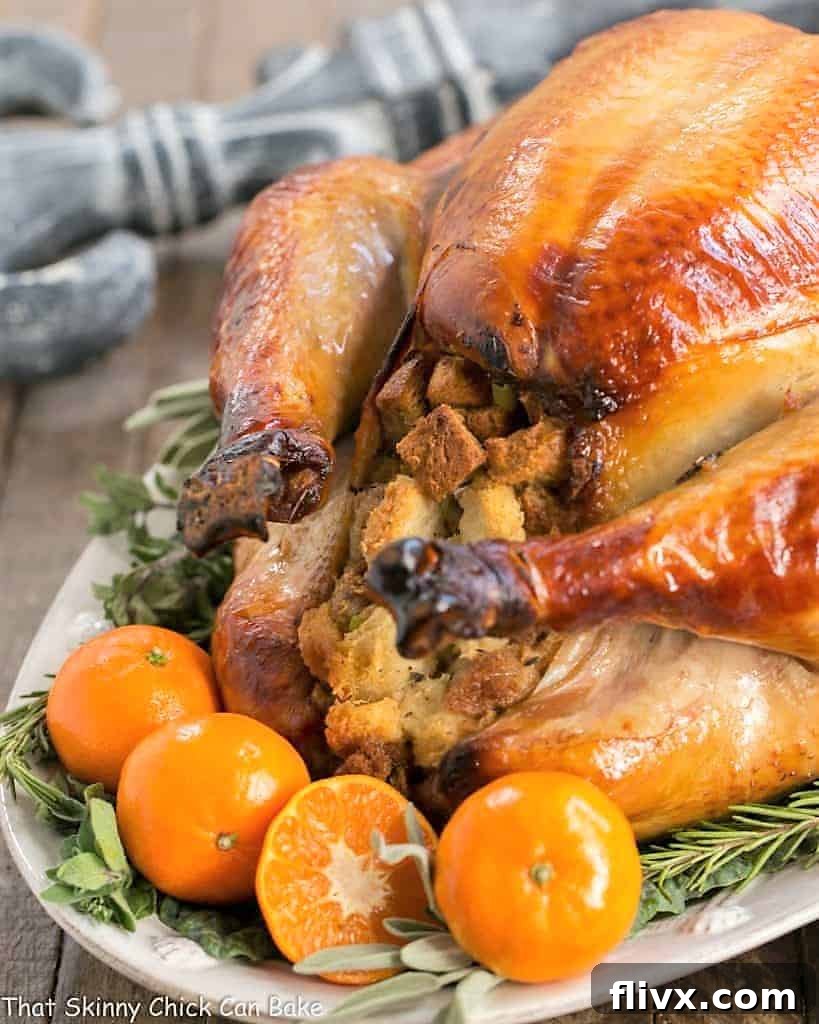
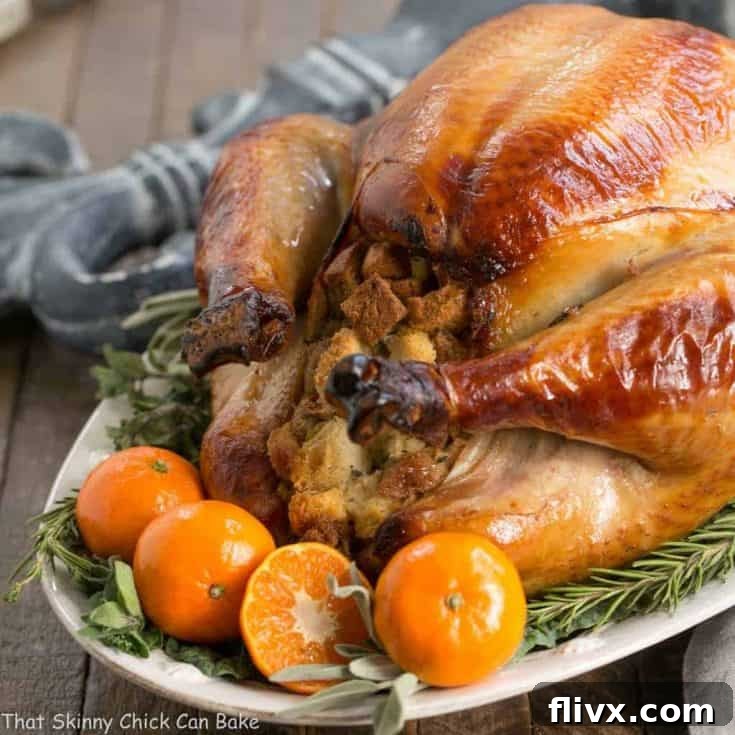
That holiday season, I followed her instructions precisely, and the results were nothing short of spectacular. The turkey emerged from the oven with a stunning, deep mahogany hue, perfectly roasted and unbelievably tender. Every bite was infused with a harmonious blend of sweet and savory notes, a testament to the power of a well-executed brine. It was a revelation, transforming what could often be a challenging dish into a highlight of our holiday meal. Since then, this Honey Brined Turkey has become a cherished tradition in my home, guaranteeing a moist, flavorful, and unforgettable centerpiece year after year.
Why This Honey Brined Turkey Recipe Is a Must-Make for Your Holiday Table
For the past five years, brining has been my secret weapon for Thanksgiving turkey. This simple yet transformative technique consistently delivers moist, tender, and incredibly flavorful white meat, dispelling any fears of a dry holiday bird. If you’re looking to impress your guests and elevate your holiday meal, this honey-brined turkey recipe is an absolute game-changer.
- Guaranteed Moisture and Tenderness: The primary benefit of brining is its ability to infuse the turkey meat with moisture. The salt solution helps the turkey retain its natural juices during roasting, resulting in exceptionally tender and succulent meat, even the often-tricky white meat, which typically dries out first. This recipe virtually guarantees a perfectly cooked bird every single time.
- Simple and Accessible Ingredients: You don’t need exotic ingredients to achieve incredible results. This turkey brine is crafted from common pantry staples, making it easy to prepare without a special trip to the store. The straightforward nature of the ingredients ensures that anyone, regardless of their culinary experience, can successfully make this brine.
- Exquisite Sweet and Savory Flavor Profile: The genius of this recipe lies in its balanced combination of sweet and salty elements. The molasses and soy sauce not only contribute to a beautiful, dark, lacquered sheen on the skin, but they also penetrate the meat, imparting a delectable depth of flavor. This perfect synergy creates a turkey that is both deeply savory and subtly sweet, making it stand out from traditional preparations.
- All-Natural Goodness: Unlike many pre-brined turkeys found in grocery stores, this homemade brine uses only all-natural ingredients. You have complete control over what goes into your turkey, ensuring a wholesome and delicious meal free from artificial additives or preservatives. This commitment to natural components enhances both the flavor and quality of your holiday centerpiece.
If you’re hesitant about dealing with a wet brine, don’t fret! My Dry Brined Turkey recipe offers a fantastic alternative with less mess and equally delicious results. For those hosting a smaller gathering or simply craving turkey without the full-roast commitment, a Grilled Turkey Breast is an excellent and flavorful option that comes together quickly.
Key Ingredient Notes for Your Honey Brine
Each ingredient in this brine plays a crucial role in achieving that perfectly moist, flavorful, and beautifully browned holiday turkey. Understanding the function of each component will help you appreciate the science behind this simple yet effective technique.
- Kosher Salt: This is the cornerstone of any effective brine. Kosher salt’s larger crystal size means it dissolves more slowly and offers a less concentrated salinity per volume compared to table salt, preventing your turkey from becoming overly salty. Its primary role is to initiate osmosis, drawing moisture into the turkey cells and tenderizing the meat.
- Hot Water: Essential for quickly and thoroughly dissolving the kosher salt, molasses, and honey. Starting with hot water ensures that all the brining agents are evenly distributed throughout the solution before the turkey is added.
- Molasses: Contributes a rich, deep sweetness and a beautiful, dark caramelization to the turkey skin. Its robust flavor adds complexity to the brine and helps create that desirable golden-brown exterior when roasted.
- Soy Sauce: A powerhouse of umami, the “fifth” savory taste, soy sauce not only adds another layer of sodium for effective brining but also deepens the overall meaty flavor of the turkey. It contributes to the gorgeous dark color as well, enhancing the visual appeal of your roasted bird.
- Honey: Provides a delicate sweetness and unique floral notes that complement the savory aspects of the brine. Honey also aids in browning the skin, creating a delicious, crisp exterior while keeping the meat juicy within.
- Ice: Crucial for rapidly chilling the hot brine solution before introducing the turkey. Adding ice ensures that the turkey remains in a food-safe temperature zone throughout the brining process, preventing bacterial growth. As it melts, it also helps to dilute the concentrated brine, ensuring a perfectly balanced flavor absorption.
- Turkey: The star of the show! It’s absolutely essential that your turkey is fully defrosted before brining. A frozen or partially frozen turkey will not absorb the brine properly, leading to uneven flavoring and potentially unsafe conditions. Ensure giblets are removed before brining.
Expert Tips for a Flawless Honey Brined Turkey
Achieving a perfectly brined and roasted turkey doesn’t have to be daunting. With these expert tips, you’ll be well on your way to serving a show-stopping holiday centerpiece that’s moist, tender, and bursting with flavor.
- Brining Bag Security: On one occasion while re-testing this recipe, my brining bag developed an unfortunate leak. To prevent any messy mishaps and wasted brine, always opt for an extra-large, heavy-duty turkey brine bag. For added peace of mind, consider double-bagging your turkey, especially if you’re brining a larger bird or if you’re concerned about potential punctures. A sturdy cooler is also a good backup for containing any leaks.
- Optimal Salt Dissolution: The key to an effective brine is ensuring the salt is fully dissolved. Start by pouring the hot water into your brining container or bag, then immediately add the kosher salt. Agitate the mixture well, stirring or gently shaking the bag, until the salt crystals are completely dissolved. This maximizes the salt’s ability to penetrate the turkey meat. Only after the salt is fully dissolved should you add the molasses, soy sauce, and honey, mixing again to combine all ingredients thoroughly. Feel free to infuse your brine with additional aromatics and herbs like bay leaves, peppercorns, orange slices, or rosemary sprigs for an extra layer of flavor.
- Cool the Brine Completely: Before adding your turkey to the brine, it is crucial to allow the solution to cool to at least room temperature, preferably colder. Adding a raw turkey to hot or even warm brine can begin to cook the meat prematurely and create a food safety hazard. Using ice as suggested in the recipe helps to rapidly bring down the temperature.
- Perfect Brining Duration: The ideal brining time for a turkey is typically 12 to 18 hours. This duration allows sufficient time for the brine to work its magic, infusing the meat with moisture and flavor without making it overly salty. While brining for slightly longer (up to 24 hours) might result in darker skin and meat due to the molasses and soy, it will still taste wonderful. However, avoid brining for more than 24 hours, as this can lead to an unpleasantly salty bird with a rubbery texture.
- PRO-Tip: Refrigeration is Key: Always brine your turkey in the refrigerator to maintain food safety. If your refrigerator space is a premium during the bustling holiday season, a large, insulated cooler filled with plenty of ice is an excellent alternative. Ensure you have enough ice to keep the turkey completely submerged and the temperature below 40°F (4°C), replenishing ice as needed to maintain a consistently cold environment.
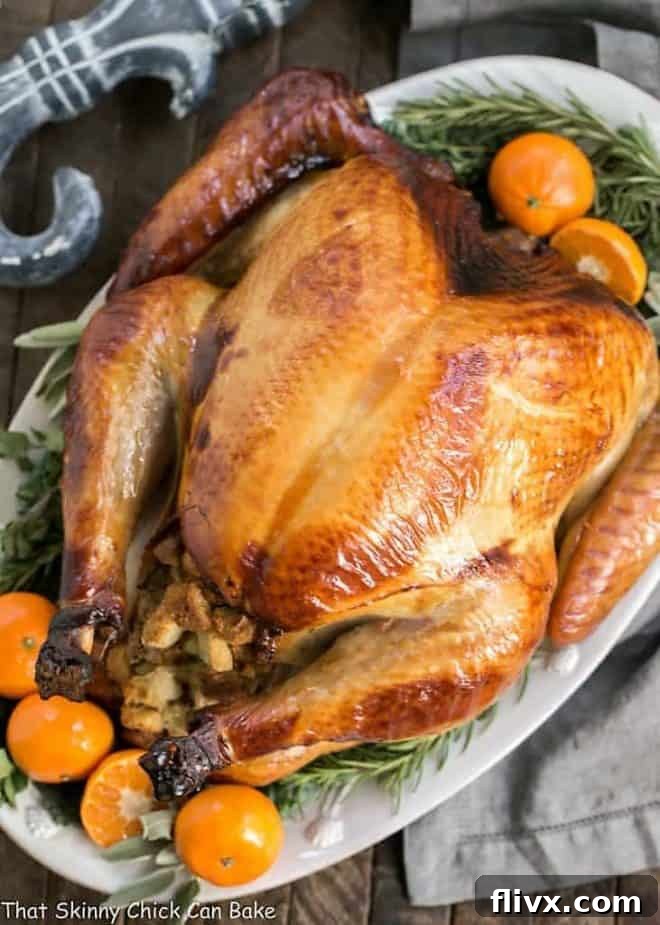
- Truss Your Turkey: Trussing means tying the legs and wings snugly against the turkey’s body, usually with butcher’s twine. This simple step helps the turkey roast more evenly, prevents the wing tips and leg ends from burning, and results in a more compact, appealing presentation on your serving platter.
- Cover for Even Browning: Once your turkey’s skin has achieved that beautiful, rich golden-brown color during roasting, cover it loosely with heavy-duty aluminum foil. This prevents the skin from over-browning or burning while allowing the internal meat to continue cooking to the desired temperature, ensuring both a stunning exterior and a perfectly cooked interior.
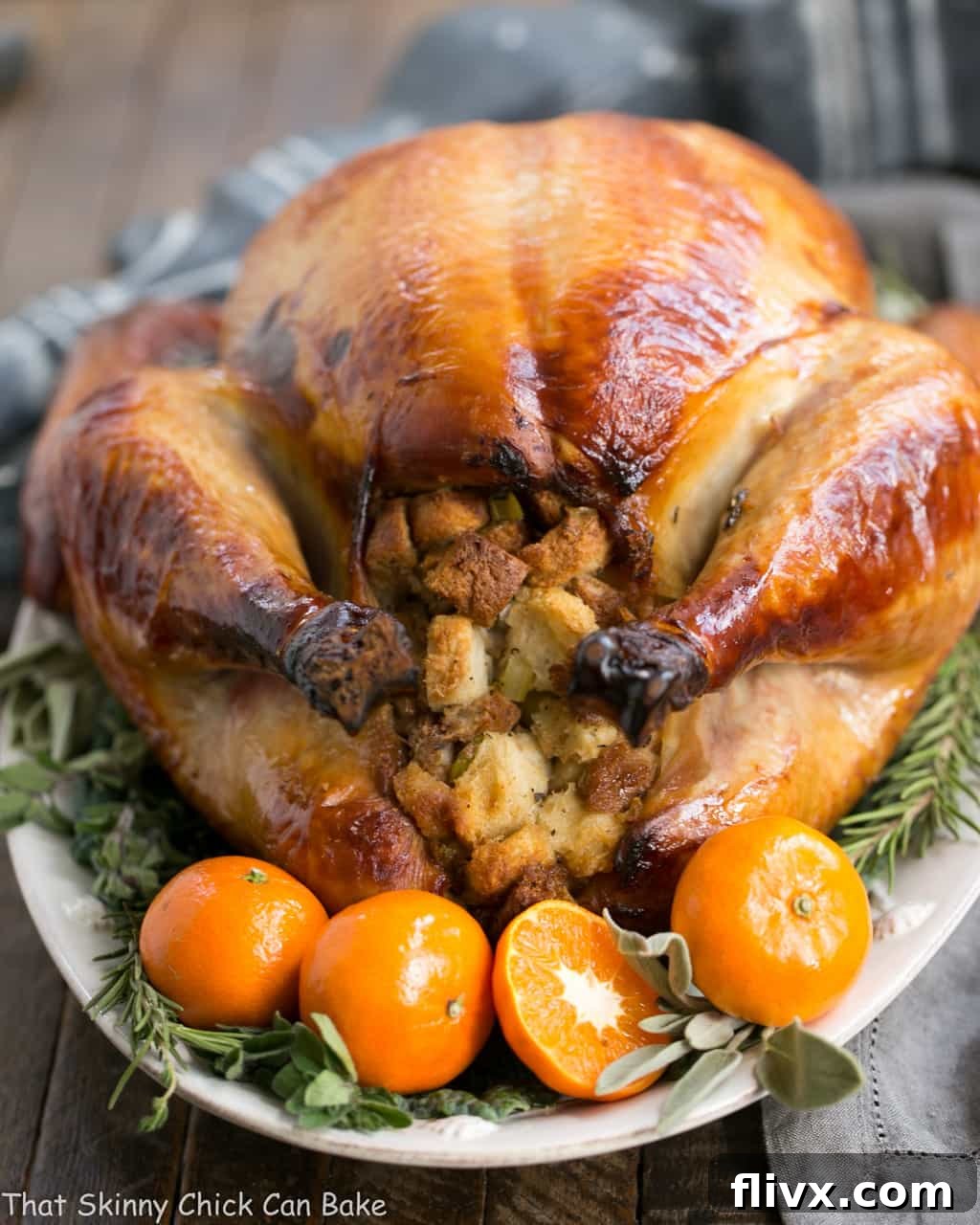
- Stuffing Temperature Check: If you choose to stuff your brined turkey, remember to check the internal temperature of the stuffing separately before deeming the bird fully cooked. The stuffing must reach a safe internal temperature of 165°F (74°C). Be aware that stuffing cooked inside a brined bird may absorb some of the brine’s saltiness, so adjust your stuffing recipe accordingly to avoid over-seasoning.
- PRO-Tip: Last-Minute Flavor Boost: If you find yourself short on time and unable to brine your turkey, don’t despair! An easy Turkey Injection can be a fantastic alternative. You can directly infuse flavors, such as a Cajun seasoning blend, into your bird just before it goes into the oven, providing a rapid boost of moisture and taste.
Frequently Asked Questions About Turkey Brining
Brining, at its core, is a simple application of osmosis, a fundamental principle of chemistry. When you soak meat in a saltwater solution, the saltier brine solution works to equalize the salt concentration across a semi-permeable membrane (the turkey’s cell walls). This process draws water, along with some of the dissolved salts and sugars, into the less salty turkey cells. As the turkey absorbs this seasoned liquid, its cells plump up, which helps the meat retain moisture throughout the cooking process. The result is a significantly more tender and succulent turkey, especially noticeable in the white meat which is prone to drying. A wonderful bonus of homemade brining is that you’re using only natural, wholesome ingredients, free from any artificial chemicals often found in pre-brined grocery store options.
For a wet brine like this honey recipe, the ideal brining time for a whole turkey typically ranges from 8 to 18 hours. This timeframe allows enough time for the salt and flavors to penetrate the meat effectively without overdoing it. Brining for too short a period won’t yield maximum moisture and flavor benefits, while brining a turkey for too long (e.g., beyond 24 hours) can lead to an undesirable outcome. Over-brined meat can become excessively salty, and its texture may suffer, often becoming mushy or spongy. It’s important to differentiate this from dry brining, which involves rubbing the turkey with salt and takes a longer duration, usually 2 to 3 days, for the salt to work its way into the meat.
The fundamental ratio for a basic wet brine is generally 1 tablespoon of kosher salt for every cup of water or other liquid. This ratio provides a balanced salinity that effectively tenderizes and flavors the meat without making it too salty. It is absolutely crucial to use kosher salt, which has a larger crystal size and therefore less sodium by volume compared to fine-grain table salt. If you substitute table salt without adjusting the quantity, your brine will be significantly more concentrated, and your turkey could become unpalatably salty. Always measure your salt carefully and stick to kosher salt for consistent results.
While salt, water, and a form of sugar are the essential components of a wet brine, there are numerous delicious additions that can elevate the flavor profile of your holiday turkey. Beyond the granulated white sugar, brown sugar, molasses, or honey often used for sweetness and browning, you can incorporate a variety of herbs and spices. Consider sprigs of fresh rosemary, thyme, or sage for an aromatic, earthy note. Whole peppercorns, bay leaves, or even a few cloves of crushed garlic can add depth. Citrus elements like orange or lemon slices introduce a bright, zesty counterpoint. Apple cider, vegetable broth, or even a splash of white wine can replace some of the water to infuse additional layers of complex flavor. Experiment with different combinations to find your signature holiday turkey brine!
Yes, maintaining a safe temperature is absolutely critical during the brining process. Your turkey must be kept refrigerated at all times while it is brining to prevent the growth of harmful bacteria and minimize the risk of food-borne illnesses. The ideal temperature for brining is below 40°F (4°C). If you’re challenged by limited refrigerator space, a large, well-insulated cooler offers an excellent alternative. Fill the cooler generously with ice, ensuring the entire turkey and brine solution remain submerged and consistently cold. It’s vital to monitor the ice levels throughout the brining period and add more as needed to maintain that crucial low temperature.
Contrary to a common misconception, there is no need to rinse your turkey after it has been brined. In fact, rinsing can be counterproductive as it can wash away the flavorful salt and sugars that have adhered to the skin, which contribute to its crispy texture and delicious taste. Furthermore, rinsing raw poultry in the sink can easily spread bacteria around your kitchen, creating a cross-contamination risk. Instead of rinsing, simply remove the turkey from the brine, pat it thoroughly dry with paper towels, and proceed with your roasting method. For an extra-crispy skin, you can even let the patted-dry turkey air-dry in the refrigerator for 4-6 hours before roasting, which further removes surface moisture.
Roasting a brined turkey to perfection is quite similar to roasting an unbrined one, but with the added confidence that your bird will be moist and flavorful. You can follow your standard roasting method, often beginning in a higher-temperature oven to crisp the skin, then reducing the heat for even cooking. A common approach is to start roasting your brined turkey in a 425°F (220°C) oven for the first 15-20 minutes, then immediately decrease the temperature to 350°F (175°C) for the remainder of the cooking time. Baste your turkey periodically with a mixture of melted butter and white wine, or pan juices, to keep the skin moist and promote browning. Once the skin develops a gorgeous, deep brown lacquer, usually about halfway through cooking, loosely cover the turkey with heavy-duty aluminum foil. This prevents over-browning while allowing the internal meat to cook through. The best turkey brine, like this honey version, creates truly delicious results, delivering a perfectly cooked, succulent bird that will be the highlight of any holiday celebration!
Complementary Holiday Dishes You May Also Like:
- No Boil Slow Cooker Mashed Potatoes from Spend with Pennies
- Shredded Brussels Sprouts Recipe with Pistachios, Cranberries, and Parmesan from Cookin’ Canuck
- The Best Thanksgiving Stuffing Recipe from Fifteen Spatulas
- Spinach Souffle
- Praline Topped Sweet Potato Casserole
- Best Holiday Side Dish Recipes
- Plus more Holiday Recipes
Stay in touch through social media @ Instagram, Facebook, and Pinterest. Don’t forget to tag me when you try one of my recipes! And if you love the results, please give it a 5-star rating in the recipe card.
Honey Brined Turkey Recipe
15 minutes
3 hours
3 hours 15 minutes
16 servings
The perfect way to get succulent meat from your holiday turkey!
Rated 4.9 out of 5 stars by 54 reviewers.
Ingredients
Brine:
- 1 pound kosher salt
- 6 quarts hot water
- 1 cup molasses
- 1 cup soy sauce
- 1 cup honey
- 5 pounds of ice
- 16-pound turkey, defrosted (any size will work)
Instructions
- Pour hot water into an extra-large brining bag, then add salt. Agitate bag to help dissolve the salt.
- Add molasses, soy, and honey and mix to combine.
- Add the turkey with giblets removed and seal the bag with a twist tie.
- Set in a cooler filled with at least 5 pounds of ice or the refrigerator in a pan to catch any leaks.
- Allow to brine for 12 hours or overnight.
- Make sure to drain turkey well and pat dry before roasting as desired.
Notes
Recipe adapted from my friend, Mary Ann.
Roasting time varies depending on the size of your turkey. Always use a meat thermometer to ensure your turkey reaches a safe internal temperature of 165°F (74°C) in the thickest part of the thigh.
Calories and nutrition information is an estimate only and isn’t 100% accurate because the majority of the salt, honey, and molasses in the brining liquid will not be consumed.
Due to the molasses and soy sauce in the brine, the turkey meat may appear darker than normal, especially the skin. Rest assured, it will still taste wonderful and be incredibly moist.
Recommended Products
As an Amazon Associate and member of other affiliate programs, I earn from qualifying purchases.
- Roasting Pan
- Brining Bags
- OXO Turkey Baster
Nutrition Information:
Yield:
16
Serving Size:
1
Amount Per Serving:
Calories: 991
Total Fat: 34g
Saturated Fat: 10g
Trans Fat: 0g
Unsaturated Fat: 22g
Cholesterol: 494mg
Sodium: 12355mg
Carbohydrates: 34g
Fiber: 0g
Sugar: 33g
Protein: 131g
This nutritional info is skewed as you will not be drinking the brine 🙂
HOW MUCH DID YOU LOVE THIS RECIPE?
Please leave a comment on the blog or share a photo on Pinterest