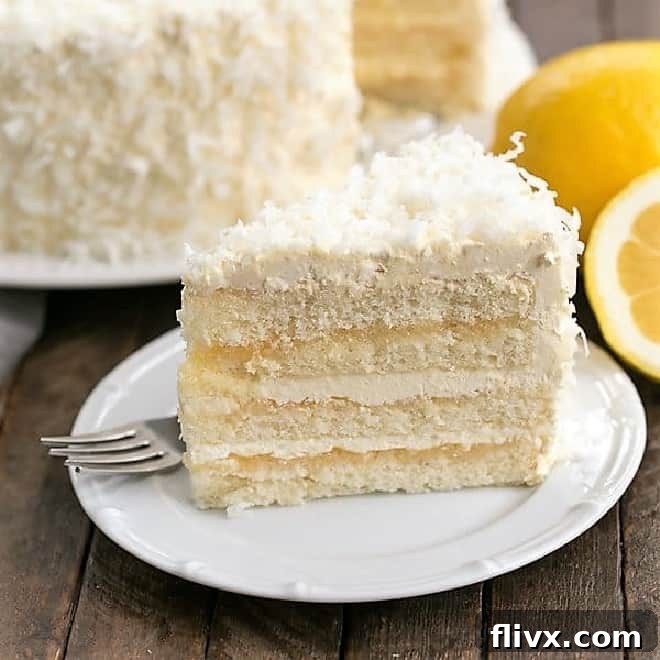
There are some desserts so utterly delightful, so bursting with vibrant flavor, that they simply demand a special occasion. This luscious Lemon Layer Cake with Lemon Curd Filling is precisely one such masterpiece. Infused with bright, sunny lemon from crust to creamy crown, it’s an exquisite celebration cake that perfectly captures the essence of springtime and festive gatherings. Imagine a dessert that not only tastes incredible but also evokes feelings of warmth, sunshine, and pure joy – that’s the magic of this lemon cake.
For those who truly adore the refreshing zest of lemon, this Lemon Curd Cake is an absolute dream come true. While it certainly requires a bit of effort and patience, every single minute spent crafting this beauty is profoundly rewarding. If you’ve never experienced the silky, cloud-like texture of a Swiss Meringue Buttercream frosting, prepare to be utterly converted. It’s a game-changer, elevating this cake from merely delicious to truly unforgettable.
Why This Lemon Layer Cake is a Must-Bake Masterpiece
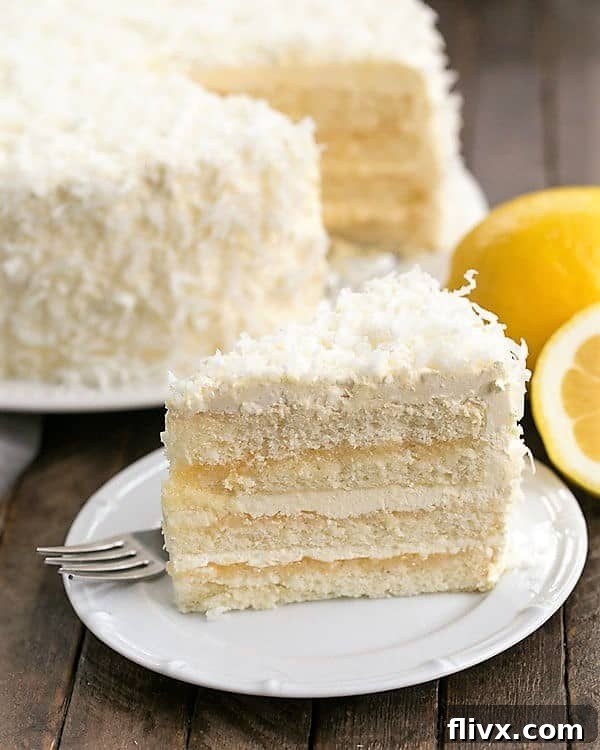
What makes this particular lemon layer cake stand out from the rest? It’s more than just a dessert; it’s an experience. Here’s why you absolutely have to try baking this incredible recipe:
- The Ultimate Special Occasion Cake: With its elegant presentation and complex, yet balanced flavors, this cake is destined to be the star of any celebration. Whether it’s Easter brunch, a birthday party, a spring gathering, or simply a desire to create something extraordinary, this cake fits the bill perfectly.
- A Lemon Lover’s Dream: If you or someone you know can’t get enough of tangy, citrusy delights, this recipe will be an instant favorite. The triple threat of lemon in the cake layers, the vibrant lemon curd filling, and the bright lemon Swiss Meringue Buttercream ensures an intense and authentic lemon experience.
- Luxurious Swiss Meringue Buttercream: Forget overly sweet, grainy frostings. Swiss Meringue Buttercream is renowned for its incredibly satiny, light, and luscious texture. It’s less sweet than traditional American buttercream, allowing the delicate lemon flavor to truly shine. While it requires a specific technique, the resulting velvety smooth frosting that spreads and cuts like a dream is well worth the extra effort and will garner endless rave reviews.
Essential Baking Tips for a Flawless Lemon Layer Cake
Creating a multi-layered cake might seem intimidating, but with a few expert tips, you’ll achieve bakery-quality results right in your own kitchen. This recipe, adapted from Dorie Greenspan’s celebrated Perfect Party Cake, elevates the lemon factor by incorporating a delightful lemon curd between the layers instead of traditional preserves.
- Verify Your Baking Powder’s Freshness: This is a crucial, often overlooked step! Baking powder is an essential leavening agent that can lose its potency over time, especially if stored in an opened container. Unlike baking soda, which is used more frequently, baking powder might linger in your pantry past its prime. To ensure your cake rises beautifully and has that perfect tender crumb, always test your baking powder.
- How to Test Baking Powder: Place ½ teaspoon of baking powder into a heat-safe bowl. Pour ¼ cup of boiling water over it. If you observe immediate, vigorous fizzing and bubbling, your baking powder is fresh and ready for action. If there’s little to no reaction, it’s time to replace it.
- Room Temperature Ingredients are Key: For a smooth, emulsified batter and light, fluffy frosting, ensure your butter, eggs, and buttermilk are at true room temperature. This allows them to incorporate evenly, creating a consistent texture and superior rise in your cake.
- Precision in Measuring: Baking is a science. While cooking allows for more improvisation, accurate measurements are vital for successful baking. Use a kitchen scale for flour if possible, or the ‘spoon and level’ method for precise volume measurements.
- Don’t Overmix the Batter: Once you add the flour, mix just until combined. Overmixing develops the gluten in the flour, leading to a tough, dense cake. A light hand is best for a tender crumb.
Mastering the Art of Slicing Cake Layers Horizontally
One of the distinctive features of this recipe is creating four thinner layers from two baked cakes. This might sound a little daunting, especially if you’re new to the technique, but it’s a skill that’s easily mastered and makes for a truly impressive cake.
- The Toothpick Guide Method: My go-to strategy for perfectly even slices is to insert toothpicks around the perimeter of each cooled cake layer. Place them just below the midline, creating a visual guide for your knife. This simple trick provides invaluable assistance, ensuring your cuts are straight and consistent.
- Using a Serrated Knife: A long serrated knife is your best friend for slicing cake layers. Begin by making shallow cuts around the edge of the cake, following your toothpick guide. Gradually deepen these cuts, working your way around the entire circumference until you can slice all the way through to the center. Take your time; patience is key to clean, even layers.
- Aim for Evenness: The goal is to create four cake slices of approximately the same thickness. While perfection isn’t strictly necessary for a delicious cake, even layers contribute to a professional-looking finish and balanced flavor distribution in every bite. Even if your slices aren’t absolutely perfect, rest assured, the cake will still be wonderfully delicious!
- Consider an Alternative: A clever reader once suggested using four separate cake pans to bake four distinct, thinner layers, thereby avoiding the need for horizontal slicing altogether. This is an ingenious idea! If you opt for this method, you may need to adjust the baking time, likely decreasing it significantly. You might also consider lowering the oven temperature by about 25 degrees Fahrenheit to prevent the thinner layers from browning too quickly. If you give this a try, I’d love to hear about your results!
Secrets to Velvety Perfection: Swiss Meringue Buttercream Frosting
Swiss Meringue Buttercream (SMB) might look sophisticated, but with careful attention to detail, you’ll discover why this luxurious, less-sweet frosting is a favorite among professional bakers and a personal favorite of mine. It truly is worth the effort!
- Understanding Buttercream Types: Beyond the familiar American buttercream, which relies on butter and powdered sugar, there are several European styles: Swiss, French, and Italian. All these European versions use eggs and generally contain less sugar, resulting in a lighter, silkier texture. Swiss Meringue Buttercream is my preferred choice when seeking that unparalleled smoothness.
- Egg White Safety: Rest assured, the egg whites in Swiss Meringue Buttercream are perfectly safe to eat. They are gently heated over simmering water for approximately 3 minutes, reaching a temperature sufficient to eliminate any potential salmonella bacteria. For absolute certainty, use an instant-read thermometer to ensure the mixture reaches 160ºF (71ºC).
- Constant Whisking is Key: During the heating process, you must continuously whisk the sugar and egg white mixture. This constant motion prevents the eggs from scrambling or cooking, ensuring they remain liquid and combine properly with the sugar.
- Patience During Cooling: After heating, transfer the mixture to your stand mixer (highly recommended for this step!) and whip it on high speed until it has completely cooled. This can take 10 minutes or even longer, so be patient. It’s crucial that the meringue cools down fully before you add the butter. If the bowl feels warm to the touch, your frosting will not emulsify correctly and could separate.
- Adding the Butter (and Troubleshooting): Once the meringue is cool and forms stiff, glossy peaks, switch to the paddle attachment. Begin adding the softened, room-temperature butter one tablespoon at a time. Don’t panic if the mixture looks curdled, broken, or soupy at first – this is a common and temporary phase! Keep adding the butter, and once it’s all incorporated, continue beating the mixture on high speed for another 6-10 minutes. Magically, it will transform into a thick, fluffy, and perfectly smooth frosting. If it’s still too soft, refrigerate the bowl for 15-20 minutes, then re-whip. If it’s too firm, let it sit at room temperature for a bit, then re-whip.
The rave reviews from party attendees are a testament to this cake’s exceptional quality. One guest even declared this lemon birthday cake the best dessert I had ever made! I happily shared the “secrets” – from the precision horizontal cutting technique that creates those delicate layers to the step-by-step process of achieving such a velvety Swiss Meringue Buttercream. This frosting, by the way, not only spreads like a dream but cuts incredibly cleanly, making serving a breeze. If you have a lemon aficionado in your life, you absolutely must save this lemon cake recipe for their next special occasion!
Frequently Asked Questions About Lemon Layer Cake
Lemon is incredibly versatile and pairs beautifully with a variety of flavors. Coconut is a classic and highly favored pairing, especially delightful for spring and Easter desserts. For extracts, both vanilla and almond complement lemon wonderfully, adding depth and warmth. Berries such as strawberries, raspberries, and cherries also create a fantastic flavor contrast and can be incorporated into lemon desserts, used as elegant garnishes, or prepared as sauces to serve alongside.
There are several effective ways to infuse your cake with vibrant lemon flavor. One of my favorite techniques is to rub fresh, finely grated lemon zest into the sugar specified in the recipe. This process helps to release the essential oils from the peel, allowing them to permeate and intensify the lemon aroma and flavor within the sugar itself. Additionally, lemon zest, lemon extract, and/or fresh lemon juice can be directly added to the cake batter to further enhance its citrusy profile.
Swiss Meringue Buttercream is one of the distinct types of buttercream frosting, known for its ultra-smooth, silky texture. It’s made by gently heating egg whites and sugar over a double boiler, then whipping them into a stable meringue before gradually incorporating softened butter. The result is a light, less-sweet, and incredibly elegant frosting that contrasts beautifully with the richness of a cake, making it a favorite for professional finishes.
Absolutely! Lemon curd is an excellent component to prepare in advance. It can be made up to a week ahead of time and stored in an airtight container in the refrigerator. This makes the cake assembly process much smoother, as you’ll have one less step to worry about on baking day. Ensure it’s fully chilled before spreading between cake layers.
Due to the Swiss Meringue Buttercream, which contains butter, and the lemon curd, this cake should be stored in the refrigerator. Cover it loosely with plastic wrap or a cake dome to prevent it from drying out. Bring slices to room temperature for about 30-60 minutes before serving for the best flavor and texture. It will keep well for 3-4 days in the fridge.
More Lemon & Dessert Inspiration You May Also Love:
- Outrageous Lemon Lover’s Trifle from Melissa’s Southern Style Kitchen
- The Best Lemon Bars Recipe
- Classic Lemon Meringue Pie
- Refreshing Strawberry Lemon Tart
- Discover more of the Best Dessert Recipes for every occasion!
Stay connected and share your baking adventures with me through social media on Instagram, Facebook, and Pinterest. Don’t forget to tag me when you try one of my delicious recipes! And if you absolutely love the results, please consider giving it a 5-star rating in the recipe card below – your feedback means the world!
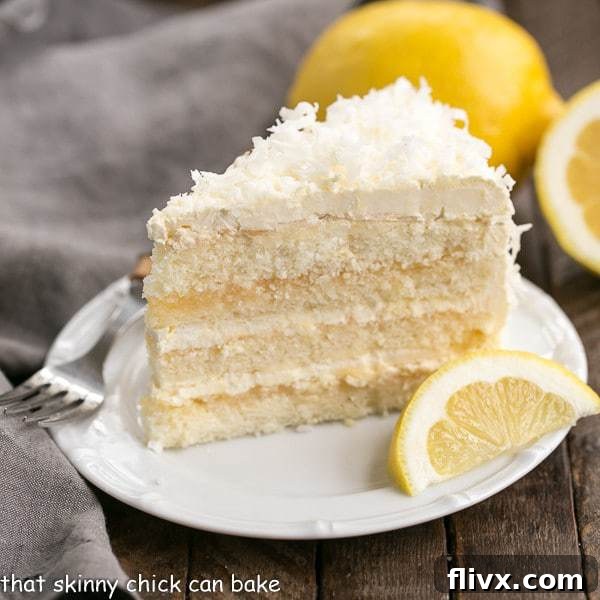
Lemon Layer Cake with Lemon Curd Filling Recipe
45 minutes
40 minutes
1 hour 25 minutes
16 servings
A scrumptious lemon and coconut layer cake, inspired by Dorie Greenspan’s Baking: From My Home to Yours, featuring a delightful lemon curd filling and velvety Swiss Meringue Buttercream.
Ingredients
For the Lemon Cake:
- 2 ¼ cups cake flour
- 1 tablespoon baking powder
- ½ teaspoon table salt
- 1 ¼ cups buttermilk
- 4 egg whites, at room temperature
- 1 ½ cups granulated sugar
- 2 teaspoons finely grated lemon zest
- 1 stick (4 ounces) unsalted butter, softened to room temperature
- ½ teaspoon pure lemon extract (Penzey’s brand recommended)
For the Lemon Swiss Meringue Buttercream:
- 1 cup granulated sugar
- 4 egg whites
- 3 sticks (12 ounces) unsalted butter, softened to room temperature
- ⅛ teaspoon table salt
- ¼ cup fresh lemon juice
- 1 teaspoon vanilla extract
For Assembly:
- 1 11-ounce jar of good-quality lemon curd
- 2 cups sweetened shredded coconut
Instructions
- Prepare Cake Pans: Preheat your oven to 350 degrees F (175 degrees C). Grease two 9-inch round cake pans generously with non-stick flour and oil baking spray (such as Baker’s Joy). Line the bottom of each pan with a circle of parchment paper, then spray the top of the parchment as well.
- Combine Dry and Wet Ingredients: In a medium bowl, whisk together the cake flour, baking powder, and salt until well combined. In a separate bowl, whisk together the buttermilk and egg whites.
- Infuse Sugar with Lemon Zest: In the bowl of your stand mixer, combine the granulated sugar and finely grated lemon zest. Using your fingertips, rub the lemon zest into the sugar for a minute or two until the sugar is moist and fragrant, releasing the lemon’s essential oils.
- Cream Butter and Sugar: Add the softened unsalted butter to the lemon sugar mixture in the mixer bowl. Beat at medium speed using the paddle attachment for about 3 minutes, or until the butter and sugar mixture is very light and fluffy. Mix in the pure lemon extract.
- Alternate Wet and Dry Additions: With the mixer on low speed, gradually add one-third of the flour mixture to the butter mixture and mix until just combined. Then, add half of the buttermilk-egg white mixture and mix until incorporated. Repeat with another third of the flour mixture, followed by the remaining half of the buttermilk-egg white mixture, and finally, the last third of the flour mixture.
- Final Mix: Scrape down the sides and bottom of the bowl as needed throughout the process to ensure all ingredients are well incorporated. Beat the entire batter on medium-low speed for another 2 minutes, but be careful not to overmix.
- Bake Cake Layers: Divide the batter evenly between the two prepared 9-inch cake pans. Smooth the tops gently with an offset spatula. Bake for 30-35 minutes, or until the center of the cake springs back lightly when touched, and a wooden skewer inserted into the center comes out clean.
- Cool Cakes: Remove the cakes from the oven and transfer them to wire cooling racks. Let them cool in their pans for 5 minutes before carefully inverting them onto the racks. Gently peel off the parchment paper from the bottom of the cakes. Allow the cakes to cool completely, top sides up, on the wire racks before proceeding with assembly.
- Prepare Swiss Meringue Base: To make the buttercream, combine 1 cup granulated sugar and 4 egg whites in a large, heat-safe mixer bowl (preferably stainless steel). Place this bowl over a saucepan containing about an inch or two of simmering water, ensuring the bottom of the bowl does not touch the water.
- Heat and Whisk Meringue: Continuously whisk the sugar and egg white mixture over the simmering water. Continue whisking for approximately 3 full minutes, or until the mixture is hot to the touch and all the sugar crystals have completely dissolved. If you have an instant-read thermometer, aim for 160°F (71°C).
- Whip Meringue: Carefully remove the bowl from the heat and attach it to your stand mixer. Using the whisk attachment, beat the mixture on high speed for about 5-10 minutes, or until the meringue is very thick, glossy, and has cooled completely. The bowl should feel cool to the touch. This step is crucial for stable buttercream.
- Incorporate Butter: Switch to the paddle attachment. With the mixer on medium-low speed, add the softened unsalted butter one stick (4 ounces) at a time, allowing each addition to be partially incorporated before adding the next. The mixture may look curdled or soupy initially – this is normal! Keep beating.
- Whip Until Smooth: Once all the butter has been added, increase the mixer speed to high. Beat the mixture for 6-10 minutes, or until the buttercream transforms into a thick, fluffy, and perfectly smooth consistency. If it’s too soft, chill the bowl for 15 minutes, then re-whip.
- Flavor the Buttercream: Decrease the mixer speed to medium. Gradually beat in the fresh lemon juice, waiting until each addition is fully absorbed before adding more. Finally, mix in the vanilla extract until just combined. Set the finished buttercream aside while you prepare the cake layers.
- Slice Cake Layers: To assemble, take each cooled cake layer and carefully slice it horizontally in half, creating four thinner layers in total. A helpful trick is to place toothpicks around the perimeter of the cake, slightly below where you intend to slice, to guide your long serrated knife as you saw through the layers.
- First Layer & Curd: Place one cake layer, cut side up, on your chosen serving dish or cake stand. Spread it evenly with one-third of the lemon curd (approximately ⅓ cup).
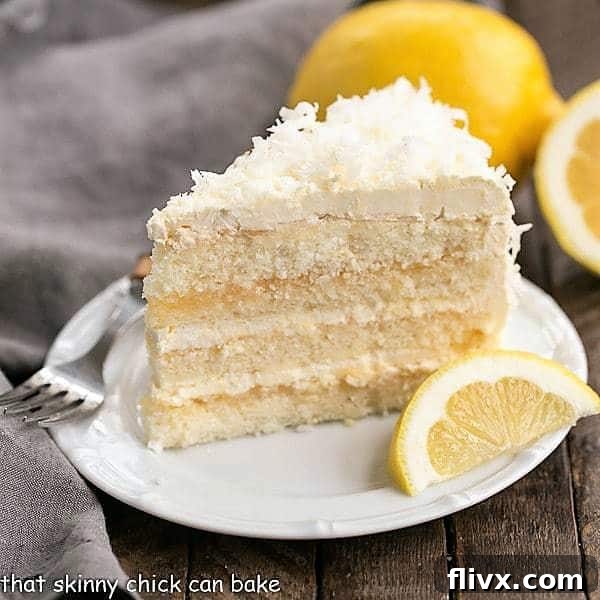
- Build the Layers: Spread about ¼ of the lemon Swiss Meringue Buttercream evenly over the lemon curd. Place the next cake layer on top and repeat the sequence: lemon curd, then buttercream. Repeat this process two more times.
- Final Layer & Frosting: Place the final cake layer on top, with its baked side facing up. Use the remaining lemon Swiss Meringue Buttercream to frost the top and sides of the entire cake, creating a smooth, elegant finish.
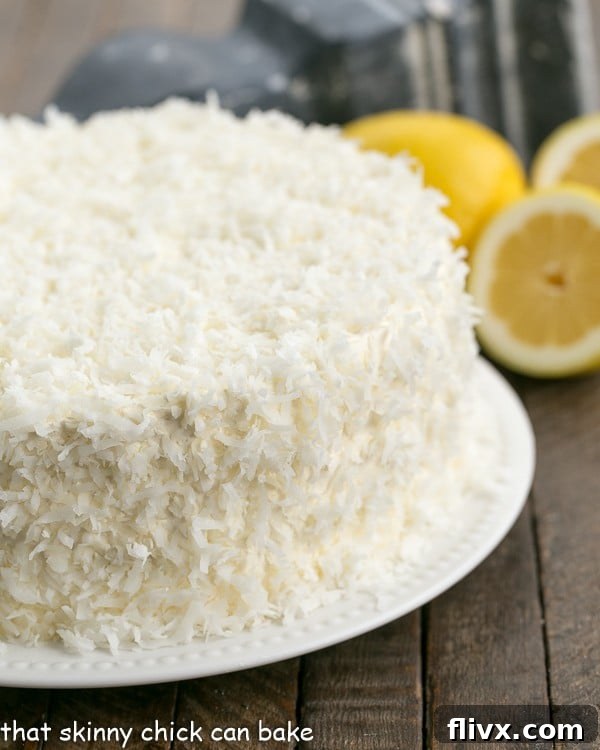
- Garnish: For an extra touch of flavor and visual appeal, gently press the sweetened shredded coconut onto the frosted sides and top of the cake.
Notes
Ensure you are using baking powder for this recipe, not baking soda. It’s also a good practice to check if your baking powder is fresh, as it can lose potency over time while sitting in your pantry. Refer to the “Essential Baking Tips” section in the main article for a quick and easy way to test its freshness.
Recommended Products for Baking
As an Amazon Associate and member of other affiliate programs, I earn from qualifying purchases.
- KitchenAid KSM150PSER Artisan Tilt-Head Stand Mixer with Pouring Shield, 5-Quart, Empire Red
- Baker’s Joy Non-Stick Baking Spray with Flour
- 9-inch USA Pan Bakeware Round Cake Pan
Nutrition Information:
Yield:
16
Serving Size:
1
Amount Per Serving:
Calories: 343
Total Fat: 9g
Saturated Fat: 6g
Trans Fat: 0g
Unsaturated Fat: 2g
Cholesterol: 34mg
Sodium: 326mg
Carbohydrates: 62g
Fiber: 1g
Sugar: 44g
Protein: 5g
HOW MUCH DID YOU LOVE THIS RECIPE?
Please leave a comment on the blog or share a photo on Pinterest