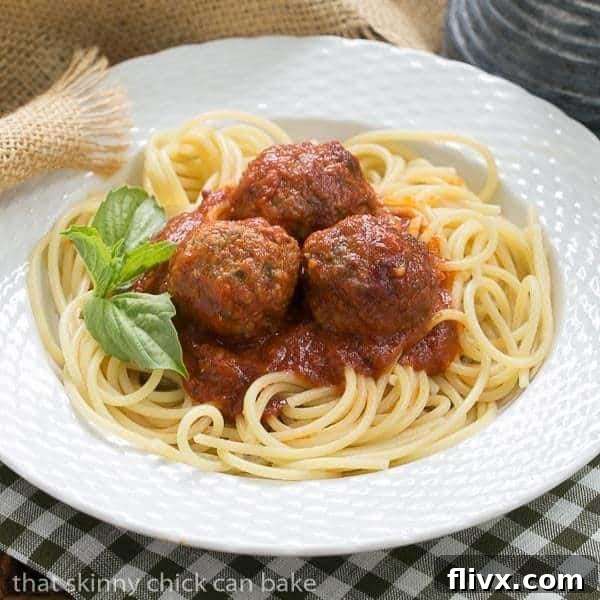
For many, the word “gravy” conjures images of savory brown drippings poured over mashed potatoes. But for those with Italian-American roots, “Sunday Gravy” means something entirely different: a slow-simmered, rich tomato sauce brimming with various meats, garlic, basil, and an aroma that promises warmth, comfort, and a celebration of family. It’s a culinary tradition, a labor of love, and the quintessential centerpiece of many Sunday dinners.
While a quick weeknight pasta sauce might involve browning onions, garlic, and Italian sausage before adding canned tomatoes and a splash of wine, a true Sunday Gravy transcends this simplicity. It’s an experience, a journey through flavor that unfolds over hours, filling your home with an irresistible garlicky goodness that instantly transports you to a nonna’s kitchen. Today, we’re diving into the heart of this tradition, inspired by a cherished recipe from Vita Greco, shared by east coast foodie friends who know the true meaning of a soul-satisfying meal.
The Time-Honored Tradition of Italian-American Sunday Gravy
The term “Sunday Gravy” itself is a fascinating glimpse into Italian-American culture. For immigrants arriving in America, “gravy” was the English word for a meat-infused sauce, often thicker and richer than a typical “sugo” (sauce) from Italy. Sundays became the day for this elaborate dish because it required significant time – time that was more readily available on a day of rest and family gathering. It’s more than just a recipe; it’s a cultural artifact, representing adaptation, culinary ingenuity, and the enduring power of food to connect generations.
What sets Sunday Gravy apart from a standard marinara or even a bolognese? It’s the multi-meat foundation. This isn’t just a tomato sauce; it’s a deeply flavored, hearty concoction where pork ribs, Italian sausage, and tender meatballs slowly impart their savory essence into a robust tomato base. This long simmering process allows the flavors to meld and deepen, resulting in a sauce that is incredibly rich, complex, and utterly unforgettable. It’s truly a sauce that gets better with time, often tasting even more magnificent the next day.
Crafting the Perfect Meats for Your Authentic Gravy
The selection and preparation of the meats are crucial for an authentic Sunday Gravy. Each component plays a vital role in building the gravy’s distinct flavor profile.
Pork Ribs: The Foundation of Flavor
Country-style pork ribs are often the star of Sunday Gravy. Their bone-in nature and fatty marbling contribute immense depth and richness as they slowly braise in the tomato sauce. Over hours, they become incredibly tender, practically falling off the bone, infusing the gravy with a succulent, savory pork flavor that is indispensable.
Italian Sausage: A Burst of Spiced Goodness
Italian sausage links, whether mild or hot, add a beautiful layer of spice and herbaceousness. Browning the sausages first creates a delicious crust and renders some of their fat, which then forms a flavorful base for the gravy. Piercing the casings allows the seasoned pork to release its aromatic juices into the sauce as it cooks, ensuring every spoonful is bursting with flavor.
Homemade Meatballs: Tender, Flavorful Morsels
No Sunday Gravy is complete without perfectly tender meatballs. The traditional “meatball mix” – equal parts ground beef, ground pork, and ground veal – is highly recommended for achieving the ideal balance of flavor and tenderness. The combination of these meats provides a rich, nuanced taste and a moist, delicate texture. When forming meatballs, remember not to overmix the ingredients; this can lead to tough meatballs. Gently combining them with eggs, bread crumbs, Romano cheese, fresh parsley, and minced garlic ensures they remain light and airy. Browning the meatballs before adding them to the gravy creates a lovely crust and locks in their juices, adding another layer of texture and flavor to the finished dish.
The Heart of the Gravy: Tomatoes, Garlic, and Herbs
Beyond the meats, the tomato base and aromatic ingredients are what give Sunday Gravy its iconic character. Quality ingredients truly make a difference here.
Choosing Your Tomatoes Wisely
A combination of crushed tomatoes, tomato paste, and sometimes a smaller can of tomato sauce creates the perfect consistency and depth of flavor. Crushed tomatoes provide the bulk and fresh tomato taste, while tomato paste, when sautéed, deepens and concentrates the tomato flavor to an almost caramelized sweetness. A small can of tomato sauce can help achieve the desired consistency without diluting the rich flavor. Opt for high-quality, Italian-style canned tomatoes for the best results.
The All-Important Garlic
Garlic is non-negotiable in Sunday Gravy. Generous amounts, minced and gently sautéed, lay the aromatic groundwork for the entire dish. It infuses the olive oil and then the tomatoes with its pungent, sweet essence.
Herbs and Seasonings: The Finishing Touches
Fresh Italian parsley and dried basil are key herbs. Fresh parsley adds a bright, herbaceous note, while dried basil, when simmered for hours, contributes a deep, sweet, and slightly peppery flavor. Salt and freshly ground black pepper are essential for seasoning, of course. A teaspoon of sugar might seem unusual, but it plays an important role in balancing the acidity of the tomatoes, creating a smoother, more rounded flavor profile. A few pinches of grated Romano cheese, beyond the meatballs, add an extra layer of salty, savory umami directly to the gravy.
Spaghetti with Sunday Gravy: The Authentic Recipe
This recipe, adapted from Vita Greco, guides you through creating an unforgettable Sunday Gravy.
Ingredients:
Olive oil (for browning meats and sautéing)
4 country-style pork ribs
1 pound Italian sausage links
For the Meatballs:
1 pound meatball mix (equal parts ground beef, ground pork, and ground veal) or ground beef
2 eggs, slightly beaten
2 tablespoons fresh Italian parsley, chopped
1/4 cup grated Romano cheese
1/2 cup breadcrumbs (plain or Italian-style)
4 cloves of garlic, minced
Freshly ground black pepper, to taste
A pinch of salt (optional, as Romano cheese is salty)
For the Gravy:
4 cloves garlic, minced
1 small can (6 ounces) tomato paste
2 large cans (28 ounces each) crushed tomatoes
Freshly ground black pepper, to taste
Salt to taste (add cautiously, as meats and cheese are salty)
1 teaspoon sugar
A few pinches of grated Romano cheese
1/4 cup fresh Italian parsley, chopped
1 tablespoon dried basil
1 small can (8 ounces) tomato sauce
1 small can (8 ounces) water (or red wine for extra depth)
Instructions:
- Prepare the Meats: In a large, heavy-bottomed Dutch oven or pot, add a generous drizzle of olive oil over medium-high heat. Brown the Italian sausage links and country-style pork ribs on all sides until deeply golden. While the first side of the sausage is browning, you can pierce the casings with a fork to help release fats and flavors. Once browned, remove the sausages and ribs from the pot and set them aside.
- Make and Brown Meatballs: While the meats are browning, prepare the meatballs. In a large bowl, gently combine the meatball mix (or ground beef), slightly beaten eggs, chopped fresh Italian parsley, grated Romano cheese, breadcrumbs, minced garlic, and a generous amount of freshly ground black pepper. Mix just until combined; do not overmix. Scoop out tablespoon-sized portions and gently roll them into balls.
- Sauté Aromatics: Using the residual oil and drippings in the Dutch oven (add a little more olive oil if needed), brown the meatballs on all sides until a nice crust forms, but they don’t need to be cooked through. Remove the meatballs from the pot and set them aside with the other browned meats.
- Build the Gravy Base: Reduce the heat to medium-low. Add the remaining minced garlic (4 cloves) to the Dutch oven and sauté gently for 1-2 minutes until fragrant, being careful not to let it brown or burn. Stir in the small can of tomato paste and cook for an additional 2-3 minutes, stirring constantly. This step deepens the tomato flavor and color.
- Combine and Simmer: Pour in the two large cans of crushed tomatoes, the small can of tomato sauce, and the can of water (or red wine). Stir well. Add the remaining gravy ingredients: salt, freshly ground black pepper, sugar, a few pinches of Romano cheese, chopped fresh Italian parsley, and dried basil. Bring the gravy to a gentle simmer.
- Add Meats and Cook: Carefully return all the browned meats – the pork ribs, Italian sausage, and meatballs – to the simmering gravy. Ensure they are mostly submerged. Reduce the heat to low, cover the pot, leaving the lid slightly ajar to allow some steam to escape.
- Slow Cook to Perfection: Let the Sunday Gravy simmer for at least 3 hours, or even longer (up to 4-5 hours for maximum tenderness and flavor). Stir frequently, especially scraping the bottom of the pot, to prevent sticking and scorching. The longer it simmers, the more tender the meats will become, and the flavors will deepen and meld beautifully.
Serving and Enjoying Your Sunday Gravy
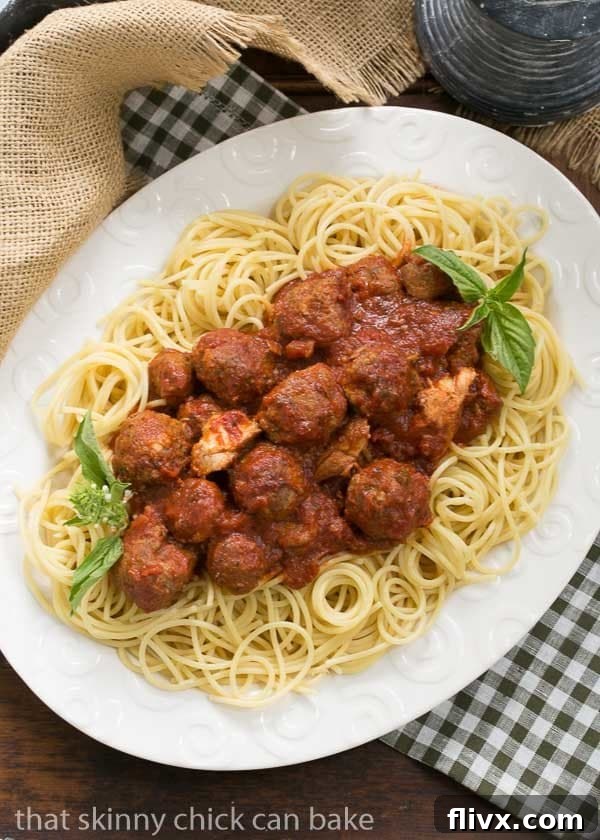
Once the gravy has simmered to perfection, it’s time to gather around the table. Traditionally, Sunday Gravy is served generously over a bed of perfectly cooked spaghetti. However, it’s equally delicious with other sturdy pasta shapes like rigatoni, ziti, or paccheri, which can hold the hearty sauce and chunks of meat beautifully. Don’t forget to have plenty of crusty Italian bread on hand to sop up every last drop of this marvelous, rich sauce – it’s practically a requirement!
Garnish with a sprinkle of fresh parsley or a grating of fresh Romano cheese for an extra touch of flavor and visual appeal. This meal is best enjoyed with loved ones, sharing stories, and savoring the deep, comforting flavors that only a slow-simmered Sunday Gravy can provide.
Tips for a Flawless Sunday Gravy
- Don’t Rush the Browning: Take your time browning the meats. Those browned bits (fond) stuck to the bottom of the pot are pure flavor and will deglaze into the sauce, adding incredible depth.
- Quality Matters: Use good quality canned tomatoes. San Marzano-style tomatoes are often preferred for their balanced sweetness and acidity.
- Taste and Adjust: Throughout the long simmering process, taste the gravy periodically and adjust seasonings as needed. Remember that flavors will intensify, so start conservatively with salt.
- Make Ahead: Sunday Gravy is one of those dishes that often tastes even better the next day, after the flavors have had more time to meld. It also freezes beautifully, making it perfect for meal prepping. Store cooled gravy in airtight containers in the refrigerator for up to 3-4 days or in the freezer for up to 3 months.
Frequently Asked Questions About Sunday Gravy
Q: Can I use different meats?
A: While the traditional combination of pork ribs, Italian sausage, and a beef-pork-veal meatball mix offers the best flavor, you can certainly experiment. Some variations include braciole (stuffed beef rolls) or even chicken thighs. Just ensure you brown any added meats to build a strong flavor base.
Q: Why add sugar to tomato sauce?
A: A small amount of sugar helps to balance the acidity of the tomatoes, creating a smoother, less sharp flavor profile. It doesn’t make the sauce sweet, but rather harmonizes the overall taste.
Q: How do I prevent the gravy from scorching at the bottom of the pot?
A: The key is to use a heavy-bottomed Dutch oven or pot, maintain a very low simmer, and stir frequently, especially scraping the bottom. Ensuring the lid is slightly ajar helps release some steam, preventing the sauce from becoming too thick too quickly at the bottom.
Making Sunday Gravy is more than just cooking; it’s an act of love, a connection to heritage, and a guarantee of delicious memories. The aroma alone is enough to bring everyone to the kitchen, eager for a taste of this timeless Italian-American masterpiece. So, set aside an afternoon, gather your ingredients, and immerse yourself in the joyful tradition of preparing a truly magnificent Sunday Gravy for your family and friends.
Print This Recipe
Photo circa 2011: A timeless dish, as delicious today as it was then.