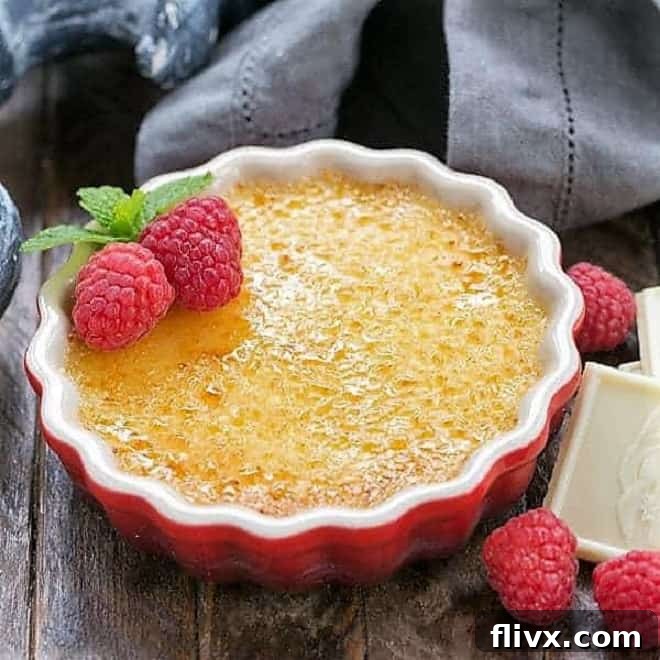
Indulge in an exquisite culinary journey with this luscious White Chocolate Crème Brûlée, a decadent and luxurious twist on the beloved classic custard dessert. This recipe promises an ultra-creamy, smooth custard infused with rich white chocolate, crowned with a perfectly caramelized, crusted sugar topping that cracks with satisfying delight. It’s a truly magnificent dessert, ideal for elevating any special occasion or simply treating yourself to an unforgettable sweet experience.
Unlock the secrets to creating this restaurant-worthy dessert in your own kitchen. Our comprehensive guide will teach you precisely How to Make Crème Brûlée, ensuring you achieve that silken texture and signature crackle every single time.
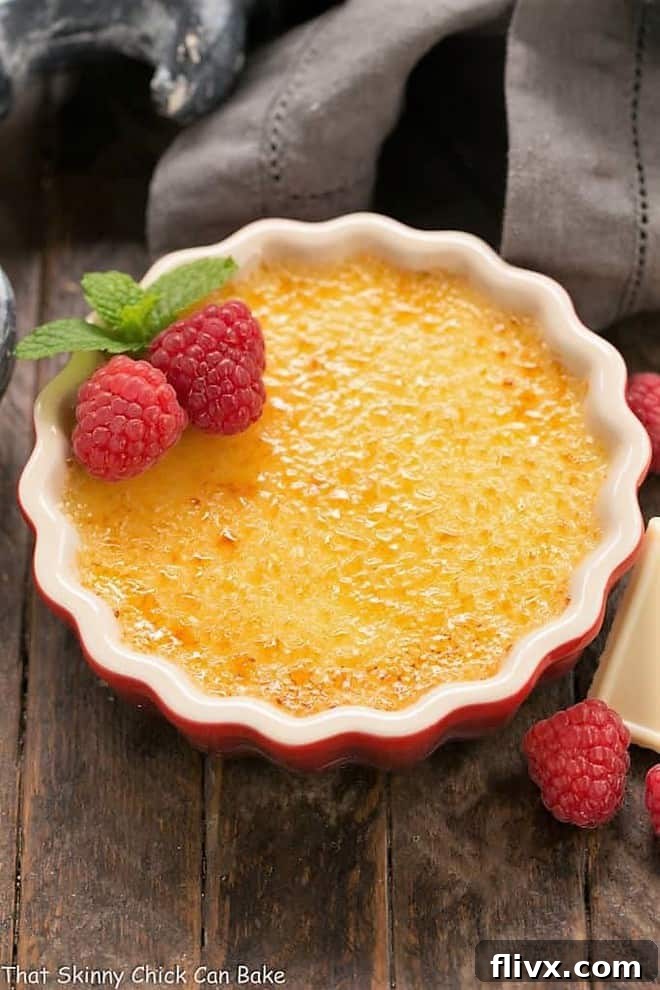
Why This White Chocolate Crème Brûlée Is a Must-Try
Are you searching for a dessert that not only impresses but also delivers an unparalleled taste experience? Look no further. This White Chocolate Crème Brûlée recipe is designed to captivate your senses and become an instant favorite. Here’s why you absolutely need to make this dessert:
- Unbelievably Creamy and Delicious: Prepare yourself for a custard that melts in your mouth, offering a symphony of rich, sweet flavors. The texture is impeccably smooth, a hallmark of a perfectly executed crème brûlée.
- A Recipe Based on Culinary Excellence: This recipe is inspired by the legendary Le Cirque’s famous crème brûlée. My husband, a connoisseur of this classic dessert, confidently declares it superior to any restaurant version he’s ever savored. That’s a testament to its exceptional quality!
- A Divine Celebration of White Chocolate: If you’re a fan of white chocolate, this dessert is your dream come true. The delicate, sweet notes of white chocolate are elegantly woven into the custard, adding a sophisticated depth of flavor that complements the traditional richness beautifully. It’s an innovative yet harmonious fusion of flavors.
The first time I embarked on making this dreamy White Chocolate Crème Brûlée, it was quite an memorable experience, albeit with a slight culinary mishap when I inadvertently received a “crème brûlée facial” while carefully removing one of the custards from the water bath. Thankfully, the drenching was a one-time occurrence, but the incredible taste was definitely worth repeating. As we stocked our fridge with the delectable custards, my husband, Bill, was quick to express his delight at how utterly fabulous they tasted. I wholeheartedly concurred! This recipe truly creates a dessert that transcends expectations, making any minor kitchen adventure entirely worthwhile.
Mastering Crème Brûlée: Expert Tips for Success
Having made classic crème brûlée countless times for Bill, who considers it his absolute favorite dessert, I’ve gathered a wealth of knowledge and honed my technique over the years. These tried-and-true tips will guide you in achieving a flawless, restaurant-quality White Chocolate Crème Brûlée every time:
- PRO-Tip: Tempering the Eggs is Crucial: The most critical step to prevent scrambled eggs in your custard is tempering. Slowly, gradually, drizzle the hot cream and melted white chocolate mixture into your egg yolks while whisking vigorously and constantly. Begin with just a few drops at a time. If you rush this process, the heat from the cream will cook the eggs, causing them to curdle. If the eggs curdle, when you strain the mixture, all the vital egg proteins that provide structure to your crème brûlée will be discarded, leading to a runny, unappealing custard. Take your time here – patience is a virtue in crème brûlée making!
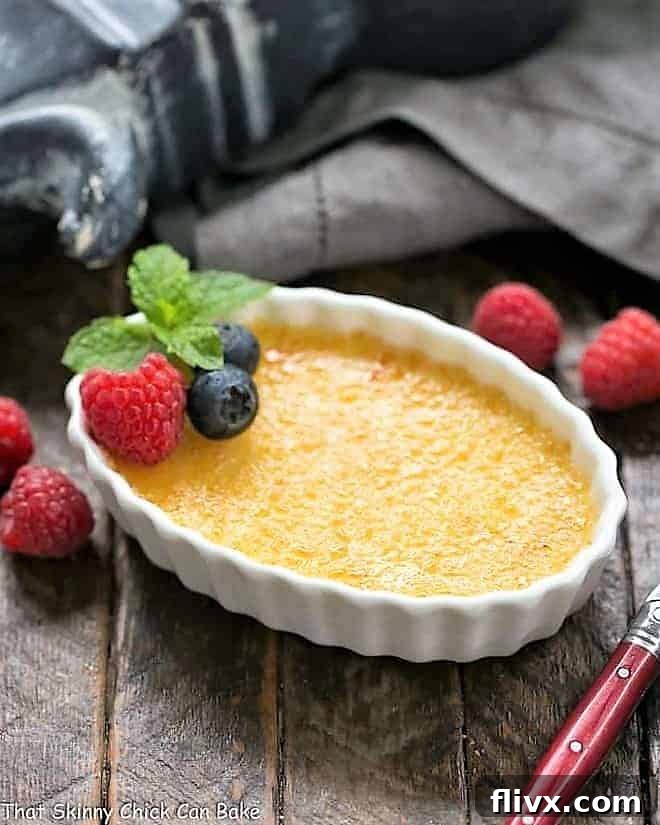
- Ramekin Choice Impacts Baking Time: The baking duration for your crème brûlée will vary significantly depending on the type and size of ramekins you choose. Deeper, round ramekins (such as 4 oz. Porcelain Ramekins) will generally require a longer baking time compared to shallower, oblong dishes (like a Crème Brûlée Ramekin Set). Always monitor for the “slight jiggle” test rather than strictly adhering to a timer.
- PRO-Tip: The Indispensable Water Bath (Bain-Marie): Baking your custards in a bain-marie, or water bath, is not optional; it’s essential for achieving that characteristic silky, creamy texture. This method ensures that the custard bakes at a gentle, consistent temperature, preventing the edges from overcooking and becoming rubbery before the center sets. Without a water bath, your crème brûlée will likely be unevenly cooked and potentially curdled.
- Choosing Your Bain-Marie Pan: For a convenient water bath, I often use a deep dish pizza pan or my sturdy roasting pan. A roasting pan is particularly handy due to its handles, which make it much easier and safer to transfer the water-filled pan in and out of the oven. Ensure your chosen pan is large enough to comfortably hold your ramekins without them touching each other.
- Selecting the Perfect Sugar for Torching: For the signature burnt sugar topping, I highly recommend using sugar in the raw or Turbinado sugar. These larger sugar crystals create a more pronounced, satisfying crunch. While brown sugar can work, I suggest spreading it out on a plate to dry for a few hours before sprinkling it over the chilled custard. This reduces its moisture content, helping it caramelize more evenly and preventing it from clumping.
- Broiler Method for Caramelization: You can use your oven’s broiler to melt and caramelize the sugar topping. However, this method requires constant vigilance. Place the custards a few inches from the heat source and watch them like a hawk. The sugar can go from perfectly golden to burnt in a matter of seconds. You want it melted and lightly browned, not charred.
- The Precision of a Culinary Torch: For optimal control and professional results, a Culinary Torch is your best friend when brûléeing the sugar. It allows you to precisely direct the flame, achieving an even, beautiful caramelization without the risk of overcooking the custard itself. It’s a worthy investment for any crème brûlée enthusiast.
- PRO-Tip: Don’t Waste Those Egg Whites! This recipe uses only egg yolks, leaving you with leftover egg whites. Don’t let them go to waste! They are perfect for making other delightful treats like a light and airy pavlova, delicate meringue cookies, or chewy macaroons! For even more inspiration, check out this fantastic collection of 50 Egg White Recipes!
Frequently Asked Questions About Crème Brûlée
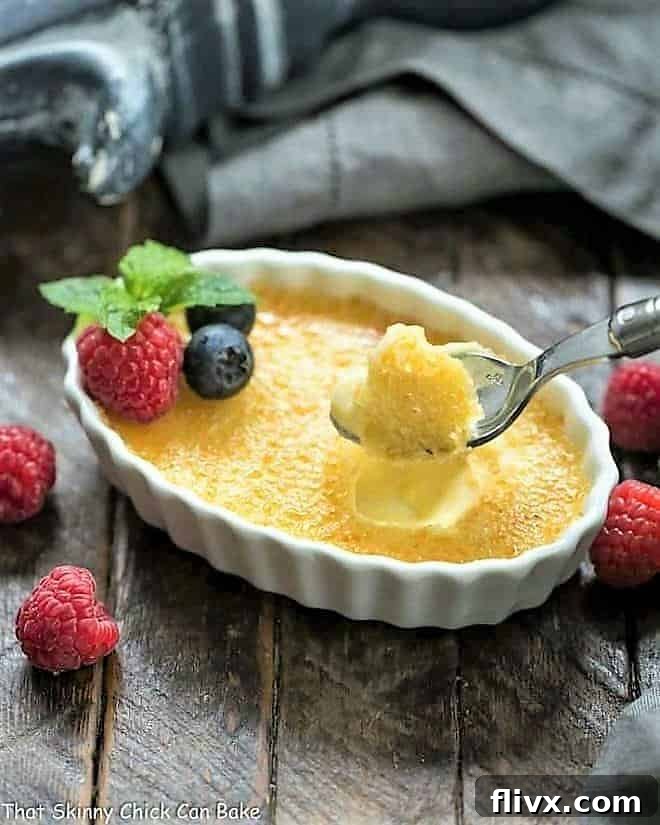
Crème Brûlée, which translates to “burnt cream” in French, is a classic and elegant dessert consisting of a rich, creamy, baked vanilla custard base topped with a contrasting thin, brittle layer of caramelized sugar. This sugar crust is typically created by torching or broiling, resulting in its distinctive “burnt” appearance and delightful crackle. While its exact origin is debated, the first recorded recipe appeared in a French cookbook in 1691, with chefs at Versailles later perfecting the technique as we know it today – sans the modern kitchen torch, of course!
While both custards and puddings are delightful, creamy desserts made from similar base ingredients like milk, sugar, and eggs, they differ in preparation and texture. Custards are traditionally baked, allowing the eggs to gently set the mixture, resulting in a firmer, often flat-topped dessert with a smooth, delicate consistency. Puddings, on the other hand, are typically cooked on the stovetop and may incorporate starches like flour or cornstarch in addition to eggs for thickening, which gives them a softer, fluffier texture compared to custards.
Crème Brûlée offers versatility in serving temperature, making it enjoyable warm, at room temperature, or chilled. After discovering the renowned Le Cirque crème brûlée recipe many years ago, this dessert quickly became a cherished family favorite. For both our classic and white chocolate versions, we consistently find that serving them cold enhances their rich flavors and creamy texture, creating a truly refreshing and satisfying experience.
An “eggy” or sulfuric taste in crème brûlée is almost always a sign of overcooking. Custards are delicate and require precise temperature control. If the internal temperature of the custard exceeds approximately 175°F (79°C), the egg proteins can tighten too much, releasing sulfur compounds that result in an unpleasant eggy flavor and a curdled texture. To avoid this, remove your custards from the oven when the very center still has a slight, almost imperceptible jiggle. The residual heat from the ramekins will continue the cooking process, known as carryover cooking, ensuring a perfectly set, silky-smooth custard without any off-flavors.
More Decadent Desserts You’ll Love:
If you have a sweet tooth and a passion for exquisite desserts, you’ll undoubtedly appreciate these other delightful recipes. Expand your repertoire of decadent treats!
- Custard Peach Pie from Christina’s Cucina
- Luxurious Italian Chocolate Pudding
- Refreshing Blueberry Peach Custard Pie
- Heartwarming Apple Crumble with Custard
- Delicate Mini Vanilla Flans
- Plus, you’ll adore this unique Crème Brûlée Cheesecake!
- Explore all my Best Dessert Recipes for endless inspiration!
Stay connected and share your culinary creations with me through social media! Follow me @ Instagram, Facebook, and Pinterest. Don’t forget to tag me when you whip up one of my recipes! If you love the results, please consider giving it a 5-star rating in the recipe card below. Your feedback means the world to me!
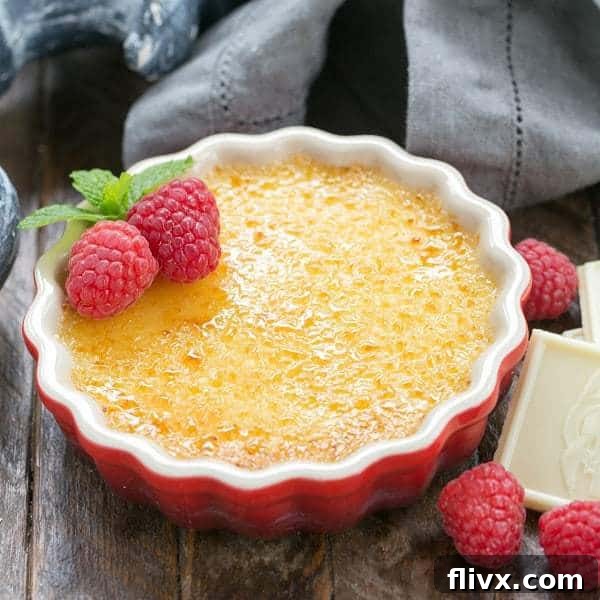
White Chocolate Crème Brûlée Recipe
15 minutes
55 minutes
1 hour 10 minutes
4 servings
A sophisticated and utterly delicious twist on the classic crème brûlée, elevated by the luxurious addition of rich white chocolate.
Average Rating: 4.8 stars based on 65 reviews.
Ingredients
- 4 large egg yolks
- ¼ – ⅓ cup granulated sugar (Note: White chocolate is naturally sweet, so you might prefer the smaller amount of sugar to balance the flavors.)
- 2 cups heavy cream
- 4 ounces quality white chocolate, finely chopped
- ½ teaspoon pure vanilla extract
- Turbinado sugar (or sugar in the raw) for the topping
- Fresh berries and mint sprigs for garnish, optional
Instructions
- Prepare Oven: Preheat your oven to 300ºF (150ºC).
- Prepare Custard Base: In a medium-sized bowl, whisk together the egg yolks and granulated sugar until well combined and slightly pale. In a small saucepan, gently heat the heavy cream over medium heat until it just begins to simmer, showing small bubbles around the edges. Remove from heat and immediately add the chopped white chocolate to the hot cream. Whisk continuously until the white chocolate is completely melted and the mixture is smooth.
- Temper the Eggs: This is a crucial step! Very slowly, drizzle a few tablespoons of the warm cream and white chocolate mixture into the egg yolk mixture, whisking constantly and vigorously. This process, known as tempering, gradually raises the temperature of the eggs without scrambling them. Once the eggs are tempered, gradually pour the remaining warm cream mixture into the egg yolks, whisking continuously until fully combined. Stir in the vanilla extract.
- Strain and Fill Ramekins: Strain the liquid custard mixture through a fine-mesh sieve into a large glass measuring cup. This step removes any potential cooked egg bits and ensures a perfectly smooth custard. Pour the strained mixture evenly into four 6-ounce ramekins. Arrange the filled ramekins in a larger baking pan (such as a deep dish pizza pan or roasting pan). Carefully pour hot water into the baking pan, ensuring it reaches halfway to three-quarters up the sides of the ramekins (1 to 1½ inches deep). This creates a protective water bath (bain-marie).
- Bake the Custards: Carefully transfer the baking pan with the water bath and ramekins into the preheated oven. Bake for 45-55 minutes, or until the edges are set and the very center of the custards still shows a slight jiggle when gently moved. Be careful not to overbake, as this can lead to an “eggy” flavor. Once baked, carefully remove the ramekins from the hot water bath (use tongs or oven mitts). Allow them to cool completely on a wire rack at room temperature, then refrigerate for at least 4 hours, or preferably overnight, until thoroughly chilled and set.
- Caramelize and Serve: Just before serving, sprinkle a generous, even layer of Turbinado sugar over the top of each chilled crème brûlée. To caramelize, you have two options: either use a kitchen torch, moving the flame constantly in small circles until the sugar melts and turns a deep amber color, or place the ramekins under a preheated broiler for 3-4 minutes, watching very carefully as sugar can burn quickly. Allow the caramelized sugar to cool and harden for a few minutes until it forms a crisp crust. Garnish with fresh berries and mint, if desired, and serve immediately.
Notes
Recipe adapted from a Ghirardelli original, with enhancements for optimal texture and flavor.
Recommended Products for Perfect Crème Brûlée
As an Amazon Associate and member of other affiliate programs, I earn from qualifying purchases, helping support this blog at no extra cost to you.
- OXO Good Grips 11-Inch Better Balloon Whisk
- Cuisinart Fine Mesh Strainers
- 8-ounce Ramekins
Nutrition Information:
Yield:
4
Serving Size:
1
Amount Per Serving:
Calories: 698
Total Fat: 56g
Saturated Fat: 34g
Trans Fat: 1g
Unsaturated Fat: 18g
Cholesterol: 325mg
Sodium: 64mg
Carbohydrates: 43g
Fiber: 3g
Sugar: 38g
Protein: 9g
HOW MUCH DID YOU LOVE THIS RECIPE?
Please leave a comment on the blog or share a photo on Pinterest