
Experience culinary elegance with these delightful lemon curd-filled Butter and Rum Crêpes – a dessert so exceptional, it even captivated the most discerning palates! Exquisitely refined and utterly delicious, these French-inspired crêpes are designed to impress.
Inspired by the masterful Dorie Greenspan, this recipe transforms humble crêpes into a multi-faceted culinary experience, elevated by the bright, tangy zest of Homemade Lemon Curd. These sophisticated Dessert Crêpes aren’t just for after-dinner indulgence; they also make a spectacular centerpiece for a special brunch, promising to turn any meal into an unforgettable occasion.

Why These Butter and Rum Crêpes Are an Absolute Must-Make
Diving into the world of crêpe making might seem daunting, but mastering this recipe opens up a universe of culinary possibilities. Here’s why these Butter and Rum Crêpes with Lemon Curd should be next on your baking (or rather, non-baking) list:
- Unleash Your Inner Crêpe Master: Once you’ve learned the fundamental techniques for crafting a basic crêpe, you’ll unlock the versatility to create endless sweet or savory variations for any meal of the day. This recipe provides a perfect foundation, building confidence for future culinary adventures.
- Effortless Elegance, No Baking Required: This dessert proves that sophistication doesn’t always come from hours in the oven. These crêpes are an elegant, no-bake treat that allows you to present a stunning dish without the complexity of traditional baked goods, perfect for entertaining or a luxurious weeknight indulgence.
- A Symphony of Flavors: The simple yet exquisitely flavorful homemade lemon curd filling is a burst of sunshine in every bite. When paired with fresh, vibrant berries and the delicate, liquor-infused crêpes, it creates a harmonious balance of sweet, tart, and rich notes that will tantalize your taste buds.
- Impressive for Any Occasion: Whether it’s a cozy family gathering, a celebratory brunch, or an elegant dinner party, these crêpes elevate the dining experience. Their delicate texture and rich flavors make them a memorable dish that guests will talk about long after the last bite.
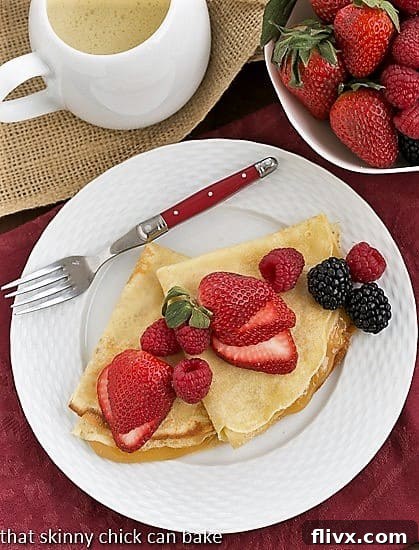
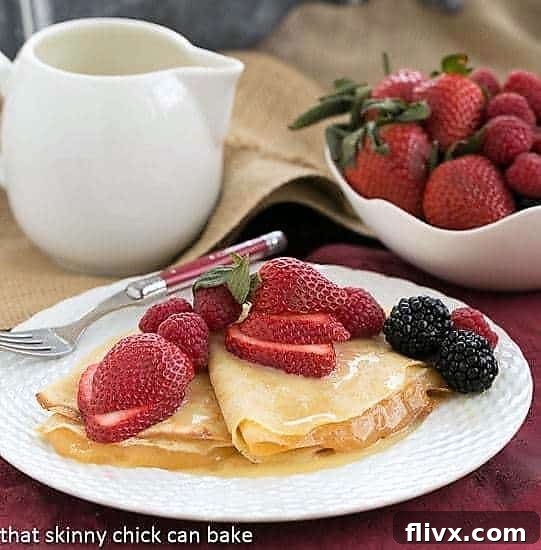
The scene unfolded on a quiet afternoon. Three-day-old chocolate chip bars sat patiently on the counter, catching my husband’s eye as his perceived dessert. Yet, beside them lay a freshly prepared plate of these alluring Butter and Rum Crêpes, meticulously filled with bright lemon curd, adorned with a medley of fresh berries, and drizzled with a luminous citrus honey sauce. “You know, I really don’t like crêpes,” he declared, his gaze still fixed on the chocolate chip remnants, when I simply asked him to humor me with just one forkful.
For those who know me in person, you’ll appreciate that what I *thought* – a silent sigh mixed with a roll of the eyes – remained unspoken. Instead, I took a deep, calming breath, opting for diplomacy. He finally relented, taking a courtesy bite, and as anticipated, a look of genuine surprise spread across his face. “Boy, is that lemony… and good.” A quiet, inward smile bloomed on my face. Lemon curd, after all, is no stranger to our kitchen, but I wisely kept my wifely commentary to myself, savoring the moment of his delicious revelation.
Mastering the Art of Crêpe Making: Expert Tips for Flawless Results
Creating perfect crêpes is a rewarding culinary skill. With a few key techniques and a bit of practice, you’ll be flipping thin, tender crêpes like a seasoned pro. Here are essential tips to guide you through the process, ensuring every crêpe is a masterpiece:
- Invest in the Right Pan: While a dedicated crêpe pan with its low sides is ideal for ease of flipping, a high-quality 8 to 10-inch non-stick sauté pan will work beautifully. The key is a pan that distributes heat evenly and prevents sticking, making your crêpe journey much smoother.
- Maximize Citrus Flavor: Don’t just toss the citrus zest into the batter! Rubbing the finely grated lemon and orange zest into the sugar with your fingertips before mixing helps release their fragrant essential oils. This simple step infuses the sugar with intense citrus aroma, which then permeates the entire batter for a more vibrant flavor profile.
- The Essential Batter Rest: This is a crucial step often overlooked. Allowing the batter to rest in the refrigerator for at least 30 minutes, or even better, overnight, makes a significant difference. Resting gives the gluten in the flour time to relax, resulting in a more tender and less chewy crêpe. It also allows the flour to fully absorb the liquid, leading to a smoother, more consistent batter that spreads perfectly in the pan.
- Whisk for Homogeneity: After the batter has rested, give it a good whisk before you start cooking. This re-incorporates any ingredients that might have settled and ensures the batter is perfectly homogeneous, preventing lumps and ensuring uniform crêpes.
- Adjust Batter Consistency: If, after resting, your batter appears a little too thick, don’t hesitate to add a small amount of milk, a tablespoon at a time, until it reaches the desired thin, pourable consistency. It should be similar to thin cream.
- Grease Your Pan Judiciously: Even with a non-stick pan, a light coating of oil or melted butter is essential for the first few crêpes and as needed throughout cooking. Melted butter not only prevents sticking but also imparts a richer, more delicious flavor to your crêpes. Use a paper towel to evenly spread a thin layer.
- Perfect Pan Temperature: Heat your pan over medium heat. This is critical. If the pan is too hot, the batter will set almost immediately upon contact, preventing it from spreading thinly and evenly across the surface. If it’s too cool, the crêpe will be pale and won’t develop those lovely golden-brown spots.
- The Wrist Swirl Technique: Once you pour a small amount of batter into the hot pan, immediately lift the pan and tilt it with a quick, circular motion of your wrist. This technique helps the batter quickly spread into a thin, even layer across the entire cooking surface. Speed is key here!
- Embrace the First Crêpe: It’s a common culinary adage that the first pancake (or crêpe) is rarely perfect. It’s often a test run to gauge your pan temperature and batter consistency. Consider it the chef’s treat – a delicious reward for your efforts!
- Smart Storage for Leftovers: If you have leftover crêpes, stack them with a piece of wax paper or parchment paper between each layer. This simple trick prevents them from sticking together, making them easy to separate and reheat for later enjoyment.
A Culinary Debate: Dessert or Breakfast Delicacy?
“Can I eat this for breakfast?” my husband inquired, his eyes wide with a newfound appreciation for crêpes. Ah, the eternal battle! In my world, much like with a child, I’ve learned to pick my battles. So, after a dinner featuring tempting Tollhouse chocolate chip bars, the notion of dessert crêpes for breakfast became an acceptable, if unconventional, reality. Welcome to my delightful culinary realm!
Indeed, these are far from your typical, unassuming breakfast crêpes. The batter itself is a celebration of nuanced flavors, generously infused with rich dark rum, a hint of sophisticated Grand Marnier, and the bright, aromatic zests of fresh lemon and orange. Are you convinced yet? They are then generously filled with our luscious lemon curd – whether you opt for Dorie Greenspan’s superb homemade recipe or a premium, quality jarred version from your local market. The final flourish is a decadent drizzle of a homemade sauce, a symphony of warm honey, sweet orange juice, tart lemon juice, and, of course, a generous touch of melted butter. So, whether your heart desires these fancy crêpes as an elegant dessert to cap off a meal or as an extraordinary offering to start your day, you have my full permission. Just promise yourself this: you absolutely must experience the sheer delight of these lemon-infused crêpes!
Frequently Asked Questions About Crêpes
Crêpe is the French word for pancake, but with a distinctive difference. Unlike the thicker, fluffier American pancakes, crêpes are celebrated for their incredibly thin, delicate, and paper-like texture. This characteristic thinness makes them incredibly versatile, serving as a perfect vehicle for both sweet and savory fillings. Dessert crêpes might be lovingly filled with fruit, jam, chocolate, or cream, and are often finished with a dramatic flambé of rum or brandy. Savory crêpes, on the other hand, are typically stuffed with delicious mixtures of meats, cheeses, or vegetables and often served with a rich sauce, making them suitable as an appetizer, light lunch, or even a main course.
There are two commonly accepted pronunciations for “crêpes” in English. The most popular and generally understood pronunciation is “Krayps,” rhyming with “grapes.” However, the pronunciation closest to the original French is “Krehps,” where the “e” sound is shorter and more open, similar to the “e” in “bed.” Both pronunciations are widely recognized and accepted, so feel free to use whichever feels most natural to you.
While a specialized crêpe pan is certainly a useful tool, particularly if you plan on making crêpes frequently, it is not strictly necessary to achieve excellent results. Many home cooks find great success using a good quality non-stick sauté pan that is between 8 and 10 inches in diameter. The most important feature for any pan used for crêpes is sloped sides, which allow for easier tilting and swirling of the batter to create those signature thin edges, and crucially, make flipping the delicate crêpes much simpler.
Absolutely! In fact, making crêpe batter ahead of time is highly recommended. As mentioned in our tips, allowing the batter to rest in the refrigerator for at least 30 minutes, and ideally for several hours or even overnight, greatly improves the texture of the finished crêpes. This resting period allows the flour to fully hydrate and the gluten to relax, resulting in more tender, less prone-to-tear crêpes. Just give it a good whisk before cooking.
While both are delicious griddle cakes, crêpes and traditional American pancakes differ significantly in thickness and texture. Pancakes are typically leavened with baking powder or baking soda, making them thick, fluffy, and light. Crêpes, on the other hand, contain no leavening agents, resulting in their characteristic thin, delicate, and pliable form. This thinness makes crêpes ideal for rolling or folding around various fillings, whereas pancakes are usually served in stacks with toppings drizzled over them.
Explore More Delicious Crêpe and Pancake Creations
If these Butter and Rum Crêpes have sparked your interest in delicate griddle cakes, you might also enjoy these other fantastic recipes:
- Lemon Poppy Seed Crepes with Lemon Curd from Country Cleaver
- Strawberry Crepes from Barbara Bakes
- Crepes with Grilled Peaches & Cream from Two Peas and Their Pod
- Classic Buttermilk Pancakes
- Easy Chocolate Crepes
- Brown Butter Crepes with Berry and Cheesecake Filling
Stay connected and share your culinary adventures! Find us on social media @ Instagram, Facebook, and Pinterest. Don’t forget to tag me when you whip up one of my delicious recipes! If you adore the results as much as we do, please consider leaving a 5-star rating in the recipe card below – your feedback means the world!
Butter and Rum Crêpes Recipe with Lemon Curd
10 minutes
20 minutes
30 minutes
10 crepes
Dosed with Grand Marnier and rum and filled with lemon curd, these are no ordinary crepes!
Ingredients
For the Crêpes:
- 2 tablespoons sugar, plus more for sprinkling
- Finely grated zest of ½ lemon
- Finely grated zest of ¼ orange
- Pinch of salt
- 2 large eggs
- ¾ cup whole milk, plus a little more if needed
- 1 tablespoon dark rum or 1 ½ teaspoons pure vanilla
- 2 teaspoons Grand Marnier (optional)
- 3 tablespoons unsalted butter, melted
- ½ cup all-purpose flour
- Canola oil or other flavorless oil, for the pan
For the Honey Citrus Sauce:
- ⅓ cup honey
- ⅓ cup fresh orange juice
- ¼ cup fresh lemon juice
- 7 tablespoons unsalted butter, at cool room temperature
For the Homemade Lemon Curd:
- 1 ¼ cups sugar
- 4 large eggs
- 1 tablespoon light corn syrup
- ¾ cup fresh lemon juice (from 4-5 lemons)
- 8 tablespoons (1 stick) unsalted butter, cut into chunks
Instructions
- Prepare the Crêpe Batter: Put the sugar and citrus zests into a bowl and rub them together with your fingertips until the sugar is moist and highly fragrant. Transfer the zest-infused sugar to a food processor or blender.
- Add the salt, eggs, milk, dark rum (or vanilla), and Grand Marnier (if using) to the food processor or blender. Blend until well combined. Pour in the melted butter and process again until the mixture is smooth and fully blended.
- Add the all-purpose flour to the mixture. Pulse the machine just until the flour is incorporated; be careful not to overmix, as this can develop gluten and make crêpes tough. Pour the smooth batter into a pitcher or a large measuring cup with a spout, cover it tightly, and refrigerate for at least 2 hours, or ideally, overnight. This resting period is crucial for tender crêpes.
- Cook the Crêpes: When ready to cook, sprinkle a dinner plate with a little extra sugar (this helps prevent crêpes from sticking and adds a delicate sweetness). Lightly rub an oiled paper towel over the surface of a 7-½-inch-diameter crêpe pan or a similar-sized non-stick skillet. Place the pan over medium heat.
- Once the pan is hot, lift it from the heat and pour in 2 to 3 tablespoons of batter. Immediately swirl the pan with a quick wrist motion to spread the batter into a thin, even layer across the entire surface. Return the pan to the heat and cook for about 1-2 minutes until the top of the crêpe appears set and the edges are lightly golden. Carefully check the underside to ensure it’s beautifully browned, then flip using your fingers or a thin spatula. Cook the other side for another 30-60 seconds until lightly browned.
- Transfer the cooked crêpe to the sugared plate, sprinkle it lightly with a touch more sugar, and continue with the remaining batter, repeating the process.
- Prepare the Honey Citrus Sauce: In a microwave-safe bowl or small saucepan, gently melt the honey over low heat. Let the melted honey cool for about 5 minutes. Stir in the fresh orange juice and lemon juice. Then, gradually whisk in the 7 tablespoons of cool room temperature unsalted butter, adding it one tablespoon at a time, until the sauce is smooth and emulsified. Use immediately, or refrigerate and gently reheat when needed.
- Assemble the Crêpes: If you plan to fill the crêpes, spoon a generous amount of lemon curd (prepared as per the instructions below) onto the upper-right-hand quarter of each crêpe. Fold the crêpe in half, then fold it in thirds to create elegant triangles.
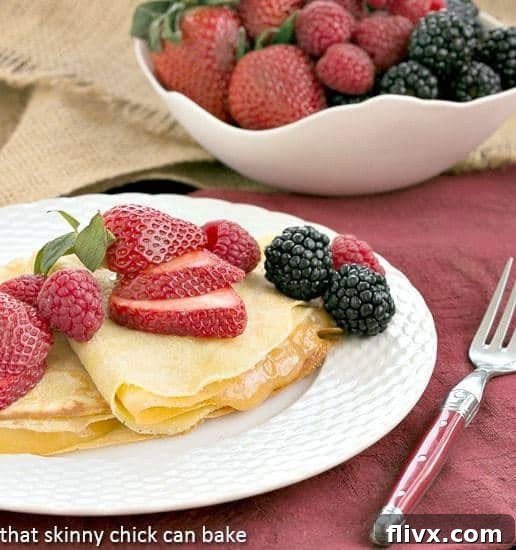
- Arrange the filled (or unfilled) crêpes artfully on serving plates. Drizzle generously with the prepared honey citrus sauce and, if desired, garnish with fresh berries. Serve immediately to enjoy them at their best.
- Make the Homemade Lemon Curd: In a heavy-bottomed saucepan, whisk together the sugar and eggs until well combined. Then, whisk in the light corn syrup, fresh lemon juice, and the chunks of unsalted butter.
- Place the saucepan over medium-low heat. Stir constantly with a whisk or wooden spoon, ensuring to scrape the bottom and sides, until the curd thickens to a custard-like consistency and just begins to bubble gently. It’s crucial not to let it come to a rolling boil, as this can curdle the eggs. Once thickened, immediately remove the curd from the heat and scoop it into a heatproof container. Press a piece of plastic wrap directly against the surface of the curd to prevent a skin from forming. Cover, let it cool completely at room temperature, and then refrigerate until thoroughly chilled and set.
Notes
Please note that the total time listed for this recipe does not include the essential chilling time required for the crêpe batter and lemon curd.
Recommended Products for Crêpe Perfection
As an Amazon Associate and member of other affiliate programs, I earn from qualifying purchases.
- KitchenAid Blender
- Black Spatula
- 10-inch Crepe Pan
Nutrition Information:
Yield:
10
Serving Size:
2 crepes
Amount Per Serving:
Calories: 661Total Fat: 27gSaturated Fat: 15gTrans Fat: 0gUnsaturated Fat: 11gCholesterol: 168mgSodium: 142mgCarbohydrates: 103gFiber: 0gSugar: 96gProtein: 5g
HOW MUCH DID YOU LOVE THIS RECIPE?
Please leave a comment on the blog or share a photo on Pinterest
This exquisite recipe is adapted from the acclaimed cookbook Around My French Table by the esteemed Dorie Greenspan, a true gem for any culinary enthusiast (affiliate link).