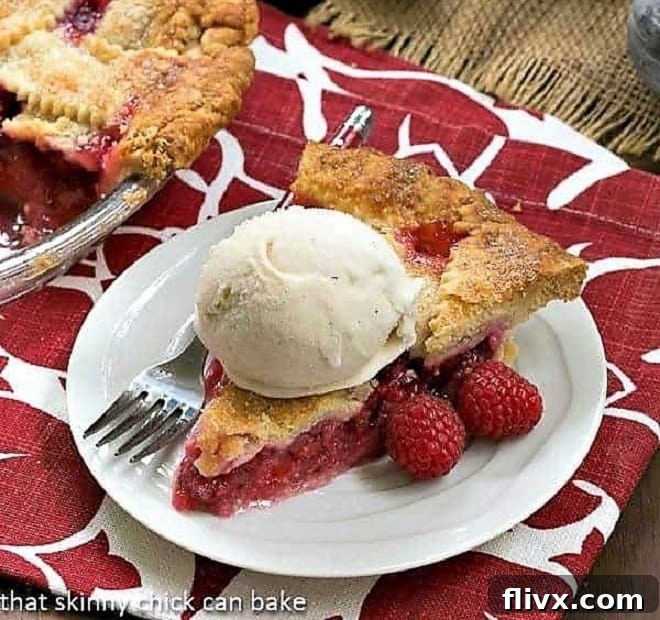
The Ultimate Lattice-Topped Raspberry Pie: A Journey to Pie Perfection
There’s a special kind of magic that happens when you pull a perfectly baked pie from the oven. The intoxicating aroma, the golden-brown crust, and the promise of sweet, juicy fruit within – it’s a moment that can truly brighten anyone’s day. For me, creating this heavenly Lattice-Topped Raspberry Pie is a guaranteed way to bring a smile to my husband’s face, and it often becomes the star of any gathering. But it’s not just about the fruit; the secret to an unforgettable pie lies in its foundation: the crust. Join me as we uncover the exquisite combination for the most flawless, flaky pie crust you’ll ever bake!
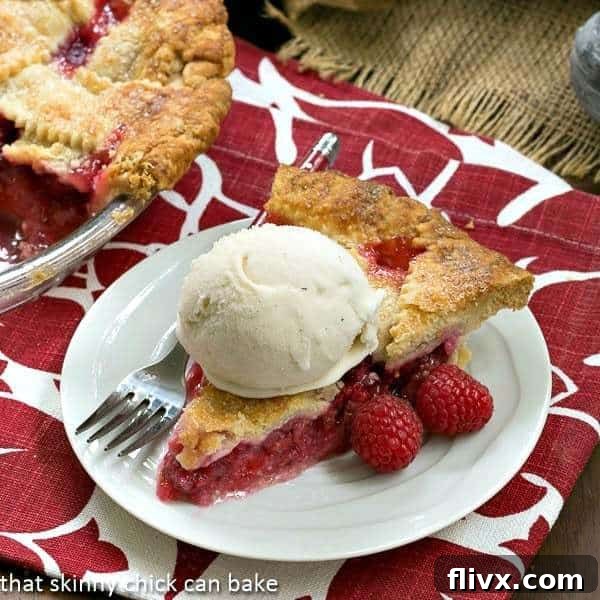
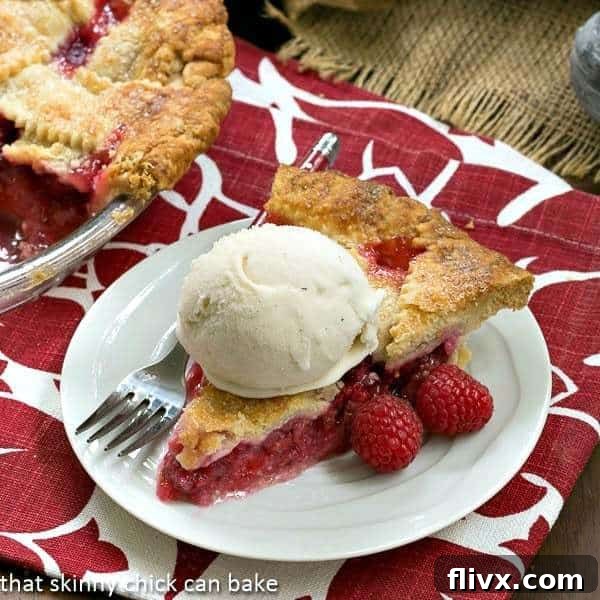
A **Berry Pie** stands as an undeniable icon of summer desserts. Whether your heart yearns for the vibrant sweetness of fresh raspberries, the cheerful burst of strawberries, the subtle tang of blueberries, or a delightful medley of seasonal treasures, each slice promises pure joy. Imagine a warm, fragrant slice, generously topped with a cool scoop of vanilla ice cream, creating a symphony of temperatures and textures. While this recipe focuses on our beloved raspberries, feel free to explore other options. Perhaps this Blackberry Pie recipe might be calling your name for another delightful adventure!
Why This Lattice Raspberry Pie is a Must-Make
Beyond its undeniable deliciousness, there are several compelling reasons why this Lattice-Topped Raspberry Pie deserves a prime spot in your baking repertoire. It’s more than just a dessert; it’s an experience, a statement, and a celebration of seasonal flavors.
- Impress with Homemade Elegance: Nothing speaks volumes like a homemade pie, especially one adorned with a beautiful, flaky pastry crust. This pie isn’t just a treat for the taste buds; it’s a feast for the eyes, guaranteed to make a lasting impression on your guests and elevate any meal from ordinary to extraordinary. The effort you put into a delicate lattice top and a truly flaky crust will be evident and appreciated.
- Raspberry Perfection (or a Dreamy Combination): Fresh raspberries offer a unique balance of sweetness and tartness that shines brilliantly in a pie. Their vibrant flavor is quintessential summer. For an even more complex and delightful profile, consider combining raspberries with ripe, sweet peaches. The two fruits complement each other beautifully, creating a filling that’s both rich and refreshing. This versatility means you can adapt the pie to your preference or what’s most abundant at your local market.
- Embrace Seasonal Abundance: Summer is the peak season for fresh berries, and there’s no better way to enjoy them than baked into a glorious pie. When you can source local, plump raspberries, or find them at fantastic prices in your grocery store, seize the opportunity! Baking this pie allows you to capture the essence of the season in every single bite, making it the perfect dessert for backyard barbecues, picnics, family reunions, or simply a quiet evening on the porch.
Just last weekend, we hosted dinner guests, and the conversation turned to pie crusts. My dear friend, Barb, from Creative Culinary, passionately extolled the virtues of her pie crust, particularly highlighting her use of leaf lard. Her enthusiasm was contagious, and I knew it was time to retrieve my own stash of leaf lard from the freezer. Inspired, I ended up baking not just one, but two glorious pies: a classic peach pie and, of course, this exquisite lattice-topped raspberry masterpiece.
My approach to pie crust is remarkably similar to Barb’s. We both advocate for a harmonious blend of fats: butter, primarily for its rich, unmistakable flavor, and lard, specifically for its unparalleled ability to produce an exceptionally flaky, tender crust. My detailed leaf lard pie crust recipe made its very first appearance on this blog post way back in Thanksgiving 2010, and it has been a cherished staple ever since. It truly is outstanding. If you’re new to the art of homemade pie crusts or simply looking to refine your technique, I highly recommend scrolling down to discover my proven tips and tricks for pie crust perfection.
Mastering the Art of Homemade Pie Crust: Essential Tips and Techniques
Let’s be honest, achieving a perfect pie crust isn’t something most of us are born knowing. It’s an art form that develops with practice, keen observation, and understanding the subtle cues of the dough. Recognizing when you’ve added just the right amount of water, blended the fats to the ideal consistency, and rolled it to the proper thickness all come with experience. However, a few foundational tips and expert insights can dramatically simplify the process and set you on the path to consistent pie crust success.
Choosing the Right Fats for the Flakiest Crust
The fat you choose is arguably the most critical component of your pie crust, directly influencing its texture, flavor, and overall appeal. The world of pie fats offers a fascinating array of options, each with its own unique characteristics. You might encounter recipes calling for all lard, all butter, all shortening, or various combinations thereof. While some adventurous bakers experiment with oil, I personally find it doesn’t yield the desired flakiness or richness.
- The Power of Combination: My preferred method, and one I highly recommend, is to use a blend of fats. I typically opt for ⅔ butter, prized for its exceptional flavor and golden hue, combined with ⅓ either shortening or, ideally, leaf lard. This blend harnesses the best of both worlds: the rich taste of butter and the superior flakiness provided by shortening or lard.
- PRO-Tip: The Importance of Cold Fats: This cannot be stressed enough – keep your fats as cold as possible! Cold fats create steam pockets during baking, which separate the layers of gluten and fat, resulting in a truly flaky crust. If you frequently bake pies, consider storing a block of shortening or leaf lard directly in your freezer so it’s always ready and perfectly chilled. Some dedicated bakers even go a step further, chilling their mixing bowls and even the flour itself to ensure the dough remains as cool as possible throughout the preparation process.
- Embracing Leaf Lard: For those seeking the absolute pinnacle of flakiness, leaf lard is your secret weapon. It is the highest grade of pork lard, rendered from the delicate fat found around the kidneys and loin of a pig. What makes it superior is its neutral flavor – unlike other types of lard, it imparts little to no “porky” taste, allowing the fruit filling to truly shine. Its unique fat composition is legendary for producing the most tender and shatteringly flaky crusts. If you’re in the Indianapolis area, local friends can often find high-quality leaf lard at Moody’s Meats. It freezes exceptionally well, making it easy to stock up, especially around holiday seasons like Thanksgiving when it’s often more readily available.
- Quality Butter Matters: Don’t overlook the importance of your butter choice either. Seek out the highest quality premium butter you can find. European or European-style butters, such as Kerrygold, are often preferred by bakers because they boast a lower water content and a higher fat percentage compared to standard American butters. Less water means a richer, more tender, and flakier crust.
Mixing the Pie Dough to Perfection
The mixing stage is where the magic truly begins to transform cold fats and flour into nascent pie dough. The goal is to incorporate the fats into the dry ingredients without overworking them, which can lead to a tough crust.
- PRO-Tip: Tools for Success: To efficiently cut your cold fats into the dry ingredients, I highly recommend using either a pastry blender or a food processor. A pastry blender allows for manual control, ensuring you don’t overmix. If using a food processor, work in short, quick pulses. You’re aiming for a mixture that resembles coarse cornmeal, with a few distinct pea-sized bits of fat still visible and interspersed throughout. These small pockets of fat are what will later create those coveted flaky layers.
- Avoid Over-processing: This is a crucial warning: over-processed pie dough is the enemy of flakiness. When you overmix, you develop the gluten in the flour too much, resulting in a tough, chewy crust rather than one that’s tender and melts in your mouth. The key is gentle handling and minimal mixing once the water is added.
- The Chill of Ice Water: When it comes to hydrating your dough, always use ice water. The cold water further helps to keep your fats solid, reinforcing the flaky texture. Be vigilant, however, and ensure that no actual ice cubes find their way into the dough, as they can create uneven pockets of moisture. The trick is to add just enough water, tablespoon by tablespoon, until the dough comes together.
- PRO-Tip: The Pinch Test: How do you know if you’ve added enough water without adding too much? Perform the “pinch test.” Take a small amount of the mixed dough and pinch it between your fingers. If it holds together without crumbling, you’ve likely added sufficient moisture. If it falls apart, add another tablespoon of ice water and mix lightly before testing again. This intuitive method helps prevent both overly dry and overly wet dough, both of which can compromise your crust.
Rolling the Pie Dough with Ease and Precision
Rolling out pie dough can sometimes feel intimidating, but with the right technique, it becomes much more manageable. The goal is an evenly thick round that can be easily transferred to your pie plate.
- Chill Before Rolling: Once your dough is mixed, gently form it into two flattened rounds or disks, wrap them tightly in plastic wrap, and chill them in the refrigerator for at least 30 minutes, or even longer. This crucial step serves two purposes: it gives the gluten in the flour time to relax, making the dough less elastic and easier to roll, and it allows the fats to rechill and firm up, preserving those essential pockets for flakiness.
- The Rolling Technique: Prepare a clean, dry surface by dusting it generously with flour. Place one disk of chilled dough in the center. Begin rolling from the center outwards, applying even pressure. After each pass or two, rotate the dough a quarter turn and repeat. This ensures an even thickness and prevents the dough from sticking. If you find the dough isn’t turning easily, re-flour your surface and rolling pin as needed.
- Gentle Handling is Key: Remember the delicate fat bits we worked so hard to preserve? Continue to treat the dough gently during rolling. Avoid overworking it or pressing down too hard, as this can compress those fat pockets, leading to a less flaky crust. The ideal thickness is usually about ⅛ inch.
Fitting the Pie Dough into the Pie Plate Flawlessly
Transferring and fitting the rolled-out dough without stretching it is essential to prevent shrinkage during baking, ensuring your crust maintains its shape.
- The Fold and Unfold Method: To transfer the delicate dough, carefully fold the rolled-out round in half, then in half again to form a quarter circle. Gently lift it and place the pointed corner into the center of your pie plate. Unfold the dough carefully, allowing it to fall naturally into the contours of the plate. Crucially, do not stretch the dough to fit; instead, gently ease it into place. Stretching the dough can cause it to shrink dramatically when baked.
- Re-Chilling if Needed: If, during the rolling and fitting process, your pie crust has become noticeably warm and soft, don’t hesitate to chill it again in the pie plate for 15-20 minutes. A cold crust is a happy crust, maintaining its structure and flakiness during baking.
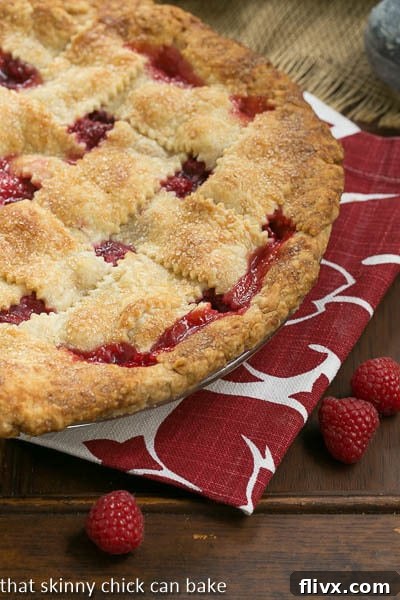
- Vents for Steam: If your pie recipe calls for a solid top crust, remember to cut several small vents or decorative slashes into the dough. These vents are vital; they allow steam generated by the cooking fruit filling to escape, preventing the crust from puffing up or cracking excessively. For a lattice-topped pie, like our raspberry masterpiece, the woven strips naturally create these essential vents, adding both beauty and functionality.
Baking a Raspberry Pie to Golden Perfection
The final stage, baking, brings all your careful preparation to fruition. A few strategic considerations can make a significant difference in the final outcome of your pie.
- The Essential Baking Sheet: Always place your pie on a baking sheet before transferring it to the oven. This serves a dual purpose: it acts as a trusty catch-all for any delicious fruit juices that might bubble over and drip from the pie, saving your oven from sticky messes. More importantly, the direct contact of the baking sheet with the bottom of the pie plate helps conduct heat more efficiently, promoting a crisp, fully cooked bottom crust and preventing dreaded sogginess.
- Optimal Oven Placement: For most pies, baking in the lower third of the oven is ideal. This position ensures that the bottom crust receives adequate heat, helping it to brown and crisp up properly.
- Tenting with Foil: Keep a close eye on your pie as it bakes. If you notice the crust, particularly the edges, starting to brown too quickly before the filling is fully cooked, don’t panic! Simply create a “tent” with aluminum foil and place it loosely over the pie. This will reflect some of the direct heat away from the crust, allowing the filling to continue cooking without the crust becoming over-browned or burnt.
Frequently Asked Questions About Baking Raspberry Pie
Fruit pies, especially those bursting with juicy raspberries, almost always require a thickening agent to achieve that perfect, spoonable consistency. Common thickeners include all-purpose flour, cornstarch, and tapioca. This particular raspberry pie recipe utilizes a powerful combination of both instant tapioca and cornstarch, leveraging the strengths of each. Instant tapioca is a fantastic choice because it holds up well when exposed to acidic ingredients like raspberries, ensuring your filling thickens effectively without deteriorating. It also won’t turn cloudy or lose its thickening power at room temperature, which is a great advantage. For tapioca to work its magic, it’s crucial to let it sit with the fruit juices for about 10-15 minutes before baking, allowing it to absorb moisture, and then ensure the pie cooks until the filling is almost bubbling. Cornstarch, on the other hand, creates a beautiful, clear jell and a slightly glossy finish. To prevent lumps, it must always be mixed with a small amount of liquid (usually some of the fruit juice or water) to form a slurry before being added to the main filling. Like tapioca, cornstarch requires sufficient heat – it needs to get hot enough to bubble or boil – to properly activate its thickening properties and achieve that desirable gelled texture.
A runny pie filling is a common baking frustration, but it’s usually easily explained and preventable. The most frequent culprit is simply not adding enough thickening agents for the volume of fruit you’re using. Raspberries are naturally very juicy, so they demand a sufficient amount of cornstarch, tapioca, or flour to absorb that liquid and create a cohesive filling. Beyond the quantity of thickener, the other critical factor is heat. If you’re using cornstarch or tapioca, and the pie filling doesn’t reach a high enough temperature during baking, these starches won’t properly gel, leaving you with a liquidy interior. For pies with a lattice crust, it’s relatively easy to monitor for signs of bubbling filling, which indicates it’s hot enough. If your pie has a solid top crust, you’ll need to strategically peek through the air vents you’ve cut, looking for clear signs of vigorous bubbling. This bubbling action confirms that the filling has reached the necessary temperature to activate the thickeners and ensure a beautifully set pie.
The dreaded soggy bottom crust is a nemesis for many pie bakers, especially with juicy fruit fillings. It occurs when the wet filling releases moisture that the bottom crust absorbs before it has a chance to fully bake and crisp up in the oven. While a single-crust pie can often be “blind-baked” (pre-baked before adding the filling) to prevent this, this technique isn’t feasible for a double-crust pie like our Lattice-Topped Raspberry Pie. However, there are effective strategies to combat sogginess. One of the most impactful solutions is to bake your pie on a preheated baking sheet rather than directly on the oven rack. The baking sheet provides direct, consistent heat to the bottom of the pie plate, which significantly helps the bottom crust to cook faster and achieve a golden-brown, crisp texture. Additionally, ensuring your oven is fully preheated to the correct temperature and placing the pie in the lower third of the oven also contribute to a better-baked bottom crust.
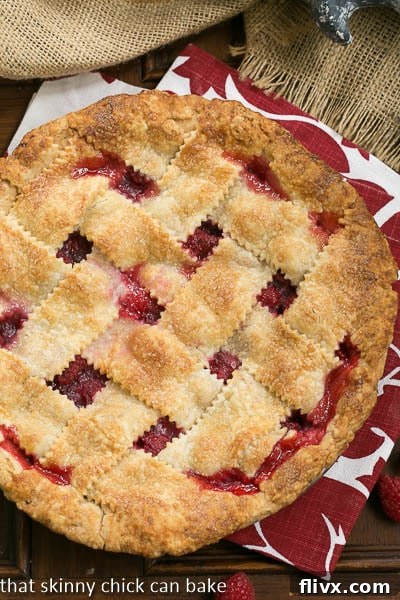
The baking time provided in any recipe, including this one, should always be treated as a general guideline. Several variables can influence the actual time required, such as the exact amount of fruit used (more fruit means more moisture and longer baking), the specific calibration of your oven (ovens can vary significantly), and even the type of pie plate you’re using. As the lower end of the suggested baking time approaches, shift your focus to visual cues rather than solely relying on the clock. The crust should be beautifully golden brown, and perhaps even a shade darker around the edges. Most importantly, closely observe the middle of the pie filling. For the filling to properly thicken and set, it absolutely must be bubbling. While you shouldn’t expect a vigorous, rolling boil like a pot of water on the stove, you should see gentle but distinct bubbling visible between the lattice strips. If you’re baking a pie with a solid top crust, you must cut several vents to allow steam to escape and also use these vents to peek in and confirm that the filling is indeed bubbling sufficiently. Patience and observation are key to a perfectly baked pie.
Yes, both baked and unbaked raspberry pies can be successfully frozen, making them excellent candidates for meal prep or future dessert emergencies! To freeze a baked pie, allow it to cool completely to room temperature first. Then, wrap it very tightly in several layers of plastic wrap, followed by a layer of aluminum foil, ensuring no air can reach it. Properly wrapped, a baked raspberry pie can be stored in the freezer for up to 2 months. When you’re ready to enjoy it, defrost it overnight in the refrigerator, then warm it gently in a moderate oven (around 300-325°F or 150-160°C) until heated through and the crust is crisp again. For an unbaked pie, wrap it similarly and it can be stored for up to 3 months in the freezer. When baking from frozen, there’s no need to thaw it first. Simply place the frozen pie directly into a preheated oven, but be prepared to extend the baking time significantly (often an additional 30-60 minutes or more), and keep an eye on the crust, tenting with foil if it begins to brown too quickly.
You May Also Love These Delightful Pie and Raspberry Recipes
If you’ve fallen in love with the art of pie making or simply can’t get enough of fresh berry desserts, I have a fantastic collection of recipes I think you’ll truly enjoy. From other fruit-filled pies to unique raspberry creations, there’s something here to tempt every palate. Dive in and discover your next favorite bake!
- Blueberry Crumb Pie from Saving Room for Dessert offers a delightful textural contrast with its buttery crumb topping.
- Indulge in a childhood favorite with my Razzleberry Pie, featuring a delicious blend of three different berries for ultimate flavor.
- For convenience and deliciousness, try my Freeze and Bake Blueberry Pie, perfect for preparing ahead of time.
- If you’re a fan of raspberries beyond pie, this Raspberry Bundt Cake Recipe combines elegant flavors in a beautiful form.
- For a rustic and charming dessert, explore this Peach Raspberry Galette, an open-faced pie that’s as easy as it is delicious.
- Go back to basics with a comforting Apple Pie from Scratch, a timeless classic everyone loves.
- Plus, here’s one of my absolute favorite Raspberry Recipes – a wonderfully warm and crunchy Raspberry Crisp!
- And for a complete journey through my baking adventures, be sure to check out my comprehensive Recipe Index, where you’ll find all my delectable Pie Recipes and so much more!
I love connecting with you! Stay in touch and share your baking creations through social media. You can find me @ Instagram, Facebook, and Pinterest. Don’t forget to tag me when you try one of my recipes! And if you absolutely love the results and want to share the joy, please consider giving it a 5-star rating in the recipe card below. Your feedback truly helps others discover these delicious recipes!
Lattice-Topped Raspberry Pie Recipe
40 minutes
55 minutes
1 hour 35 minutes
8 servings
An exquisite fresh raspberry pie featuring the ultimate flaky pie crust recipe – a perfect blend of butter and leaf lard for unparalleled flavor and texture!
Ingredients
For the Ultimate Flaky Crust:
- 2 ½ cups all-purpose flour
- ½ teaspoon fine sea salt
- 1 tablespoon granulated sugar
- 12 tablespoons unsalted premium butter (such as Kerry Gold or other European-style butter, for superior flavor), kept very cold and cut into ½ inch pieces
- 8 tablespoons leaf lard (preferred for maximum flakiness, or use vegetable shortening as an alternative), kept very cold and cut into pieces similar in size to the butter.
- 6-8 tablespoons ice water (add gradually, just enough until the dough barely holds together when pinched between your fingers)
For the Luscious Raspberry Filling:
- 1 ⅓ cups granulated sugar
- 2 tablespoons quick-cooking tapioca
- 2 tablespoons cornstarch
- 5 cups fresh, ripe raspberries (gently washed and thoroughly dried)
- 1 tablespoon unsalted butter, cut into small dots
For the Golden Crust Glaze:
- 1 tablespoon milk (whole or 2%)
- 1-2 teaspoons granulated sugar, for sprinkling
Instructions
- Prepare the Pie Dough: In a food processor, combine the flour, salt, and 1 tablespoon of sugar. Pulse a few times to mix thoroughly. Add the cold butter and cold lard pieces. Pulse 3-5 times in short bursts until the mixture resembles coarse cornmeal with some pea-sized chunks of fat still visible. Gradually add the ice water, one tablespoon at a time, pulsing briefly after each addition, until the dough just begins to come together when pinched between your fingers. Be careful not to overmix.
- Chill the Dough: Divide the dough into two equal portions and gently form each into a flattened disk. Wrap each disk tightly in plastic wrap and refrigerate for at least one hour, or ideally longer (up to two days), to allow the gluten to relax and the fats to rechill.
- Prepare the Bottom Crust: On a lightly floured surface, roll out one disk of chilled dough into a 12-13 inch circle. Carefully transfer the dough to a 9-inch pie tin, easing it into place without stretching. Trim the edges, leaving about a ½ inch overhang. Place the pie plate with the bottom crust back into the refrigerator while you prepare the filling.
- Prepare the Filling: In a large bowl, combine the 1 ⅓ cups sugar, quick-cooking tapioca, cornstarch, and fresh raspberries. Gently toss to coat the berries evenly. Let the mixture stand for 15 minutes to allow the tapioca to begin absorbing the fruit juices.
- Create the Lattice Top: On a well-floured surface, or directly on a Silpat or piece of parchment paper (which makes transferring easier), roll out the remaining disk of dough to at least a 12-inch circle. Using a pastry wheel or knife, cut the dough into strips about 1 to 1¼ inches wide. Weave these strips into a lattice crust. Start by laying parallel strips in one direction, then fold back alternating strips to weave perpendicular strips over and under. (For visual guidance, you can refer to online tutorials on how to weave a lattice pie crust, such as those found on Simply Recipes.) Alternatively, you can simplify by laying half the strips in one direction, and then layering the other half perpendicularly over them without weaving.
- Chill the Lattice (Optional but Recommended): Once the lattice is woven (especially if done on parchment), slide the parchment onto a flat baking sheet and chill for a few minutes. This helps the dough firm up slightly, making it easier to transfer, but don’t let it get hard and brittle.
- Assemble the Pie: Remove the chilled bottom crust from the refrigerator. Scoop the prepared raspberry filling evenly into the pie plate. Dot the top of the filling with small pieces of the 1 tablespoon of butter.
- Add the Top Crust: Carefully transfer the woven lattice crust over the top of the filling (a large cake lifter can be very helpful here for precision). Trim the lattice strips to match the overhang of the bottom crust. Press the edges of the top and bottom crusts together to seal, then crimp or flute the edges decoratively.
- Glaze and Bake: Lightly brush the lattice top with milk and sprinkle generously with the remaining granulated sugar for a beautiful golden finish and extra sweetness. Place the pie on a baking sheet to catch any potential drips.
- Bake: Preheat your oven to 350°F (175°C). Bake for 50-55 minutes, or until the crust is golden brown and the raspberry filling is visibly bubbling, particularly between the lattice strips. If the crust starts to brown too quickly, loosely tent the pie with aluminum foil.
- Cool and Serve: Once baked, transfer the pie to a wire rack and allow it to cool completely before slicing and serving. This is crucial for the filling to set properly, typically taking 3-4 hours. Serve warm or at room temperature, ideally with a scoop of vanilla ice cream. Enjoy!
Recipe Notes and Expert Tips
The delicious filling for this pie was inspired by a Taste of Home recipe, a testament to reliable and delicious results.
If you’re unable to find high-quality leaf lard, feel free to substitute with an equal amount of solid vegetable shortening. While leaf lard offers unparalleled flakiness, shortening is a good alternative for a tender crust.
Remember, European butter (or European-style butter) typically has a lower water content and higher fat percentage than American butter, making it an excellent choice for a richer, flakier pie crust.
Please note that the “Total Time” listed in the recipe card does not include the essential chilling time for the pie dough. Factor in at least an hour for chilling, or more if preparing ahead.
While this recipe instructs you to weave the lattice on parchment paper and transfer it, you can also weave the lattice crust directly on top of the filled pie. Whichever method you choose, take your time for a beautiful result.
Don’t be discouraged if your lattice strips get a little stained from the vibrant raspberry juices during the weaving process. During baking, some of the juices will bubble onto the lattice, creating a rustic charm. The top will never be perfectly pristine, and that’s part of its homemade beauty!
Recommended Baking Tools and Products
As an Amazon Associate and member of other affiliate programs, I earn from qualifying purchases, which helps support this blog at no extra cost to you.
- Fluted Pastry Wheel – Ideal for cutting decorative edges on your pastry strips.
- Ceramic Pie Plate – For even baking and a beautiful presentation.
- French Rolling Pin – For precise and even dough rolling.
Nutrition Information:
Yield:
8
Serving Size:
1 slice
Amount Per Serving:
Calories: 644Total Fat: 35gSaturated Fat: 19gTrans Fat: 1gUnsaturated Fat: 15gCholesterol: 67mgSodium: 296mgCarbohydrates: 78gFiber: 6gSugar: 39gProtein: 5g
Thatskinnychickcanbake.com occasionally offers nutritional information for recipes contained on this site. This information is provided as a courtesy and is an estimate only. This information comes from online calculators. Although thatskinnychickcanbake.com attempts to provide accurate nutritional information, these figures are only estimates.
Varying factors such as product types or brands purchased can change the nutritional information in any given recipe. Also, many recipes on thatskinnychickcanbake.com recommend toppings, which may or may not be listed as optional and nutritional information for these added toppings is not listed. Other factors may change the nutritional information such as when the salt amount is listed “to taste,” it is not calculated into the recipe as the amount will vary. Also, different online calculators can provide different results.
To obtain the most accurate representation of the nutritional information in any given recipe, you should calculate the nutritional information with the actual ingredients used in your recipe. You are solely responsible for ensuring that any nutritional information obtained is accurate.
HOW MUCH DID YOU LOVE THIS RECIPE?
Please leave a comment on the blog or share a photo of your beautiful pie on Pinterest – I’d love to see your creations!