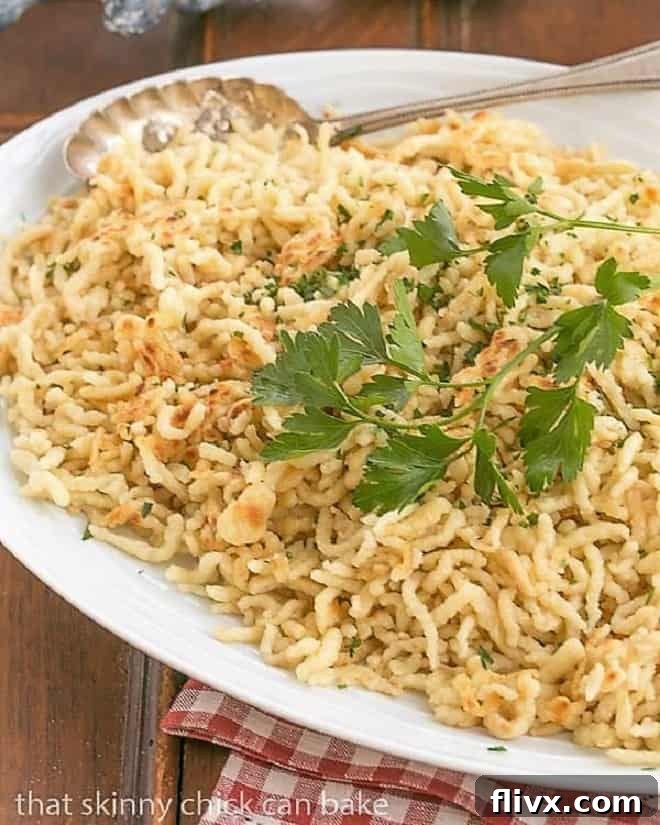
Spaetzle is a beloved German culinary staple, a uniquely tender and chewy egg noodle that effortlessly elevates any meal. This delightful pasta offers a fantastic, homemade alternative to traditional side dishes like potatoes or rice, bringing a touch of authentic European flavor to your table. Learning how to make spaetzle from scratch is surprisingly simple, requiring just a few basic ingredients and a little technique.
This Spaetzle Recipe demystifies the process, guiding you to create these exquisite German egg noodles with just four pantry staples. It’s a versatile and satisfying addition that pairs beautifully with almost any main course, promising to become a new favorite in your culinary repertoire.
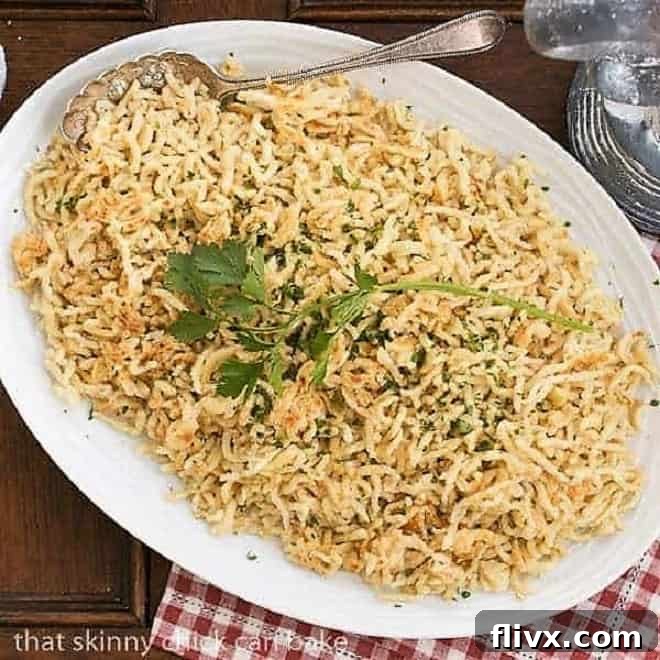
Why You Must Make These Homemade German Egg Noodles
Embarking on the journey of making homemade spaetzle is a truly rewarding experience. Beyond the simple joy of creating something from scratch, there are several compelling reasons why this traditional German egg noodle deserves a prime spot in your kitchen.
- Unbeatable Freshness and Flavor: Forget the bland, store-bought versions. This homemade noodle offers a depth of flavor and a tender, chewy texture that simply can’t be replicated by anything you can buy at your local grocery store. The freshness of the ingredients shines through, making every bite a delight.
- Simple Ingredients, Incredible Results: You’ll be amazed at how such an extraordinary dish can be made with such humble beginnings. Crafted from everyday essentials – flour, eggs, water, and salt – these are ingredients you probably already have stocked in your kitchen. This accessibility makes spaetzle a perfect last-minute side dish or a comforting staple.
- No Fancy Equipment Required (Initially!): While an authentic spaetzle press certainly streamlines the process and yields perfectly uniform noodles, it’s not a prerequisite for your first attempt. There are several clever techniques using common kitchen tools that allow you to achieve excellent results. However, once you realize just how delicious and versatile this German spaetzle is, you might find yourself investing in a dedicated maker – a testament to its irresistible appeal!
- A Versatile Culinary Canvas: Spaetzle’s mild, eggy flavor and satisfying texture make it an incredibly adaptable side. It can stand alone, absorb rich sauces, or even be transformed into a main course. It’s a true chameleon in the kitchen, ready to complement a wide array of cuisines and dishes.
Tried and True Spätzle Noodles: A Personal Journey to Perfection
The best recipes are often those passed down through generations, refined over countless batches. Such was my introduction to the world of authentic spaetzle. When my wonderful neighbors, Steve and Shelli, who possess a wealth of experience having made spaetzle over a hundred times, extended an invitation for a hands-on demonstration, I couldn’t possibly refuse. Steve held a true treasure: his grandmother’s well-worn, authentic spaetzle press, a testament to culinary heritage. Together, he and his trusty side-kick, Shelli, had honed the entire process into an art form, a seamless dance of dough and boiling water.
Observing their practiced ease was inspiring, but it wasn’t until it was my turn to transform a simple batter into delicate, chewy noodles that I truly grasped how ridiculously simple and deeply satisfying the whole process can be. My neighbors masterfully demonstrated the efficiency of tag-teaming: one pressing the dough, another tending to the boiling noodles, and a third rinsing them in cold water. This collaborative approach not only sped things up but also ensured each batch of spaetzle reached perfect al dente tenderness. With the venerable tool passed down from his German grandmother, both Steve and Shelli patiently guided my friend, Susan, and me, sharing their invaluable insights and tips. The afternoon was filled with laughter, learning, and the comforting aroma of fresh noodles – truly an unforgettable experience. A heartfelt thank you to them for such a fun and enlightening afternoon!
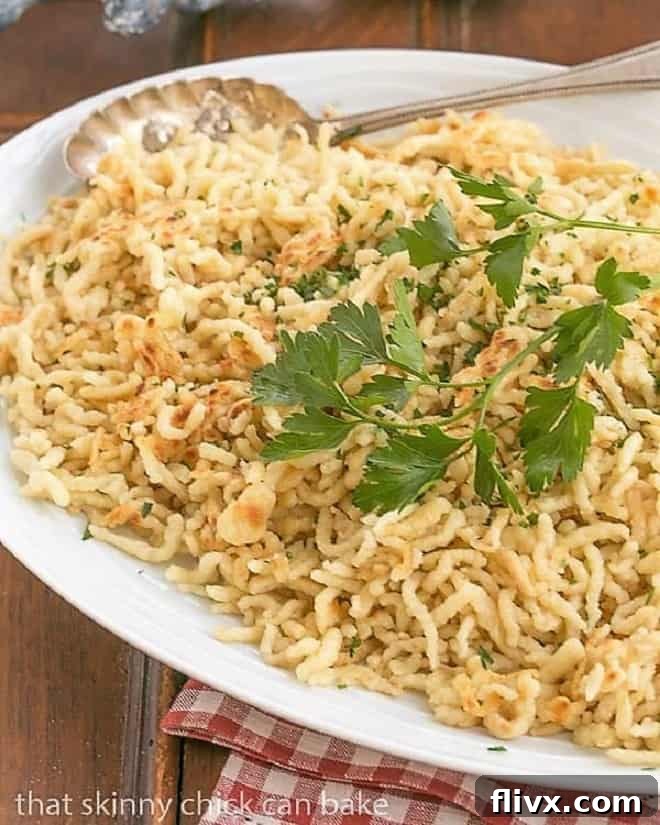
How to Serve Spaetzle: Unlocking Its Culinary Versatility
One of the most remarkable qualities of spaetzle is its incredible versatility. These humble egg noodles can be transformed to suit almost any meal, from a simple weeknight dinner to a festive holiday spread. Here are some delectable ways to serve your homemade spaetzle:
- A Superior Side Dish: The most classic way to enjoy spaetzle is lightly fried in butter until golden brown and slightly crispy. Serve it as a delightful alternative side dish in place of traditional starches like rice, mashed potatoes, couscous, or pasta. It pairs exceptionally well with roasted meats, poultry, or any dish where you’d typically serve a starchy accompaniment.
- The Perfect Base for Saucy Creations: Spaetzle’s porous texture makes it an ideal canvas for absorbing rich, flavorful sauces. It’s a fantastic base for hearty, saucy dishes such as succulent braised short ribs, robust beef stews, creamy mushroom sauces, or any dish brimming with pan juices or savory gravy. The noodles soak up every drop of flavor, making each bite incredibly satisfying.
- A Versatile Noodle Substitute: Don’t limit spaetzle to German cuisine! Try it as a substitute for any dish in which you’d typically use other egg noodles. Imagine it in a comforting chicken noodle soup, a creamy stroganoff, or even a creative twist on mac and cheese. Its unique texture adds an exciting dimension.
- Sweet and Savory Pairings: While most commonly served savory, spaetzle can also be a delightful accompaniment to slightly sweet dishes. For a traditional German pairing, serve it alongside a spoonful of Homemade Applesauce. The tart sweetness of the applesauce provides a wonderful contrast to the buttery noodles.
- Elevate Simple Dishes: Even simple sautéed vegetables or pan-seared chicken can be elevated with a serving of buttery spaetzle, turning an ordinary meal into something special.
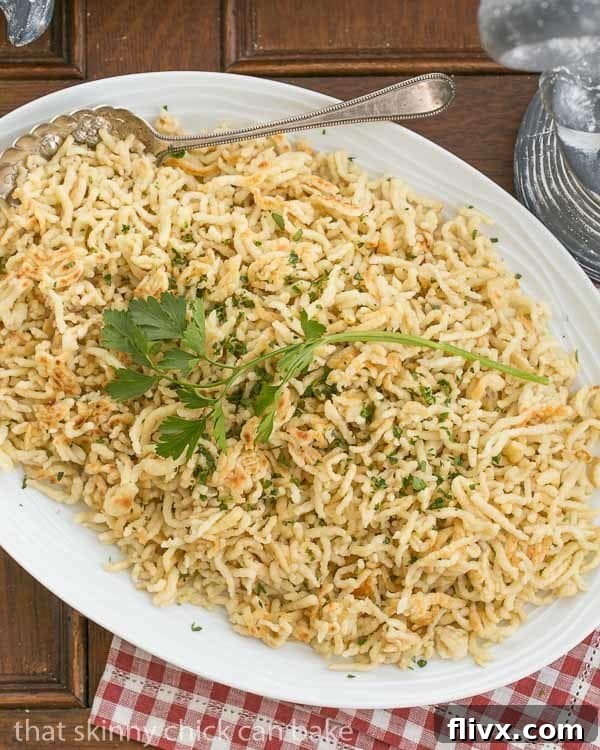
Expert Tips for Achieving Spaetzle Perfection
Crafting perfect homemade spaetzle is incredibly rewarding, and a few expert tricks can make all the difference. Follow these tips to ensure your German egg noodles turn out beautifully every time:
- Dough Consistency is Key: The foundation of great spaetzle lies in the dough. Make sure your dough is thick enough to hold its shape as it passes through your press or chosen alternative. It should be thick and somewhat sticky, resembling a very thick pancake batter, but still pliable. If it’s too thin, it will be watery and won’t form distinct noodles; too thick, and it will be difficult to press. You’re looking for an elastic consistency that forms bubbles as you beat it.
- Prevent Sticking in the Press: If you find the dough is sticking to your spaetzle press, there are a couple of easy solutions. Either spritz the press lightly with a little cold water before each batch, or spray it with a non-stick cooking spray, like Pam. This creates a barrier that helps the dough slide through smoothly.
- Cook in Batches: Overcrowding the pot is a common mistake. Cook your spaetzle in small to medium batches with plenty of salted boiling water. This allows each noodle enough space to cook evenly and prevents them from clumping and sticking together. As soon as the noodles float to the surface, they are cooked and ready to be scooped out.
- The Browning Butter Advantage: Frying the cooked noodles in browned butter (also known as beurre noisette) adds an exquisite richness and a delightful nutty flavor that elevates the spaetzle to another level. This step also creates a wonderful duality of textures, from the crispy, golden-brown edges to the wonderfully chewy, unbrowned bits. Don’t skip this if you want truly decadent spaetzle!
- Make Ahead and Store: Spaetzle is fantastic fresh, but it also lends itself well to advance preparation. You can make your spaetzle ahead of time. After rinsing and draining, simply store the cooked noodles in an airtight Ziploc bag or container in the refrigerator for a day or two. When you’re ready to serve, simply fry them in butter until heated through and golden.
- Salt Your Water Generously: Just like with any pasta, salting your boiling water is crucial. It infuses flavor into the noodles from the inside out. Aim for water that tastes like the sea.
Frequently Asked Questions About Spaetzle
Pronunciation can sometimes be a fun challenge with foreign words! For “Spaetzle” (or “Spätzle”), there are at least three commonly accepted pronunciations, depending on regional dialects and personal preference: SHPEHT-sluh, SHPEHT-sehl, or SHPEHT-slee. The key is often the ‘SH’ sound at the beginning and the short ‘e’ vowel. The spelling varies too, with some preferring the umlaut (two dots) above the ‘A’ (ä) to indicate the specific ‘eh’ sound, while others use ‘ae’ as an equivalent.
The word “Spaetzle” translates most literally to “Little Sparrow” in German, which is a charming and curious name for a noodle! There’s no single, definitive answer as to why this particular name stuck, but several theories exist. One popular idea suggests that the way the dough was traditionally held in two hands, then pressed or scraped into the boiling water, might have resembled a small bird’s nest or the action of holding a sparrow. Another theory posits that when using two spoons to scoop out small mounds of dough, the resulting shapes could have looked like tiny sparrows (as noted by sources like Masterclass.com). Regardless of its exact origin, the name adds a whimsical touch to this rustic dish.
While a dedicated spaetzle maker or press is undoubtedly the easiest and most consistent way to create these noodles, you can certainly improvise with common kitchen tools. I’ve personally tried several alternatives over the years before investing in a proper press. A potato ricer is a decent option, forcing the dough through its holes. A colander with larger holes can also work, where you push the dough through with a spatula. Some even use a cutting board and a knife, carefully scraping small strips of dough into the water. Another rustic method involves a slotted spoon, pushing dough through its holes. However, I can assure you from experience that using the real thing is worth it. The uniformity, ease, and speed of an authentic spaetzle press are unparalleled. If you fall in love with homemade spaetzle, I highly recommend getting one (check out the Amazon link in the recipe card for a recommendation!).
Spaetzle is a traditional dish with roots deep in the culinary history of Swabia, a region spanning parts of Germany, Switzerland, Austria, Hungary, and Alsace (France). Historically, it was considered a humble, everyday food made from simple ingredients, often served as a main dish with a variety of toppings or as a hearty side. While the exact origins are debated, references to similar noodle-like dishes can be found dating back centuries, evolving into the beloved spaetzle we know today.
Yes, with some modifications, spaetzle can be made gluten-free! The traditional recipe relies on wheat flour for its texture and elasticity. However, many successful gluten-free versions use a blend of gluten-free flours, often incorporating starches like tapioca or potato starch, along with an all-purpose gluten-free flour mix. The key is to achieve the right dough consistency, which might require slight adjustments to the liquid content. The result can be surprisingly close to the classic, offering a delicious alternative for those with dietary restrictions.
You May Also Like: Other Delicious Noodle and Pasta Recipes
If you loved making homemade spaetzle, you might enjoy exploring other noodle and pasta dishes that bring comfort and flavor to your table:
- Hearty Chicken Noodle Soup with Homemade Noodles from The Food Charlatan – The ultimate comfort food, elevated with fresh pasta.
- Classic Spaghetti Carbonara – A timeless Italian pasta dish known for its rich, creamy sauce and smoky bacon.
- Light and Fluffy Ricotta Gnocchi – Another delightful dumpling-style pasta that’s surprisingly easy to make.
- Beautiful Straw and Hay Pasta (Paglia e Fieno) – A vibrant mix of green and yellow pasta, often served with a creamy sauce.
- Explore more of our Homemade Pasta Recipes for endless culinary inspiration.
Stay in touch and share your culinary creations with us through social media! Follow @ Instagram, Facebook, and Pinterest. Don’t forget to tag me when you try one of my recipes! And if you love the results and want to show your appreciation, please consider giving it a 5-star rating in the recipe card below.
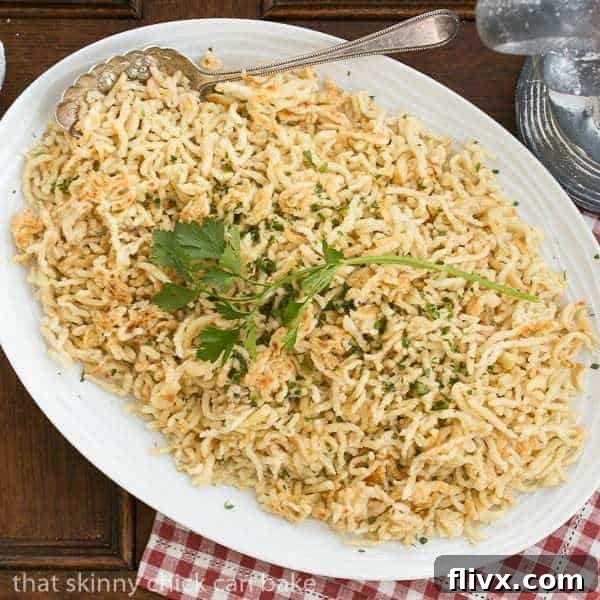
Spaetzle: Easy Homemade German Egg Noodles
20 minutes
5 minutes
25 minutes
6 servings
Learn to make the perfect, tender, and chewy German Spaetzle from scratch with this easy recipe. A delicious and versatile side dish, courtesy of the tried-and-true methods of Steve and Shelli Moss.
Ingredients
- 3 cups all-purpose flour
- 1 cup cold water, plus more to thin if needed
- 3 large eggs
- 1 1/2 teaspoons salt (plus more for boiling water)
- 2 tablespoons unsalted butter, to fry the spaetzle (optional, but highly recommended)
Instructions
- In a large mixing bowl, combine the flour, water, eggs, and salt. Beat the mixture vigorously with a strong wooden spoon or a stand mixer with a paddle attachment for several minutes until the batter is smooth, elastic, and shows small air bubbles. The dough should be thick and slightly sticky.
- Prepare your spaetzle press (or chosen alternative, like a colander or ricer) by rinsing it thoroughly with cold water. This helps prevent the dough from sticking.
- Bring a large pot (about 4 quarts) of generously salted water to a rolling boil. Place a portion of the spaetzle batter into your press. Slowly press the batter directly into the boiling water. For shorter noodles, hold the press 2-3 inches above the water. For longer noodles, hold it 4-5 inches above. Work in batches to avoid overcrowding the pot.
- As soon as the spaetzle noodles rise to the surface of the boiling water (this usually takes about 30-60 seconds), they are cooked. Promptly scoop them out using a slotted spoon or a fine-mesh sieve.
- Immediately transfer the cooked spaetzle to a bowl of cold water (or rinse under cold running water) to stop the cooking process and prevent them from sticking together. Drain off any excess water thoroughly.
- Repeat the process with the remaining batter until all the spaetzle is cooked. Cooked spaetzle can be stored in an airtight container or Ziploc bag in the refrigerator for up to 2 days, ready to be warmed or fried before serving.
- When you are ready to serve, melt butter in a large skillet over medium heat. For an even richer flavor, allow the butter to brown slightly until it develops a nutty aroma (beurre noisette). Add the cooked and drained spaetzle to the skillet and fry until golden brown and heated through, developing delicious crispy edges. Serve hot as a side dish or with your favorite saucy main course.
Nutrition Information:
Yield:
6
Serving Size:
1 (approx. 1 cup)
Amount Per Serving (estimated):
Calories: 376Total Fat: 9gSaturated Fat: 3gTrans Fat: 0gUnsaturated Fat: 5gCholesterol: 117mgSodium: 664mgCarbohydrates: 61gFiber: 3gSugar: 0gProtein: 12g
HOW MUCH DID YOU LOVE THIS RECIPE?
Please leave a comment on the blog or share a photo on Pinterest