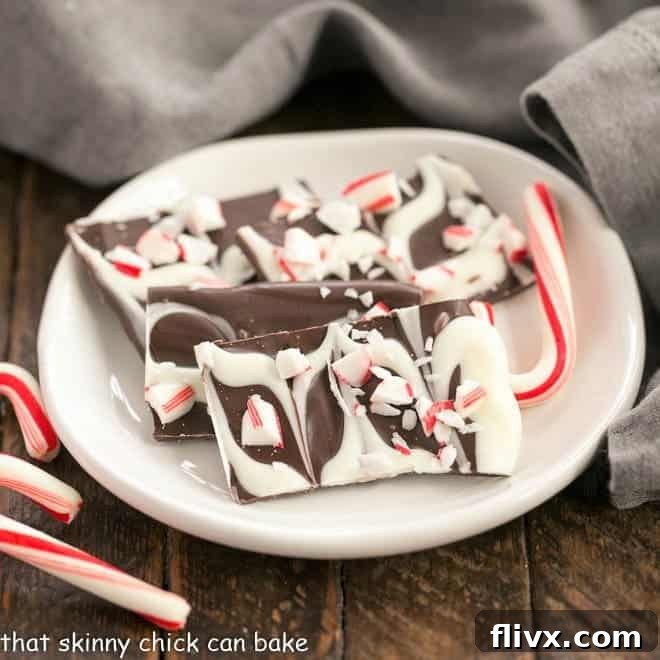
As the holiday season draws near, few treats capture the festive spirit quite like the classic peppermint bark. This year, I’ve ventured beyond tradition to create an exquisite batch of Swirled Peppermint Bark, a recipe that promises to be a showstopper on any holiday table. While a simple white chocolate peppermint bark is undeniably delicious, introducing a rich, dark chocolate layer transforms this treat into something truly extraordinary. It’s a symphony of flavors and textures, with the cool mint complementing the decadent chocolate in every bite.
Peppermint candy is an iconic symbol of Christmas, and this peppermint bark recipe is not only incredibly easy to master but also a guaranteed crowd-pleaser. With minimal effort, you can create a stunning dessert that looks professionally made, making it perfect for holiday gifting or simply indulging your family and friends. This isn’t just a recipe; it’s an invitation to create lasting holiday memories with a treat that’s as beautiful as it is delicious.
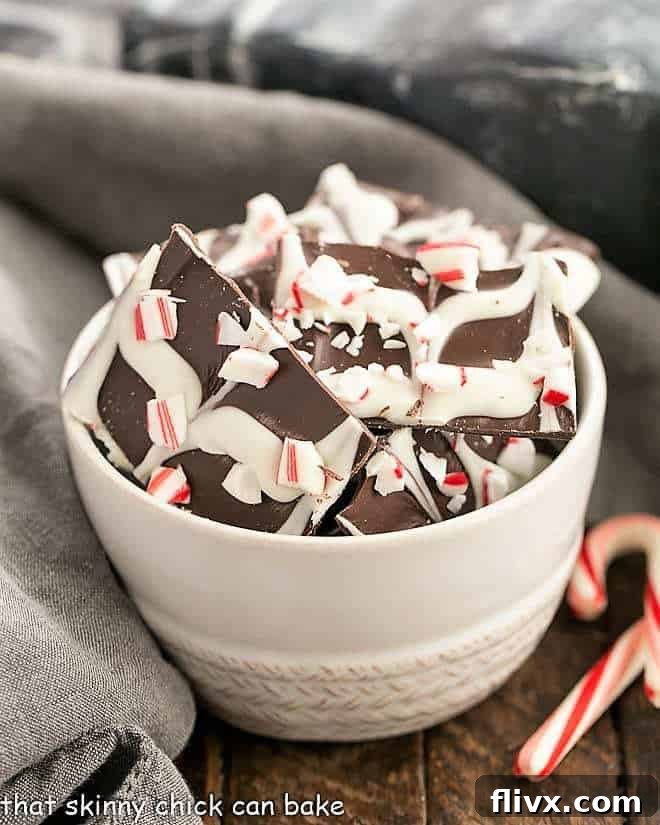
Why You Must Make This Easy Swirled Peppermint Bark Recipe
There are countless reasons why this particular homemade peppermint bark should be at the top of your holiday baking list. It’s more than just a sweet treat; it’s an experience.
- A Family Favorite (Mostly!): My children are utterly smitten with anything minty, making peppermint bark a perennial request. While my discerning husband prefers mint in his toothpaste, the overwhelming approval from everyone else makes this a cherished holiday tradition. This recipe bridges the gap between different palates with its balanced chocolate and mint profile.
- Elevated Holiday Elegance: Every Christmas, I craft some version of a peppermint bark recipe, but this year, I truly outdid myself. By starting with a rich, velvety dark chocolate base and artfully swirling in a vibrant white chocolate layer infused with fragrant peppermint extract, topped with a generous sprinkle of crushed candy canes, this bark transcends ordinary. The visual appeal alone is enough to impress, offering a sophisticated twist on a beloved classic.
- Effortless Preparation, Stunning Results: You don’t need to be a pastry chef to create this masterpiece. Requiring only a handful of common ingredients and simple steps, this easy peppermint bark comes together quickly, leaving you more time to enjoy the festivities. It’s truly a no-fail recipe that delivers gorgeous results every single time.
- Perfect for Gifting: Homemade gifts carry a special charm, and this festive chocolate bark is ideal. Its beautiful swirl and vibrant colors make it a thoughtful and impressive present for neighbors, teachers, colleagues, or anyone who deserves a touch of holiday cheer. Package it in clear cellophane bags with a festive ribbon, and you have a gift that looks as good as it tastes.
If you’re looking to expand your repertoire of holiday gifting treats, I also highly recommend my Oreo White Chocolate Fudge, these delicate Coconut White Chocolate Truffles, and the comforting Old Fashioned Amish Sugar Cookies. Each offers its own unique charm for your holiday celebrations.
Mastering Your Chocolate: Expert Tips for Flawless Peppermint Bark
Making chocolate bark is an art, but it’s an accessible one. Whether you opt for a simple white chocolate bark, a sophisticated layered chocolate bark, or our beautiful swirled chocolate bark, the key to success lies in understanding your chocolate. These expert tips will guide you to a perfect batch every time (unless, of course, you only appreciate mint in your oral hygiene routine!).
- Understanding Chocolate Options: You have several paths to delicious bark. A classic approach is white chocolate peppermint bark, which is incredibly straightforward. Simply combine melted white chocolate, a touch of peppermint extract (remember, a little goes a long way!), and plenty of crushed candy canes. Spread this mixture onto a lined baking sheet and allow it to cool completely before breaking it into delightful, bite-sized pieces. This method is forgiving and produces a bright, festive treat.
- The Dark Side of Chocolate: Addressing Bloom: When working with dark chocolate, a common concern is “chocolate bloom.” This refers to the grayish, streaky discoloration that can appear on the surface of chocolate that hasn’t been properly tempered. While bloom doesn’t affect the taste or safety of the chocolate, it certainly impacts its visual appeal. White chocolate is less prone to this issue, making it a safer bet for beginners. However, with our swirled bark, we aim for perfection in both layers.
- Layered vs. Swirled: Camouflage and Creativity: If you’re incorporating a dark chocolate component but are worried about bloom, a layered approach can be your friend. By placing a layer of pristine white chocolate on top of your dark chocolate base, you can effectively camouflage any minor imperfections or signs of bloom on the dark chocolate below. However, the swirled technique we employ here is much more dynamic and appealing, creating an artistic finish that’s worth a little extra care.
- PRO-Tip: Preventing Bloom with Ease: To significantly reduce the chances of bloom, especially when not tempering chocolate professionally, you can add a small amount of a neutral fat like vegetable oil or shortening (about 1 teaspoon per 10 ounces of chocolate) when you melt your chocolate. This helps stabilize the cocoa butter. Crucially, melt your chocolate gently. Avoid fully melting it in the microwave or double boiler. Instead, heat it until it’s mostly melted, then remove it from the heat and stir until the residual heat finishes the job, creating a smooth, glossy consistency. Overheating is the enemy of smooth chocolate!
- The Convenience of Melting Wafers: For consistent, reliable results and ease of use, I often recommend using high-quality chocolate melting wafers, as I did for this swirled peppermint bark recipe. These are specifically formulated to melt smoothly and set with a beautiful shine, eliminating the need for traditional tempering. Always follow the package instructions meticulously for the best melting results.
- Timing is Everything: Dark chocolate, especially in a cool winter kitchen, tends to harden quite rapidly. This is why preparation is paramount. Have both your dark and white chocolates melted and ready to go simultaneously. This allows you to swiftly drizzle the white chocolate onto the dark layer and create your swirl before the base chocolate sets too firmly, ensuring a seamless, beautiful blend.
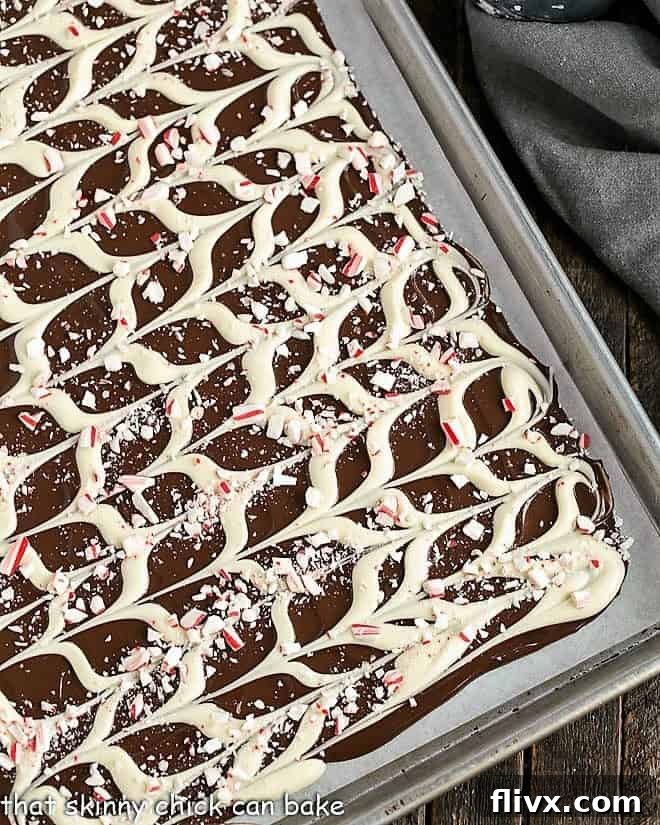
- PRO-Tip: The Art of the Swirl: Achieving that perfect, captivating swirl is simpler than it looks. I find that a quart-sized Ziploc bag, with a small corner snipped off, is an excellent tool for piping neat lines of white chocolate across the dark chocolate base. Once your white chocolate lines are in place, grab a table knife. Drag the tip of the knife perpendicularly through both layers of chocolate, from one long side of the pan to the other, to create an intricate, fun, and elegant swirled design. Experiment with different patterns for unique results!
- Chill for Perfection: Once your bark is swirled and sprinkled, gently transfer the baking sheet to the refrigerator. Allow it to chill until the chocolate is completely firm, typically about 30-60 minutes. This ensures a clean break or cut.
- Peppermint Oil vs. Extract: Know Your Potency: It’s important to distinguish between peppermint oil and peppermint extract. Peppermint oil is significantly more potent and concentrated, requiring only a drop or two. I consistently use peppermint extract, which is widely available and easier to measure. If you are using peppermint oil, exercise caution and start with a single drop, tasting before adding more.
- Marbleizing vs. Swirling: A Subtle Difference: While both techniques create beautiful patterns, true “swirling” often results in more circular, fluid patterns. My described technique with a knife creates more of a marbleized, linear effect, which is equally stunning and offers a distinct visual appeal. Either method will yield gorgeous, professional-looking chocolate peppermint bark.
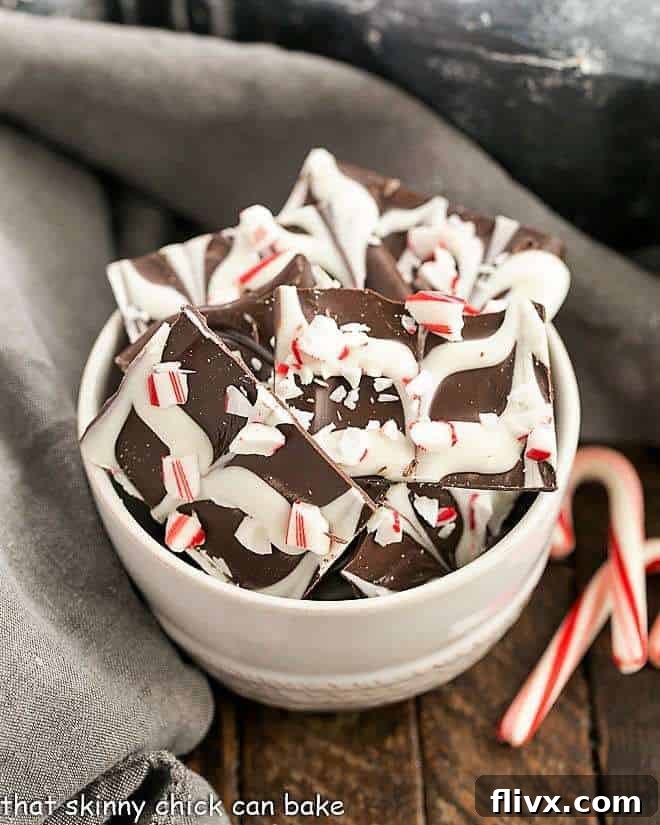
Frequently Asked Questions About Peppermint Bark
Here are some common questions about making and storing your delicious homemade peppermint bark:
When stored properly in an airtight container, peppermint bark will maintain its freshness and quality for up to two weeks at room temperature. For optimal results, choose a cool, dry place away from direct sunlight. If your kitchen tends to be on the warmer side, especially during the bustling holiday season, transferring your airtight container to the refrigerator can extend its shelf life and prevent the chocolate from softening prematurely. Just be sure to let it come to room temperature for a few minutes before serving for the best texture.
Breaking homemade chocolate bark into appealing pieces is part of the fun! To avoid leaving unsightly fingerprints on the smooth chocolate surface, fold the edges of the parchment paper over the bark, creating convenient “holding spots.” Then, gently bend the parchment-covered bark to encourage it to snap into natural, rustic pieces. You can readjust your holding spots as needed to guide the breaks. For more controlled shapes, a sharp knife can be used to make strategic cuts into the chocolate, which will help guide the breaks into more uniform shards. For a more dramatic and satisfying break, cover the entire surface of the bark with a layer of aluminum foil and use a clean hammer or rolling pin to lightly tap and shatter the bark into various-sized shards. This method is particularly effective for larger batches.
Generally, yes, most homemade and commercially available peppermint bark is naturally gluten-free. The primary ingredients—chocolate, peppermint extract, and candy canes—do not typically contain gluten. However, it’s always prudent to be cautious, especially if you or someone you’re serving has a severe gluten allergy or sensitivity. When making it yourself, double-check the ingredient labels on your chocolate, extract, and candy canes to ensure they are certified gluten-free, as cross-contamination can occur in manufacturing facilities. If purchasing store-bought bark, always review the ingredient list and any allergen warnings on the package, or inquire directly with the maker, before indulging.
While chocolate chips can be used in a pinch, they are often formulated with stabilizers that prevent them from melting as smoothly or setting as hard and glossy as chocolate melting wafers or high-quality baking bars. For the best texture and appearance in your swirled peppermint bark, especially for gifting, I highly recommend using quality chocolate melts or finely chopped baking chocolate. If you do use chocolate chips, melt them very slowly and consider adding a teaspoon of vegetable oil or shortening per cup of chips to help them achieve a smoother consistency and a better shine once set.
Chocolate seizes when even a tiny amount of liquid (like water or steam) comes into contact with it during melting, turning it into a thick, gritty, unworkable paste. If your chocolate seizes, it’s difficult to fully recover, but not impossible. Try stirring in a teaspoon of vegetable oil, shortening, or melted butter at a time, continuously stirring until it becomes somewhat smooth again. It won’t be as perfect as un-seized chocolate, but it might be salvageable for bark. To prevent seizing, ensure all your melting equipment (bowls, spatulas) are completely dry, and if using a double boiler, make sure the bottom of your bowl doesn’t touch the simmering water, and no steam escapes into the chocolate.
You May Also Like Other Holiday Recipes
Craving more mint or holiday cheer? Explore these delightful recipes:
- Homemade York Peppermint Patties for a refreshing, classic treat.
- White Chocolate Candy Cane Cookies, perfect for festive cookie platters.
- Peppermint Bark Snowflakes for a whimsical twist on the traditional bark.
- Discover more of the Best Holiday Recipes to complete your festive spread.
- Plus, delve into even more Delicious Christmas Recipes for every taste and occasion.
Stay connected and share your culinary creations with me on social media! Find me on Instagram, Facebook, and Pinterest. Don’t forget to tag me when you try one of my recipes! If you’re delighted with the results, please consider leaving a 5-star rating in the recipe card below – your feedback means the world to me.
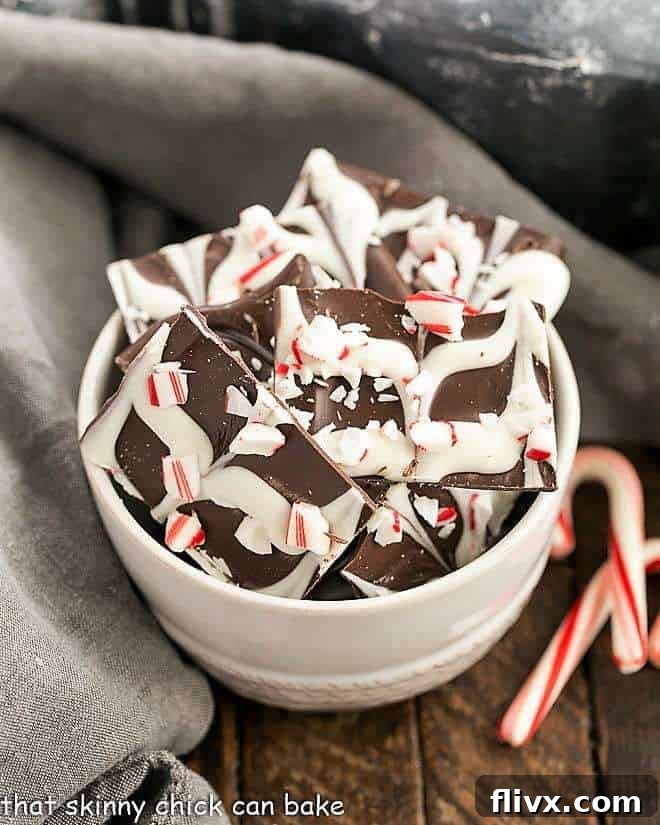
Swirled Peppermint Bark Recipe
15 minutes
2 minutes
1 hour
1 hour 17 minutes
1 ½ pounds bark
Dark chocolate, white chocolate and candy cane pieces swirled together for a fabulous holiday treat! This easy homemade peppermint bark is perfect for gifting or enjoying throughout the festive season.
Ingredients
- Equal Parts dark and white chocolate melts, melted according to package directions*
- ¼ teaspoon peppermint extract
- Candy canes, crushed, about ¼+ cup
Instructions
- Line a baking pan with parchment paper, allowing some overhang for easy lifting later.
- Gently melt the dark chocolate in the microwave in 30-second intervals, stirring after each, until mostly smooth. Pour the melted dark chocolate onto the prepared parchment and spread it evenly with an offset spatula to form your base.
- Gently melt the white chocolate in the microwave following the same method. Stir in the peppermint extract until well combined. Transfer the white chocolate to a quart-sized Ziploc bag, snip off a small corner, and pipe even lines across the dark chocolate, from one short end of the pan to the other.
- Take the tip of a table knife and gently drag it through both layers of chocolate, cutting perpendicular to your white chocolate lines, from one long side of the pan to the other. Repeat this motion in the opposite direction, creating a beautiful swirled pattern.
- Immediately sprinkle the crushed candy cane pieces generously over the wet chocolate, ensuring they adhere well.
- Chill the baking pan in the refrigerator for at least 30-60 minutes, or until the chocolate is completely hard. Once firm, break the bark into irregular, bite-sized pieces or use a sharp knife to cut into squares.
Notes
*For best results, use high-quality chocolate melting wafers or finely chopped baking chocolate (10 ounces each of dark and white chocolate). Avoid using chocolate chips, as they may not melt or set as smoothly.
If you choose to use real chocolate baking bars (not melting wafers), you may wish to add 1 teaspoon of vegetable oil or shortening to the dark chocolate during melting. This helps to minimize the appearance of “bloom” (a grayish discoloration) and ensures a glossier finish.
The Ziploc bag method for piping white chocolate offers excellent control for creating neat lines and a more defined swirl. Alternatively, you can drizzle the white chocolate with a spoon.
Nutrition Information:
Yield:
12
Serving Size:
1
Amount Per Serving:
Calories: 266Total Fat: 12gSaturated Fat: 7gTrans Fat: 0gUnsaturated Fat: 4gCholesterol: 3mgSodium: 23mgCarbohydrates: 42gFiber: 1gSugar: 33gProtein: 2g
HOW MUCH DID YOU LOVE THIS RECIPE?
Please leave a comment on the blog or share a photo on Pinterest