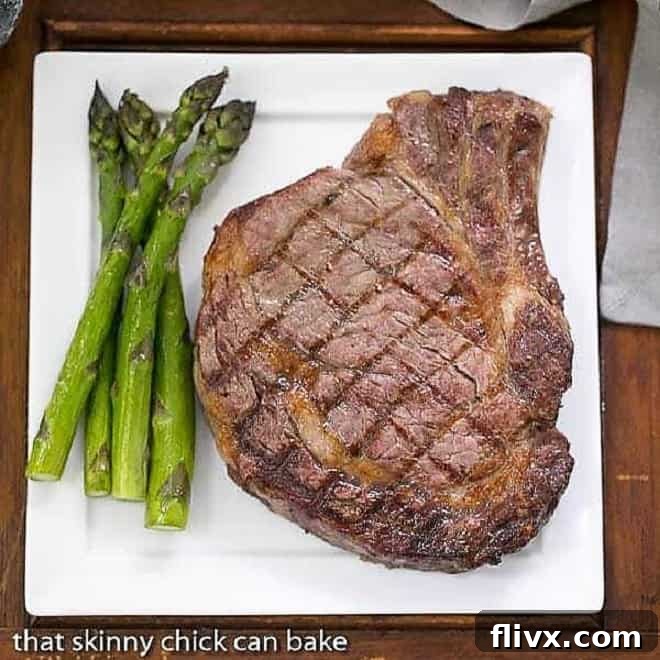
Welcome to the ultimate guide for mastering the art of grilling steak! If you’ve ever dreamt of serving up a restaurant-quality steak right from your backyard, bursting with flavor and cooked to absolute perfection, then you’re in the right place. Grilling a steak might seem daunting, especially with varying opinions on techniques and temperatures, but with the right approach, it’s a skill anyone can master. This comprehensive guide will walk you through every step, from selecting the finest cuts to achieving that desirable sear and ideal doneness, transforming you into a true grill master.
Over the years, our family has perfected the craft of grilling steak, ensuring each piece is consistently tender, juicy, and incredibly flavorful. We understand that a great steak is more than just a meal; it’s an experience, a celebration, and a moment of culinary triumph. This detailed approach simplifies the process, making it accessible even for beginners, while offering valuable insights that seasoned grillers will appreciate.
Why Mastering Grilled Steak is a Game Changer
Grilling a perfect steak isn’t just about cooking; it’s about investing in a skill that pays off richly in satisfaction and delicious meals. Here’s why you’ll absolutely love mastering this technique:
- Protect Your Investment: High-quality steaks, especially cuts like rib-eye or tenderloin, represent a significant investment. Overcooking them is a common and disheartening mistake that wastes both money and potential enjoyment. This guide empowers you to cook expensive cuts with confidence, ensuring they reach their full flavorful potential every time.
- Elevate Your Culinary Status: Follow our methods, and you’ll quickly become the go-to grill master among your friends and family. There’s immense pride in presenting a perfectly cooked steak, boasting a beautiful crust and juicy interior, impressing everyone at the table. Your backyard barbecues will become legendary!
- Perfect for Special Occasions: Whether it’s a birthday, an anniversary, or simply a desire to treat loved ones, a perfectly grilled steak elevates any gathering into a special event. This “recipe” provides the foundation for memorable meals, making every bite a celebration.
- Unlock Unrivaled Flavor: Grilling imparts a unique smoky char and a depth of flavor that other cooking methods simply can’t replicate. Learning to harness this power means you’ll unlock a new dimension of taste, making your steaks truly unforgettable.
The Essential Steps: How to Grill a Steak to Perfection
A beautifully grilled steak or beef roast brings immense joy to any meal. While I often splurge on premium dry-aged rib-eye steaks from our local butcher for special occasions, the fundamental techniques shared here are universally applicable. Whether you’re grilling succulent beef tenderloin, robust New York strips, or any other cut of steak you prefer, these principles will guide you to outstanding results.
- Choose Your Cut Wisely: The journey to a perfect steak begins at the butcher counter. Invest in the best quality beef you can reasonably afford. Look for excellent marbling – the intramuscular fat streaks that melt during cooking, infusing the meat with incredible flavor and tenderness. A lean steak, while healthier, will often lack the rich flavor and succulent texture that marbling provides. When selecting beef grades, aim for Prime if your budget allows; it’s the highest grade with abundant marbling. Otherwise, Choice beef offers a fantastic balance of quality and value. Select is the least expensive option and is generally not recommended for grilling due to its minimal marbling, which often results in a less flavorful and tougher steak.
- Understand Steak Cuts: Beyond grading, the cut itself plays a crucial role. My husband often favors rib-eye steaks for their rich marbling and robust flavor, and New York strips for their satisfying chew and distinctive beefy taste. While I personally adore a great filet mignon for its buttery tenderness, its leanness means it can dry out on the grill. To counteract this, wrapping it in bacon or giving it a light coating of olive oil adds crucial fat, enhancing its juiciness and flavor. Other excellent grilling options include porterhouse (a generous cut combining filet and New York strip), T-bone (similar to porterhouse but smaller filet portion), and sirloin (a more economical option that still grills well).
- PRO-Tip: Season Early for Maximum Flavor (Dry Brining): This step is non-negotiable for deeply flavorful steaks. Salt your beef a minimum of 30 minutes before cooking, but ideally, even longer. I frequently season my steaks a day in advance, allowing them to “dry brine” uncovered in the refrigerator overnight. This process draws moisture from the surface, creating a concentrated brine that is then reabsorbed into the meat. The result is a more tender, flavorful, and beautifully seared crust. Use kosher salt for the best results due to its larger crystal size.
- PRO-Tip: Bring Steaks to Room Temperature: Approximately 30 to 60 minutes before grilling, remove your steaks from the refrigerator. Placing cold steaks directly on a hot grill can lead to uneven cooking, with the exterior overcooked before the interior reaches the desired doneness. Allowing them to come closer to room temperature promotes more uniform cooking from edge to center, leading to a much more satisfying result.
- Achieve Optimal Grill Heat: Whether you’re using charcoal or gas, high heat is paramount for a perfect sear. If possible, opt for charcoal; the smokiness it imparts adds a wonderfully complex, authentic barbecue flavor that’s hard to beat. The goal is to achieve a scorching fire, ideally between 450-500ºF (232-260ºC). For charcoal, use a chimney starter to get coals glowing hot, then arrange them for direct and indirect heat zones. For gas grills, preheat all burners to high, then adjust to create two zones.
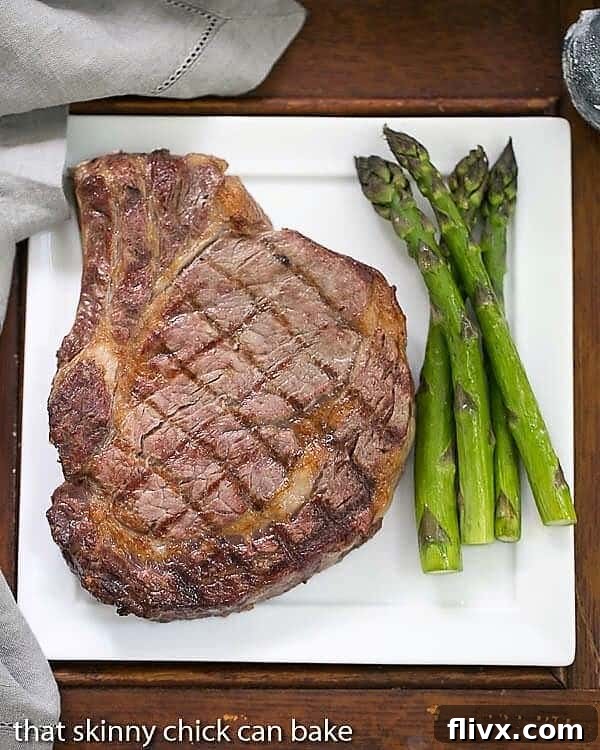
- Master the Flip for the Perfect Sear: Resist the urge to constantly poke and prod your steak. Move it only 2-4 times throughout the entire cooking process, ideally just once per side for a simple sear. However, if you desire those iconic, picture-perfect cross-hatch grill marks, you’ll need to rotate your steaks 45 degrees midway through cooking each side. This means searing for 1.5-2 minutes, rotating 45 degrees for another 1.5-2 minutes, then flipping and repeating the rotation on the second side. This minimal handling ensures maximum contact with the hot grates, developing that delicious, caramelized crust known as the Maillard reaction.
- The Essential Rest: Once your steak reaches the desired internal temperature (we’ll cover this next), remove it from the grill and let it rest on a cutting board for at least 5 to 10 minutes before slicing and serving. This critical step allows the juices, which have been driven to the center of the steak by the heat, to redistribute evenly throughout the meat. Skipping the rest will result in juices flowing out onto your plate, leaving you with a drier, less flavorful steak. You can lightly tent it with foil to keep it warm, but avoid wrapping it tightly, which can steam the crust.
Pinpointing Perfection: How to Tell When Steak is Done
Steak doneness is a deeply personal preference. In my family, the men often prefer their steaks “rare with a capital R”—as my husband jokingly says, “just shy of mooing!” I, on the other hand, lean towards a perfect medium-rare, often sending my steak back to the grill for an extra minute or two. Knowing precisely how long to grill steak to cater to these diverse tastes is an invaluable skill for any aspiring grill master.
Historically, many cooks relied on the “hand trick” to gauge doneness. This technique involves pressing on the fleshy pad beneath your thumb while touching your thumb to different fingers. For example, pressing your thumb to your pointer finger makes that fleshy spot feel like rare beef, while touching your thumb to your pinky finger simulates well-done beef. You can easily find detailed demonstrations by searching “hand test for beef doneness” online.
While the hand trick can be a helpful guide once you’ve developed an experienced touch, it’s inherently subjective and relies heavily on practice. For consistent, reliable results, especially when cooking for varying preferences or for those who are new to grilling (and those who don’t want to learn the hand trick, though I won’t name names!), a high-quality meat thermometer is absolutely essential. It eliminates guesswork and ensures your steak is cooked exactly how you and your guests prefer it, every single time.
Achieving Doneness: How Long to Grill a Steak and Internal Temperatures
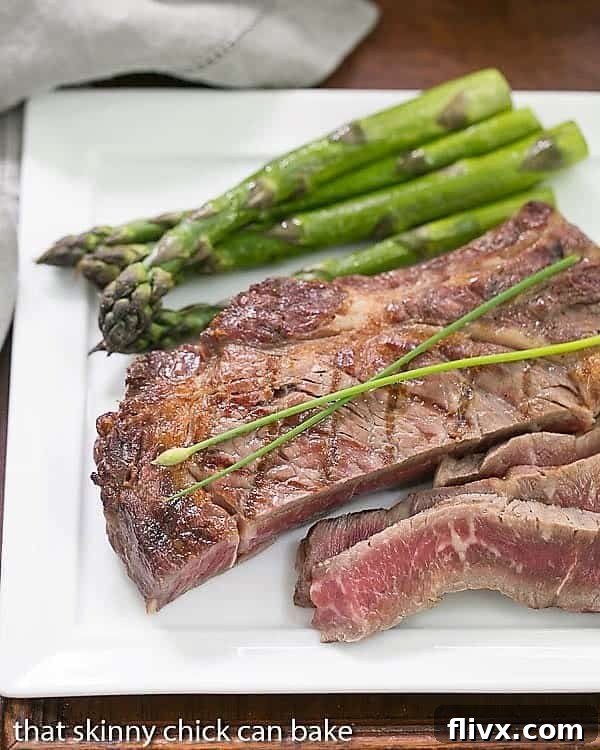
While estimated cooking times can offer a rough guideline, the most accurate and reliable way to achieve your desired steak doneness is by monitoring its internal temperature with an instant-read meat thermometer. Different levels of doneness correspond to specific internal temperatures. According to the Certified Angus Beef website, the ideal temperatures for each stage of doneness are as follows:
Below is a comprehensive list of the target internal temperatures for your Grilled Steaks. These temperatures represent the final doneness *after* a crucial 10-minute resting period, accounting for carry-over cooking:
- Rare: A cool, vibrant red center. Target internal temperature: 125ºF (52ºC).
- Medium Rare: A warm, deep red center. This is often considered the ideal doneness for many steak lovers, balancing tenderness and juiciness. Target internal temperature: 135ºF (57ºC).
- Medium: A warm, pink center. This offers a good balance of tenderness and a slightly firmer texture. Target internal temperature: 145ºF (63ºC).
- Medium Well: A slightly pink center. The steak will be firmer and less juicy than medium-rare or medium. Target internal temperature: 150ºF (66ºC).
- Well: Little to no pink at all, with a grayish-brown interior. The steak will be quite firm and less tender. Target internal temperature: 160ºF (71ºC).
PRO-Tip: Account for Carry-Over Cooking: This is one of the most vital secrets to perfectly cooked steak. Always remove your meat from the grill when its internal temperature is approximately 10ºF (about 5-6ºC) *less* than your desired final temperature listed above. For example, if you aim for medium-rare (135ºF), pull the steak off the grill when it reads 125ºF. During the 10-minute resting period, the internal temperature of your beef will continue to rise by another 5-10ºF due to residual heat, ensuring it reaches perfect doneness without overcooking. This phenomenon is known as “carry-over cooking,” and understanding it is key to culinary success.
Frequently Asked Questions About Grilling Steak
The truth is, there’s no single “set” answer for how long to grill a steak, as several variables significantly influence cooking time. Firstly, the heat of your grill is critical; a gas grill typically offers more consistent temperature control than a charcoal grill, where flare-ups and cooling coals can cause fluctuations. Regardless of the grill type, constant monitoring is essential. Secondly, the initial temperature of your beef matters; I highly recommend taking steaks out of the fridge 30-60 minutes before grilling so they can come closer to room temperature. A cold steak will take considerably longer to cook and may result in uneven doneness. Lastly, and perhaps most importantly, the thickness of your steak dictates grilling time. A thin, 1-inch steak will cook much faster than a thick, 1.5 or 2-inch cut. Therefore, for truly consistent and perfect results, it’s absolutely imperative to use a reliable instant-read meat thermometer to monitor your steaks as they cook, rather than relying solely on timed estimates.
Cooking steak on a charcoal grill imparts an unmatched smoky flavor. Begin by lighting your charcoal, preferably using a chimney starter, and allow it to come up to temperature until the coals are ash-gray and glowing hot, typically reaching 450°-500°F (232-260°C). Once hot, arrange your coals to create two cooking zones: a direct heat zone where the coals are concentrated, and an indirect heat zone with fewer or no coals. Start by searing the steak directly over the hot coals for about 2-3 minutes per side to develop a beautiful crust and rich flavor. After searing, move the steaks to the indirect heat zone, close the lid if possible, and continue grilling until they reach your desired internal temperature, using a meat thermometer to track doneness.
Grilling steak on a gas grill offers convenience and excellent control. Similar to a charcoal grill, you’ll want to establish two zones: direct and indirect heat. Preheat your gas grill with all burners on high until it reaches approximately 450°-500°F (232-260°C). Once hot, turn one or two burners down to low or off to create your indirect heat zone, while leaving other burners on high for direct heat. Sear the steaks over the direct high heat for 2-3 minutes per side to achieve a robust, caramelized crust. Then, move the steaks to the indirect heat zone, close the grill lid, and finish cooking until they reach your preferred internal temperature, diligently checking with an instant-read thermometer.
Expand Your Grilling Horizons: Related Recipes
While outdoor grilling offers unparalleled flavor, sometimes inclement weather or kitchen convenience calls for an indoor alternative. For those times, I highly recommend this fantastic recipe for Pan-Seared Steak from 15 Spatulas, which delivers a superb crust and tender interior without needing a grill. And if you’re looking for more ways to enjoy beef, especially from the grill, explore these delicious ideas:
- Grilled Steak with Garlic Butter
- Italian Pesto Burger
- Grilled Flank Steak with Soy, Garlic, and Ginger
- Flank Steak with Chimichurri
- Grilled Flank Steak Fajitas
- Discover more incredible Beef Recipes here!
Stay in touch and share your culinary creations with me on social media: follow me on Instagram, Facebook, and Pinterest. Don’t forget to tag me when you try one of my recipes! If you love the results, please consider giving it a 5-star rating in the recipe card below – your feedback means the world!
Perfect Rib Eye Steaks
5 minutes
8 minutes
13 minutes
1
An easy recipe for perfectly grilled rib eye steaks
Ingredients
- One 1½ inch thick, 8-ounce rib eye steak per person, prime or the best quality you can afford
- Kosher salt
- Freshly ground black pepper
- 2 garlic cloves, cut in half
Instructions
- A couple of hours or the night before grilling, pat steaks dry with a paper towel. Sprinkle each side with a scant ½ teaspoon of kosher salt and return to the refrigerator, uncovered. This dry brining method enhances flavor and promotes a better crust.
- Bring steaks out to sit at room temperature one hour prior to grilling. This ensures more even cooking. Rub each with a garlic half for subtle aroma and re-season lightly with salt and freshly ground black pepper.
- Grill over hot coals (or set your gas grill to high heat) with the lid open. For rare doneness, grill for about 3-4 minutes per side. For medium-rare, extend slightly, and so on.
- If you desire the classic cross-hatch sear marks, turn the steak 45º (one ⅛ turn) at the 1½-2 minute mark on the first side. Grill for a couple more minutes before flipping. Repeat this rotation on the second side.
- Repeat the searing process on the other side, grilling for a total of 3-4 minutes. Use an instant-read thermometer to check the internal temperature. Remove the steak when it’s 10°F below your desired final temperature: for rare, remove at 120ºF; for medium-rare, remove at 125ºF. Remember, there will be carry-over cooking, and the temperature will continue to rise during the resting period.
- Let rest for at least 5 minutes before slicing and serving. This allows the juices to redistribute throughout the steak, resulting in a more tender and flavorful bite.
Notes
Grilling times are highly variable and depend significantly on the heat of your grill, along with the starting temperature and thickness of your steak. For the most accurate and consistently perfect results, always use an instant-read thermometer.
It’s crucial to understand that your meat will continue to cook after it’s removed from the grill due to residual heat, a process known as carry-over cooking. To avoid overcooking, pull your steak off the grill before it reaches its desired final temperature, typically about 10°F (5-6°C) below. Then, cover it loosely with foil and let it rest for 10 minutes before serving. This resting period not only allows the temperature to rise to perfection but also ensures the juices redistribute throughout the meat, resulting in a tenderer and more flavorful steak.
Recommended Products
As an Amazon Associate and member of other affiliate programs, I earn from qualifying purchases.
- Santoku Knife
- OXO Cutting Board
- Thermapen Instant Read Thermometer
Nutrition Information:
Yield:
1
Serving Size:
1 steak
Amount Per Serving:
Calories: 629Total Fat: 43gSaturated Fat: 19gTrans Fat: 0gUnsaturated Fat: 23gCholesterol: 177mgSodium: 447mgCarbohydrates: 3gFiber: 1gSugar: 0gProtein: 57g
Thatskinnychickcanbake.com occasionally offers nutritional information for recipes contained on this site. This information is provided as a courtesy and is an estimate only. This information comes from online calculators. Although thatskinnychickcanbake.com attempts to provide accurate nutritional information, these figures are only estimates.
Varying factors such as product types or brands purchased can change the nutritional information in any given recipe. Also, many recipes on thatskinnychickcanbake.com recommend toppings, which may or may not be listed as optional and nutritional information for these added toppings is not listed. Other factors may change the nutritional information such as when the salt amount is listed “to taste,” it is not calculated into the recipe as the amount will vary. Also, different online calculators can provide different results.
To obtain the most accurate representation of the nutritional information in any given recipe, you should calculate the nutritional information with the actual ingredients used in your recipe. You are solely responsible for ensuring that any nutritional information obtained is accurate.
HOW MUCH DID YOU LOVE THIS RECIPE?
Please leave a comment on the blog or share a photo on Pinterest
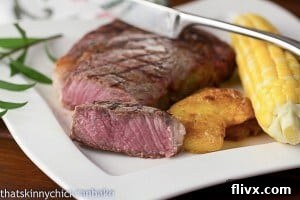
Photo circa 2012
By following these detailed tips and techniques, you’re now equipped with the knowledge to consistently grill a perfect steak. From selecting the right cut and mastering the art of seasoning to controlling your grill’s heat and understanding the science of doneness, every element plays a crucial role. Remember, practice makes perfect, and each steak you grill will refine your skills further. So fire up your grill, embrace the journey, and prepare to enjoy the most delicious, tender, and perfectly cooked steaks you’ve ever made. Happy grilling!