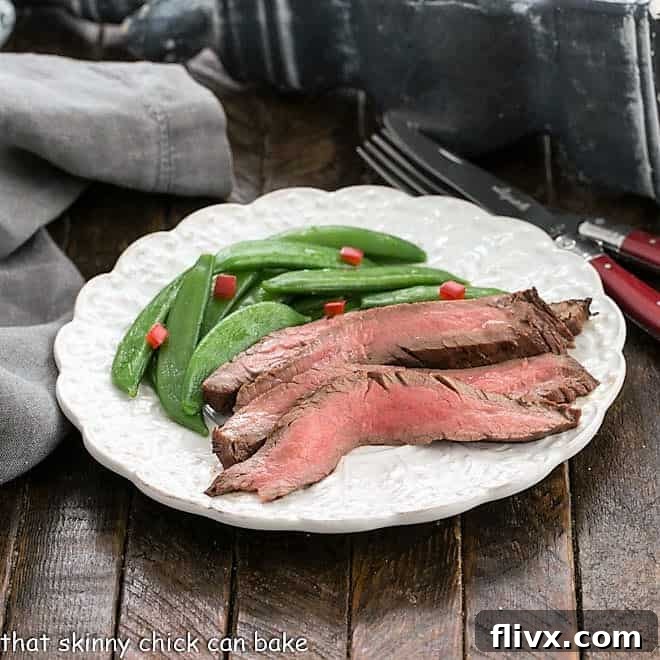
Master the art of grilling with this sensational Korean Grilled Flank Steak! Infused with an irresistible Asian marinade and cooked to perfect medium-rare doneness on your BBQ, this recipe promises to become an instant family favorite and a go-to for impressive entertaining.
The secret to its allure lies in the vibrant, aromatic flavors from a carefully crafted blend of Asian ingredients. These savory, sweet, and subtly spicy notes deeply permeate the lean flank steak, transforming it into an absolutely irresistible culinary experience. Prepare to delight your taste buds with this exceptional Korean Beef Recipe that truly captures the essence of authentic Korean flavors.
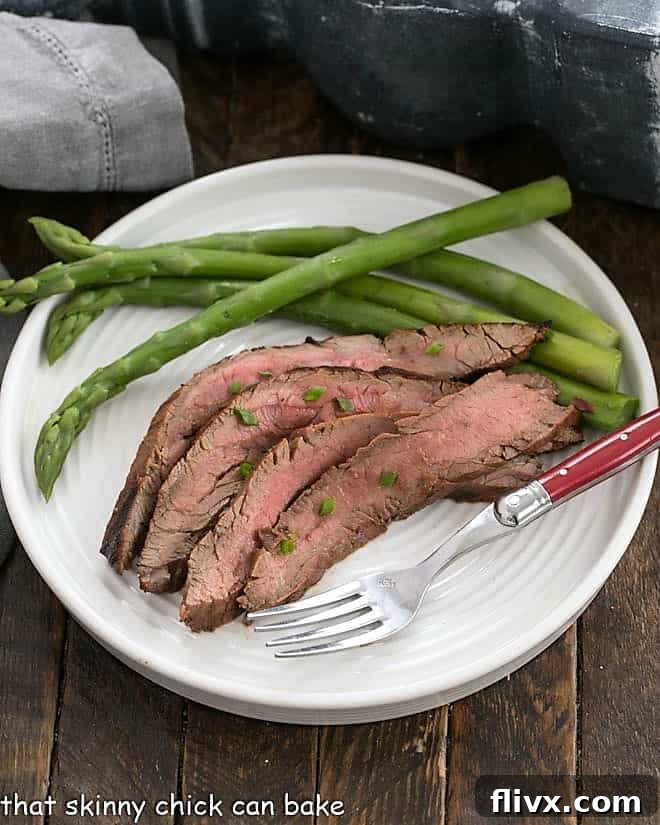
Why This Korean Grilled Flank Steak Will Be Your New Favorite
There’s an undeniable joy that comes with grilling, and for many, it’s a year-round passion. Our grill often sees extensive use during the warmer months, but the allure of flame-kissed food knows no season. From classic burgers to succulent chicken and flavorful chops, anything can be elevated by the grill. I even recall a memorable instance when my husband, undeterred by winter’s chill, once enlisted our youngest to help bring our extremely heavy Big Green Egg indoors after its lid had frozen solid to the grill top – a testament to true grilling dedication!
Among the myriad grilling options, flank steak holds a special place in our hearts. It’s a lean and robust cut that, while delicious, can sometimes be a bit plain without the right preparation. That’s precisely where a phenomenal marinade steps in, transforming a good piece of meat into a truly spectacular entree. Here’s why this Korean Grilled Flank Steak recipe is an absolute must-try:
- Flavor Transformation: Flank steak, by itself, offers a neutral canvas. A carefully crafted marinade, especially one brimming with vibrant Asian flavors, infuses every fiber of the meat, elevating it from simple to extraordinary.
- Irresistible Asian Fusion: The unique blend of ingredients in this marinade creates a harmonious balance of savory, sweet, and umami notes that perfectly complement the rich taste of beef. It’s a flavor profile that’s both comforting and exciting.
- Tenderness and Texture: Beyond just flavor, the marinade works its magic to tenderize the lean muscle fibers of the flank steak, ensuring a juicy and tender bite with every slice.
- Adjustable Spice Level: Featuring the bold kick of sriracha, this recipe allows you to tailor the heat to your preference. Whether you prefer a mild warmth or a fiery zest, adjusting the hot sauce amount is simple, making it perfect for all palates.
The marinade’s fantastic punch of flavor, thanks to the freshly grated ginger, savory soy sauce, and adjustable sriracha, guarantees a memorable meal. It’s an ideal entree for any summer barbecue, but honestly, it’s so good you’ll want to enjoy it all year long. This dish doesn’t just satisfy; it excites, offering a delightful culinary journey with every bite.
Expert Tips for the Perfect Korean Grilled Flank Steak
Achieving a perfectly tender and flavorful flank steak requires a few key techniques. Flank steak, originating from the abdominal muscles of the cow, is notably lean and can become quite chewy if not prepared correctly. These expert tips will guide you to culinary success, ensuring your Korean Grilled Flank Steak is nothing short of amazing:
- Maximize Marination for Flavor and Tenderness: Beef, being a robust and denser cut of meat compared to fish or chicken, benefits significantly from extended marination.
- PRO-Tip: Allowing your flank steak to marinate overnight (for at least 8-12 hours) is highly recommended. This prolonged exposure ensures the Asian flavors deeply penetrate the meat, while the acidic components in the marinade work to gently break down tough muscle fibers, resulting in superior tenderness and an explosion of taste.
- To prepare, combine all marinade ingredients in a gallon-sized Ziploc bag. Agitate the bag thoroughly to mix everything evenly. Then, add the flank steak, remove any excess air to ensure maximum contact between the meat and the marinade, seal the bag securely, and place it on a plate in the refrigerator.
- The Critical Art of Slicing Against the Grain: Even with perfect marination and grilling, improper slicing can render your flank steak tough.
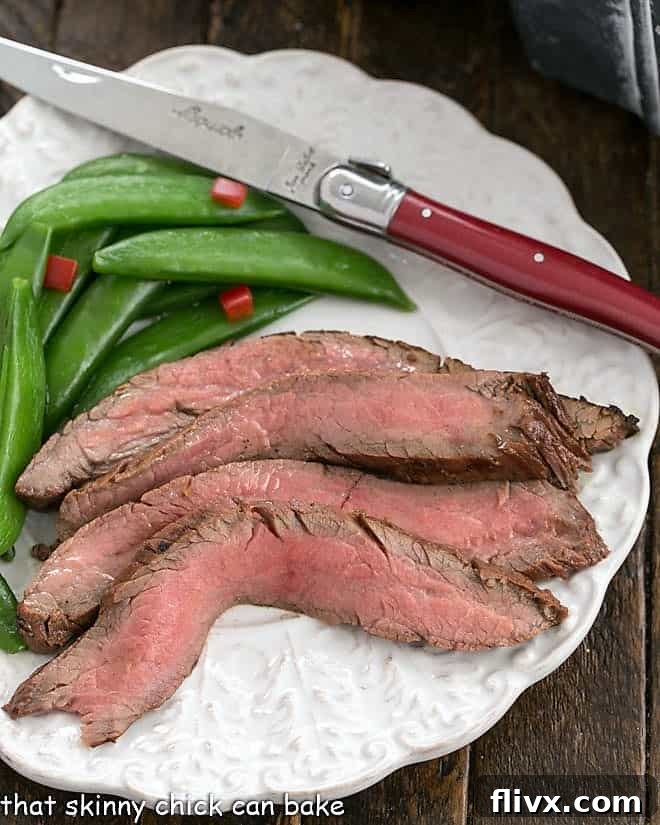
- PRO-Tip: Always cut thin slices across the grain. This is perhaps the most crucial step for ensuring a tender flank steak. The “grain” refers to the long, parallel muscle fibers visible on the surface of the steak.
- To identify the grain, look for the natural lines running from one side of the flank steak to the other. Instead of cutting parallel to these lines, position your knife perpendicular to them, cutting across them from one of the long sides to the other. This shortens the muscle fibers, making each bite significantly more tender and enjoyable. It truly makes a monumental difference in texture!
- Precision Grilling for Optimal Doneness: Overcooking flank steak is a common mistake that leads to a tough texture.
- PRO-Tip: We find that grilling flank steak to a rare or medium-rare doneness yields the most succulent and flavorful results. To achieve this precision, always use an instant-read meat thermometer. Insert the thermometer into the thickest part of the steak, avoiding any bone.
- Remove the steak from the grill when it reaches approximately 5-10°F below your desired final internal temperature. This is because of “carryover cooking,” where the internal temperature of the meat continues to rise even after it’s removed from the heat source. For example, if your goal is 135°F for medium-rare, pull the steak off at 125-130°F.
- The Essential Resting Period: Don’t rush serving your perfectly grilled steak!
- PRO-Tip: After removing the flank steak from the grill, immediately cover it loosely with aluminum foil and let it rest for at least 10 minutes (15 minutes for thicker cuts). This crucial resting period allows the muscle fibers to relax and reabsorb their juices.
- Skipping this step will result in juices pooling on your cutting board or platter when you slice the meat, leaving you with a drier, less flavorful steak. Resting ensures that every slice remains incredibly juicy and tender.
Complementary Serving Suggestions
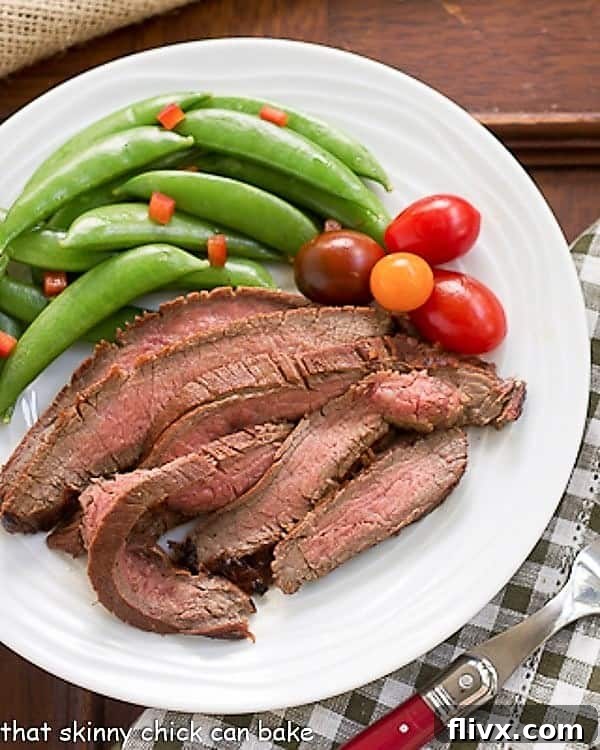
When a flank steak is marinated to perfection, as this Korean Grilled Flank Steak is, its rich and vibrant flavors take center stage. The beef becomes so inherently delicious that it doesn’t require overly complex or competing side dishes. The goal is to choose accompaniments that enhance, rather than overshadow, the star of the meal.
Consider these simple yet elegant pairings:
- A light and crisp green salad, perhaps with a simple vinaigrette, offers a refreshing contrast to the richness of the beef.
- Fresh seasonal vegetables, like perfectly roasted garlic parmesan green beans or steamed asparagus, provide a wholesome and flavorful addition without being heavy.
- Starchy sides such as fluffy white rice or creamy mashed potatoes are excellent for soaking up any extra juices and balancing the meal. For an authentic Asian experience, serving it with steamed jasmine rice is a classic choice.
This Korean Beef has consistently garnered rave reviews in our household. Even those sensitive to spice have found the sriracha, an Asian chile-laced condiment, to be perfectly balanced and never overwhelming. Trust me when I say, this is truly one of the best flank steak marinades you will ever encounter!
Beyond flank steak, this versatile Asian marinade is incredibly adaptable. Friends have successfully used it on chicken and steelhead trout, praising its ability to impart delicious flavor to various proteins. My next culinary adventure will definitely involve trying it with salmon – I have no doubt it will be equally fantastic. This marinade is a true game-changer, opening up a world of possibilities for delicious, easy meals.
Optimal Marinating Times for Various Meats
Marinating is a fantastic way to infuse flavor and tenderize meat, but it’s not a one-size-fits-all process. The ideal marinating time varies significantly depending on the type, cut, and density of the meat or seafood you’re preparing. Delicate proteins, like small shrimp, require much less time than a robust cut like flank steak. The composition of the marinade, particularly the presence of acidic ingredients, also plays a crucial role in how quickly the meat is tenderized.
It’s vital to always marinate in a sturdy, food-safe container such as a thick Zip-loc bag or a glass dish. Avoid using metal containers, as acidic marinades (containing ingredients like vinegar or citrus juice) can react with certain metals, potentially imparting an undesirable metallic taste and possibly compromising food safety. Furthermore, acidic components in a marinade can break down meat fibers more rapidly, so over-marinating with highly acidic mixtures can sometimes lead to a mushy texture.
Here’s a general guide to marinating times for different proteins:
- Beef: Cuts like this grilled flank steak or larger roasts can benefit from extended marination, ideally 6 hours to overnight (up to 24 hours). Thinner steaks, such as sirloin or ribeye, typically need 2-3 hours.
- Pork: Chops and tenderloins are best marinated for 6 hours or overnight (up to 12-18 hours).
- Chicken: Boneless, skinless chicken breasts and thighs generally require 1½-2 hours. Bone-in chicken pieces can be marinated for up to 4 hours or even overnight (I’ve successfully marinated bone-in chicken breasts overnight with great results).
- Lamb: Chops and smaller cuts of lamb, like those for kebabs, marinate well in 4-6 hours, or overnight for larger cuts.
- Shelled Shrimp: Due to their small size and delicate texture, shrimp only need 30-60 minutes of marinating time. Any longer can cause them to become mushy.
- Salmon: Similar to shrimp, delicate fish like salmon should be marinated for a shorter duration, typically 30-60 minutes.
Frequently Asked Questions About Grilling Flank Steak
The grilling time for flank steak is influenced by several important factors, making it more an art than a science, though easily mastered with practice. First and foremost, consider the weight and thickness of your specific cut of meat. A thicker steak will naturally require more time on the grill. The next critical variable is the heat of your grill; gas grills offer precise temperature control, while charcoal grills can fluctuate, requiring more careful monitoring and adjustment. Additionally, the initial temperature of your meat matters significantly. For more even cooking, I highly recommend allowing your flank steak to sit on the countertop at room temperature for about an hour before grilling to take the chill off.
Finally, your preferred level of doneness—rare, medium-rare, medium, or well-done—will dictate the total grilling time. Typically, for a standard 1.5-2 pound flank steak cooked to medium-rare, it takes approximately 4-5 minutes per side. Always use an instant-read thermometer to check for your desired internal temperature.
PRO-Tip: After removing your beef from the grill, cover it loosely with foil and let it rest for about 10 minutes before slicing. This essential resting period allows the juices within the meat to redistribute throughout, ensuring every bite is succulent and flavorful. Furthermore, this resting time contributes to “carryover cooking,” where the internal temperature of the steak can rise by an additional 5-10 degrees. For this reason, it’s always best to pull your beef off the grill when it’s approximately 5-10 degrees under your target doneness temperature.
Understanding ideal internal temperatures is key to grilling beef to your desired doneness. Using an accurate meat thermometer is crucial for consistent results. Remember that carryover cooking means you should remove the beef from the grill a few degrees before it reaches these target temperatures:
- Rare – Characterized by a cool, deep red center. Target internal temperature: 125° F
- Medium Rare – Features a warm, vibrant red center. This is often the preferred doneness for flank steak due to its balance of juiciness and tenderness. Target internal temperature: 135° F
- Medium – Displays a warm, rosy pink center. Target internal temperature: 145° F
- Medium Well – Shows a slightly pink center, with more gray-brown throughout. Target internal temperature: 150° F
- Well Done – Exhibits very little to no pink, mostly gray-brown throughout. Target internal temperature: 160° F (While some prefer this, it is generally not recommended for lean cuts like flank steak as it can become quite tough. However, everyone has their preference – my dad, for instance, always enjoyed his beef cooked well-done, so we always accommodated him).
Absolutely! One of the fantastic advantages of this recipe is its suitability for meal prep. You can prepare the marinade up to 2-3 days in advance and store it in the refrigerator. The flank steak itself can be added to the marinade and refrigerated for at least 2 hours, and ideally, overnight. This makes it perfect for busy weeknights or when entertaining guests, as most of the preparation is done ahead of time. Simply pull the marinated steak from the fridge, let it come to room temperature for about an hour, and then grill! Leftovers, if any, can be stored in an airtight container in the refrigerator for 3-4 days and are delicious thinly sliced for salads, sandwiches, or rice bowls.
Explore More Delicious Beef Recipes
If you’ve enjoyed this incredible Korean Grilled Flank Steak, you’ll be thrilled to discover other fantastic beef recipes that complement a variety of tastes and occasions. Here are some of our top recommendations:
- Stuffed Flank Steak from Diethood for an elevated presentation.
- Beef Bulgogi, another one of our favorite Asian beef recipes, offering a different take on Korean flavors.
- Flank Steak Roulades for a gourmet touch.
- Beef Sushi Rolls, a creative and exciting appetizer or light meal.
- Easy Grilled Flank Steak for a quick and simple weeknight dinner.
- How to Grill a Perfect Steak for mastering your grilling technique.
- Soy, Orange Juice, and Red Wine Marinade for another versatile flavor profile.
- Discover more of the Best Beef Recipes to expand your culinary repertoire.
Stay in touch through social media @ Instagram, Facebook, and Pinterest. Don’t forget to tag me when you try one of my recipes! And if you love the results, please give it a 5-star rating in the recipe card.
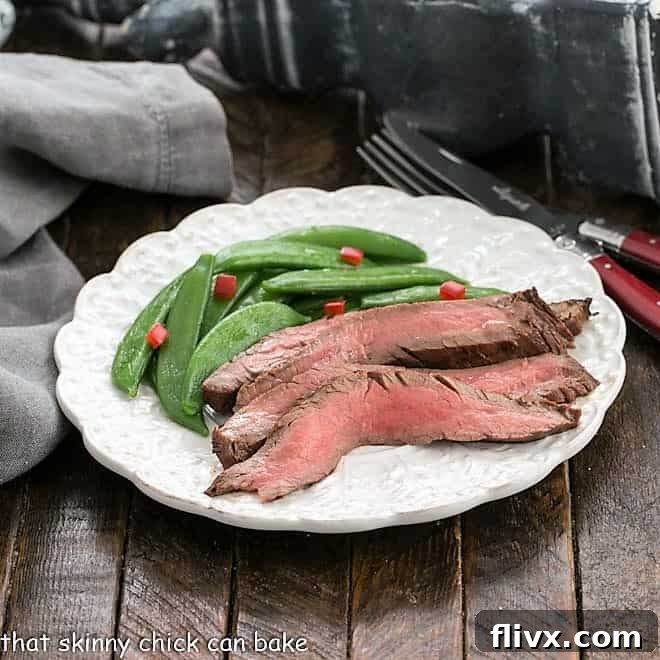
Korean Grilled Flank Steak
5 minutes
10 minutes
15 minutes
4 servings
A simple Asian marinade transforms a flank steak into a fabulous entree!
Ingredients
- ½ cup soy sauce
- ¼ cup rice wine vinegar
- ½ bunch green onions (finely chopped)
- 2 tablespoons grated fresh ginger
- 1 tablespoon toasted sesame oil
- 1 ½ teaspoons sriracha chili paste or sauce
- 1 flank steak, 2 pounds
- Freshly ground black pepper to taste
Instructions
- Combine all marinade ingredients, and mix well in a bowl or a large Ziploc bag.
- Pour the marinade into a large ziplock bag and add the flank steak. Seal the bag, ensuring to remove any excess air, and marinate for at least 2 hours, or preferably up to overnight, in the refrigerator for best flavor and tenderness.
- When ready to grill, prepare your grill for medium-high heat. Remove the steak from the marinade, discarding the used marinade, and pat the steak dry with paper towels. Lightly sprinkle with freshly ground black pepper to taste.
- Grill the steak to your desired doneness (medium-rare is highly recommended for optimal tenderness), typically about 3-4 minutes per side. Use an instant-read meat thermometer to ensure accuracy, aiming to remove the steak when it’s about 5-10°F below your target temperature due to carryover cooking.
- Once grilled, transfer the steak to a cutting board, cover it loosely with aluminum foil, and let it rest for about 10 minutes. This allows the juices to redistribute. After resting, slice the meat thinly across the grain and serve immediately.
Notes
This recipe is adapted from Americanprofile.com. Please note that the total time listed does not include the essential marinating time, which can range from 2 hours to overnight.
Recommended Products
As an Amazon Associate and member of other affiliate programs, I earn from qualifying purchases.
- Pyrex Measuring Cups
- Measuring Spoons
- Santoku Knife
- OXO Cutting Board
Nutrition Information:
Yield:
4
Serving Size:
1
Amount Per Serving:
Calories: 112Total Fat: 5gSaturated Fat: 1gTrans Fat: 0gUnsaturated Fat: 4gCholesterol: 17mgSodium: 2039mgCarbohydrates: 7gFiber: 1gSugar: 3gProtein: 9g
HOW MUCH DID YOU LOVE THIS RECIPE?
Please leave a comment on the blog or share a photo on Pinterest