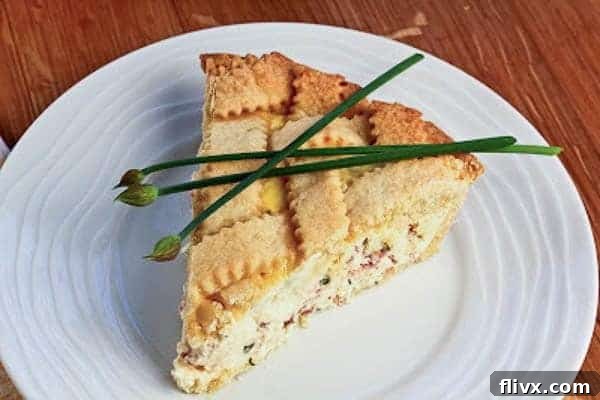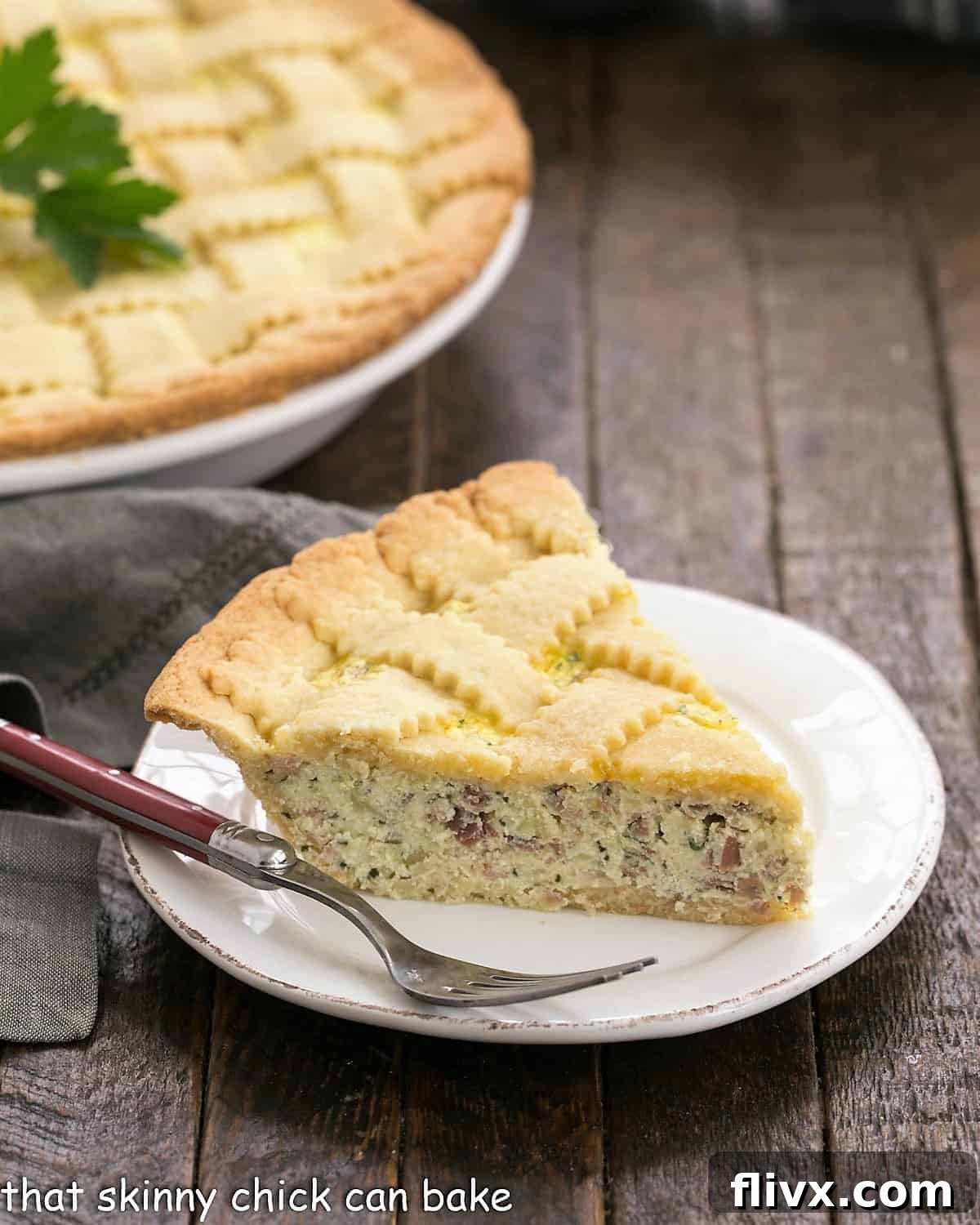
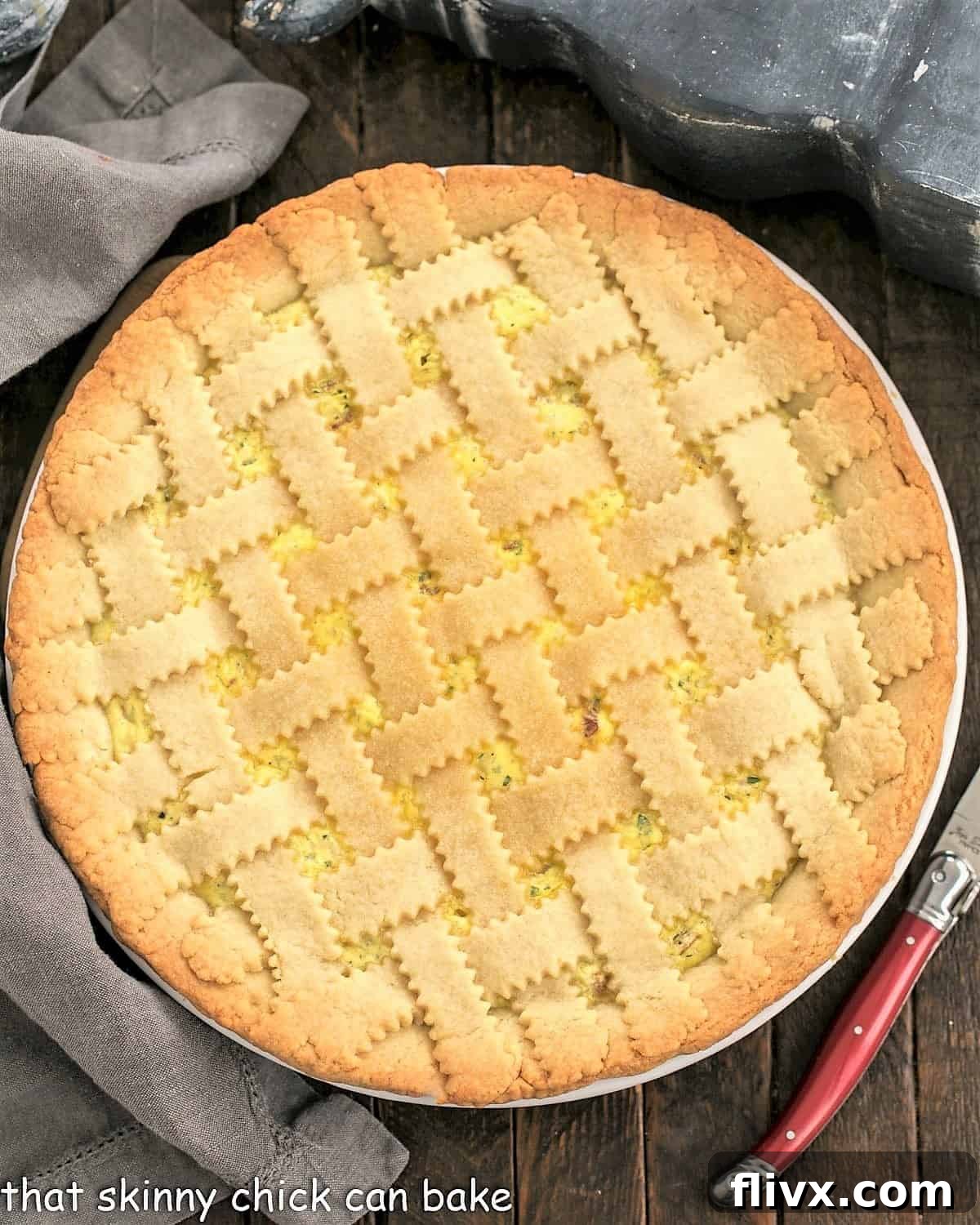
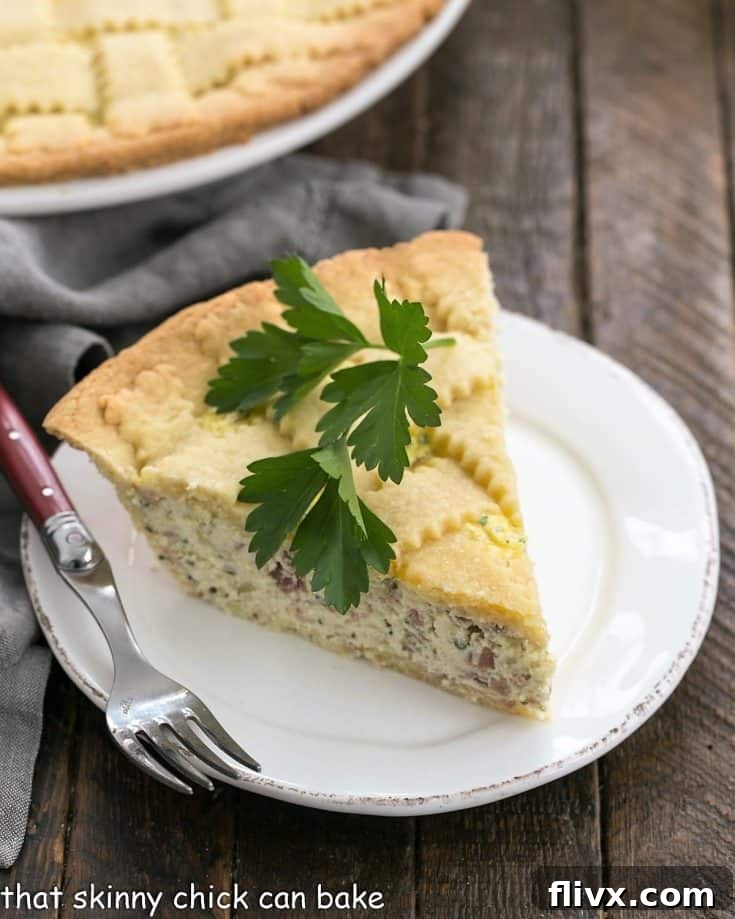
This Italian Pizza Rustica is a quintessential savory pie, boasting a delightful slightly sweet pastry shell generously filled with a rich, creamy blend of ricotta cheese, eggs, fresh mozzarella, and savory prosciutto. More than just a dish, it’s a culinary celebration.
Known affectionately as Rustico Pizza or the revered Italian Easter Pie, this magnificent creation is encased in a tender, golden pastry crust that promises an extraordinary experience with every single bite. It’s a testament to rustic Italian charm and a true centerpiece for any gathering, especially during the festive Easter season. Its unique blend of flavors and textures sets it apart, making it an unforgettable savory treat.
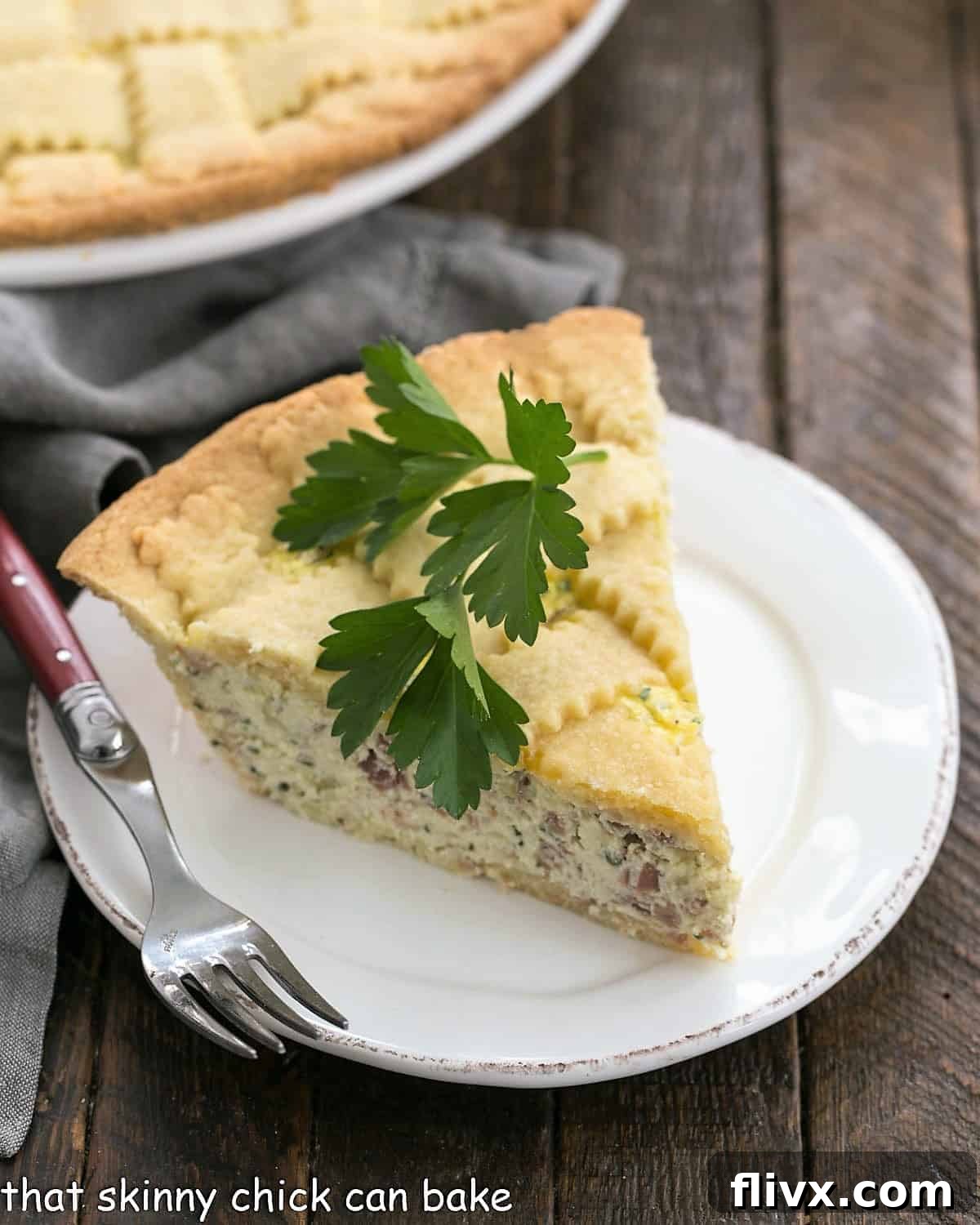
The Enchanting History of Italian Pizza Rustica
Delving into the origins of Pizza Rustica takes us on a flavorful journey back to 17th-century Naples, Italy. This iconic dish emerged from a rich tradition of utilizing seasonal ingredients and celebrating religious holidays with elaborate feasts. Originally conceived as a substantial and hearty meal to break the Lenten fast during Easter, Pizza Rustica quickly became a beloved staple in Italian households, particularly in the southern regions.
Its creation was deeply intertwined with the culinary ingenuity of the time, where families would painstakingly prepare this elaborate pie days in advance of Easter Sunday. The robust filling, packed with cured meats and cheeses, provided much-needed sustenance after periods of fasting and was a symbol of abundance and renewal. Over centuries, the recipe evolved, with each family and region adding its own unique twist, incorporating local meats and cheeses. Despite variations, the core essence—a rich, savory pie encased in a tender crust—remained constant, solidifying its place as a cherished Easter tradition that continues to be passed down through generations.
Why This Classic Savory Pie is an Absolute Must-Make
There are countless reasons to add Italian Pizza Rustica to your culinary repertoire, especially when following a meticulously crafted recipe:
- A Master’s Touch: This particular recipe hails from Nick Malgieri, a renowned baking authority whose insights have guided countless home bakers to perfection. His expertise ensures a reliable and truly authentic result, mirroring the techniques used for impeccable apple pies and luscious cheesecakes.
- A Versatile Culinary Gem: While traditionally a star of the Easter table, served as a delightful appetizer, Pizza Rustica’s comforting and robust flavors make it incredibly versatile. It transcends holiday boundaries, proving equally satisfying as a unique breakfast, a hearty lunch, or a special dinner. Its ability to be served warm, at room temperature, or even cold further enhances its appeal.
- Unforgettable Flavor and Texture: The buttery pastry crust, enriched with eggs, is remarkably tender and a dream to roll out, making the baking process a joyous experience. This perfect crust cradles a lavish filling where the creamy richness of ricotta, the gooey texture of mozzarella, and the salty, savory notes of prosciutto come together in a harmonious explosion of taste. It’s a symphony of textures and flavors that captivates from the very first bite.
Expert Tips for a Flawless Pizza Rustica
Achieving Pizza Rustica perfection is easier with these insightful tips and tricks:
- Prepare the Crust in Advance: For convenience and enhanced flavor, you can prepare the pastry crust a day or two ahead of time. Simply wrap it tightly in plastic wrap and store it in the refrigerator. Remember to allow it to come to room temperature before rolling it out, as this will prevent cracking and make it more pliable.
- Customizing Sweetness: The original recipe suggests 1/3 cup of sugar for the pastry, but for a truly savory pie, consider reducing it to 1/4 cup, or even less, depending on your preference. This subtle adjustment allows the rich, savory notes of the filling to truly shine through without being overshadowed.
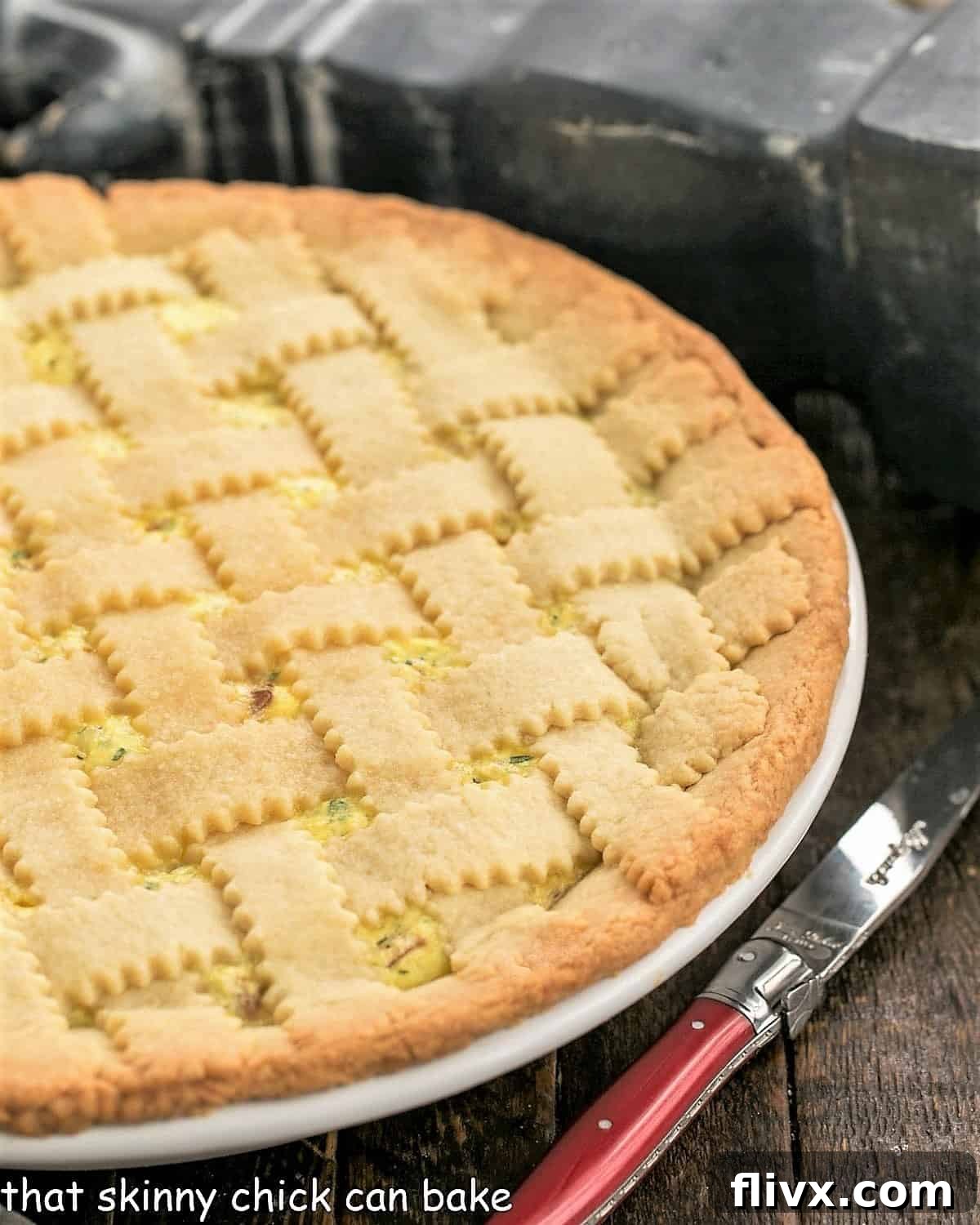
- Elevate Your Presentation: While a simple straight-edge cut for your lattice top is beautiful, using a crimped pastry cutter can add a festive and decorative touch, making your Italian Easter Pie even more visually appealing for special occasions.
- Personalize Your Meats: Traditional Pizza Rustica often features a variety of cured Italian meats. Feel free to customize the filling with your favorites such as Italian sausage, spicy pepperoni, soppressata, or even cooked smoked ham. Ensure all meats are cooked and diced appropriately before adding them to the ricotta mixture.
- Cheese Alternatives: While mozzarella and Pecorino Romano are classic choices, don’t hesitate to experiment with other delicious Italian cheeses. Provolone offers a sharper, tangier note that beautifully complements the meats, and a good quality Parmesan can be a wonderful substitute for Pecorino Romano, offering a slightly milder, nutty flavor.
- Spotting Perfect Doneness: Baking a pie with a lattice crust offers a distinct advantage: you can observe the filling. Bake until the crust is golden brown and the filling appears beautifully puffed and set in the middle. This visual cue is crucial for ensuring a perfectly cooked and structurally sound pie.
How to Make a Delectable Rustico Pizza: Step-by-Step
Crafting this savory Italian masterpiece involves a few key stages:
- Mastering the Crust: Begin by preparing the dough in a food processor for ease and efficiency. Once mixed, gently knead it until smooth, then divide, wrap in plastic, and allow it to rest. This resting period is crucial for a tender, easy-to-roll crust.
- The Hearty Filling: In a separate bowl, combine all the filling ingredients. Use a rubber spatula to gently mix until everything is thoroughly incorporated and smooth. This ensures a consistent flavor throughout your pie.
- Preparation is Key: Butter your chosen pie plate thoroughly. This prevents sticking and helps achieve a beautiful golden crust.
- Laying the Foundation: Roll out the larger portion of your rested dough into a generous circle. Carefully transfer it to your prepared pie plate, pressing it gently against the bottom and up the sides. Trim any excess dough neatly along the rim.
- Generous Filling: Spoon the rich, savory filling into the pie shell, spreading it evenly to create a level top.
- Crafting the Lattice: Roll out the remaining pie crust and cut it into 12-14 even strips. This is where your artistic touch comes in!
- Weaving the Top: Arrange half of the pastry strips across the pie in one direction. Then, take the remaining strips and weave them perpendicularly or at a slight diagonal over and under the first set. This creates the classic, beautiful lattice pattern. If you need a visual guide, many online tutorials, such as this one on how to weave a lattice crust, can assist you. Pinch the edges to seal.
Frequently Asked Questions About Pizza Rustica
Pizza Rustica, also known as Italian Easter Pie, is a traditional savory pie that features a delicate, flaky pastry crust generously filled with a delectable combination of rich cheeses like ricotta, mozzarella, and Pecorino Romano, alongside various cured Italian meats such as sausage, smoked ham, and pepperoni. It’s a hearty and flavorful dish, far removed from the typical flat pizza, and often enjoyed as a celebratory meal.
This beloved Italian savory pie goes by several names, reflecting its regional variations and historical context. It is commonly referred to as Italian Easter Pie, Rustico Pizza, Pizzagaina (a Neapolitan dialect term), Pizza Ripiena (stuffed pizza), or Pizza Chiena (full pizza).
The origins of this traditional Easter pie can be traced back to the vibrant culinary traditions of Naples, Italy, with its history extending as far back as the 17th century. It developed as a celebratory dish, especially popular during the Easter season.
Pizza Rustica is incredibly versatile in how it can be served. While it can be enjoyed warm, its traditional and arguably best presentation is at room temperature, making it an ideal appetizer or part of a buffet spread. It also holds up well when served cold, showcasing its rich flavors and textures.
To ensure optimal freshness and safety, Pizza Rustica should not be left at room temperature for more than 2 hours. When properly stored, covered tightly with plastic wrap or aluminum foil and refrigerated, it will maintain its quality and deliciousness for 4-5 days, making it perfect for enjoying leftovers.
Complement Your Meal: Related Recipes You Might Enjoy
- Spinach Torta Rustica
- Braided Easter Bread
- White Chocolate Easter Bark
- Herb Crusted Rack of Lamb
- Discover more of the Best Holiday Recipes
Stay connected and share your culinary creations with me on social media! Find me @ Instagram, Facebook, and Pinterest. Don’t forget to tag me when you try one of my recipes! If you adore the results, please consider leaving a 5-star rating in the recipe card below – your feedback means the world!
Italian Pizza Rustica
30 minutes
40 minutes
1 hour 10 minutes
8 servings
A ricotta, mozzarella and Prosciutto filled pie!
Ingredients
For the Dough
- 2 cups all-purpose flour
- ⅓ cup sugar
- ½ teaspoon baking powder
- ¼ tsp salt
- 1 stick (4 oz) cold, unsalted butter or 4 oz cold lard, cut into 8 pieces
- 2 large eggs, lightly beaten
For the filling:
- 1 pound whole milk ricotta
- 3 large eggs
- ¼ cup freshly grated Pecorino Romano cheese
- ¼ pound mozzarella cheese, grated
- ¼ pound thinly sliced prosciutto, shredded
- 2 tablespoons chopped fresh parsley
- ¼ teaspoon freshly ground black pepper
Instructions
- Put the flour, sugar, baking powder, and salt into the work bowl of a food processor, fitted with the metal blade; pulse a few times just to mix the ingredients.
- Add the butter and pulse 15 to 20 times, or just until the mixture resembles fine cornmeal. With the machine running, add the eggs and process until the dough forms a ball on the blade, about a minute or so.
- Remove the dough from the processor and knead it, folding it over on itself until smooth, 1 to 2 minutes. Wrap the dough in plastic and set aside. (If you’re not going to make the pizza now, wrap the dough well and refrigerate for up to 3 days)
- Scoop the ricotta into a medium bowl and stir until smooth with a rubber spatula. Add the rest of the filling ingredients one at a time, stirring until each addition is incorporated and the mixture is well blended.
- Position a rack in the lower third of the oven and preheat the oven to 350º, butter a 9-inch glass pie plate. (If you don’t have a glass pie plate, use metal, but increase the oven temp to 375º)
- Divide the dough into two pieces, one twice as large as the other. Working with the large piece, knead it into a disk and roll it out on a lightly floured work surface into a 12-inch circle.
- Transfer the dough to the pie plate and press gently against the bottom and up the sides of the plate. Don’t worry if the dough tears, just press it back together. Use the dull side of a knife to trim the excess dough even with the rim.
- Scrape the filling into the pie shell and smooth the top.
- Knead and shape the remaining piece of dough into a block and roll it into a 9-inch square. Using a pizza or pastry cutter or a thin sharp knife, cut the dough into 12 even strips. To form the lattice, lay 6 of the strips across the pie at 1 1/4-inch intervals, then crisscross the strips, placing the remaining strips diagonal across the first. Trim the ends of the strips even with the edge of the pan and pinch to seal.
- Bake for 35 to 40 minutes, or until the crust is golden and the filling is firm and slightly puffed. Transfer the pie to a rack to cool completely before serving.
- Leftovers can be kept well-covered in the refrigerator for up to 4 days.
Nutrition Information:
Yield:
8
Serving Size:
1 slice
Amount Per Serving:
Calories: 510Total Fat: 31gSaturated Fat: 15gTrans Fat: 0gUnsaturated Fat: 15gCholesterol: 186mgSodium: 703mgCarbohydrates: 35gFiber: 1gSugar: 9gProtein: 21g
HOW MUCH DID YOU LOVE THIS RECIPE?
Please leave a comment on the blog or share a photo on Pinterest