
Welcome, aspiring bakers and seasoned home cooks alike! Embarking on a baking journey can be one of the most rewarding experiences in the kitchen. There’s a unique magic in transforming simple ingredients into delicious, heartwarming treats. Whether you’re just starting out or looking to refine your skills, mastering a few fundamental baking tips and tricks can elevate your creations from good to absolutely extraordinary. With decades of hands-on experience crafting sweet delights, I’ve gathered my ultimate collection of best baking tips to help you achieve consistent success and confidence in your culinary adventures.
From essential preparation techniques to smart ingredient substitutions, this comprehensive guide is designed to make your baking journey smoother and more enjoyable. So, tie on your apron, gather your tools, and let’s unlock the secrets to perfect baking together! Don’t forget to share this invaluable resource with any friends or family new to the wonderful world of baking.

Baking Basics: Essential General Baking Tips and Tricks
Success in baking often hinges on understanding the foundational principles. These general baking tips cover crucial aspects from ingredient preparation to oven calibration, ensuring you set yourself up for delicious results every time. Even if you consider yourself a seasoned baker, you might discover a new tip or trick here that transforms your approach.
- Room Temperature Ingredients are Key: This is a golden rule in baking. Ensure your eggs are at room temperature as cold eggs can cause butter to seize and create a lumpy batter. Room temperature eggs also emulsify more easily with other ingredients, leading to a smoother, more uniform mixture and a better rise in your baked goods. To quickly warm eggs, simply place them in a bowl of very hot tap water for 5-10 minutes. Be careful not to use boiling water, as you don’t want to cook them!
- Softened Butter, Not Melted: Similarly, your butter should be at room temperature unless the recipe specifically calls for cold butter. Room temperature butter should be soft enough to indent easily with your finger and bend slightly without breaking, but not so warm that it appears greasy or starts to melt. This ideal consistency is vital for creaming with sugar, incorporating air, and creating light, tender baked goods.
- Cream Cheese and Sour Cream: For recipes like cheesecakes, cream cheese and sour cream should also be at room temperature. Blending cold cream cheese can result in tiny, unmixed specks throughout your batter, affecting both texture and appearance. Allow them ample time to soften on the counter before you begin.
- Read the Recipe Thoroughly: Before you even think about cracking an egg or preheating your oven, take the time to read your entire recipe from start to finish. This crucial step helps you understand the process, identify any special equipment needed, and anticipate potential chilling or resting times. For instance, some cookie doughs require several hours in the fridge, so if you’re craving immediate gratification, you might choose a different recipe. This foresight prevents surprises and ensures a smooth baking experience.
- Mise en Place – Prepare All Ingredients: The French culinary term “mise en place” means “everything in its place.” Adopt this practice by measuring out all your ingredients before you start mixing. This simple habit ensures you don’t forget a crucial component in the heat of the moment and helps you move efficiently through the baking process.
- Don’t Skip the Salt: It might seem counterintuitive to add salt to a sweet dessert, but salt plays a vital role in balancing flavors. A pinch of salt enhances the sweetness, deepens chocolate notes, and prevents baked goods from tasting flat or overly sugary. It’s a flavor enhancer you won’t want to omit.
- Invest in Quality Ingredients: While saving money is always good, baking often benefits from using quality ingredients. Higher-quality butter, chocolate, and extracts can significantly impact the final flavor and texture of your baked goods. Look for sales on your preferred brands to stock up.
- Check Expiration Dates on Leaveners: Baking powder, baking soda, and yeast are crucial for the rise and texture of your creations. Always check their expiration dates. While a “best by” date is often a guideline, expired leaveners can lose their potency, leading to dense, flat, or under-risen baked goods. To test baking powder, add a teaspoon to half a cup of hot water; it should fizz vigorously. For baking soda, add a quarter teaspoon to a few tablespoons of vinegar; it should also fizz immediately.
- Baking Soda vs. Baking Powder: These two are not interchangeable. Baking soda requires an acid (like buttermilk, lemon juice, or brown sugar) to activate, while baking powder contains both an acid and a base and only needs liquid and heat. They have different chemical reactions and are designed for different types of recipes.
- Calibrate Your Oven with a Thermometer: Oven temperatures can vary significantly from what the dial indicates, sometimes by as much as 50 degrees Fahrenheit. An inexpensive oven thermometer is an invaluable tool to ensure your oven is accurately calibrated. When a recipe calls for baking at 350°F for an hour, you want your oven to actually be at that temperature for consistent results. Many modern ovens offer calibration settings; consult your appliance manual for specific instructions.
- Identify and Address Hot Spots: Ovens often have hot spots, areas where the temperature is higher. If you notice cookies at the back of a baking sheet browning faster than those at the front, rotate your pans halfway through the baking time. This simple action ensures even baking and prevents burnt edges or undercooked centers.
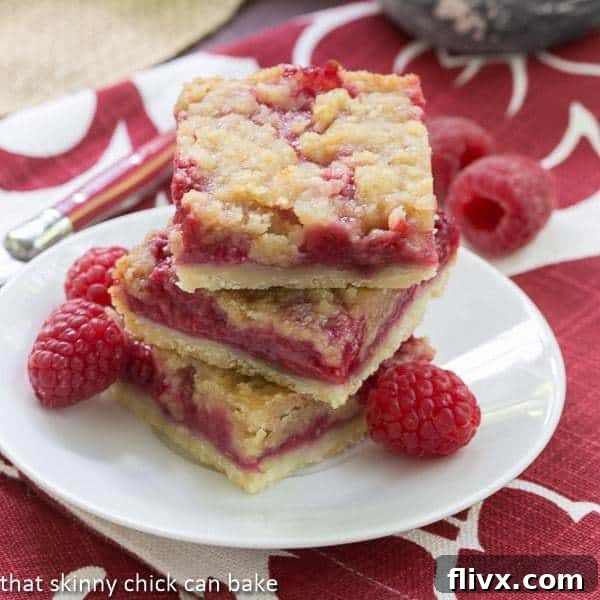
Raspberry Streusel Bars – A perfect example of how proper technique yields delicious results.
Precise Measuring Tips for Perfect Baking
Baking is often referred to as a science, and for good reason. Accurate measurements are paramount to achieving the desired texture, flavor, and consistency in your baked goods. Understanding how to correctly measure different ingredients is a fundamental skill that every baker should master.
- Use Dedicated Measuring Cups: It’s crucial to have separate sets of measuring cups for dry and liquid ingredients. Dry measuring cups are designed to be leveled off, while liquid measuring cups have a spout and measurements below the rim, allowing you to read at eye level for accuracy. These two types are not interchangeable and using the wrong one can lead to significant measurement errors.
- The Non-Stick Spray Trick for Sticky Ingredients: Measuring sticky ingredients like peanut butter, molasses, syrup, honey, or even shortening can be messy and wasteful. A clever trick is to lightly spray your measuring cup or spoon with a non-stick cooking spray (like Pam) before adding the ingredient. The oil creates a barrier, allowing the sticky substance to slide out effortlessly, ensuring you get the full, accurate measurement and an easy cleanup.
- Measure Flour Correctly: For the most accurate flour measurement without using a scale, avoid scooping directly from the bag with your measuring cup, as this compacts the flour, resulting in too much. Instead, gently spoon the flour into your dry measuring cup until it’s overflowing. Then, use the flat edge of a knife or an offset spatula to level off the top, removing any excess. This method ensures a lighter, more accurate measure, preventing dense baked goods.
- Pack Brown Sugar: Most recipes calling for brown sugar require it to be packed firmly into the measuring cup. This means pressing it down with a spoon or your fingers until it holds its shape when inverted. This ensures you’re removing air pockets and getting the correct density and amount of sugar needed for the recipe.
- The Ultimate Accuracy: A Digital Kitchen Scale: While volumetric measurements (cups and spoons) are common, the BEST way to measure ingredients, especially in baking, is by weight using a Digital Kitchen Scale. Flour, for example, can vary significantly in weight per cup depending on how it’s measured. A scale eliminates these inconsistencies, providing unparalleled precision. It’s also invaluable for tasks like dividing bread dough into equal halves, ensuring identical amounts of batter in multiple cake pans, or scaling recipes. It’s a worthy investment for any serious home baker.
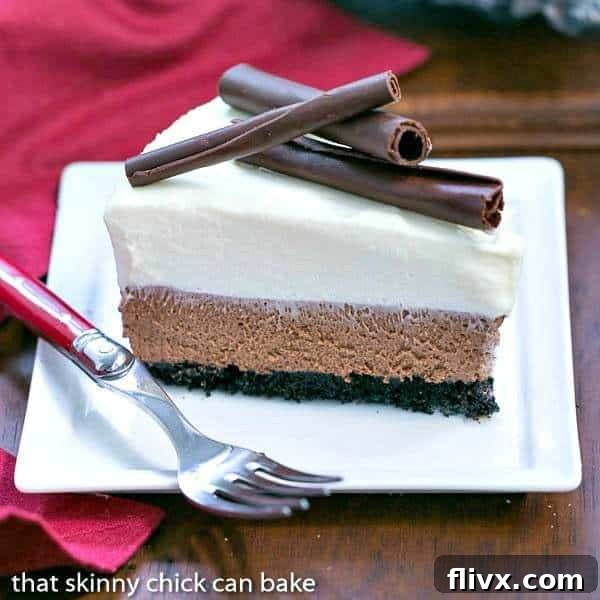
Triple Chocolate Mousse Pie – A dessert that truly benefits from precise measurements.
More Baking Basics: Essential Pan Preparation Techniques
Properly preparing your baking pans is a critical step that often goes overlooked, yet it’s fundamental to ensuring your baked goods release cleanly and maintain their beautiful shape. A sticky cake or crumbled cookie bar can be incredibly frustrating after all your hard work. Here are the best strategies for pan prep.
- Specialty Baking Sprays for Cakes and Quick Breads: For cakes, quick breads, muffins, and other baked goods that are prone to sticking, a cooking spray specifically designed for baking is a game-changer. Products like Baker’s Joy combine oil and flour, creating a non-stick coating that works significantly better than plain cooking spray or butter and flour alone. This ensures a clean release, even for intricate Bundt pans.
- Parchment Paper for Cookie Sheets: Line your cookie sheets with Parchment Paper Baking Sheets. Not only does this prevent cookies from sticking, but it also promotes more even baking, prevents spreading, and makes cleanup incredibly easy. You can simply slide the baked cookies off the parchment onto a cooling rack without fear of breakage.
- Lining Loaf and Cake Pan Bottoms: For cakes and loaf breads, beyond greasing and flouring the sides, consider cutting a piece of greased parchment paper to fit the bottom of the pan. This extra layer guarantees that the bottom of your baked good won’t stick, allowing for a pristine release and preventing any chunks from tearing off during removal.
- Non-Stick Foil for Cookie Bars: When baking cookie bars, brownies, or other bar-style desserts, lining the pan with Non-Stick Foil or parchment paper is highly recommended. Leave an overhang on two sides to create “handles.” Once cooled, you can easily lift the entire slab of bars out of the pan, place it on a cutting board, and slice it neatly without damaging the pan or struggling with removal.
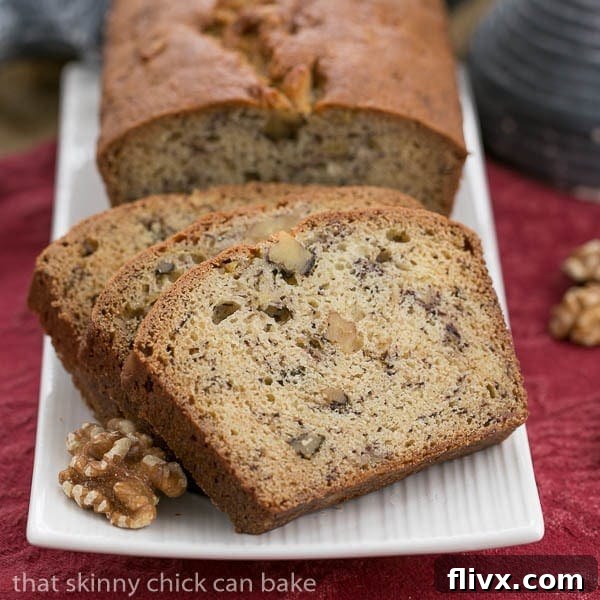
Classic Banana Nut Bread – Always a hit when it comes out of the pan perfectly.
Testing for Doneness: When Are Your Baked Goods Really Done?
Knowing exactly when your baked goods are perfectly done is a skill that takes practice, but these reliable testing methods will guide you to consistent success. Over or under-baking can drastically alter texture and flavor, so pay close attention to these cues.
- The Toothpick Test for Cakes and Quick Breads: This is a classic method for determining if most cakes, muffins, and quick breads are done. Insert a wooden toothpick, skewer, or thin knife into the very center of the baked good. If it comes out clean with no wet batter attached, it’s typically done. However, some recipes, particularly for moist cakes or brownies, might instruct you to look for a few moist crumbs clinging to the toothpick, indicating a fudgier or softer consistency is desired. Always refer to your specific recipe’s guidance.
- The “Spring Back” Touch Technique: For many cakes and muffins, you can also use a gentle touch test. Carefully and lightly press down on the center of the baked item with your fingertip. If the indentation springs back immediately, the item is likely done. If the indentation remains or feels soft and gooey, it needs more baking time. This method is excellent for assessing the overall set of the interior.
- Internal Temperature for Bread: For yeast breads, the most accurate way to check for doneness is with an instant-read thermometer. Insert the thermometer into the thickest part of the loaf. For most yeast breads, an internal temperature of 200°F to 210°F (93°C to 99°C) indicates that it’s fully baked. Additionally, a traditional trick is to tap the bottom of the loaf with your knuckles; a hollow sound suggests it’s done.
- Brownies: A Unique Challenge: Brownies can be tricky because their ideal texture can range from fudgy to cakey. They will often pull away slightly from the sides of the pan when done, and the center should look set but still have a slight wobble if shaken gently. A toothpick inserted near the edge should come out clean, but one in the center might have moist crumbs for a fudgy brownie. Always consult your recipe’s specific tips for the best results for that particular brownie style.
- Cookies: Observe the Edges: For most cookies, check them at the minimum baking time specified in the recipe. The edges should appear set and lightly golden, while the centers may still look slightly soft or “underbaked.” This slight under-baking typically results in a chewier cookie. If you prefer a crispier cookie, bake them for an extra minute or two until the centers are fully set.
- Proper Cooling is Essential: Do not rush the cooling process. Allow cakes and quick breads to cool in their pans for 10-15 minutes before inverting them onto a wire rack to finish cooling completely. This allows them to firm up and prevents them from breaking. Similarly, let cookies cool on their baking sheet for a few minutes before transferring them to a wire rack. More delicate cookies might need a longer rest on the sheet before moving. Always follow recipe-specific cooling instructions.
- The Art of Cutting Perfect Bars: Achieving perfectly even bars, brownies, or cookie squares requires a simple technique. First, ensure your baked bars are thoroughly chilled in the refrigerator for at least an hour, or preferably longer. Then, use a very sharp, clean knife that has been heated under hot water and wiped dry. Reheat and wipe the knife after every few cuts. For consistency, if eyeballing doesn’t work, use a ruler. For an 8×8-inch pan, cutting into 16 bars (each 2×2 inches) is ideal. For a 9×9-inch pan, nine 3×3-inch bars or 36 1½-inch bars might work best. For a detailed guide, check out this post on How to Cut Perfect Cookie Bars.
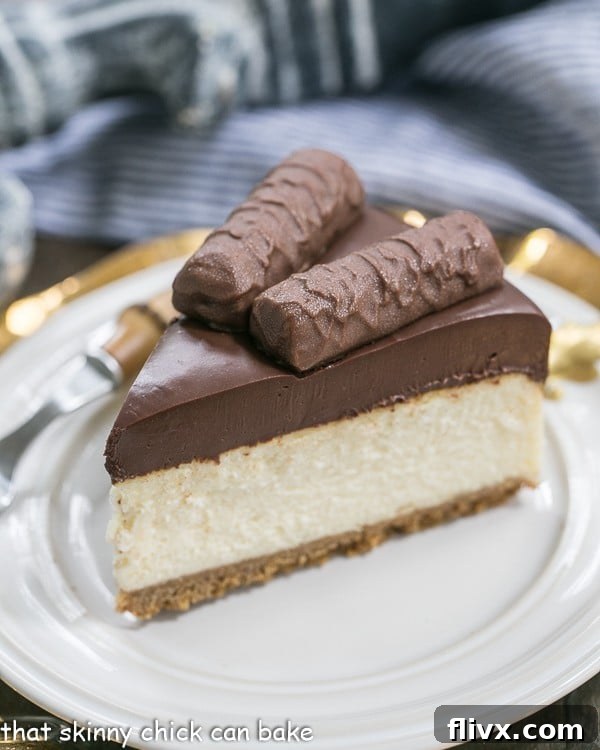
Twix Cheesecake – Requires careful attention to doneness and cooling.
The Impact of Quality Ingredients in Baking
While it might be tempting to always opt for the cheapest brand, the quality of your ingredients can significantly impact the flavor, texture, and overall success of your baked goods. This is especially true for foundational ingredients like butter, flour, and eggs. Investing a little more or seeking out sales on trusted brands can make a noticeable difference in your final product.
- Flour: The type and quality of flour are crucial for structure. I consistently recommend using the King Arthur brand for All-Purpose and Cake Flour. Their flours are unbleached and undergo rigorous quality control, providing reliable protein content for consistent results across various recipes.
- Sugar: For granulated and brown sugars, consistency in granule size and moisture content is important. I find the Domino brand to be highly reliable and readily available, ensuring predictable sweetness and texture in my recipes.
- Butter: This is an ingredient where quality truly shines. Some generic brands of butter contain higher water content, which can affect the fat-to-liquid ratio in your recipe, leading to less tender or flaky results. I prefer using Land O’Lakes butter for its consistent quality and rich flavor. I typically use salted butter and adjust (reduce) the amount of added salt in recipes that call for unsalted butter.
- Eggs: Large eggs are the standard for most baking recipes in the US. Beyond size, ensuring fresh, high-quality eggs contributes to better structure and moisture. I regularly purchase Eggland’s Best due to its consistent availability and freshness. Remember, having your eggs at room temperature is also vital for easy incorporation and emulsification into your batter.
Handy Easy Baking Substitutions for When You’re in a Pinch
Sometimes you’re halfway through a recipe only to discover you’re missing a key ingredient. Don’t fret! These easy baking substitutions can save your recipe and prevent an extra trip to the grocery store. I’ve personally used many of these repeatedly, especially for buttermilk and cake flour, and they consistently deliver excellent results.
- Buttermilk Substitute: If your recipe calls for buttermilk and you don’t have any, it’s incredibly easy to make your own. Pour 1 tablespoon of lemon juice or a neutral-flavored vinegar (like white or apple cider vinegar) into a one-cup liquid measuring cup. Then, fill the rest of the cup to the one-cup mark with regular milk (dairy or non-dairy). Stir gently and let it sit for 5-10 minutes. The milk will curdle slightly, mimicking the acidity and texture of buttermilk. Use this mixture as directed in your recipe.
- Homemade Cake Flour: Cake flour is known for its lower protein content, which results in a softer, more tender crumb. If you don’t have cake flour, you can create a suitable substitute using all-purpose flour and cornstarch. For every cup of cake flour needed, measure out one cup of all-purpose flour. Then, remove two tablespoons of that all-purpose flour. Replace those two tablespoons with two tablespoons of cornstarch. Sift the mixture two or three times to ensure the cornstarch is evenly dispersed throughout the flour. This creates a lower-protein flour blend perfect for delicate cakes and pastries.
- Baking Powder Substitute: For every 1 teaspoon of baking powder, you can substitute a mixture of ¼ teaspoon baking soda, ½ teaspoon cream of tartar, and ¼ teaspoon cornstarch. The cream of tartar provides the necessary acid to activate the baking soda, and cornstarch helps stabilize the mixture.
- Baking Soda Substitute: If you’re out of baking soda, you can use 2 teaspoons of baking powder for every ½ teaspoon of baking soda a recipe calls for. Remember that baking powder contains its own acid, so this substitution works best in recipes where the primary leavening agent is baking soda and there is also some acid present.
- Butter Substitute: In most recipes, an equal amount of margarine can be substituted for butter. Be aware that margarine can have a different fat and water content, which might slightly alter the texture of your final product, but it generally works well.
- Brown Sugar (Light) Substitute: To make light brown sugar from granulated white sugar, simply add one tablespoon of molasses to 1 cup of granulated (white) sugar. Mix them together thoroughly with your hands or a fork until evenly combined. The molasses provides the characteristic flavor and moisture of brown sugar.
- Dark Brown Sugar Substitute: Similarly, to make dark brown sugar, add one tablespoon of molasses to 1 cup of light brown sugar. Mix well until uniformly colored and moistened.
- One Large Egg Substitute (Flax Egg): For a vegan option or if you’re out of eggs, mix 1 tablespoon of ground flaxseed meal with 3 tablespoons of water. Let the mixture sit for about 5-10 minutes until it thickens and becomes gelatinous. This “flax egg” works well as a binder in many baked goods.
- One Large Egg Substitute (Mayonnaise): Surprisingly, 3 tablespoons of mayonnaise can act as a substitute for one large egg. Mayonnaise is primarily made of oil and egg yolk, providing moisture and richness to your baked goods.
Discover More of the Best Baking Tips and Tricks:
The world of baking is vast and full of wisdom. Here are some additional resources to further expand your knowledge and refine your skills:
- 100 Best Baking Tips from Sommer of A Spicy Perspective!
- Bon Appetit’s 11 Baking Tips for elevating your creations.
- Baking Tips and Techniques from the trusted experts at King Arthur Flour.
- Baking Tips for Layer Cakes from Barbara Bakes, perfect for perfecting your tiered masterpieces.
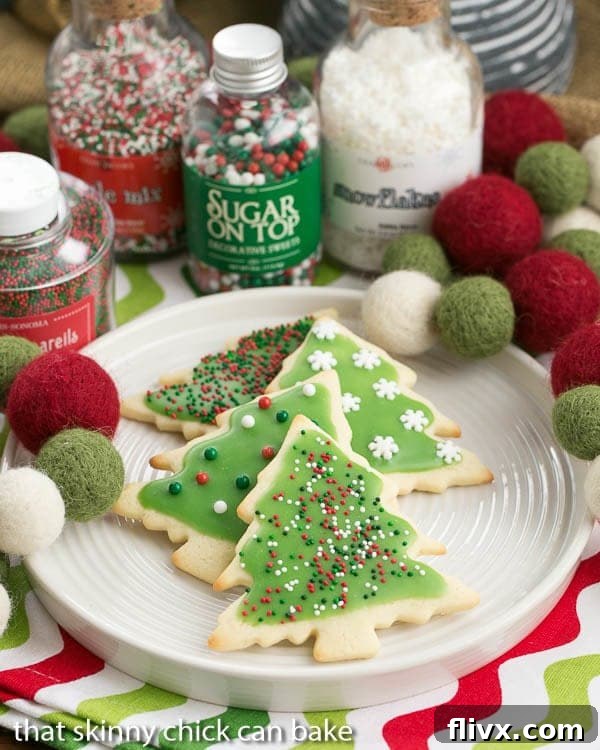
Best Sugar Cookies – A simple recipe made exceptional with the right tips.
Disclaimer: Please note that I am an enthusiastic home baker with years of practical kitchen experience, not a professionally trained pastry chef. These baking tips and tricks are born from countless hours of trial and error, research, and success in my own kitchen. While I strive for accuracy and effectiveness, not every tip may yield identical results for everyone, as variables like oven calibration, ingredient brands, and even humidity can play a role. I encourage you to experiment and find what works best for you. If you have any additional baking suggestions or insights not covered here, please feel free to share them in the comments section below – let’s learn and grow together! Happy baking!