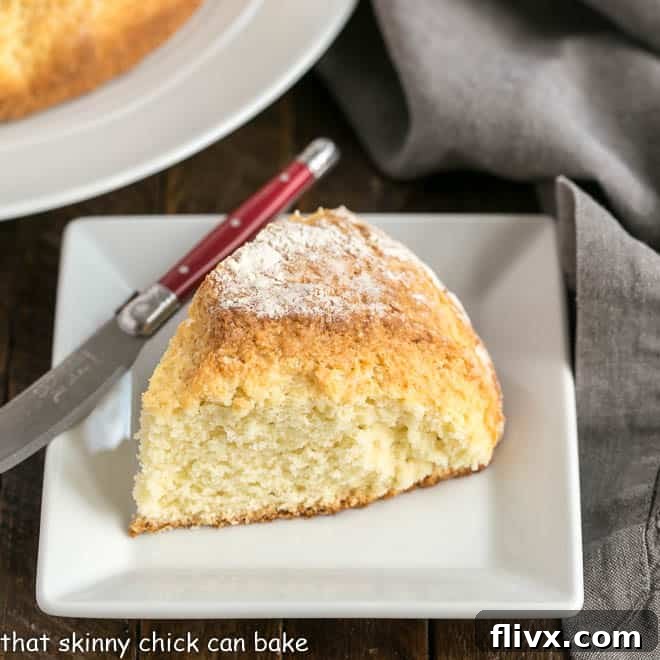
A simple loaf of Irish Soda Bread is a true culinary comfort, quick to prepare, and a delightful staple not just for your St. Patrick’s Day celebrations but perfect for enjoying throughout the entire year!
This Easy Soda Bread Recipe stands apart from traditional yeast-leavened breads, achieving its remarkable rise through the magic of baking soda. Often referred to as a “quick bread,” it bypasses the need for lengthy proofing or rising times that yeast breads require. The secret lies in the chemical reaction between the alkaline baking soda and an acidic component, most commonly buttermilk. This effervescent pairing creates carbon dioxide bubbles, giving the bread its signature texture and lift. Adding buttermilk not only activates the baking soda but also imparts a distinctive tang and tenderness that defines authentic Irish Soda Bread.
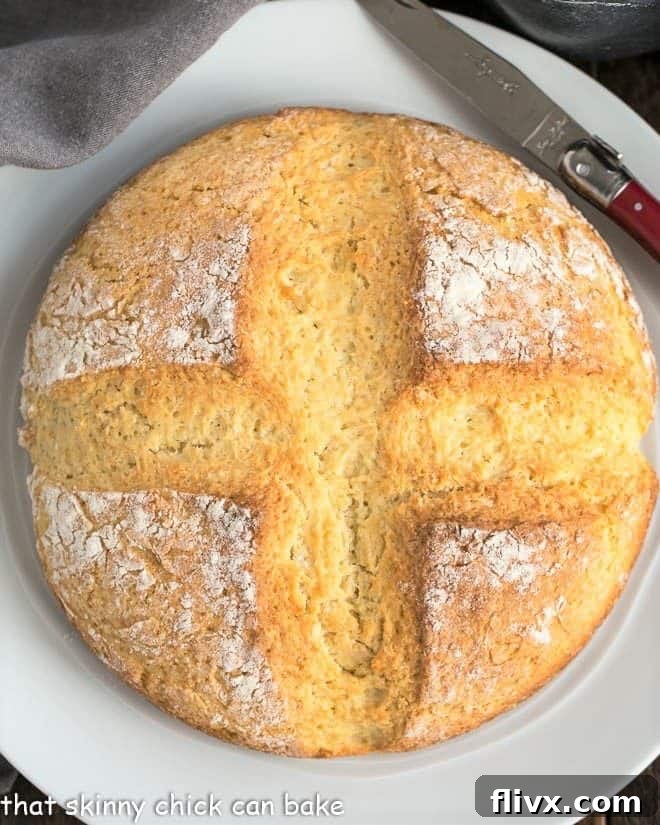
Why You Need to Bake This Irish Soda Bread
Having explored the hearty flavors of Irish Brown Bread after a memorable trip to Ireland, I was inspired to perfect a classic Irish Soda Bread recipe. This particular version, sourced from the esteemed cookbook author Marion Cunningham, stands out for its incredible simplicity and truly satisfying results. With just four core ingredients, it’s a testament to the fact that extraordinary flavor doesn’t require a complex shopping list or an elaborate process. My personal touch of a few tablespoons of sugar (an optional, non-traditional addition) only enhances its charm, adding a subtle sweetness that complements the rustic profile.
- Effortless Preparation: This authentic Irish Soda Bread recipe requires only four fundamental ingredients: Flour, Baking Soda, Salt, and Buttermilk. This minimal ingredient list makes it incredibly accessible, even for novice bakers.
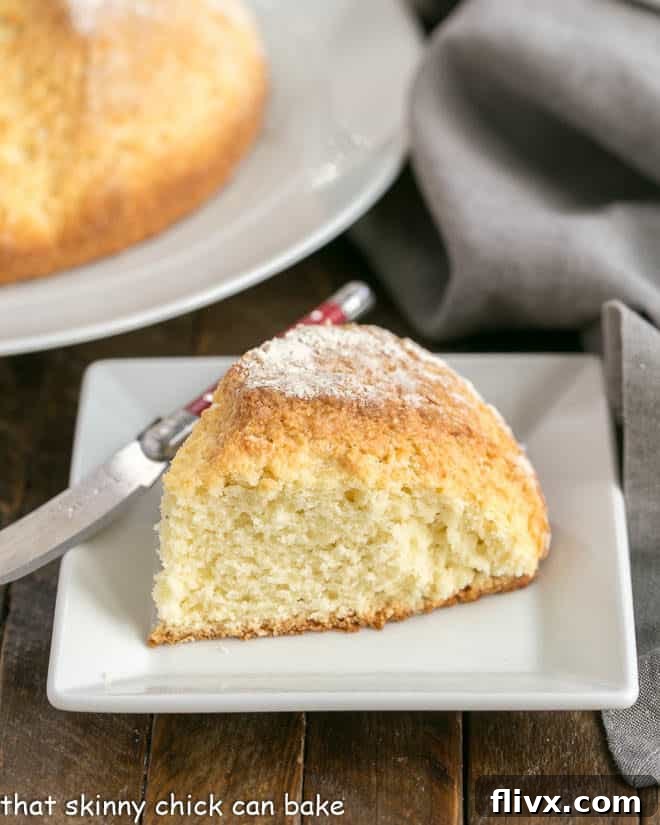
- Superior Texture & Flavor: After a mere 50 minutes in the oven, you’ll be rewarded with a beautifully dense loaf crowned with a perfectly chewy, golden crust. Each slice offers a tender crumb and a comforting flavor that evokes the warmth of an Irish kitchen.
- Universally Loved: Despite its wonderfully rustic appearance, the taste of this bread consistently receives rave reviews. When I offered a slice to my husband, Bill, his immediate response was, “This is really, really good!” – a true measure of success in any kitchen.
- Trusted Source: This exceptional Best Irish Soda Bread Recipe comes from the acclaimed cookbook author and food writer, Marion Cunningham, ensuring a reliable and time-tested method for perfect results every time.
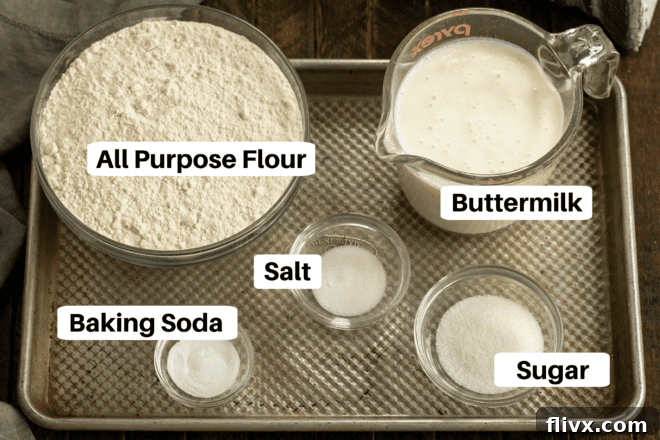
Key Ingredients for Your Homemade Soda Bread
Creating a delicious loaf of Irish Soda Bread starts with understanding the role of each simple ingredient. While the core recipe is incredibly straightforward, a few optional additions can elevate your baking experience and customize the flavor profile to your liking.
- All-Purpose Flour: The foundation of our bread. While whole wheat flour is common in Irish Brown Bread, all-purpose flour yields a lighter, more tender crumb for this classic white soda bread. Ensure it’s fresh for the best results.
- Baking Soda: The star leavening agent. This alkaline powder reacts with the acid in buttermilk to produce carbon dioxide, creating the rise without the need for yeast. Precision in measurement is key for optimal texture.
- Salt: Essential for balancing and enhancing the flavors of the bread. Standard table salt works perfectly, contributing to the overall taste and crust development.
- Sugar (Optional): While traditional Irish Soda Bread often contains no sugar, adding a few tablespoons introduces a subtle sweetness that many find appealing. This is especially true if you plan to incorporate dried fruits, as the sugar can complement their natural flavors beautifully. Feel free to adjust or omit based on your preference for a truly rustic or slightly sweeter loaf.
- Buttermilk: The critical acidic component that activates the baking soda. Real buttermilk is always preferred for its authentic tang and richer flavor profile. If you don’t have buttermilk on hand, don’t worry! You can easily create a substitute at home. Simply measure out one cup of milk (removing one tablespoon) and mix in one tablespoon of lemon juice or a neutral-flavored vinegar. Let it sit for 5-10 minutes until it slightly thickens and curdles. Whole milk works best for this substitute, but 2% milk can also be used in a pinch.
- Dried Fruit (Optional): A wonderful way to add bursts of flavor and texture. Currants are the most classic and traditional addition to Irish Soda Bread, but feel free to experiment with other dried fruits like sweet Cherries, tangy Cranberries, or chopped dried apricots. If using larger fruits, a quick chop ensures they are evenly distributed throughout the dough.
Step-by-Step Guide to Baking Perfect Irish Soda Bread
Baking this rustic Irish delicacy is a straightforward process that yields incredibly satisfying results. Follow these simple steps for a flawless loaf:
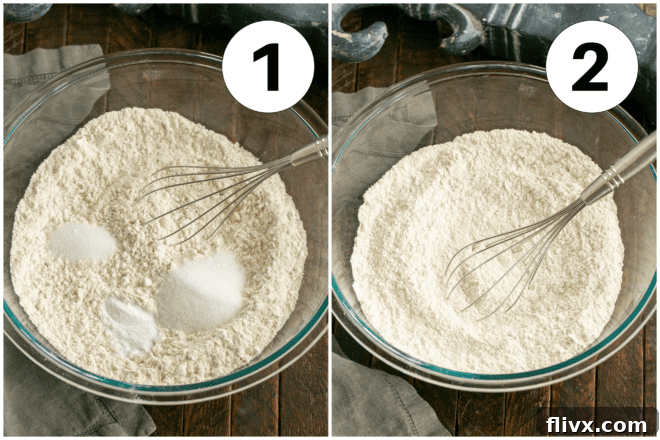
- Preparation: Begin by preheating your oven to 375°F (190°C) and lightly greasing an 8-inch pie plate or a baking sheet. In a large mixing bowl, measure out all your dry ingredients: flour, baking soda, salt, and sugar (if using).
- Combine Dry Ingredients: Using a whisk, thoroughly combine the dry ingredients until they are well integrated and evenly distributed. This ensures the leavening agent is spread throughout the flour.
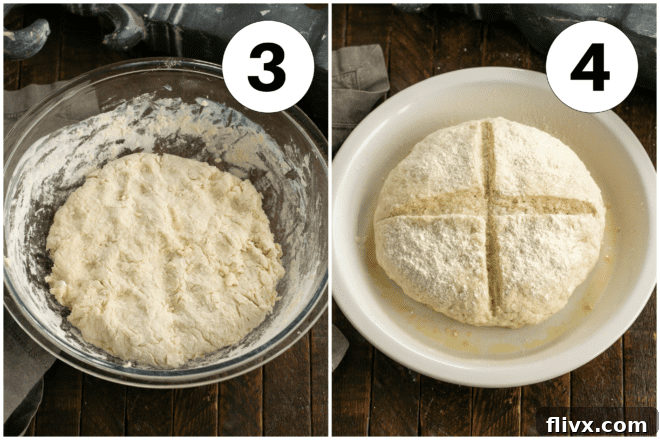
- Incorporate Buttermilk: Gradually add the buttermilk to the dry ingredients, mixing just until the dough comes together. If adding dried fruit, fold it in now, ensuring it’s evenly distributed without overworking the dough.
- Knead & Shape: Turn the dough out onto a lightly floured surface. Knead gently for only a minute or so—just enough to bring it together into a cohesive mass. Over-kneading can develop gluten too much, leading to a tough bread. Shape the dough into a rustic 6-inch ball. Place it into your prepared pan, and with a sharp knife, slice a deep “X” across the surface. This iconic mark helps the loaf bake evenly and is steeped in tradition.
- Bake to Perfection: Bake the loaf as directed in your recipe card, typically around 50 minutes, or until the crust is golden brown and the “X” has visibly widened. A clean knife inserted into the center confirms doneness.
Expert Tips for the Best Irish Soda Bread
Achieving the perfect loaf of Irish Soda Bread is a simple endeavor, but a few expert tips can elevate your baking from good to extraordinary. These insights will help you master the traditional texture and flavor that make this bread so beloved.
- Mixing Method Matters: While a whisk is perfectly acceptable for combining ingredients, my friend Ann often recommends mixing the dough with your hands. She believes this gentle approach helps achieve a lighter, airier consistency, as it allows for better control and prevents over-mixing. Her version, incorporating a stick of butter, is also incredibly tasty, adding richness to the crumb.
- PRO-Tip: Avoid Overworking the Dough. This is perhaps the most crucial rule for any quick bread, including Irish Soda Bread. Unlike yeast breads that benefit from extensive kneading, quick breads (those relying on baking powder and/or baking soda) develop tough, undesirable tunnels if the dough is over-mixed. Mix only until the ingredients are just combined and no dry streaks of flour remain.
- Dough Consistency is Key: Your dough should be substantial and heavy, yet still manageable and not overly wet. If the dough feels too dry and crumbly, you can add a tiny bit more buttermilk, a tablespoon at a time, until it reaches the desired consistency. Conversely, if it’s too sticky, a light dusting of flour can help.
- Shaping Your Loaf: To easily shape the dough into a round loaf, lightly dust your hands with flour. This prevents sticking and allows you to form a neat, traditional shape.
- The Signature “X” Slash: This iconic cross on top of the loaf is not just for aesthetics; it serves a practical purpose by allowing steam to escape, which helps the bread bake more evenly. While a sharp knife works beautifully, Ann suggests using the wrong end of a fork for a rustic, deep incision.
- PRO-Tip: Make the “X” Pop. For that classic, artisanal look where the cross truly stands out, dust the top of your shaped loaf generously with flour just before making the slash.
- Fruit Additions – A Matter of Preference: Traditionally, raisins are the most common dried fruit added to Irish Soda Bread. However, personal preference plays a big role. While my family doesn’t appreciate raisins in bread, I’ve often included dried cherries, which I adore. Whether you opt for currants, raisins, cherries, or even cranberries, ensure they are evenly incorporated into the dough.
- PRO-Tip: Homemade Buttermilk Substitute. If real buttermilk isn’t available, creating a substitute is easy. For every cup of buttermilk required, measure out a cup of milk, then remove one tablespoon. Stir in one tablespoon of white vinegar or lemon juice. Let the mixture rest for 5-10 minutes until it slightly thickens and appears curdled. Whole milk yields the best results, but 2% milk can work in a pinch.
- Choosing Your Baking Vessel: You can bake your Irish Soda Bread in an 8-inch cake pan or a cast-iron skillet. Many bakers find that a cast-iron skillet provides a superior rise and contributes to a wonderfully crispy crust.
- PRO-Tip: Confirming Doneness. To ensure your bread is perfectly cooked through, insert a thin, sharp knife or a metal skewer into the center of the loaf at the end of the baking time. If it comes out clean, your bread is done. Another good indicator is tapping the bottom of the loaf; it should sound hollow.
After perfecting the classic recipe, I experimented with a smaller, half-batch loaf, incorporating ⅓ cup of dried cherries – a personal favorite. This slightly smaller Irish soda bread loaf baked beautifully in just 35 minutes. Whether you stick to the traditional or customize with your preferred dried fruits, this recipe promises a delightful experience. May your baking be filled with joy this St. Patrick’s Day and beyond! Erin Go Bragh!
Frequently Asked Questions About Irish Soda Bread
The practice of cutting a cross on top of Irish Soda Bread carries both practical and symbolic significance. Historically, dating back to the 1800s, it was believed that the cross allowed the Devil to escape from the bread as it baked, bringing good luck. More broadly, it serves as a symbol of giving thanks and offering protection for the home. Practically, the cuts allow the dense dough to expand more evenly during baking, preventing cracking and ensuring a better-cooked interior.
Beyond following the recipe’s recommended baking time as a guide, there are several visual and tactile cues to determine if your soda bread is perfectly baked. Look for the “X” slash on top to have visibly expanded and the crust to have turned a rich golden brown. A reliable test is to insert a metal skewer or a thin knife into the very center of the loaf; if it comes out clean with no wet dough clinging to it, the bread is done. Additionally, gently tapping the bottom of the loaf should produce a hollow sound, indicating it’s cooked through.
For the cleanest and most attractive slices, it’s essential to allow your Irish Soda Bread to cool completely before attempting to cut it. Once cooled, use a serrated knife and employ a gentle sawing motion. This method helps to cleanly cut through the crust and the dense, tender crumb without tearing or squishing the loaf, ensuring each slice holds its shape beautifully.
Irish Soda Bread is incredibly versatile and can be served in many delicious ways. The most classic approach is to enjoy it simply with a generous slather of creamy Irish butter. For added sweetness, pair it with your favorite jam, marmalade, or honey. It also makes a fantastic accompaniment to hearty soups, stews, or a traditional Irish breakfast. This recipe yields a loaf that typically serves 6-8 people, depending on how thickly you slice it.
To keep your homemade Irish Soda Bread fresh, it’s crucial to store it properly. Once completely cooled, wrap the loaf tightly in plastic wrap, aluminum foil, or place it in an airtight container. Store it at room temperature. Due to its minimal fat content, soda bread tends to dry out quickly, so it truly tastes best on the day it is made. If you have leftovers, consider toasting slices the next day to refresh their texture.
Irish Soda Bread: The Recipe
Here’s the straightforward recipe for a classic loaf of Irish Soda Bread, perfect for any occasion.
Ingredients
- 4 cups all-purpose flour
- 1 teaspoon baking soda
- 1 ½ teaspoons salt
- 2 tablespoons sugar (optional, for a slightly sweet loaf)
- 2 cups buttermilk*
- ⅓ – 1 cup dried cherries, currants, or raisins (optional)
Instructions
- Prepare Oven and Pan: Position a rack in the center of your oven and preheat it to 375°F (190°C). Lightly grease an 8-inch pie plate or a baking sheet.
- Combine Dry Ingredients: In a large mixing bowl, whisk together the flour, baking soda, and salt. If using sugar, whisk it in as well.
- Add Wet Ingredients and Fruit: Pour in the buttermilk and mix gently until the dough just comes together. If adding dried cherries or any other dried fruit, fold them in now until evenly distributed. Be careful not to overmix.
- Knead and Shape: Turn the dough out onto a lightly floured surface. Knead very gently for about one minute—just enough to form a soft, malleable ball. Do not overwork the dough. Pat it into a round, 6-inch dough ball and place it in your prepared pan.
- Score the Loaf: Using a sharp knife, cut a deep “X” into the top of the dough. For a more pronounced cross, you can dust the top with a little extra flour before slashing.
- Bake and Cool: Bake for 50 minutes, or until the crust is golden brown and the “X” has widened significantly. A knife or skewer inserted into the center should come out clean. Allow the bread to cool completely on a wire rack before slicing and serving to ensure the best texture.
Notes
This recipe is adapted from Marion Cunningham’s “Baking with Julia.”
*Buttermilk Substitute: If you don’t have buttermilk on hand, you can easily make your own. For each cup of buttermilk needed, measure out 1 cup of milk and remove 1 tablespoon. Then, stir in 1 tablespoon of white vinegar or lemon juice. Let the mixture sit for 5-10 minutes until it slightly thickens and curdles. Whole milk is recommended for the best results.
Dried Fruit Options: Feel free to customize your bread by adding raisins, currants, dried cherries, or other chopped dried fruits to the dough. Incorporate them gently to avoid overworking.
Best Enjoyed Fresh: Irish Soda Bread is renowned for tasting its absolute best on the day it’s baked. Its lack of fat means it can dry out quickly, so fresh is always preferred!
Nutrition Information
Yield:
6 Servings
Serving Size:
1 Slice
Amount Per Serving (approximate):
Calories: 441
Total Fat: 2g
Saturated Fat: 1g
Trans Fat: 0g
Unsaturated Fat: 1g
Cholesterol: 3mg
Sodium: 899mg
Carbohydrates: 93g
Fiber: 3g
Sugar: 26g
Protein: 12g
Explore More Delicious Recipes
If you’ve enjoyed baking this classic Irish Soda Bread, you might love exploring these other delightful recipes perfect for any occasion:
- St. Patrick’s Day Desserts from Hoosier Homemade
- Hearty Sunflower Whole Wheat Bread
- Authentic Homemade Pita Bread
- Luxurious Irish Cream Pots de Crème
- Decadent Irish Chocolate Mousse Cake
- Plus, discover a wide array of my Best Bread Recipes for every baker!
Stay connected and share your baking adventures with me on social media! Find me @ Instagram, Facebook, and Pinterest. Don’t forget to tag me when you whip up one of my recipes! If you love the results, please consider leaving a 5-star rating and a comment on the blog.