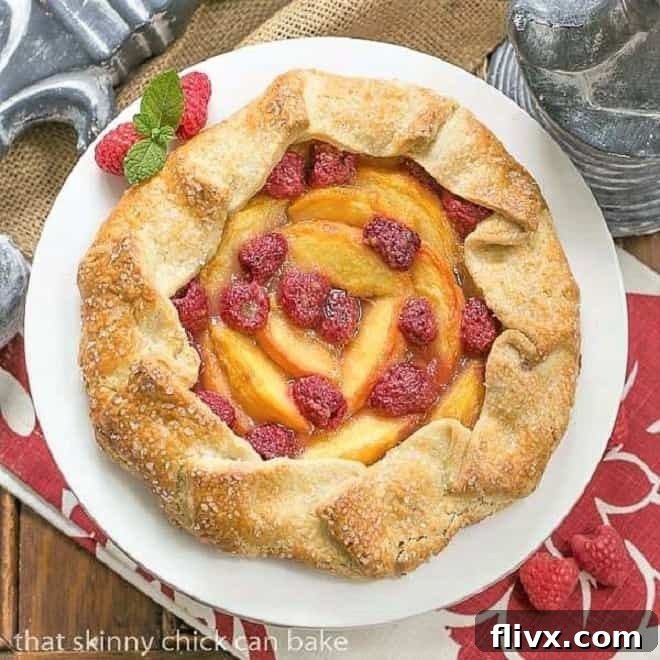
Step into the delightful world of rustic desserts with this exquisite Peach Raspberry Galette. A true celebration of summer’s bounty, this dessert masterfully combines the luscious sweetness of ripe peaches with the vibrant tang of fresh raspberries, all encased in a perfectly flaky, golden-brown pastry crust. Far simpler to assemble than a traditional pie, yet equally impressive, a galette invites you to embrace culinary charm without the fuss. If you’ve been searching for an approachable yet elegant dessert that captures the essence of warm weather, this free-form tart is destined to become your go-to recipe.
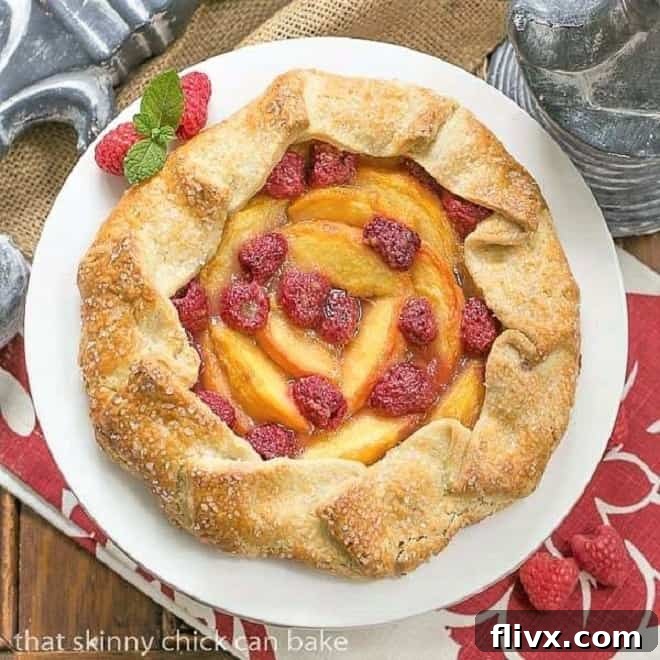
The Allure of the Rustic Galette: Why This Peach Raspberry Delight is a Must-Try
There’s an undeniable charm to a galette. Unlike its more structured cousin, the pie, a galette revels in its free-form, “perfectly imperfect” nature. This means less stress in the kitchen and more joy in the eating! Imagine a dessert that looks like it took hours of painstaking effort, but actually comes together with surprising ease. That’s the magic of this peach raspberry galette, making it the ultimate summer treat for any occasion.
- Effortless Elegance: This rustic peach tart offers all the delicious flavors of a classic fruit pie—a buttery, flaky pastry and a juicy, sweet fruit filling—but with significantly less effort. There’s no intricate crimping or elaborate top crust required, making it an ideal choice for bakers of all skill levels, from beginners to seasoned pros. Its relaxed appearance is part of its inviting appeal.
- Showcasing Summer’s Best: When summer peaches are at their peak, bursting with natural sweetness and aromatic juiciness, there’s no better way to highlight their exquisite flavor. A galette allows the fruit to truly shine, becoming the star of the show with minimal interference. It celebrates the vibrant colors and fresh tastes of the season.
- An Irresistible Flavor Combination: If you’ve never experienced the delightful pairing of sweet, tender peaches and tart, bright raspberries in a baked dessert, prepare to be captivated. The contrast creates a symphony of flavors that is both refreshing and deeply satisfying, making every bite an unforgettable experience. The slight tartness of the raspberries cuts through the sweetness of the peaches, creating a perfectly balanced profile.
My husband, Bill, hails from a lineage of master pie bakers. His grandmother and mother were renowned for their exceptionally tender and flaky crusts, often made with lard—a secret to their incredible texture and a source of my early intimidation in the kitchen. Early in our marriage, I felt the immense pressure to live up to this formidable baking heritage, trying to master the perfect pie crust! I still vividly recall my first taste of a homemade raspberry pie at his parents’ house during a Thanksgiving gathering. Bill’s brother wasn’t a fan of pumpkin pie, so a second pie, always brimming with luscious red raspberries, was a comforting and eagerly anticipated staple on the dessert table. It was a truly dreamy dessert, a revelation of sweet-tart goodness that expanded my culinary horizons beyond the traditional pumpkin.
Fast forward a decade or so, and I found myself in a familiar predicament while preparing a peach pie. I had carefully peeled and sliced my beautiful, sun-ripened peaches, only to realize I was a bit short on the quantity needed for a full two-crust pie. What was a resourceful baker to do? A quick glance into the refrigerator revealed a treasure trove of gorgeous, plump red raspberries, practically begging to be included. Inspiration struck instantly! I decided to toss them into the mix, reasoning that since I was a huge fan of both classic peach pie and vibrant raspberry pie, combining them couldn’t possibly go wrong. Hours later, as the golden-crusted, bubbling tart emerged from the oven, filling the kitchen with its sweet, fruity aroma, I knew I had stumbled upon something truly special. This rustic peach tart with raspberries was an exquisite surprise—a new, beloved favorite that would be eagerly anticipated and repeated every summer. Bill, of course, became its biggest enthusiast, cementing its place in our family’s dessert repertoire!
Essential Ingredients for Your Perfect Peach Raspberry Galette
Creating an outstanding galette begins with selecting high-quality ingredients, paying close attention to their freshness and condition. Each component plays a vital role in achieving that perfect balance of flavor and texture that defines a truly exceptional dessert. The journey to a golden, flaky crust and a perfectly sweet-tart filling starts right here.
- Kitchen Staples: For the foundational elements of this recipe, you’ll need all-purpose flour for the dough, granulated sugar and rich brown sugar for sweetness, a crucial pinch of salt to enhance and balance flavors, and a splash of cold milk to help bring the pastry dough together to the right consistency. These pantry essentials ensure both the crust and the filling are perfectly seasoned and structured.
- Cold Butter: This is arguably the most critical ingredient for achieving that desirable flaky galette crust. Ensure your unsalted butter is very cold, almost frozen, and cut into small ½ tablespoon pieces. The principle here is simple: as these tiny pockets of cold butter melt and create steam within the dough during baking, they lift the layers, resulting in an incredibly delicate, airy, and flaky pastry that is tender with every bite.
- Egg: An egg plays a dual and equally important role in this galette recipe. The egg yolk is incorporated directly into the pastry dough, adding richness, tenderness, and a subtle golden hue. The reserved egg white is then lightly beaten and used as a delicate glaze for the exposed crust before baking, giving it a beautiful, glossy, golden-brown finish and helping the coarse sugar adhere for a sparkling, professional touch.
- Fresh Peaches: The vibrant heart of your galette! The success of your dessert heavily relies on the quality of your peaches. Select firm but ripe peaches that yield slightly to gentle pressure and offer a fragrant, sweet aroma. Freestone varieties are generally easier to peel and slice, which saves time. Before you begin slicing, always sample a small piece; if your peaches aren’t naturally sweet and bursting with flavor on their own, your galette filling won’t be as delicious. Peeling the peaches is highly recommended for a smoother, more refined texture in the baked filling.
- Fresh Raspberries: These jewel-toned berries provide a delightful, bright burst of tartness and beautiful color that perfectly complements the mellow sweetness of the peaches. Look for plump, firm, and unblemished raspberries that are uniformly red. Handle them gently to avoid crushing. It’s best to gently wash them just before you are ready to use them and pat them thoroughly dry to prevent any excess moisture from making your filling watery or the berries mushy during baking.
Mastering the Galette: Expert Tips for Success
While making a galette is inherently simpler than a traditional pie, incorporating a few insider tips can significantly elevate your baking experience and ensure a perfectly delicious outcome every single time. From preparing your fresh fruit to handling the delicate pastry dough, these pointers will guide you towards crafting a truly spectacular and memorable dessert.
- Effortless Peach Peeling Technique: To easily and efficiently remove peach skins, bring a medium pot of water to a rolling boil. Carefully drop your peaches into the boiling water for a brief 30-60 seconds—just long enough for the skins to start loosening. Immediately transfer them to a bowl filled with ice water to halt the cooking process. Once cooled, the skins should slip right off with minimal effort using your fingers or a small paring knife. For even easier peeling, score a shallow “X” on the base of each peach before blanching. Remember, this trick works best with truly ripe peaches; under-ripe fruit will still be more stubborn to peel.
- The Golden Rule: Keep Your Dough Ingredients Cold: This is arguably the most paramount tip for achieving an incredibly flaky and tender galette crust. Ensure that your butter, and ideally your flour, are well-chilled before you begin. The small, solid pieces of cold butter embedded within the dough create steam as they bake in the hot oven, forming tiny pockets that result in those coveted, delicate layers characteristic of a light, airy, and incredibly flaky pastry. If your dough becomes too warm and sticky during handling, don’t hesitate to wrap it and pop it back into the refrigerator (or even the freezer for a quick chill) for 10-15 minutes until it firms up again.
- Achieving a Perfect Circle (or a Perfectly Rustic One!): While the free-form nature of a galette means perfection isn’t required, a relatively uniform round shape makes for easier assembly and a prettier presentation. If you own a 12-inch round bowl or a dinner plate, you can use it as a helpful guide. Place a piece of parchment paper on your counter, trace a 12-inch circle, then flip the parchment over. This provides a clear template as you roll out your dough, ensuring a consistent size and shape without the need for absolute precision.
- Baking Sheet Essentials for Easy Cleanup: Always line your baking sheet with a sheet of parchment paper. This simple step prevents the dough and any potential fruit juices from sticking, ensures easy cleanup, and makes transferring your baked galette from the sheet to a cooling rack or serving platter a breeze. Furthermore, using a rimmed baking sheet is highly recommended, as its raised edges will effectively catch any fruit juices that might bubble over during baking, saving your oven from sticky, burnt messes.
- Pre-Bake Chill for Shape Retention: Once you have assembled your galette, with the fruit arranged and the edges folded, if the dough feels warm or soft from handling, it’s beneficial to place the entire baking sheet with the galette into the refrigerator for an additional 15-20 minutes. This crucial re-chilling step helps the crust firm up and maintain its beautiful shape during baking, preventing it from spreading too much and contributing significantly to an even flakier final texture.
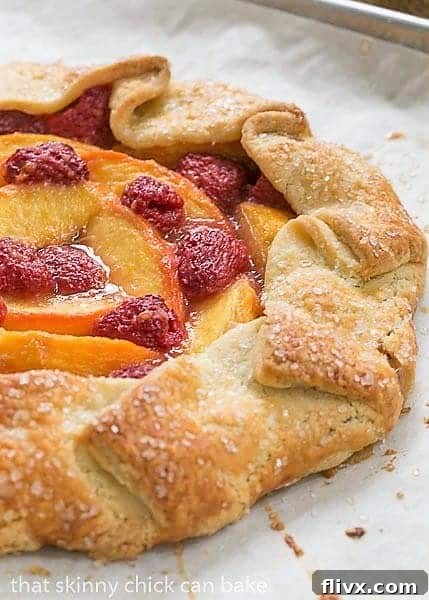
- The Glaze and Sparkle: Don’t skip the final touches! Brushing the exposed pastry crust generously with a beaten egg white just before baking is essential. This creates a beautiful, deep golden-brown crust with a lovely sheen. For an extra touch of sweetness, texture, and visual appeal, sprinkle coarse sugar (also known as sanding sugar or turbinado sugar) over the egg-washed dough. This not only adds a delightful crunch but also a shimmering, professional-looking finish that makes your rustic galette truly shine, inviting everyone to take a slice.
Your Galette Questions Answered: FAQs
Originating from French cuisine, a galette is a versatile term that broadly refers to a flat, round cake or pastry, often prepared in a free-form manner without the need for a pie dish, tart pan, or springform pan. In the context of fruit galettes, like this exquisite Peach Raspberry Galette, it involves rolling out a single round of pastry dough (much like a pie crust), mounding a sweet, flavorful fruit filling in the center, and then folding and pleating the edges of the dough casually over the perimeter of the fruit. This creates a beautifully rustic, open-faced tart. It’s often referred to as a “rustic pie” or “free-form tart” and is a fantastic alternative to a traditional two-crust pie, as it’s considerably easier and quicker to assemble. The beauty of a galette lies in its charming imperfections and its elegant, yet unpretentious, presentation, making it perfect for bakers who appreciate a more relaxed approach to dessert-making.
Folding the galette dough is where the “rustic” magic truly happens, allowing for creative expression rather than strict precision! After arranging your fruit filling neatly in the center of the rolled-out dough, ensuring you leave a generous 1 to 1.5-inch border of uncovered pastry around the edges, you’ll begin the folding process. Work your way around the circle in an orderly manner, gently lifting and folding small sections of the exposed dough up and over the perimeter of the fruit filling. Overlap each folded section slightly with the previous one, and gently pleat the dough as needed to create a contained edge that keeps the fruit securely nestled within. Don’t strive for absolute perfection; the natural folds, creases, and slight irregularities are what give a galette its signature homemade charm. Once all the edges are folded, brush this exposed crust generously with a beaten egg white. This crucial step not only helps it turn a beautiful golden brown during baking but also acts as an adhesive for the coarse or sanding sugar, which should be sprinkled over the egg-washed crust for an irresistible sparkle and added crunch.
Absolutely! The remarkable versatility of a galette is one of its greatest strengths and a major reason why it’s so beloved. Galettes are wonderfully adaptable and can be made with almost any of your favorite fruits, making them perfect for showcasing seasonal produce. Common and delicious choices include crisp apples, juicy pears, various berries (such as blueberries, blackberries, or strawberries), sweet plums, tart cherries, or delightful combinations of any of these. When experimenting with different fruits, you might need to tweak the amount of sugar in the filling slightly, depending on the natural sweetness or tartness of the fruit you select. For instance, naturally sweeter fruits may require less added sugar, while tarter ones might benefit from a little more to achieve perfect balance. But the versatility doesn’t stop at sweet! Savory galettes are incredibly delicious and an excellent option for impressive appetizers, light lunches, or unique side dishes. Imagine fillings featuring rich caramelized onions and tangy goat cheese, earthy roasted mushrooms and fresh thyme, vibrant spinach and crumbled feta, thinly sliced zucchini and grated Parmesan, or a colorful medley of roasted seasonal vegetables with herbs. For savory versions, you would typically decrease or even completely eliminate the sugar in the pastry crust itself to ensure it perfectly complements the savory filling flavors, perhaps adding a pinch of black pepper or herbs to the dough instead.
Enhance Your Dessert Experience: Serving & Storage Suggestions
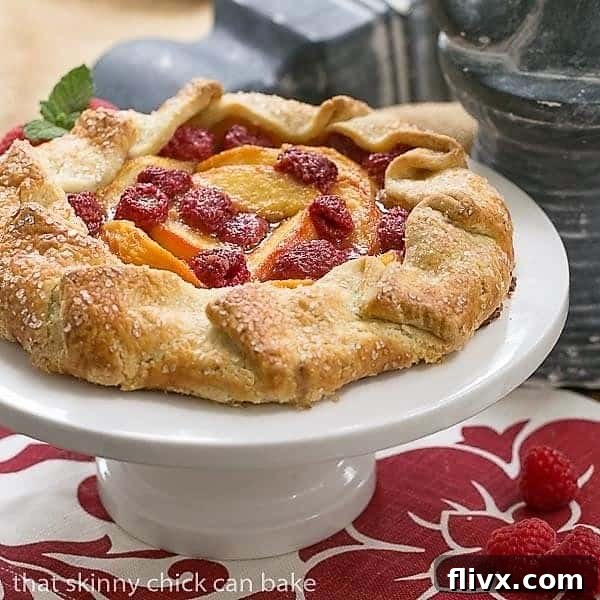
A freshly baked Peach Raspberry Galette is truly a treat for the senses, and how you choose to serve it can make it an even more special culinary experience. While utterly delicious on its own, a few simple accompaniments can transform it into an extraordinary dessert that will impress your guests and delight your family. For the most delightful experience, serve your galette warm. This allows the sweet, fragrant fruit juices to remain wonderfully tender and succulent, while the buttery crust retains a slight, appealing crispness. It pairs exquisitely with a generous scoop of creamy vanilla bean ice cream that slowly melts into the warm fruit, or a dollop of freshly whipped cream, adding a light and airy texture. For those who appreciate a touch of sophistication and a tangy contrast, a spoonful of rich crème fraîche offers a beautiful balance to the sweetness. A sprinkle of fresh mint leaves can also add a burst of vibrant color and a refreshing aromatic note, elevating the entire presentation.
Should you be fortunate enough to have any delectable leftovers, proper storage will help preserve their deliciousness. Simply cover the galette loosely with plastic wrap or aluminum foil and store it at room temperature for up to 2 days, especially if your kitchen is cool. For extended freshness, you can refrigerate it for up to 3-4 days. When you’re ready to enjoy it again, for the best texture and flavor, gently reheat individual slices. A toaster oven or a conventional oven at a low temperature (around 300°F or 150°C) for about 10-15 minutes will work perfectly, warming the fruit through and helping the crust regain some of its original crispness. It’s advisable to avoid reheating in the microwave, as this method can often make the delicate pastry crust soggy, detracting from the overall enjoyment.
Discover More Delightful Recipes
- Peach-Bourbon Upside Down Cake from Creative Culinary
- Irresistible Raspberry Crisp
- Streusel Topped Peach Tart
- Classic Lattice Topped Peach Raspberry Pie
- Plus all my other Delicious Pie and Tart Recipes
Stay connected and share your culinary creations with me! Find me on social media @ Instagram, Facebook, and Pinterest. Don’t forget to tag me when you try one of my recipes! If you love the results and this Peach Raspberry Galette becomes your new summer favorite, please consider giving it a 5-star rating in the recipe card below. Your feedback helps other bakers discover these delightful recipes. Happy baking!
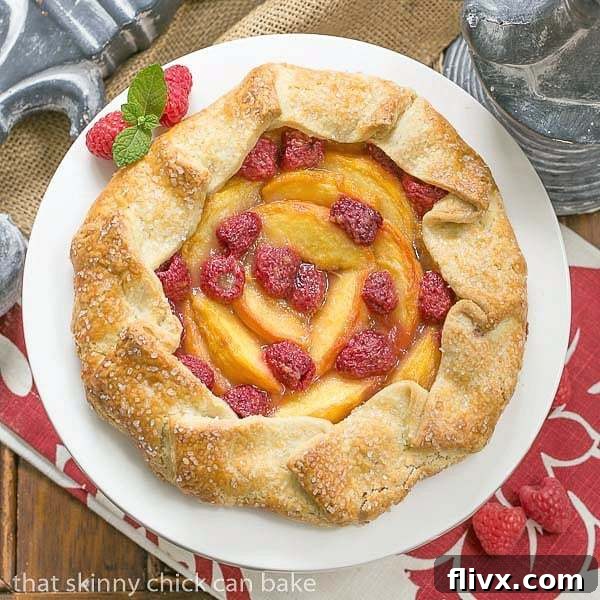
Peach Raspberry Galette
30 minutes
50 minutes
1 hour 20 minutes
6 servings
A rustic tart or galette filled with ripe, fresh peaches and raspberries.
Ingredients
Crust:
- 1 ½ cups flour, plus more for rolling
- 1 tablespoon sugar
- ¼ teaspoon salt
- 11 tablespoons cold butter, cut into ½ tablespoon pieces
- 1 egg yolk (reserved white to glaze dough)
- 3 tablespoons milk
Filling:
- 2 cups peeled and sliced fresh peaches (about 1 pound)
- 1 cup fresh raspberries
- ¼ cup brown sugar
- 2 tablespoons flour
- Pinch of salt
- 1 egg white, beaten
- 2 tablespoons sugar (coarse sugar preferred but granulated is fine)
Instructions
- To make the dough, combine the flour, sugar, and salt in a food processor and pulse to combine.
- Add the butter to the flour and pulse till the butter is broken into small pieces and the mixture resembles cornmeal.
- Mix together the egg yolk and milk and add to the dough.
- Pulse till the dough comes together. Pour out onto a piece of plastic wrap and press into a flat disk. Wrap and chill for 30 minutes.
- Preheat the oven to 350°F. Line a rimmed baking sheet with parchment paper and set aside.
- Carefully toss the peaches and raspberries with brown sugar, flour, and salt.
- Roll out the dough to a 12-inch round on a lightly floured surface. Carefully move the dough to the baking sheet.
- Arrange the fruit in the center of the dough, leaving about an inch of the perimeter uncovered. Fold the outside edge of the dough over the fruit, pleating as needed.
- Brush egg white over the exposed crust. Sprinkle the coarse sugar over the dough and fruit.
- Bake the galette until the crust turns a light brown and the filling bubbles, about 50 minutes. Let cool for 10 minutes then cut and serve warm with whipped cream or vanilla ice cream, if desired.
Notes
Adapted from Fine Cooking.
Recommended Products
As an Amazon Associate and member of other affiliate programs, I earn from qualifying purchases.
- Reynolds Cookie Baking Sheets Non-Stick Parchment Paper, 25 Sheet, 4 Count
- USA Pan Bakeware Half Sheet Pan
- Food Processor
Nutrition Information:
Yield:
6
Serving Size:
1 slice
Amount Per Serving:
Calories: 410Total Fat: 23gSaturated Fat: 14gTrans Fat: 1gUnsaturated Fat: 7gCholesterol: 87mgSodium: 295mgCarbohydrates: 47gFiber: 3gSugar: 19gProtein: 6g
Thatskinnychickcanbake.com occasionally offers nutritional information for recipes contained on this site. This information is provided as a courtesy and is an estimate only. This information comes from online calculators. Although thatskinnychickcanbake.com attempts to provide accurate nutritional information, these figures are only estimates. Varying factors such as product types or brands purchased can change the nutritional information in any given recipe. Also, many recipes on thatskinnychickcanbake.com recommend toppings, which may or may not be listed as optional and nutritional information for these added toppings is not listed. Other factors may change the nutritional information such as when the salt amount is listed “to taste,” it is not calculated into the recipe as the amount will vary. Also, different online calculators can provide different results. To obtain the most accurate representation of the nutritional information in any given recipe, you should calculate the nutritional information with the actual ingredients used in your recipe. You are solely responsible for ensuring that any nutritional information obtained is accurate.