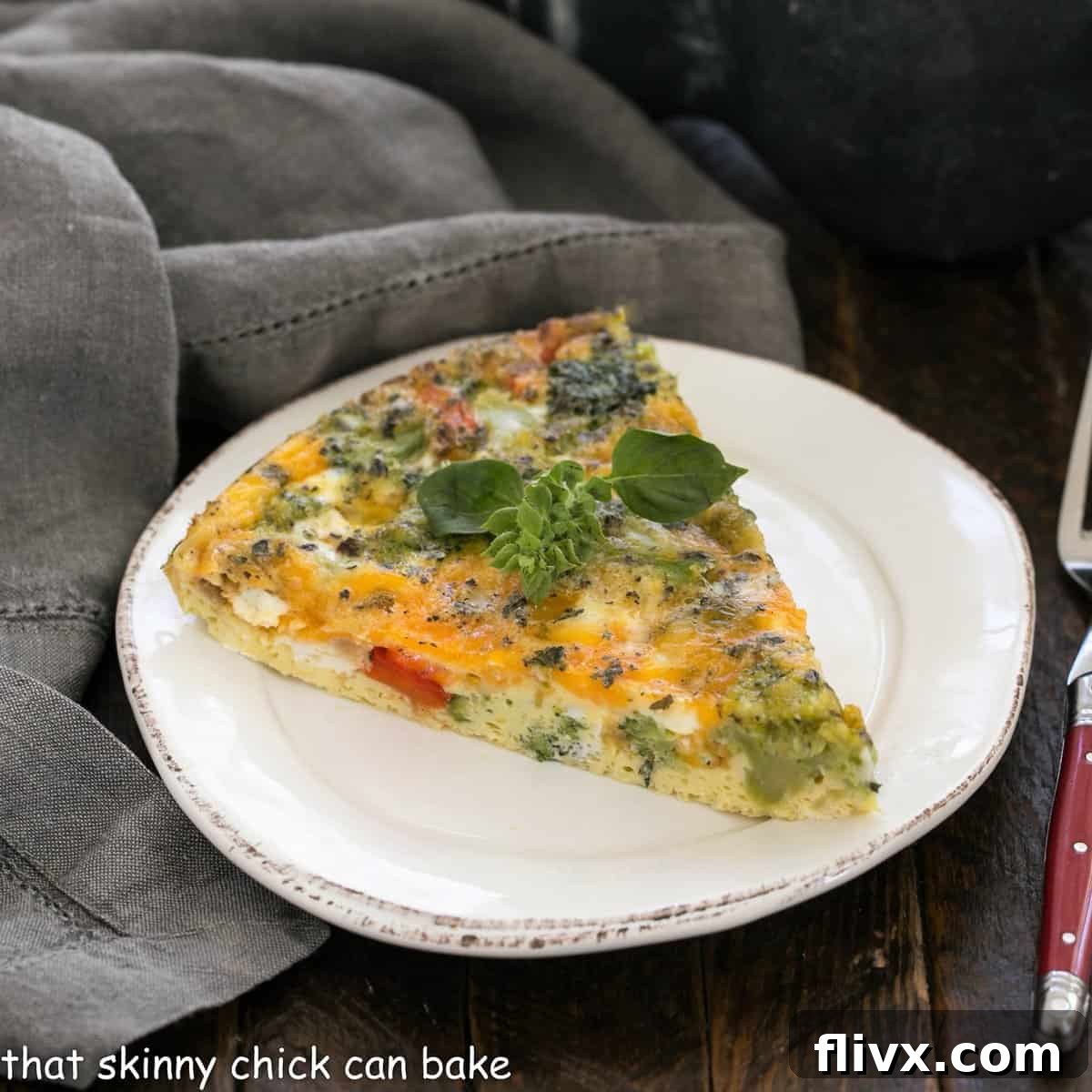
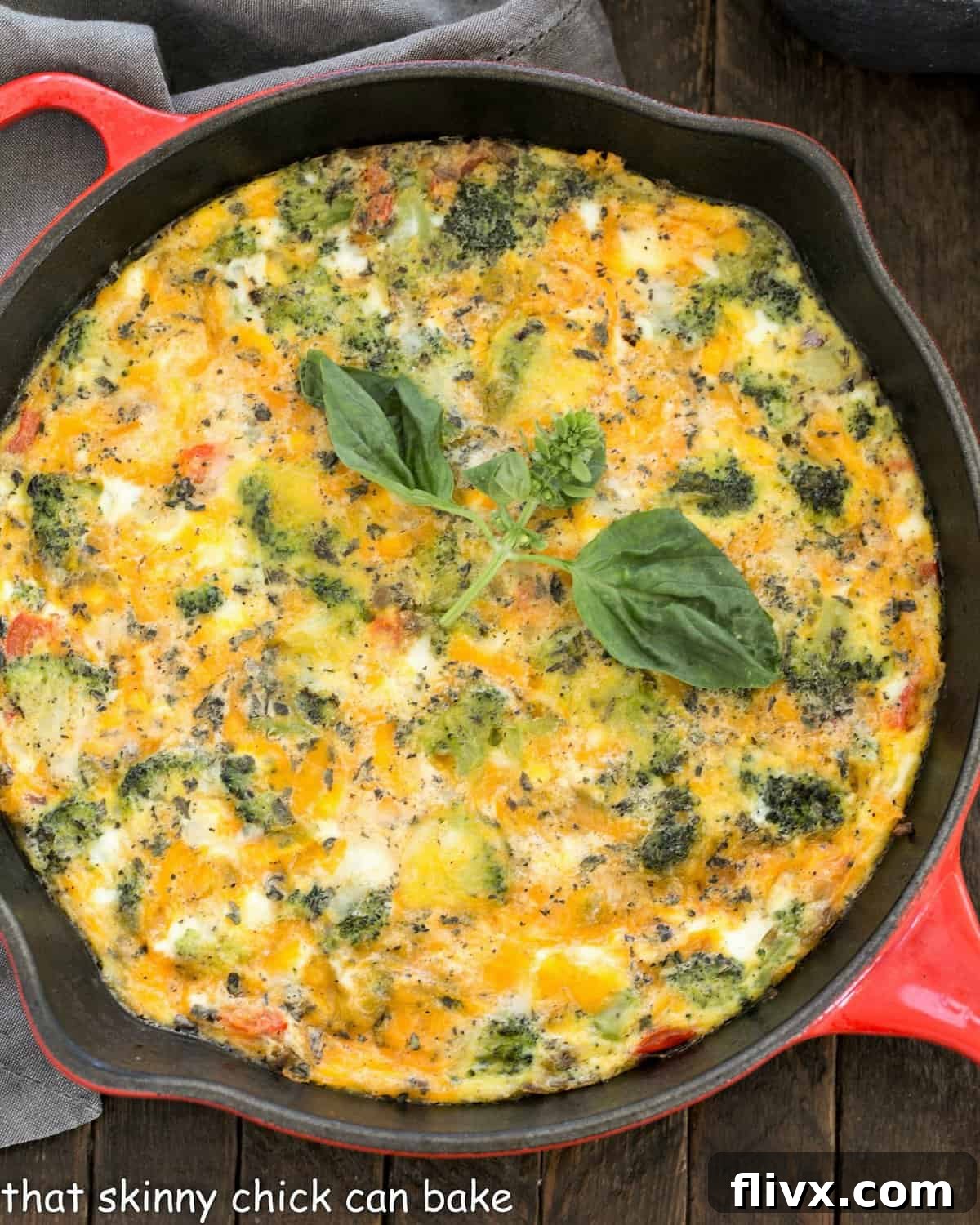
This incredibly versatile and effortlessly delicious Roasted Broccoli Frittata recipe is a true kitchen hero, allowing you to transform any assortment of leftover vegetables and cheeses into a satisfying meal. Whether you’re craving a wholesome breakfast, a light yet filling lunch, or a quick and easy dinner, this frittata fits the bill perfectly. The secret to its simplicity and depth of flavor? Utilizing frozen broccoli and giving it a quick roast – a game-changer that makes meal prep a breeze!
For years, my go-to for a quick egg dish was an omelet. While delicious, I often craved something more substantial, something that could feed a crowd or be enjoyed throughout the week. The idea of an Egg Frittata had always intrigued me, but the thought of prepping fresh vegetables sometimes felt like an extra step I didn’t have time for. That was until a friend shared her brilliant hack: roasting broccoli florets straight from the freezer. This simple technique revolutionized my approach to frittatas, proving that convenience doesn’t have to compromise on taste. This baked frittata recipe quickly became a household favorite, a testament to its deliciousness and adaptability.
Why This Roasted Broccoli Frittata is an Absolute Must-Try
Beyond its delicious taste, this frittata offers a myriad of reasons to become a staple in your culinary repertoire. It’s more than just a meal; it’s a solution for busy weeknights, a canvas for creativity, and a healthy choice for any time of day.
- Unleash Your Inner Chef with Leftovers: This recipe is a champion of practicality. It’s incredibly forgiving and encourages you to get creative with what you already have. Eggs, odds and ends of vegetables, and various cheeses lurking in your refrigerator can be effortlessly transformed into a gourmet-level frittata. Think beyond broccoli – roasted sweet potatoes, sautéed spinach, leftover cooked chicken, or even a sprinkle of crumbled feta can all find a happy home in this dish. It’s a fantastic way to minimize food waste and maximize flavor.
- A Wholesome and Healthy Meal: Naturally low-carb and packed with protein, eggs, and nutrient-rich vegetables, this frittata makes for an exceptionally healthy breakfast, brunch, or even dinner option. It provides sustained energy without the heaviness, making it ideal for maintaining a balanced diet. It’s also a fantastic way to sneak in extra vegetables for both adults and picky eaters alike.
- The Magic of Roasting for Enhanced Flavor: The step of roasting your vegetables first, especially the broccoli, is what truly elevates this frittata. Roasting brings out their natural sweetness, caramelizes their edges, and softens them to perfection, adding a depth of flavor and a pleasing texture that simply boiling or steaming can’t achieve. This simple pre-cooking method ensures every bite of your frittata is bursting with rich, savory notes.
- Effortless Meal Prep Solution: Prepare a large frittata on Sunday, and you’ll have delicious, ready-to-eat meals for several days. It reheats beautifully and tastes just as good cold, making it perfect for grab-and-go breakfasts or packed lunches. Its sturdy structure holds up well, making it an excellent candidate for advance preparation.
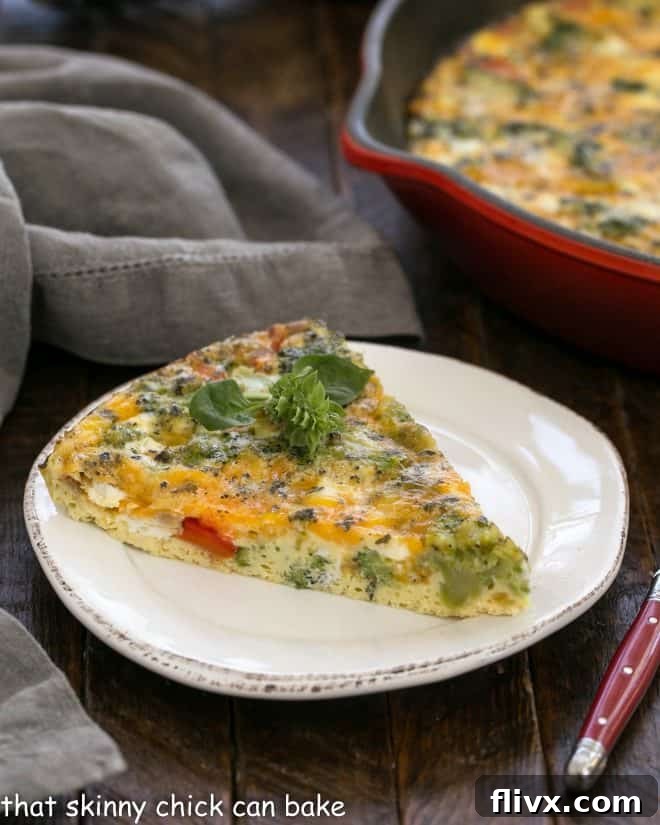
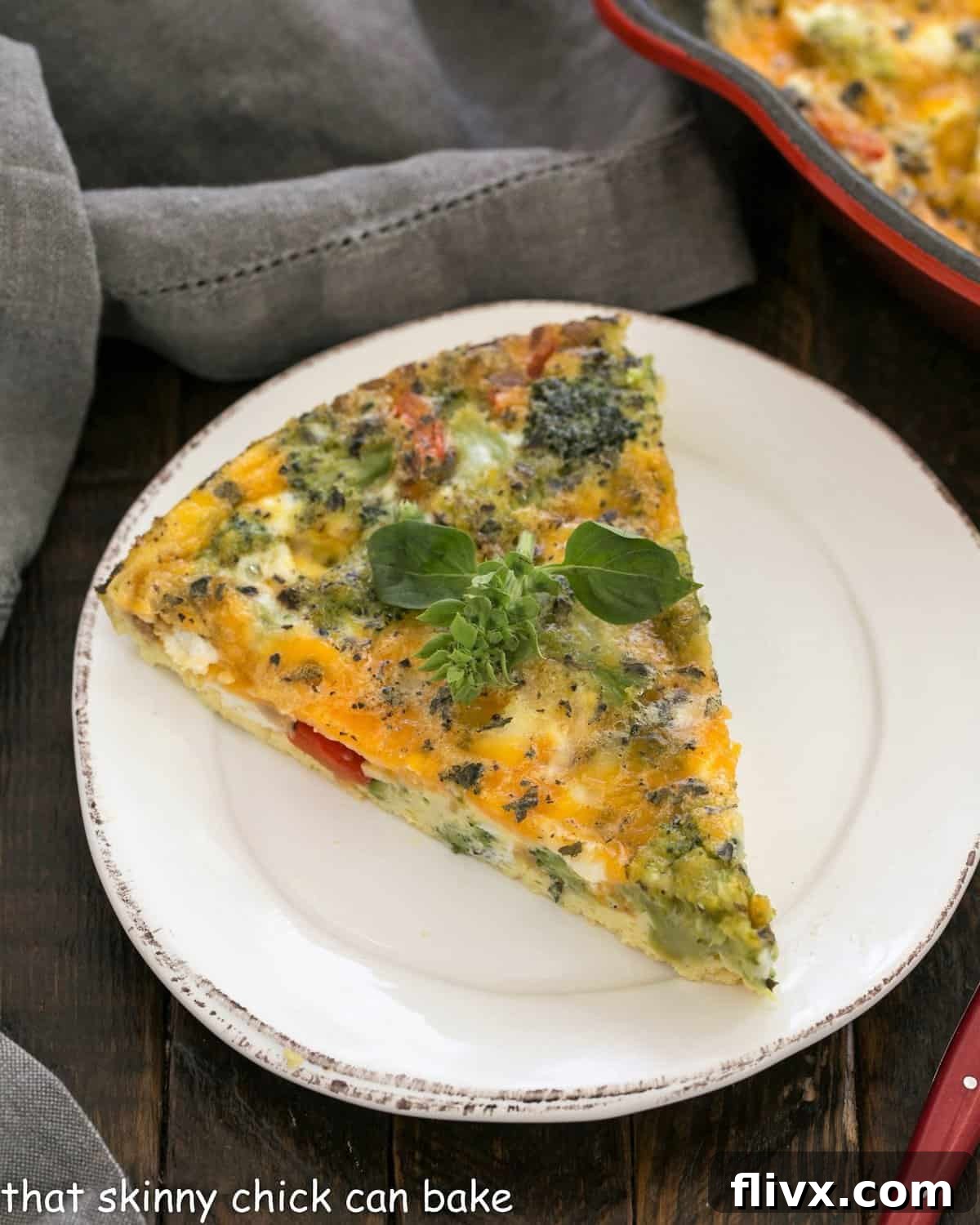
To craft your perfect frittata, begin by selecting your fillings. My fundamental formula involves a harmonious blend of vegetables – always including an aromatic like onion or garlic – and a generous helping of cheese. For this particular frittata, we chose the delightful combination of perfectly roasted broccoli, thinly sliced shallots, vibrant red bell peppers, creamy mozzarella, sharp cheddar cheese, a splash of milk, and, of course, fresh eggs. Remember, the beauty of a frittata lies in its flexibility; utilizing leftover vegetables and those small quantities of cheese in your fridge can result in an unexpectedly scrumptious vegetable frittata!
Step-by-Step Guide: Crafting Your Delicious Roasted Broccoli Frittata
Making a frittata is simpler than you might think, a true testament to rustic Italian cooking. Follow these steps to create a hearty and flavorful dish that will impress both your taste buds and your guests.
- Prepare Your Vegetables with Care: The foundation of any great frittata lies in its vegetables. If you don’t have any leftover roasted broccoli ready, this should be your first and most crucial step. I typically use a 10.8-ounce bag of frozen broccoli florets, which I roast directly from the freezer without defrosting. Once roasted and slightly cooled, I chop them into convenient bite-sized pieces to ensure they distribute evenly throughout the egg mixture. Don’t skip this roasting step, as it unlocks a depth of flavor and tender texture that steamed or boiled broccoli simply can’t provide.
- Whisk the Perfect Egg Mixture: In a medium bowl, vigorously whisk together the eggs until they are light and frothy. This aeration helps create a fluffier frittata. Incorporate the milk or cream – the dairy adds richness and ensures a tender texture. Now is the time to add your chosen seasonings. For this recipe, I love dried basil, but feel free to experiment with herbs that complement your specific vegetable selections, such as oregano, thyme, or a pinch of red pepper flakes for a subtle kick. Finally, fold in the grated cheese; a good mix of melty and flavorful cheeses works wonders. Set this vibrant mixture aside.
- Build the Flavor Base on the Stovetop: Heat your chosen oil (olive oil or butter work well) in a cast iron or other ovenproof skillet over medium heat. This is where you build the aromatic foundation of your frittata. Begin by cooking aromatics like finely minced onion, garlic, or shallots until they are softened and fragrant – typically 2-3 minutes. Next, add any additional raw vegetables that require cooking until tender. If you’re using a variety of vegetables with different cooking times, add the denser, harder ones first (like carrots or bell peppers), allowing them to partially cook before introducing softer or leafy greens (like spinach or mushrooms), which cook much faster.
- Combine, Set, and Finish in the Oven: Once all your vegetables are perfectly tender and flavorful, evenly distribute any pre-cooked ingredients, such as your roasted broccoli florets, into the pan. Give them a quick toss to mix with the other vegetables. Next, pour the whisked egg and cheese mixture over the vegetables in the skillet. Allow the frittata to cook undisturbed on the stovetop for a couple of minutes until the edges begin to set and slightly firm up. This crucial step prevents the eggs from sticking and ensures a beautiful, golden crust on the bottom. Finally, carefully transfer the skillet to the preheated oven to finish cooking. Baking it ensures the center cooks evenly and sets perfectly without needing to flip or fuss.
Mastering the Art of Frittata: Expert Tips for Success
The beauty of a frittata lies in its inherent adaptability. With just eggs, milk, a few odds and ends of cheeses, and whatever vegetables you have on hand, you can create a culinary masterpiece. Think of it as a blank canvas for your leftovers, an ingenious way to repurpose dinner into a delightful breakfast or brunch. I once enjoyed a frittata that cleverly incorporated leftover linguine – proof that there are truly no right or wrong ingredients when it comes to this versatile dish!
- Embrace Any Egg Size: Don’t fret about egg size. While recipes often call for large eggs, any size will work. If you happen to have regular or medium eggs, simply add an extra one or two to ensure you have enough volume for a perfectly set frittata. The key is the overall egg-to-dairy ratio, which can be subtly adjusted.
- Vegetable Versatility is Key: The golden rule for frittata vegetables is simple: they must be pre-cooked and, in your opinion, taste good together. Whether roasted, sautéed, or steamed, ensure they are tender and drained of excess moisture. Cut them into uniform, bite-sized pieces for even distribution and easier eating. Think beyond broccoli: consider roasted asparagus, sautéed mushrooms, caramelized onions, sun-dried tomatoes, or even leftover cooked potatoes.
- Cheese: The More, The Merrier: Most varieties of cheese will absolutely work wonders in a frittata. Melty cheeses like sharp cheddar, Monterey Jack, or mozzarella are always favorites for their creamy texture and appealing stretch. However, don’t shy away from bolder flavors! A touch of crumbled blue cheese can add a sophisticated tang, especially when paired with ingredients like leftover roasted, diced potatoes. Grated Parmesan or Pecorino Romano can provide a salty, umami kick that beautifully complements almost any melty cheese combination.
- Aromatics are Essential: A strong aromatic base sets the stage for a flavorful frittata. I often keep finely chopped onions in my freezer for quick additions, but a fresh shallot or vibrant green onions are fantastic alternatives that add a delicate sweetness. Minced garlic is, of course, always a welcome and wonderful addition, imparting a rich, savory depth.
- Choose the Right Pan: A heavy-bottomed, oven-safe skillet is crucial. Cast iron skillets are ideal as they distribute heat evenly on the stovetop and transfer seamlessly to the oven, creating a beautiful golden-brown crust. Ensure your pan is well-seasoned or use a non-stick oven-safe pan.
- Seasoning to Perfection: Don’t be afraid to season generously. Eggs love salt and pepper! Taste your egg mixture before adding it to the pan and adjust seasonings as needed. Fresh herbs, a pinch of cayenne, or a dash of your favorite spice blend can really make the flavors pop.
The Game-Changing Method: How to Perfectly Roast Frozen Vegetables
This method truly is culinary genius. It eliminates the need for last-minute trips to the market and allows you to enjoy the marvelous, delicious, slightly sweet, and caramelized flavors of roasted vegetables at a moment’s notice. Roasting frozen vegetables is not just convenient; it often yields a fantastic texture and intensified flavor profile.
- No Defrosting Required: The best part? There’s absolutely no need to defrost your frozen vegetables beforehand. In fact, roasting them from frozen helps to crisp them up rather than making them soggy, as the surface moisture evaporates quickly in the high heat.
- Uniformity is Key: To ensure even cooking and consistent texture, make sure your frozen vegetables are all of similar sizes. If you have large florets or chunks, give them a quick chop before oiling.
- Generous Oiling: Place your frozen vegetables in a large Ziploc bag or a spacious bowl. Drizzle generously with a couple of tablespoons of olive oil. Do not scrimp on the oil; there must be enough to thoroughly coat every single piece of the frozen veggies. This oil is essential for achieving that desirable crispy, golden-brown exterior.
- Preheat Your Oven to High Heat: For best results, preheat your oven to a high temperature, typically between 425-450 degrees Fahrenheit (220-230 degrees Celsius). High heat is crucial for roasting and caramelizing, rather than just steaming, the vegetables.
- Spread and Season: Spread the oiled vegetables out in a single layer on a large baking sheet (metal sheets are preferred over glass for better heat conduction and crisping). Do not overcrowd the pan; if necessary, use two baking sheets to avoid steaming the vegetables. Season generously as desired with kosher salt and freshly ground black pepper. You can also add other spices like garlic powder, paprika, or your favorite herb blend.
- Toss for Even Roasting: Halfway through the roasting time, use a spatula to toss the vegetables. This ensures even browning and prevents sticking, guaranteeing a beautifully caramelized result on all sides.
- Roasting Time Varies: The precise roasting time will depend on the type of vegetable, its size, and the specific quirks of your oven. However, here are some general suggested times to get you started, drawing insights from resources like Sustainable Cooks and Dinner, then Dessert:
- Broccoli and Cauliflower Florets, Carrots: Aim for 15-18 minutes for tender-crisp results.
- Asparagus: Typically around 17 minutes for perfectly tender spears with slightly browned tips.
- Beets (cubed): About 20 minutes, yielding tender, sweet, and earthy bites.
- Brussels Sprouts: Approximately 20 minutes, transforming them into deliciously crisp and nutty morsels.
- Squash (cubed, e.g., butternut or acorn): Allow about 22 minutes for a soft, sweet, and caramelized texture.
- Whole Green Beans: Around 18-20 minutes, resulting in tender beans with a delightful snap.
Serving Suggestions and Smart Storage
A frittata is wonderfully versatile when it comes to serving. Enjoy it warm, at room temperature, or even cold straight from the fridge. For a complete meal, consider pairing your Roasted Broccoli Frittata with a crisp green salad tossed in a light vinaigrette, a side of fresh seasonal fruit, or a slice of crusty artisan bread. A dollop of Greek yogurt, sour cream, or a drizzle of your favorite hot sauce can add an extra layer of flavor and creaminess.
For storage, if kept airtight in a container or wrapped tightly in plastic, your frittata will last beautifully for up to 4 days in the refrigerator. This makes it an ideal choice for meal prepping healthy breakfasts or lunches throughout the week. When reheating, you can gently warm slices in the microwave for a minute or two, or for best results, pop them in a preheated oven at 300°F (150°C) for about 10-15 minutes until heated through.
Frequently Asked Questions About Frittatas
A frittata is an Italian egg-based dish, similar to an omelet or crustless quiche. The main distinction from a French omelet is that in a frittata, the fillings are mixed directly into the eggs, rather than folded inside. It starts cooking slowly on the stovetop and is then finished in the oven, resulting in a firmer, round, and often thicker dish than a traditional omelet. Think of it as a more robust, shareable, and less delicate egg preparation.
The baking time for a frittata can vary based on several factors, including the diameter and material of your pan, the quantity and temperature of your fillings, and the initial temperature of your eggs when they go into the oven. For an 8-egg frittata cooked in a 10-inch skillet and finished in a 400ºF (200ºC) oven, it typically takes about 15-17 minutes to set perfectly. Always keep an eye on it towards the end of the cooking time.
A frittata is done when its center appears firm and set. You can gently jiggle the pan; if the center is still very wobbly, it needs a few more minutes. For a more precise check, insert a knife or a thin skewer into the center of the frittata. If it comes out clean with no liquid egg clinging to it, and leaves a visible mark that doesn’t immediately fill with raw egg, your frittata is perfectly cooked. Be careful not to overcook, as this can lead to a rubbery texture.
Absolutely! Frittatas and other egg casseroles are excellent candidates for freezing. To freeze, allow the frittata to cool completely, then slice it into individual portions. Wrap each portion tightly in plastic wrap, then place them in an airtight freezer-safe container or a heavy-duty freezer bag. They can be stored in the freezer for up to 3 months. To enjoy, defrost overnight in the refrigerator, then gently reheat in a microwave or, for the best texture, in a preheated oven until warmed through.
A 10-inch oven-safe skillet is ideal for most frittata recipes using 6-8 eggs. Cast iron skillets are highly recommended because they retain and distribute heat exceptionally well, leading to beautifully caramelized edges and even cooking. If you don’t have cast iron, any oven-safe, non-stick, or stainless steel skillet will work, provided it has an oven-safe handle.
Explore More Delicious Breakfast & Brunch Recipes:
If you’ve enjoyed this versatile frittata, you’ll love exploring other hearty and delightful egg-based dishes and breakfast inspirations from my kitchen. These recipes are perfect for expanding your repertoire for morning meals, brunches, or even simple, satisfying dinners.
- Spinach Bell Pepper Frittata: Another vibrant and adaptable frittata recipe, bursting with fresh flavors.
- Easy Bacon and Egg Casserole: A comforting, make-ahead casserole perfect for feeding a crowd or for lazy weekend mornings.
- Egg Muffins in Ham Cups: Portable, protein-packed egg muffins baked in savory ham cups – ideal for on-the-go breakfasts.
- Spinach Quiche with Mushrooms: A classic, elegant quiche that’s perfect for brunch or a light dinner, offering a delightful combination of earthy and creamy flavors.
- Discover even more of the Best Breakfast Recipes for endless morning inspiration!
Stay connected and be part of our culinary community! Find us on social media @ Instagram, Facebook, and Pinterest. Don’t forget to tag me when you whip up one of my recipes – I love seeing your creations! If you adore the results, please consider leaving a 5-star rating in the recipe card below. Your feedback helps others discover these delicious dishes!
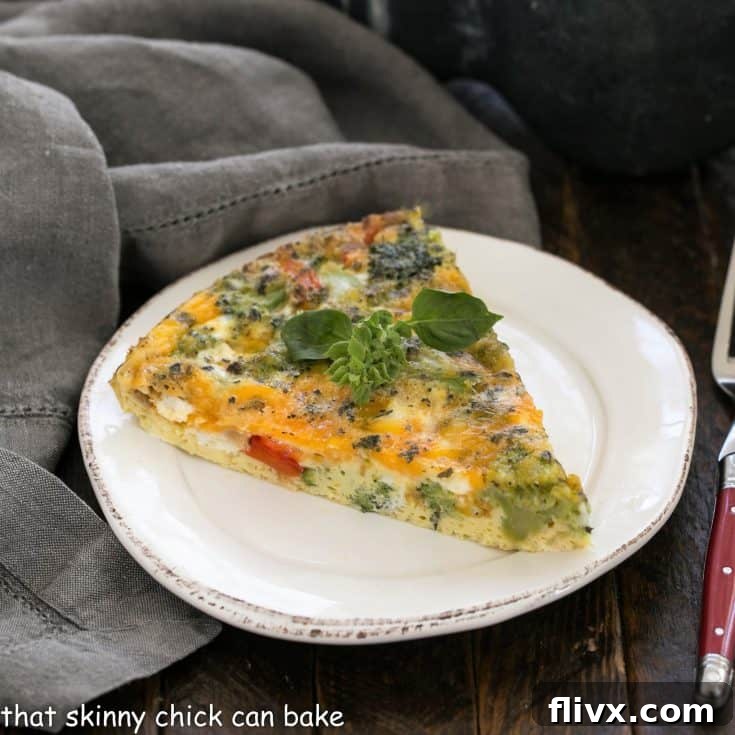
Roasted Broccoli Frittata
10 minutes
20 minutes
30 minutes
4
A highly adaptable frittata recipe that’s delicious any time of day, perfect for using up leftovers and roasting frozen vegetables!
Ingredients
- 1 ½ tablespoons olive oil
- 2 tablespoons minced onion
- 1 clove garlic, minced
- ½ red bell pepper, diced
- 1 ½ cups roasted broccoli florets, large florets chopped into bite-sized pieces (or any cooked/roasted vegetables of your choice)
- 8 large eggs
- ½ cup whole milk (or cream, for extra richness)
- 1-1 ½ cups shredded cheese (I used a blend of sharp cheddar and mozzarella, but feel free to substitute your favorite melty cheese)
- 1 teaspoon kosher salt
- ½ teaspoon freshly ground black pepper
- 1 teaspoon dried basil (or your preferred dried herb, such as oregano or thyme)
Instructions
- Preheat your oven to 400°F (200°C).
- Heat the olive oil in a 10-inch oven-safe skillet (cast iron works beautifully) over medium heat. While a 10-inch pan is recommended, other sizes can be used, but baking time may need adjustment. Add the minced onion and cook until it softens and becomes translucent, about 2-3 minutes. Next, add the minced garlic and diced red bell pepper, cooking for another 3-5 minutes until the peppers are tender-crisp. Add the prepared roasted broccoli (or your chosen cooked vegetables) to the pan and toss gently to combine with the aromatics.
- In a separate bowl, whisk together the eggs, milk, shredded cheese, salt, black pepper, and dried basil until well combined and slightly frothy. Pour this egg mixture evenly over the vegetables in the skillet. Allow the frittata to cook on the stovetop for about 1 minute, or until the edges begin to set and firm up.
- Carefully slide the skillet into the preheated oven and bake for 15-17 minutes, or until the center of the frittata is completely set and no longer wobbly. The top should be lightly golden. Remove from the oven, let it cool for a few minutes, then cut into wedges and serve warm. Enjoy!
Notes
Feel free to get creative with your frittata by adding any of your favorite roasted or sautéed vegetables, cooked meats, or different cheese combinations. This recipe is designed to be highly adaptable!
Recommended Products
As an Amazon Associate and member of other affiliate programs, I earn from qualifying purchases.
- Le Creuset 10-inch Skillet
- Wustof Tomato Knife
- Garlic Press
Nutrition Information:
Yield:
4
Serving Size:
1 large wedge
Amount Per Serving:
Calories: 408
Total Fat: 30g
Saturated Fat: 12g
Trans Fat: 0g
Unsaturated Fat: 15g
Cholesterol: 417mg
Sodium: 771mg
Carbohydrates: 10g
Fiber: 2g
Sugar: 4g
Protein: 25g
Thatskinnychickcanbake.com occasionally offers nutritional information for recipes contained on this site. This information is provided as a courtesy and is an estimate only. This information comes from online calculators. Although thatskinnychickcanbake.com attempts to provide accurate nutritional information, these figures are only estimates. Varying factors such as product types or brands purchased can change the nutritional information in any given recipe. Also, many recipes on thatskinnychickcanbake.com recommend toppings, which may or may not be listed as optional and nutritional information for these added toppings is not listed. Other factors may change the nutritional information such as when the salt amount is listed “to taste,” it is not calculated into the recipe as the amount will vary. Also, different online calculators can provide different results. To obtain the most accurate representation of the nutritional information in any given recipe, you should calculate the nutritional information with the actual ingredients used in your recipe. You are solely responsible for ensuring that any nutritional information obtained is accurate.
HOW MUCH DID YOU LOVE THIS RECIPE?
Please leave a comment on the blog or share a photo on Pinterest!