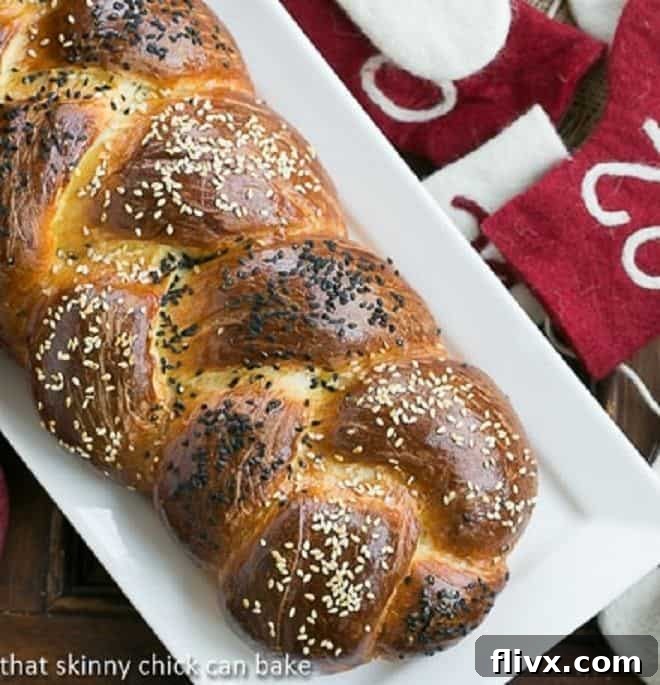
Welcome to the heartwarming world of **Braided Challah Bread**, a truly magnificent creation that effortlessly blends rich flavor with a tender, chewy texture. This particular recipe, inspired by culinary classics, is more than just a baked good; it’s an invitation to a sensory experience that might just transport you back to cherished childhood memories. Imagine the golden-brown crust, the soft, eggy interior, and the irresistible aroma that fills your kitchen as this **rich egg bread** bakes to perfection. Traditionally served during the Sabbath and on various Jewish holidays, Challah holds a special place at the table, symbolizing blessing, joy, and family.
Delight your friends and family with this stunning **Jewish bread**. Its intricate braid is a feast for the eyes, promising a delicious journey for the palate. The tantalizing fragrance of sweet yeast and rich eggs will envelop your home, making the anticipation almost as enjoyable as the first bite. This isn’t just a recipe; it’s an opportunity to create a masterpiece that’s as beautiful to behold as it is satisfying to eat. Whether you’re a seasoned baker or new to the world of yeast breads, this accessible guide will help you craft a truly unforgettable loaf.
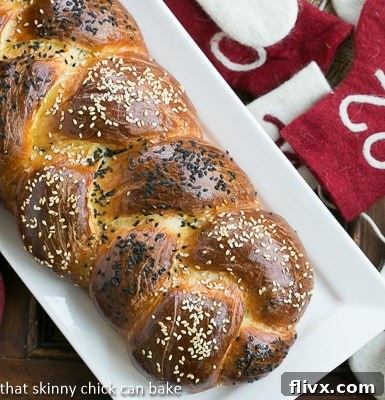
Why This Braided Challah Recipe Is a Must-Try
Beyond its traditional significance, there are countless reasons why this **braided Challah** will become a staple in your baking repertoire. It’s more than just a bread; it’s a versatile canvas for countless culinary delights. Here’s why you absolutely need to make it:
- Unforgettable Flavor and Texture: This isn’t just delicious; it’s the epitome of comforting bread. With its soft, fluffy interior, delightful chewiness, and rich, eggy flavor, every bite is a revelation. It evokes that nostalgic feeling of a perfect homemade loaf, superior to anything you’d buy at a store.
- Remarkably Versatile: While it’s utterly divine served simply with some creamy butter or a drizzle of honey, its versatility knows no bounds. This **rich egg bread** is absolutely perfect for creating the most decadent French toast, elevating your breakfast casseroles to gourmet status, or even making the most incredible sandwiches. Its subtle sweetness and tender crumb make it a fantastic companion to both sweet and savory dishes.
- A Showstopper for Any Occasion: The elegant braided shape of Challah makes it a visually stunning centerpiece for any meal or gathering. It’s a guaranteed conversation starter and a testament to your baking prowess, even if the braiding process is simpler than it looks!
- A Rewarding Baking Experience: The process of making **homemade Challah** is incredibly therapeutic and deeply satisfying. From watching the yeast bloom to kneading the silky dough and forming the beautiful braids, each step builds anticipation for the final, glorious loaves. The aroma alone is worth the effort!
Growing up in Ames, Iowa, discovering Challah was an unexpected delight. It wasn’t a bread we encountered often in our small town. My first introduction to this magical **Jewish bread** came during our annual summer vacations to Aspen, Colorado. Those road trips were a significant part of my childhood, brimming with excitement and the promise of new adventures.
The night before departure was always sleepless, filled with the buzzing energy of four girls wired with anticipation. We’d pile into the back of our green Plymouth Satellite station wagon, usually after being dosed with banana Dramamine for the long journey. My dad was at the wheel, my mom by his side, and us, without seatbelts, radios, or air conditioning, navigating twelve hours of singing, bickering, and constantly asking, “Are we there yet?” The endless stretch of Nebraska seemed to last forever, but the moment we caught the first glimpse of the majestic foothills of the Rockies, our excitement reached a fever pitch, knowing new experiences, and delicious food, awaited.
Essential Ingredients for Your Perfect Challah
Crafting a truly exceptional **braided Challah bread** begins with understanding the role of each ingredient. While the list might seem straightforward, each component contributes uniquely to the bread’s characteristic flavor, texture, and rise. Here’s a closer look at what you’ll need:
- Kitchen Staples: These foundational ingredients form the base of many breads. You’ll need granulated Sugar to feed the yeast and add sweetness, Lukewarm Water (around 110°F or 43°C) to activate the yeast, a good quality Salt to enhance flavor and control yeast activity, and Warm Milk to contribute to a softer crumb and richer taste.
- Active Dry Yeast: We recommend using two packets of active dry yeast, such as Red Star Yeast. This is the leavening agent that makes your Challah light and airy. Ensure your yeast is fresh and properly proofed in lukewarm water to guarantee a good rise.
- Unsalted Butter: The inclusion of butter in this recipe is key to its incredibly rich flavor and tender texture. It gives this Challah a luxurious, almost brioche-like quality. While traditional Challah is often pareve (dairy-free) to be kosher, our version with butter offers an unparalleled richness. Make sure to have both thinly sliced butter for the dough and some melted butter for greasing the bowl and brushing the dough.
- Honey: A touch of honey not only adds another layer of subtle sweetness but also helps with the bread’s beautiful golden-brown crust. For some, local honey may even offer benefits for seasonal allergies.
- Extra Large Eggs (plus one Yolk): Eggs are arguably the most distinctive ingredient in **Challah**. They give the bread its signature golden hue, incredible richness, and tender, yet chewy texture. Using extra-large eggs ensures maximum richness. The extra egg yolk in the glaze contributes to an even more vibrant, glossy finish. Ensure eggs are at room temperature for better incorporation into the dough.
- Bread Flour: We highly recommend using bread flour, such as King Arthur Brand, over all-purpose flour. Bread flour has a higher protein content, which translates to more gluten development. This gluten network is what gives Challah its characteristic chewiness and structure, allowing it to hold its beautiful braided shape.
- Cornmeal: A light dusting of cornmeal on your baking sheets before the third rising prevents the dough from sticking and helps create a lovely, slightly crisp bottom crust.
- Sesame Seeds and/or Poppy Seeds (Optional): For a classic finish and added textural contrast, sprinkle these seeds over the unbaked loaves after brushing them with the egg wash. They adhere beautifully and add a delightful crunch.
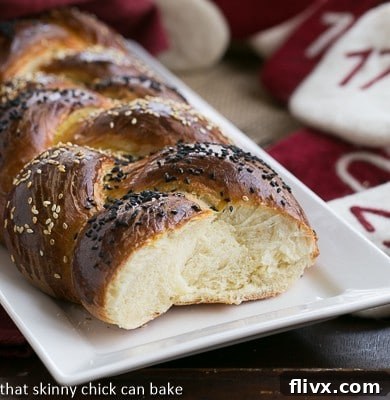
A Note on Parve: Due to the addition of butter, this **Challah recipe** is not considered parve (or pareve). Parve is a Yiddish term indicating a food product contains neither meat nor dairy, making it suitable to be eaten with either. While traditional Challah often uses oil to remain parve and kosher, our buttery version leans closer to a brioche in richness, offering a truly indulgent experience. Regardless of its classification, its deliciousness is undeniable.
If you’re looking to explore other delightful variations, I’ve successfully transformed half of this dough into irresistible Challah Pretzels, which vanished even quicker than the loaf itself. For a wholesome twist, my Whole Wheat Challah is wonderfully hearty, and for an autumnal treat, my delicious Pumpkin Challah offers a unique flavor profile.
Mastering the Art of Braiding Challah: Expert Tips
While the idea of braiding bread might seem daunting, especially for those new to baking, it’s a surprisingly straightforward and immensely satisfying skill to learn. Although I’m not formally trained, I’ve refined these tips over years of baking, and they’ve proven invaluable for creating beautifully braided **Challah bread**. If you grew up braiding hair, you might find this second nature, but even novices can achieve stunning results with a little practice.
- PRO-Tip: Start with the Easier 3-Stranded Braid. Don’t try to tackle an elaborate 6+ stranded loaf on your first attempt. The classic 3-stranded braid is fundamental, elegant, and much easier to master. Once you’re confident with three, you can gradually work your way up to more complex patterns. The goal is to build confidence and enjoy the process.
- PRO-Tip: Practice Makes Perfect (and Easier). If you’re nervous about braiding, consider practicing with defrosted frozen bread dough. The results won’t be as delicious as your homemade Challah, but it allows you to focus solely on the braiding technique without the added pressure of simultaneously learning how to make the dough. This method proved incredibly effective when I taught friends how to braid bread, isolating the skill makes it much more approachable.
- Form Even Ropes: Begin by dividing your dough into three precisely equal portions. This is crucial for a symmetrical and beautiful braid. Gently roll each portion on a very lightly floured work surface into ropes of uniform length and diameter. Resist the urge to stretch the dough; focus on rolling to achieve consistent thickness.
- Anchor Your Braid: To start, place all three dough ropes side-by-side on a parchment-lined baking sheet. Firmly pinch the three ropes together at one end. This creates a stable anchor point, preventing the ropes from shifting as you braid and ensuring a neat beginning.
- The Classic Braiding Technique: The motion for braiding **Challah dough** is just like braiding hair. Take the rope on the right and cross it over the center rope. Then, take the rope on the left and cross it over the new center rope. Continue this alternating pattern—right over center, left over center—until you reach the end of your ropes.
- Finish with a Neat Pinch: Once your braid is complete, firmly pinch the ends of the ropes together to seal them. Then, gently tuck these pinched ends underneath the loaf for a clean, professional finish. This ensures your **braided Challah** looks perfectly crafted from end to end.
- Proofing, Glazing, and Baking: Always allow your bread to proof according to your recipe’s instructions. Proper proofing is essential for a light, airy texture. After proofing, apply your egg glaze generously for that signature golden, shiny crust before baking.
- Add a Decorative Touch: For an extra flourish and delightful texture, sprinkle the top of your Challah with sesame or poppy seeds immediately after brushing on the egg glaze. The glaze acts as an adhesive, ensuring the seeds stick beautifully during baking.
Frequently Asked Questions About Challah Bread
Challah stands out from other breads primarily due to its rich composition. It’s distinctively made with a generous amount of eggs and either oil or butter, giving it a characteristic light, airy texture and a beautiful golden-yellow hue. Unlike many lean breads that use only flour, water, salt, and yeast, Challah is a “rich bread,” meaning it incorporates fats and sweeteners. Its cultural significance as a traditional Jewish yeast bread, particularly served on the Sabbath and holidays, also sets it apart.
While both Challah and Brioche are rich, egg-leavened breads, they originate from different culinary traditions and often have distinct ingredient profiles. Brioche is a French creation, renowned for being exceptionally rich due to its high butter and egg content, often shaped into small buns (like brioche à tête with its characteristic “head” or topknot) or loaves. Challah (also spelled hallah or challa) is a traditional Jewish bread, primarily served on the Sabbath and holy days. It’s typically braided and can take various shapes, but its defining characteristic is that it’s traditionally made without butter, using oil instead, to ensure it remains kosher and pareve (dairy-free). Our version, which includes butter, leans towards a brioche-like richness, making it incredibly delicious but not traditionally kosher/dairy-free.
Braiding Challah is surprisingly simple and much like braiding hair. To make a classic three-strand loaf, you divide the dough for one loaf into three equal-length ropes. These ropes are then lined up side by side. The braiding process involves taking the rope on the right and crossing it over the center rope, then taking the rope on the left and crossing it over the new center rope. This alternating pattern is repeated until the entire loaf is braided. The ends are then pinched together and tucked under for a neat appearance.
In Jewish tradition, the three braids of Challah are often symbolic, representing important values. They are commonly interpreted to symbolize truth, peace, and justice. The beauty of the braided loaf thus carries a deeper meaning, reflecting hope and fundamental principles.
Challah is incredibly versatile and can be enjoyed in numerous ways. A simple slice is heavenly on its own, perhaps with a drizzle of honey, a smear of creamy butter, or dipped in your favorite flavored olive oil. It makes for exceptional toast, perfect for a hearty breakfast, or can be transformed into the most luxurious French toast. Its tender crumb and slight sweetness also make it ideal for sandwiches, or simply served sliced alongside almost any meal, from roasted chicken to a fresh salad. It’s truly a bread that complements both sweet and savory flavors beautifully.
Explore More Delicious Bread Recipes:
- Homemade Pretzel Rolls
- Hearty Whole Wheat Dinner Rolls
- Exquisite Swiss Butter Braid
- Rustic Whole Wheat Country Bread
- Soft Homemade Pita Bread
- Comforting Potato Bread Recipe
- Fluffy Japanese Milk Bread
- Discover more delightful Bread Recipes
Stay connected and share your baking journey with me! Find me on social media @ Instagram, Facebook, and Pinterest. Don’t forget to tag me when you try one of my recipes! If you love the results, please consider giving it a 5-star rating in the recipe card below.
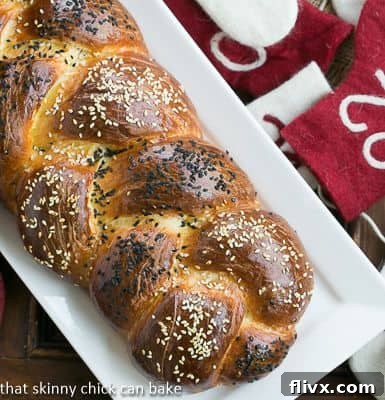
Braided Challah
30 minutes
35 minutes
1 hour 5 minutes
2 loaves
A delicious braided egg bread.
Ingredients
- 2 packages of active dry yeast
- ½ cup lukewarm water (about 110°)
- ⅓ cup sugar, plus a pinch
- 1 stick (4 ounces) unsalted butter, thinly sliced, plus 2 tablespoons, melted
- 1 cup warm milk
- 1 tablespoon honey
- 2 ½ teaspoons salt
- 4 extra-large eggs, at room temperature, plus 1 extra-large egg beaten with 1 extra-large egg yolk and 1 tablespoon water, for glazing
- About 6 cups of bread flour
- Cornmeal, for dusting
- Sesame seeds, Poppy seeds, optional
Instructions
- In a small bowl, dissolve the yeast in the lukewarm water with a pinch of sugar and let it stand until it starts to bubble.
- In a medium saucepan, combine the sliced butter and the milk. Warm over low just until the butter melts.
- Stir in the remaining ⅓ cup of sugar, honey, and salt. Pour the milk mixture into a large bowl and stir in the yeast and the 4 eggs.
- Add the flour, ½ cup at a time, stirring vigorously with each addition. Stop adding flour when the dough has cleaned the sides of the bowl and it is difficult to stir.
- Grease a large bowl with 1 ½ tablespoons of the melted butter. Place the dough in the buttered bowl and brush the top with the remaining ½ tablespoon of melted butter.
- Cover the bowl with plastic wrap and a thin towel and let rise in a warm spot until doubled, about 2 hours.
- Punch down the dough, then cover and let rise until doubled again, about 1 ¼ hours.
- Line two rimmed baking sheets with parchment paper and sprinkle the paper with cornmeal. On a lightly floured work surface, divide the dough in half.
- Cover one half with plastic wrap and divide the other half into 3 equal pieces.
- Using lightly floured hands, roll each piece into a 10-inch-long rope with tapered ends.
- Arrange the ropes side by side and just touching. Starting in the middle and working toward one end, braid the ropes together, bringing the outside ropes over the center one. Pinch the ends to seal and tuck them under.
- Turn the loaf around and repeat with the other half, this time braiding the outer ropes under the center one. Seal the ends, tuck them under, and transfer the loaf to a prepared baking sheet. Repeat with the remaining dough. Cover the loaves with thin towels and let rise for 35 minutes.
- Preheat the oven to 375°. Brush the loaves with the egg glaze. Let stand uncovered for 10 minutes, then brush again with the glaze.
- Sprinkle with sesame seeds or poppy seeds if desired.
- Bake the loaves in the upper and lower thirds of the oven, switching the pans halfway through baking, for 35 to 45 minutes, or until they are golden and sound hollow when tapped on the bottom.
- Tent the loaves with foil if they become too brown during baking.
- Transfer to a rack and let cool thoroughly before slicing.
Notes
Total time does not include proofing times.
This recipe contains butter so it is not dairy-free, and therefore not kosher according to strict dietary laws.
Recommended Products
As an Amazon Associate and member of other affiliate programs, I earn from qualifying purchases.
- Nesting Mixing Bowls (for mixing and/or ingredients)
- Reynolds Cookie Baking Sheets Non-Stick Parchment Paper, 25 Sheet, 4 Count
- USA Pan Bakeware Half Sheet Pan
Nutrition Information:
Yield:
24
Serving Size:
2 slices
Amount Per Serving:
Calories: 186Total Fat: 3gSaturated Fat: 1gTrans Fat: 0gUnsaturated Fat: 1gCholesterol: 56mgSodium: 250mgCarbohydrates: 33gFiber: 1gSugar: 4gProtein: 7g
HOW MUCH DID YOU LOVE THIS RECIPE?
Please leave a comment on the blog or share a photo on Pinterest