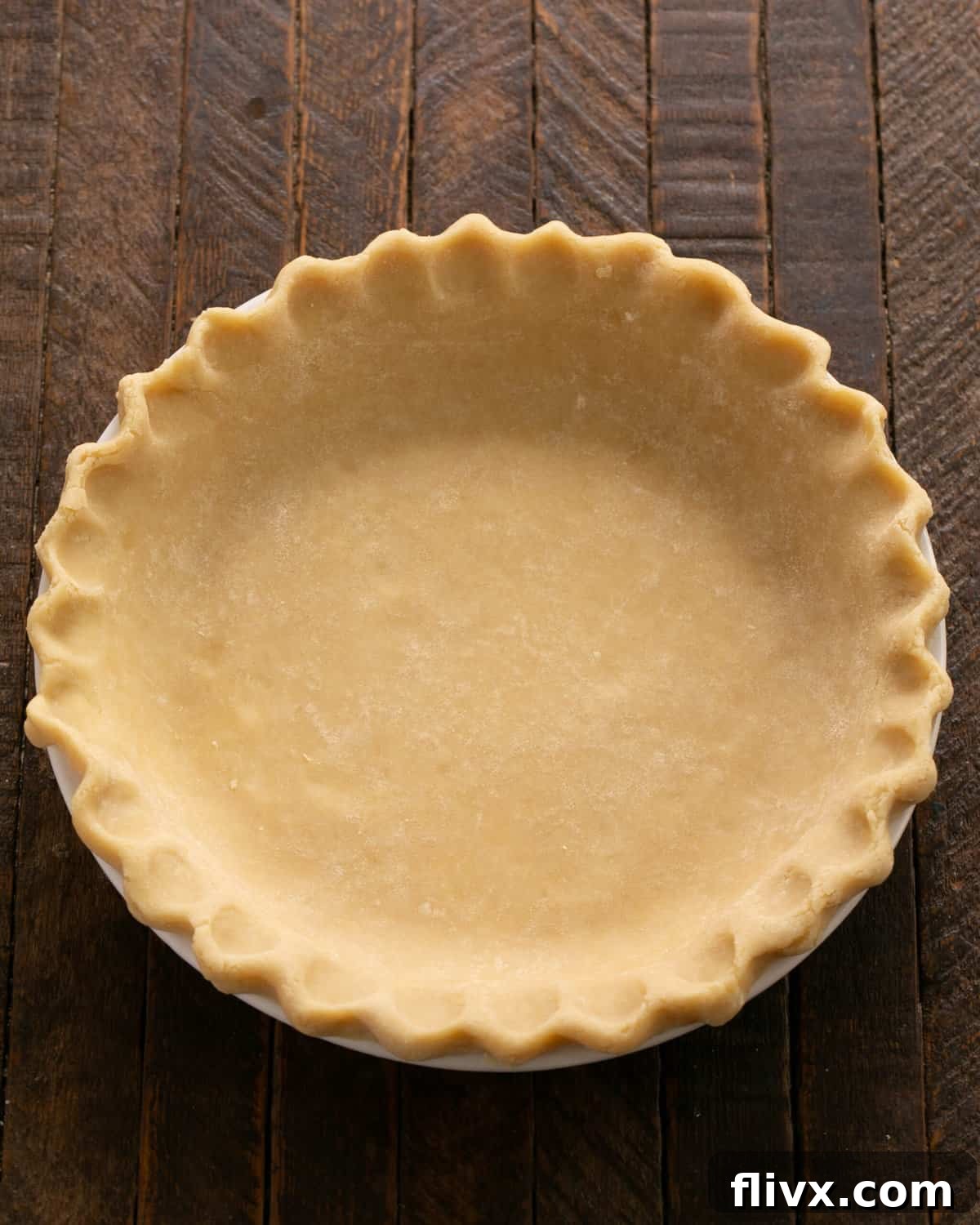
Imagine a pie crust so tender, so flaky, and so incredibly flavorful that it elevates any pie, sweet or savory, into an unforgettable culinary experience. This isn’t a dream, nor does it require hours of arduous labor. Our Easy Pie Crust Recipe, masterfully crafted in a food processor, transforms what many consider a daunting baking task into a swift and satisfying endeavor. By harnessing the power of quick pulses, the food processor achieves the ideal consistency, ensuring a delicate texture that’s simply unrivaled.
The secret to its exceptional taste and texture lies in the harmonious blend of cold butter and shortening. Butter infuses the crust with a rich, irresistible flavor, while shortening contributes to its signature flakiness and makes the dough remarkably pliable and easy to handle. Forget the lackluster, often tough, store-bought alternatives; once you try this method for Homemade Pie Crust, you’ll discover that a superior crust is not only attainable but surprisingly simple to master.
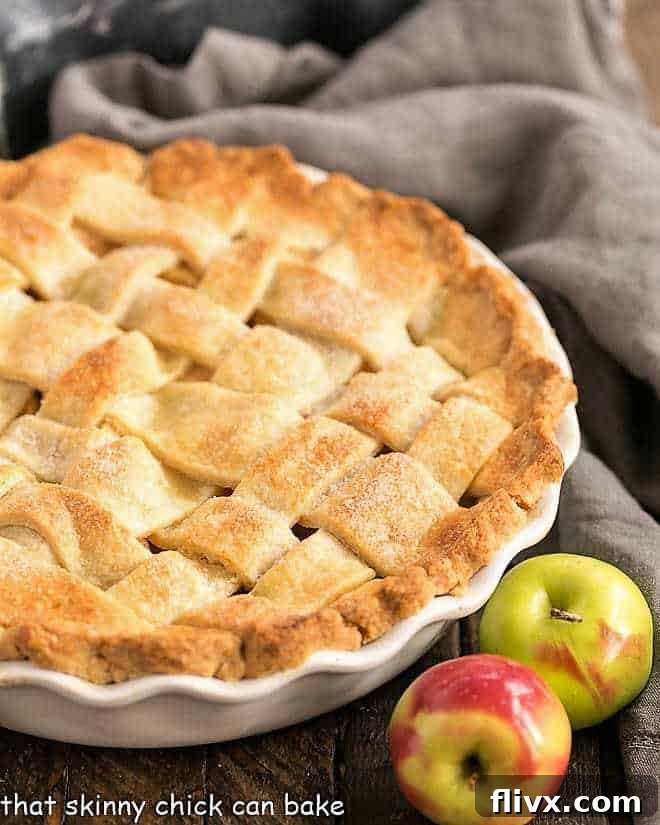
Why This Easy Pie Crust Recipe Will Transform Your Baking
Baking from scratch can seem intimidating, especially when it comes to pie crusts, which are often perceived as temperamental. However, this recipe is designed to demystify the process and deliver consistently excellent results. Here’s why this particular pie crust recipe is a must-try for any home baker:
- Effortless Preparation with a Food Processor: The food processor is a true game-changer, significantly simplifying the mixing process. All ingredients are contained within the appliance, minimizing mess and reducing cleanup time. This method ensures that the butter and shortening are perfectly cut into the flour without overworking the dough, which is crucial for a tender, flaky crust.
- The Ideal Fat Combination for Superior Results: Our recipe champions the use of both shortening and butter. Butter provides unparalleled rich flavor, a golden hue, and a delightful crispness. Shortening, on the other hand, contributes to the crust’s incredible flakiness and makes the dough wonderfully malleable, preventing it from shrinking or cracking during baking. This thoughtful blend guarantees a crust that is both flavorful and structurally sound.
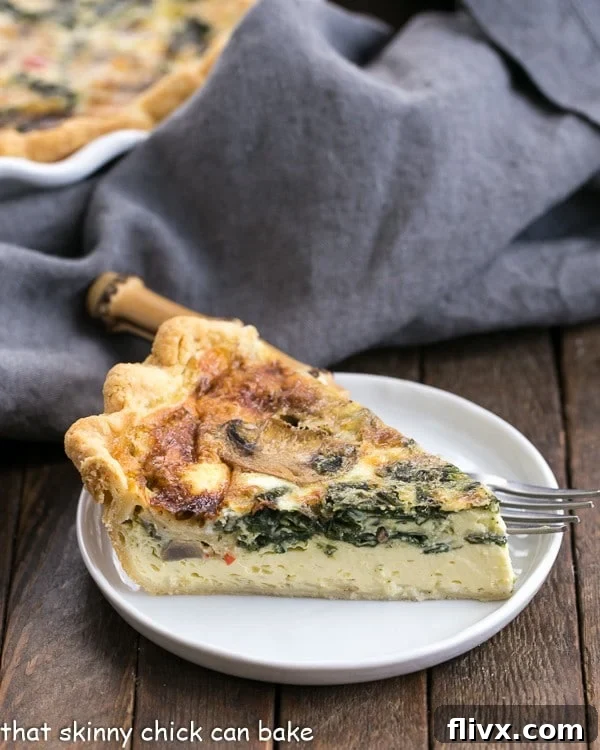
- Unmatched Versatility for Any Dish: This homemade pie dough is incredibly adaptable, serving as the perfect foundation for an array of culinary creations. Whether you’re planning a classic sweet fruit pie like apple or cherry, or a savory dish such as a hearty quiche or a chicken pot pie, this crust performs beautifully. The minimal amount of sugar in the recipe can be easily omitted for purely savory applications, making it truly versatile.
- Guaranteed Flakiness and Tenderness: The methodical approach, emphasizing cold ingredients and careful processing, ensures a crust that bakes up incredibly flaky and tender every single time. Tiny pockets of fat melt during baking, creating steam that separates the layers of dough, resulting in that coveted airy texture.
- Cost-Effective and More Delicious Than Store-Bought: Making your own pie crust from scratch is not only more economical than purchasing pre-made versions but also yields a far superior product. The difference in taste and texture is undeniable, offering a fresh, wholesome quality that cannot be replicated by mass-produced crusts.
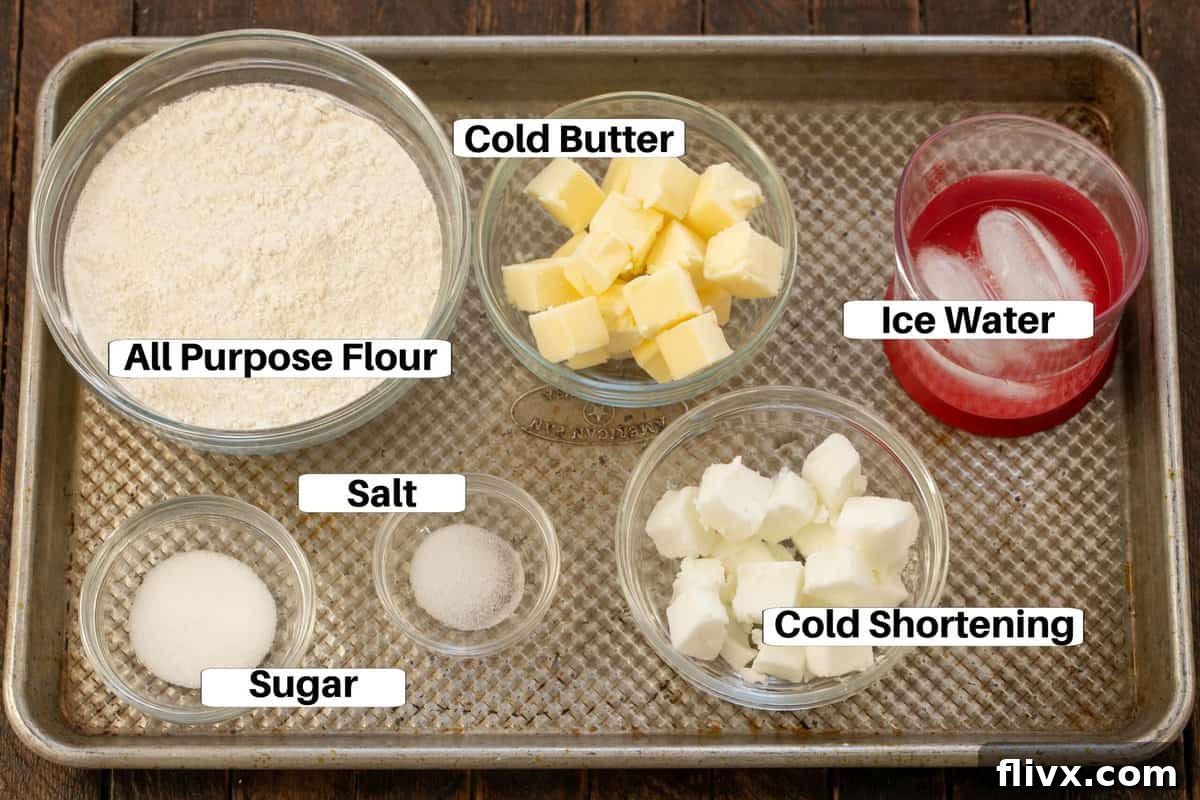
Key Ingredients for Your Flaky Pie Crust and Why They Matter
The quality and temperature of your ingredients are paramount to achieving a truly exceptional pie crust. Each component plays a vital role in creating the perfect balance of flavor, texture, and workability. Here’s a closer look at the essential elements:
- All-Purpose Flour: This forms the primary structure of your crust. While specialized pastry flour can be used, all-purpose flour offers a reliable balance of protein for structure without making the crust tough, provided it’s measured correctly. Always spoon your flour into the measuring cup and level it off to avoid compaction, which can lead to a dry, dense dough.
- Salt: Far more than just a seasoning, salt is crucial for enhancing the overall flavor of your pie crust. It balances the richness of the fats and sugars, preventing the crust from tasting bland. Don’t skip it, even in sweet pies!
- Sugar: We use just a touch of granulated sugar in this recipe. Its purpose is twofold: it subtly tenderizes the dough and aids in achieving a beautiful golden-brown crust during baking. For savory pies or quiches, feel free to omit the sugar entirely, as it won’t affect the structural integrity or flakiness of the crust.
- Cold Butter: This is where much of the magic happens for flakiness and flavor. Cold, cubed butter is essential because when it melts in the oven, the water content in the butter turns to steam. This steam creates pockets of air, separating the layers of dough and resulting in a wonderfully flaky texture. Using cold butter also prevents it from fully incorporating into the flour, which would lead to a crumbly, rather than flaky, crust.
- Cold Shortening (or Lard): While butter delivers flavor, shortening is a champion for tenderness and workability. Shortening has a higher melting point and 100% fat content, meaning it contributes to an even flakier crust and makes the dough exceptionally easy to roll out without tearing or shrinking. If you opt for lard, seek out leaf lard, which is considered the finest choice for pie crusts due to its neutral flavor and superior tenderness-imparting properties. Ensure both butter and shortening are very cold, ideally straight from the freezer for a few minutes before use.
- Ice Water: The exact amount of ice water required can vary slightly depending on factors like humidity and the specific flour used. The key is to add just enough to bring the dough together. Using ice water is critical for keeping the butter and shortening chilled, preventing them from melting prematurely and ensuring those desirable pockets of fat remain intact for maximum flakiness. Start with the lower recommended amount and add more sparingly, a tablespoon at a time, until the dough just barely holds together when pinched.
Expert Tips for a Flawless, Flaky Pie Crust Every Time
Creating the perfect pie crust is an art form, but with these pro tips, you’ll achieve bakery-quality results in your own kitchen. Paying attention to these details will make all the difference in the texture and flavor of your homemade pie crust:
- The Power of the Butter and Shortening Blend: This is a non-negotiable for the ultimate pie crust. Butter delivers incredible, rich flavor and a beautiful golden crust, while shortening (or leaf lard) ensures superior flakiness and makes the dough much easier to handle, preventing cracks and shrinkage during rolling and baking. Embrace both for the best of both worlds.
- Maintain Chilled Ingredients and Environment: This cannot be stressed enough. Cold butter and shortening are paramount. Before you start, cube your butter and shortening and place them in the freezer for 10-15 minutes while you gather other ingredients. This ensures they remain firm and distinct in the dough, forming those crucial steam pockets when baked. If your kitchen is warm, consider chilling your food processor bowl and blade as well.
- Understand the Science of Flakiness: Keeping the dough cool ensures that the tiny bits of cold butter and shortening remain solid. As the pie crust bakes, these cold fat particles melt and release steam, which separates the layers of gluten in the flour. This process creates distinct, delicate layers, resulting in that wonderfully flaky texture everyone craves.
- Measure Flour Accurately: Precision in baking is key, especially with flour. Do not scoop flour directly from the bag with your measuring cup, as this compacts it, leading to too much flour and a tough, dry crust. Instead, gently spoon the flour into your measuring cup until it overflows, then level it off with the straight edge of a knife or an offset spatula. This technique ensures the flour stays loosely packed, giving you the correct amount.
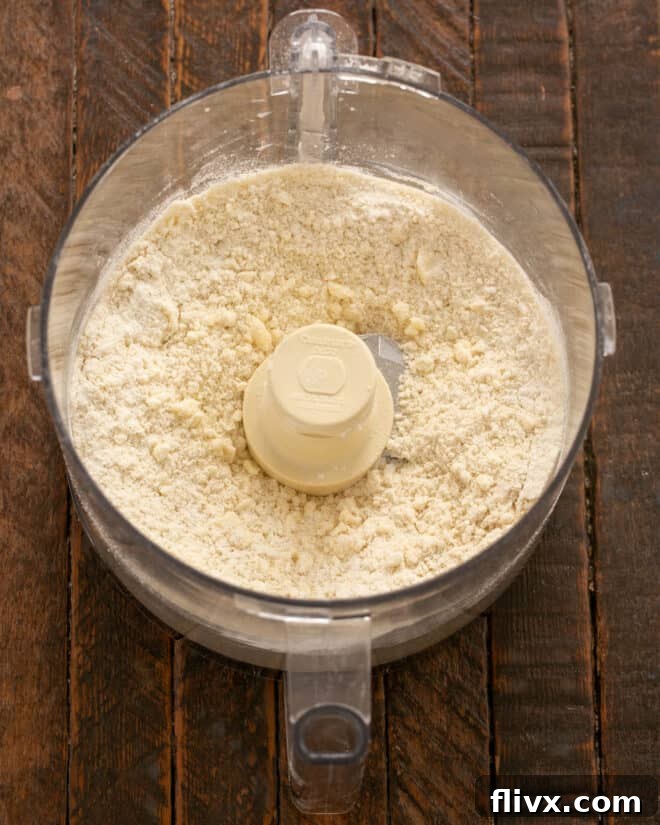
- Avoid Overworking the Dough: When mixing, pulse just enough to combine the ingredients. Overworking the dough develops the gluten too much, which can make your pie crust tough and inelastic, causing it to shrink significantly during baking. The goal is to incorporate the fats into the flour until the mixture resembles coarse cornmeal with some pea-sized pieces of fat still visible.
- Use Just Enough Ice Water: Water is the binder, but too much will activate excess gluten, resulting in a tough crust, and too little will leave you with a crumbly dough that’s hard to roll. Add ice water one tablespoon at a time, pulsing briefly after each addition. Stop as soon as the dough begins to come together and can be gently pressed into a ball without crumbling. The dough should still look a bit shaggy, not wet or sticky.
- Don’t Over-Flour Your Rolling Surface: While a lightly floured surface is necessary to prevent sticking, too much extra flour can be absorbed into the dough, making it tough. Use a minimal amount of flour on your countertop and rolling pin. After each pass of the rolling pin, lift the dough, rotate it a quarter turn, and lightly dust the surface again if needed. This also helps ensure an even thickness.
- Chill Your Dough Adequately: Once formed, the dough absolutely needs to chill in the refrigerator for at least one hour, or preferably longer. This rest period allows the gluten to relax, which prevents shrinkage during baking, and gives the fats a chance to firm up again, ensuring maximum flakiness. Chilled dough is also much easier to roll out.
- Consider Your Rolling Surface: If you have a marble countertop or a pastry board, these are excellent for rolling pie dough as their cool surface helps keep the butter and shortening from warming up too quickly. Even with these surfaces, a light dusting of flour is still recommended to prevent sticking.
Step-by-Step Guide: Crafting Your Perfect Food Processor Pie Crust
Making pie crust in a food processor is remarkably simple and efficient. Follow these steps for a beautifully flaky and tender dough:
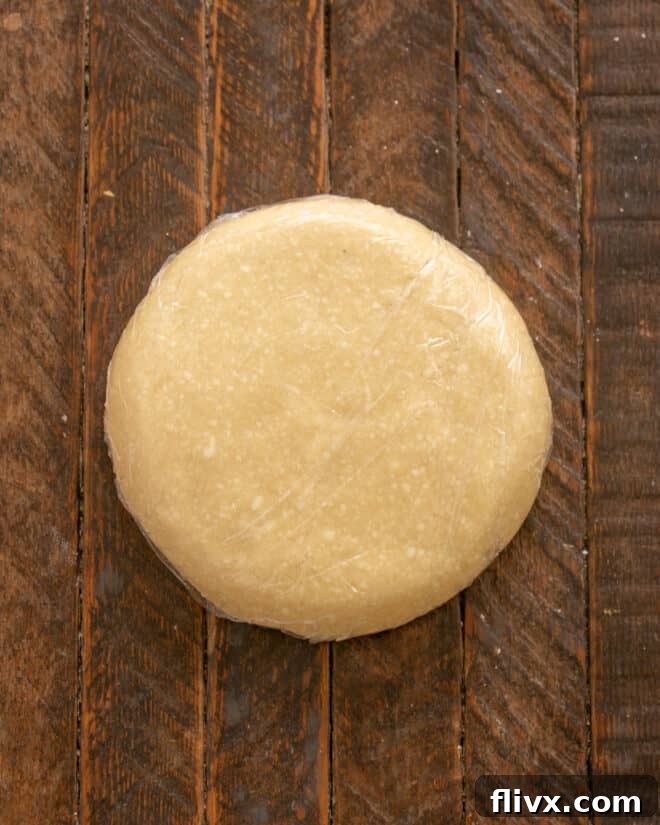
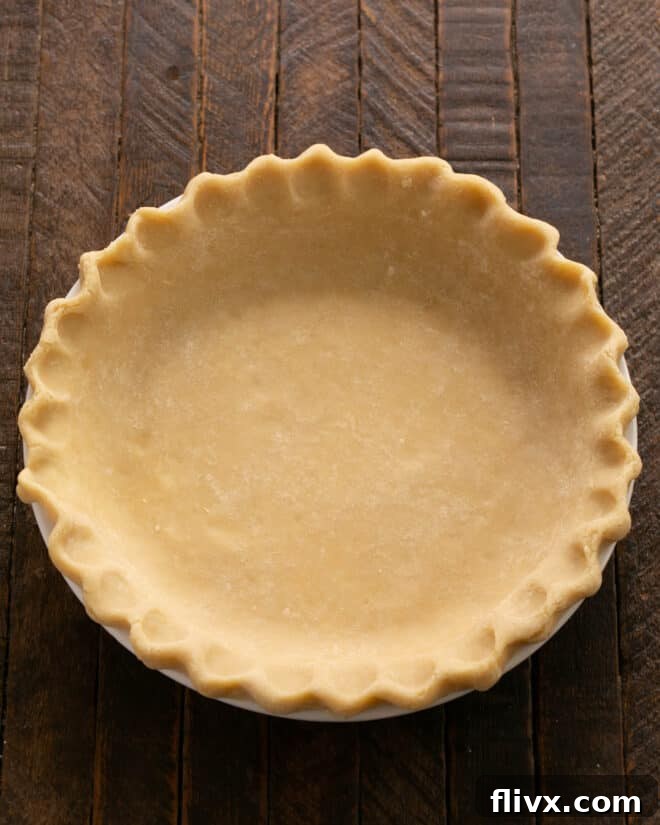
Once you’ve made your dough, remember to handle it gently. Overworking will develop the gluten and make your crust tough. After rolling and fitting it into your pie plate, give it a final chill before filling and baking. This helps set the fats and prevents shrinkage.
Frequently Asked Questions About Homemade Pie Crust
Absolutely! While the food processor makes the job quick and mess-free, you can certainly make pie crust using traditional methods. A hand-held pastry blender is an excellent tool for cutting cold fats into the flour. Alternatively, two knives can be used to scissor-cut the butter and shortening into the dry ingredients until the mixture reaches the desired cornmeal-like consistency. The key is to work quickly to keep the fats as cold as possible.
Homemade pie dough is fantastic for meal prep! You can prepare the dough up to 3 days ahead of time. Simply keep it tightly wrapped in plastic wrap in the refrigerator. For longer storage, this dough freezes beautifully for up to 3 months. To freeze, wrap individual disks of dough first in plastic wrap, then again in aluminum foil, or place them in a freezer-quality Zip-loc bag, pressing out as much air as possible to prevent freezer burn. Defrost the dough overnight in the refrigerator before you plan to use it.
Blind baking refers to baking a pie crust without its filling. This technique is typically used when the pie filling is unbaked (like a pudding, mousse, or fresh fruit that releases a lot of moisture) or requires a fully cooked and cooled crust. To blind bake, first, “dock” the crust by gently poking holes across the bottom and sides with a fork. This helps to prevent the bottom crust from blistering or puffing up excessively. An alternative, and often preferred, method is to line the docked crust with parchment paper or aluminum foil and fill it with pie weights, dried beans (navy beans work great), or even uncooked rice. These weights prevent the crust from shrinking or developing large bubbles during baking. Bake with the weights for the initial period, then remove them and continue baking until the crust is golden brown and fully cooked. Remember, dried beans used as pie weights can be reused multiple times; just store them in an airtight container once cooled.
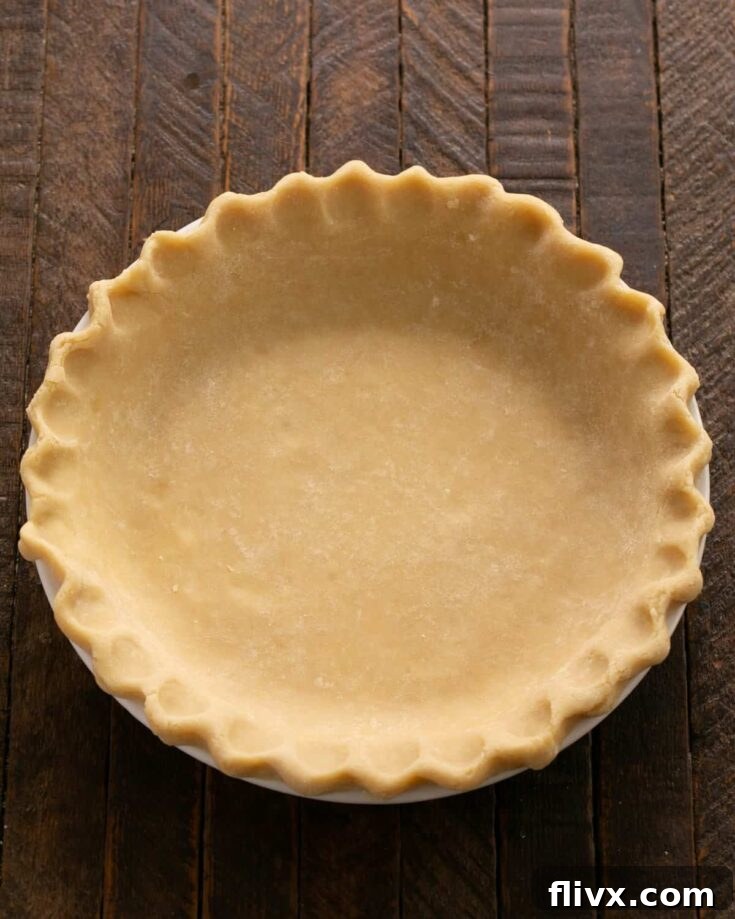
Fluting, or crimping, is the decorative edge you create on a pie crust that rests on the rim of the pie plate. It adds both beauty and helps hold the top crust in place for double-crusted pies. A classic method involves using two fingers from one hand to press the crust from the outside, while one finger from your other hand presses between them from the inside. This creates a traditional, wavy pattern. For a simpler look, you can use the tines of a fork to make linear indentations around the perimeter. For an extra special touch, use mini cookie cutters to create small leaves or shapes from any leftover dough scraps, attaching them to the edge with a simple egg wash (egg mixed with a little water or milk) before baking. Don’t be afraid to experiment to find your favorite style!
Preventing sticking is key to a smooth rolling process. First and foremost, ensure your pie dough is thoroughly chilled – cold dough is less likely to stick. Lightly dust your rolling surface (a clean countertop, pastry mat, or marble slab) and your rolling pin with flour. After the initial pass with your rolling pin, gently lift the dough, give it a quarter turn, and roll again. This regular lifting and turning prevents the dough from adhering to the surface and ensures an even roll. Re-dust the surface and rolling pin with a light coating of flour whenever the dough starts to feel tacky. Marble surfaces are often favored for rolling pie dough because they naturally stay cool, which helps keep the butter and shortening from melting, but even marble will benefit from a light dusting of flour.
The pie crust featured in this recipe is also known as Pâte Brisée, a French term meaning “short pastry.” It is a rich, flaky, and tender dough commonly used for both sweet and savory applications, including pies, tarts, and quiches. Its neutral flavor profile makes it incredibly versatile. Another popular type is Pâte Sucrée, which translates to “sweet pastry.” This is a rich, sweet dough, often crumbly rather than flaky, primarily used for desserts such as sweet tarts, dessert pies, and filled cookies. It typically contains more sugar and sometimes an egg yolk for added richness and tenderness, making it less suitable for savory dishes.
Pie crust shrinkage is a common issue, often due to a few factors. The most prevalent reason is insufficient chilling time. When the dough isn’t properly chilled, the gluten hasn’t had a chance to relax. As it bakes, the gluten contracts, causing the crust to pull away from the edges of the pie plate. Overworking the dough during mixing or rolling also develops too much gluten, making the dough elastic and prone to shrinkage. Always chill your dough for at least an hour, or even longer, before rolling and again after fitting it into the pie plate for best results. Handling the dough gently and quickly will also help prevent overworking.
Elevate Your Baking: Delicious Recipes to Pair with Your Perfect Pie Crust
Now that you’ve mastered the art of making a flawless pie crust, it’s time to put your skills to delicious use! This versatile homemade pie crust is the perfect foundation for an endless array of sweet and savory fillings. Here are some of our favorite recipes that truly shine when paired with your tender, flaky pastry:
- Strawberry Cream Pie: A delightful, creamy classic that benefits immensely from a crisp, buttery crust.
- Fresh Peach Pie: Capture the essence of summer with juicy, ripe peaches nestled in your perfectly baked crust.
- French Silk Pie Recipe: This rich, chocolatey indulgence demands a sturdy yet tender crust to balance its luxurious filling.
- Blueberry Peach Custard Pie: A harmonious blend of fruits and creamy custard, beautifully contained by your homemade pastry.
- Plus, explore all my Best Pie Recipes for even more inspiration to fill your kitchen with the comforting aroma of freshly baked pie!
Stay in touch through social media @ Instagram, Facebook, and Pinterest. Don’t forget to tag me when you try one of my recipes! And if you love the results, please give it a 5-star rating in the recipe card.
Homemade Pie Crust Recipe
20 minutes
20 minutes
2 single pie crusts
A homemade pie crust made with a perfect blend of butter for rich flavor and shortening for incredible flakiness and ease of handling. This food processor method simplifies the process for a consistently tender and delicious result.
Ingredients
Crust:
- 2 ½ cups all-purpose flour
- ½ teaspoon salt
- 1 tablespoon granulated sugar (omit for savory pies)
- 12 tablespoons cold butter, cut into ½-inch pieces
- 8 tablespoons cold shortening (Crisco) or leaf lard, cut into ½-inch pieces
- 6-8 tablespoons ice water, or just enough until the crust holds together when pinched
Optional Glaze for a Golden Crust:
- 1 egg yolk
- 1 tablespoon of cream or milk
Instructions
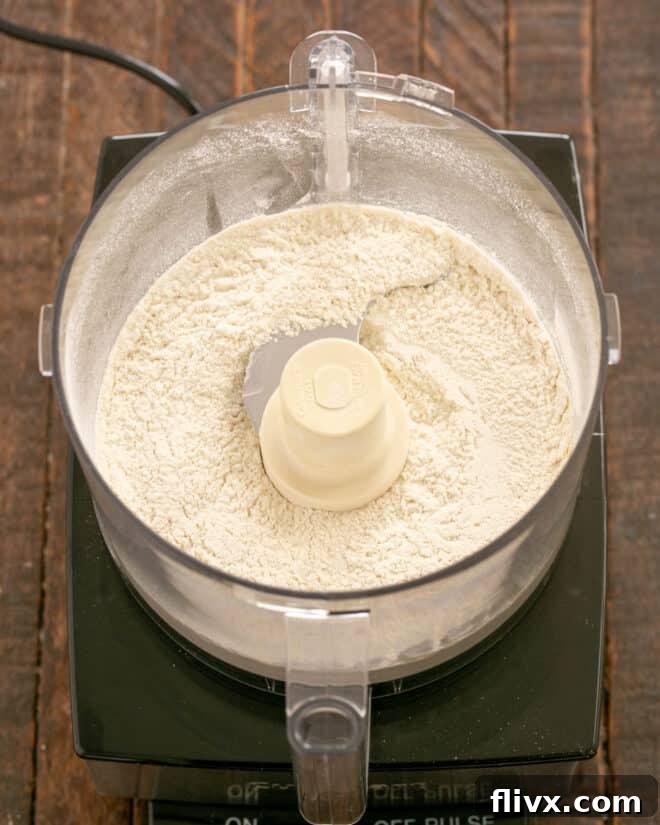
- In the bowl of a food processor, add the flour, salt, and sugar. Pulse 3-5 times until well mixed.
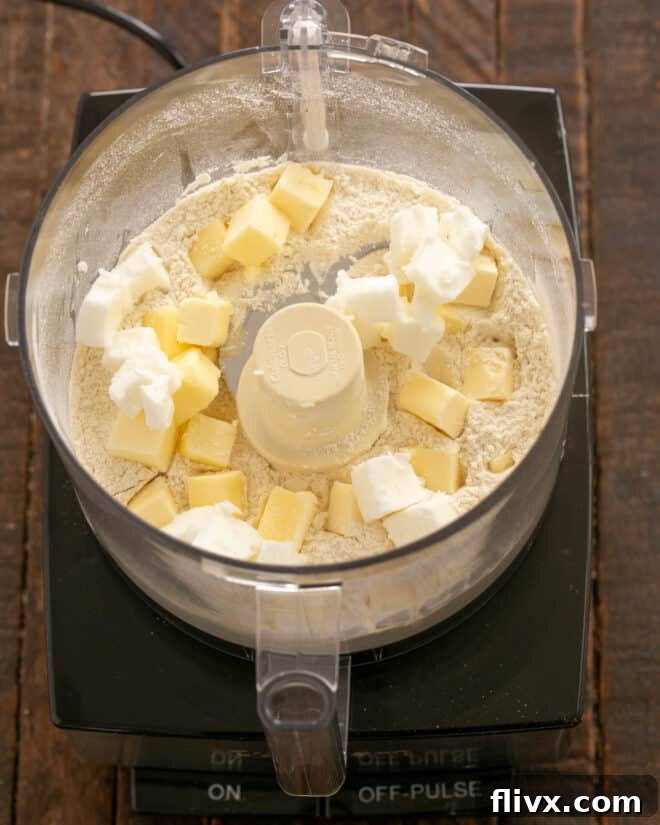
- Add the cold, cubed butter and shortening (or lard) to the food processor. Pulse 5-7 times, or until the mixture resembles coarse cornmeal with some pea-sized chunks of fat still visible. Be careful not to over-process.
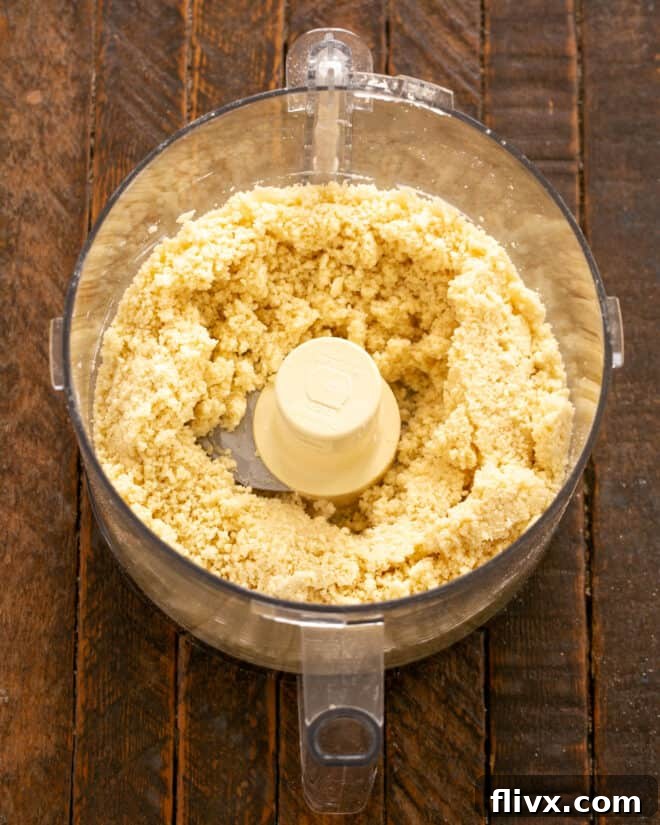
- With the food processor running on low, slowly add the ice water one tablespoon at a time through the feed tube. Pulse only until the dough just begins to come together into a shaggy mass and holds when pinched between your fingers. You may not need all the water.
- Transfer the dough from the food processor to a clean surface. Divide the dough into two equal halves. Gently form each half into a round disk, wrap tightly in plastic wrap, and flatten slightly.
- Refrigerate the dough disks for at least 1 hour, or preferably longer (up to 3 days). This chilling time is crucial for relaxing the gluten and firming the fats, ensuring a flaky crust that won’t shrink during baking.
- When ready to use, remove one disk of dough from the refrigerator and let it sit at room temperature for about 10 minutes to soften slightly (but still remain cold). On a lightly floured surface, roll out the dough into a 12-inch circle (or desired size) using a rolling pin. Carefully transfer the rolled dough into your pie tin. Trim the edges and flute or crimp the rim as desired. If blind baking, remember to dock the crust with a fork across the bottom.
- Place the fitted pie crust back into the refrigerator while you prepare your pie filling. This re-chilling step helps maintain the crust’s shape and prevents shrinkage.
- If desired, for an extra golden and shiny crust, whisk together the egg yolk and cream for the optional glaze. Carefully brush this mixture over any exposed crust before baking.
- Bake as directed in your specific pie recipe. If blind baking, line the chilled crust with parchment paper or non-stick foil, fill with pie weights or dried beans, and bake at 375°F (190°C) for 20-25 minutes. Remove the weights and parchment/foil, then continue baking for another 10-15 minutes, or until the crust is golden brown and cooked through.
Notes
Detailed Guide to Blind Baking Your Pie Crust:
(This method is for pies with no-bake fillings, or fillings that require a pre-baked crust)
- Ensure your fluted pie crust is well-chilled in the pie plate.
- Line the chilled crust with parchment paper or aluminum foil, making sure to extend it slightly over the edges to protect them from browning too quickly.
- Fill the lined crust completely with pie weights or dried beans (such as navy beans or pinto beans).
- Bake in a preheated oven at 375°F (190°C) for 25-30 minutes.
- Carefully remove the parchment/foil along with the pie weights.
- Return the crust to the oven and continue baking for another 10-12 minutes, or until the bottom and sides are beautifully golden brown. Let cool completely before filling.
Recommended Products
As an Amazon Associate and member of other affiliate programs, I earn from qualifying purchases.
- Nonstick Foil
- Pie weights
- Ceramic pie plate
- French Rolling Pin
- Pastry Blender
- Food Processor
Nutrition Information:
Yield:
8
Serving Size:
1
Amount Per Serving:
Calories: 471Total Fat: 36gSaturated Fat: 19gTrans Fat: 1gUnsaturated Fat: 15gCholesterol: 89mgSodium: 283mgCarbohydrates: 32gFiber: 1gSugar: 2gProtein: 5g
Thatskinnychickcanbake.com occasionally offers nutritional information for recipes contained on this site. This information is provided as a courtesy and is an estimate only. This information comes from online calculators. Although thatskinnychickcanbake.com attempts to provide accurate nutritional information, these figures are only estimates. Varying factors such as product types or brands purchased can change the nutritional information in any given recipe. Also, many recipes on thatskinnychickcanbake.com recommend toppings, which may or may not be listed as optional and nutritional information for these added toppings is not listed. Other factors may change the nutritional information such as when the salt amount is listed “to taste,” it is not calculated into the recipe as the amount will vary. Also, different online calculators can provide different results. To obtain the most accurate representation of the nutritional information in any given recipe, you should calculate the nutritional information with the actual ingredients used in your recipe. You are solely responsible for ensuring that any nutritional information obtained is accurate.
HOW MUCH DID YOU LOVE THIS RECIPE?
Please leave a comment on the blog or share a photo on Pinterest