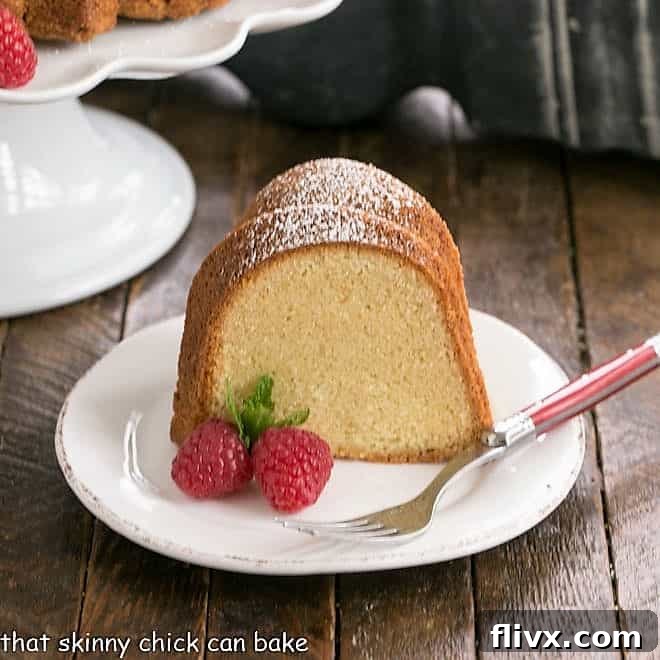
Indulge in the irresistible charm of a perfectly sweet and wonderfully dense slice of Sour Cream Pound Cake. This classic dessert is elevated with the addition of sour cream, ensuring an exceptionally moist crumb and a rich flavor that will captivate your taste buds. Imagine it adorned with a vibrant medley of seasonal berries and a generous dollop of freshly whipped cream – a truly scrumptious experience that elevates any occasion. With my foolproof tips for How to Make a Pound Cake, you’ll effortlessly achieve baking success, solidifying your reputation as a culinary maestro among friends and family!
The secret to this outstanding Pound Cake Recipe lies in the sour cream, which not only imparts incredible moisture but also contributes to its beautifully fine, tender crumb. This cake is so delightfully delicious, you’ll find yourself constantly sharing the recipe. Prepare for compliments and requests for seconds!
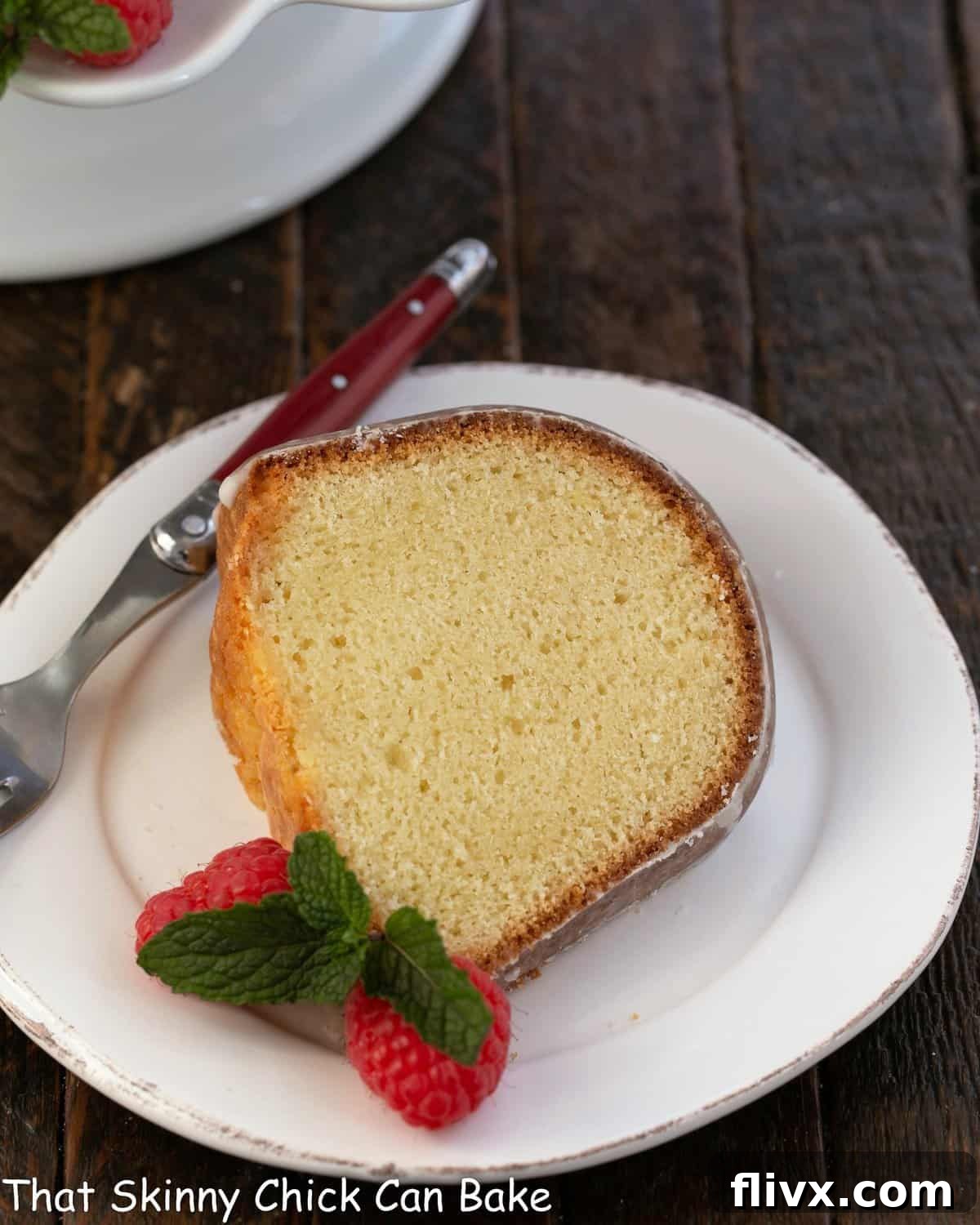
Why This Sour Cream Pound Cake Will Become Your Go-To Recipe
- An Elevated Classic: While a traditional pound cake prides itself on simplicity—butter, sugar, eggs, and flour—this sour cream rendition introduces a few thoughtful additions that propel it into a league of its own. The sour cream is the star, delivering an unparalleled tender crumb and a luxurious richness. Complementing this, both vanilla and almond extracts work in harmony to create a deep, complex flavor profile that tantalizes with every bite.
- Effortless Elegance: Despite its sophisticated taste and texture, this remains a wonderfully simple cake to prepare and enjoy, needing nothing more than a fork to savor its deliciousness. Adding a delicate Pound Cake Glaze, a thin veil of powdered sugar and water, serves a dual purpose. It not only seals in moisture, keeping the cake fresh and delightful for longer, but also adds a subtle, pleasing texture to its already golden-brown, tasty crust. It’s a touch of elegance that requires minimal effort.
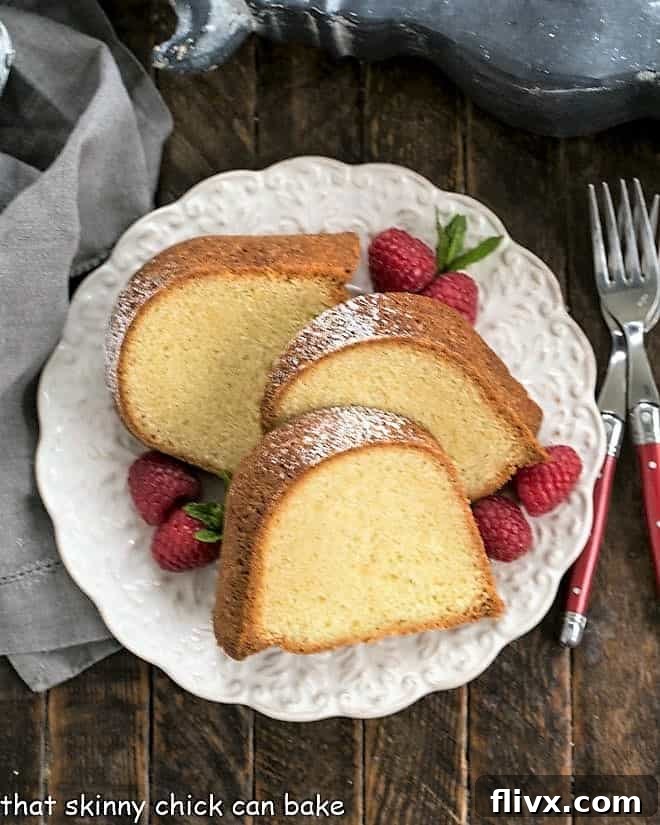
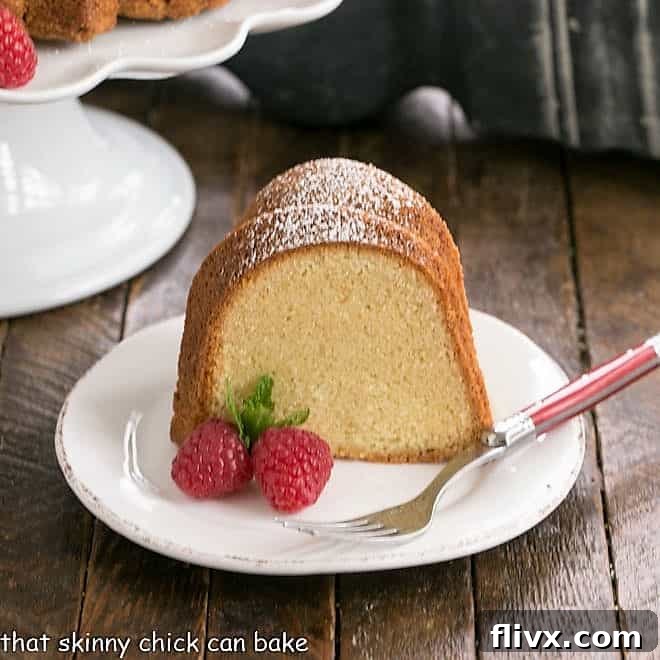
- Versatile for Every Occasion: This cake is inherently company-worthy, with just a simple garnish transforming it into a showstopper. While a handful of fresh berries is often all it needs, its versatility shines when paired with a myriad of toppings. Imagine a vibrant sweetened raspberry sauce, a luxurious crème anglaise, or even a scoop of homemade ice cream to elevate the experience further. Whether it’s a casual family gathering or a formal dinner party, this pound cake adapts beautifully, always emerging as a triumphant centerpiece. I initially planned to create a raspberry sauce from some frozen berries, but in the end, the fresh berries provided such a perfect, vibrant contrast that they were all that was needed. Truly, a winner in any presentation.
Essential Ingredient Notes for the Perfect Pound Cake
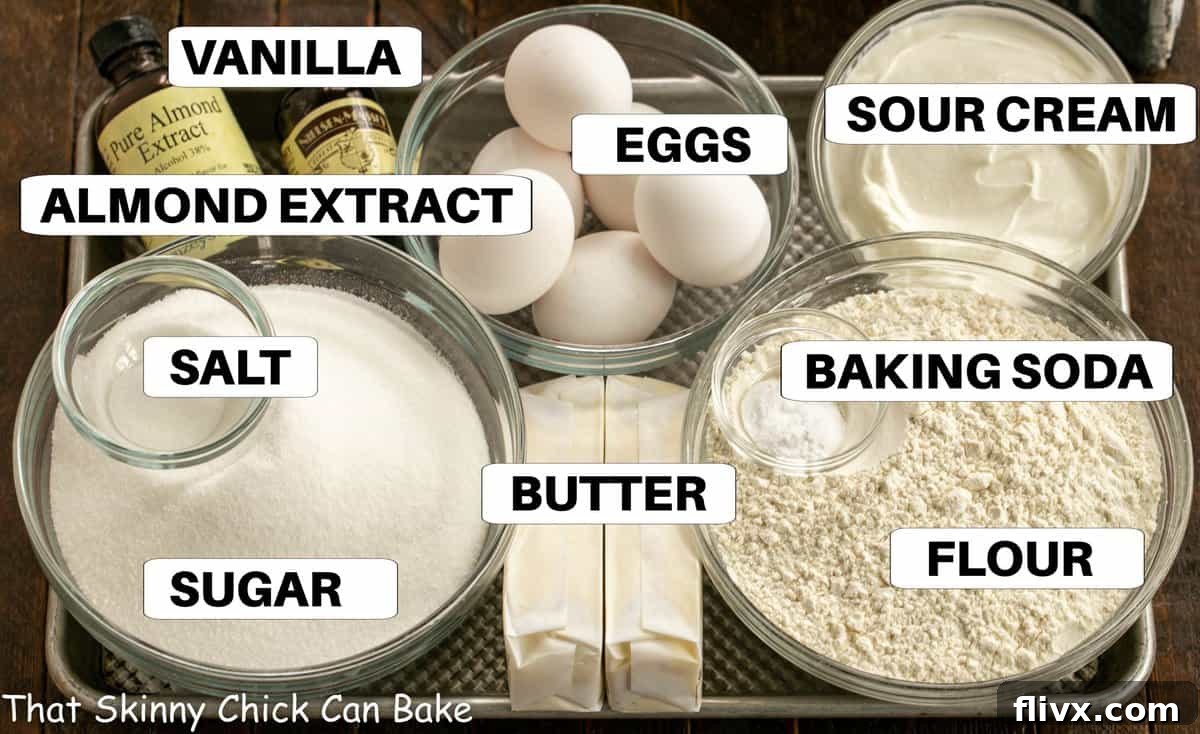
Achieving the perfect sour cream pound cake starts with understanding your ingredients. Quality and temperature are key to unlocking the best flavor and texture.
- Butter: For superior flavor, opt for a good quality salted butter, perhaps a brand name or European variety. If you prefer to use unsalted butter, remember to slightly increase the amount of salt in the recipe to balance the flavors. It is absolutely crucial that your butter is at **room temperature** before you begin mixing, as this allows it to cream properly with the sugar, incorporating air for a light yet dense texture. Never substitute margarine for butter; the fat content and flavor profile are significantly different and will compromise the cake’s quality.
- Sour Cream: This is the hero ingredient that lends incredible moisture and richness to our pound cake. Always use **full-fat sour cream** for the best results. The higher fat content contributes to a luscious, tender crumb, while its acidity helps to tenderize the gluten in the flour and activate the baking soda, aiding in a beautiful rise and an even finer texture.
- Large Eggs: You’ll need six large eggs for this recipe, and like your butter and sour cream, they must be at **room temperature**. Room temperature eggs emulsify much better with the other ingredients, creating a smoother, more cohesive batter. This ensures a uniform texture in your baked cake.
- Vanilla Extract: The flavor of vanilla is foundational in pound cakes. Invest in **real vanilla extract**, not imitation. The depth and complexity of natural vanilla are incomparable and will significantly enhance the overall taste of your cake.
- Almond Extract: This extract adds a subtle yet distinctive nutty aroma and flavor that beautifully complements the vanilla and richness of the cake. As with vanilla, purchase the **best quality almond extract** you can find. High-quality extracts make a noticeable difference in the finished product. Brands like Penzey’s are known for their excellent flavor.
- Powdered Sugar: Essential for the optional glaze, powdered sugar (confectioners’ sugar) should always be **sifted** before use. This step is critical to prevent lumps in your glaze, ensuring a silky-smooth consistency that adheres beautifully to the cake.
- All-Purpose Flour: While some pound cake recipes might suggest pastry or cake flour for a lighter crumb, this specific recipe thrives with **common all-purpose flour**. Its slightly higher protein content provides enough structure to support the dense, moist nature of a classic pound cake while still yielding a tender result when mixed correctly.
Step-by-Step Guide: How to Make Your Sour Cream Pound Cake
Making this exceptional sour cream pound cake is a straightforward process when you follow these simple steps. With attention to detail, you’ll achieve a perfect cake every time.
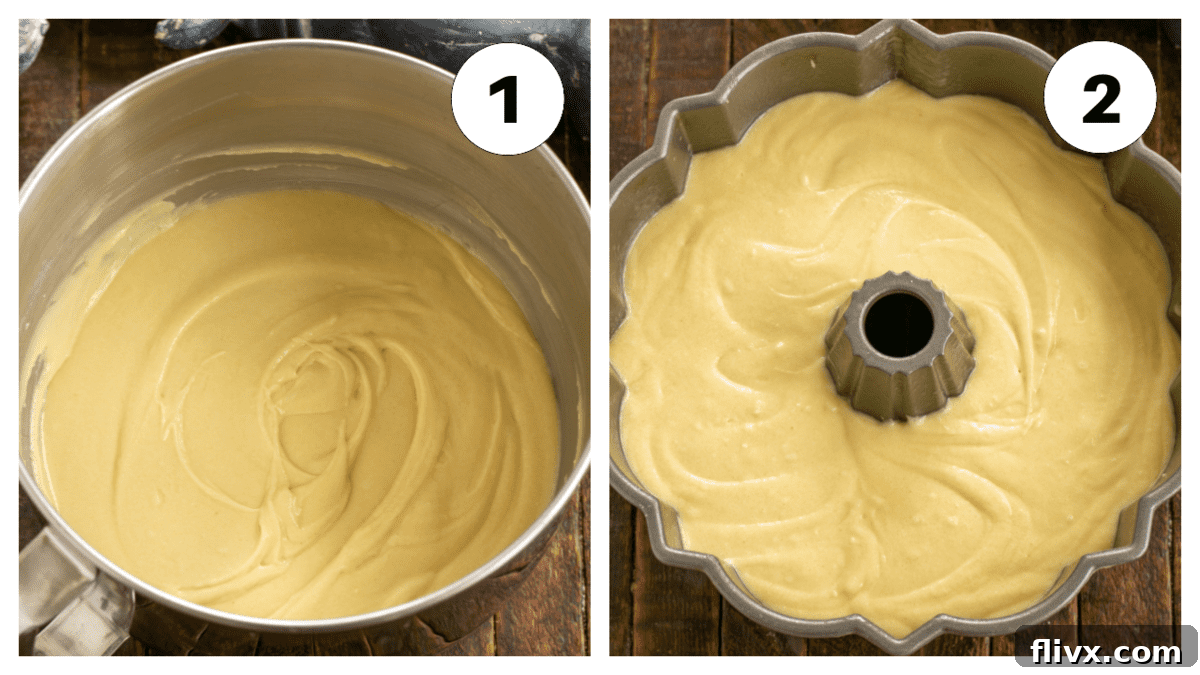
- Prepare the Batter: Following the recipe instructions, combine and mix the cake batter thoroughly using either a hand mixer or a stand mixer. Ensure all ingredients are well incorporated, and scrape down the sides of the bowl as needed to achieve a uniform consistency.
- Fill and Bake: Carefully scrape the prepared batter into your thoroughly greased and floured Bundt pan. Distribute the batter evenly, then bake in the preheated oven for the time specified in the recipe.
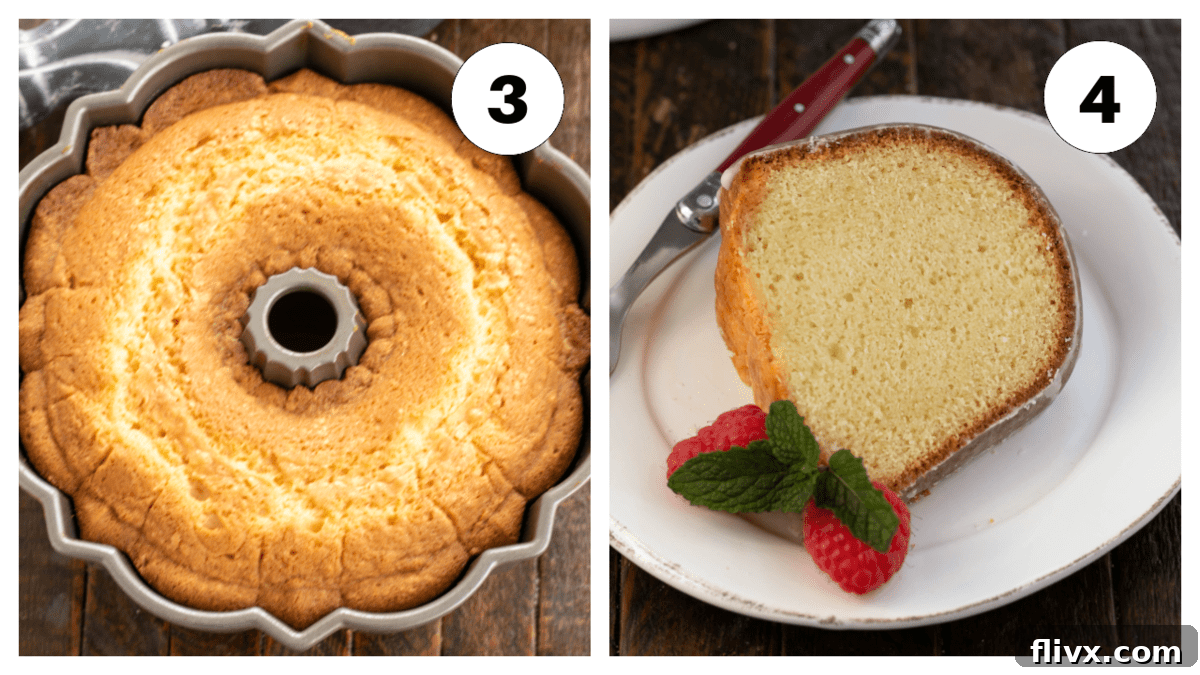
- Cool and Invert: Once baked, allow the cake to rest in the Bundt pan on a wire rack for precisely 10-15 minutes. This crucial resting period allows the cake to firm up slightly before you invert it. After resting, carefully invert the pan onto the cooling rack, allowing the cake to release cleanly. Glaze if desired while still warm.
- Serve and Enjoy: Once the cake has cooled completely (or is warm with glaze), slice it into generous portions. Serve immediately with your favorite toppings and savor every delightful bite!
Mastering the Art of Pound Cake: Expert Tips for Success
Pound cakes are renowned for their distinctively dense texture and fine crumb, offering a satisfying richness that sets them apart from lighter, airy cakes. They can be incredibly versatile, made in countless flavors and adorned with a variety of delicious add-ins. I personally find them far less intimidating to bake than intricate layer cakes requiring precise frosting techniques or cupcakes demanding perfectly piped buttercream swirls. However, achieving that perfect pound cake requires adhering to a few specific rules that differ slightly from ordinary cake baking.
Ingredients and Mixing Techniques:
- Start with Room-Temperature Ingredients: The Foundation of Success. This is perhaps the most critical tip for any cake, and especially for a pound cake. Ensuring your butter, eggs, and sour cream are at room temperature (around 68-72°F or 20-22°C) is key to a smooth, evenly textured batter. When ingredients are at the same temperature, they emulsify much more effectively, meaning they blend together seamlessly. Cold ingredients will resist mixing, leading to a lumpy batter and a cake with an inconsistent texture. To achieve room temperature, simply set your eggs, butter, and sour cream out on the counter for about an hour before you plan to mix. If you’re short on time, you can speed up the process for eggs by placing them in a bowl of warm (not hot or boiling) water for 5-10 minutes. For butter, cut it into smaller pieces to warm faster.
- Choose the Right Attachment: Paddle for Perfection. Most traditional pound cake recipes call for using the paddle attachment on your stand mixer (or the standard beaters on a hand mixer) to cream the butter and sugar. This method incorporates less air into the batter compared to a whisk attachment. The goal for a pound cake is a smooth, dense, and thick batter, not a light and airy one like a sponge cake. While the whisk attachment might be tempting, it can over-aerate the mixture, leading to a less characteristic pound cake texture. However, with this particular sour cream pound cake recipe, a whisk attachment is acceptable if a paddle is unavailable, as the sour cream’s structure helps maintain the desired density.
- Creaming Butter and Sugar: The First Key Step. Make sure the butter and sugar mixture is thoroughly creamed before you introduce the eggs. This means beating them together until the mixture is light in color, fluffy in texture, and visibly increased in volume. This process dissolves the sugar crystals slightly and incorporates air, which is crucial for the cake’s structure and tenderness.
- PRO-Tip: Alternating Wet and Dry Ingredients. Many cake recipes, including this pound cake, benefit from alternating the addition of eggs and flour during the mixing process. When a recipe specifies this method, always **start and stop with the flour**. This technique helps to minimize the development of gluten, which can make a cake tough if overmixed. By introducing flour first, then eggs, and ending with flour, you create a more tender, fine-crumbed cake, which is precisely what we’re aiming for in a truly exquisite pound cake.
- Scrape Down the Bowl: Ensure Uniformity. During the mixing process, especially when adding ingredients, take a moment to stop your mixer and scrape down the bottom and sides of the bowl a couple of times. This ensures that all ingredients are fully incorporated and prevents pockets of unmixed butter or flour, leading to a perfectly consistent batter and an evenly baked cake.
- PRO-Tip: The Dangers of Over-Mixing. Like with a delicate cheesecake, you only want to beat in each egg until it is *just* incorporated into the batter. Similarly, after you’ve added the flour, mix only until it is *just combined* and no streaks of dry flour remain. **Do not over-mix or beat in the flour vigorously.** Overmixing activates the gluten in the flour excessively, resulting in a tough, chewy, and less tender cake. Precision in mixing ensures that fine, dense crumb that makes pound cake so irresistible.
Baking and Storing Your Pound Cake to Perfection:
- Perfect Pan Preparation: The key to a beautiful, intact pound cake is meticulous pan preparation. Always grease and flour your Bundt pan thoroughly. While butter can work, **shortening often performs best for greasing your pan** as it has a higher melting point, creating a more reliable non-stick layer. Alternatively, a baking spray with flour, like Baker’s Joy, is an excellent option in a pinch. Ensure every nook and cranny of the pan is covered to prevent sticking and ensure an easy release.
- Patience in Baking: Pound cakes are substantial and typically require a longer baking time, often an hour or more, to cook through completely. Be patient and resist the urge to open the oven door too frequently, as this can cause the cake to sink. **To accurately check if your pound cake is done, gently insert a long wooden skewer or toothpick into the very center of the cake.** When the cake is perfectly baked, the toothpick should emerge clean, without any wet batter clinging to it. If it comes out with moist crumbs, continue baking for a few more minutes and retest.
- The Crucial Cooling Phase: Once baked, let your pound cake cool in its pan on a wire rack for a precise 10-15 minutes. This allows the cake to firm up sufficiently, preventing it from breaking apart when you attempt to remove it. After this initial cooling, gently shake the pan to loosen the cake, then invert it onto the cooling rack. Allow it to cool completely on the rack before slicing. Removing it too soon risks breakage, while leaving it in the pan too long can cause it to stick.
- Serving Temperature: For the best texture and flavor, ensure your cake is completely cooled before slicing. While a warm slice can be delightful, a fully cooled cake will be easier to slice cleanly and its flavors will have fully developed.
- Optimal Storage: Your delicious pound cake will maintain its freshness and moisture wonderfully when kept tightly covered at room temperature for up to 3-4 days. To extend its life beyond this, wrap it exceptionally well. First, enclose the cake tightly in plastic wrap, then follow with a layer of aluminum foil. Properly wrapped, this pound cake freezes beautifully.
- Freezing for Future Enjoyment: A well-wrapped pound cake can be frozen for an impressive 4-6 months without significant loss of quality. To thaw, simply remove it from the freezer and let it come to room temperature while still wrapped, which helps to retain its moisture.
Frequently Asked Questions About Pound Cake
The name “Pound Cake” harks back to its origins in 18th-century England. The answer is delightfully simple: the original recipes famously called for a pound each of four core ingredients – a pound of butter, a pound of sugar, a pound of flour, and a pound of eggs. This straightforward ingredient list made it easy for even novice bakers to remember and prepare, and it produced a very rich, dense, and satisfying cake.
Pound cake is a classic cake characterized by its rich, dense texture and fine, close crumb. Historically, it was made with equal “pound” parts of butter, sugar, flour, and eggs, often flavored simply with vanilla or lemon. Over time, as baking science evolved, variations emerged. Modern pound cakes might include small amounts of leavening agents like baking powder or baking soda (especially when acidic ingredients like sour cream or buttermilk are added) and can incorporate a wider array of flavors, such as coconut, various nuts, or dried fruits. Traditionally, pound cakes were baked in loaf pans, but they are now very commonly baked in decorative Bundt pans or classic tube pans, which help ensure even cooking and a beautiful presentation.
The baking time for a pound cake can vary significantly based on your specific oven’s calibration, the type and material of your pan, and the exact dimensions of the cake. While the recipe provides a guide, it’s always best to use it as an estimate and adjust as necessary. A crucial factor for pound cakes is often the baking temperature. Many cakes are baked at 350°F (175°C), but this can be too hot for a dense pound cake, potentially causing the outside to brown too quickly or crack before the inside is fully cooked. This particular Sour Cream Pound Cake is baked at a lower temperature of 325°F (160°C), which allows it to bake more evenly all the way through, resulting in that desirable tender crumb without a burnt exterior.
The most reliable method to determine if your pound cake is fully baked is the toothpick test. Insert a long wooden skewer or toothpick into the deepest part of the cake, usually the center. When the toothpick comes out clean, with no wet batter clinging to it, your pound cake is done. It’s a good practice to test in more than one location to ensure thorough baking. Additionally, pay attention to the aroma; a baked cake will typically release a wonderful fragrance when it’s nearing completion. You should also look for a golden-brown crust and a cake that springs back slightly when gently touched. Start checking a few minutes before your timer goes off to prevent overbaking, which can lead to a dry cake.
Allowing your pound cake to cool in the pan on a wire rack for 10-15 minutes is a critical step for successful removal. This brief cooling period allows the cake’s structure to set and firm up, making it less fragile. If you try to remove it any sooner, the cake might be too delicate and could break apart or stick to the pan. Conversely, leaving the cake in the pan for too long can cause it to cool excessively and potentially create condensation, making it prone to sticking firmly to the pan. The 10-15 minute window is the sweet spot for a clean and easy release.
Pound cakes generally bake best in tube pans, which include classic angel food cake pans (though without a removable bottom) or decorative Bundt pans. These pans, with their central tube, allow heat to penetrate the center of the dense batter more effectively, ensuring even baking. It is crucial to **avoid using a 2-piece angel food pan with a removable bottom** for pound cake batter, as the liquid batter will likely leak out during baking. While pound cakes can also be baked in loaf pans, be aware that a recipe designed for a large Bundt pan will typically yield enough batter to fill more than one standard loaf pan. If using loaf pans, you will also need to adjust the baking time, often reducing it, and possibly the temperature, to accommodate the smaller size and different heat distribution.
Adding sour cream to a pound cake recipe is a brilliant culinary decision that significantly enhances its quality. Sour cream serves multiple vital roles: it generously contributes moisture and a luscious richness to the cake without thinning the batter excessively. This results in a remarkably soft, velvety, and fine crumb that is characteristic of a superior pound cake. Furthermore, the inherent acidity in sour cream plays a crucial chemical role; it weakens the gluten strands that develop in the flour during mixing. This tenderizing effect leads to a much softer and more delicate cake texture. Additionally, if the recipe includes baking soda (as this one does), the acid in the sour cream helps to activate it, producing carbon dioxide gas which contributes to a beautiful, subtle lift and an even finer crumb.
Explore More Delicious Cake Recipes:
- Condensed Milk Pound Cake from A Family Feast: A wonderfully rich and tender cake, made even more decadent with the sweetness of condensed milk.
- Strawberry Pound Cake: Infused with the fresh, vibrant taste of strawberries, perfect for spring and summer gatherings.
- Key Lime Pound Cake: A zesty and refreshing pound cake bursting with the tangy flavor of key limes.
- Lemon Pound Cake: Bright and citrusy, this glazed lemon pound cake is a classic for a reason – pure sunshine in every bite.
- Vanilla Pound Cake: A timeless vanilla pound cake recipe, delivering comforting, pure flavor.
- English Trifle Recipe made with pound cake: Discover how to transform pound cake into a magnificent layered English trifle.
- More of the Best Cake Recipes: A collection of delightful cake recipes for every craving and occasion.
For more baking inspiration, be sure to check out my Delicious Cakes and Cupcakes Pinterest Board.
Stay connected with me and my latest creations through social media! You can find me on Instagram, Facebook, and Pinterest. Don’t forget to tag me when you try one of my delicious recipes! And if you absolutely love the results, please consider giving it a 5-star rating in the recipe card below – your feedback means a lot!
Sour Cream Pound Cake Recipe
20 minutes
1 hour 20 minutes
1 hour 40 minutes
10 servings
A dense, classic vanilla pound cake made wonderfully moist with sour cream. Perfect served elegantly with fresh berries and rich whipped cream.
Ingredients
- ½ lb (2 sticks) of butter, at room temperature
- 3 cups sugar
- 1 cup sour cream, at room temperature
- 3 cups all-purpose flour
- ½ teaspoon baking soda
- ½ teaspoon salt
- 6 large eggs, at room temperature
- 1 teaspoon pure vanilla extract
- ½ teaspoon almond extract
Optional Glaze:
- 1½ cups powdered sugar, sifted
- ½ teaspoon pure vanilla extract
- Hot water (as needed for consistency)
Instructions
- Preheat your oven to 325°F (160°C).
- Thoroughly grease and flour a standard 12-cup Bundt pan (or use a baking spray like Baker’s Joy, ensuring full coverage).
- In a large mixing bowl, using a stand mixer with a paddle attachment or a hand mixer, cream together the room-temperature butter and sugar until light and fluffy. Then, gradually mix in the room-temperature sour cream until well combined.
- In a separate bowl, sift together the baking soda, salt, and all-purpose flour. Sifting ensures no lumps and a lighter texture.
- Begin adding the sifted flour mixture to the creamed butter-sugar mixture, alternating with the room-temperature eggs. Start by adding about a third of the flour, mix just until incorporated, then add one egg, mix until just combined. Repeat this process, ending with the flour. Be careful not to overmix the batter once the flour is added.
- Stir in the pure vanilla extract and almond extract. Pour the prepared batter evenly into your greased and floured Bundt pan. Bake for approximately 1 hour and 20 minutes, or until a wooden skewer inserted into the center comes out clean. Let the cake cool in the pan on a wire rack for 10-15 minutes. After this crucial cooling period, invert the pan onto the rack to release the cake, then allow it to cool completely.
- If you choose to add the optional glaze, prepare it while the cake is cooling in the pan.
- To make the glaze, whisk together the sifted powdered sugar and vanilla extract. Gradually add hot water, one teaspoon at a time, until the glaze reaches a thin, pourable consistency that is just thick enough to coat a spoon and will soak into the cake slightly. Brush or drizzle the warm glaze over the slightly warm cake. Alternatively, simply dust the cooled cake generously with powdered sugar for a simpler finish.
Notes
This recipe has been adapted from a classic by Paula Deen.
Ensuring your eggs, butter, and sour cream are at room temperature is paramount for a smooth, emulsified batter and a tender cake.
For a quick and elegant garnish, simply dust the cooled cake with powdered sugar instead of glazing.

Watch the video tutorial for this delicious Sour Cream Pound Cake!
Recommended Baking Essentials
As an Amazon Associate and member of other affiliate programs, I earn from qualifying purchases, which helps support this blog at no extra cost to you.
- KitchenAid 9-Speed Digital Hand Mixer
- Baker’s Joy Baking Spray
- Bundt Pan
Nutrition Information:
Yield:
10 servings
Serving Size:
1 slice
Amount Per Serving (estimated):
Calories: 524Total Fat: 8gSaturated Fat: 3gTrans Fat: 0gUnsaturated Fat: 3gCholesterol: 125mgSodium: 115mgCarbohydrates: 106gFiber: 1gSugar: 77gProtein: 8g
HOW MUCH DID YOU LOVE THIS RECIPE?
Please leave a comment on the blog or share a photo on Pinterest!