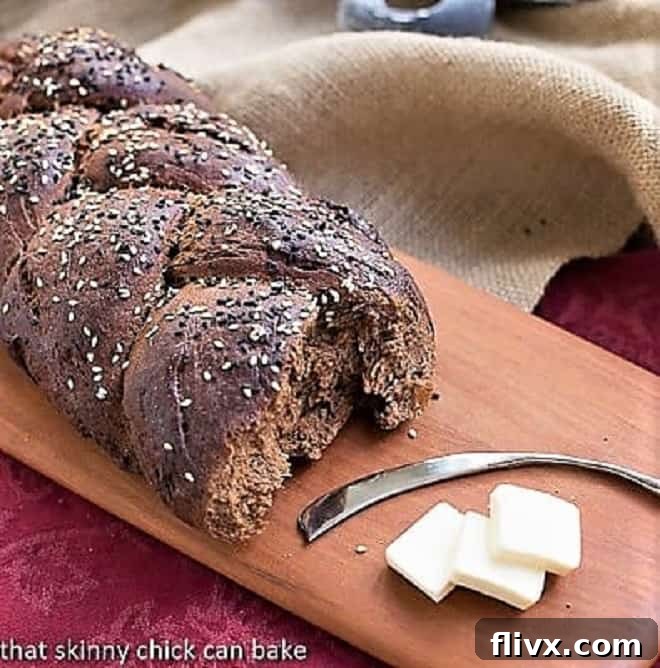
Embark on a culinary journey to bake authentic Pumpernickel Loaves—a dark, rich, and uniquely flavorful German rye bread that promises an unforgettable experience. Beyond its distinctive deep hue, Pumpernickel bread boasts a dense, chewy crumb and a robust taste that’s absolutely divine, especially when generously spread with creamy butter. This traditional bread is more than just a staple; it’s a testament to ancient baking techniques and a celebration of earthy, wholesome flavors.
If you cherish the craft of baking yeast bread, preparing this beautiful, often braided, Pumpernickel Bread is an essential addition to your repertoire. It’s a rewarding project that yields loaves brimming with character, perfect for elevating your breakfast, complementing a hearty sandwich, or serving as an impressive side for any dinner.
Mastering Homemade Pumpernickel Bread: Unlocking Its Unique Flavors
Delving into the ingredient list for traditional pumpernickel loaves often sparks curiosity, if not outright bewilderment. Prune butter, a dash of espresso, dark molasses, and unsweetened chocolate? This might seem like an unconventional medley for bread, but each component plays a crucial role in crafting the classic pumpernickel. Prunes, or prune butter (lekvar), are not just for flavor; they act as a natural humectant and preservative, ensuring a moist crumb and extending shelf life. Meanwhile, molasses, espresso, and unsweetened chocolate synergistically contribute to the bread’s signature rich, dark color and complex depth of flavor, far beyond simple sweetness.
As noted by culinary experts like Lauren Groveman, a contributing baker for renowned recipes such as those featured in “Baking with Julia,” these distinctive ingredients provide a multi-dimensional flavor profile that defines true pumpernickel. But the intrigue doesn’t stop at the ingredients. The technique of hanging the loaves in a fabric sling for their final rise is another element that distinguishes this bread-making process. This peculiar method, essential for maintaining the loaf’s shape and promoting an even rise in a dough known for its higher moisture content and rye flour composition, definitely makes baking pumpernickel an engaging and truly interesting experience.
Essential Tips for Crafting an Authentic Pumpernickel Bread
Baking pumpernickel bread can be a deeply satisfying endeavor, especially when armed with the right knowledge and techniques. This particular recipe, adapted from “Baking with Julia,” offers a robust framework, but a few additional insights can elevate your baking to perfection:
- **Kneading with Confidence:** The dough for pumpernickel, especially with its rye flour content, can be stickier and denser than typical wheat flour doughs. While I utilized my sturdy professional KitchenAid stand mixer for efficient kneading, hand-kneading is also feasible, requiring a bit more effort and patience. The key is to develop sufficient gluten, even if the dough remains somewhat tacky. Don’t be shy about using a pastry scraper to keep your work surface clean and incorporate the dough effectively.
- **Visual Learning is Key:** For those new to the unique methods involved, like the “sling” technique, watching a demonstration can be incredibly beneficial. I found immense help by watching the PBS episode where Lauren Groveman meticulously demonstrates her method to Julia Child. Visual cues can clarify intricate steps that text alone might not fully convey. Consider searching for such videos online to guide your shaping and rising processes.
- **Gathering Your Unique Ingredients:** The distinctive flavor and texture of this pumpernickel rely heavily on its less common ingredients. Make sure you have prune butter (also known as lekvar, often found in the jam and preserves aisle of well-stocked supermarkets), rich molasses, instant espresso powder, and unsweetened chocolate readily available. If you appreciate the aromatic, slightly peppery notes of caraway, ensure you have both ground and whole caraway seeds on hand to truly capture the traditional essence.
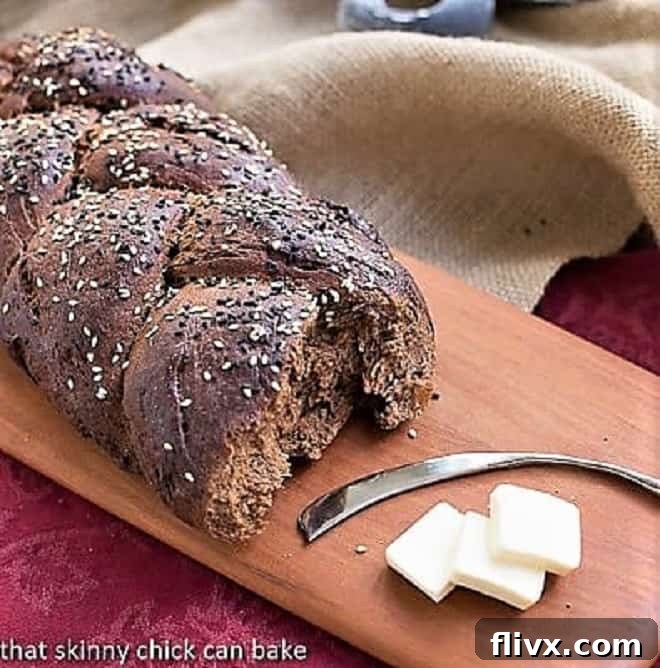
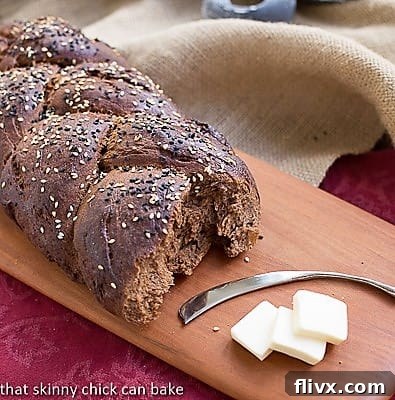
- **Experiment with Shaping:** While the recipe provides a specific shaping method, don’t hesitate to personalize your loaves. I prepared one loaf precisely as directed, embracing the classic free-form style. For the second, I opted for a beautiful braided shape, reminiscent of challah, by dividing the dough into three ropes. This not only adds visual appeal but also demonstrates the versatility of the dough.
- **Understanding the “Sling” Technique:** The sling method isn’t just an oddity; it’s a clever way to support the soft, wet rye dough during its final proof. By allowing the dough to hang, gravity gently stretches and lifts it, encouraging an open crumb structure and preventing it from spreading outward prematurely. This results in a taller, airier loaf than might otherwise be achieved with a dough that can be prone to flattening. For a visual guide on how to correctly shape and bake these loaves using the sling method, explore online video resources, often found on public broadcasting sites or culinary channels.
- **The Importance of Proofing:** Rye flour doughs can proof differently than all-wheat doughs. The three distinct proofing periods in this recipe are crucial. Pay close attention to the dough’s activity rather than strict timing, as environmental factors like room temperature and humidity can influence proofing times. A draft-free, warm spot is ideal for consistent rising.
- **Achieving the Perfect Crust:** Pumpernickel is known for its robust crust. Creating a steamy environment in your oven during the initial baking phase is vital. This helps gelatinize the starches on the surface, allowing the crust to expand before it sets, resulting in a thin, crisp shell rather than a thick, tough one. Utilizing quarry tiles or a pizza stone can also aid in achieving an excellent bottom crust.
The Unforgettable Flavor and Versatility of Pumpernickel Loaves
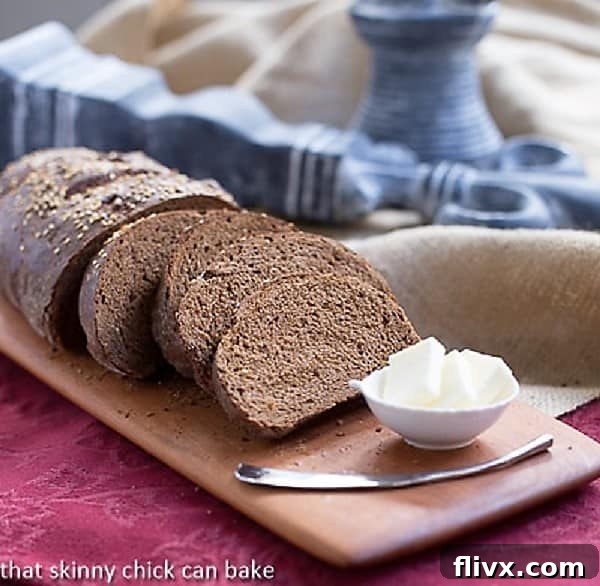
The moment of truth arrived as the homemade pumpernickel bread emerged from the oven, its dark crust crackling and filling the kitchen with an earthy, slightly sweet aroma. Sliced while still warm and generously adorned with a creamy pat of butter, the taste was nothing short of lovely. There’s a distinct satisfaction in savoring a bread you’ve made yourself, especially one as unique and traditionally rich as pumpernickel.
This bread possesses a deeply complex flavor profile—earthy, with subtle hints of sweetness from the molasses and prune butter, a faint bitterness from the chocolate and espresso, and a robust tang from the rye flour. The texture is dense yet yielding, wonderfully chewy, offering a satisfying mouthfeel that distinguishes it from lighter, airier breads. While it might not be a daily craving for everyone, it stands out as a truly special bread that expands one’s culinary horizons.
Beyond being delicious with butter, Pumpernickel Loaves are incredibly versatile. Imagine a slice toasted for breakfast, topped with cream cheese and smoked salmon, or perhaps a savory homemade pate. For lunch, it forms the perfect foundation for a robust open-faced sandwich, piled high with roast beef, Swiss cheese, and mustard. It also shines as an accompaniment to hearty stews, goulash, or a flavorful bowl of soup, soaking up all the rich liquids. The sturdy slices are ideal for serving with strong cheeses, cured meats, or a vibrant relish, making them an excellent addition to any charcuterie board or appetizer spread.
Baking this pumpernickel was an adventurous and educational experience, largely thanks to groups like “Tuesdays with Dorie” that encourage delving into challenging yet rewarding recipes. It’s a testament to how stepping outside one’s comfort zone in the kitchen can lead to truly remarkable creations. And if you’re curious about reactions, my husband Bill, while appreciating the effort, remained largely aloof to its charm – but that just meant more for me to enjoy!
Are you ready to explore more baking adventures? Check out my collection of other Homemade Bread Recipes and discover your next baking passion.
Pumpernickel Loaves
45 minutes
40 minutes
1 hour 25 minutes
2 loaves
Rich, delicious Pumpernickel Loaves make a tasty breakfast, sandwich or dinner side!
Ingredients
- 3 to 4 tablespoons melted butter, for greasing
- 2 cups plain yogurt, at room temperature or, as a substitute, use tepid water (warm to the touch)
- 1 stick unsalted butter, softened and cut into small cubes
- 1/4 cup solid vegetable shortening, at room temperature
- 1/2 cup prune lekvar (also called prune butter: available in most well-stocked supermarkets with jams and preserves)
- 1/4 cup molasses
- 1 tablespoon instant espresso powder
- 1 cup boiling water
- 2 1/2 squares (2 1/2 ounces) unsweetened chocolate, broken
- 2 tablespoons ground caraway seeds
- 1 1/2 tablespoon whole caraway seeds
- 1 tablespoon fine table salt
- 2 1/2 packages active dry yeast
- 1/2 cup warm water
- Pinch of sugar
- 3 1/2 cups coarse rye meal (if unavailable, substitute medium rye flour)
- Up to 6 cups high gluten bread flour, including flour for dusting and shaping
- Glaze: 1 egg white beaten with 1 teaspoon water
- Topping: sesame seeds and/or caraway seeds (optional)
- Cornmeal (medium ground), for bakers peel
Instructions
- Brush an 8-quart bowl with melted butter and set aside to rise dough. Take out your pastry scraper, another large mixing bowl and a wooden spoon.
- In a large mixing bowl, combine the yogurt, cubed butter, shortening, lekvar and molasses. Dissolve instant espresso in 1 cup boiling water and pour into a small, heavy-bottomed saucepan.
- Add broken chocolate and melt chocolate in espresso over very low heat until smooth, stirring frequently. Add to mixing bowl with powdered and whole caraway seeds and salt. Dissolve yeast in 1/2 cup warm water with a pinch of sugar until creamy and pour into mixing bowl along with the rye meal. Stir to combine well.
- Using a wooden spoon, briskly stir in enough bread flour, 1/2 to 1 cup at a time until you create a mass that’s not easily stirred, but not dry. Turn the mass out onto a floured wooden board and knead until smooth and elastic, adding only as much flour as necessary to prevent dough from sticking to your work surface and hands.
- At the beginning of the kneading process, this dough will feel quite “pasty” because of the rye flour. As always, use a pastry scraper while kneading to scrape the dough off the board cleanly as you continue to knead in a sufficient amount of flour.
- When the dough is smooth and elastic, place it in the buttered rising bowl. Cover bowl with buttered plastic wrap and a clean kitchen towel. Let rise in a draft-free spot until doubled in bulk, about 2 1/2 hours.
- Punch down dough with several swift swats from the back of your hand to deflate the dough totally. Turn over dough, cover, and let rise again for 1 1/2 hours.
- Turn out fully risen dough onto a lightly floured board and use the blade of your pastry scraper to divide the dough in half. Work with half the dough at a time, keeping the other half covered.
- Lay two clean kitchen towels on your counter and sprinkle them with bread flour. Roll dough half into a 7×10-inch rectangle. Starting at the short end farthest from you, roll dough toward you, pinching to seal as you go.
- *Pinch to seal the ends and tuck under to attach to the bottom seam. Rotate and plump dough to finish shaping and place shaped loaf (seam side up) diagonally on a prepared towel.
- Form a sling by joining the corners of the towel furthest from the loaf. Secure the joined towel points within a closed drawer (in a quiet area) so the loaves hang undisturbed in their slings for 45 minutes.
- While bread is rising, position the rack in the second or third lowest shelf in the oven and, if using a sheet of quarry tiles or a pizza stone, place it on the rack. On the rack below this, place a heavy-bottomed, oven-proof pan, which will preheat along with the tiles. Sprinkle a baker’s peel or a flat cookie sheet with cornmeal. Thirty minutes before the end of the rise, preheat the oven to 450 degrees.
- If not using tiles or a stone, brush or spray 1 or 2 large (preferably dark steel) shallow baking sheets with vegetable oil and sprinkle the interior with cornmeal. After mixing egg white and water, pour into a small medium-mesh sieve into another bowl to remove excess coagulation and any bubbles created while mixing. Place glaze next to your work surface.
- Working with one loaf at a time, carefully release slings and gently turn out loaves from towels (smooth side up) onto the prepared baker’s peel or baking sheet at least 3 inches apart. Use your hands gently to plump loaf into a neat shape.
- Using a sharp serrated knife or a razor, slash tops of each loaf three times horizontally, going 1/3 inch deep into the dough. Using a pastry brush, paint tops and sides of loaves (excluding slashes) generously with glaze.
- Just before inserting the dough into the hot oven, carefully pour ¾ cup warm water into the pan beneath the rack used to bake the loaves, then shut the door while you go get the loaves. If baking with tiles, insert the peel all the way to the back of the oven and with one swift jerk pull out the peel, leaving loaves on the hot tiles (preferably with three inches between them). If not using tiles or a stone, place loaves into the hot oven on their baking sheets as directed.
- Bake loaves at 450 degrees for 10 minutes. Reduce heat to 350 degrees and bake for 30 minutes. Remove from the oven and place on wire racks to cool thoroughly before slicing, 2 to 3 hours.
Notes
Recipe from Baking with Julia.
Total time does not include proofing time.
*I shaped one loaf as written and for the second, I made 3 ropes from each half of the dough and braided them like a challah.
Nutrition Information:
Yield:
36
Serving Size:
1 slice
Amount Per Serving:
Calories: 195Total Fat: 7gSaturated Fat: 3gTrans Fat: 0gUnsaturated Fat: 3gCholesterol: 12mgSodium: 225mgCarbohydrates: 29gFiber: 2gSugar: 4gProtein: 5g
Thatskinnychickcanbake.com occasionally offers nutritional information for recipes contained on this site. This information is provided as a courtesy and is an estimate only. This information comes from online calculators. Although thatskinnychickcanbake.com attempts to provide accurate nutritional information, these figures are only estimates.
Varying factors such as product types or brands purchased can change the nutritional information in any given recipe. Also, many recipes on thatskinnychickcanbake.com recommend toppings, which may or may not be listed as optional and nutritional information for these added toppings is not listed. Other factors may change the nutritional information such as when the salt amount is listed “to taste,” it is not calculated into the recipe as the amount will vary. Also, different online calculators can provide different results.
To obtain the most accurate representation of the nutritional information in any given recipe, you should calculate the nutritional information with the actual ingredients used in your recipe. You are solely responsible for ensuring that any nutritional information obtained is accurate.
HOW MUCH DID YOU LOVE THIS RECIPE?
Please leave a comment on the blog or share a photo on Pinterest