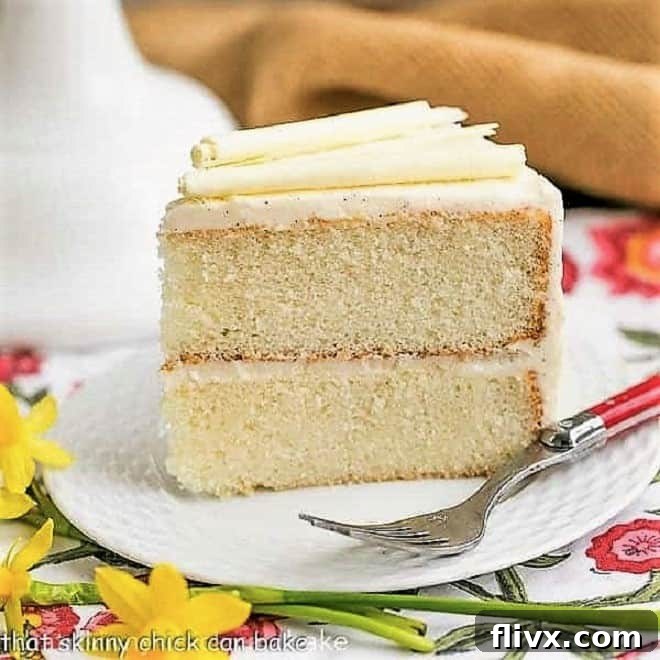
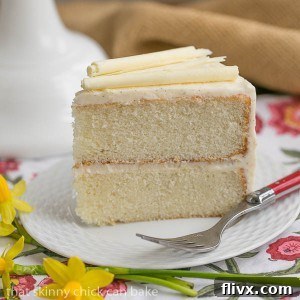
This sweet, tight crumb Perfect White Birthday Cake will rival any bakery cake! It’s the most delicious layer cake you’ll make this year, guaranteed to impress at any celebration!
With its remarkably fine crumb, irresistibly sweet and tender texture, and a luscious vanilla bean buttercream, this White Cake Recipe is truly a showstopper. It’s the quintessential choice for birthdays, elegant dinner parties, anniversaries, or any special occasion demanding a touch of classic sophistication.
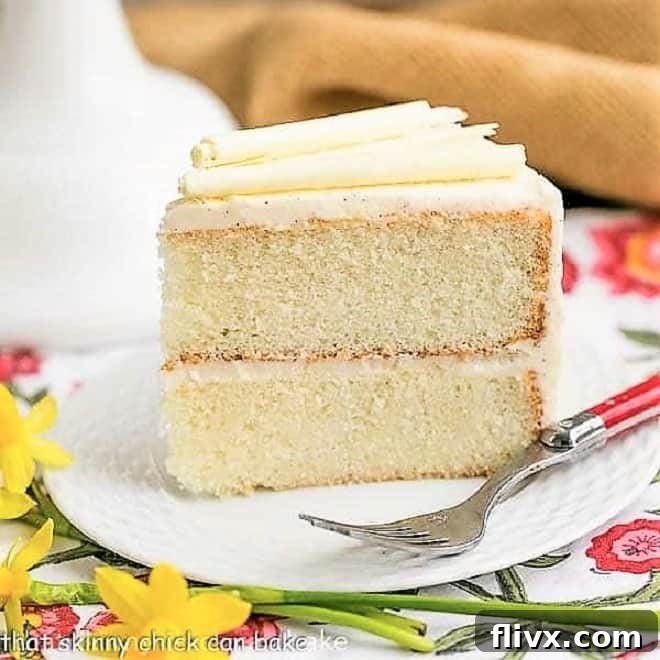
Bake the Best Perfect White Birthday Cake: Your Go-To Recipe for Celebrations
There’s something uniquely charming about a classic white cake. While rich chocolate desserts often steal the spotlight, a beautifully crafted white cake offers a light, elegant, and equally satisfying experience. This recipe isn’t just good; it’s designed to deliver a bakery-quality white birthday cake right in your own kitchen. Prepare for rave reviews and requests for seconds as you master the art of this timeless dessert.
Why This White Birthday Cake is a Must-Bake for Every Occasion
When it comes to celebratory desserts, a white cake holds a special place. It’s a timeless classic that appeals to a wide audience and offers a beautiful canvas for decorations. Here are compelling reasons why this particular recipe deserves a spot in your baking repertoire:
- A Delightful Alternative to Chocolate: While many gravitate towards rich chocolate desserts, a tender, sweet white cake is a refreshing and delicious way to diversify your dessert offerings. It provides a lighter flavor profile that can be incredibly satisfying and a welcome change.
- Universal Appeal and Versatility: White cake is incredibly versatile and often the safest bet when you’re unsure of your guests’ dessert preferences. Its delicate vanilla flavor is universally loved, making it perfect for large gatherings where varied tastes are present. It adapts beautifully to various decorating styles, from simple elegance to elaborate birthday themes.
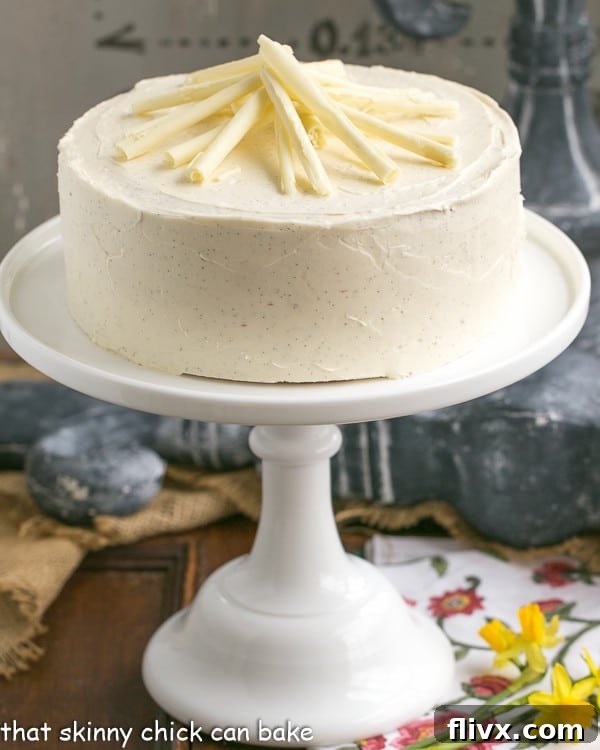
- Exquisite Vanilla Bean Buttercream: This cake is crowned with a rich, dreamy vanilla bean buttercream frosting. The natural speckles of vanilla bean elevate both the flavor and appearance, creating a truly luxurious experience that complements the tender cake layers perfectly. It’s smooth, luscious, and truly irresistible.
- Achieve Bakery Quality at Home: This recipe focuses on precise techniques and high-quality ingredients that ensure a professional-grade result. You’ll achieve a cake with a remarkably fine, tight crumb and an unbelievably tender texture that tastes just like it came from a high-end patisserie, all from the comfort of your kitchen.
- Perfect for Any Celebration: Beyond birthdays, this white cake is ideal for anniversaries, baby showers, bridal celebrations, graduations, or simply as a stunning centerpiece for any elegant dinner party. Its pristine appearance and delicious taste make it suitable for countless festive moments throughout the year.
The inspiration for this magnificent white cake came during a family celebration. My husband, Bill, had his birthday just after Easter, and despite the lingering deliciousness of a Tunnel of Mousse Cake in the fridge, he firmly believed a birthday deserved its own dedicated cake. No Easter leftovers with candles for him! His first suggestion was a classic white cake with white icing, a choice he knew would also delight our notoriously picky daughter. This prompted a delightful baking adventure, leading me to the blog of my talented friend, Amanda, of I Am Baker fame. Known for her extraordinary cake creations, she had just the exquisite white cake recipe I needed. And indeed, it was a triumph! If you’re a fan of festive bakes, don’t forget to check out this delightful Confetti Cake for another wonderful celebratory option!
Essential Ingredient Notes for Your Perfect White Cake
Crafting a truly exceptional white cake begins with understanding the role of each ingredient. Quality and proper preparation are key to achieving that coveted tender crumb and rich flavor. Here’s a detailed look at what you’ll need and why:
- Kitchen Staples: Ensure you have granulated sugar, a good quality fine salt, and powdered sugar (confectioners’ sugar) for the buttercream. Sift your powdered sugar before use to prevent lumps in your frosting, guaranteeing a silky-smooth finish.
- Cake Flour: This is a non-negotiable ingredient for achieving a tender, delicate white cake. Cake flour has a lower protein content (less gluten-forming proteins) than all-purpose flour. Less gluten means a softer, more delicate crumb, which is exactly what we want in a classic white cake. Do not substitute with all-purpose flour unless you know how to convert it by removing two tablespoons per cup and replacing them with two tablespoons of cornstarch, sifting thoroughly.
- Milk: Always use whole milk for optimal richness and moisture. Crucially, it must be at room temperature. Cold ingredients can cause the batter to curdle or become lumpy, preventing proper emulsification and negatively affecting the final texture of your cake.
- Egg Whites: To achieve that pristine white color and light texture, this recipe calls for only egg whites. Like the milk, egg whites should be at room temperature. This allows them to incorporate more easily and uniformly into the batter, contributing to a consistent rise and an impeccably smooth crumb. Separate your eggs while they are cold, as yolks are less likely to break into the whites, then allow the whites to warm up on the counter.
- Almond Extract: While vanilla is the primary flavor, a touch of almond extract enhances the overall sweetness and provides a subtle, sophisticated undertone that truly elevates the cake’s complexity. It’s readily available in the baking aisle of most grocery stores and adds a nuanced depth.
- Vanilla Extract: Opt for high-quality pure vanilla extract. Artificial vanilla can leave an unpleasant aftertaste and lacks the depth of flavor provided by pure vanilla. A good quality Bourbon or Madagascar vanilla will contribute significantly to the cake’s exquisite aroma and taste.
- Baking Powder: This leavening agent is critical for the cake’s rise and light texture. Always check the expiration date before baking; expired baking powder will lead to a flat, dense, and heavy cake. To test for freshness, simply add a spoonful to a bowl of hot water. If it fizzes vigorously, it’s still active and ready to work. If it doesn’t, it’s time for a new container. Remember, baking powder is distinct from baking soda and they are not interchangeable in this recipe.
- Unsalted Butter: For the cake, your butter should be at room temperature but still cool enough to hold its shape (it should yield slightly when pressed). This allows it to cream properly with the sugar, incorporating air without becoming oily. For the buttercream, the butter should be softened to a true room temperature (very soft but not melted), making it easier to whip into a light, airy frosting. Using unsalted butter gives you precise control over the overall salt content of your recipe.
- Vanilla Bean: For the ultimate vanilla bean buttercream, using a fresh vanilla bean is highly recommended. Halve it lengthwise and carefully scrape out the aromatic, tiny black seeds to infuse your frosting with intense, natural vanilla flavor and beautiful, visible flecks. If a vanilla bean is unavailable or too costly, a good quality vanilla bean paste is an excellent alternative, offering similar flavor and visual appeal without the scraping effort.
- Heavy Cream: Also known as heavy whipping cream (typically with 36% butterfat), this ingredient is added to the buttercream to create a rich, smooth, and incredibly luscious consistency. It helps achieve that desirable fluffy texture, stabilizes the frosting, and contributes to the overall decadence and luxurious mouthfeel.
Expert Recipe Tips for a Flawless White Birthday Cake
Achieving a bakery-quality white cake at home is entirely possible with a few key techniques and careful attention to detail. This basic recipe, adapted from Cook’s Illustrated and refined with Amanda’s expert insights, consistently yields a truly heavenly result. When frosted with the vanilla bean buttercream, it genuinely rivals any other celebratory cake I’ve ever made.
- Read Through the Recipe First (Mise en Place): Before you even gather your ingredients, take a moment to read the entire recipe, ideally once or twice. This helps you understand the process, anticipate steps, and ensures you have all necessary ingredients and equipment at hand. Organize and measure all components before you start mixing; this “mise en place” approach is your blueprint for success!
- Verify Baking Powder Freshness: As a crucial leavening agent, active baking powder is vital for a light and airy cake. Always double-check its expiration date. A simple test involves mixing a spoonful into hot water; if it bubbles vigorously, it’s fresh and ready to perform. Otherwise, replace it to avoid a dense cake.
- Room Temperature Matters Immensely: For this recipe, it’s paramount that your egg whites, milk, and butter are at room temperature.
- Egg Whites: While eggs separate best when cold (as the yolk is firmer), the whites incorporate much more smoothly and create a more uniform batter when at room temperature. This recipe doesn’t require whipping the whites separately, so room temperature helps them blend seamlessly into the batter.
- Milk and Butter: Room temperature milk and softened butter (still cool, not melted or greasy) emulsify much better with other ingredients. This creates a smoother, more stable batter that can effectively trap air. This emulsion and trapped air are critical for the cake’s rise and ultimately its tender, fine texture.
- The Art of Alternating Wet and Dry Ingredients: When combining your wet and dry ingredients, the “creaming method” used here, with alternating additions, is key. This technique allows the fats in the butter to properly envelop the flour particles. This is important because flour contains gluten, which develops when agitated with liquid. In bread baking, we encourage gluten development for chewiness and structure. However, for a tender cake, we want to minimize gluten development. The fat coating acts as a barrier, resulting in a wonderfully soft and delicate crumb that melts in your mouth.
- Avoid Overmixing at All Costs: This is a golden rule in cake baking. Once the dry ingredients are added, mix only until just combined – no more! Overmixing develops gluten unnecessarily, leading to a tough, dry, and chewy cake rather than a moist, tender one. A light, air-filled batter from excessive beating will also compromise the desired tight, velvety crumb, making it coarse instead.
- Even Layers for Even Baking: For professional-looking cake layers that bake uniformly and stack beautifully, use a kitchen scale to weigh out equal amounts of batter into each prepared cake pan. This ensures each layer is the same thickness, bakes in the same amount of time, and creates a level foundation for easy frosting and assembly.
- Know When Your Cakes Are Done (Beyond the Timer): Baking times are always guidelines; ovens vary widely. Rely on visual cues and the trusty toothpick test. Insert a clean wooden skewer or toothpick into the center of the cake; if it comes out clean with no wet batter attached, your cake is perfectly baked. The cake should also spring back lightly when gently pressed with a fingertip.
- Proper Cooling is Crucial: Allow the cakes to cool in their pans on a wire rack for about 10-15 minutes immediately after removing them from the oven. This brief cooling period helps them set. Then, carefully invert them onto the wire rack to cool completely to room temperature. Cooling too quickly or directly on a solid surface can cause condensation, leading to a soggy bottom. Ensure they are completely cool before frosting to prevent the warm cake from melting your beautiful buttercream.
- Preparing Your Cake Pans: To prevent sticking and ensure a clean release, thoroughly grease and flour your cake pans. Apply a generous coating of butter or non-stick baking spray to all interior surfaces, then dust with flour, tapping out any excess. For added security, especially with delicate white cakes, cut circles of parchment paper to fit the bottom of your pans and place them after greasing, then grease and flour the parchment too.
The triumph of this White Birthday Cake was evident immediately. The crumb was utterly perfect, beautifully tender and moist. The leftover chocolate mousse cake, which was indeed delicious, was completely forgotten in the face of this new creation. The birthday boy’s wish for a classic white cake was granted, and our picky daughter, Miss Katie, was on cloud nine. This recipe has undeniably become my go-to for white cakes, a testament to its consistent excellence and undeniable charm.
Frequently Asked Questions About Baking the Perfect White Cake
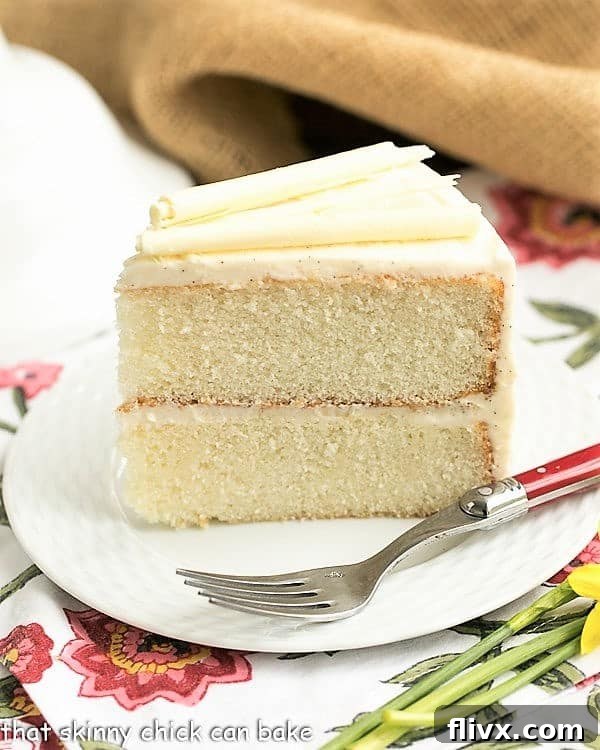
While both white cakes and vanilla cakes share many similar ingredients and a primary vanilla flavor, the key distinction lies in the use of eggs. A true white cake is made exclusively with egg whites, completely omitting the yolks. This removal of the yellow yolks results in a pristine, pure white batter and a lighter, often more delicate texture. In contrast, a vanilla cake typically includes whole eggs (whites and yolks), which imparts a subtle off-white or pale yellow hue to the cake. The flavor profile of a white cake is often characterized by its clean, pure vanilla notes, while a vanilla cake might have a slightly richer, more custardy flavor due to the fat content of the yolks.
Achieving a fluffy cake depends on several factors, and a dense cake often points to one or more common baking errors. Firstly, improper creaming of butter and sugar is a frequent culprit. This initial step is vital for incorporating air into the mixture, which creates pockets that expand during baking, resulting in a light texture. If the butter isn’t sufficiently softened or creamed long enough, not enough air will be trapped. Secondly, using cold ingredients (milk, eggs, butter) prevents proper emulsification, leading to a lumpy batter that struggles to rise. Always ensure these ingredients are at room temperature. Thirdly, sifting your cake flour is important to remove lumps and aerate the flour, preventing a dense crumb. Finally, overmixing the flour once it’s added is a common mistake. Beating flour vigorously develops gluten, which makes the cake tough and dense. Instead, gently fold in the flour mixture until just combined, stopping as soon as no dry streaks remain.
While cake flour is highly recommended for its low protein content, which results in a wonderfully tender crumb, you can create a reasonable substitute using all-purpose flour in a pinch. To do so, for every cup of cake flour required, measure out one cup of all-purpose flour, then remove two tablespoons. Replace those two tablespoons with two tablespoons of cornstarch. Sift this mixture together thoroughly several times to ensure the cornstarch is evenly distributed and the flour is aerated. This blend helps to lower the overall protein content and mimics some of cake flour’s characteristics, though the results may still be slightly denser than with true cake flour.
Preventing your cake from sticking is crucial for beautiful, intact layers. Always thoroughly grease and flour your cake pans. Start by coating the insides of the pans generously with softened butter or a non-stick baking spray. Then, sprinkle a tablespoon or two of flour into each pan, tilting and rotating the pan to coat all surfaces, tapping out any excess. For an extra layer of protection, especially with delicate cakes, you can line the bottom of the pans with parchment paper after greasing. Cut parchment circles to fit perfectly, then grease the parchment as well before flouring. This triple-action method ensures your cakes release cleanly every time, preserving their perfect shape.
Absolutely! This white cake is excellent for making ahead. The baked cake layers can be wrapped tightly in plastic wrap (once completely cooled) and stored at room temperature for up to 2 days, or frozen for up to 2-3 weeks. For freezing, double-wrap the layers in plastic wrap, then an additional layer of aluminum foil. Thaw frozen layers overnight in the refrigerator before frosting. The buttercream can also be made a day or two in advance and stored in an airtight container in the refrigerator; bring it to room temperature and re-whip briefly before frosting your cake.
You May Also Enjoy These Delicious Cake Recipes
If you’ve loved baking this perfect white cake, you might be looking for more delightful dessert inspirations. Here are some other fantastic recipes to explore:
- For another timeless classic, check out The Best Yellow Birthday Cake with Chocolate Icing from Noble Pig. It’s a wonderfully comforting and rich option for those who love a golden crumb.
- If you’re feeling adventurous and want to try something truly unique, the Momofuku Birthday Cake from Brown Eyed Baker offers a creative and unforgettable baking challenge with its distinct flavors and textures.
- For a fun, less formal alternative that’s perfect for quick treats or parties, consider whipping up some Birthday Cake Mix Cookies from Crunchy Creamy Sweet. They’re quick, easy, and full of celebratory flavor.
- Indulge in pure decadence with this rich and satisfying Chocolate Fudge Layer Cake – a guaranteed crowd-pleaser for serious chocolate lovers, perfect for any special occasion.
- And for my personal birthday, nothing would make me happier than a slice of this magnificent Italian Cream Cake, a truly sophisticated and flavorful dessert featuring coconut and pecans.
- Plus, don’t miss exploring my full collection of Best Homemade Cake Recipes for endless baking inspiration and a wide array of delicious options!
Stay connected and share your baking triumphs with me! Find me on social media @ Instagram, Facebook, and Pinterest. Don’t forget to tag me when you try one of my recipes! If you love the results, please consider leaving a 5-star rating in the recipe card below to help other bakers.
Perfect White Birthday Cake Recipe
1 hour
30 minutes
1 hour 30 minutes
12 servings
This sweet, tight crumb Perfect White Birthday Cake will rival any bakery cake!
Ingredients
For the Cake:
- 2 ¼ cups cake flour
- 1 cup whole milk, at room temperature
- 6 large egg whites, at room temperature
- 2 teaspoons almond extract
- 1 teaspoon pure vanilla extract
- 1 ¾ cups granulated sugar
- 4 teaspoons baking powder
- ¾ teaspoon fine salt
- 1 ½ sticks (12 tablespoons) unsalted butter, at room temperature but still cool
For Vanilla Bean Buttercream:
- 1 ¼ cups (2 ½ sticks) unsalted butter, softened to room temperature
- 1 vanilla bean, halved lengthwise and seeds scraped (or 1-2 tsp good quality vanilla bean paste)
- 2 ½ cups powdered sugar (10 ounces), sifted
- Pinch of salt
- 1 teaspoon pure vanilla extract
- 2 Tablespoons heavy cream (36% butterfat)
Instructions
- Preheat your oven to 350 degrees F (175 degrees C). Prepare two 8-inch round cake pans by thoroughly greasing and flouring them, or by lining the bottoms with parchment paper and then greasing and flouring.
- Ensure your milk and egg whites are at room temperature. This is crucial for proper batter emulsification and a tender crumb.
- In a medium bowl, combine the room temperature milk, egg whites, almond extract, and vanilla extract. Whisk gently until just combined. Set aside.
- In the bowl of an electric mixer fitted with the paddle attachment, combine the cake flour, granulated sugar, baking powder, and salt. Mix on low speed for about 30 seconds to aerate and thoroughly combine the dry ingredients. Add the 1 ½ sticks of butter, cut into small pieces. Continue beating on low speed for another 2 minutes until the mixture resembles coarse, moist crumbs.
- Gradually add half of the milk mixture to the flour-butter mixture. Increase speed to medium and beat for about 2 minutes, ensuring everything is well combined and scraping down the bowl as needed. Add the remaining milk mixture and beat for approximately 1 minute more, or until fully incorporated and smooth. Be careful not to overmix; stop as soon as no dry streaks remain.
- Divide the batter evenly between the two prepared cake pans. For best results and perfectly level layers, use a kitchen scale to ensure equal amounts in each pan.
- Bake for 27 to 30 minutes, or until a wooden skewer or toothpick inserted into the center of the cakes comes out clean. The tops should be lightly golden and spring back when gently touched.
- Allow the cakes to cool in their pans on a wire rack for 10-15 minutes. This helps them firm up before handling. Then, carefully invert them onto the wire rack to cool completely to room temperature before frosting.
- To make the Vanilla Bean Buttercream: In a standing mixer with the whisk attachment, beat the 1 ¼ cups of room temperature butter at medium-high speed until it’s smooth and creamy, about 20-30 seconds. Scrape the seeds from the vanilla bean (or add vanilla bean paste) directly into the butter and beat at medium-high speed for another 15 seconds to combine thoroughly.
- Add the sifted powdered sugar and a pinch of salt to the butter mixture. Beat on low speed until most of the sugar is moistened (about 1 minute) to prevent a cloud of sugar. Scrape down the bowl, then increase to medium speed and beat until the mixture is fully incorporated and smooth (less than a minute).
- Scrape down the sides of the bowl once more. Add the pure vanilla extract and heavy cream. Beat on medium speed until incorporated, then increase the speed to medium-high and beat until the buttercream is light, fluffy, and voluminous, typically about 4 minutes. Remember to scrape down the bowl at least once halfway through this step to ensure everything is evenly mixed.
- Once the cake layers are completely cool, assemble and frost your magnificent White Birthday Cake. Decorate as desired and enjoy!
Notes
This recipe has been thoughtfully adapted from a classic Cook’s Illustrated base, ensuring reliability and exquisite results. For best flavor and texture, do not deviate from using cake flour and bringing all refrigerated ingredients to room temperature. This cake is best served at room temperature.
Nutrition Information:
Yield:
12
Serving Size:
1 slice
Amount Per Serving:
Calories: 598
Total Fat: 32g
Saturated Fat: 20g
Trans Fat: 1g
Unsaturated Fat: 10g
Cholesterol: 86mg
Sodium: 589mg
Carbohydrates: 74g
Fiber: 0g
Sugar: 52g
Protein: 5g
HOW MUCH DID YOU LOVE THIS RECIPE?
Please leave a comment on the blog or share a photo on Pinterest and tag us!