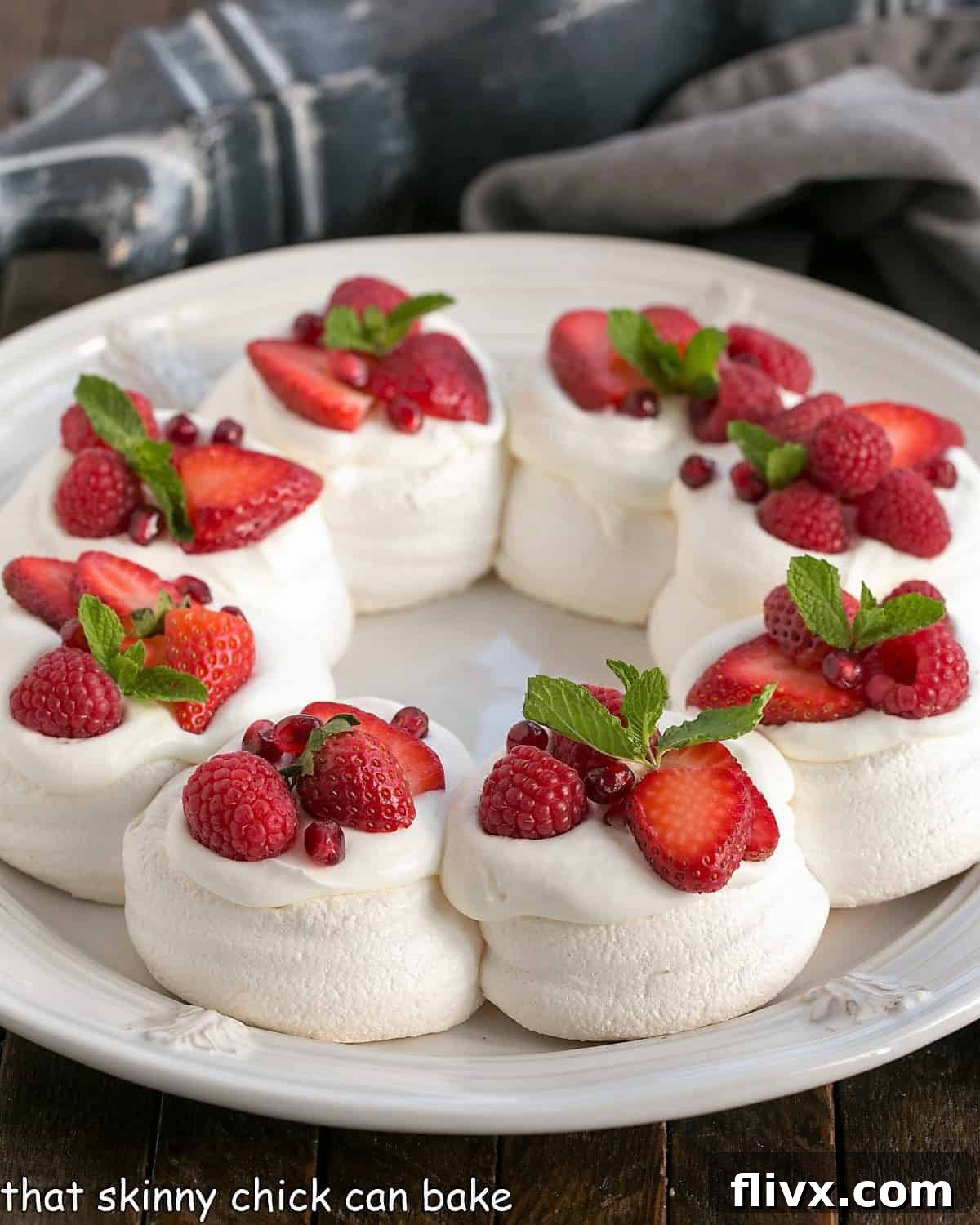
Welcome to the ultimate guide for creating a show-stopping Christmas Pavlova Wreath! This stunning dessert is not only incredibly beautiful and festive, but it’s also remarkably delicious. Imagine a delicate, crisp meringue shell, adorned with luscious whipped cream and vibrant seasonal berries – it’s a taste and visual sensation that embodies the magic of the holidays. If you’re looking for a dessert that will truly impress your guests and become the centerpiece of your festive table, look no further than this elegant pavlova. Its light texture and fresh flavors offer a delightful contrast to heavier holiday fare, making it an absolute must-try for your seasonal celebrations.
Transforming this classic Pavlova dessert into a whimsical wreath shape immediately elevates its holiday charm. The circular form, generously topped with an array of glistening red berries and fragrant green mint sprigs, captures the spirit of Christmas perfectly. This recipe isn’t just about making a dessert; it’s about crafting a memorable experience that will leave everyone in awe. Get ready to embark on a delightful baking journey that promises both simplicity in execution and spectacular results!
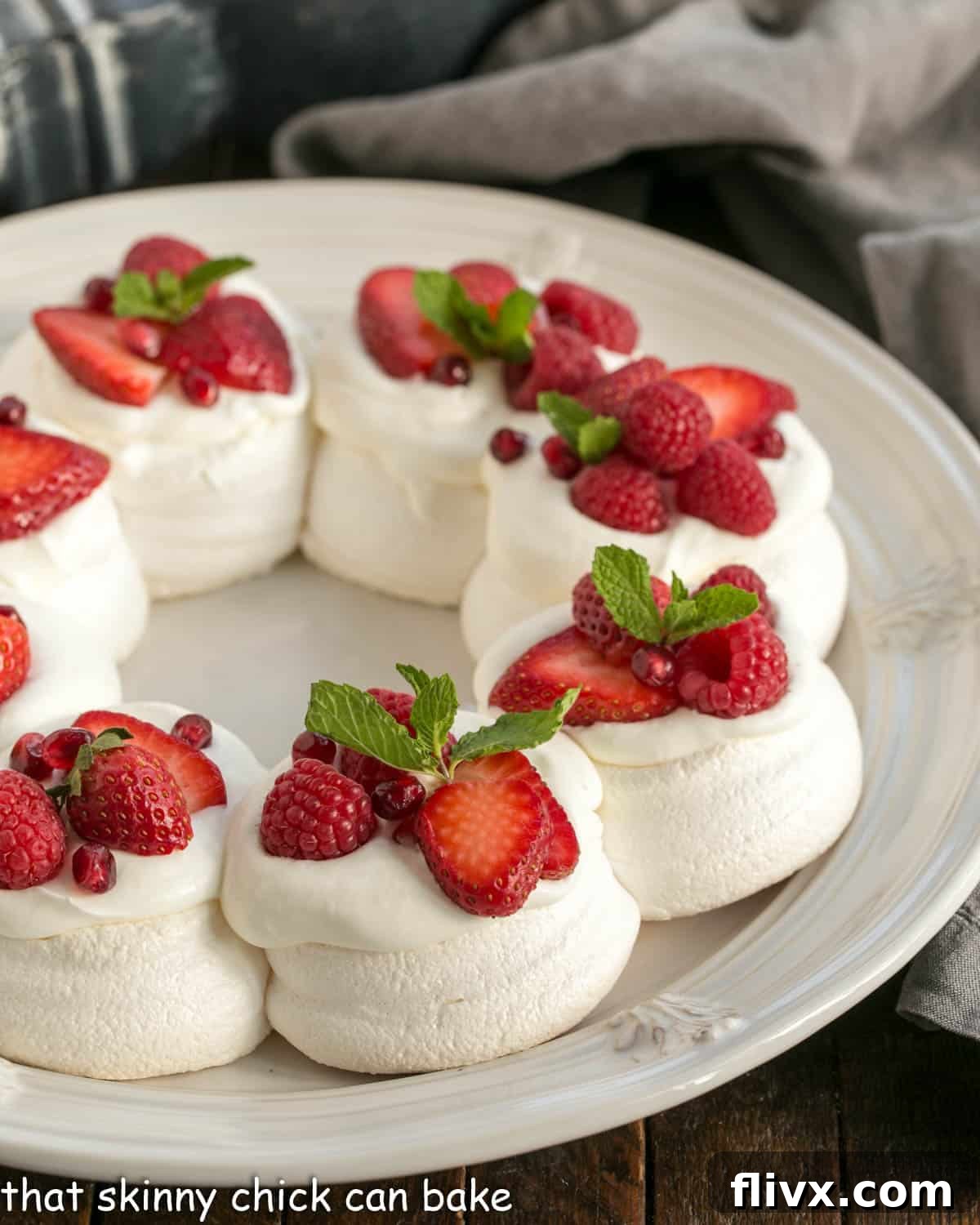
Discover the Magic: Why This Christmas Pavlova Wreath is a Must-Make
- An Unforgettable Dessert Experience: Pavlova is surprisingly still an unfamiliar delight for many, even among seasoned home cooks. Serving this exquisite dessert means you’re offering something truly unique and special, ensuring a memorable culinary moment for your friends and family. It’s a fantastic conversation starter and a testament to your baking prowess, presenting an elegant alternative to traditional holiday pies and cakes.
- Easier Than It Looks: Don’t let its sophisticated appearance intimidate you! If you have experience making meringue cookies or a simple meringue topping for a pie, you already possess the fundamental skills needed for pavlova. This recipe breaks down the process into manageable steps, making it accessible even for those new to meringue. With a few key techniques and expert tips, you’ll find creating this gorgeous wreath surprisingly straightforward.
- A Symphony of Texture and Flavor: Prepare for one of the most delicious and texturally satisfying desserts you’ll ever taste. Pavlova boasts a wonderfully crisp exterior that yields to a marshmallow-soft, slightly chewy interior – a heavenly contrast that sets it apart. Beyond its delightful texture, the fresh, vibrant fruit toppings and rich, sweet whipped cream create a perfect balance of flavors. The presentation alone is a stunning visual feast, making it the perfect centerpiece for any holiday gathering.
- Naturally Gluten-Free: For those with dietary considerations, pavlova is a fantastic naturally gluten-free option, ensuring that everyone can enjoy a slice of this festive treat without compromise.
- Customizable for Any Occasion: While perfect for Christmas, the versatility of pavlova allows it to be adapted for any celebration. By simply changing the fruit and garnish, you can tailor it to suit different seasons and themes.
Essential Ingredients for Your Perfect Pavlova Wreath
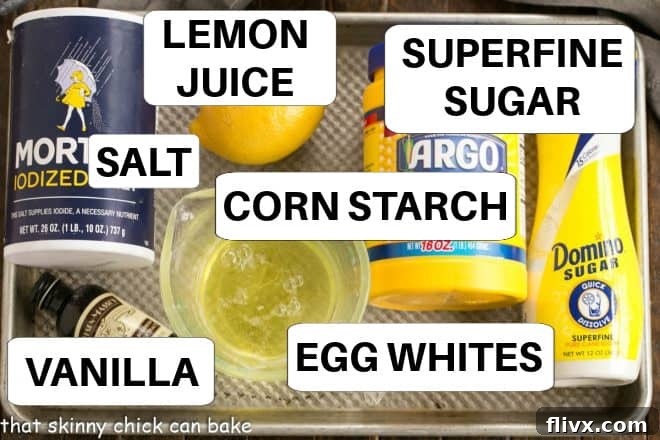
Crafting a perfect pavlova relies on a few key ingredients and understanding their roles. Here’s a deeper dive into what you’ll need and why each component is crucial for success:
- Superfine Sugar: This is not just any sugar; its fine granulation is vital for a smooth, stable meringue. Superfine sugar dissolves more quickly and completely into the egg whites, resulting in a glossy, stable meringue without a grainy texture. While you *can* attempt to blitz regular granulated sugar in a food processor, this can sometimes create sharp edges on the sugar crystals. These sharp edges can potentially cut into the whipped egg white proteins, leading to a less stable meringue and impacting the final texture of your pavlova. Using pre-made superfine sugar ensures the best possible result, contributing to the characteristic crisp crust and soft interior.
- Cornstarch: A secret weapon in pavlova making! Cornstarch plays a crucial role in creating that signature contrast: a wonderfully soft, marshmallow-like center, while the sugar ensures a crisp outer shell. It helps to stabilize the meringue during baking, preventing it from collapsing and contributing to the unique “squidgy” (as Nigella Lawson beautifully describes it) texture that defines a true pavlova.
- Large Egg Whites (at Room Temperature): The foundation of your meringue. Using room-temperature egg whites is non-negotiable for achieving maximum volume and stability. Warmer egg whites have less viscous proteins, allowing them to stretch and trap air more efficiently when whipped. This leads to a higher, fluffier meringue. Crucially, ensure that all bowls and utensils that will come into contact with the egg whites are absolutely free of any oil or grease. Even a tiny speck of yolk or residual fat can prevent the egg whites from whipping properly, leading to a flat, unstable meringue. To guarantee scrupulous cleanliness, I always run my mixer bowl and whisk attachment through the dishwasher before starting.
- Fresh Lemon Juice or White Vinegar: The acid in lemon juice or white vinegar acts as a stabilizer for the whipped egg whites. It helps strengthen the protein structure, allowing the egg whites to hold more air and maintain their light, airy volume. This is especially important as you incorporate the sugar, preventing the meringue from deflating and contributing to a more stable structure during baking.
- Table Salt: Often overlooked in sweet recipes, a pinch of salt is a true flavor enhancer. It doesn’t make the pavlova taste salty, but rather it balances the sweetness of the sugar and deepens the overall flavor profile. Without a touch of salt, many desserts, including pavlova, can taste surprisingly flat or one-dimensional.
- Pure Vanilla Extract: For the best flavor, always opt for pure vanilla extract over imitation. Vanilla adds a wonderful aromatic depth and sweetness that complements the crisp meringue and fresh toppings beautifully.
- Whipped Cream and Fresh Berries: These are your glorious garnishes! Sweetened whipped cream provides a rich, creamy contrast to the crisp meringue, while a vibrant assortment of fresh red berries (like raspberries, strawberries, and pomegranate arils) and bright green mint sprigs not only add bursts of flavor but also create that quintessential festive look for your Christmas Pavlova Wreath.
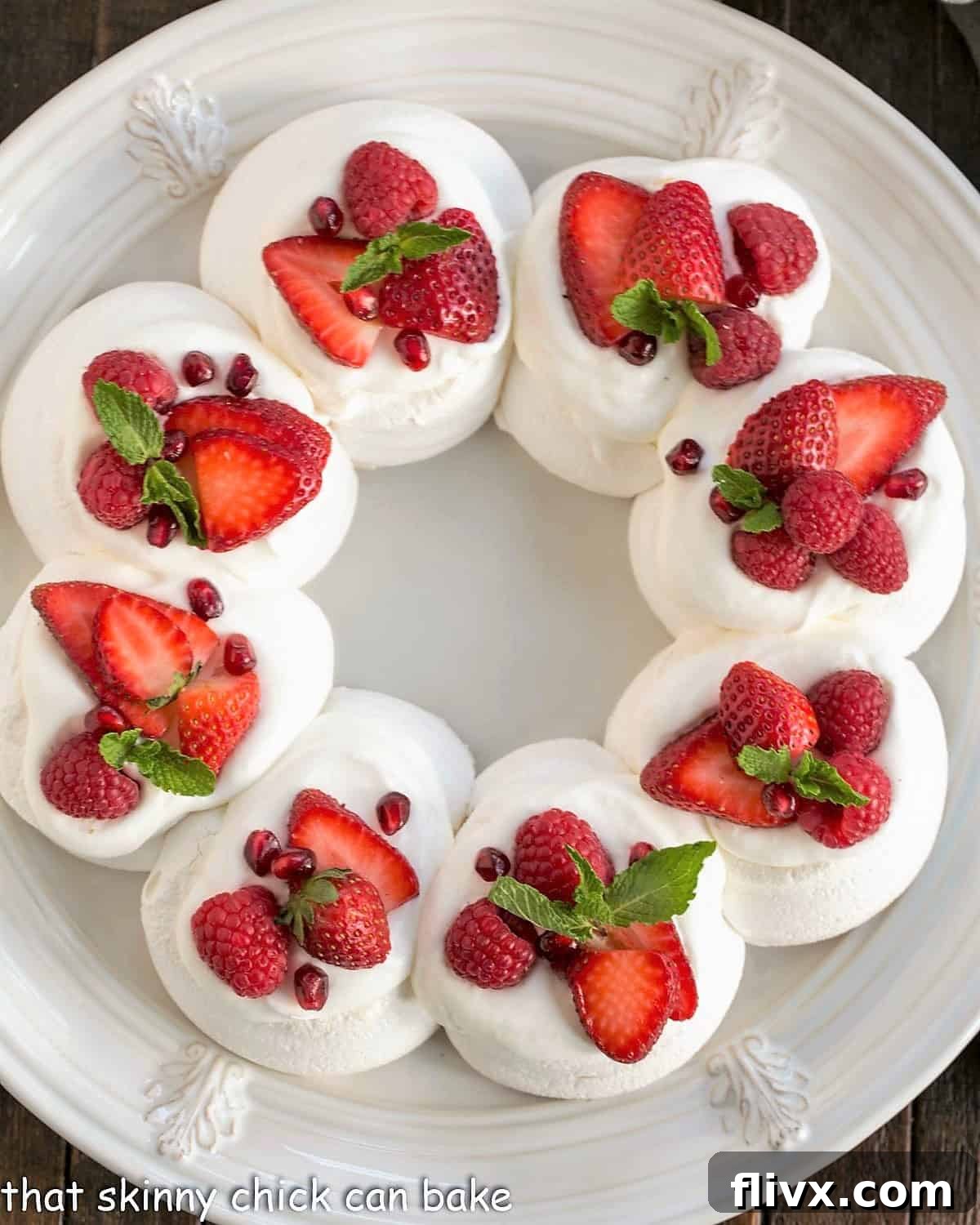
Mastering Meringue: Expert Tips for Pavlova Perfection
While pavlova might seem daunting, it’s truly a straightforward dessert when you know a few key secrets. Many of these tips are applicable to any meringue creation, ensuring your success every time:
- The Three-Bowl Egg Separation Method: This technique is critical for meringue success. Separate your eggs one at a time. Crack an egg over a small, separate bowl, allowing the white to fall into it while gently transferring the yolk to another designated bowl. Once you’re certain no yolk has contaminated that individual egg white, then transfer it to your main mixing bowl. Repeat this process for each egg. This method ensures that if one yolk breaks, it only contaminates a single white, saving the rest of your precious egg whites from being discarded.
- PRO-Tip: Cold Eggs Separate Best: While egg whites whip best at room temperature, they separate much more easily when cold. The yolk is firmer and less likely to break when chilled. Separate your eggs while cold, then let the whites come to room temperature (about 30 minutes) before whipping.
- PRO-Tip: Scrupulously Clean Equipment is Non-Negotiable: This cannot be stressed enough. Any trace of oil, grease, or fat – even a microscopic speck of egg yolk – will prevent your egg whites from whipping into stiff peaks. Fat breaks down the protein structure that allows the whites to hold air. To ensure impeccable cleanliness, run your mixer bowl and whisk attachment through the dishwasher or wash them thoroughly with hot, soapy water, followed by a rinse with white vinegar and drying with a clean towel.
- Always Use Superfine Sugar: For the silkiest, most stable meringue, superfine sugar is your best friend. Its smaller crystals dissolve more readily and completely into the egg whites, resulting in a smoother, less grainy texture compared to regular granulated sugar. This quick dissolution is key to achieving that desirable glossy, stiff meringue.
- Add Sugar Slowly and Gradually: Patience is a virtue when adding sugar to egg whites. My mom taught me a clever trick: rub a tiny bit of the meringue between your fingers. If you still feel grainy sugar crystals, it needs more mixing time. The goal is for the sugar to fully dissolve, creating a smooth, stable, and glossy meringue. Adding it slowly, a tablespoon at a time, ensures proper incorporation without deflating your whipped whites. While achieving a completely granule-free meringue can be challenging, aiming for minimal graininess is important.
- Timing is Everything for Topping: This bears repeating for a reason: **do not top your meringue with cream or fruit until approximately an hour before serving.** Meringue is highly susceptible to moisture. The whipped cream, especially, will gradually release moisture, which the delicate meringue shell will absorb. This absorption causes the crisp exterior to become soft, sticky, and very chewy – a texture far from the desired light and airy crunch.
- PRO-Tip: Humidity is the Enemy of Meringue: Meringues are best stored in a cool, dry location. Any humidity in the air will affect their delicate texture, making them soft and sticky. This means the refrigerator, with its inherently high humidity, is NOT suitable for storing your ungarnished pavlova wreath. Store it in an airtight container at room temperature.
- Creative Storage for the Baked Shell: A perfectly baked and cooled pavlova shell can be stored in your turned-off oven. The oven provides a dry, enclosed environment that protects the meringue from humidity. Just remember to put a large, obvious note on the oven door to prevent anyone from accidentally preheating it with your beautiful pavlova inside! Ensure the oven is completely cool before storing.
- Achieving the Perfect Pip: For a rustic wreath, you can simply spoon the meringue onto your parchment template. However, for a more refined look, a piping bag (even a large Ziploc with a corner snipped) offers more control. The distinct mounds create beautiful pockets for your toppings.
Frequently Asked Questions About Pavlova
Pavlova is an exquisite dessert with a captivating history, rumored to have been named after the Russian ballerina Anna Pavlova. It’s essentially a large, baked meringue, but with a unique twist. Unlike a traditional crisp meringue cookie, pavlova is characterized by its dual texture: a beautifully crisp, melt-in-your-mouth exterior shell that gives way to a gloriously soft, chewy, and marshmallow-like interior. This signature “squidgy” (a term often used by Nigella Lawson) center is achieved by the addition of cornstarch and a careful slow baking process. Sweetened primarily with sugar and stabilized with a touch of acid like lemon juice or white vinegar, it’s a testament to simple ingredients transforming into something truly magical. Pavlova is a dessert deeply ingrained in the culinary cultures of Australia and New Zealand, with both countries proudly claiming its origin as their own national dish, sparking a delightful, ongoing culinary debate.
Absolutely! The meringue shell of a pavlova is an excellent component to prepare in advance, which helps reduce stress on your serving day. You can bake the meringue shell a day or even two days beforehand. The key to successful advance preparation lies in proper storage: keep the baked meringue in a very low humidity environment to prevent it from absorbing moisture and becoming sticky or soft. A cool, dry pantry or, as suggested in our expert tips, a completely cooled and turned-off oven are ideal spots. However, a crucial point to remember is to **never top the pavlova until just before serving**. The moisture from the whipped cream and fresh fruit will quickly compromise the meringue’s delicate texture. Refrigeration is generally not recommended for the naked meringue shell due to the humidity inside the fridge.
For optimal texture and presentation, it’s best to decorate your pavlova fairly close to serving time. As mentioned, the meringue is highly sensitive to moisture, and whipped cream, even if stabilized, will eventually begin to soften the crisp shell. Aim to top your pavlova with whipped cream and fresh berries no more than an hour before you plan to serve it. This timeframe allows for the beautiful presentation to hold up while ensuring the meringue maintains its delightful crisp-chewy contrast. If you have any leftovers after serving, then it’s perfectly acceptable (and recommended) to refrigerate them, but be aware that the meringue will soften considerably once chilled and exposed to moisture from the toppings.
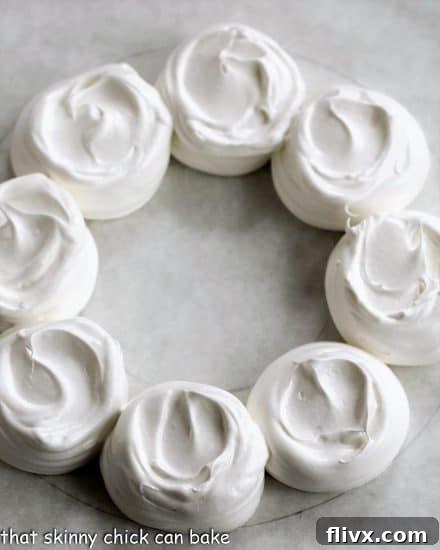
Creating a beautifully shaped pavlova wreath is surprisingly simple with a template. The easiest and most effective method I’ve found is to first draw a guide on a sheet of parchment paper. Start by tracing a 10-inch cake pan to define the outer diameter of your wreath. Then, use a smaller 4-inch (or similarly sized) mixing bowl to draw the inner circle, creating the wreath’s opening. Once your template is complete, flip the parchment paper over onto a baking sheet so the drawn lines are visible underneath. Use small dabs of your raw meringue mixture to “glue” the corners of the parchment paper to the baking pan, preventing it from shifting during piping. For piping, a large piping bag fitted with a large, open star or round tip works wonderfully for a defined shape. If you don’t have one, a large Ziploc bag with a corner snipped off will also work, giving your wreath a slightly more rustic and charming appearance. Begin piping round mounds of meringue between the two drawn lines. Start with one mound, then pipe another directly opposite it to help balance the shape. Continue piping 8-10 uniform mounds around the circle, ensuring they touch to form a continuous wreath. You can always go back and add a bit more meringue to any mounds that seem too small. After piping, use the back of a spoon to create slight divots in the center of each mound. These indentations will be perfect cradles for the whipped cream and berries once your pavlova is baked and ready for garnishing. This technique ensures a visually appealing and structurally sound wreath.
Explore More Meringue & Holiday Dessert Delights
If you’ve fallen in love with the elegance and simplicity of meringue-based desserts, or are simply looking for more festive baking inspiration, here are some delightful recipes you might enjoy. Each offers a unique spin on classic flavors and impressive presentations, perfect for any occasion:
- Peppermint Meringue Cookies from Shugary Sweets: A crisp, airy bite with a refreshing burst of peppermint – ideal for holiday cookie platters.
- Simple Egg White Cookies: A classic, delicate meringue cookie recipe that melts in your mouth.
- Individual Pavlovas: Perfect for portion control and elegant plating, these mini versions are just as impressive as their larger counterparts.
- Chocolate Raspberry Pavlova: Indulge in the rich combination of chocolate meringue paired with tart raspberries and cream.
- Layered Chocolate Meringue Cake: An incredible dessert that combines layers of crisp meringue with decadent chocolate.
- Discover more of the Best Dessert Recipes for every season and celebration.
Stay in touch and share your culinary creations with our community! Follow us on social media @ Instagram, Facebook, and Pinterest. Don’t forget to tag us when you try one of our recipes! Your beautiful results inspire us all. And if you love this Christmas Pavlova Wreath as much as we do, please show your support by giving it a 5-star rating in the recipe card below – it truly helps!
Festive Christmas Pavlova Wreath Recipe
30 minutes
1 hour 30 minutes
1 hour
3 hours
8 servings
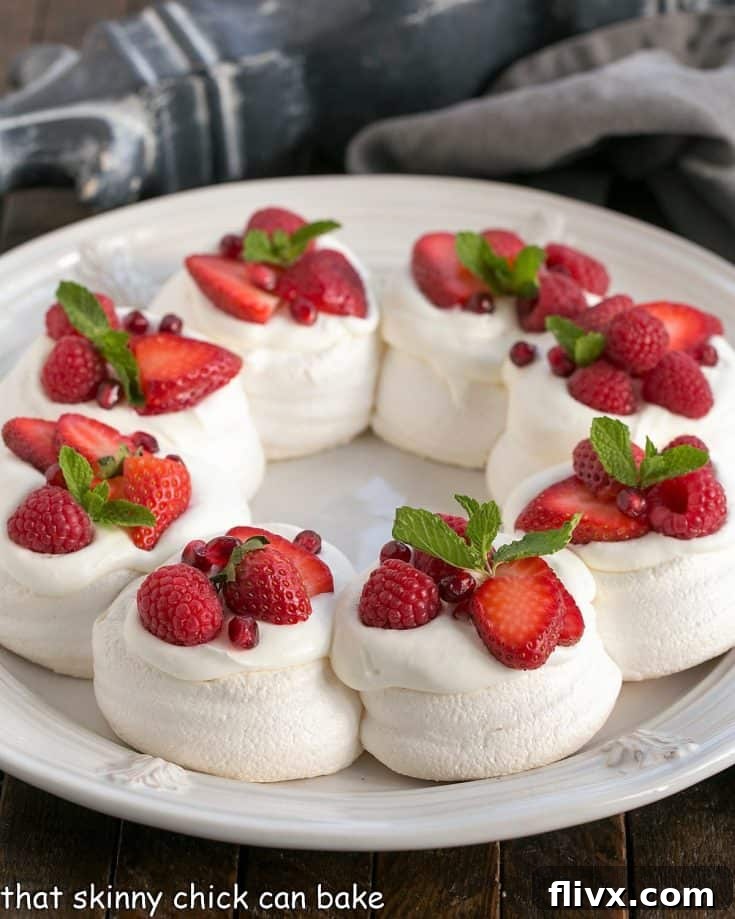
A show-stopping meringue wreath, baked to crisp perfection with a soft, marshmallowy center. Elegantly topped with sweetened whipped cream, a medley of glistening red berries, and fresh mint sprigs, this festive dessert is an absolute showstopper, making it truly perfect for your Christmas celebrations.
Ingredients
For the Pavlova Meringue:
- 1 cup plus 2 teaspoons of superfine sugar (caster sugar)
- 2 teaspoons cornstarch
- 4 large egg whites, brought to room temperature
- 2 teaspoons fresh lemon juice or white vinegar
- ¼ teaspoon table salt
- ½ teaspoon pure vanilla extract
For the Festive Topping:
- 1 cup heavy cream (cold)
- ¼ cup powdered sugar (confectioners’ sugar), sifted
- An assortment of fresh raspberries, sliced strawberries, vibrant pomegranate arils, and delicate mint sprigs for garnish
Instructions
- Preheat your oven to 275°F (135°C). Prepare a large baking sheet by lining it with parchment paper.
- On the parchment paper, draw a 10-inch circle in the center. Inside this larger circle, draw a 4-inch circle to create your wreath template. Flip the parchment paper over so the ink lines are on the underside and won’t transfer to your meringue.
- In a small bowl, whisk together the 2 teaspoons of superfine sugar and the cornstarch. Set this mixture aside.
- In the impeccably clean bowl of a stand mixer fitted with the whisk attachment, combine the room-temperature egg whites, fresh lemon juice (or white vinegar), and salt. Begin beating on medium-high speed until soft peaks form, which typically takes about 2 minutes. The whites should be foamy and hold a gentle peak when the whisk is lifted.
- With the mixer still running on medium-high, gradually add the remaining 1 cup of superfine sugar, one tablespoon at a time. This slow addition is crucial for the sugar to fully dissolve and incorporate into the egg whites, creating a stable, glossy meringue. Scrape down the sides of the bowl as needed to ensure all sugar is incorporated. This step usually takes around 5 minutes. Continue beating until the meringue is stiff, glossy, and smooth – when you rub a small amount between your fingers, it should feel dissolved, not gritty.
- Once stiff peaks are achieved, add the reserved cornstarch mixture and pure vanilla extract. Mix for about another minute until the meringue is incredibly stiff and shiny, holding its shape firmly.
- To secure the parchment paper to the baking sheet, place a small dab of meringue under each corner of the paper before piping the wreath.
- Transfer the meringue to a large piping bag fitted with a large open star or round tip (or use a large Ziploc bag with a corner snipped off). Pipe 8-10 distinct, generous mounds of meringue between the two circular lines drawn on your parchment paper. Start by piping one mound, then pipe another directly opposite it to help ensure an even circular shape. Continue around the circle until the wreath outline is filled with connected meringue mounds. You can always go back and add more meringue to any mounds to achieve a uniform thickness and height.
- Using the back of a spoon, gently create a small divot or indentation in the center of each meringue mound. These depressions will serve as perfect little nests for your whipped cream and fruit toppings after baking.
- Carefully place the baking sheet with the piped meringue into your preheated oven. Immediately reduce the oven temperature to 250°F (120°C).
- Bake the pavlova wreath for approximately 1 hour and 30 minutes, or until the meringue is dry to the touch, crisp on the outside, and has a very light cream color. To ensure even baking, rotate the baking pan halfway through the baking time.
- Once baked, turn off the oven. Prop the oven door open slightly with a wooden spoon or heat-proof object, and allow the pavlova to cool completely inside the oven for at least 1-2 hours, or even overnight. This slow cooling prevents the meringue from cracking and helps maintain its crispness.
- When you are ready to serve (about an hour before), prepare the topping. In a clean, chilled bowl of a stand mixer (or using a hand mixer), combine the cold heavy cream and sifted powdered sugar. Whip on high speed until stiff peaks form. Be careful not to overbeat, or it may turn grainy.
- Gently transfer the cooled pavlova wreath from the parchment paper to your chosen serving plate or platter.
- Generously spoon or pipe the freshly whipped cream into the divots of each meringue mound. Then, artfully arrange your fresh raspberries, sliced strawberries, sparkling pomegranate arils, and vibrant mint sprigs over the cream and meringue to create a beautiful, festive wreath.
- Serve your gorgeous Christmas Pavlova Wreath within an hour of decorating for the best possible texture and enjoyment.
Important Notes for Pavlova Success
Achieving a perfect meringue hinges on cleanliness. Ensure all your mixing bowls and utensils are absolutely free of any grease, oil, or even a tiny molecule of egg yolk. Any fatty residue will prevent your egg whites from whipping properly into the stiff, glossy peaks essential for a stable pavlova.
For shaping your wreath template accurately on parchment paper, use a 10-inch cake pan for the outer circle and a 4-inch mixing bowl for the inner circle. This provides a clear guide for piping your meringue mounds.
Store your baked and completely cooled pavlova shell in a dry, airtight location. The oven, once turned off and fully cooled, makes an excellent, dry environment (just remember to place a prominent note on the door to avoid accidental heating!). Never store an ungarnished pavlova in the refrigerator, as the humidity will quickly cause it to soften and become sticky. Only refrigerate assembled pavlova if there are leftovers, understanding that the meringue texture will change.
This recipe has been thoughtfully adapted from a classic Pavlova with Rhubarb and Strawberries recipe by Fine Cooking, ensuring reliable and delicious results.
Recommended Baking Tools & Products
As an Amazon Associate and member of other affiliate programs, I earn from qualifying purchases, helping to support this blog at no extra cost to you.
- KitchenAid KSM150PSER Artisan Tilt-Head Stand Mixer with Pouring Shield, 5-Quart, Empire Red
- Reynolds Kitchens Non-Stick Baking Parchment Paper Sheets – 12×16 Inch, 22 Count
- USA Pan Bakeware Half Sheet Pan
Nutrition Information:
Yield:
8 servings
Serving Size:
1 slice
Amount Per Serving:
Calories: 165Total Fat: 11gSaturated Fat: 7gTrans Fat: 0gUnsaturated Fat: 3gCholesterol: 34mgSodium: 103mgCarbohydrates: 14gFiber: 2gSugar: 11gProtein: 3g
The nutritional information provided for recipes on this site is offered as a courtesy and is an estimate only. This information typically originates from online calculators and should not be considered a substitute for professional nutritional advice. While we strive to provide accurate nutritional data, figures can vary significantly based on factors such as specific product types, brands purchased, and measurement exactness. Many recipes, including this one, may recommend optional toppings or variations, and their nutritional impact might not be included in the provided estimate. Additionally, when ingredient quantities like salt are listed “to taste,” the exact amount can vary, affecting the nutritional breakdown. Different online calculators may also yield slightly different results. For the most precise nutritional information relevant to your specific preparation, we highly recommend calculating it using the actual ingredients and quantities you use in your recipe. You are solely responsible for verifying the accuracy of any nutritional information obtained.
HOW MUCH DID YOU LOVE THIS RECIPE?
Please leave a comment on the blog or share a photo on Pinterest