Mastering Homemade Chocolate: Decadent Truffles, Velvety Caramels & The Art of Tempering
Welcome, fellow baking enthusiasts, to a journey into the delightful world of homemade chocolate confections! The August 2011 Daring Bakers’ Challenge, masterfully hosted by Lisa of Parsley, Sage, Desserts and Line Drive and Mandy of What the Fruitcake?!, was a special one. These incredible sugar mavens challenged us to create nothing less than sinfully delicious candies. What made this challenge even sweeter was the generous prize offered by the wonderful team at Chocoley.com for the most creative and delectable entry. This wasn’t just a baking task; it was an invitation to transform simple ingredients into edible works of art, proving that the magic of a good homemade treat is truly unparalleled.
My Daring Bakers’ Journey: Embracing the Chocolate Challenge
I must admit, I had been conspicuously absent from the past few Daring Bakers’ challenges. Life, as it often does, intervened with a whirlwind of vacations, dishes my family might (sadly) snub, and a generally overbooked schedule. But then, a glimmer of pure, unadulterated joy appeared on the horizon: the August recipes involved chocolate, and, more importantly, the intricate art of tempering chocolate. This was my cue to jump back into the fray! There was simply no way my family would refuse homemade candy, especially rich, luscious chocolate candy. As long as I kept nuts out of the equation (a household preference), I knew I was in business for a guaranteed family hit.
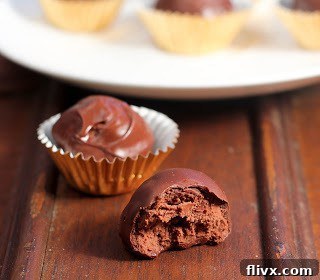
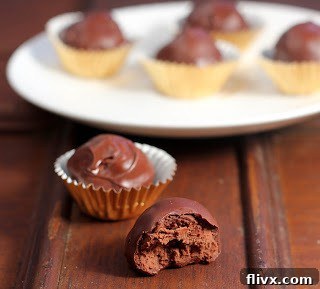
For this exciting challenge, I decided to craft two timeless favorites: elegant chocolate truffles and classic chocolate-covered caramels. Typically, when I make truffles, I opt for simpler finishes, rolling them in cocoa powder, shredded coconut, or colorful sprinkles. This avoids the common dilemma many home confectioners face: the beautiful, glossy sheen of freshly dipped chocolates turning dull, streaky, or developing a “bloom” the very next day. This unsightly transformation is often due to chocolate that hasn’t been properly tempered. Tempering is a crucial, albeit somewhat delicate, method that ensures the chocolate crystallizes correctly as it cools, maintaining its beautiful shine, smooth texture, and satisfying snap, preventing any undesirable gray streaks or bloom.
My tempering experience was… an exercise in patience. It felt a bit like watching paint dry, to be honest! The process involves carefully heating two-thirds of your chocolate over a double boiler until it melts smoothly. Then, you incorporate the remaining one-third, heating the mixture to a specific temperature (around 113ºF for dark chocolate), before allowing it to cool gradually to about 81ºF. It was this cooling phase that seemed to take an eternity! Part of the challenge stemmed from using a smaller quantity of chocolate, just 8 ounces total; larger batches tend to retain heat better and cool more efficiently. Furthermore, attempting this in the peak of summer, with an air conditioner struggling to cool the house much below 80ºF, certainly didn’t help accelerate the process. When it finally reached the target cooling temperature, I was instructed to gently reheat it to 90ºF, which, ironically, happened in a nanosecond, leading me to suspect I might have slightly overheated it. Only time, and the eventual sheen (or lack thereof), would tell the true story of my tempered chocolate.
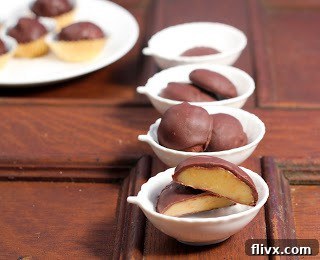
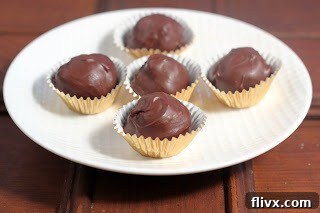
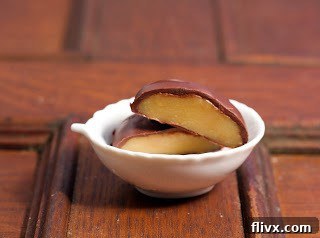
Next came the dipping stage, where I had perfectly shaped ganache balls and ready-to-go caramels awaiting their chocolate bath. This proved to be a fit of fussy work. As the candies patiently waited their turn, they began to soften, and the warmth of the tempered chocolate only accelerated this. I quickly realized that a career as a professional chocolatier might not be in my immediate future, given the slight imperfections in the appearance of my bonbons. However, despite not being the most beautiful candies ever crafted, there were absolutely no complaints from my family regarding their deliciousness! Being pushed out of my comfort zone was a valuable experience, and nothing brings more giddy joy to my family than a homemade chocolate treat.
Crafting Classic Caramels: A Timeless Family Recipe
There’s something uniquely comforting about homemade caramels – their rich, buttery flavor and wonderfully chewy texture are simply irresistible. This particular recipe for caramels comes from a true heirloom: my grandfather’s circa 1952 “Today’s Woman Candy Cookbook.” It’s a testament to the enduring appeal of traditional sweets, passed down through generations. These caramels are perfect on their own, but truly shine when coated in tempered chocolate.
Grandfather’s 1952 Caramel Recipe
- 1 cup granulated sugar
- ¾ cup corn syrup
- ¼ pound (1 stick) unsalted butter
- 1 cup evaporated milk
- ½ teaspoon pure vanilla extract
Instructions:
- In a medium-sized, heavy-bottomed saucepan, combine the sugar, corn syrup, butter, and ½ cup of the evaporated milk. Stir gently to combine the ingredients.
- Place the saucepan over medium heat. Cook the mixture, stirring occasionally, until it reaches 220ºF (approximately 104ºC) on a candy thermometer. This initial cooking phase helps dissolve the sugar and begins to build the caramel’s foundation.
- Once 220ºF is reached, carefully add the remaining ½ cup of evaporated milk to the mixture. Be cautious as the temperature may momentarily drop.
- Continue to cook the caramel, stirring constantly to prevent scorching, until it reaches a temperature of 260ºF (approximately 127ºC). Constant stirring is crucial during this stage to ensure even cooking and prevent the sugars from burning at the bottom of the pan. This temperature indicates the caramel has reached its firm-ball stage, perfect for chewy candies.
- Immediately remove the saucepan from the heat once 260ºF is achieved.
- Stir in the ½ teaspoon of vanilla extract. The vanilla adds a wonderful aromatic depth to the rich caramel flavor.
- Pour the hot caramel mixture into a greased 8×8 inch pan. For this challenge, I specifically poured the caramel into individual candy molds, which makes for perfectly shaped pieces ready for dipping.
- Allow the caramels to cool completely at room temperature. Once cooled, if you used a pan, cut them into squares and wrap each piece in waxed paper to prevent sticking. If using molds, simply pop them out.
- Chill the caramels in the refrigerator until your tempered chocolate is ready for dipping. This firming step ensures they hold their shape perfectly when coated.
Luxurious Frangelico Ganache Truffles: A Touch of Elegance
Chocolate truffles are the epitome of simple elegance. A smooth, rich ganache center enrobed in chocolate offers an explosion of flavor and texture. While classic cocoa-dusted truffles are delightful, adding a liqueur like Frangelico elevates them to a sophisticated dessert, perfect for special occasions or a luxurious personal treat. This recipe, adapted from the renowned Nick Malgieri, ensures a silky-smooth ganache that’s a dream to work with.
Frangelico Ganache for Truffles (Adapted from Nick Malgieri)
- 9 ounces semisweet chocolate, finely chopped
- ½ cup heavy whipping cream
- 2 tablespoons unsalted butter
- 1 tablespoon corn syrup
- 2 tablespoons Frangelico or other liqueur of your choice (e.g., Kahlúa, Grand Marnier, raspberry liqueur)
Instructions:
- Place the finely chopped semisweet chocolate in a microwave-safe bowl. Gently melt the chocolate in the microwave, stopping and stirring at 30-second intervals to prevent scorching. Continue until the chocolate is smooth and fully melted. Set aside.
- In a large Pyrex measuring cup or another microwave-safe bowl, combine the heavy cream, butter, and corn syrup. Heat in the microwave until the mixture just begins to bubble around the edges. This indicates it’s hot enough to infuse the chocolate.
- Remove from the microwave and stir the cream mixture until the butter is fully melted and all ingredients are well combined.
- Allow the cream mixture to cool for about 5 minutes. This slight cooling prevents the chocolate from seizing when combined.
- Pour the cooled cream mixture over the melted chocolate. Using a whisk, gently but thoroughly combine the two mixtures until a smooth, homogeneous ganache forms.
- Stir in the Frangelico (or your chosen liqueur). The alcohol not only adds flavor but also helps to emulsify the ganache, giving it a beautiful sheen.
- Cover the bowl and refrigerate the ganache for 15-30 minutes, or until the mixture is almost cooled to room temperature but still pliable. It should be firm enough to hold its shape but not too hard.
- Remove the ganache from the refrigerator and beat it with an electric mixer on medium speed until it reaches the consistency of frosting – light, airy, and easily pipeable or scoopable. Be careful not to overbeat, as this can make it greasy.
- Using a piping bag or a small scoop (like a melon baller), pipe or scoop rounds of ganache onto a parchment-lined cookie sheet.
- Chill the ganache rounds thoroughly in the refrigerator until your tempered chocolate is ready for dipping. Firm ganache is essential for easy handling and successful coating.
Demystifying Chocolate Tempering: The Seeding Method for Perfection
Tempering chocolate is the secret to achieving that professional, glossy finish and satisfying snap in your homemade candies. Untempered chocolate can result in dull, streaky, or “bloomed” creations. While it might seem intimidating, the “seeding” method is a reliable technique for home cooks, ensuring your chocolate sets perfectly every time. This process involves carefully controlling the temperature of the chocolate to stabilize its crystal structure, preventing unsightly bloom and delivering a beautiful, stable product. It’s a bit scientific, but entirely achievable with a good thermometer and a touch of patience.
Essential Tempering Ranges (Seeding Method)
For approximately 8 ounces of semisweet chocolate (sufficient for half a batch of caramels and half a batch of ganache), these ranges are critical. Using a good quality chocolate with a higher cocoa butter content (couverture callets are ideal) will yield the best results.
Celsius Temperatures:
- Dark Chocolate: Melt to 45°C-50°C > Cool to 27°C > Reheat to Working Temperature of 32°C
- Milk Chocolate: Melt to 45°C > Cool to 27°C > Reheat to Working Temperature of 30°C
- White Chocolate: Melt to 45°C > Cool to 27°C > Reheat to Working Temperature of 29°C
Fahrenheit Temperatures:
- Dark Chocolate: Melt to 113°F-122°F > Cool to 80.6°F > Reheat to Working Temperature of 89.6°F
- Milk Chocolate: Melt to 113°F > Cool to 80.6°F > Reheat to Working Temperature of 86°F
- White Chocolate: Melt to 113°F > Cool to 80.6°F > Reheat to Working Temperature of 84.2°F
The basic principle of seeding involves melting the majority of your chocolate to a specific temperature, then introducing unmelted “seed” chocolate to bring the overall temperature down. This cool, stable chocolate helps guide the formation of the correct crystal structure in the warmer chocolate. Finally, a gentle reheat brings it to its ideal working temperature for dipping, molding, or coating.
Step-by-Step Tempering with the Seeding Method (using couverture callets or finely chopped chocolate)
- If using chocolate in bar or slab form, finely chop it into small pieces, roughly the size of almonds. This allows it to melt and incorporate more easily.
- Place approximately two-thirds of your chopped chocolate into a heatproof bowl.
- Set aside the remaining one-third of the chocolate; these will be your “seeds.”
- Place the bowl containing the two-thirds chocolate over a saucepan of simmering water, ensuring the bottom of the bowl does not touch the water. This creates a double boiler, providing gentle, indirect heat.
- Important Tip: Ensure your bowl fits snugly into the saucepan to prevent steam droplets from condensing and falling into your chocolate. Even a tiny amount of water can cause chocolate to seize, turning it into a grainy, unusable mass.
- Using a rubber spatula, gently stir the chocolate continuously as it melts. This promotes even melting and prevents hot spots.
- Once the chocolate is fully melted, closely monitor its temperature with a reliable thermometer. As soon as it reaches 45°C / 113°F (or between 45°C-50°C / 113°F-122°F for dark chocolate), immediately remove the bowl from the heat.
- Begin adding small amounts of the reserved one-third unmelted “seed” chocolate into the melted chocolate. Stir continuously to help these pieces melt and evenly distribute.
- Continue adding small additions of chocolate and stirring until the overall temperature of the chocolate mixture is brought down to 27°C / 80.6°F (for dark chocolate, you can aim between 80°F and 82°F). The unmelted chocolate helps to cool the mixture and introduce stable cocoa butter crystals.
- Once the target cooling temperature is reached, place the bowl back over the double boiler for a very brief period. Gently stir and closely watch the thermometer as you bring the temperature back up to its specific working temperature: 32°C / 89.6°F for dark chocolate, 30°C / 86°F for milk chocolate, and 29°C / 84.2°F for white chocolate.
- If you still observe a few stubborn unmelted bits of chocolate, keep the bowl briefly over the simmering water, stirring gently and diligently watching the thermometer. It’s crucial not to exceed the working temperature.
- IMPORTANT: Precision is paramount here. You must keep a vigilant eye on the thermometer to ensure the chocolate does not go even a few degrees over its ideal working temperature, as this can undo the tempering.
Your chocolate is now perfectly tempered and ready to use for dipping, molding, or coating your delicious homemade candies!
Tip: An alternative to adding many small “seeds” is to drop in one large, already-tempered chunk of chocolate as your seed. This makes it easier to remove the unmelted seed once the chocolate reaches temper, as you only need to retrieve one piece instead of many small bits.
Expert Tips for Flawless Chocolate Candy Making
- Maintaining Working Temperature: If you’re dipping a large batch of truffles or caramels, your chocolate will naturally cool and thicken as it sits off the heat. To maintain an ideal viscosity for even coating, periodically place the bowl over the steam of your double boiler for 30 seconds to 1 minute every 10-15 minutes. Remember, do not let the temperature exceed its working temperature!
- Insulation Assistance: Keeping your tempered chocolate in a warmed glass bowl and wrapped in a hot kitchen towel can significantly help to retain its working temperature for longer, reducing the need for frequent reheating.
- Quantity Matters: It is generally easier to maintain the correct working temperature when tempering larger quantities of chocolate rather than very small amounts. Larger masses of chocolate are more stable thermally.
- No Water Allowed: Reiterate this golden rule: ensure absolutely no water or steam gets into your chocolate at any stage of the tempering process, as it will cause the chocolate to seize and become unusable.
- Thermometer is Your Best Friend: Unless you are a seasoned chocolatier with an intuitive “feel” for chocolate temperature (like touching it to your lower lip), it is absolutely imperative to use an accurate thermometer. Even a few degrees off can ruin the temper.
- Don’t Fear Mistakes: The beauty of chocolate tempering is that if you make a mistake at any stage, you can almost always start over from the very beginning. There’s no need to waste good chocolate!
- Cooling Surface Flexibility: While a marble or granite slab is often recommended for cooling in some tempering methods due to its thermal properties, you can certainly use other countertops like laminated, glass, or stainless steel. It may take a bit longer for the chocolate to cool, but it is entirely possible.
- Leftover Chocolate: Any leftover tempered chocolate can be stored in a cool, dry place. When you’re ready to use it again, simply re-temper it following the same steps. This ensures no delicious chocolate ever goes to waste.
- Utensil Choice: Wooden spoons can absorb and retain moisture, which is detrimental to chocolate. For tempering, it’s always best to use a rubber spatula or a silicone spoon to prevent any risk of water contamination.
There you have it – a comprehensive guide to crafting delightful homemade chocolate truffles and caramels, complete with the essential art of tempering. The satisfaction of biting into a perfectly shiny, snappy, homemade chocolate treat is truly unmatched. Happy candy making!
Print This Recipe