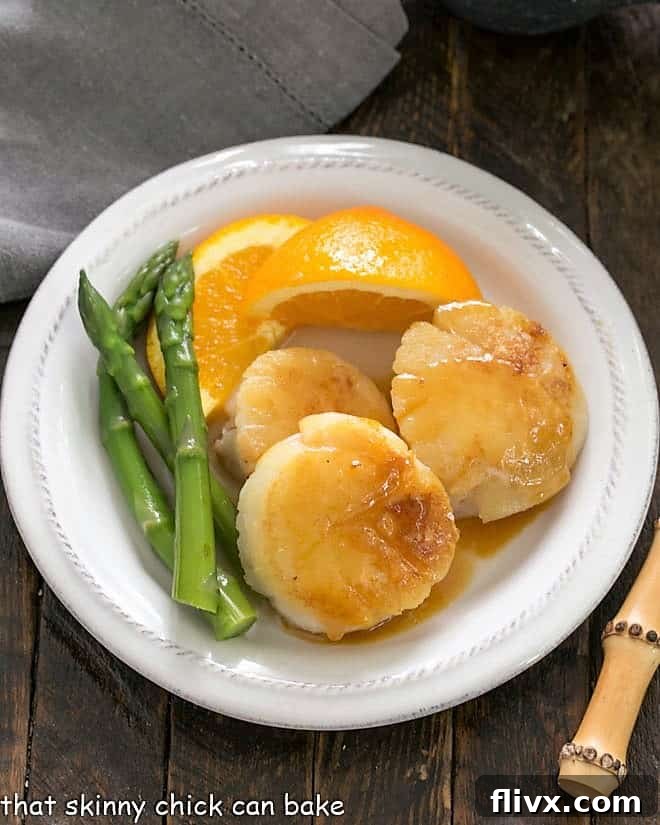
Indulge in a culinary masterpiece that promises to elevate your home dining experience: Pan-Seared Scallops with a vibrant Caramel Orange Sauce. This isn’t just a recipe; it’s an invitation to effortlessly create a restaurant-worthy dish that will impress and delight. The delicate sweetness of perfectly seared sea scallops finds its exquisite match in a sophisticated glaze crafted from simple sugar, fresh orange juice, and a hint of dry white wine. This harmonious blend accentuates the natural richness of the seafood, transforming a quick meal into an unforgettable gourmet affair. Prepare to dazzle your palate and your guests with this remarkably approachable yet profoundly flavorful creation.
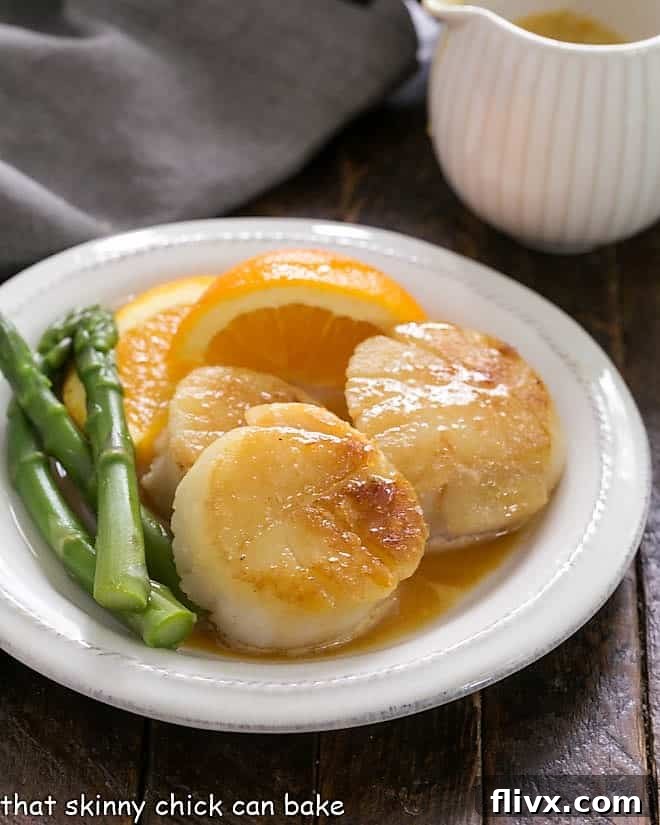
Why This Scallop Recipe is a Must-Try
There are countless reasons why this seared scallops recipe deserves a prime spot in your culinary repertoire. It combines elegance with simplicity, making it perfect for both special occasions and an elevated weeknight dinner. Here’s why you’ll absolutely love making this dish:
- Inspired by a Culinary Master: This exceptional recipe is a testament to the genius of cookbook writer extraordinaire, Dorie Greenspan. Her profound understanding of flavors and techniques ensures a foolproof and utterly delicious outcome that consistently yields professional-level results.
- A Symphony of Flavors: The delicate, naturally sweet flavor of succulent sea scallops is beautifully complemented by the unique caramel orange sauce. The sauce, with its caramelized notes, bright citrus tang, and subtle wine undertones, creates a dynamic contrast that truly makes the scallops sing. It’s a flavor profile that’s both comforting and exciting.
- Impress Without Effort: You’ll effortlessly dazzle any dinner guests with this remarkably approachable recipe. Despite its sophisticated appearance and gourmet taste, the steps for cooking scallops and creating the accompanying sauce are straightforward and easy to master, even for novice cooks.
- Quick and Convenient: Far from being a labor-intensive dish, cooking these scallops is an absolute breeze. With minimal prep and a speedy cooking time, you can have a luxurious meal on the table in under 30 minutes. This makes it an ideal choice for busy weeknights when you crave something extraordinary without the fuss.
Essential Tips for Perfect Pan-Seared Scallops
Achieving that coveted golden crust and tender interior for your scallops, along with a perfectly balanced sauce, relies on a few key techniques and considerations. Follow these expert tips to ensure your pan-seared scallops turn out flawlessly every time:
- Choose the Right Scallops: Always opt for larger sea scallops for searing, not the smaller bay scallops. Sea scallops hold their shape better, offer a meatier texture, and develop a superior sear due to their size and lower moisture content. Bay scallops are better suited for quick sautés or dishes where they are not the primary focus for searing.
- Build a Relationship with Your Fishmonger: A good fishmonger is an invaluable resource. They can provide advice on what seafood is freshest, what’s in season, and help you choose the highest quality scallops. Don’t hesitate to ask questions about the origin and handling of their scallops.
- Identify Fresh Scallops: When purchasing, look for scallops that are firm, plump, and have a beautiful, uniform color – typically white, creamy, or pale pink. They should possess a fresh, clean, oceanic aroma, reminiscent of the sea, and absolutely no “fishy” smell. Avoid any scallops that appear sticky, discolored, or have a strong, unpleasant odor.
- Avoid Overcooking: This is perhaps the most critical tip for cooking scallops. Scallops cook very quickly, and overcooking is the fastest way to ruin them, turning their tender, sweet flesh into a rubbery disappointment. The internal texture should change from translucent to opaque. If you’re unsure, an instant-read meat thermometer is your best friend. Refer to the frequently asked questions below for precise temperature guidelines to ensure perfectly cooked scallops.
- Master the Caramel Sauce: The caramel sauce requires careful attention. Cook the sugar until it reaches a beautiful, deep caramelly color – a rich amber, not dark brown, which indicates burning. Be extremely cautious when adding the cold liquids (wine and orange juice) to the hot molten sugar; the mixture will sputter and spurt violently due to the sudden temperature change. Stand back and pour slowly. Continue stirring over heat until it reduces by half, concentrating the flavors into a luscious glaze.
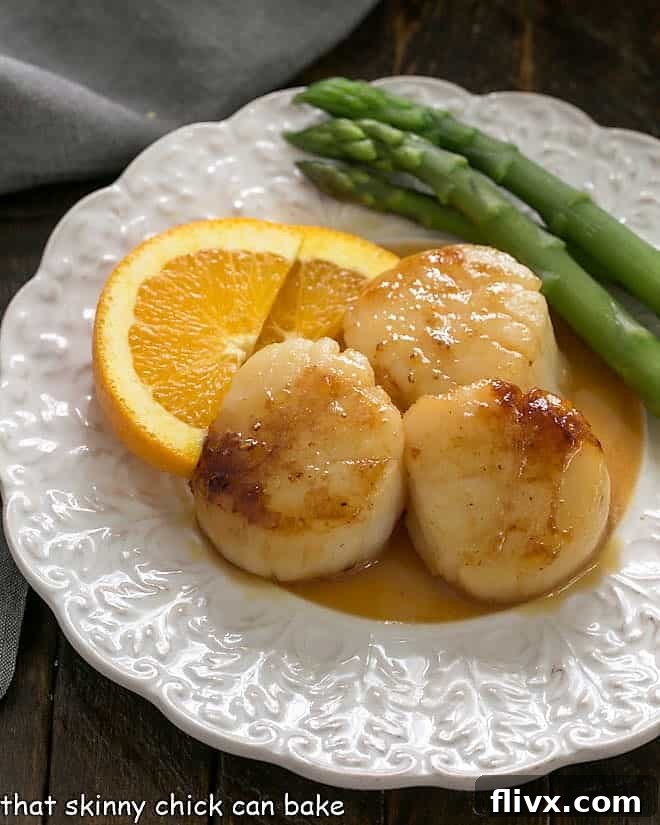
Achieving the Perfect Sear: A Step-by-Step Guide
Searing scallops might seem intimidating, but with the right technique, it’s remarkably simple and incredibly rewarding. The goal is a beautiful, golden-brown crust on the outside and a tender, melt-in-your-mouth interior. While my husband, Bill, has yet to be converted to the joys of scallops (more for me!), you’ll find this method surprisingly easy and perfect even on a busy weeknight. Let’s break down the process to ensure every scallop is a triumph:
- Prepare the Scallops for Searing: The absolute first and most crucial step is to thoroughly dry your scallops. Place them between several layers of paper towels and gently press down to absorb as much moisture as possible. Repeat with fresh paper towels if necessary until they are completely dry to the touch. This step is non-negotiable for achieving a proper sear and the desirable Maillard reaction, which creates that delicious crust. While doing this, also inspect each scallop for the small, tough abductor muscle on the side; if present, gently pull or slice it off, as it becomes chewy when cooked.
- Craft the Easy Caramel Orange Sauce: In a small, heavy-bottomed saucepan, sprinkle the sugar evenly. Place it over medium-high heat and allow the sugar to melt and caramelize. As it starts to turn a light amber, gently swirl the pan to ensure even coloring. Once it reaches a deep caramel color (like a penny), immediately and very carefully add the dry white wine and freshly squeezed orange juice. Be prepared for it to bubble and splash aggressively due to the temperature difference; stand back and pour slowly. Stir the mixture with a wooden spoon over high heat until it reduces by half, creating a luscious, concentrated glaze (approximately ⅓ cup). Remove from heat and set aside, keeping it warm over very low heat while you cook the scallops.
- Season the Scallops Generously: Just before searing, season the top side of each dried scallop generously with salt and a touch of freshly ground white pepper. White pepper is often preferred for seafood as it doesn’t leave visible black flecks, maintaining an elegant appearance, but black pepper works perfectly fine in a pinch.
- Achieve the Perfect Sear: Heat a heavy-bottomed skillet (cast iron or stainless steel works best) over high heat until it’s very hot, almost smoking. Add about ½ to 1 tablespoon of olive oil (or another high-smoke-point oil like grapeseed or avocado oil) and swirl to evenly coat the bottom of the pan. The oil should shimmer, indicating it’s ready. Carefully place the seasoned scallops into the hot pan in a single layer, ensuring not to overcrowd the pan. If necessary, sear in batches to maintain high heat. Do not touch or move the scallops for the first 2 minutes. This allows a beautiful golden-brown crust to form.
- Flip and Finish Cooking: After approximately 2 minutes, the scallops should have a gorgeous golden-brown sear. Flip each scallop to the other side. Cook for another 1 to 2 minutes, or until the centers change from translucent to opaque. Be vigilant; scallops can go from perfectly cooked to rubbery in a matter of seconds. For absolute precision, an instant-read thermometer should register 115-120°F (46-49°C) at this point, allowing for carry-over cooking.
- Transfer and Finish the Sauce: Once cooked, immediately remove the scallops to a warm serving plate. Next, turn up the heat under the caramel orange sauce saucepan (if it was on low) to ensure it’s warm and fluid. Remove the sauce from the heat, then add 1 tablespoon of cold butter, cut into 3 pieces. Swirl the pan gently until the butter is completely melted and incorporated, creating a glossy, rich finish for the sauce. Season the sauce with a tiny pinch more salt and pepper to taste.
- Serve with Elegance: Pour the finished caramel orange sauce through a fine-mesh strainer into a small pitcher or serving vessel to ensure a silky-smooth texture, removing any tiny bits of caramelized sugar that may not have dissolved. Drizzle a generous amount of the warm sauce over the perfectly seared scallops. Serve immediately, passing any extra sauce at the table for those who desire more.
- Enjoy Promptly: While Dorie Greenspan recommends eating these on the day they’re cooked for optimal texture, gentle reheating is possible. If you do have leftovers, rewarm them very gently over low heat or in a microwave on a low setting for short bursts to avoid overcooking. Leftovers should be consumed within 2 days when stored properly in the refrigerator.
Frequently Asked Questions About Cooking Scallops
Understanding the distinction between sea and bay scallops is crucial for selecting the right seafood for your recipe. Bay scallops are smaller, typically about ½ inch in diameter. They are seasonal, peaking in the fall, and primarily found along the East Coast. Their meat is light beige to pinkish, and they boast a very tender texture and a slightly sweeter flavor than sea scallops. Due to their small size and delicate nature, bay scallops are best suited for dishes involving quick sautéing, poaching, or as an addition to pastas and salads where they cook almost instantly.
Sea scallops, on the other hand, are significantly larger, often ranging from 1 to 2 inches in diameter. They are harvested from colder, deeper seawater and are available year-round. These scallops have a sweet, less delicate flavor, and a firmer, chewier texture compared to bay scallops. Their robust size and structure make them ideal for searing, grilling, or broiling, where they can develop a beautiful crust while remaining tender inside.
The most important factor when purchasing scallops is to look for “dry scallops.” Dry scallops are natural, untreated scallops that have not been soaked in any solutions. They have a firm texture, a clean, briny smell, and a natural, slightly off-white or creamy color. These are essential for achieving a perfect sear because their low moisture content allows for proper caramelization and browning.
In contrast, “wet scallops” have been soaked in a polyphosphate solution, which causes them to absorb water, making them appear plumper and whiter. While this adds weight and makes them cheaper per pound, it dilutes their natural flavor, gives them a rubbery texture, and makes it incredibly difficult to achieve a good sear. The excess moisture leaches out during cooking, often steaming the scallops instead of browning them. Always ask your fishmonger for “dry-packed” or “dry” scallops for the best quality and culinary results. A reputable fishmonger will understand and accommodate this request.
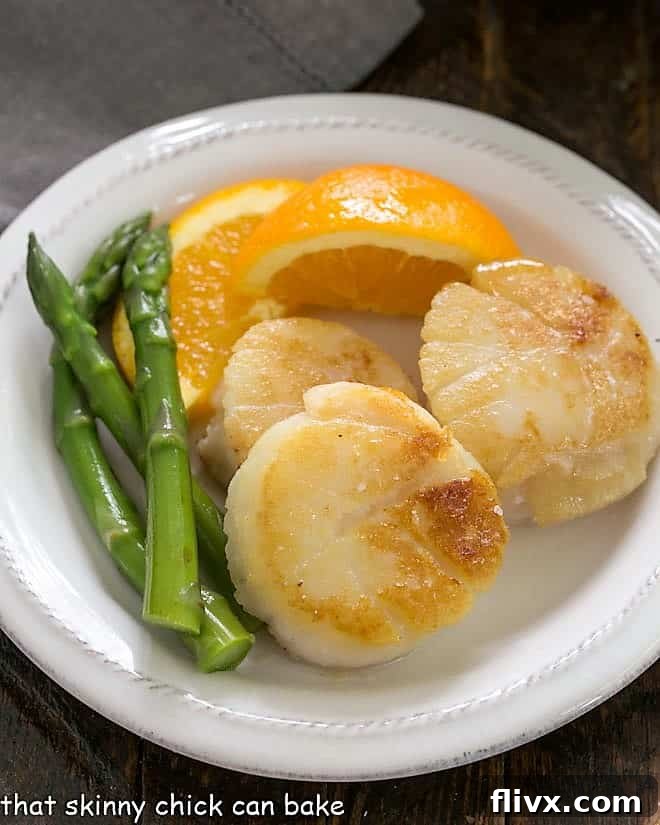
Knowing when scallops are done is key to avoiding a rubbery outcome. In a very hot pan, sea scallops typically require only about 2 minutes per side, for a total cooking time of 3-4 minutes. Visually, the outside should develop a beautiful golden-brown crust, while the sides should appear opaque rather than translucent. If you’re unsure, you can make a small incision into the thickest part of one scallop after cooking each side; the center should no longer be raw or translucent but opaque and pearly white.
To eliminate any guesswork and ensure consistent results, use an instant-read thermometer. For perfectly tender scallops, aim for an internal temperature of 115-120ºF (46-49°C) when you remove them from the pan. This lower temperature is intentional as it accounts for “carry-over cooking” – the phenomenon where food continues to cook for a few minutes after being removed from the heat. This allows the scallops to gently rise to their ideal final temperature of approximately 130ºF (54°C) without drying out. To further facilitate this carry-over cooking and ensure even heat distribution, transfer the cooked scallops to a serving dish and loosely cover them with foil for 5-10 minutes before serving. This brief resting period helps redistribute the juices, resulting in a more succulent and flavorful scallop.
Explore More Delicious Seafood Recipes:
- Vibrant Rainbow Salmon Skewers from The View from Great Island
- Irresistible Bacon-Wrapped Scallops
- Flavorful Grilled Shrimp Scampi
- Zesty Grilled Fish Tacos
- Elegant Sea Bass with Tomatoes, Olives, and Capers
- Discover a broader collection of Exquisite Seafood Recipes
Stay connected and share your culinary creations with me through social media on Instagram, Facebook, and Pinterest. Don’t forget to tag me when you try one of my recipes! And if you absolutely love the results and enjoyed making this dish, please consider leaving a 5-star rating and a review in the recipe card below to help others discover this fantastic recipe.
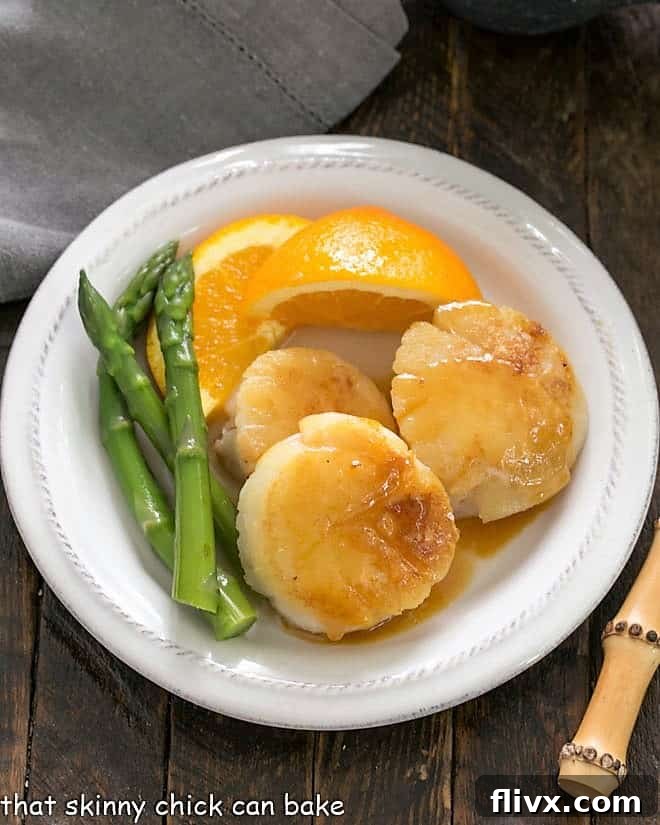
Scallops Recipe with Caramel Orange Sauce
10 minutes
7 minutes
17 minutes
4 servings
A quick, elegant way to prepare scallops that will impress any guest or elevate a simple weeknight meal.
Ingredients
- 2 tablespoons of white sugar
- ½ cup of dry white wine
- Juice of 1 large orange – generous ⅓ cup
- 1 pound of sea scallops
- ½ to 1 tablespoon of olive oil
- Salt and freshly ground white pepper, for taste
- 1 tablespoon cold butter, cut into 3 pieces
Instructions
- Sprinkle the sugar evenly into a small, heavy-bottomed saucepan. Place the pan over medium-high heat and allow the sugar to melt gently.
- As soon as you observe the sugar beginning to turn brown, start to gently swirl the pan to ensure even caramelization. Once the sugar has achieved a deep, rich caramel color, very carefully add the white wine and orange juice. Be prepared for the mixture to bubble and spatter vigorously due to the heat difference; exercise caution and stand back.
- Increase the heat to high, stir the sauce with a wooden spoon, and bring it to a boil. Allow it to simmer until it is reduced by half (resulting in approximately ⅓ cup of concentrated sauce). Remove the pan from the heat and set it aside, keeping it warm over very low heat while you prepare the scallops.
- Thoroughly pat the sea scallops dry between several layers of paper towels. It is crucial they are as dry as possible to achieve a good sear. Inspect each scallop and gently pull off any small, tough abductor muscles attached to the sides. Have a warm serving platter and a small strainer ready for the final steps.
- Ensure the saucepan with the caramel sauce is over very low heat to keep it warm and fluid while you focus on cooking the scallops.
- Heat a heavy skillet (such as cast iron or stainless steel) over high heat until it is very hot and almost smoking. Pour in 1½ teaspoons of olive oil and swirl to evenly coat the bottom of the pan. The oil should be shimmering.
- Carefully place the scallops into the hot skillet in a single layer, ensuring not to overcrowd the pan. If necessary, cook in batches to maintain high heat. Immediately season the scallops with salt and pepper.
- Cook the scallops undisturbed for approximately 2 minutes per side, or until they develop a beautiful golden-brown crust and are firm on the outside with an opaque center. Be careful not to overcook them, as they can quickly become rubbery.
- Once cooked to perfection, promptly transfer the seared scallops to your prepared warm serving platter.
- To finish the sauce, remove the saucepan from the heat and add the cold butter pieces. Swirl the pan gently until the butter is completely melted and beautifully incorporated, giving the sauce a rich, glossy finish.
- Taste and season the finished sauce with additional salt and pepper if needed. Then, pour the sauce through a fine-mesh strainer into a small pitcher or a clean serving bowl. Drizzle a generous amount of this exquisite sauce over the warm scallops and serve immediately. Pass the remaining sauce at the table for guests to enjoy extra.
Notes
Recipe adapted from Around My French Table by the acclaimed Dorie Greenspan.
For optimal results, always make sure to specifically look for larger “dry” sea scallops, not bay scallops, as they are essential for achieving the best sear and texture.
If you prefer to use an instant-read thermometer to ensure perfect doneness, remove the scallops from the pan when they reach an internal temperature of about 115-120°F (46-49°C). There will be some carryover cooking that will continue to gently raise their internal temperature by another 10°F or so, bringing them to their ideal final temperature for maximum tenderness.
Recommended Products
As an Amazon Associate and member of other affiliate programs, I earn from qualifying purchases.
- Best Lemon Squeezer
- Black and Decker Juicer
- Thermapen Instant Read Thermometer
Nutrition Information:
Yield:
4
Serving Size:
1
Amount Per Serving:
Calories: 286Total Fat: 7gSaturated Fat: 3gTrans Fat: 0gUnsaturated Fat: 4gCholesterol: 54mgSodium: 963mgCarbohydrates: 27gFiber: 1gSugar: 18gProtein: 24g
Thatskinnychickcanbake.com occasionally offers nutritional information for recipes contained on this site. This information is provided as a courtesy and is an estimate only. This information comes from online calculators. Although thatskinnychickcanbake.com attempts to provide accurate nutritional information, these figures are only estimates.
Varying factors such as product types or brands purchased can change the nutritional information in any given recipe. Also, many recipes on thatskinnychickcanbake.com recommend toppings, which may or may not be listed as optional and nutritional information for these added toppings is not listed. Other factors may change the nutritional information such as when the salt amount is listed “to taste,” it is not calculated into the recipe as the amount will vary. Also, different online calculators can provide different results.
To obtain the most accurate representation of the nutritional information in any given recipe, you should calculate the nutritional information with the actual ingredients used in your recipe. You are solely responsible for ensuring that any nutritional information obtained is accurate.
HOW MUCH DID YOU LOVE THIS RECIPE?
Please leave a comment on the blog or share a photo on Pinterest