
Welcome to the enchanting world of French patisserie, right in your own kitchen! If you’ve ever dreamt of biting into a perfectly flaky, richly buttery, and exquisitely flavored croissant, then get ready to turn that dream into a delicious reality. This comprehensive guide will walk you through crafting the most exquisite Homemade Almond Croissants, also known as Croissants aux Amandes. Forget store-bought; these artisan-quality pastries, made with delicate laminated dough and a luscious almond paste filling, are a true showstopper that will transport your taste buds straight to a charming Parisian cafe.
The journey to creating these culinary masterpieces is both a rewarding challenge and an incredibly satisfying experience. We’re talking about real butter, expertly folded into layers of tender dough, resulting in a pastry that shatters with every bite, revealing pockets of air and a melt-in-your-mouth texture. The rich, sweet almond paste nestled within provides a delightful counterpoint to the buttery flakiness, creating a symphony of flavors that truly defines gourmet baking. While the process of mastering laminated dough from scratch may seem daunting, with patience and our detailed instructions, you’ll unlock the secrets to a French delicacy that will undoubtedly impress anyone lucky enough to try them.

Why You Must Embark on This Homemade Almond Croissant Journey
Baking homemade croissants is more than just following a recipe; it’s an immersive culinary adventure that rewards you with an unparalleled taste and a profound sense of accomplishment. Here’s why these Homemade Almond Croissants should be at the top of your baking bucket list:
- Master a French Delicacy: This tried-and-true recipe, inspired by the expertise of baking legends like Dorie Greenspan, offers a genuine path to mastering one of France’s most iconic pastries. It’s an opportunity to develop advanced baking skills and truly understand the art of lamination.
- Unmatched Flavor and Texture: While store-bought croissants are convenient, they simply cannot compare to the depth of flavor and delicate, airy texture of a homemade version. The meticulous process of creating the laminated dough with real butter yields a flakiness that is simply divine, perfectly complementing the sweet, aromatic almond filling.
- A Truly Rewarding Process: Yes, it’s a two-day commitment involving careful rolling, turning, chilling, and repeating, but the journey itself is incredibly meditative and satisfying. There’s immense pride in pulling a tray of perfectly golden, puffed croissants from your oven, knowing you created them from basic ingredients.
- Versatility in Baking: Once you master this foundational laminated dough, a world of possibilities opens up. You can easily adapt the recipe to make classic plain croissants, rich chocolate croissants, or even savory pastries. This recipe is your gateway to diverse and delicious baking projects.
- Impress Your Loved Ones: Imagine serving warm, freshly baked almond croissants to family and friends. The aroma alone is enough to captivate, and the taste will leave everyone utterly delighted and impressed by your baking prowess. They’ll taste like they came straight from a high-end French patisserie!
Key Ingredient Notes for Perfect Homemade Almond Croissants
The quality and preparation of your ingredients are paramount to achieving that coveted flaky texture and rich flavor. Here’s a closer look at what you’ll need and some crucial tips:
- Kitchen Staples: You’ll need everyday essentials like fresh milk, granulated sugar, salt, and unbleached all-purpose flour. Ensure your milk is at the specified warm temperature for yeast activation, and your flour is fresh. The egg for the egg wash, whisked with a tablespoon of water, is essential for that beautiful golden-brown crust.
- Butter – The Heart of Lamination: Use only cold, unsalted butter, and prioritize high-quality butter with a higher fat content (like European-style butter) if possible. The butter is not just an ingredient; it’s a structural component. Its coldness is vital for creating distinct layers within the dough. Low-quality or warmer butter can melt into the dough prematurely, preventing proper lamination and resulting in a less flaky croissant.
- Almond Paste – The Signature Filling: A small can of quality almond paste is what gives these croissants their distinct and beloved flavor. You can typically find it in the baking aisle or specialty foods section of larger supermarkets or gourmet markets. Don’t confuse it with marzipan, which is sweeter and has a different texture. If you can’t find it, you can sometimes make your own with blanched almonds and sugar, but a good quality store-bought paste is convenient and effective.
- Dry Active Yeast: While some traditional recipes call for compressed yeast, active dry yeast is more commonly available and works beautifully. The original recipe specifies 1 ounce of compressed yeast, but we’ll use 4 ½ teaspoons of active dry yeast, which needs to be bloomed in warm milk before being incorporated into the dough. Ensure your yeast is fresh and active for a proper rise.

Essential Recipe Tips for Croissant Perfection
Making croissants from scratch is a labor of love, and these expert tips will help ensure your efforts result in magnificently flaky and flavorful pastries:
- Pre-made Puff Pastry (A Shortcut, with Caveats): If you’re short on time or new to laminated dough, using a high-quality, all-butter premade puff pastry can be an option. Brands like Dufour are excellent. However, be aware that you might not achieve the same airy, yeasted puff as with traditional croissant dough. The flavor will still be wonderful, but the texture will be slightly different. For true French bakery-style croissants, the homemade laminated dough is the way to go.
- PRO-Tip: Temperature is Your Best Friend (and Foe!): The absolute golden rule for laminated dough is to keep everything COLD. If your dough or butter warms up too much during rolling and shaping, the butter can melt into the dough, destroying the layers and preventing that characteristic flakiness. If you notice your dough becoming soft or the butter starting to break through, immediately refrigerate it for 20-30 minutes (or longer) before continuing. A cool kitchen environment is also very helpful.
- Generous Almond Filling: When I first made these, I used a thin rope of almond paste, and while delicious, I wished for more! Don’t be shy with the filling. Roll out your almond paste into a thicker rope or spread it more generously. Ensure it’s fully encased within the dough so it doesn’t ooze out during baking. A rich filling makes every bite truly decadent.
- Other Delicious Filling Options: Croissants are incredibly versatile. For a classic variation, try chocolate. Use your favorite high-quality chocolate, whether it’s chips, chopped bars, or specialty chocolate batons. Again, make sure the chocolate is well-enclosed in the dough to prevent it from melting out and burning on the baking sheet. Fruit fillings or savory options like cheese and herbs are also fantastic possibilities once you master the basic technique.
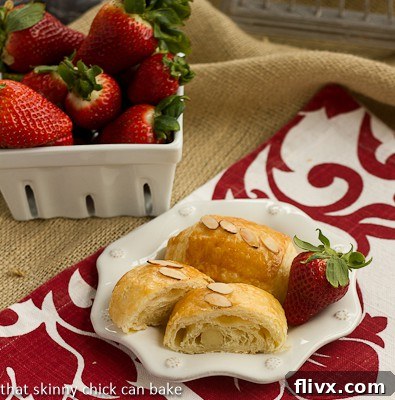
- PRO-Tip: The Visual Cue (and Nut Allergy Consideration): After brushing on your egg wash, sprinkle a few sliced almonds on top of your almond-filled pastries. This not only adds a beautiful decorative touch but also clearly signals the filling flavor. It’s a simple yet effective way to distinguish them from other varieties, especially if you’re baking for a crowd with different preferences or dietary needs (like a “nut-avoiding hubby” who might prefer chocolate croissants!).
- Proofing Environment Matters: Croissants require a warm, humid environment to proof properly. A turned-off oven with a pan of hot, steamy water placed underneath is an ideal setting. This allows the yeast to activate fully and the dough to rise to three times its size, becoming spongy, which is crucial for a light and airy finished product. Avoid proofing in overly hot conditions, which can cause the butter to melt.
- Patience is a Virtue: The multi-day process isn’t just about chilling; it’s about allowing the gluten to relax and the flavors to meld. Rushing any step, especially the chilling times between turns, will compromise the final texture. Embrace the leisurely pace of this baking project.
I must confess, one of these glorious homemade almond croissants vanished almost as quickly as I typed up this post! It’s an irresistible treat, so prepare to exercise some self-control (or have a treadmill nearby!).
Frequently Asked Questions About Croissants and Laminated Dough
Laminated dough, known as pâte feuilletée in French, is a type of pastry dough that is repeatedly folded and rolled out with butter (or another fat) layered between the dough. This creates numerous, extremely thin layers of dough separated by thin layers of butter. When baked, the moisture in the butter turns to steam, pushing the dough layers apart, resulting in the incredibly flaky, airy, and crispy texture characteristic of croissants, puff pastry, and Danishes.
Puff pastry is incredibly versatile! Beyond classic croissants, it’s used to create iconic pastries like Napoleons (Mille-feuille) and Palmiers (elephant ears). It’s also frequently employed to wrap various fillings, from sweet fruit tarts and savory cheeses (like baked brie en croute) to elegant beef Wellington and other meat dishes. Its ability to puff dramatically makes it a favorite for both sweet and savory applications.
The magic of puff pastry’s rise lies in the hundreds of delicate layers of dough and butter created during the rolling and folding process (lamination). When this chilled pastry is placed into a hot oven, the tiny pockets of butter within these layers rapidly melt. The water content in the butter instantly converts into steam. This steam becomes trapped between the dough layers, forcing them to separate and expand dramatically, creating the signature light, airy, and flaky texture. The gluten structure in the dough also helps trap the steam and maintain the separation.
Homemade croissants are undeniably best enjoyed on the day they are baked, when their flakiness and aroma are at their peak. If you have leftovers, store them in an airtight container at room temperature for up to a day, although they will lose some crispness. For longer storage, wrap them tightly in an airtight container or freezer bag and freeze for up to 1 month. To reheat, thaw them overnight in the refrigerator or at room temperature, then place them in a 350°F (175°C) oven for 6-8 minutes until warmed through and crisped up. This brings back much of their fresh-baked quality.
Absolutely! In fact, preparing croissant dough often requires multiple chilling steps over two days, making it ideal for advance preparation. You can prepare the dough up to the final shaping stage and refrigerate it overnight (or even up to 2 days) after the last fold. Alternatively, shaped but unbaked croissants can be frozen solid on a baking sheet, then transferred to a freezer bag and stored for up to 2-3 weeks. When ready to bake, thaw them overnight in the refrigerator, then let them proof at room temperature before baking as usual.
While not many specialized tools are strictly necessary, a few items make the process much smoother. A large, sturdy rolling pin (French-style or with handles) is crucial for even rolling. A large, clean work surface that can be floured generously is also key. Parchment paper for lining baking sheets and for marking your turns helps immensely. Other useful items include a pastry brush for egg wash, a sharp knife or pastry wheel for cutting, and ideally a stand mixer with a dough hook for the initial dough mixing. A kitchen scale for precise ingredient measurement is also highly recommended.
You May Also Love These Pastry Recipes
If you enjoyed the process of making these magnificent Homemade Almond Croissants, you’ll surely love exploring other delightful pastry creations. Expand your baking repertoire with these fantastic recipes:
- Puff Pastry Cinnamon Rolls from Lauren’s Latest – A quick and easy way to enjoy the flakiness of puff pastry with a classic cinnamon swirl.
- Maple Glazed Apple Tart – A rustic yet elegant dessert, perfect for showcasing seasonal apples.
- Puff Pastry Antipasto Squares – A savory crowd-pleaser, ideal for appetizers or light snacks.
- Sausage Croissant French Toast Casserole – A brilliant brunch option that cleverly repurposes croissants.
- French Apple Tart with Puff Pastry – Another delightful apple dessert, highlighting the versatility of puff pastry.
- More Breakfast and Brunch Recipes – Explore a wider collection of morning meal inspirations.
Stay in touch through social media @ Instagram, Facebook, and Pinterest. Don’t forget to tag me when you try one of my recipes! And if you love the results, please give it a 5-star rating in the recipe card below.

Homemade Almond Croissants
40 minutes
12 minutes
7 hours
7 hours 52 minutes
8 Croissants
An exquisite treat with homemade laminated dough filled with sweet almond paste, delivering a taste of French bakery luxury!
Ingredients
For the Croissant Dough:
- 4 ½ teaspoons active dry yeast
- 1 cup warm milk (plus up to 6 tablespoons more, if needed)
- 3 ¾ cups unbleached all-purpose flour
- ⅓ cup sugar
- 2 teaspoons salt
For the Butter Block:
- 4 ½ sticks (1 pound 2 ounces) cold unsalted butter, cut into 1/2 inch cubes
- 2 tablespoons unbleached all-purpose flour
For the Egg Wash:
- 1 large egg, beaten with 1 tablespoon cold water
For the Almond Filling:
- Small can (approximately 7-8 ounces) of almond paste
- Optional: Sliced almonds for garnish
Instructions
- Activate the Yeast: In a small bowl, add the active dry yeast to 1 cup of warm milk. Let it sit for 5-10 minutes until it becomes foamy, indicating the yeast is active and blooming.
- Prepare the Dough: In the bowl of a stand mixer fitted with a dough hook, combine the flour, sugar, salt, and the bloomed milk/yeast mixture. Mix on the lowest speed for 1 to 2 minutes until a soft, moist dough begins to form around the hook.
- Adjust Dough Consistency: If the dough appears too dry and not all the flour is incorporated, add additional warm milk, 1 tablespoon at a time (I often find myself adding almost 6 tablespoons). Continue mixing until all the flour is moistened, and the hook picks up all the dough from the bowl, forming a coherent mass.
- Knead the Dough: Increase the mixer speed to the highest setting recommended for dough by your manufacturer (e.g., speed 2 on a KitchenAid). Knead the dough for about 8-10 minutes until it becomes smooth, elastic, and no longer sticky. It should have a consistency similar to soft butter.
- First Chill (Overnight is Best): Remove the dough from the mixer. Place it into a plastic bag, leaving a little room for it to expand slightly. Keep the dough at room temperature for 30 minutes, then transfer it to the refrigerator for at least 8 hours, or preferably overnight. This long chill allows the dough to relax and develop flavor.
- Prepare the Butter Block: Attach the paddle attachment to your mixer. Beat the cold, cubed butter with the 2 tablespoons of flour on the highest speed for about 2 minutes, until it’s smooth and has the same pliable consistency as your chilled croissant dough. This step ensures the butter will be easy to incorporate into the dough without breaking or melting.
- Shape the Butter Block: Transfer the beaten butter onto a large piece of plastic wrap. Gently slap it a few times to remove any air pockets, then shape it into a neat oval approximately 5 to 6 inches long and 1 inch thick. Wrap it tightly in the plastic wrap and refrigerate until needed, keeping it firm and cold.
- Encasing the Butter (First Step of Lamination): On a generously floured large work surface, place your chilled croissant dough. Lightly dust the top of the dough with flour.
- Roll the Dough: Using a long rolling pin, roll the dough into an oval shape, approximately 10 inches wide and 17 inches long. Maintain a rectangular shape as much as possible, as this will aid in even layering.
- Enclose the Butter: Center the oval of chilled butter across the middle of the dough oval. Fold the top and bottom sections of the dough over the butter to completely enclose it, forming a neat package. Gently stretch the folded dough layers out to the sides and firmly press the edges to seal the butter inside. It’s crucial that no butter is exposed.
- Distribute the Butter: Using your rolling pin, gently but firmly whack the dough all over to begin distributing the butter evenly. Rotate the dough and pound it again in the other direction. You should feel and see the butter beginning to spread towards the edges of the dough. This step helps prevent butter from breaking through the dough during the subsequent rolling.
- Form Initial Rectangle: After pounding, you should have a roughly 1-inch thick rectangle, about 14 inches long and 6 inches wide.
- First Turn (Single Fold): Keep your work surface and the top of the dough well-floured. Roll the dough into a large rectangle, 24 to 26 inches long and about 14 inches wide, with the long side facing you. If the dough or butter becomes too warm at any point during this process, refrigerate it for an hour or two before continuing.
- Fold the Dough (Brochure Fold): Gently brush off any excess flour from the dough. Working from the left and right sides, fold the dough inward into thirds, like folding a brochure. This will create a package that is approximately 8 inches wide by 14 inches long.
- First Chill After Turn: Transfer the folded dough to a parchment-lined baking sheet. Cover it loosely with plastic wrap. For tracking, you can mark the parchment paper with “Turn 1”. Refrigerate for at least 2 hours. This chilling is essential for the butter to firm up and the gluten to relax.
- Second Turn (Single Fold): Position the dough on your floured work surface so that the 14-inch side runs from left to right. Ensure your work surface is well-floured at all times. Roll the dough into a rectangle of similar dimensions as before: 24 to 26 inches long by about 14 inches wide. It’s okay if the dough cracks a little with the next couple of turns; this is normal.
- Fold and Chill Again: As before, brush off excess flour and fold the dough into thirds. Place it back on the parchment, mark the paper “Turn 2”, cover, and refrigerate for at least another 2 hours.
- Third Turn (Book Fold): Start with the 14-inch side running from your left to your right. Roll the dough into a rectangle that is roughly 24 inches long by 14 inches wide. For this turn, fold the left and right sides of the dough into the center, leaving a small space (about half an inch) in the very middle. Then, fold one side over the other, as if you are closing a book. This creates an even number of layers.
- Final Chill for Dough: Brush off any remaining flour, wrap the dough securely in plastic wrap, and refrigerate for a minimum of 2 hours. Many bakers prefer to refrigerate it overnight at this stage for best results.
- Preparing to Shape (Divide the Dough): Flour your work surface generously. Take out the chilled dough. Position it so that it resembles a closed book, with the “spine” to your left and the “opening” to your right. Carefully cut the dough in half horizontally to make it more manageable. You should have two pieces, each about 7 inches long and 6 ½ inches wide. Wrap and re-chill one half while you work with the other. Any extra dough can also be frozen for later use.
- Rolling for Croissant Shapes: Flour the dough piece you’re working with and your work surface well. Roll the dough into a rectangle that’s approximately 24 to 26 inches long and 15 to 18 inches wide. This step requires a good workout and steady hands to maintain even thickness. If necessary, turn the dough so the longest side runs left to right along your counter.
- Cutting the Croissants: Line two large baking sheets with parchment paper. When your rolled dough is ready, measure and cut it into 3 to 4-inch wide strips, cutting from the bottom to the top in straight lines. Unfold each strip, and then cut it crosswise in half, creating two triangular or rectangular pieces depending on your desired croissant shape.
- Filling and Shaping: Take a small piece of almond paste and roll it into a thin rope or shape it to fit your dough strip. Place this almond paste at the top (the wider end if it’s a triangle, or one end if it’s a rectangle) of each dough strip. Roll the dough tightly into a coil, ensuring the seam is on the bottom. If making traditional crescent shapes, gently curve the ends inward. Repeat with the remaining dough and filling.
- Glazing and Rising (Proofing): Place the shaped croissants onto your parchment-lined baking sheets, leaving ample space between them. Gently brush the tops of the croissants with a little of the reserved egg wash and garnish with a few sliced almonds if desired. Allow them to rise, uncovered, at room temperature for 3 to 4 hours, or until they have tripled in size and feel soft and spongy. An ideal place for proofing is a turned-off oven containing a pan of hot steamy water to create a warm, humid environment. Keep any remaining egg wash covered in the refrigerator.
- Baking the Croissants: Preheat your oven to 350°F (175°C). Just before baking, brush the croissants once more with the remaining egg wash. Bake for 12 minutes. Then, rotate the baking sheets from front to back to ensure even browning, and continue baking for another 4 to 6 minutes, or until the croissants are deeply golden brown and beautifully puffed.
- Cool and Serve: Carefully transfer the baked croissants to wire racks and allow them to cool completely before eating. While they are tempting when warm, cooling helps the layers set and gives them the perfect texture.
- Storing Baked Croissants: As mentioned, croissants are truly at their best when enjoyed on the day they are made. If you need to store them longer, place them in an airtight container and freeze them. They can be thawed overnight in the refrigerator or at room temperature. To reheat and bring back some of their crispness, place them in a 350°F (175°C) oven for about 8 minutes.
Notes
Source: Inspired by “Baking with Julia: Savor the Joys of Baking with America’s Best Bakers” by Dorie Greenspan, this recipe offers a refined approach to classic French croissants.
Nutrition Information:
Yield:
8
Serving Size:
1 croissant
Amount Per Serving (estimated):
Calories: 450Total Fat: 14gSaturated Fat: 7gTrans Fat: 0gUnsaturated Fat: 6gCholesterol: 79mgSodium: 650mgCarbohydrates: 67gFiber: 4gSugar: 11gProtein: 14g
HOW MUCH DID YOU LOVE THIS RECIPE?
Please leave a comment on the blog or share a photo on Pinterest