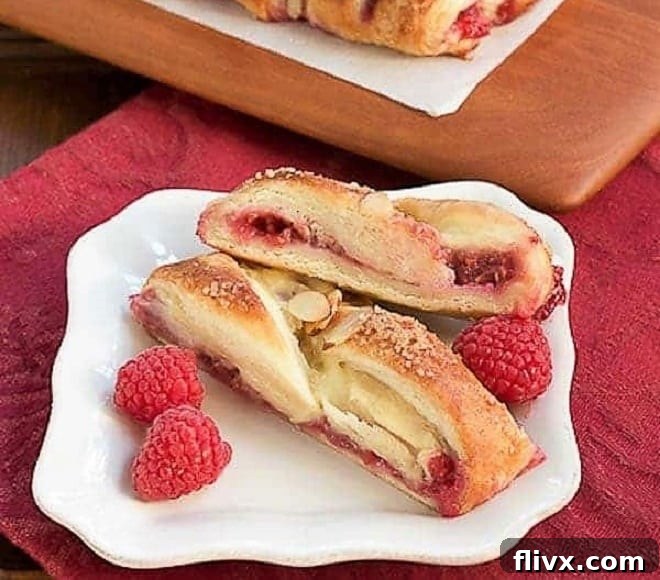
Bea Ojakangas, a celebrated baker and the culinary mastermind behind this delightful Raspberry Danish Braid recipe, reveals that this innovative approach to Danish pastry production is precisely how modern Danish pastries are crafted in Denmark. This endorsement speaks volumes about the authenticity and quality you can expect from this recipe.
There are moments in a baker’s journey when you know you’ve truly outdone yourself. For me, that moment arrived when one of my closest friends, after taking a single bite, declared this Raspberry Danish Pastry to be the finest thing I had ever pulled from the oven. That’s when I knew I had hit a home run, creating a treat that wasn’t just good, but absolutely unforgettable. Prepare to create a culinary masterpiece that will garner similar accolades from your lucky tasters!
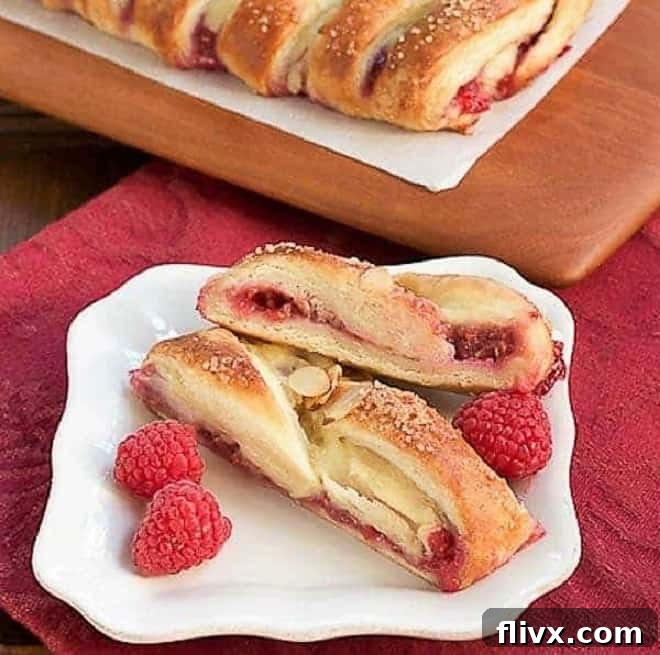
Why This Raspberry Danish Braid Will Become Your Go-To Recipe
Embarking on the journey of baking a perfect Danish can often seem daunting, especially with the traditional complexities of laminated dough. However, this particular Raspberry Danish Braid recipe offers a simplified yet equally rewarding experience. Here’s why this recipe is an absolute must-try for any baking enthusiast:
- The Revolutionary “Cheater” Laminated Dough: Forget the tedious, butter-laden traditional methods. This recipe introduces a brilliant shortcut for laminated dough, meticulously crafted in a food processor. This innovative technique sidesteps the messy and time-consuming layering of butter while still yielding astonishingly similar results: a tender, flaky pastry that rivals its more complex counterparts. It’s truly a game-changer for home bakers seeking professional-level results with less fuss.
- Authenticity Endorsed by Experts: The method for creating this exquisite Raspberry Danish Braid comes with a stamp of approval from none other than Bea Ojakangas, a renowned contributor to “Baking with Julia.” She confirmed that this very approach reflects how homemade Danish pastries are prepared in Denmark today. This means you’re not just baking a pastry; you’re engaging with a modern, authentic Danish tradition.
- Exceptional Taste, Reduced Effort: While traditional Danish pastry recipes demand significant time and effort, this simplified version ensures you don’t compromise on flavor or texture. You’ll achieve a beautifully buttery, incredibly flaky dough that cradles its luscious fillings perfectly. It’s a testament to smart baking, proving that you can achieve outstanding results without the exhaustive labor, making homemade Danish accessible to everyone.
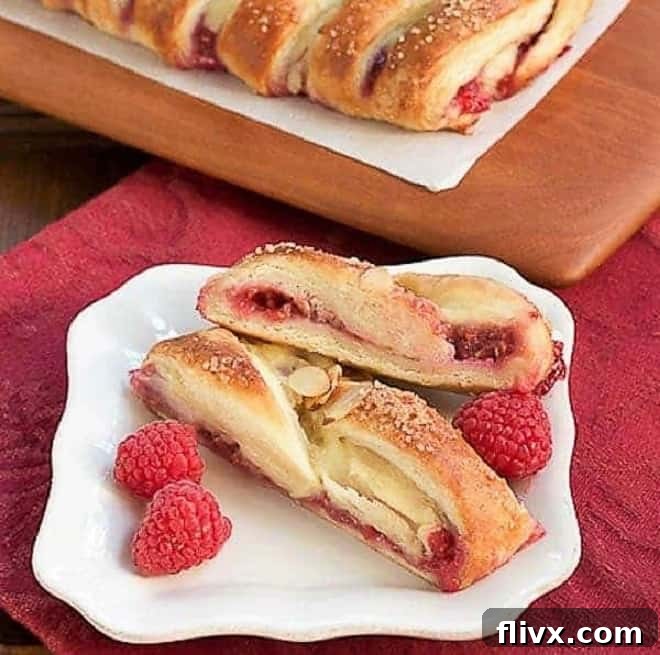
The creation of this magnificent pastry begins with a tender, buttery dough, lovingly filled with a harmonious blend of creamy vanilla custard and vibrant, gelled raspberries. The artistry culminates in a stunning crisscrossed braid, a true feast for the eyes even before it touches your palate. The aroma alone, as it bakes to golden perfection, is utterly intoxicating. Waiting for this masterpiece to cool enough for that first, anticipated sample was pure torture, a test of patience that felt endless. Yet, every single step, including the essential overnight resting period for the dough, was absolutely worth it. The resulting taste and texture are simply divine, and I am confident you will wholeheartedly agree.
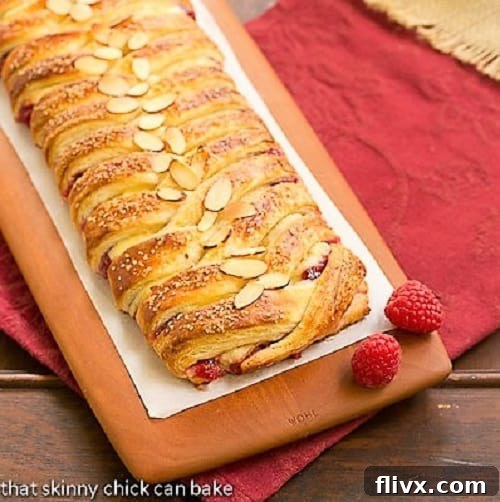
Essential Ingredients for Your Raspberry Danish Braid
Crafting the perfect Raspberry Danish Braid begins with selecting high-quality ingredients. Each component plays a vital role in achieving that sought-after flaky texture and rich, sweet flavor. Here’s a detailed look at the ingredients you’ll need and some key notes to ensure your baking success:
- Kitchen Staples: These fundamental ingredients form the backbone of your Danish. Ensure you have granulated sugar for sweetness, fine salt to balance flavors, all-purpose flour for structure, cold unsalted butter for those crucial flaky layers, room-temperature eggs for better emulsion, an extra egg yolk for richness in the cream, and cornstarch as a thickener for the fillings.
- Warm Water (105-115°F): The temperature of your water is critical for activating the yeast. Water that is too cold won’t activate it, while water that is too hot can kill it. A thermometer is your best friend here to ensure optimal yeast proofing.
- Dry Active Yeast (2 ½ teaspoons): This is slightly more than a standard packet and essential for the dough’s rise and texture. Ensure your yeast is fresh and active for the best results.
- Fresh Raspberries (Crushed): Opt for ripe, fresh raspberries for the most vibrant flavor and natural sweetness in your filling. Crushing them helps release their juices and makes for a smoother jam-like consistency. While frozen raspberries can work, fresh often yield a superior taste and texture.
- Fresh Lemon Juice: Always choose fresh lemon juice over bottled alternatives. The bright, zesty notes of fresh lemon elevate the raspberry filling, cutting through the sweetness and adding a delightful tang that truly makes the flavors pop.
- Heavy Cream (36% Butterfat): The higher fat content of heavy cream (often labeled whipping cream) is crucial for a rich, luxurious confectioner’s cream. It provides a creamy mouthfeel and helps the filling achieve its desired thick consistency.
- Vanilla Extract: This is where quality truly matters. Always use pure vanilla extract, not artificially flavored vanilla. The depth and warmth of real vanilla are irreplaceable and contribute significantly to the overall exquisite flavor profile of your pastry.
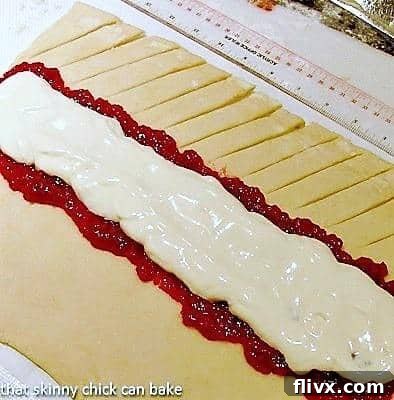
To achieve the perfect braid, make parallel cuts along both sides of your pastry, leaving a strip of filling exposed down the middle. Begin at one end, folding a dough strip over the filling from one side, then repeat with the corresponding strip from the opposite side. Continue this alternating pattern until all strips are folded over the luscious filling.
Expert Tips for a Flawless Raspberry Danish Braid
Baking this Raspberry Danish Braid is a rewarding experience, and with these expert tips, you can ensure a flawless outcome. From mastering the fillings to perfecting the braid, these insights will guide you to Danish pastry perfection:
- Navigating Microwave Instructions for Fillings: A word of caution regarding microwave cooking times for the fillings: older microwave instructions can be notoriously powerful. I learned this the hard way when my raspberry concoction aggressively boiled out of its measuring cup around the 7-minute mark. Had I continued for the full 10 minutes, I would likely still be cleaning! For consistent results, especially with the berry filling, start with shorter intervals (e.g., 2-3 minutes), stirring frequently, and cook until the liquid has mostly absorbed and the mixture is glossy and thick. Alternatively, for greater control, consider making the fillings on the stovetop over medium-low heat, stirring constantly until thickened.
- The Versatility of Fillings: While the vanilla cream and gelled raspberries are a match made in heaven, the beauty of this Danish recipe lies in its adaptability. The dough, being the true star, pairs wonderfully with a myriad of flavors. Feel absolutely free to customize the filling to your heart’s desire. Imagine a rich cream cheese filling, a spiced apple butter, a zesty lemon curd, or even a decadent chocolate-hazelnut spread. The possibilities are endless, allowing you to create a Danish that truly tickles your fancy.
- Understanding Laminated Dough Layers: The rolling and folding technique, even in this “cheater” version, is what creates the beautiful layers characteristic of a classic laminated pastry. Each fold incorporates butter and air, which then expand in the oven, resulting in that irresistible flaky texture. Don’t be shy with flouring your work surface to prevent sticking during these crucial steps, but avoid incorporating too much flour into the dough itself.
- Berry Variations: While raspberries offer a delightful tart-sweet contrast, this recipe is equally delicious with other berries. Consider using fresh blueberries, blackberries, or a mix of seasonal berries. Each berry will impart its unique flavor profile, allowing you to enjoy fresh variations throughout the year.
- Mastering the Braid: The braiding process might look intimidating, but it is surprisingly simple and much easier than plaiting a traditional three-stranded bread. Refer to the detailed photos above (and in the recipe card) for a visual guide on making your cuts. After slicing parallel slits along both sides of the filling, begin at one end. Fold one strip of dough over the filling from one side, then take the corresponding strip from the opposite side and fold it over. Continue this alternating back-and-forth pattern, ensuring each strip slightly overlaps the previous one, until all the strips have been folded and the filling is elegantly encased. This creates a stunning, bakery-worthy presentation.
- Dough Preparation Ahead of Time: This Danish dough is incredibly forgiving and perfect for make-ahead baking. After the final folds, the dough can be wrapped tightly in plastic wrap and chilled in the refrigerator for up to 4 days. This makes it ideal for preparing the dough on a weekday evening and baking fresh pastries for a leisurely weekend breakfast or brunch.
- Storage and Reheating: While this Raspberry Danish Braid is undoubtedly best enjoyed on the day it’s baked, leftovers can be stored at room temperature in an airtight container for up to 2 days, or refrigerated for up to 4 days. For optimal taste and texture, gently reheat individual servings in a toaster oven or conventional oven at a low temperature (around 300°F or 150°C) until warmed through, which helps crisp up the pastry again.
I distinctly remember taking this gorgeous braid over to my neighbor’s house to share with a gathering of friends. The moment I set it down on the kitchen counter, a collective gasp of “oohs and aahs” filled the room. But the ultimate compliment, the true confirmation of its perfection, came after everyone had taken a bite: I was told that this beautiful braid tasted every bit as good as it looked, and that it was unequivocally one of the BEST things I had ever baked! It was then that I truly understood why this particular recipe is Bea Ojakangas’s most requested, a testament to its irresistible charm and deliciousness.
Frequently Asked Questions About Danish Pastries
Despite their name, Danish pastries did not originate in Denmark but have a fascinating historical connection. In the 1850s, a pastry maker strike in Austria led to bakers migrating to Denmark. They brought with them their Viennese pastry-making techniques, which the Danes then adopted and called “wienerbrød” (Viennese bread). Over time, these delicious baked goods became known globally as “Danishes,” particularly here in the U.S., a tribute to their adoption and popularization in Denmark.
A Danish pastry, also known as “wienerbrød” in Denmark, is a sweet, multilayered, laminated pastry. It was initially developed by Viennese bakers in Austria, who were renowned for their fluted and buttery doughs. As mentioned, these Austrian bakers introduced their techniques to Denmark, where the pastry quickly became a beloved staple and subsequently gained its international reputation as the “Danish.” It is characterized by its tender, flaky texture and sweet fillings.
Absolutely! One of the fantastic advantages of this “cheater” laminated Danish dough is its make-ahead friendly nature. After the final folding process, the dough can be tightly wrapped in plastic wrap and stored in the refrigerator for up to 4 days. This flexibility allows you to prepare the dough well in advance, making fresh-baked Danish a convenient option for weekend brunches or special occasions without the morning rush.
While both Danish pastry and puff pastry are types of laminated doughs known for their flaky layers, there’s a key distinction. Puff pastry typically consists only of flour, water, butter, and salt, creating an exceptionally light, crisp, and neutral-tasting dough. Danish pastry, on the other hand, is a yeast-leavened dough that also incorporates eggs, milk, and sugar, in addition to butter layers. This results in a richer, slightly sweeter, and more bread-like yet still wonderfully flaky texture, making it more robust and suitable for sweet fillings.
Explore More Delicious Pastries and Breakfast Recipes
If you’ve fallen in love with the luscious flavors and tender texture of this Raspberry Danish Braid, you’ll be thrilled to discover more delightful recipes that promise to elevate your breakfast and brunch experiences. Expand your baking repertoire with these irresistible treats:
- For another exquisite fruity option, an apricot version of this Danish can be viewed here, offering a different yet equally captivating flavor profile.
- You might also enjoy my Cream Cheese Danishes, a classic favorite featuring a rich, tangy cream cheese filling nestled in a tender pastry.
- For those who adore warm spices, my Braided Cinnamon Danish offers a comforting and aromatic twist, perfect for a cozy morning.
- Discover even more of the best breakfast recipes and brunch food in my comprehensive Recipe Index, where a world of culinary inspiration awaits!
Stay connected and share your baking triumphs with me across social media! Find me on Instagram, Facebook, and Pinterest. Don’t forget to tag me when you try one of my recipes! If you adore the results and find this recipe worthy, please consider leaving a 5-star rating in the recipe card below to help other bakers discover this joy.
Raspberry Danish Braid
1 hour
20 minutes
1 hour 20 minutes
12 servings
Indulge in this tender, flaky Danish dough, generously filled with sweet raspberry jam and a creamy vanilla custard. Learn the secret to making an easy “cheater” laminated dough that delivers incredible results every time!
Ingredients
Danish Dough (Makes enough for 2 danishes, approximately 2 pounds of dough):
- ¼ cup warm water (105-115 degrees F)
- 2 ½ teaspoons active dry yeast
- ½ cup milk at room temperature
- 1 large egg at room temperature
- ¼ cup granulated sugar
- 1 teaspoon salt
- 2 ½ cups all-purpose flour
- 8 ounces unsalted cold butter, cut into ½-inch pieces
- Extra flour for dusting work surface and preventing sticking
Fresh Berry Jam Filling:
- 2 cups crushed fresh raspberries
- 1 cup granulated sugar
- 1-2 tablespoons fresh lemon juice (start with 1, add more to taste)
Confectioner’s Cream Filling:
- 1 cup heavy cream
- 1 ½ tablespoons cornstarch
- 2 tablespoons granulated sugar
- 1 egg yolk
- 1 teaspoon pure vanilla extract
Instructions
- Prepare the Yeast Mixture: Pour the warm water into a medium bowl. Gently sprinkle the active dry yeast over the water and let it sit for 5-10 minutes until foamy, indicating the yeast is active.
- Combine Wet Ingredients: Add the room temperature milk, large egg, sugar, and salt to the yeast mixture. Whisk everything together thoroughly until well combined, then set aside.
- Process Dry Ingredients with Butter: In a food processor, combine the all-purpose flour and the cold, cut-up butter. Pulse gently a few times until the butter has broken down into pieces about half an inch in size. It’s crucial that the butter remains visible in chunks; this is key to achieving a flaky, layered pastry texture.
- Combine Dough Components: Empty the flour and butter mixture into the bowl with the wet ingredients. Using a spatula, gently mix the ingredients together until just combined and a shaggy dough forms. Be careful not to overmix.
- Overnight Chill: Cover the bowl tightly with plastic wrap and place it in the refrigerator to rest overnight. This crucial chilling period allows the dough to develop flavor and the butter to firm up, making it easier to work with.
- Prepare for Rolling (Half Dough): The recipe makes enough dough for two Danishes (approximately 2 pounds). Divide the chilled dough in half. Use one half for your current Danish braid, and wrap the other half tightly in plastic wrap to freeze for later use (it can be frozen for up to 1 month or kept in the fridge for up to 4 days).
- First Roll and Fold: Lightly flour a cool work surface. Dump one half of the dough onto it and roughly shape it into a square. Sprinkle a little more flour on top and roll the dough into a 16-inch square. Fold the dough into thirds, like a letter. Turn the folded dough so the closed, folded side is facing your left.
- Second Roll and Fold: Lightly flour your work surface and the dough again. Roll the dough out to a rectangle approximately 10 x 24 inches. Remember to use flour as needed to prevent sticking. Fold the dough into thirds again. Turn it so that the closed side is once more on your left.
- Third and Fourth Roll and Fold: Repeat the process. Roll the dough into a 20-inch square and fold it again into thirds like a brochure. For the final fold, roll the dough into a rectangle 10 x 24 inches and fold it into thirds one last time.
- Final Dough Chill: Wrap the folded dough tightly in plastic wrap and chill it in the refrigerator for at least 30 minutes. This allows the gluten to relax and the butter to firm up, making the dough ready to be rolled and shaped for your pastry.
- Prepare the Berry Filling: In a microwave-safe bowl, combine the crushed fresh raspberries and granulated sugar. Cook on full power in the microwave for 5-8 minutes, stirring well at the 3-minute mark and every minute thereafter. Cook until most of the liquid has been absorbed, the mixture is thick like jam, and looks glossy. Be cautious as microwave strengths vary significantly; mine often takes less time than typical instructions. Stir in the fresh lemon juice and allow the filling to cool completely to room temperature before using.
- Prepare the Confectioner’s Cream: In a large microwave-safe bowl, whisk together the heavy cream, cornstarch, and sugar until smooth. Microwave on full power for about 1 minute. Stir well, then microwave for another 2-3 minutes, watching carefully until the mixture boils and begins to thicken slightly. Microwaves cook differently, so keep a close eye to prevent boiling over.
- Temper the Egg Yolk: In a separate small bowl, whisk together the egg yolk and pure vanilla extract. To temper the egg mixture, slowly whisk a small amount (about ¼ cup) of the hot cream mixture into the egg yolk mixture. This slowly raises the temperature of the egg without scrambling it.
- Combine and Thicken Cream: Slowly add the tempered egg yolk mixture back into the remaining hot cream mixture, whisking constantly to ensure it fully incorporates. Microwave for an additional 30 seconds, then stir vigorously. The cream should be thick, resembling lemon curd in consistency. Press a piece of plastic wrap directly onto the surface of the cream to prevent a skin from forming, and let it cool completely to room temperature before assembling the Danish.
- Assemble the Danish Braid: Once the dough is chilled and the fillings are cool, roll out your prepared dough half on a lightly floured surface into a rectangle, approximately 12 x 18 inches. Spread a generous amount of the berry filling down the middle third of the dough. Then, dollop and spread some of the confectioner’s cream filling over the raspberry layer. You may not need to use all of the fillings; reserve any extra for another use.
- Create the Braid: Using a sharp knife or pastry wheel, slice parallel slits along both long sides of the filling, extending from the filling to the edge of the dough. Make these slits approximately 1 inch wide, creating strips of dough. Leave the very top and bottom sections of the dough uncut. Starting at one end, fold one dough strip from the left side diagonally over the filling. Then, take the corresponding strip from the right side and fold it diagonally over, overlapping the previous strip. Continue this alternating pattern, folding one strip from the left, then one from the right, until all the strips have been neatly folded over the filling, creating a beautiful braided pattern. Tuck in the ends to seal.
- Preheat Oven & Prepare Pan: Preheat your oven to 400°F (200°C). Line a large baking sheet with parchment paper to prevent sticking and ensure even baking.
- Second Rise: Carefully transfer the assembled Raspberry Danish Braid to the prepared baking sheet. Cover it loosely with a clean kitchen towel and let it rise in a warm, draft-free place for about 30 minutes. The Danish will look noticeably puffy but will not double in size like a traditional bread.
- Bake to Golden Perfection: Bake the Danish braid for 18-20 minutes, or until it is beautifully golden brown across the top and bottom. The pastry should feel firm to the touch.
- Cool and Serve: Once baked, remove the Danish from the oven and transfer it to a wire rack. Allow it to cool completely before slicing and serving. This cooling time is essential for the fillings to set properly and for the pastry’s structure to stabilize. Enjoy your homemade masterpiece!
Notes
Adapted from the esteemed “Baking with Julia” cookbook, this recipe captures the essence of classic Danish pastry with a modern, simplified approach.
For the absolute best flavor and texture, this Raspberry Danish Braid is most delicious when enjoyed on the very day it is baked. The freshness of the pastry and vibrancy of the fillings are at their peak.
Recommended Baking Tools
As an Amazon Associate and member of other affiliate programs, I earn from qualifying purchases, supporting the creation of more delicious recipes.
- Sturdy 10-Inch Wire Whisk
- Reliable Food Processor
- Classic French Rolling Pin
Nutrition Information:
Yield:
8
Serving Size:
1
Amount Per Serving:
Calories: 688Total Fat: 36gSaturated Fat: 22gTrans Fat: 1gUnsaturated Fat: 11gCholesterol: 142mgSodium: 475mgCarbohydrates: 84gFiber: 4gSugar: 37gProtein: 9g
HOW MUCH DID YOU LOVE THIS RECIPE?
Please leave a comment on the blog or share a photo on Pinterest