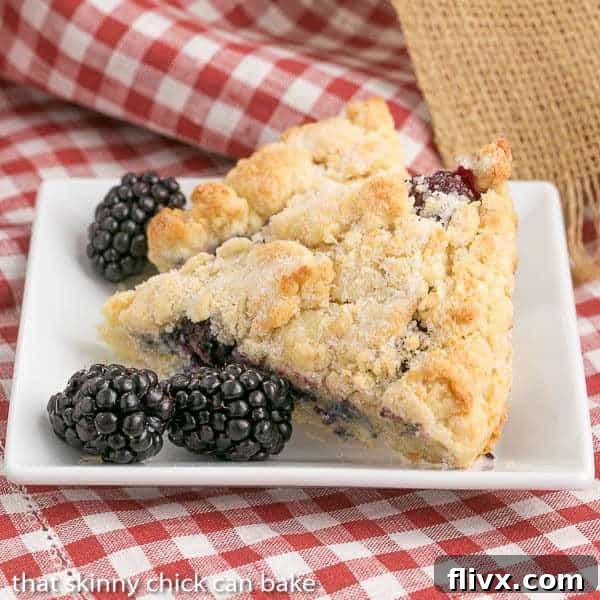
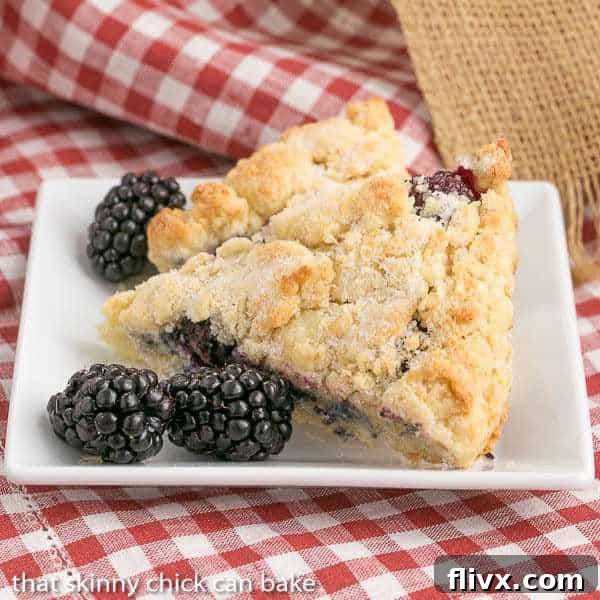
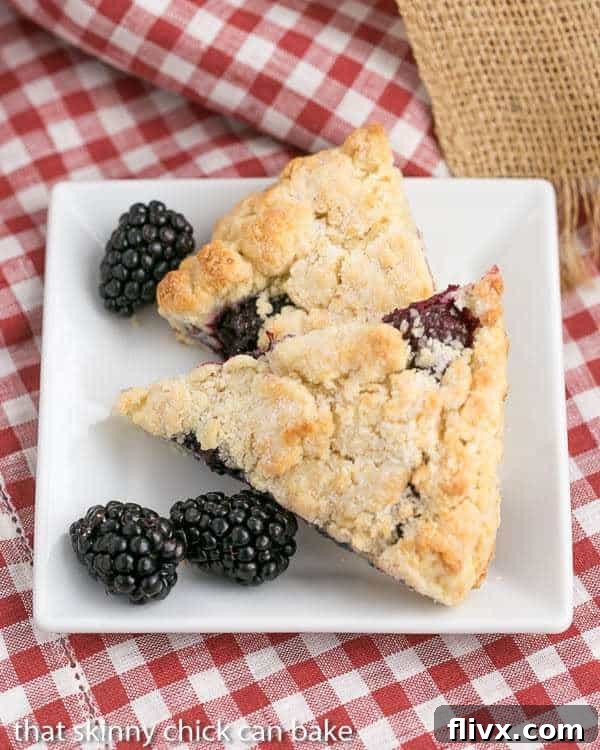
Indulge in the simple pleasure of baking with these exquisite Fresh Blackberry Scones. Crafted with a generous hand of butter and rich cream, and bursting with succulent blackberries, these scones promise a moist, tender crumb and an unforgettable taste experience. There’s truly nothing quite like a warm, homemade scone straight from the oven, and this recipe delivers a breakfast treat that feels both luxurious and comforting. Perfectly fresh, these scones are an ideal way to celebrate the bounty of berry season or to simply elevate your morning routine any time of year.
This versatile recipe isn’t limited to just blackberries. Feel free to adapt it to create equally delightful Blueberry Scones, vibrant Raspberry Scones, or even a beautiful medley of Mixed Berry Scones. The fundamental formula for these tender, flaky delights is a proven winner, ensuring light and airy results every time. It’s designed to be straightforward and accessible, quickly becoming your trusted, go-to Easy Scone Recipe for any occasion. Whether you’re an experienced baker or new to the world of scones, you’ll find this recipe yields impressive results with minimal fuss.
Why You Must Bake These Irresistible Blackberry Scones Today
There are countless reasons to whip up a batch of these delectable scones, but here are the top compelling motivations that make this recipe an absolute must-try:
- Celebrate Seasonal Berries: These scones are a truly delicious and delightful way to utilize an abundance of fresh spring and summer berries. Whether you’ve picked them yourself or found them at a local market, incorporating plump, juicy blackberries into these tender baked goods highlights their natural sweetness and vibrant flavor in every bite.
- Experience Homemade Perfection: If you’ve never ventured into scone baking before, prepare to be amazed. You’ll quickly discover the unparalleled taste and texture of homemade scones, fresh from your oven. The delicate crust, the soft interior, and the warmth simply can’t compare to store-bought varieties, offering a uniquely satisfying culinary experience.
- Versatile Berry Choices: Not a fan of blackberries? No problem at all! This adaptable recipe welcomes substitutions. Try them with sweet, plump blueberries, tart raspberries, or even a mix of your favorite seasonal fruits. The core recipe remains robust, ensuring success regardless of your chosen berry, allowing for endless customization and enjoyment.
- A Perfect Companion: Scones pair wonderfully with a variety of spreads and beverages. While they are a star on their own, serving them alongside a rich, homemade clotted cream or your favorite fruit jam elevates them to an extraordinary tea-time treat. For more berry inspiration, you might also love this Southern Blackberry Cobbler from The Cooking Bride, a perfect dessert to complement your scone-making adventures!
- Impress Guests with Ease: These easy-to-make scones look and taste incredibly impressive, making them perfect for entertaining guests for brunch, afternoon tea, or as a thoughtful homemade gift. Despite their sophisticated appearance, the process is surprisingly simple, allowing you to create bakery-quality treats right in your own kitchen without stress.
Expert Recipe Notes and Baking Tips for Perfect Scones
Achieving truly exceptional scones relies on a few key techniques and understanding the science behind them. Follow these expert tips to ensure your blackberry scones are tender, flaky, and simply divine:
- PRO-Tip: Embrace COLD Butter: This is arguably the most crucial tip for light and tender scones. Use butter that is as cold as possible, ideally straight from the refrigerator and cut into small pieces. The tiny bits of cold butter will slowly melt in the hot oven, releasing steam. This steam creates small pockets of air throughout the dough, which results in a lighter, flakier, and more tender scone. If your butter is too warm, it will blend into the flour too much, leading to a denser, tougher texture. You can even grate frozen butter for an even easier way to incorporate small, cold pieces.
- PRO-Tip: Verify Your Baking Powder’s Freshness: Baking powder is the primary leavening agent in scones, responsible for their beautiful rise. Unlike baking soda, which is often used more frequently, baking powder can lose its potency over time, especially if left open in the pantry. To test if your baking powder is still active, mix a teaspoon of it with about a quarter cup of hot water. If it fizzes vigorously, it’s still good to use. If not, it’s time to replace it. Proper leavening is essential for light, airy scones that rise beautifully.
- Add Liquid Incrementally: When adding the liquid (cream/vanilla mixture), do so gradually, adding just enough to bring the dough together. The goal is for the dough to be just moist enough to stick, but it should still look shaggy and slightly lumpy. Over-hydrating the dough can lead to a sticky mess that’s hard to work with and can result in dense scones. It’s better to err on the side of slightly dry than overly wet.
- PRO-Tip: Do Not Overwork the Dough: This is another fundamental rule for tender scones. Once you’ve added the liquid, use a light hand. The objective is not to create a smooth, elastic dough like bread, but rather to gently bring the ingredients together. Overworking develops the gluten in the flour, making the scones tough and chewy instead of tender and flaky. Keep the small bits of butter intact – they are key to that signature scone texture. Mix until just combined.
- Chill Unbaked Scones (Especially in Warm Kitchens): If your kitchen is warm or if you feel the butter has softened significantly during preparation, it’s a wise move to chill your unbaked scones for 15-20 minutes in the refrigerator before baking. This helps solidify the butter again, ensuring it creates maximum steam and lift during baking, contributing to a superior texture.
- Avoid Overbaking: Scones cook relatively quickly. Overbaking can dry them out, making them crumbly and less enjoyable. Keep a close eye on them towards the end of the baking time. They should be golden brown on top and feel firm to the touch. The internal temperature, if checked, should be around 200-205°F (93-96°C).
- Versatility with Fruits: This basic easy scones recipe serves as a perfect foundation for various fruit additions. Whether you prefer blueberry scones, raspberry scones, mixed berry scones, or even dried fruit scones (like cranberries or currants), the technique remains the same. When folding in delicate fruits, always use a gentle touch to prevent them from bleeding too much into the dough, which can affect color and texture.
- Serving Suggestion: The Ultimate Scone Experience: For an authentic and truly indulgent experience, serve your warm blackberry scones with a dollop of rich, homemade clotted cream and a spoonful of your favorite berry jam. The combination of textures and flavors is simply irresistible.
How to Make Perfect Fresh Blackberry Scones
Baking delicious, tender blackberry scones is a rewarding process that comes together quite quickly. Follow these simple steps for a flawless batch:
- Prepare Your Oven and Baking Sheet: Always make sure to preheat your oven to the specified temperature (425°F or 218°C) before you begin mixing your dough. This ensures the oven is consistently hot, which is vital for the scones to rise properly. Line a baking sheet with parchment paper to prevent sticking and for easy cleanup.
- Combine Dry Ingredients: In a food processor, combine the flour, baking powder, sugar, and salt. Pulse briefly to thoroughly mix these dry ingredients together. This ensures even distribution of the leavening and seasonings.
- Incorporate Cold Butter: Remove the lid of the food processor and sprinkle the small, cold pieces of butter over the dry mixture. Pulse about 10-15 times. The butter should be cut into the flour until the mixture resembles coarse cornmeal, with some larger, pea-sized pieces remaining. These larger pieces are critical for flakiness. Alternatively, you can use a pastry blender or two knives. Transfer this mixture to a large bowl.
- Add Wet Ingredients: In a separate small bowl, whisk together the heavy cream and vanilla extract (or paste). Add this vanilla-infused cream to the flour and butter mixture. Using a rubber spatula, gently stir until the dough just starts to come together. Avoid overmixing; a shaggy, slightly lumpy dough is exactly what you’re looking for.
- Lightly Knead and Fold in Berries: Turn the contents of the bowl out onto a lightly floured surface. Knead the dough just a few times, perhaps 3-4 gentle folds. Then, carefully knead in the fresh blackberries. To prevent excessive bleeding and crushing, sprinkle a few berries on top, fold the dough over, and repeat until they are evenly distributed. Remember, you do not want to overwork the dough at this stage.
- Form and Cut the Scones: Gently form the dough into an 8-inch round disc. Alternatively, you can press it into an 8-inch cake pan lined with parchment, then carefully invert it. Using a sharp knife or a pastry cutter, cut the round into 8 equal wedges.
- Bake to Golden Perfection: Place the individual scone wedges onto your prepared baking sheet, ensuring they are slightly spaced apart. Bake as directed (typically 15 to 18 minutes) until the tops are beautifully golden brown and the scones are firm to the touch.
- Cool and Serve: Once baked, transfer the scones to a wire rack and allow them to cool for at least 10 minutes. Scones are best enjoyed warm or at room temperature, ideally on the day they are baked for peak freshness and flavor.
Frequently Asked Questions About Scone Baking
Here are some common questions and helpful answers to guide you on your scone-baking journey:
Yes, absolutely! While a food processor is a convenient and quick way to “cut” cold butter into small pieces without much effort, it’s certainly not essential. Historically, scones were made without such equipment. You can achieve excellent results using traditional methods. A pastry blender (also known as a pastry cutter) is an excellent tool for this task. Simply press it into the butter and flour mixture repeatedly until the butter is incorporated into pea-sized pieces. If you don’t have a pastry blender, two table knives can be used, crisscrossing them through the butter and flour. The key is to work quickly to keep the butter as cold as possible. The end result should resemble coarse cornmeal with some larger, visible pieces of butter scattered throughout the mix – these pockets of butter are what create that coveted flaky texture.
Yes, half and half can be used as a substitute for heavy cream in scone recipes, though a slight adjustment is recommended to maintain the richness and texture. Heavy cream has a higher fat content, which contributes significantly to the tender crumb and rich flavor of scones. To mimic this, you can enrich half and half by adding a small amount of melted butter. A good formula for creating a heavy cream substitute from half and half is to combine 7/8 cup of half and half with 1/2 tablespoon of melted unsalted butter. It’s important to note that when the melted butter hits the cold half and half, it will solidify and create small lumps. To ensure it disperses well, whisk the mixture vigorously as you add the butter to break it into small pieces. While the result will be good, heavy cream generally yields a slightly richer, more tender scone due to its naturally higher fat content, so it remains the preferred choice if available.
Several factors contribute to a good rise in scones. Firstly, ensure your baking powder is fresh and active, as outlined in the “Recipe Notes.” Expired baking powder is a common culprit for flat scones. Secondly, keeping your butter and cream as cold as possible is vital. Cold butter creates steam, and cold cream prevents the butter from melting prematurely, both contributing to lift. Thirdly, avoid overworking the dough. Too much kneading develops gluten, leading to a dense texture rather than an airy one. Finally, baking in a preheated, hot oven allows for a quick, impactful rise, often referred to as “oven spring.” Don’t open the oven door too early during baking!
You May Also Like: Other Delicious Breakfast and Brunch Recipes
If you’ve enjoyed these fresh blackberry scones, you’re sure to love these other delightful treats perfect for breakfast, brunch, or an afternoon indulgence:
- Strawberry Lemon Blondies from The View from Great Island – A bright and zesty twist on classic blondies.
- Blueberry Sour Cream Muffins – Wonderfully moist and flavorful muffins, bursting with blueberries.
- Raspberry Cream Scones – Another fantastic scone variation featuring sweet raspberries.
- Lemon Blueberry Muffin Bread – A delightful hybrid combining the best of muffins and quick bread.
- Explore more delightful Breakfast Recipes for every taste and occasion.
Connect with us and share your culinary creations! Stay in touch through social media Instagram, Facebook, and Pinterest. Don’t forget to tag us when you try one of our recipes! And if you love the results, please consider leaving a 5-star rating in the recipe card below.
Blackberry Scones Recipe
10 minutes
18 minutes
28 minutes
8 scones
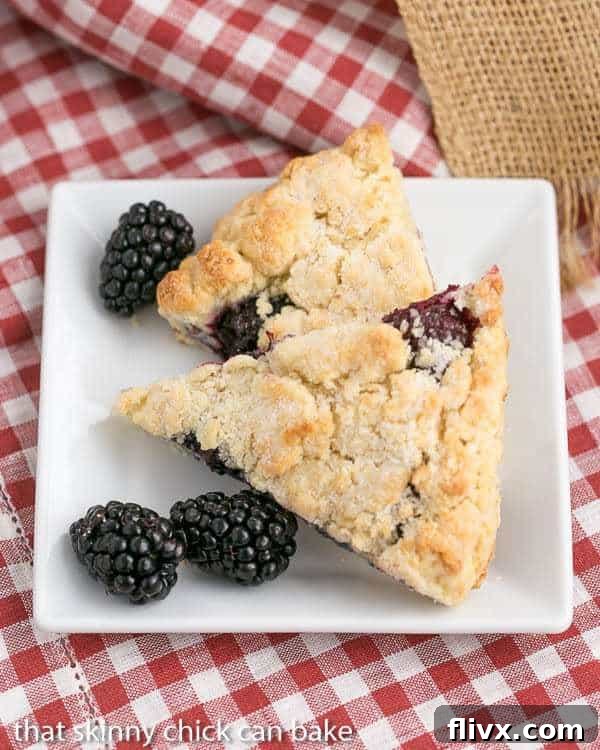
Tender cream scones chock full of sweet, juicy blackberries – a perfect treat for breakfast or brunch.
Ingredients
- 2 cups all-purpose flour
- 1 tablespoon baking powder (ensure it’s fresh and active for best rise)
- 3 tablespoons granulated sugar
- ½ teaspoon salt
- 5 tablespoons very cold unsalted butter, cut into small pieces
- ½ cup fresh blackberries
- 1 cup heavy cream
- 1 teaspoon vanilla paste (or pure vanilla extract)
Instructions
- Preheat the oven to 425°F (218°C). Line a baking sheet with parchment paper and set aside.
- Place flour, baking powder, sugar, and salt into the food processor. Pulse a few times to thoroughly combine.
- Remove the lid and sprinkle the cold butter pieces over the flour mixture. Pulse about 10-15 times until the mixture resembles coarse cornmeal, with some pea-sized pieces of butter still visible. Transfer the mixture to a large bowl.
- In a separate small bowl, add the vanilla paste to the heavy cream and stir. Pour the cream mixture into the dry ingredients. Using a rubber spatula, stir gently until the dough just begins to come together. Do not overmix.
- Turn the bowl’s contents out onto a lightly floured surface. Knead the dough gently a few times, then carefully fold in the fresh blackberries. To incorporate them without crushing, sprinkle a few, fold the dough, and repeat. Remember to handle the dough lightly to avoid developing too much gluten.
- Form the dough into an 8-inch round disc. Alternatively, press it into an 8-inch cake pan lined with parchment, then carefully flip it out. Cut the round into 8 equal wedges.
- Place the wedges onto the prepared baking sheet, spacing them slightly. Bake for 15 to 18 minutes, or until the tops are light golden brown and the scones are firm.
- Cool on a wire rack for at least 10 minutes before serving. Scones are best served warm or at room temperature, ideally on the day they are baked.
Notes
This recipe has been adapted from America’s Test Kitchen, a testament to its reliability and delicious results. A crucial element for beautifully risen scones is fresh baking powder; if yours is old, your scones may not achieve the desired height and lightness.
Maintaining a cool dough throughout the preparation process is key for tender, flaky scones. If your kitchen is particularly warm, or if you feel the butter has softened too much while working, consider covering your cut scones with plastic wrap and chilling them in the refrigerator for about 10-15 minutes before baking. This helps re-solidify the butter, promoting maximum steam production and lift in the oven.
While fresh blackberries are fantastic, this recipe is incredibly adaptable. Feel free to substitute other berries, such as blueberries or raspberries, or even use dried fruit like cranberries or golden raisins for a different flavor profile. If opting for dried fruit, you may need to slightly decrease the baking time to 12-15 minutes, as dried fruit tends to bake faster and can dry out if overcooked.
Recommended Products
As an Amazon Associate and member of other affiliate programs, I earn from qualifying purchases.
- OXO Cutting Board
- Food Processor
- Baking Powder
Nutrition Information:
Yield:
8
Serving Size:
1 scone
Amount Per Serving:
Calories: 303
Total Fat: 18g
Saturated Fat: 11g
Trans Fat: 1g
Unsaturated Fat: 6g
Cholesterol: 53mg
Sodium: 381mg
Carbohydrates: 31g
Fiber: 1g
Sugar: 6g
Protein: 4g
HOW MUCH DID YOU LOVE THIS RECIPE?
Please leave a comment on the blog or share a photo on Pinterest