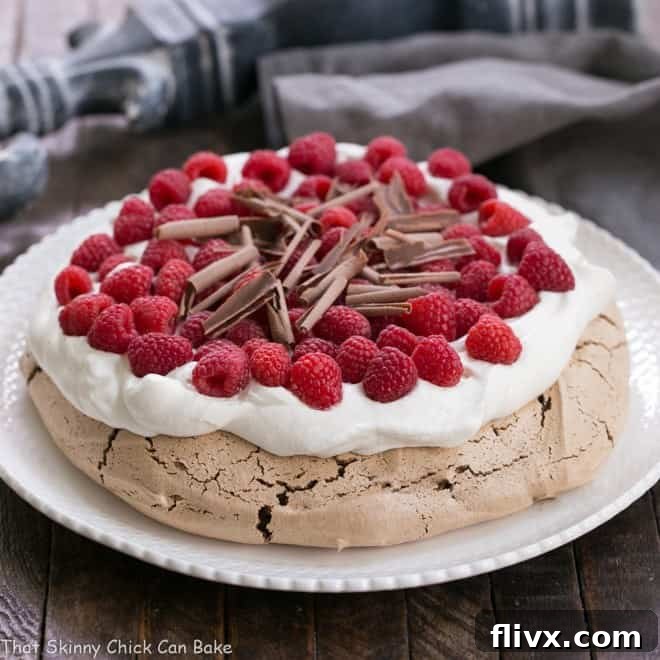
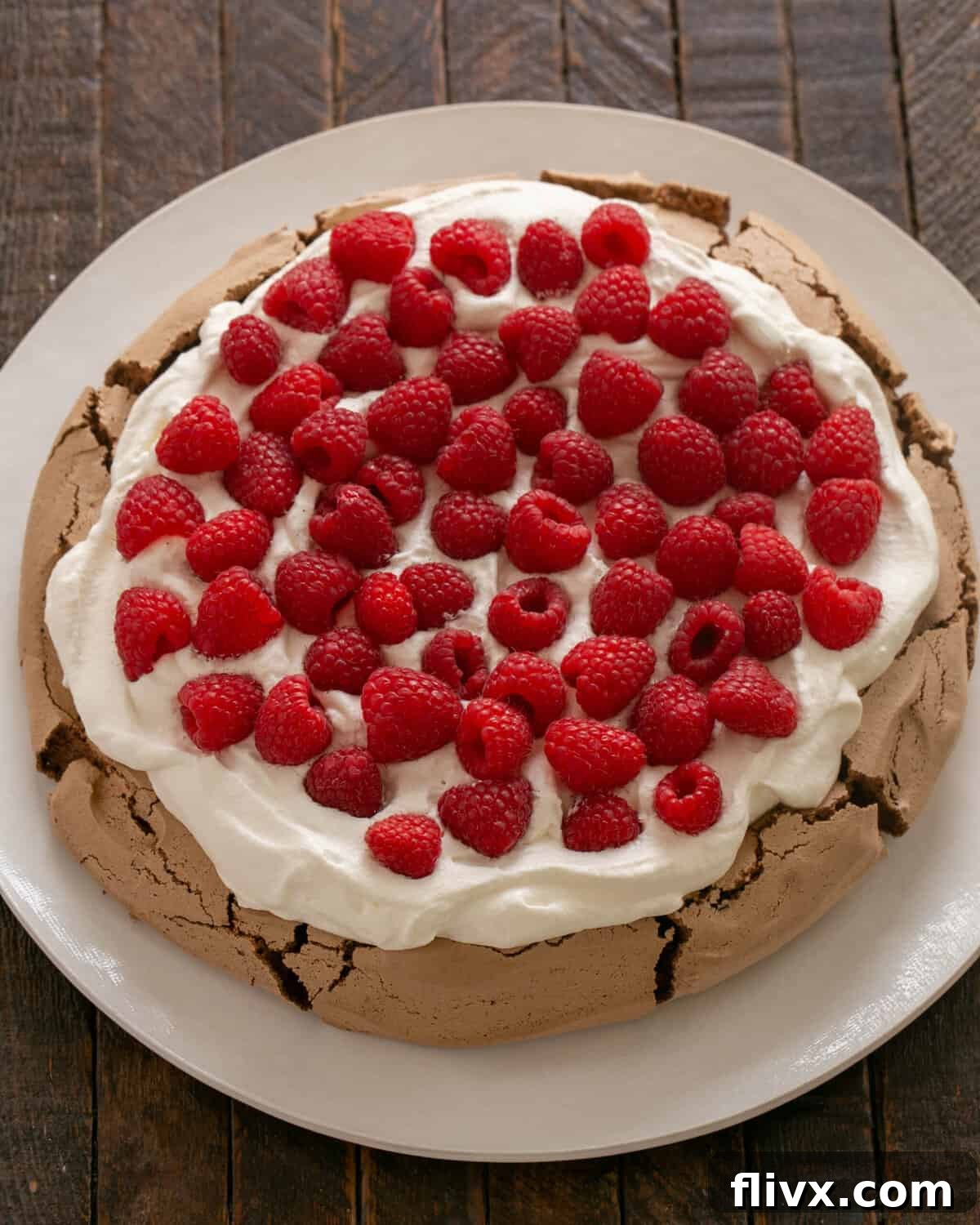
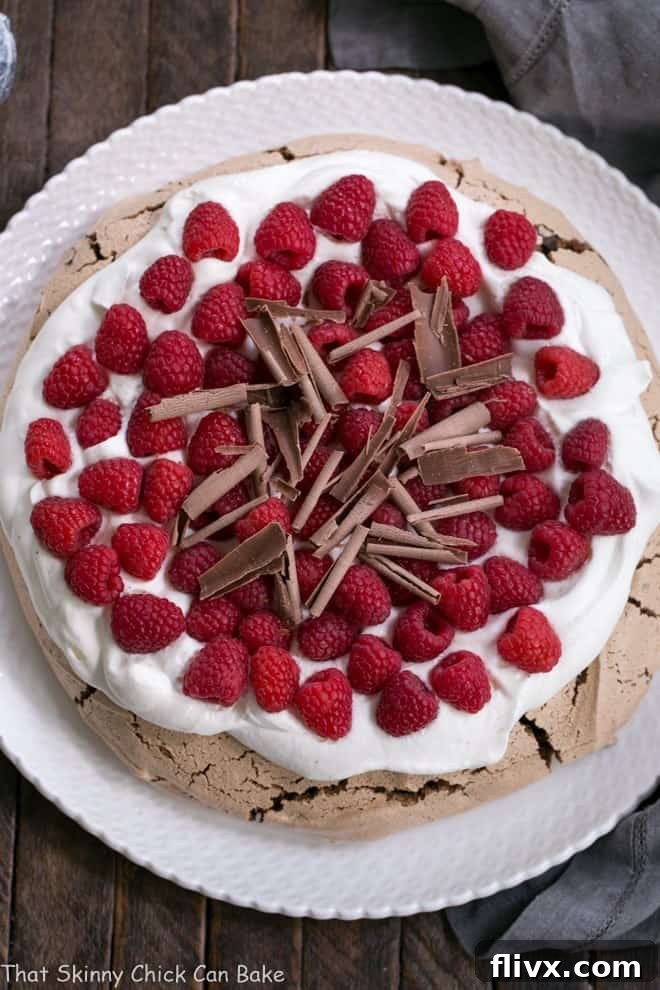
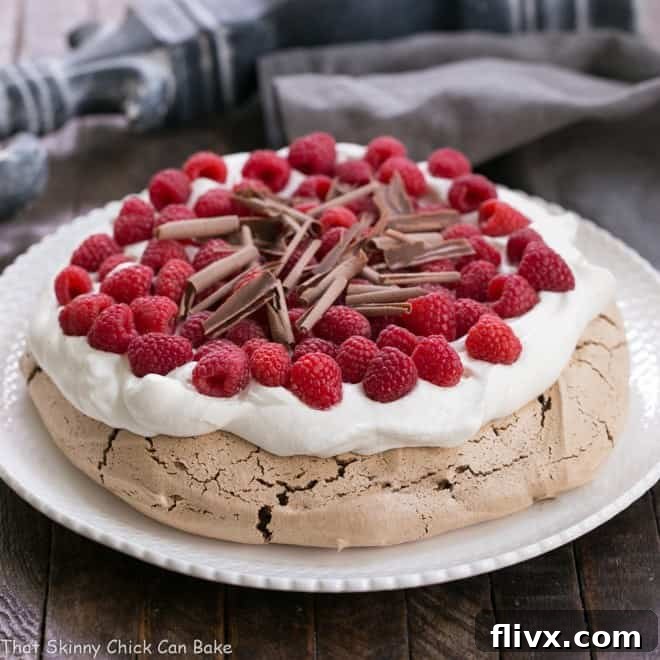
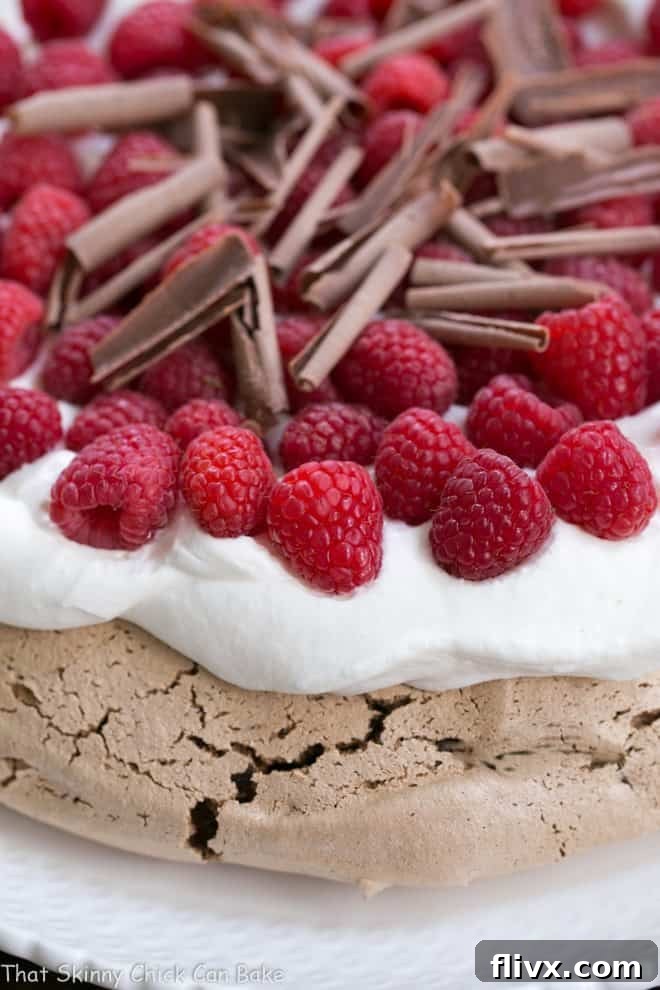
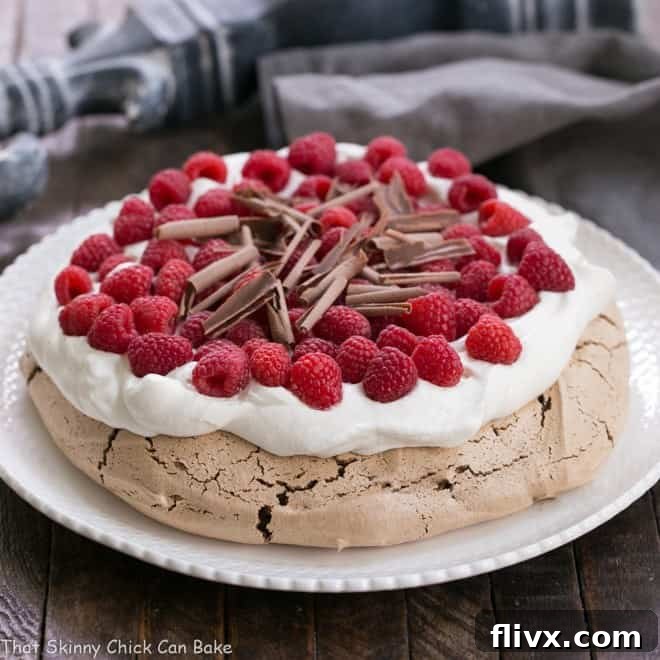
When the occasion calls for a truly unforgettable dessert, nothing quite captures attention and delights the palate like a Chocolate Raspberry Pavlova. This exquisite creation features a rich cocoa meringue base, delicately crisp on the outside and wonderfully chewy within, crowned with a lavish cloud of freshly whipped cream, vibrant, sweet raspberries, and elegant curls of dark chocolate.
This stunning Chocolate Pavlova recipe is your secret weapon for impressing guests. Imagine the gasps of delight as you present this magnificent dessert at your next gathering. It’s particularly perfect for those times when raspberries are at their peak—bursting with flavor and juiciness, making every bite a celebration of taste and texture. Beyond its visual appeal, its unique combination of textures and flavors makes it a delightful treat that caters to diverse preferences, often becoming the star of any meal.
Why This Chocolate Raspberry Pavlova is a Must-Make Dessert
If you’re looking for a dessert that stands out from the usual fare, this Chocolate Raspberry Pavlova is an exceptional choice. Here’s why it deserves a spot in your recipe repertoire:
- A Unique Culinary Experience: Over a decade ago, when I first introduced this dessert to friends, many hadn’t even heard of a pavlova, let alone tasted one. Inspired by the legendary Nigella Lawson, this dessert brings a touch of novelty and sophistication to any table. It’s not just a dessert; it’s a conversation starter.
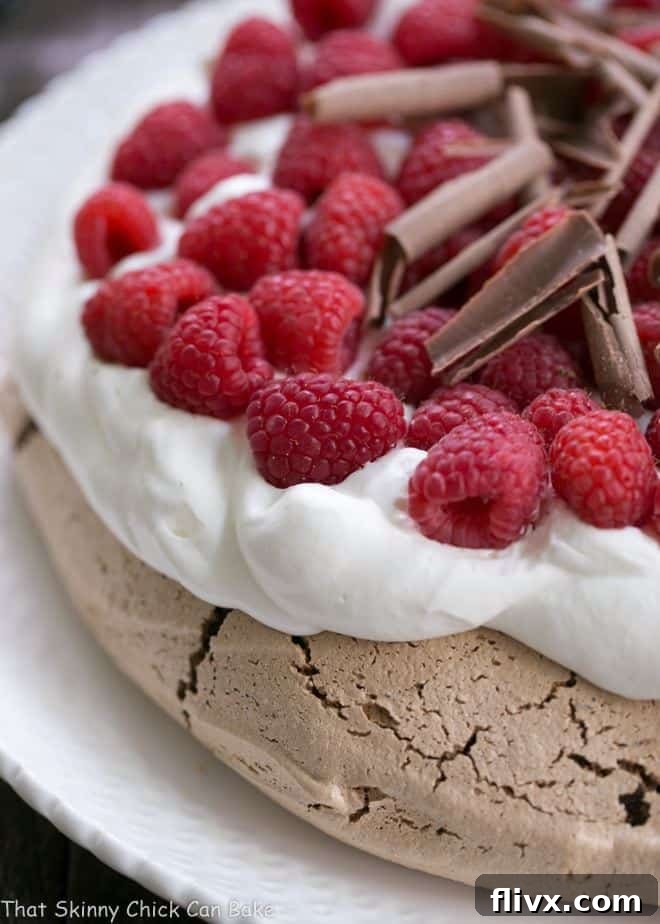
- Incredibly Delicious & Texturally Rich: Prepare for an explosion of flavors and textures! The crispy meringue shell gives way to a soft, marshmallow-like interior, which perfectly contrasts with the lightness of the whipped cream and the tart sweetness of fresh raspberries. The hint of chocolate in the meringue and the shavings on top add a delightful depth.
- An Absolute Show-Stopper: Visually, this pavlova is a masterpiece. Its towering presence, adorned with vibrant red berries and dark chocolate, makes it an undeniable focal point. It’s the kind of dessert that elicits gasps and enthusiastic compliments, making you look like a culinary genius with minimal stress.
- Surprisingly Versatile: While raspberries and chocolate are a classic pairing, this pavlova can be adapted with other seasonal fruits like strawberries, blueberries, or even tropical mango and passionfruit for a different twist.
Essential Ingredient Notes for Your Perfect Pavlova
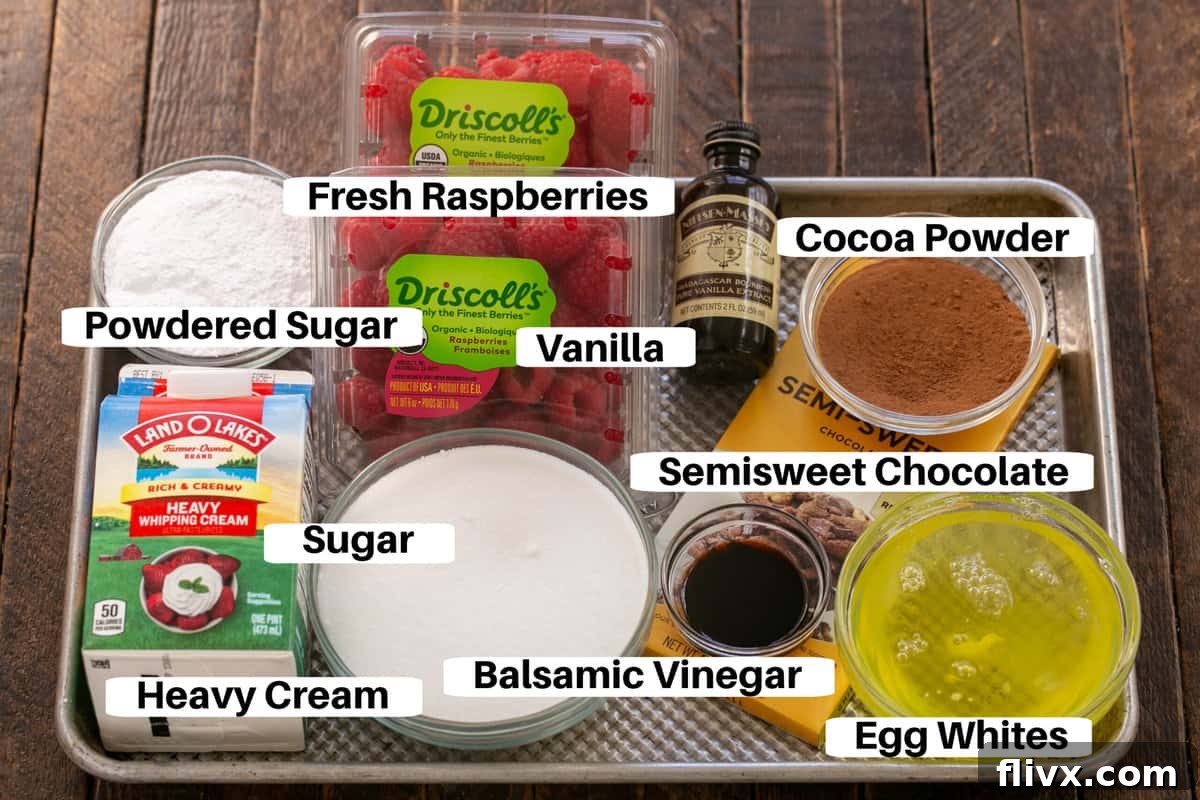
The success of your Chocolate Raspberry Pavlova hinges on understanding the role of each ingredient. Here’s a detailed look to ensure the best results:
- Egg Whites: These are the backbone of your meringue. For optimal volume and stability when whipped, ensure your egg whites are completely free of any oil, grease, or even the smallest speck of egg yolk. Fat is the enemy of meringue! Additionally, egg whites should be at room temperature before whipping, as this allows them to incorporate more air and achieve maximum volume.
- Superfine Sugar: While regular granulated sugar can work, superfine sugar is highly recommended. Its smaller granules dissolve much more easily into the egg whites, leading to a smoother, more stable, and less grainy meringue. If you can’t find superfine sugar, you can make your own by pulsing granulated sugar in a food processor for a few seconds (but don’t turn it into powdered sugar).
- Cocoa Powder: The quality of your cocoa powder directly impacts the depth of chocolate flavor in your pavlova. Opt for a good quality unsweetened cocoa powder. Brands like Ghirardelli often yield a richer, more profound chocolate taste compared to standard options.
- Semi-sweet Chocolate (Chopped): Finely chopped semi-sweet chocolate will melt beautifully into the meringue, providing pockets of intense chocolate flavor and a slightly fudgy texture. Again, using a reputable brand like Ghirardelli will enhance the overall taste.
- Vinegar (Raspberry or Balsamic): This might seem like an unusual addition, but vinegar is crucial for achieving the classic pavlova texture. Just a teaspoon or two helps stabilize the egg whites and creates that characteristic crisp outer shell with a soft, chewy, marshmallow-like interior. Don’t worry, it won’t affect the flavor in the final product; use a good quality raspberry or balsamic vinegar for the best effect.
- Toppings:
- Heavy Cream: Essential for that luscious, airy cloud topping. Ensure it’s very cold for the best whipping results.
- Powdered Sugar: Used to sweeten the whipped cream, it dissolves instantly, leaving no grit.
- Vanilla Extract: A splash of good quality vanilla extract enhances the cream’s flavor.
- Grated Semi-sweet Chocolate: For garnishing. Freshly grated chocolate melts slightly on the cool cream, adding another layer of indulgence.
Step-by-Step Guide to Crafting Your Chocolate Raspberry Pavlova
Creating this impressive dessert is simpler than you might think. Follow these steps for a perfect pavlova every time:
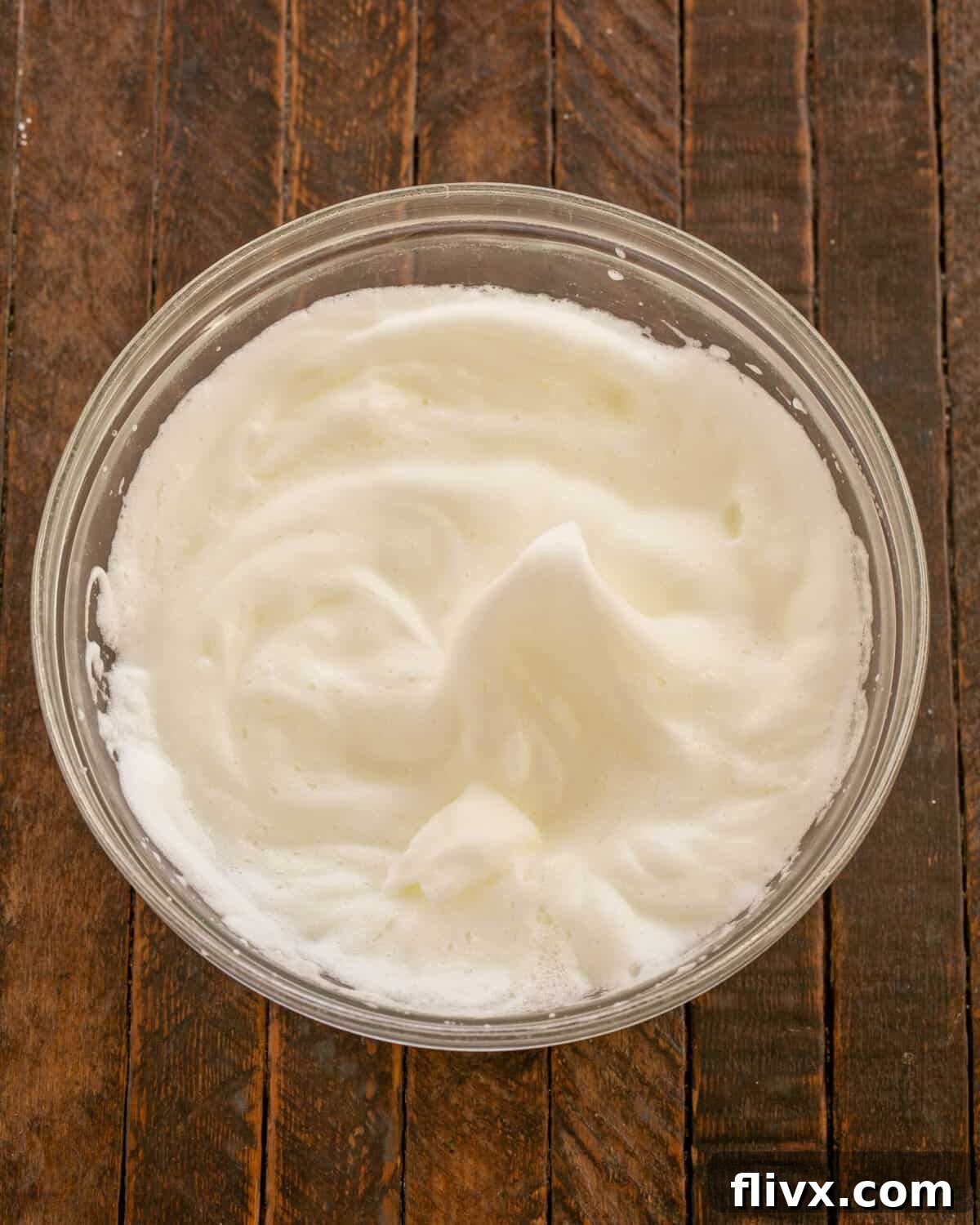
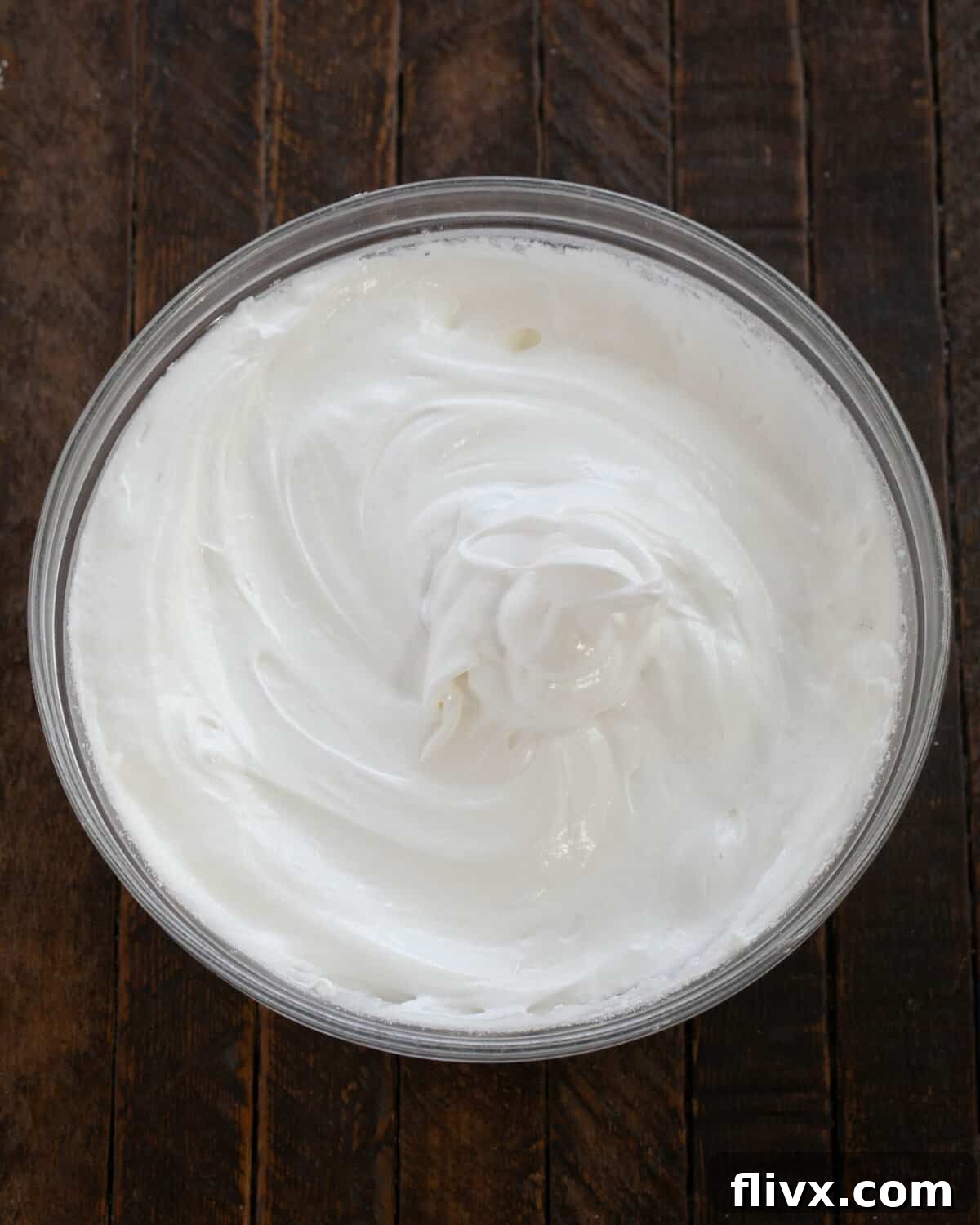
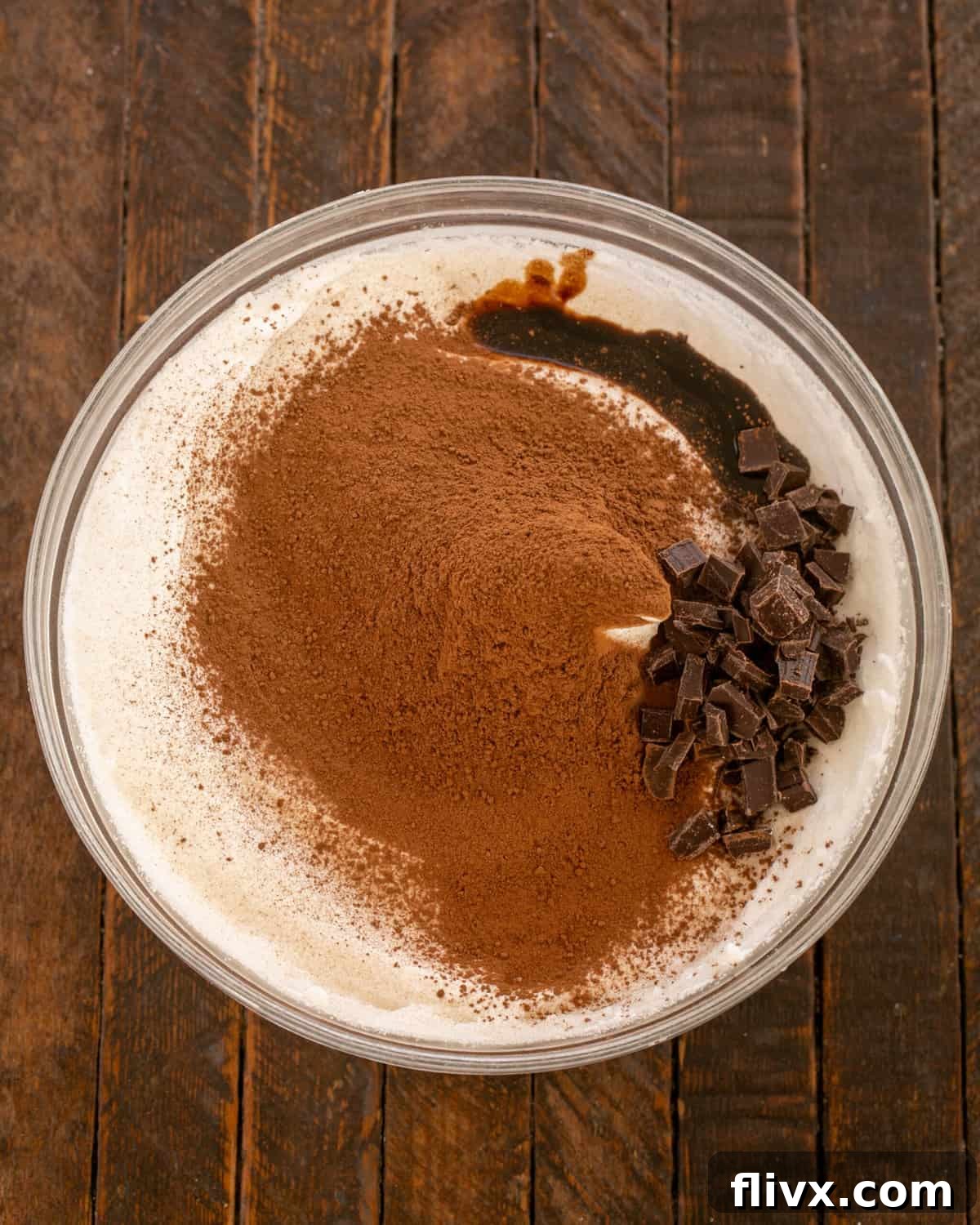
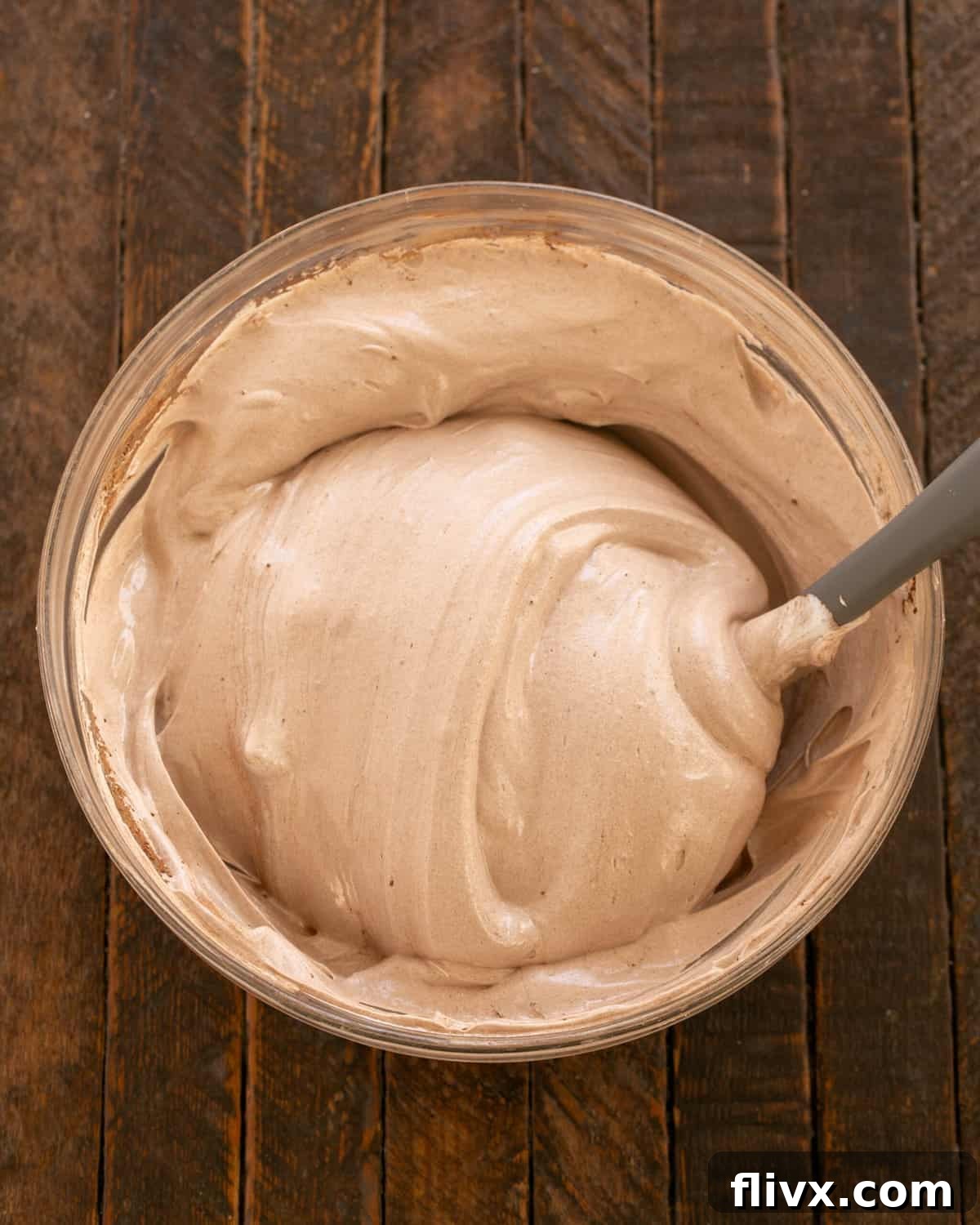
An Elegant Yet Easy Make-Ahead Dessert
One of the many charms of Nigella Lawson’s Chocolate Raspberry Pavlova is its make-ahead potential, making entertaining stress-free. I first discovered this dessert many summers ago, and its combination of a crisp exterior, chewy center, and the luscious topping of sweetened whipped cream and vibrant raspberries was an instant hit. It’s a dessert that tastes utterly indulgent but is surprisingly simple to prepare in stages.
To ease your party preparations, you can bake the meringue shell the night before you plan to serve. After it cools completely within the oven, simply store it there overnight or in another cool, dry place. Just be sure to leave a prominent note on the oven door to prevent anyone from accidentally turning it on! The next day, a few hours before serving, all that’s left is to whip the cream and adorn the pavlova with fresh berries and chocolate shavings. This phased approach allows you to focus on other aspects of your meal, ensuring a relaxed and enjoyable hosting experience.
I recall the collective “ooohs” and “aaahs” from my guests when I served this. Many had never encountered a pavlova before (leading to a few pronunciation lessons: pav-LOH-vuh!), let alone tasted one. Even a self-proclaimed “non-dessert eater” (a concept I still struggle to comprehend!) couldn’t resist its wonders. I am confident that you and your guests will be equally enchanted.
Expert Tips for Pavlova Perfection
Achieving a perfect pavlova involves a few key techniques, many of which are similar to making regular meringues, with a few special considerations. Here are some pro tips to guide you:
The Egg Whites: The Foundation of Your Pavlova
- PRO-Tip: Absolute Cleanliness is Key. When separating egg whites, ensure your mixing bowl, whisk, and any utensils are impeccably clean and free from any grease or oil. Even a tiny speck of egg yolk or fat can prevent your egg whites from whipping up properly and achieving the desired volume. It’s best practice to separate each egg into a small, separate bowl first, then transfer the clean white to your main mixing bowl. This way, if a yolk breaks, you only lose one egg white, not the whole batch.
- Temperature Matters: Eggs separate more easily when they are cold, as the yolks are firmer and less likely to break. However, for whipping, egg whites achieve the best volume when they are at room temperature. To quickly bring cold egg whites to room temperature, you can place the bowl of whites in a larger bowl of warm (not hot) water for about 10-15 minutes.
Crafting the Meringue: Crisp Outside, Chewy Inside
- Superfine Sugar for Superior Texture: Superfine sugar is preferred because its finer crystals dissolve more readily and completely into the egg whites. This results in a smoother, more stable meringue with less risk of weeping or a grainy texture. If you don’t have superfine sugar, you can process regular granulated sugar in a food processor for a few seconds until it’s finer, but be careful not to turn it into powdered sugar.
- The Vinegar Difference: Unlike standard meringue cookies, pavlova includes a small amount of vinegar (or lemon juice). This acidic ingredient is crucial for creating the distinctive pavlova texture: a beautifully crisp shell that encases a soft, slightly gooey, marshmallow-like center. It helps to tenderize the protein in the egg whites, contributing to that desired “squidgy” (as Nigella Lawson describes it) interior.
- Patience with Sugar Addition: Begin adding the superfine sugar once your egg whites are foamy and have soft peaks (after about 1-2 minutes of whipping). Add the sugar very slowly, a tablespoon at a time, allowing each addition to fully dissolve and incorporate before adding the next. This gradual process is vital for a stable, glossy meringue that holds its shape.
- Testing for Readiness: Your meringue is ready when it is thick, bright white, and glossy, holding stiff peaks. A great test is to rub a tiny bit of meringue between your thumb and forefinger; if you can still feel sugar granules, continue beating until it feels smooth.
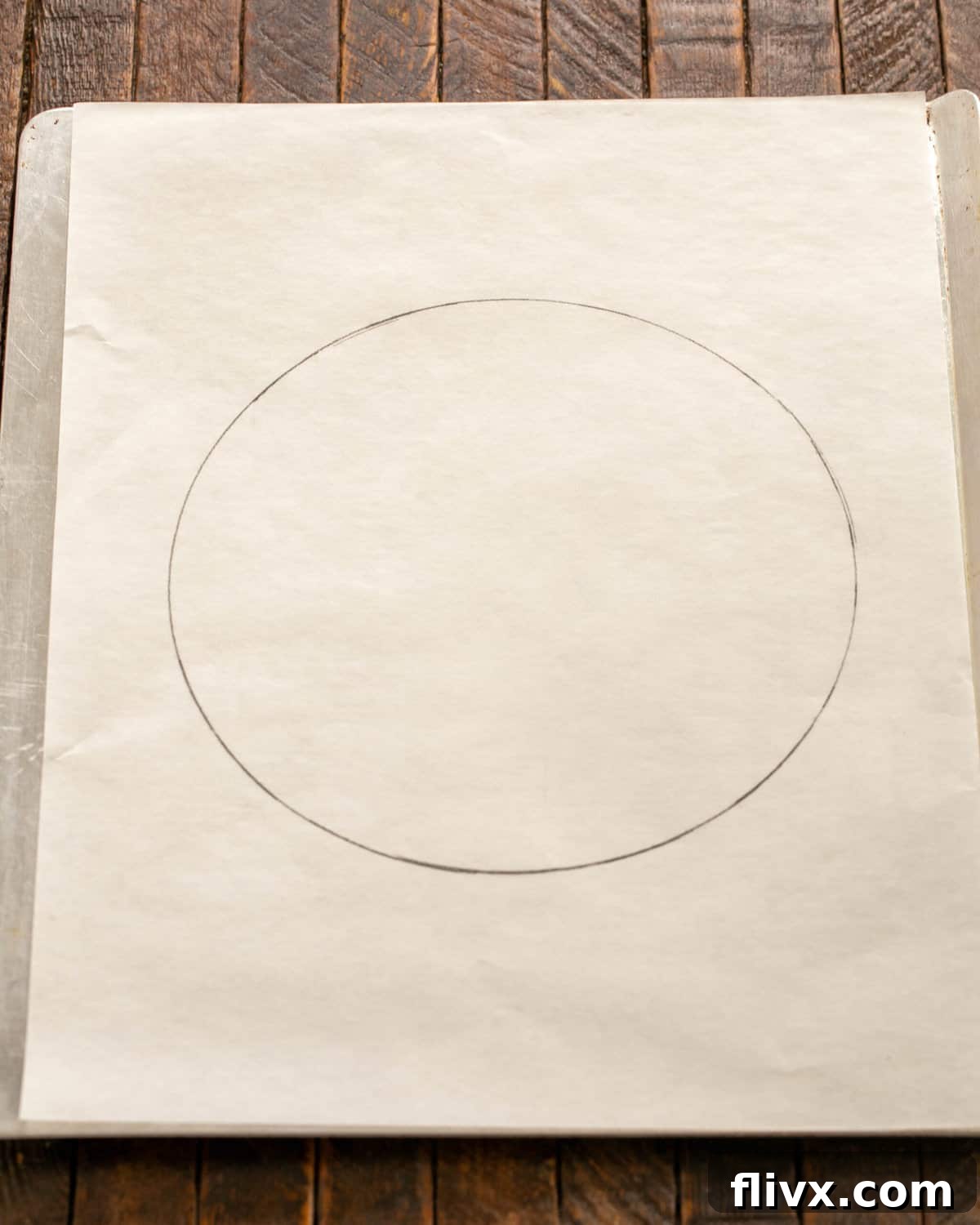
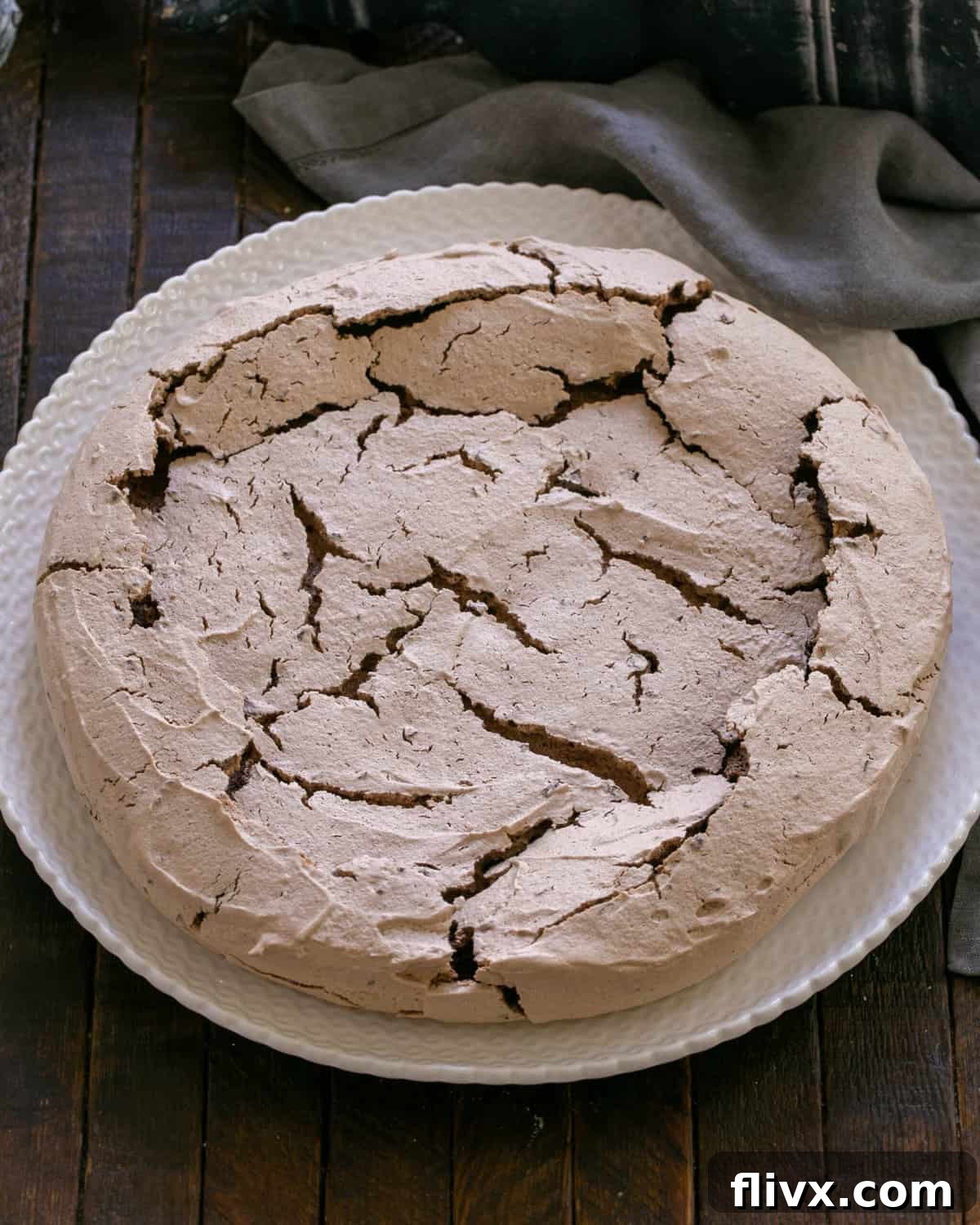
- Shaping Your Pavlova: To ensure a perfectly round pavlova, use a 9-inch cake pan or plate to draw a template on your parchment paper. Flip the paper over (so the drawing is underneath) and use this as your guide. When spreading the meringue, form a circular mound and create a slight well in the center to hold your luscious toppings later. This also helps the edges crisp up beautifully.
Baking & Cooling: The Secret to Stability
- Bake, Then Cool Slowly: Bake your pavlova as directed, but the cooling process is just as important as the baking. Once the baking time is complete, turn off the oven and prop the oven door open slightly (you can use a wooden spoon). Let the pavlova cool completely inside the oven for several hours, or even overnight. This slow, gradual cooling prevents thermal shock, which can cause the pavlova to crack excessively or collapse.
Garnishing Your Masterpiece: The Finishing Touch
- Stable Whipped Cream: For whipped cream that holds its shape longer, ensure your heavy cream, mixing bowl, and whisk attachments are all very cold. Placing the bowl and whisk in the freezer for 15-20 minutes before whipping can make a significant difference in achieving a firm, stable whipped cream without the need for additional stabilizers.
- Crafting Chocolate Shavings: For elegant chocolate shavings, take a block or bar of good quality semi-sweet chocolate. If it’s too hard, gently warm it for a few seconds in the microwave to make it slightly pliable (be careful not to melt it). Then, use a vegetable peeler to scrape along the flat side of the chocolate bar, allowing beautiful curls to form. For finer shavings, a cheese grater also works well.
Troubleshooting Your Pavlova: Common Issues and Solutions
Even experienced bakers can encounter hiccups. If your pavlova doesn’t turn out exactly as planned, don’t despair! Here are common issues and how to prevent them:
- Cracks: While a few cracks are characteristic of pavlova and add to its rustic charm, excessive cracking can be frustrating.
- Undissolved Sugar: If the sugar isn’t fully dissolved before baking, it can crystallize and weaken the meringue structure, leading to cracks. Always use superfine sugar and add it slowly, ensuring it’s completely incorporated.
- Oven Temperature Too High: An oven that’s too hot can cause the meringue to bake too quickly on the outside, creating a rigid shell that cracks as the interior expands. Always use an oven thermometer to verify your oven’s accuracy, and follow the temperature reduction instructions carefully.
- Sudden Temperature Changes: Pavlovas are sensitive to abrupt temperature shifts. Not allowing the pavlova to cool slowly in the oven with the door ajar is a common cause of cracking. The gentle decrease in temperature helps the structure set without stress.
- Meringue Doesn’t Thicken: If your egg whites refuse to whip into a thick, white, glossy, and billowy mass, it’s almost certainly due to fat contamination.
- Fat/Grease Contamination: This is the most common culprit. Even a tiny trace of egg yolk, oil, or grease on your mixing bowl or beaters will prevent the egg whites from whipping properly. Use meticulously clean bowls (preferably glass or metal, as plastic can harbor grease) and ensure your egg separation is flawless. If any yolk gets into the whites, it’s best to discard that batch and start over with fresh eggs and clean equipment.
- Water in Egg Whites: Make sure no water gets into your egg whites before beating. Water can also inhibit proper whipping.
Frequently Asked Questions About Pavlova
Where Did Pavlova Originate?
The origin of pavlova is a delightful culinary debate, fiercely claimed by both Australia and New Zealand. This elegant dessert was created in honor of Anna Pavlova, the celebrated Russian ballerina, during her tours of these countries in the 1920s. While both nations continue to assert their claim, there’s no debate that it quickly became a beloved dessert in the region.
What Exactly Is Pavlova?
Simply put, a pavlova is a large, baked meringue, though it differs significantly from small, crisp meringue cookies. Made primarily from whipped egg whites and sugar, it is baked until its exterior is wonderfully crisp, while the interior remains soft, chewy, and marshmallow-like—a texture Nigella Lawson famously describes as “squidgy.” This unique chewy center is the defining characteristic that sets pavlova apart from traditional meringues. Classic pavlovas are typically adorned with cream and fresh fruit. This particular chocolate raspberry pavlova elevates the classic by incorporating cocoa powder and chopped chocolate into the meringue base, adding a rich twist to the traditional version. Of course, countless variations exist, utilizing everything from lemon curd to tropical fruits.
How Do You Store a Pavlova?
The key to storing a pavlova is to keep it in a cool, dry environment, as moisture and humidity are its arch-enemies, quickly turning its crisp shell sticky and soft. A clever trick is to store the cooled, undecorated pavlova shell in a cold, turned-off oven. Just remember to leave a note on the door to avoid accidentally preheating it! You can prepare the meringue shell a day or two in advance. Always add the whipped cream and fresh fruit toppings on the day of serving, ideally just a few hours beforehand, to maintain the best possible texture and freshness. While best enjoyed fresh, we rarely let leftovers go to waste!
Explore More Decadent Dessert Recipes
If you loved this Chocolate Raspberry Pavlova, you might also enjoy exploring these other delightful dessert creations:
- Christmas Wreath Pavlova
- Strawberry Topped Chocolate Pavlova
- Individual Pavlovas
- Pavlova with Lemon Curd
- Over 900+ Delicious Dessert Recipes
Stay connected and share your culinary creations with me! Find me on Instagram, Facebook, and Pinterest. Don’t forget to tag me when you try one of my recipes! If you love the results, please consider leaving a 5-star rating and a comment—it truly helps!
Chocolate Raspberry Pavlova
20 minutes
1 hour 15 minutes
1 hour 35 minutes
8 servings
A jumbo cocoa meringue topped with cream and berries!
Ingredients
- 6 egg whites, at room temperature
- 1 ½ cups superfine sugar
- 3 tablespoons good quality cocoa powder
- 1 teaspoon raspberry or balsamic vinegar
- 2 ounces semi-sweet chocolate, finely chopped
- 2 cups heavy cream
- ½ cup powdered sugar
- 1 teaspoon vanilla
- 2-3 tablespoons coarsely grated semi-sweet chocolate
Instructions
- Preheat the oven to 350ºF (175ºC). Line a baking sheet with parchment paper. Draw a 9-inch circle on the parchment, then flip the paper over so the drawing is on the underside. Set aside.
- In a clean, grease-free bowl, beat the egg whites until they are satiny in appearance and hold soft peaks. Slowly add the superfine sugar, one tablespoon at a time, while continuing to beat, until the meringue is stiff, glossy, and holds firm peaks.
- Gently sift cocoa powder over the meringue, then add the vinegar and finely chopped chocolate. Fold well with a spatula until just combined, being careful not to deflate the mixture.
- Pile the meringue onto the prepared baking sheet, keeping it within the 9-inch circle. Smooth the top and edges with an offset spatula, creating a slight well in the center.
- Place the baking sheet in the oven and immediately decrease the temperature to 300ºF (150ºC). Bake for 1 to 1¼ hours, or until the edges and top are dry and crisp. The pavlova will appear cracked, which is normal.
- Turn off the oven, open the oven door slightly (you can use a wooden spoon to keep it ajar), and allow the pavlova to cool completely inside the oven for several hours or overnight.
- To serve, carefully transfer the cooled pavlova shell onto a serving plate.
- In a chilled bowl, whip the heavy cream with powdered sugar and vanilla until soft peaks form.
- Top the pavlova with the sweetened whipped cream, then generously sprinkle with fresh raspberries, followed by the coarsely grated chocolate. Serve immediately.
Notes
Recipe adapted from Nigella Lawson.
Total time does not include cooling time, which can take several hours or overnight.
For best results, ensure all equipment for whipping egg whites is completely clean and grease-free.
Nutrition Information:
Yield:
8
Serving Size:
1
Amount Per Serving:
Calories: 452Total Fat: 25gSaturated Fat: 16gTrans Fat: 1gUnsaturated Fat: 8gCholesterol: 67mgSodium: 59mgCarbohydrates: 55gFiber: 1gSugar: 53gProtein: 5g