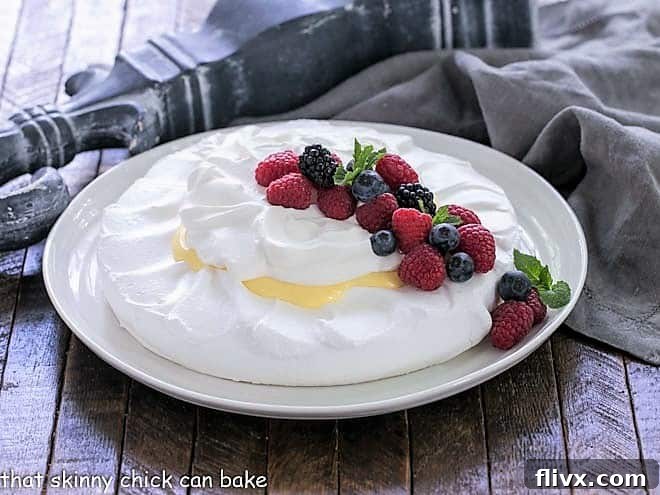
Imagine a dessert that’s as light as a cloud, bursting with vibrant citrus, and exquisitely elegant. This dreamy Lemon Pavlova is precisely that—a harmonious symphony of a crisp meringue shell, luscious homemade lemon curd, a billowy cloud of whipped cream, and a jewel-like scattering of fresh berries. Every single bite is a revelation, a perfect balance of sweet, tart, and creamy textures that will transport your taste buds to pure bliss.
Known in our family as “Lemon on a Cloud,” this exquisite creation was a specialty of my mom’s and quickly became one of my most cherished childhood desserts. It’s an undeniable masterpiece for anyone who adores citrus flavors, guaranteeing that all who taste it will be eagerly clamoring for second, and perhaps even third, helpings. It’s more than just a dessert; it’s an experience, a memory in the making.
The Irresistible Allure: Why This Lemon Pavlova is a Must-Make
There are countless reasons why this particular Lemon Pavlova recipe deserves a coveted spot in your culinary repertoire. It’s a dessert that not only tastes incredible but also tells a story and makes a lasting impression.
- A Timeless Family Legacy: This isn’t just any recipe; it’s a treasured family heirloom passed down from my mom. It delighted palates back in the 1970s with its unparalleled flavor and continues to be just as sensational today. There’s a special charm in preparing a dish that carries generations of love and tradition.
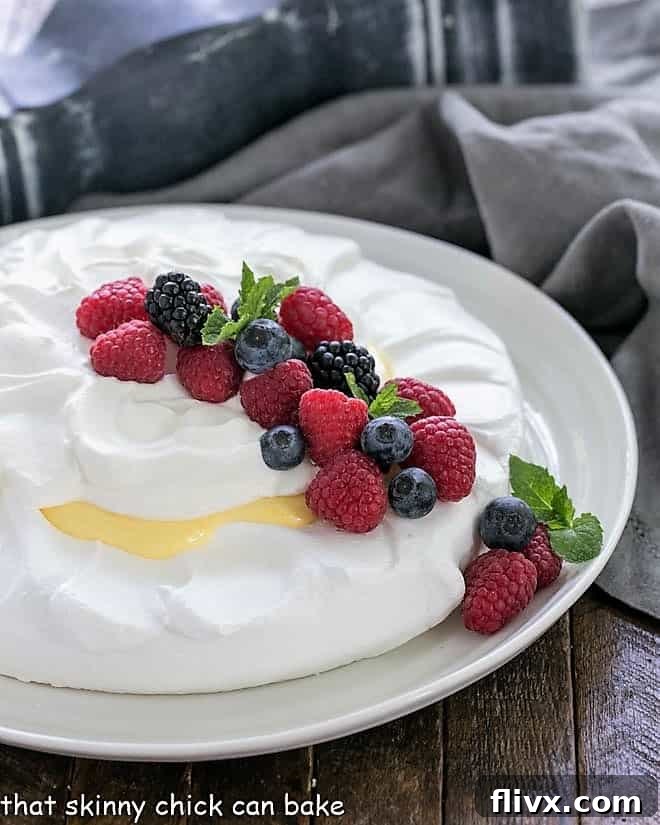
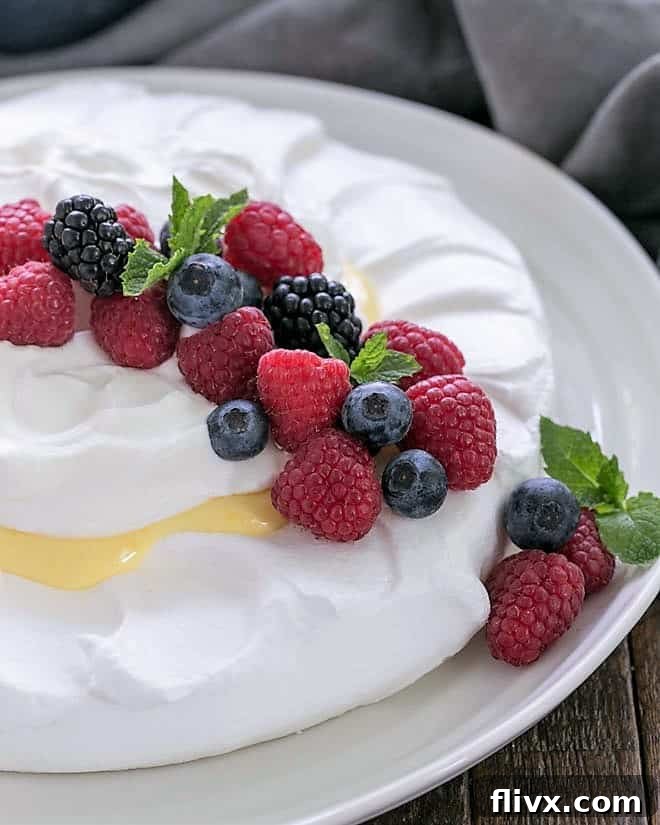
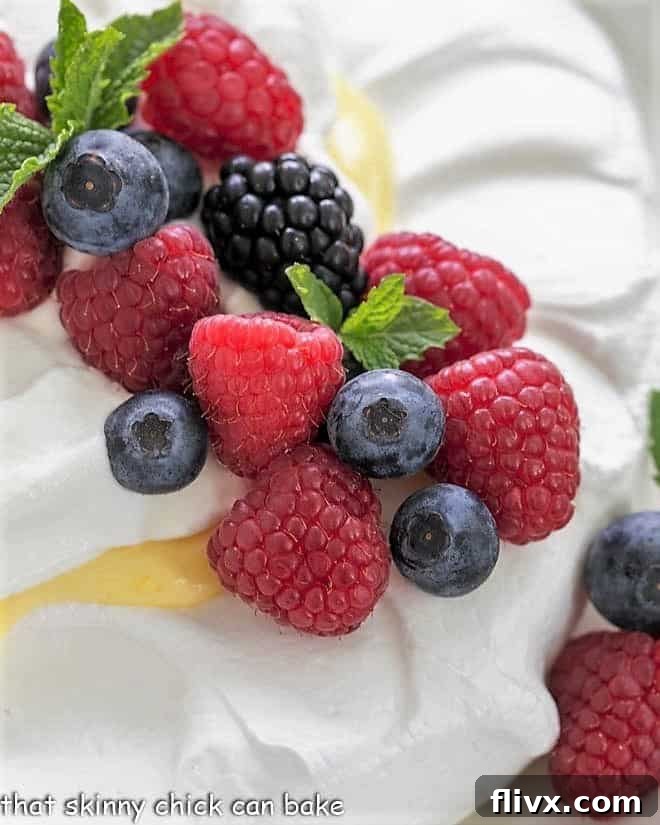
- An Unforgettable Centerpiece: Visually, this Lemon Pavlova is an absolute showstopper. The pristine, snow-white meringue shell, crowned with sunshine-yellow lemon curd, fluffy white whipped cream, and an explosion of colorful fresh berries, creates a stunning display. It effortlessly commands attention and becomes the focal point of any dessert spread, perfect for impressing guests.
- The Quintessential Dinner Party Dessert: If you’re searching for a dessert that’s elegant, impressive, and surprisingly adaptable for entertaining, look no further. This lemon pavlova is one of those culinary gems that’s ideal for a dinner party. Much of it can be prepared in advance, allowing you to assemble it just before serving for maximum freshness and minimal last-minute stress. Its light and refreshing character makes it a perfect finale to any meal.
Essential Ingredients for a Divine Pavlova
Crafting the perfect Lemon Pavlova begins with understanding the role of each ingredient. Quality and proper handling are paramount to achieving that coveted crisp yet chewy meringue and a vibrant lemon curd.
- Kitchen Staples: You’ll need basic granulated sugar, which is crucial for both the meringue and the lemon curd. For the meringue, it stabilizes the egg whites and creates that signature crisp texture.
- Egg Whites: The foundation of our meringue! For optimal results, separate your eggs when they are cold, as the yolks are firmer and less likely to break. However, for whipping, egg whites perform best at room temperature, as they achieve greater volume. Crucially, ensure not even the tiniest speck of egg yolk contaminates the whites, and that your mixing bowl and beaters are impeccably clean and free from any grease. Even a trace of fat will prevent the whites from whipping into stiff peaks.
- Egg Yolks: These are reserved specifically for creating the rich, creamy, and wonderfully tangy lemon curd that forms the heart of this dessert.
- Lemon Juice: This is a non-negotiable ingredient, and the quality truly makes all the difference. Always use freshly squeezed lemon juice for both the meringue and the curd. The vibrant, bright flavor of fresh lemons cannot be replicated by bottled lemon juice, which often tastes dull and artificial.
- Whipping Cream: To achieve that luxurious, stable cloud of whipped cream, opt for heavy whipping cream with a minimum of 36% butterfat. This higher fat content ensures a cream that holds its shape beautifully and provides a delightful contrast to the meringue and curd.
A Journey Through Childhood: The Origin of My “Lemon on a Cloud”
The story of this Lemon Pavlova begins deep within the basement of my childhood home, where a colossal freezer stood guard. This magical appliance was a repository for everything from massive cuts of beef my parents purchased in bulk to boxes upon boxes of delectable cheese danishes acquired from the Sara Lee outlet in Des Moines. Amidst these culinary treasures, one particular dessert held a special place in our hearts (and our stealthy little hands).
My mom, ever the generous baker, would typically make a double batch of what she lovingly called “Lemon on a Cloud.” One would be destined for immediate enjoyment, while the other, a secret indulgence, would be carefully tucked away in that deep freezer. But secrets, especially delicious ones, rarely stayed hidden for long from my sisters and me. As soon as we discerned its icy presence, a covert mission would commence. We’d creep down to the musty cellar, armed with a knife, and meticulously carve out slivers of this citrus beauty. I can vividly recall our sticky fingers, our satisfied sweet tooths, and the hushed triumph before we’d return upstairs, leaving behind only the faintest evidence of our delicious raid.
Years later, with a longing for that nostalgic taste, I embarked on a mission to recreate my mom’s legendary recipe. I tinkered and experimented, though I suspect her original version might have featured a more straightforward lemon curd generously topped with Cool Whip. My own creation, however, was met with enthusiastic approval from my family. Yet, a part of me still yearns for the exact replication, and I might just have to hunt down that original, handwritten recipe card the next time I visit Iowa. Little did I know at the time that my childhood “Lemon on a Cloud” was my very first introduction to what I would later discover was an exquisite lemon pavlova—a dessert renowned for its elegant simplicity and ethereal texture. It was a revelation, connecting a cherished memory to a classic culinary art form.
Mastering the Meringue: Expert Tips for a Flawless Pavlova
If you’ve successfully tackled meringue cookies or a classic pie topping, crafting a pavlova will feel like a natural extension of your skills. However, a few expert tips can elevate your pavlova from good to absolutely spectacular, ensuring a consistently successful and show-stopping dessert every time.
- PRO-Tip: The Foundation of Flawless Meringue: Before you even think about whipping your egg whites, ensure your mixing bowl and beaters are scrupulously clean and completely free of any grease or oil. Even the smallest amount of fat—whether from a broken egg yolk or residual oils—will prevent the egg whites from aerating properly and achieving the desired volume and stiffness. While separating eggs is easiest when they are cold (as yolks are firmer), allow your egg whites to come to room temperature before whipping. This warm-up period allows the proteins to relax, resulting in a significantly greater volume and a more stable meringue.
- Creating the Perfect Canvas: To ensure your pavlova bakes into an even and beautiful shape, line your baking sheet with a piece of parchment paper. Use a pencil to trace a circle on one side of the parchment, using a 9-inch round cake pan as your guide, as this lemon pavlova recipe calls for a 9-inch diameter. Make sure your marking is dark enough to be clearly visible. Then, flip the parchment paper over so the traced circle is on the underside, preventing pencil marks from transferring to your meringue. This creates a perfect template for shaping.
- Achieving Optimal Egg White Temperature: If you’re short on time and can’t wait for your egg whites to naturally reach room temperature, a quick trick is to place your bowl of separated whites into a larger bowl filled with warm (not boiling) water. Let them sit for 10-15 minutes while you gather your other ingredients and prepare your workspace.
- Whipping Whites to Foamy Perfection: Begin by beating your room-temperature egg whites on medium-low speed until they become foamy and covered in small, even bubbles. This initial stage incorporates air and sets the groundwork for the meringue’s volume.
- Gradual Sugar Integration is Key: Once foamy, gradually add the sugar, one tablespoon at a time, continuing to beat on medium-high speed. This slow addition allows the sugar granules to dissolve completely into the egg whites, which is essential for a stable, glossy, and non-weeping meringue. If you happen to have superfine sugar, it will incorporate more quickly and yield an even smoother meringue. Continue beating until the mixture is very thick, glossy, and forms stiff peaks that hold their shape when the beaters are lifted.
- The Acidic Boost: Once all the sugar is incorporated, gently beat in the lemon juice. The acid in the lemon juice plays a vital role by helping to delay the coagulation of the egg white proteins, which results in a fluffier and more stable meringue. Similarly, fresh eggs, being more acidic than older ones, also contribute to a lighter meringue. This is also why cream of tartar is frequently added to meringues for its acidic properties.
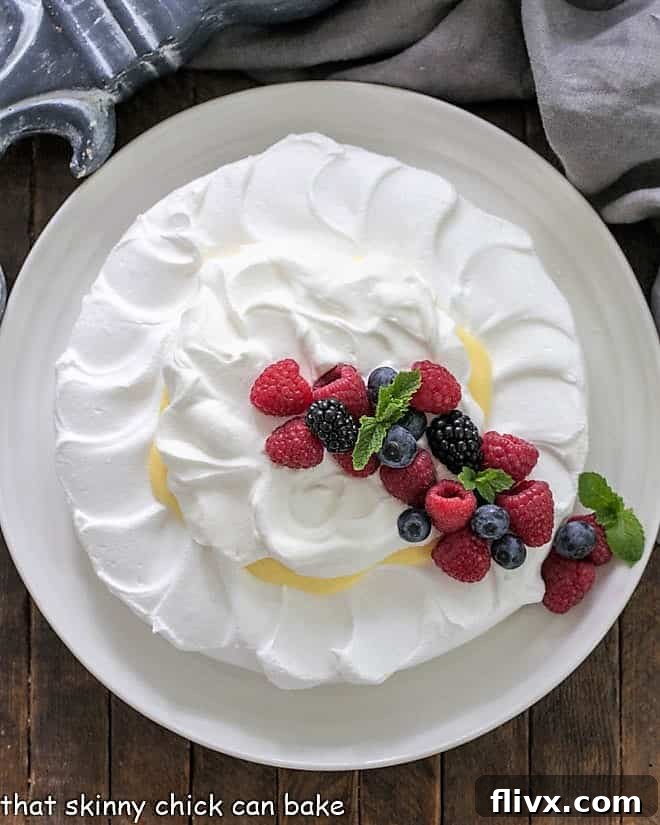
- Shaping Your Pavlova: Once your meringue is whipped to perfection, mound the billowy mixture into the center of your traced circle on the parchment paper. Use an offset spatula to gently spread and level the meringue, forming a flat-topped circle. This recipe specifically calls for creating a “well” or depression in the center of the meringue. Make this well deep enough to generously accommodate the luscious lemon filling you’ll be adding later.
- Bake Low and Slow: The Secret to a Pristine Shell: Pavlovas, much like other meringues, are typically baked at a very low temperature for an extended period. This “low and slow” approach is critical for two reasons: it prevents the meringue from browning, preserving its beautiful white color, and it gently dries out the meringue, creating that characteristic crisp exterior while leaving a delightfully chewy interior.
- Patient Cooling is Paramount: After baking, turn off the oven and leave the meringue shell inside with the door ajar until it is completely cool. This gradual cooling process helps prevent the meringue from cracking and collapsing, ensuring it retains its delicate structure and crispness. Only top your pavlova once it has cooled entirely to room temperature.
Frequently Asked Questions About Pavlova
Delving into the world of Pavlova often brings up a few common questions. Here are some detailed answers to help you navigate this delightful dessert.
A Pavlova is a majestic and ethereal dessert consisting of a large, crisp meringue shell, typically adorned with whipped cream and fresh fruit. Its name is an homage to the legendary Russian ballerina Anna Pavlova, and its creation is hotly debated, with both Australia and New Zealand passionately claiming credit for its invention. Regardless of its precise origin, the Pavlova is celebrated for its delicate balance of textures—a crunchy, slightly chewy exterior giving way to a soft, marshmallow-like interior, making it a truly unique experience.
The storage method for a Pavlova depends on whether it has been assembled or not. An undecorated meringue shell can be stored at room temperature in a cool, dry, airtight container for up to 2-3 days. Humidity is the enemy of meringue, so avoid humid environments. However, once the pavlova is assembled with its luscious lemon curd, whipped cream, and fresh fruit, it becomes perishable and must be refrigerated. The moisture from the toppings will gradually soften the meringue, so it’s best enjoyed as soon as possible after assembly.
For the absolute best texture and freshness, an assembled pavlova is ideal when eaten on the day it’s made. The meringue shell will start to absorb moisture from the cream and fruit, gradually losing its crispness and becoming softer. While it will still be safe to eat for a couple of days if refrigerated, the meringue’s texture won’t be as perfect, and the fruit topping may not look as vibrant. If you anticipate leftovers, it’s best to store the meringue shell and toppings separately and assemble individual portions as needed.
Lemon Pavlova: Your Recipe for a Cloud of Citrus Bliss
Ready to create this incredible dessert? Follow these clear steps to bring the “Lemon on a Cloud” to life in your kitchen.
Lemon on a Cloud Recipe
45 minutes
2 hours 20 minutes
3 hours 5 minutes
8 servings
A crisp meringue shell topped with zesty lemon curd and rich whipped cream, a truly unforgettable dessert.
Ingredients
For the Meringue Shell:
- 4 egg whites, at room temperature
- 1 cup granulated sugar
- 1 teaspoon fresh lemon juice
For the Lemon Curd:
- 4 egg yolks
- ½ cup granulated sugar
- ¼ cup fresh lemon juice
For the Whipped Cream Topping:
- 1 cup heavy whipping cream (36% butterfat)
Instructions
- Preheat your oven to 200ºF (95ºC).
- In a large, impeccably clean mixing bowl, beat the room-temperature egg whites on medium speed until they become foamy.
- Gradually add the 1 cup of sugar, one tablespoon at a time, continuing to beat on medium-high speed until the mixture is very stiff, glossy, and forms firm peaks.
- Gently fold in the 1 teaspoon of lemon juice until just combined.
- Line a baking sheet with parchment paper. Trace a 9-inch circle in the middle of the paper using a 9-inch cake pan as a guide. Flip the parchment over so the pencil marks are on the underside.
- Pile the whipped meringue into the center of the traced circle. Using an offset spatula, spread the meringue out to the edges of the circle, building up the perimeter slightly to create a shell-like structure with a “well” in the center for the filling.
- Bake the meringue shell for 2 hours. After 2 hours, turn off the oven and leave the meringue inside with the oven door ajar until it has cooled completely to room temperature. This gradual cooling prevents cracking.
- Meanwhile, prepare the lemon curd: In a small saucepan, combine the egg yolks, ½ cup sugar, and ¼ cup lemon juice. Cook over low heat, whisking constantly, until the mixture thickens to a custard-like consistency (about 5-7 minutes). Do not boil.
- Remove the lemon curd from the heat and transfer it to a clean bowl. Cool it at room temperature, then cover and refrigerate until thoroughly chilled and cold.
- Once the meringue shell is completely cool and the lemon curd is cold, prepare the whipped cream. In a clean bowl with clean beaters, beat the 1 cup of whipping cream until stiff peaks form.
- Using the same beaters (no need to clean them again), beat the chilled lemon filling until smooth.
- Gently fold ½ cup of the whipped cream into the smooth lemon filling until well blended. Carefully pile this luscious lemon cream into the cooled meringue shell’s well.
- Reserve the remaining whipped cream in the refrigerator. Cover the assembled pavlova and chill for at least 2 hours before serving to allow the flavors to meld and the pavlova to set.
- To serve, top with the reserved whipped cream and garnish generously with fresh berries, and a sprig of mint, if desired.
Notes
- Ensure there is absolutely no egg yolk in your whites, or they will not whip properly.
- Superfine sugar is ideal for meringues as it dissolves more readily, but regular granulated sugar works perfectly fine with gradual addition.
- The mixing bowl and beaters must be completely free of oil or grease for the egg whites to whip effectively.
- The total time includes significant cooling periods for both the meringue and the lemon curd, which are crucial for the final texture and stability of the dessert. This brings the true preparation and setting time closer to 5 ½ hours.
Nutrition Information:
Yield:
8
Serving Size:
1
Amount Per Serving:
Calories: 284Total Fat: 13gSaturated Fat: 8gTrans Fat: 0gUnsaturated Fat: 5gCholesterol: 126mgSodium: 42mgCarbohydrates: 39gFiber: 0gSugar: 39gProtein: 4g
Explore More Lemon Delights!
If you’ve fallen in love with the bright, zesty flavors of this Lemon Pavlova, you’ll be thrilled to discover other delightful lemon-infused recipes. These treats are perfect for satisfying any citrus craving.
- Lemon Bar Cookie Cups from Barbara Bakes
- Easy Lemon Bundt Cake
- Mile High Lemon Meringue Pie
- Lemon Cake with Lemon Curd
- Creamy Lemon Tart
- And for an even wider selection of sweet treats, browse more of the Best Dessert Recipes.
Loved this recipe? Share your culinary triumphs! Stay in touch through social media @ Instagram, Facebook, and Pinterest. Don’t forget to tag me when you try one of my recipes! And if this Lemon Pavlova swept you off your feet, please consider leaving a 5-star rating and a comment in the recipe section. Your feedback means the world!