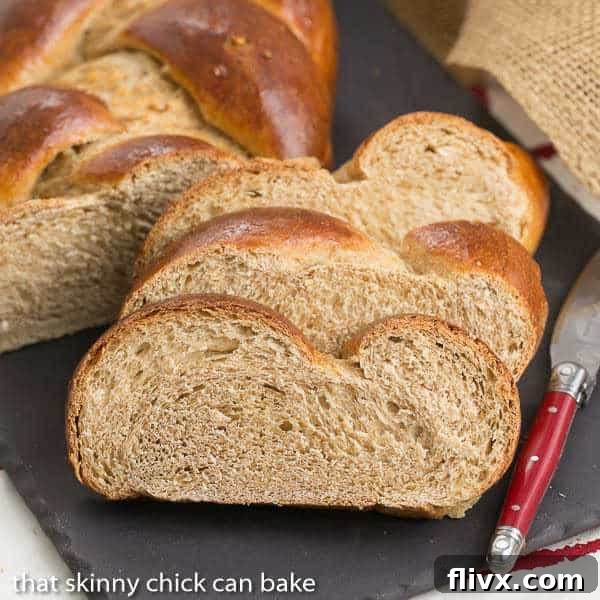
Whole Wheat Challah is more than just a loaf of bread; it’s a culinary masterpiece. This tender, egg-enriched wheat bread, traditionally recognized by its beautifully braided form, offers a delightful twist on a classic. Made with wholesome whole wheat flour, it brings a rustic depth and a nutritional boost to an already beloved recipe, making it a perfect choice for both everyday enjoyment and special occasions.
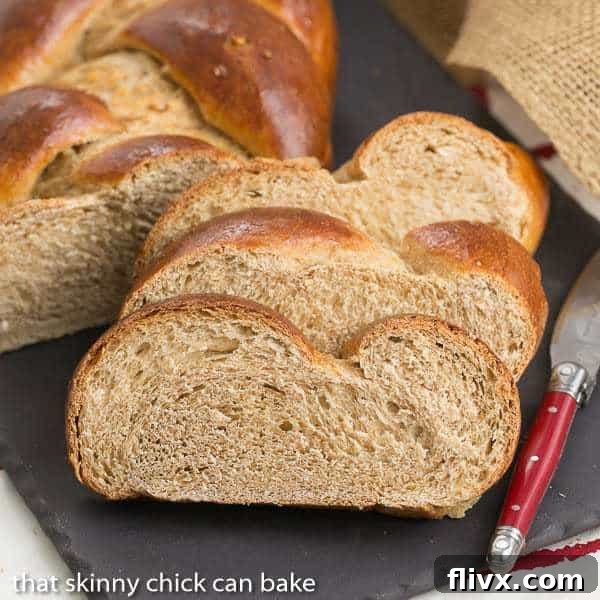
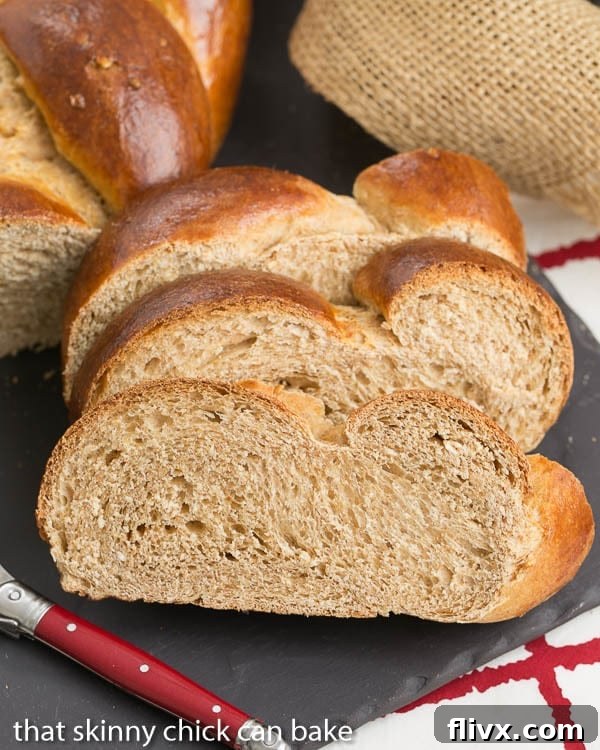
Imagine slicing into a warm, fragrant loaf of Homemade Whole Wheat Challah Bread, its golden-brown crust giving way to a soft, chewy interior. A generous pat of melting butter transforms each bite into a truly sensational experience. This particular Challah Recipe is not only incredibly rewarding but also surprisingly easy to master, even for novice bakers. It combines traditional techniques with the healthful benefits of whole grains, resulting in a bread that’s both nourishing and irresistibly delicious.
Discovering the Joy of Whole Wheat Challah
My journey with challah bread began long after my childhood in Ames, Iowa, where this rich, braided loaf wasn’t a common sight. It was my mom, inspired by a thoughtful neighbor, who introduced me to the magic of baking these exquisite loaves. Years later, during a period when my husband, Bill, had a cardiology fellowship rotation in nearby Des Moines, we frequently visited my parents. These visits were a cherished time for them to connect with their grandson and for us to savor mom’s wonderful home cooking.
It was during these family gatherings that I truly fell in love with her challah. Its slightly sweet, eggy richness and tender crumb were simply divine. However, for years, I had abstained from enjoying it as much as I wished, primarily due to my efforts to avoid white flour. The thought of not attempting a whole wheat challah recipe felt like a significant oversight. Realizing this, I resolved to adapt this cherished classic. I eagerly gathered a few whole wheat challah recipes, combining the best elements to create a version that maintains the bread’s iconic texture and flavor while embracing the wholesome goodness of whole grains. This decision opened up a whole new world of baking possibilities and brought a healthier, equally delicious challah to our table.
Mastering the Art of Braiding a 3-Strand Challah
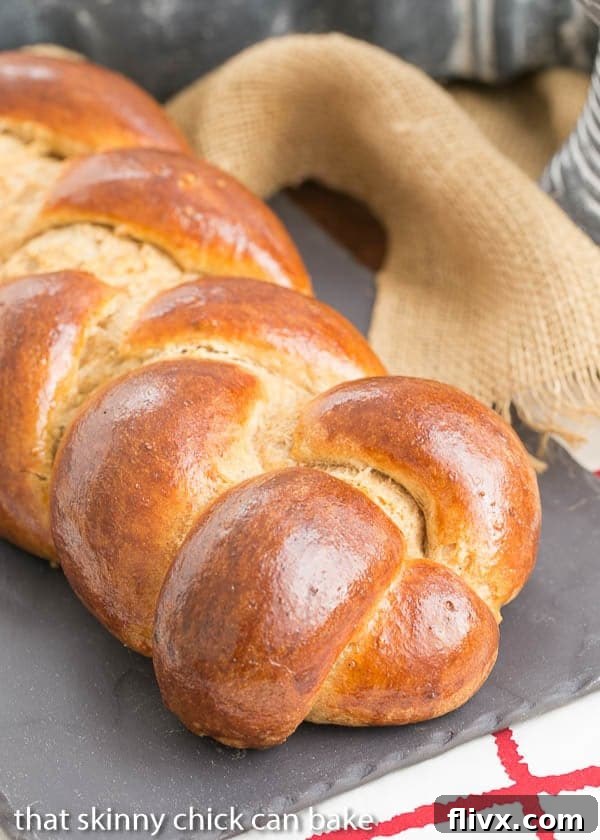
Braiding bread is an incredibly satisfying step in the baking process, transforming simple dough into a work of art. As someone who grew up with three sisters, navigating the world of long, straight hair, I had plenty of practice with plaiting, and the rhythm of braiding comes quite naturally to me. This skill translates beautifully to bread making, making even an intricate-looking challah surprisingly accessible. While advanced bakers might venture into elaborate six-strand braids, which can be wonderfully impressive, explaining such complexities without causing utter confusion is a challenge best left to detailed visual guides. For simplicity and consistent success, I wholeheartedly recommend sticking to the classic and elegant 3-strand version, especially for beginners.
The 3-strand braid is the foundation of many braided breads and is relatively straightforward once you grasp the basic technique. To begin, prepare three equal ropes of dough. Aim for them to be slightly thicker in the middle and gently tapered towards the ends. This slight variation in thickness helps create a uniform loaf after braiding. Lay these three ropes side by side on a lightly floured surface, ensuring one set of the smaller, tapered ends faces you. Then, firmly pinch the strands together at the end furthest from you. This creates a secure anchor for your braid.
Now, let the braiding commence! Take the strand on the far right and cross it over the middle strand. This action effectively makes the former middle strand the new right strand, and the right strand the new middle. Next, take the far left strand and cross it over the new middle strand. Continue this pattern: alternate between taking the far right strand and crossing it over the middle, then the far left strand and crossing it over the new middle. Maintain gentle, even tension as you braid, aiming for a consistent pattern and tight weave.
As you near the end of the ropes and the loaf is fully braided, pinch together the loose strands at the end closest to you. Once secured, carefully tuck these pinched ends underneath the loaf. Repeat this step for the ends at the far side of the loaf, pinching them together and tucking them under. This neatens the appearance of your challah and helps it hold its beautiful shape during the final proofing and baking. Your perfectly braided loaf is now ready for its final rise, preparing it for the oven. If you find yourself needing visual guidance, the internet is a treasure trove of resources. Many excellent braiding tutorials can be found on blogs like Tori Avey’s, offering clear visual cues to help you master this delightful technique.
Essential Baking Tips for Perfect Whole Wheat Challah
Crafting a truly exceptional Whole Wheat Challah involves a few key techniques that elevate it from a simple loaf to a bakery-quality masterpiece. These tips focus on achieving that signature glossy finish, ensuring a consistent bake, and mastering the braiding process.
- The Signature Gloss: Challah is renowned for its stunning, glossy surface, which is primarily achieved through the application of an egg wash. This simple mixture of beaten egg (sometimes with a touch of water or milk) brushed over the dough before baking creates a beautiful golden-brown, shiny crust. Don’t skip this step – it’s crucial for that classic challah appeal.
- The Right Tools: For applying the egg wash, I highly recommend using a silicone brush. Unlike traditional pastry brushes with bristles that can shed, a silicone brush is durable, easy to clean, and can go straight into the dishwasher, making cleanup a breeze. Its smooth application also helps in achieving an even glaze.
- Dorie Greenspan’s Double Glaze Trick: For an unparalleled shine and full coverage, try this clever trick from baking guru Dorie Greenspan. Apply the first egg wash before the challah goes into the oven. Then, after the loaf has baked for approximately 15 minutes, carefully pull it out and apply a second coat of egg wash. As challah expands and rises significantly in the heat of the oven, this second application ensures that any newly exposed surfaces are also beautifully glazed, resulting in a perfectly even, lustrous finish across the entire loaf.
- Preparing for the Braid: Before you even think about braiding, ensure your dough is properly prepared. Divide your dough into three equal portions. Roll each portion into a long, uniform rope. Aim for consistency in thickness, as this will result in a more even and aesthetically pleasing braid. Lay these ropes side-by-side on a lightly floured surface, ready for the plaiting process.
- Proofing Perfection: Whole wheat dough can sometimes be denser than white flour dough, so pay extra attention to proofing. Ensure your rising environment is warm and draft-free. The dough should double in size, indicating that the yeast is active and creating a light, airy texture. An under-proofed challah will be dense, while an over-proofed one might collapse.
- The Window Pane Test: To ensure your dough is adequately kneaded, perform the “window pane” test. Pinch off a small piece of dough and gently stretch it between your fingers. If you can stretch it thin enough to see light through it without it tearing, your dough has developed sufficient gluten and is ready. If it tears easily, continue kneading for a few more minutes and retest.
I genuinely hope these detailed tips and the accompanying recipe will inspire you to try your hand at baking a beautiful and delicious braided loaf of whole wheat challah! The aroma alone is worth the effort, and the taste is simply incomparable.
Frequently Asked Questions About Whole Wheat Challah
Challah, also spelled Hallah or Challa, is a rich and traditional Jewish yeast bread. It is distinctively made with eggs and is most often braided into an oblong loaf or shaped into a round for holidays. Challah is a central element of the Sabbath meal and other Jewish holidays, symbolizing blessings and rest. In biblical Hebrew, the word “challa” literally refers to a portion of dough set aside as an offering, signifying its sacred origins. Its presence at the table deepens the spiritual and communal experience of these special occasions.
Both methods are effective for developing the gluten needed for a tender challah. Kneading by hand offers a tactile experience and is a great workout, but it requires significant effort, typically at least 20 minutes, to achieve the proper smooth and elastic consistency. If you opt for a stand mixer, utilizing the dough hook attachment will considerably reduce the kneading time, usually taking 5 to 10 minutes. The mixer performs the repetitive work efficiently, making it a convenient choice for many home bakers.
The most reliable indicator for properly kneaded dough is the “Window Pane” test. To perform this, carefully tear off a small piece of dough (about the size of a golf ball). Gently stretch this piece between your fingers and thumbs. If the dough is sufficiently kneaded, you should be able to stretch it until it becomes very thin and translucent, allowing light to pass through it, without tearing. If the dough rips before reaching this translucent stage, it means the gluten has not yet developed enough elasticity, and the dough needs more kneading. Continue kneading for a few more minutes, then repeat the test until it passes.
While a golden-brown crust is a good visual cue, the most accurate and foolproof method for determining if your challah is fully baked is to use an instant-read thermometer. Insert the thermometer into the thickest part of the loaf. When the internal temperature reaches 190°F (88°C), your challah is perfectly done. This ensures that the bread is cooked through without being over-baked and dry. A Thermapen, or similar instant-read thermometer, is an excellent tool for this purpose.
Absolutely! Challah dough can be prepared a day in advance. After the first rise, punch down the dough, cover it tightly with plastic wrap, and refrigerate it overnight. The cold temperature will slow down the yeast activity. On baking day, remove the dough from the refrigerator, let it come to room temperature for about an hour, then proceed with shaping, braiding, and the final proofing as usual. This makes baking fresh challah more convenient for busy schedules.
To keep your challah fresh, store it at room temperature in an airtight container or a plastic bag for up to 2-3 days. For longer storage, challah freezes exceptionally well. Once completely cooled, wrap the entire loaf or individual slices tightly in plastic wrap, then place in a freezer-safe bag. It can be frozen for up to 3 months. Thaw at room temperature or warm gently in the oven for a “freshly baked” experience.
Explore More Braided Bread Creations
If you’ve fallen in love with the artistry of braided bread, here are some other delicious recipes to expand your baking repertoire. Each offers a unique flavor profile and a satisfying braiding experience:
- Russian Braided Bread with Pesto Filling from Barbara Bakes
- Braided Semolina Bread from Foodie with Family
- Chocolate Challah Bread from Belly Full
- Classic Braided Challah Bread
- Pumpkin Challah, perfect for autumn flavors
- Savory Spinach Onion Braid
- Braided Cinnamon Danish, a sweet treat
- Plus, for a fun twist, try Challah Pretzels
- And don’t forget to explore more Bread Recipes for every occasion!
Stay connected with us and our latest recipes through social media @ Instagram, Facebook, and Pinterest. We love seeing your creations, so don’t forget to tag me when you try one of our recipes! And if you absolutely love the results, please consider leaving a 5-star rating in the recipe card below to help other bakers discover this wonderful bread. Your feedback means the world to us!
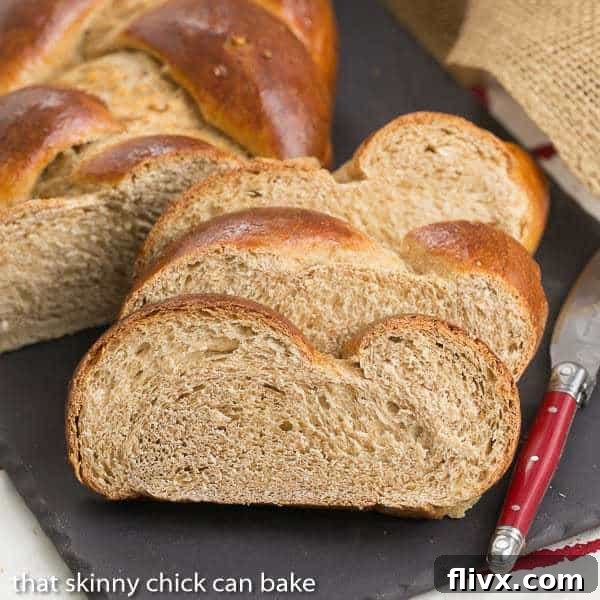
Whole Wheat Challah Recipe
20 minutes
30 minutes
50 minutes
2 loaves
A rich and tender egg bread made with wholesome whole wheat flour, perfect for any occasion.
Ingredients
- 2 (.25 ounce) packages instant yeast, such as Red Star Platinum
- 1 cup warm water (105-115°F / 40-46°C)
- ½ cup brown sugar, packed
- ½ cup unsalted butter, softened to room temperature
- 2 teaspoons salt
- 3 large eggs
- 2 cups whole wheat flour
- 2 cups all-purpose flour (you may add up to ½ cup more if needed during kneading)
- ½ cup old-fashioned rolled oats
- 1 large egg, beaten with 1 teaspoon water for egg wash
Instructions
- In the bowl of a stand mixer, combine the instant yeast and warm water. Let this mixture stand for about 5 minutes to activate the yeast.
- Using the paddle attachment, add the 3 eggs, brown sugar, softened butter, salt, whole wheat flour, 2 cups of the all-purpose flour, and rolled oats to the yeast mixture. Mix until just combined.
- Switch from the paddle attachment to the dough hook. Knead the dough on medium-low speed until it becomes smooth, elastic, and pulls away from the sides of the bowl. This typically takes 5 to 10 minutes. If the dough is too sticky, gradually add more all-purpose flour, a tablespoon at a time, until the desired consistency is reached (perform the window pane test if unsure).
- Shape the kneaded dough into a smooth ball. Place it in a lightly oiled bowl, turning the dough once to ensure its entire surface is coated with oil. Loosely cover the bowl with plastic wrap or a clean kitchen towel. Allow the dough to rise in a warm, draft-free area until it has doubled in size, which usually takes about 2 hours, depending on your environment.
- Once doubled, gently punch down the dough to release the air. Recover the bowl and let the dough rise again until doubled in size, which should take approximately 1 hour for the second rise.
- After the second rise, punch down the dough again. Turn it out onto a lightly floured surface and divide the dough in half.
- Take one half of the dough and divide it into 3 equal pieces. Roll each piece into a rope, approximately 12 inches long, making them slightly thicker in the middle and tapered at the ends. Pinch the three ropes together firmly at one end, then proceed to braid them together. Place the braided loaf onto a baking sheet lined with parchment paper.
- Repeat the braiding process with the remaining half of the dough to create a second loaf.
- Cover both braided challah loaves with a dry cloth or loosely with plastic wrap. Let them rise in a warm spot for their final proofing until they have nearly doubled in size, about 1 hour.
- While the challah is undergoing its final rise, preheat your oven to 350°F (175°C).
- Once risen, gently brush the surface of each loaf with the prepared egg wash (1 egg beaten with 1 teaspoon water). Bake in the preheated oven for 20-30 minutes, or until golden brown. For an extra glossy finish, brush the loaves with a second coat of egg wash at the 15-minute mark of baking.
- Remove the challah from the oven and transfer them to a wire rack. Allow the loaves to cool completely before slicing and serving. This ensures the crumb sets properly and enhances the flavor.
Notes
For absolute precision in baking, use an instant-read thermometer to check the internal temperature of your challah. It should register 190°F (88°C) in the thickest part of the loaf when it is fully baked, ensuring a perfect cook every time.
Recommended Products
As an Amazon Associate and member of other affiliate programs, I earn from qualifying purchases.
- Thermapen Instant Read Thermometer
- Reynolds Cookie Baking Sheets Non-Stick Parchment Paper, 25 Sheet, 4 Count
- USA Pan Bakeware Half Sheet Pan
- KitchenAid KSM150PSER Artisan Tilt-Head Stand Mixer with Pouring Shield, 5-Quart, Empire Red
Nutrition Information:
Yield:
24 servings
Amount Per Serving (approximate):
Calories: 1657
Total Fat: 58g
Saturated Fat: 32g
Trans Fat: 2g
Cholesterol: 362mg
Sodium: 1317mg
Carbohydrates: 246g
Fiber: 21g
Sugar: 37g
Protein: 45g
HOW MUCH DID YOU LOVE THIS RECIPE?
Please leave a comment on the blog or share a photo on Pinterest