
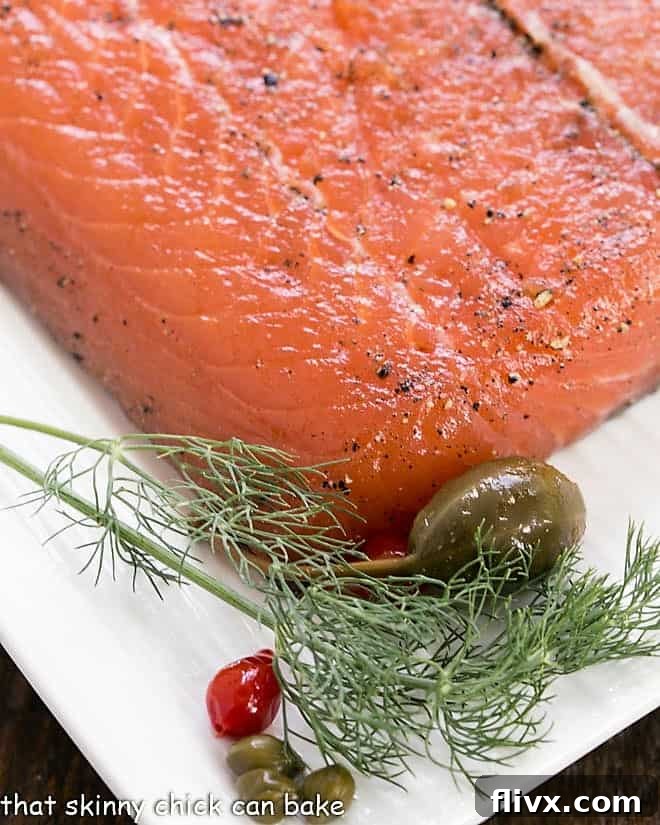
Gravlax, the quintessential Scandinavian cured salmon, stands as a testament to culinary simplicity yielding gourmet results. This exquisite delicacy, achieved through a straightforward dry-brining process using salt and sugar, requires only one main ingredient beyond the salmon itself: patience. While the hands-on preparation is remarkably easy, allowing the salmon to cure for 3-4 days in the refrigerator is the most crucial step, transforming fresh fillets into tender, flavorful slices. The wait is not merely worthwhile; it’s essential for achieving that distinctive, melt-in-your-mouth texture and rich taste that defines authentic gravlax.
Imagine the delight of your guests as you present a platter of this beautifully sliced, glistening salmon, proudly announcing it was crafted right in your own kitchen. This isn’t just a meal; it’s an experience, a luxurious treat that is surprisingly accessible for any home chef. Learning how to make gravlax will empower you to create a show-stopping dish perfect for your next breakfast, brunch, or elegant appetizer spread, promising to elevate any gathering.

Why You Must Make Homemade Gravlax
Beyond the undeniable deliciousness, there are compelling reasons to try your hand at making this iconic Scandinavian dish:
- Effortlessly Simple with Minimal Ingredients: Don’t be intimidated by its gourmet reputation. The process of curing salmon is incredibly straightforward, involving just a handful of staple ingredients like salt, sugar, and fresh dill. The real magic happens over time, making it a “set it and forget it” recipe in many ways, requiring only periodic attention.
- Complete Control Over Seasoning and Flavor: When you make gravlax at home, you become the master of its flavor profile. Adjust the balance of salt and sugar, experiment with different herbs beyond dill (though dill is traditional!), or introduce unique spices and spirits to create a taste perfectly suited to your palate. This customization is a luxury often unavailable with store-bought options.
- Impress Your Guests with a Gourmet Creation: There’s a special satisfaction in serving something truly spectacular that you’ve made yourself. Homemade gravlax consistently amazes and delights. Your friends and family will be astounded that this beautiful, expertly cured salmon originated from your kitchen, making you the undisputed culinary hero of the occasion.
- A Cost-Effective Luxury: While gravlax is often considered a high-end deli item, preparing it yourself can be significantly more economical, especially when buying salmon fillets in bulk. Enjoying this delicacy more frequently becomes a delicious reality.
For me, testing new recipes like gravlax often happens during special gatherings. Our Independence Day celebration, for instance, once featured an eclectic menu—Brazilian cocktails, this very Scandinavian cured salmon, grasshopper pie, and a few grill favorites. It was a global culinary journey, but for good reason. Gathering with neighbors provides the perfect opportunity to introduce and refine dishes for the blog. Unlike my family, who sometimes offer vague feedback, my friends are discerning eaters who provide candid and quotable reviews. Their excitement and genuine interest in the process of how to make gravlax, not just consuming it, always affirm a recipe’s success. It’s a definite improvement over the usual “good stuff” or “you don’t have to make this again” I might receive from my usual crew!
How to Make Gravlax AKA Cured Salmon: A Step-by-Step Guide
The art of making gravlax has evolved considerably since its humble beginnings. The first gravlax recipe dates back to the Middle Ages when resourceful Scandinavian fishermen would salt salmon and bury it in the sand above the high-tide line to ferment. This “grave-salmon” (grav-lax) was a method of preservation. Today, the process is far more refined and safe, focusing on dry-curing to achieve its delicate texture and flavor.
- Prepare Your Workspace and Salmon: Begin by lining a rimmed baking sheet with several layers of plastic wrap, ensuring enough overhang to completely envelop the salmon later. This is crucial for containing the brine and moisture. Place your salmon fillets, skin-side down, on the plastic-lined baking sheet. Carefully inspect the fillets for any remaining pin bones and remove them using a pair of clean tweezers.
- Craft the Dry Brine Mixture: In a small bowl, combine your chosen dry brine ingredients – typically a generous mix of kosher salt, sugar (often a mix of white and brown), and freshly ground black pepper. This salt-sugar ratio is key to both flavor and the curing process.
- Apply the Cure and Dill: Evenly sprinkle the dry brine mixture over the entire surface of the salmon fillets. Press it gently to ensure good contact. Next, generously arrange fresh dill sprigs over the cured salmon. The dill imparts its classic aromatic notes. Optionally, for an added layer of flavor complexity, drizzle a splash of alcohol like Cognac, vodka, or aquavit over the dill.
- Cover and Weight Down: Encase the salmon completely by wrapping it tightly with the overhanging plastic wrap. Then, place another baking sheet (or a flat board) directly on top of the wrapped salmon. To ensure the brine penetrates effectively and moisture is drawn out, weigh down the top baking sheet with heavy objects. Cast iron pans, bricks, or even several heavy cans work perfectly. This pressure facilitates the osmosis process.
- The Curing Process – Patience is Key: Transfer the weighted salmon to the refrigerator. This is where the patience truly comes in! Every 12 hours, you will need to flip the salmon pieces. This ensures even curing and allows the brine to work uniformly. As you flip, drain any accumulated liquid (this is moisture being drawn out of the salmon) and replace the plastic wrap to maintain freshness and hygiene. Continue this flipping and draining process for a total of 3 to 4 days. The exact duration depends on the thickness of your salmon and your desired firmness.
- Ready to Serve: Once cured, gently scrape off the dill and any remaining spices from the salmon. Pat the fillets dry with paper towels. You’re now ready to slice and enjoy your homemade gravlax!
Expert Tips for Making Perfect Gravlax
While the recipe is simple, a few expert tips can elevate your homemade gravlax from good to absolutely phenomenal. The primary requirement remains unwavering: patience, as those 3-4 days are critical for the transformation!
- Source High-Quality Salmon: The foundation of exceptional gravlax is premium salmon. Whenever possible, purchase your salmon from a reputable fishmonger rather than a general grocery store. Look for fresh, firm fillets with vibrant color and a clean, oceanic smell. Avoid salmon that appears mushy, dull, or has any off-putting odor, as the quality of the raw fish directly impacts the final texture and taste. Ideally, use wild-caught salmon for superior flavor and texture.
- Balance the Dill Flavor: Fresh dill is a hallmark of gravlax, but its flavor should complement, not overwhelm, the delicate taste of the salmon. Use a generous amount for aroma and subtle infusion, but don’t overdo it to the point where the seafood essence is lost. Consider other traditional Scandinavian spices for variety, such as a pinch of crushed fennel seeds, anise, coriander, caraway, or a hint of citrus zest (lemon or orange) in your cure mix.
- PRO-Tip: Incorporate Alcohol for Depth: Adding a tablespoon or two of alcohol, such as Cognac, vodka, gin, or aquavit (a Scandinavian spirit), to your cure is entirely optional but highly recommended for an added layer of flavor complexity. Alcohol, much like salt, acts as a flavor enhancer and can introduce subtle aromatic notes that elevate the gravlax. It doesn’t cook the fish but marries beautifully with the other ingredients.
- Embrace Patience: This cannot be stressed enough. The curing process is a scientific marvel where the salt and sugar mixture slowly penetrates the salmon, drawing out moisture and gently preserving the fish. Rushing this step will result in under-cured, less flavorful, or improperly textured gravlax. Trust the process; the wait is unequivocally worth the exquisite result.
- PRO-Tip: Set Reminders for Flipping: To ensure consistent curing, the salmon needs to be flipped every 12 hours. It’s easy to forget this crucial step, especially if your salmon is tucked away in a basement or secondary refrigerator. Use calendar alerts, phone alarms, or even sticky notes as reminders to keep you on schedule. This small effort significantly impacts the evenness of the cure.
- Choose Your Weights Wisely: The pressure applied by heavy objects is vital for keeping the salt and sugar mixture in close contact with the fish, aiding the osmosis process. You can use anything substantial: bricks wrapped in foil, a sturdy cast-iron skillet, heavy cookbooks, or even multiple cans of food. Ensure the weight is evenly distributed over the top baking sheet.
- Master the Art of Slicing: Achieving those characteristic paper-thin slices of gravlax requires a very sharp, long knife. For the best presentation and texture, slice the gravlax at a slight angle, from the long end of the fillet to the other long end. Aim for translucence. While my initial attempts weren’t always perfectly thin, practice truly makes perfect.
I knew I had a winner when one of my guests exclaimed, “This is magnificent smoked salmon!” Bill, ever the discerning eater, chimed in, “I hope there’s more of this.” Yes, Mr. Picky Pants was actually enjoying raw, cured salmon—a true revelation! Maybe one day he’ll even reconsider fennel… or mint… or nuts… or pineapple. A cook can certainly dream, can’t she? I’ve also had great success creating delightful canapés using a similar technique, inspired by recipes like Dorie Greenspan’s dilled gravlax with mustard sauce.
Frequently Asked Questions About Gravlax
Gravlax is a traditional Scandinavian dish, most commonly Swedish, consisting of raw salmon that has been cured. The curing process typically involves a dry brine mixture of salt, sugar, and fresh dill, along with black pepper, and sometimes a touch of alcohol. After curing in the refrigerator for several days, the salmon develops a firm yet tender texture and a distinctive, rich flavor. It’s then sliced paper-thin and served.
While both gravlax and lox are types of cured salmon, they differ in their preparation and ingredients. Lox, a term derived from the Yiddish word “laks” meaning salmon, traditionally refers to fresh salmon belly that is cured in a salty brine (without sugar or other spices) and is not smoked. Gravlax, on the other hand, is dry-cured with a salt and sugar mixture, fresh dill, and often pepper and alcohol, and it is also not smoked. The sugar in gravlax contributes a slightly different texture and flavor profile compared to the purely salty lox.
Making gravlax involves coating a fresh salmon fillet (skin-on, pin bones removed) with a dry brine mixture of salt, sugar, and pepper, then topping it with a generous amount of fresh dill and optionally a drizzle of spirits like Cognac. The salmon is placed on a plastic-lined, rimmed baking sheet, tightly wrapped, and then weighted down with a second baking sheet and heavy objects. It’s refrigerated for 3-4 days, during which time it’s flipped every 12 hours, and any released liquid is drained. After curing, the dill and cure mixture are scraped off, the salmon is patted dry, and then thinly sliced on the diagonal.
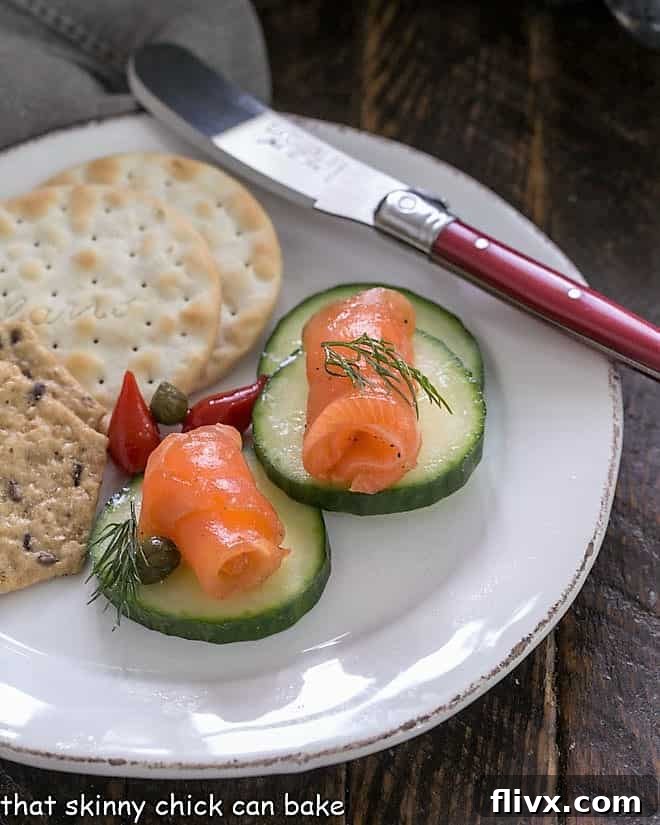
Gravlax is incredibly versatile and can be enjoyed in numerous ways. It is traditionally sliced very thinly on a slight angle and served for breakfast, brunch, or as part of a classic Scandinavian smörgåsbord. Common accompaniments include dark rye bread, crispbread, and a creamy mustard-dill sauce (hovmästarsås). For a classic pairing, serve it on a toasted bagel with a generous smear of cream cheese, finely diced red onions, and capers. It also makes an elegant appetizer on cucumber slices, endive spears, or small blini, often garnished with an extra sprig of fresh dill or a sprinkle of cracked black pepper.
Explore More Delicious Salmon Recipes:
- Rainbow Salmon Skewers from The View from Great Island
- Easy Glazed Salmon
- Pesto Potato Salmon
- Easy Smoked Salmon Dip
- Paleo Roasted Salmon
- More Delicious Seafood and Easy Salmon Recipes
Stay connected and share your culinary creations with us! Find us on Instagram, Facebook, and Pinterest. Don’t forget to tag us when you try one of our recipes! If you love the results, please consider leaving a 5-star rating in the recipe card below to help other home cooks discover these delicious dishes.

Gravlax: Scandinavian Cured Salmon
15 minutes
3-4 days (curing)
Approximately 20 servings
An easy guide to curing salmon at home with salt, sugar, and dill for a luxurious Scandinavian delicacy!
Ingredients
- 4 pounds boned salmon fillets, skin on (preferably high-quality, fresh salmon)
- 1 tablespoon freshly ground black pepper
- ½ cup granulated sugar
- ¼ cup kosher salt (or coarse sea salt)
- 3 bunches fresh dill, roughly chopped, plus extra for garnish
- 2 tablespoons Cognac, vodka, or aquavit (optional, for enhanced flavor)
Instructions
- To begin, thoroughly wrap a rimmed baking sheet in several layers of plastic wrap, ensuring ample overhang. Line this with a sheet of parchment paper. Place the salmon fillets on the parchment, skin-side down. Carefully inspect and remove any remaining pin bones using tweezers.
- In a small bowl, combine the freshly ground black pepper, granulated sugar, and kosher salt. Mix thoroughly. Evenly sprinkle this dry brine mixture over the entire surface of the salmon fillets, pressing gently to ensure good contact. Generously place the fresh dill sprigs over the cured salmon. If using, drizzle the Cognac or chosen spirit over the dill and salmon.
- Cover the salmon completely with the overhanging plastic wrap, sealing it tightly. Place another baking sheet (or a flat board) directly on top of the wrapped salmon. To apply consistent pressure, place a heavy object (such as cast iron skillets, bricks wrapped in foil, or heavy cans) on top of the second baking sheet.
- Transfer the weighted salmon to the refrigerator. Every 12 hours, carefully unwrap, flip the salmon pieces to ensure even curing, drain any accumulated liquid (which is moisture drawn out by the brine), and re-wrap with fresh plastic wrap. Continue this process for a total of 3 to 4 days, depending on the thickness of your salmon and desired texture.
- To serve, unwrap the cured salmon. Gently scrape off the dill and any excess spice mixture. Pat the fillets thoroughly dry with paper towels. Using a very sharp, long knife, slice the salmon into thin pieces on the diagonal, working from the long end of the fillet. Arrange on a platter and serve immediately, or store tightly wrapped in the refrigerator for up to 5 days.
Notes
This recipe is inspired by the techniques of culinary greats like Emeril Lagasse and Julia Child, adapted for home kitchens.
Please note that the “Total Time” listed in the summary includes the essential 3-4 days required for the curing process in the refrigerator.
If you prefer to make a smaller batch, you can easily halve the amount of salmon and all other ingredients. The curing time will remain consistent, as it depends on the thickness of the fillet, not its overall weight.
Recommended Products
As an Amazon Associate and member of other affiliate programs, I earn from qualifying purchases.
- Smithcraft Stainless Steel Measuring Cups Set
- 16-inch Grilling Tongs (Useful for handling salmon during curing)
- USA Pan Bakeware Half Sheet Pan (Essential for curing and weighing)
Nutrition Information (Estimated):
Yield:
20 servings
Serving Size:
1 slice (approx. 2 oz)
Amount Per Serving:
Calories: 210Total Fat: 11gSaturated Fat: 2gTrans Fat: 0gUnsaturated Fat: 8gCholesterol: 57mgSodium: 1470mgCarbohydrates: 5gFiber: 0gSugar: 5gProtein: 20g
HOW MUCH DID YOU LOVE THIS RECIPE?
Please leave a comment on the blog or share a photo on Pinterest