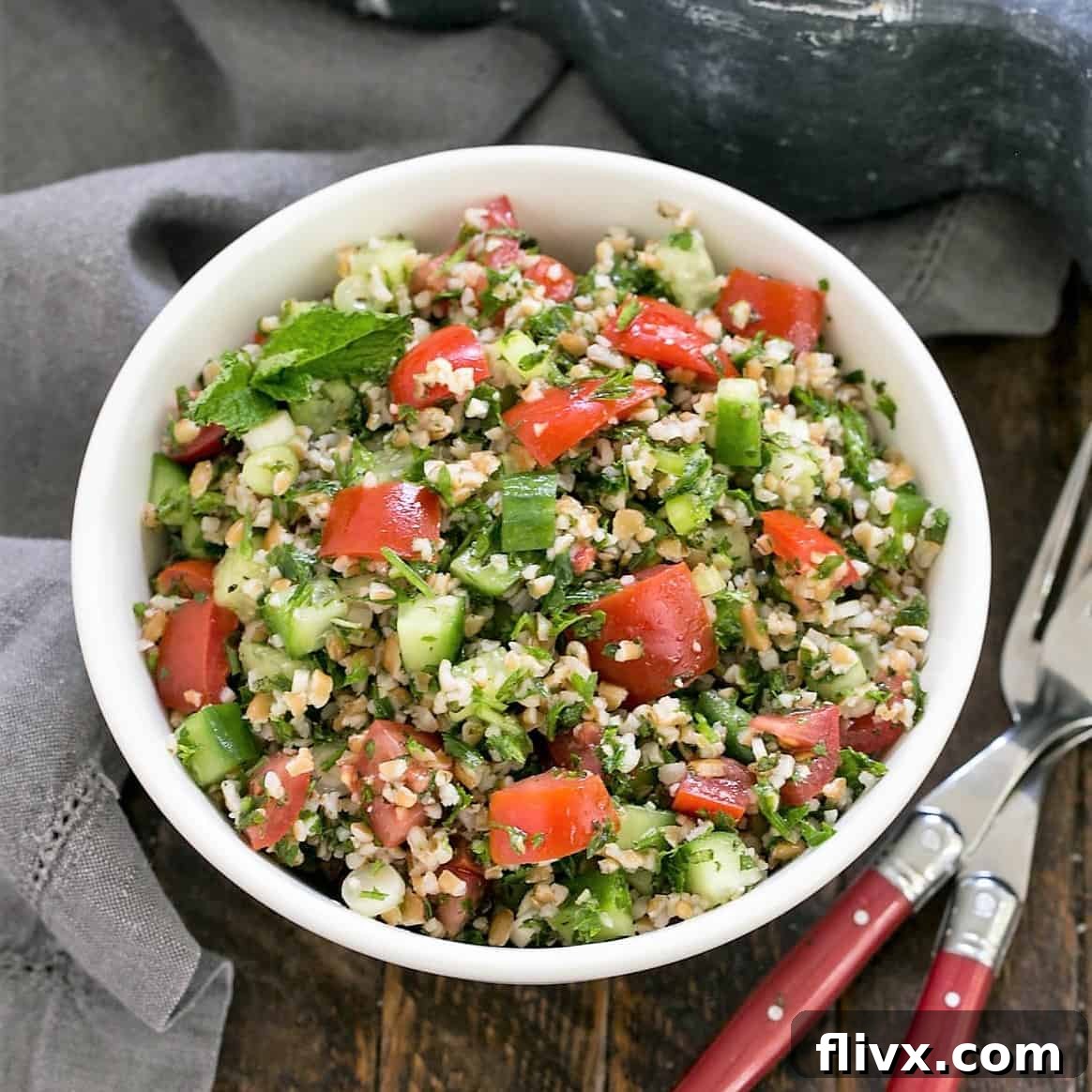
The Ultimate Tabbouleh Recipe: A Vibrant & Healthy Middle Eastern Delight
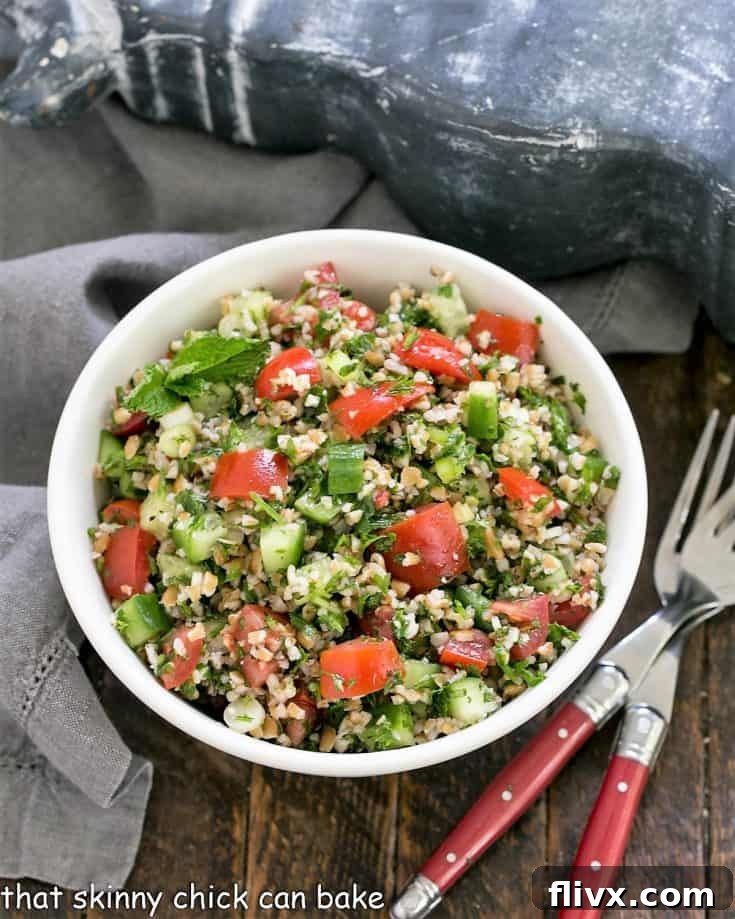
Embark on a culinary journey with this incredibly fresh and wholesome Tabbouleh Recipe. A jewel of Middle Eastern cuisine, this vibrant salad is crafted from finely chopped whole grains, an abundance of fresh herbs, juicy tomatoes, crisp cucumbers, and tender scallions. What truly elevates it is the simple yet powerful lemon and garlic dressing, which infuses every bite with a bright, zesty flavor, making it an irresistible side dish or a light, refreshing main meal.
For years, I approached Tabbouleh Salad Recipes with caution, often finding them overly tart or lacking balance. However, discovering the secret to a truly outstanding Tabbouleh transformed my perspective. The key lies in using the freshest, peak-season ingredients – especially ripe, flavorful tomatoes in the summer – and mastering the delicate balance of the dressing, ensuring the lemon enhances rather than overwhelms. This perfected recipe is not just a dish; it’s a revelation, bursting with natural goodness and unparalleled taste.
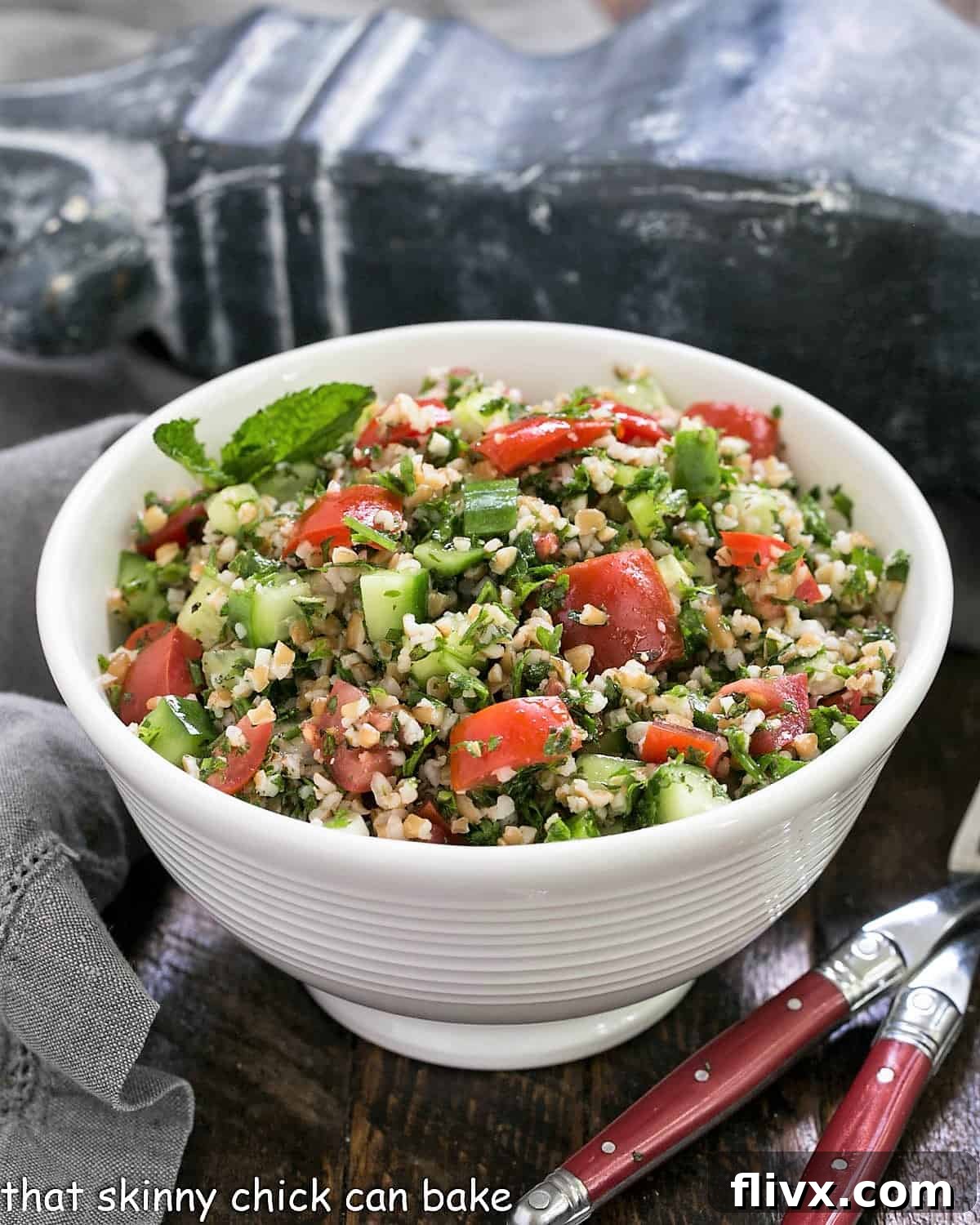
Why This Tabbouleh Recipe Will Become Your Favorite
Beyond its incredible flavor profile, there are numerous compelling reasons why this Tabbouleh recipe deserves a permanent spot in your kitchen repertoire. It’s more than just a salad; it’s a celebration of fresh, natural ingredients and simple preparation.
- Effortlessly Fresh and Easy to Prepare: This recipe proves that healthy eating doesn’t have to be complicated. With minimal cooking and straightforward chopping, you can create a spectacular dish in no time. Its refreshing nature makes it perfect for warm weather or as a palate cleanser alongside richer meals.
- Wholesome, Vegan, and Exceptionally Healthy: Packed with plant-based goodness, this Tabbouleh is naturally vegan and brimming with nutrients. It’s a guilt-free indulgence that supports a healthy lifestyle without compromising on taste.
- A Nutritional Powerhouse: Every spoonful is loaded with essential vitamins, minerals, and dietary fiber, contributing to digestive health and overall well-being. The combination of bulgur wheat, fresh vegetables, and potent herbs makes it a truly nourishing choice that tastes incredibly delicious.
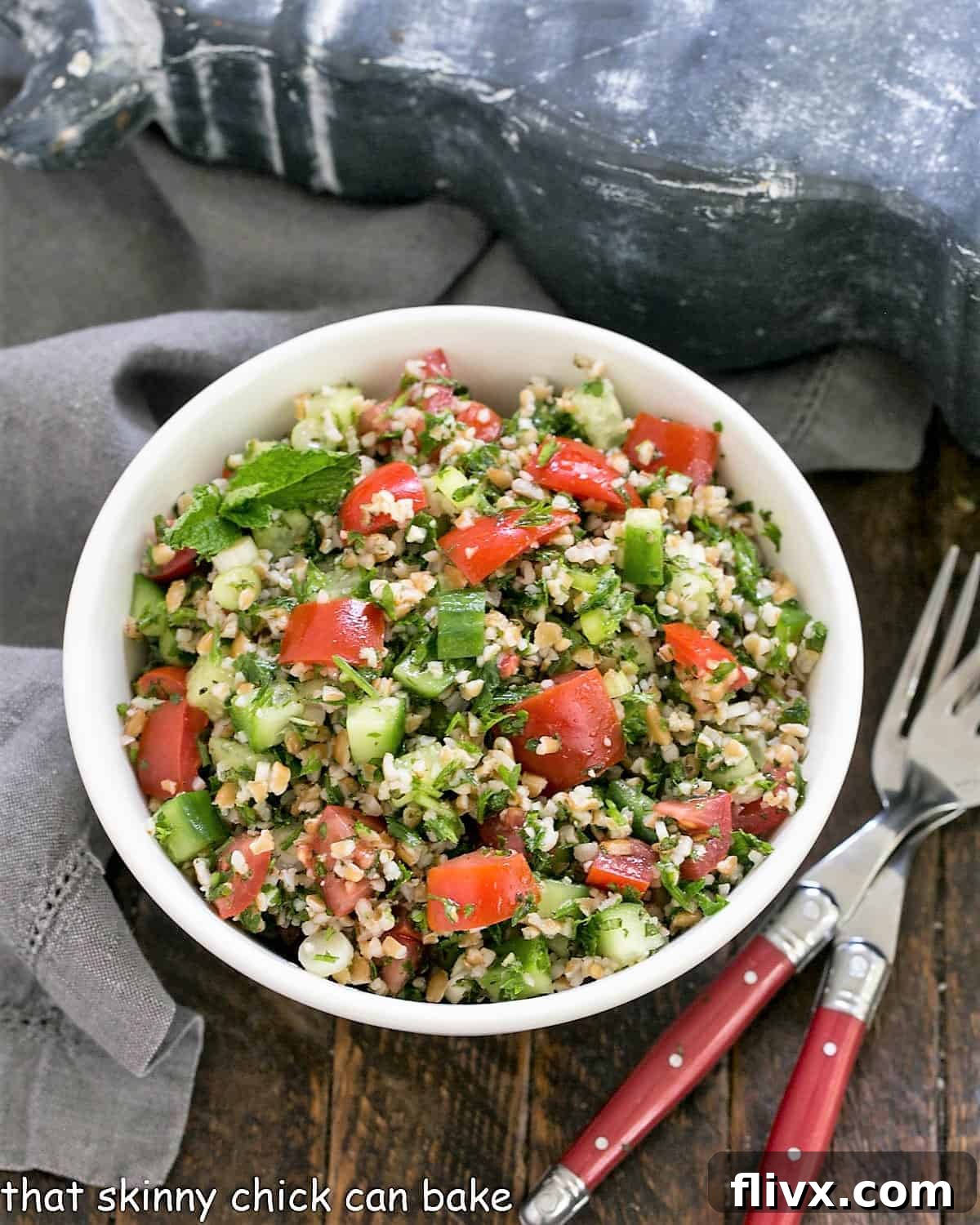
Mastering Tabbouleh: Expert Tips for Perfection
My journey to perfecting Tabbouleh has been a delightful one, even leading to a cooking segment on our local CBS affiliate station! That experience solidified my understanding of what makes a truly exceptional Tabbouleh. While I’ve often leaned towards a Quinoa Tabbouleh Salad for a gluten-free twist, this traditional bulgur-based version is equally magnificent, offering a distinct texture and flavor. Here are my expert tips to ensure your Tabbouleh is nothing short of perfection:
- Bulgur Preparation for Optimal Texture: Many recipes call for boiling bulgur, but I’ve found that soaking produces a far superior, fluffier grain, preventing it from becoming waterlogged. Always check your specific bulgur package instructions, but generally, soaking equal parts boiling water and bulgur wheat for about an hour yields the best results. The crucial step is to drain any excess water thoroughly after soaking. Squeeze it gently in a clean kitchen towel if necessary to ensure your salad isn’t watery, which can dilute the flavors.
- Enhance Vegetable Flavor and Texture: A simple trick to elevate your chopped cucumbers and tomatoes is to salt them lightly before adding them to the salad. This process draws out some of their natural moisture, concentrating their flavor and preventing the salad from becoming soggy. Salt also acts as a natural flavor enhancer, making these key ingredients truly shine. Remember to drain off any accumulated liquid before incorporating the salted vegetables into your Tabbouleh.
- The Secret to Bitter-Free Parsley: Parsley is a cornerstone of Tabbouleh, but if not prepared correctly, it can introduce an unwanted bitterness. The key is to mince it very finely. I highly recommend using a food processor for this task; it ensures a consistent, super-fine chop that minimizes bitterness. If you’re prepping your parsley ahead of time, air dry it on paper towels after mincing. This prevents moisture buildup, which can cause deterioration and loss of freshness if stored overnight in the refrigerator.
- Strategic Meal Prepping for Convenience: Tabbouleh is an excellent candidate for advance preparation. All the individual ingredients—the soaked bulgur, chopped vegetables, and minced herbs—can be prepped and stored separately the day before you plan to serve the salad. This makes assembling the entire whole-grain salad incredibly quick and easy on the day of your meal.
- Dressing Details for Best Results: The lemon and garlic dressing can also be made ahead of time. Be aware that olive oil tends to solidify when chilled. To ensure a smooth, easily incorporated dressing, remove it from the refrigerator well in advance, allowing it to return to room temperature before you toss it with your salad.
- Versatile Pairing Suggestions: This refreshing salad is incredibly versatile. It makes a fantastic accompaniment to virtually any grilled entree, from chicken and fish to halloumi. It’s also a quintessential pairing for traditional Middle Eastern main dishes like falafel, kebabs, or hummus platters, adding a bright, fresh counterpoint.
Even my notoriously picky family, who might typically shy away from ingredients like bulgur or mint, couldn’t resist this version. My husband, Bill, known for scrutinizing salad contents, was captivated. I happily devoured the lion’s share myself, and let me tell you, it was perfectly refreshing on a hot, humid Indiana day. Plus, it remained absolutely delicious as leftovers for the next couple of days, making it ideal for meal prep!
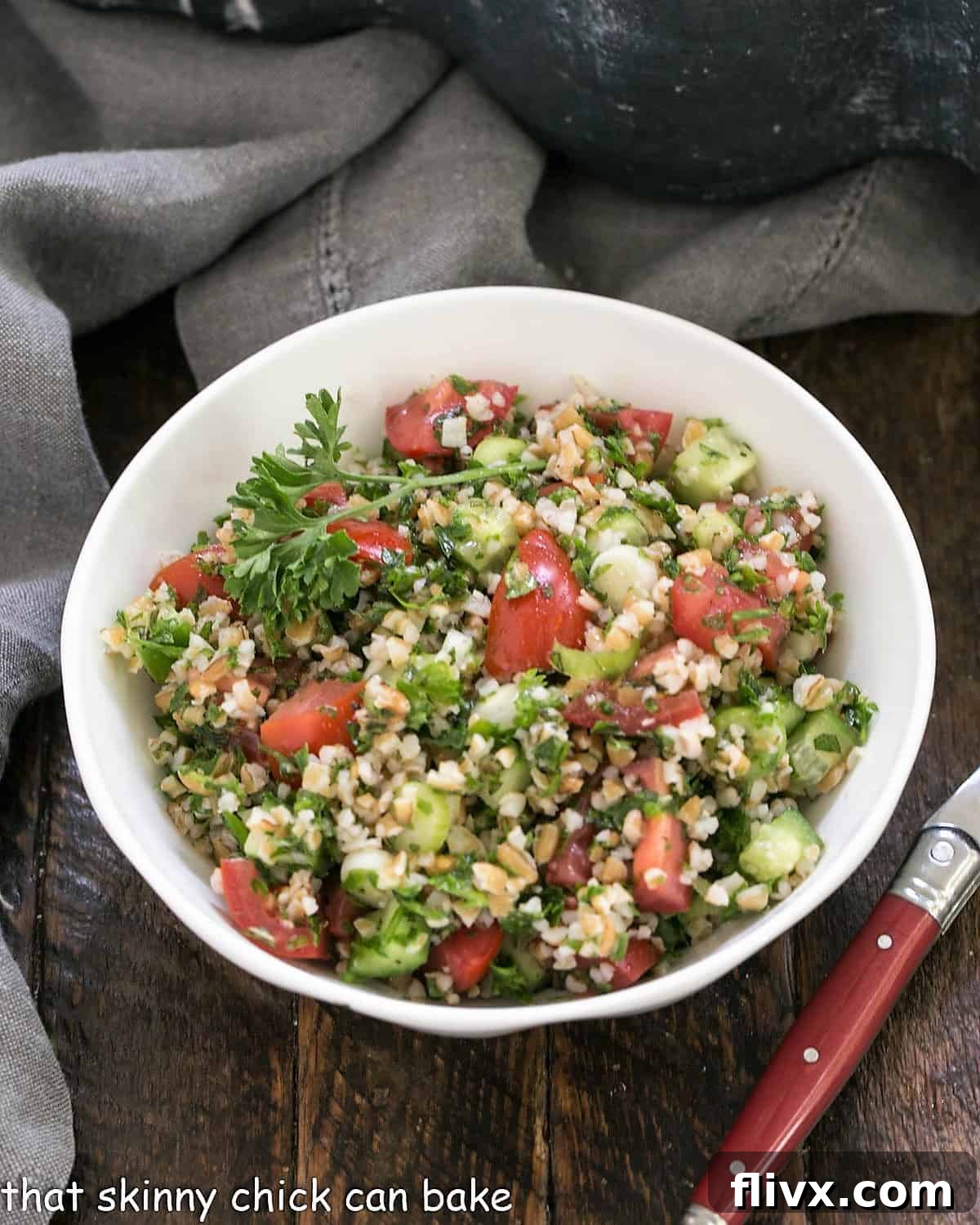
The Power of Freshness: Key Ingredients and Their Benefits
The beauty of Tabbouleh lies in its simple, fresh ingredients, each contributing not only to the flavor and texture but also offering remarkable health benefits. Choosing high-quality, fresh produce is paramount for an authentic and delicious experience.
- Bulgur Wheat: This cracked wheat is a fantastic whole grain, providing a substantial amount of dietary fiber crucial for digestive health, along with essential minerals like manganese, magnesium, and iron. It’s the hearty, satisfying base of Tabbouleh.
- Tomatoes: Bursting with flavor, tomatoes are an excellent source of Vitamins A, C, and K. More importantly, they’re rich in lycopene, a powerful antioxidant known for its potential to reduce the risk of certain cancers and protect heart health.
- Cucumber: Offering a crisp, refreshing crunch, cucumbers are primarily water, providing excellent hydration. They also contain Vitamins C and K, along with minerals like magnesium, manganese, and potassium. Their antioxidant content, including flavonoids and tannins, further adds to their health profile.
- Parsley and Mint: These aromatic herbs are the soul of Tabbouleh. Parsley is incredibly rich in Vitamin K, vital for blood clotting and bone health, and also contains beneficial flavonoids. Mint is renowned for its digestive aid properties and may even enhance brain function, providing a fresh, cooling sensation.
- Scallions and Garlic: Eaten raw in Tabbouleh, both scallions (green onions) and garlic contribute pungent flavor and significant health benefits. They are good sources of fiber, may possess anti-cancer properties (especially against stomach cancer), and are loaded with phytonutrients and antioxidants.
- Olive Oil: Extra virgin olive oil is one of the healthiest fats available. It’s rich in heart-healthy monounsaturated fats and brimming with potent antioxidants. Regular consumption may contribute to lower blood pressure, reduced risk of heart disease, decreased inflammation, and potentially offer protection against Alzheimer’s and Type 2 Diabetes.
- Lemon Juice: Freshly squeezed lemon juice brightens the entire salad. It’s exceptionally high in Vitamin C, boosts iron absorption from other foods, aids digestion, and may even help prevent certain types of kidney stone formation.
Frequently Asked Questions About Tabbouleh
Curious to learn more about this beloved Middle Eastern salad? Here are some common questions and detailed answers to help you understand and master Tabbouleh.
What exactly is Tabbouleh?
Tabbouleh, often spelled Tabouli, is a traditional Middle Eastern salad that originated in the mountains of Lebanon. Its primary ingredients include finely chopped bulgur wheat, fresh tomatoes, onions (or scallions), and generous amounts of fresh parsley and mint, all dressed in olive oil and lemon juice. It’s always served cold and is celebrated for its incredibly fresh and vibrant flavor profile. As for pronunciation, it’s typically “tuh-BOO-luh,” though many, myself included, pronounce the last syllable as “lee.” Both are widely accepted!
What are the primary ingredients in a classic Tabbouleh salad?
The foundation of an authentic Tabbouleh salad rests on bulgur wheat, which gives it its characteristic texture. This is generously mixed with finely diced fresh tomatoes and cucumbers, thinly sliced green onions (scallions), and an abundance of fresh, finely minced parsley and mint. The dressing is simple yet essential, typically made from high-quality extra virgin olive oil, freshly squeezed lemon juice, and a touch of minced garlic and salt. This combination creates a harmonious blend of flavors and textures.
Why might my Tabbouleh taste bitter, and how can I prevent it?
A common culprit for bitter Tabbouleh is improperly prepared parsley. If the parsley is not minced finely enough, it can release bitter compounds. My recommendation is to chop it roughly by hand and then pulse it in a food processor until it reaches a very fine, almost couscous-like consistency. Additionally, if you’re preparing the parsley a day in advance, spreading the minced parsley on paper towels to absorb any excess moisture before refrigerating can help minimize deterioration and prevent bitterness from developing overnight.
How long can Tabbouleh be stored, and what are the best storage practices?
Once mixed with its dressing, Tabbouleh can be stored in an airtight container in the refrigerator for up to 4 days. While it’s best enjoyed within the first two days for optimal freshness and texture, it remains perfectly edible and delicious for a few days longer. The lemon juice and olive oil act as natural preservatives, though the vegetables may soften slightly over time.
Can I make Tabbouleh gluten-free?
Absolutely! While traditional Tabbouleh uses bulgur wheat, which contains gluten, you can easily substitute it with cooked quinoa for a delicious gluten-free version. The preparation method for quinoa is similar to bulgur: cook it according to package directions, then allow it to cool and fluff before mixing with the other ingredients. The texture will be slightly different but equally satisfying.
What are the best serving suggestions for Tabbouleh?
Tabbouleh is incredibly versatile. It shines as a light and healthy side dish for virtually any meal, particularly grilled meats, poultry, or fish. It’s a perfect complement to other Mediterranean or Middle Eastern staples like hummus, baba ghanoush, falafel, or kebabs, forming part of a larger mezze platter. You can also enjoy it as a light lunch on its own, perhaps scooped with lettuce leaves or pita bread.
More Refreshing Salad Recipes You’ll Love
If you’ve enjoyed the fresh and vibrant flavors of this Tabbouleh, you’re sure to appreciate these other delightful salad creations. Each offers a unique blend of ingredients, perfect for any season or occasion:
- Mango, Avocado, Black Bean Quinoa Salad from Jeanette’s Healthy Eating: A tropical and hearty salad packed with superfoods.
- Superfoods Salad: A nutritious blend of greens and beneficial ingredients, often with a light vinaigrette.
- Guacamole Salad: All the creamy, flavorful goodness of guacamole in a refreshing salad format.
- Honey Lime Fruit Salad: A sweet and tangy fruit medley perfect for breakfast or dessert.
- Fresh Corn and Black Bean Salad: A colorful and hearty salad, ideal for barbecues and potlucks.
- Best Salad Recipes: Explore a wide collection of my favorite salad recipes for endless inspiration!
Stay connected and share your culinary creations with me on social media! Find me @ Instagram, Facebook, and Pinterest. Don’t forget to tag me when you try one of my recipes! If you love the results, please consider leaving a 5-star rating in the recipe card below to help others discover this delicious dish.
Best Tabbouleh Recipe
A healthy, refreshing whole-grain salad bursting with fresh vegetables, fragrant herbs, and a simple, zesty garlic-lemon dressing. Perfect as a side dish or light main.
Ingredients
- ½ cup bulgur wheat, cooked according to package directions
- 1 cup diced cucumbers (mini Persian cucumbers recommended)
- 1 cup diced tomatoes (use garden tomatoes or grape/cherry tomatoes for best flavor)
- 1 teaspoon fine sea salt, divided
- 2 bunches curly parsley, processed to a fine mince (stems included, adjust amount to taste)
- ½ cup minced fresh mint
- ⅓ cup thinly sliced green onions
- ⅓ cup extra virgin olive oil
- 3 tablespoons freshly squeezed lemon juice
- 1 minced garlic clove
Instructions
- Soak the bulgur in boiling water according to the package instructions. Once tender, drain off any excess water thoroughly. You can gently squeeze it in a clean kitchen towel to remove extra moisture for a fluffier result.
- In a separate bowl, combine the diced cucumbers and tomatoes with ½ teaspoon of the fine sea salt. Toss gently and let them rest for a few minutes. This helps draw out excess moisture and concentrates their flavor.
- While the vegetables rest, process the parsley in a food processor until it is finely minced. Transfer the minced parsley to your main serving bowl.
- Add the cooled, drained bulgur, fresh minced mint, and thinly sliced green onions to the serving bowl with the parsley.
- Before adding the cucumbers and tomatoes, drain any accumulated liquid from their bowl. Then, add the drained vegetables to the serving bowl.
- In a small bowl, whisk together the extra virgin olive oil, freshly squeezed lemon juice, minced garlic, and the remaining ½ teaspoon of salt until well combined.
- Pour about half of the prepared dressing over the ingredients in the serving bowl and toss gently to combine. Add more of the remaining dressing as desired, until the salad is dressed to your preference.
- Taste the Tabbouleh and adjust seasoning as needed, adding more salt or lemon juice if desired for a balanced flavor.
- Allow the Tabbouleh to rest for at least 15 minutes before serving. This allows the flavors to meld and deepen beautifully.
Notes
Store leftover Tabbouleh covered in an airtight container in the refrigerator for up to 4 days. The flavors often deepen and improve on the second day!
Recommended Products
As an Amazon Associate and member of other affiliate programs, I earn from qualifying purchases.
- Food Processor
- OXO Cutting Board
- Santoku Knife
Nutrition Information:
Amount Per Serving:
- Yield: 4 servings
- Serving Size: 1
- Calories: 301
- Total Fat: 23g
- Saturated Fat: 4g
- Trans Fat: 0g
- Unsaturated Fat: 17g
- Cholesterol: 25mg
- Sodium: 643mg
- Carbohydrates: 15g
- Fiber: 5g
- Sugar: 5g
- Protein: 11g
Thatskinnychickcanbake.com occasionally offers nutritional information for recipes contained on this site. This information is provided as a courtesy and is an estimate only. This information comes from online calculators. Although thatskinnychickcanbake.com attempts to provide accurate nutritional information, these figures are only estimates. Varying factors such as product types or brands purchased can change the nutritional information in any given recipe. Also, many recipes on thatskinnychickcanbake.com recommend toppings, which may or may not be listed as optional and nutritional information for these added toppings is not listed. Other factors may change the nutritional information such as when the salt amount is listed “to taste,” it is not calculated into the recipe as the amount will vary. Also, different online calculators can provide different results. To obtain the most accurate representation of the nutritional information in any given recipe, you should calculate the nutritional information with the actual ingredients used in your recipe. You are solely responsible for ensuring that any nutritional information obtained is accurate.
There you have it – the ultimate guide to creating a Tabbouleh that’s not just a dish, but an experience. Fresh, healthy, and incredibly flavorful, this recipe is a testament to the power of simple, quality ingredients. Enjoy the vibrant tastes of the Middle East right in your home!