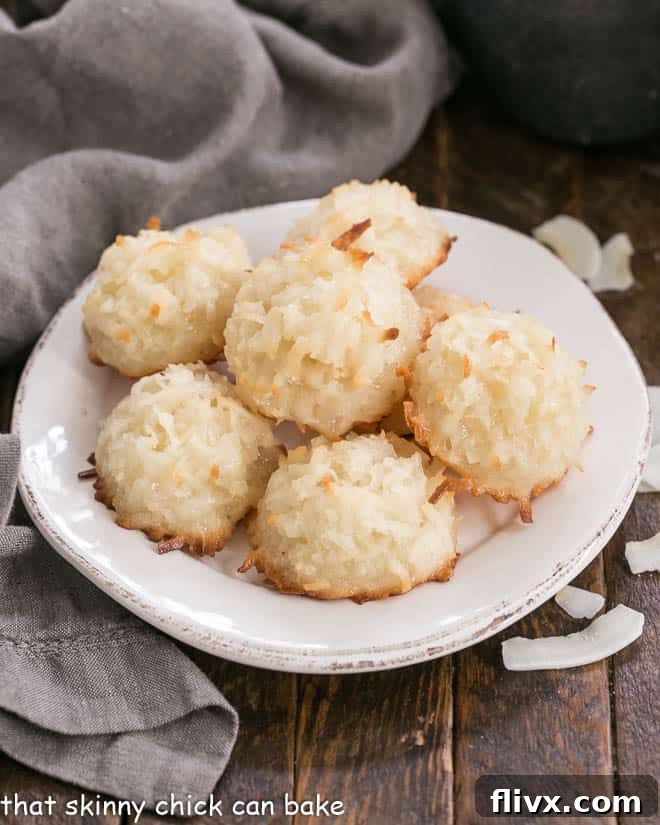
Welcome, baking enthusiasts, to the ultimate guide for creating the most delightful and authentic **Classic Coconut Macaroons**. This isn’t just any recipe; it’s a culinary masterpiece meticulously crafted to deliver an unparalleled experience of texture and flavor. Forget everything you thought you knew about coconut cookies, because these macaroons are designed to transcend your expectations, offering a perfectly sweet, moist, and wonderfully chewy bite. Whether you’re planning a cozy afternoon tea, preparing for festive holiday gatherings, or simply craving a taste of pure coconut bliss, this recipe promises to be your new gold standard.
For too long, the humble coconut macaroon has been overshadowed by its more finicky French cousin, the macaron. But today, we celebrate the rustic charm and irresistible deliciousness of the true macaroon, a cookie that evokes nostalgia and comfort with every morsel. While my family may not always share my fervent passion for all things coconut, this particular recipe has consistently earned rave reviews from friends, transforming skeptics into ardent admirers. It’s no wonder it’s now celebrated as the definitive **Best Macaroon Recipe**.
This exceptional recipe comes from the legendary baking guru and cookbook author, Alice Medrich. Known for her precision and ability to elevate classic treats, Medrich’s approach ensures a macaroon that is not only easy to make but consistently perfect. Unlike many contemporary versions that rely on sweetened condensed milk for convenience, this recipe embraces traditional methods, resulting in a depth of flavor and a superior texture that simply can’t be replicated. Prepare to impress your palate and your guests with these truly spectacular homemade coconut macaroons.
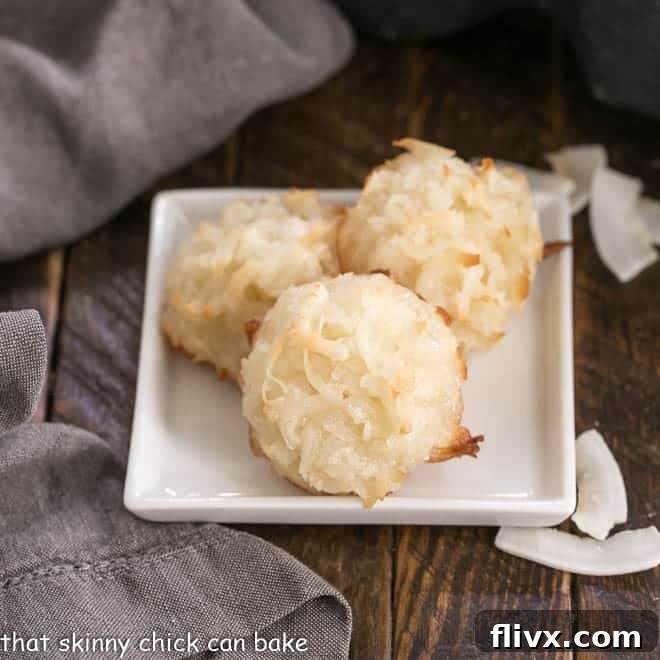
Why These Classic Coconut Macaroons Are a Must-Bake
There are countless reasons why this particular recipe for **Homemade Coconut Macaroons** stands head and shoulders above the rest. It’s more than just a sweet treat; it’s an experience, a journey back to the fundamentals of exquisite baking. Here’s why you absolutely need to make these:
- Authored by Alice Medrich: This recipe isn’t just from any cookbook; it originates from Alice Medrich, a revered figure in the culinary world. Her expertise in baking is legendary, and her recipes are celebrated for their impeccable balance and consistent results. When you bake with an Alice Medrich recipe, you’re not just following instructions; you’re tapping into decades of baking wisdom, guaranteeing a superior outcome that novice and seasoned bakers alike will appreciate.
- Perfectly Sweet and Chewy Texture: The hallmark of a truly great macaroon is its texture. These macaroons boast an incredible balance of sweetness and a delightful chewiness that melts in your mouth. They achieve a delicate crispness on the outside, giving way to a moist, tender, and incredibly satisfying interior. This isn’t the dry, crumbly coconut cookie you might encounter elsewhere; this is a rich, substantial, and utterly addictive confection.
- A Classic Recipe Without Sweetened Condensed Milk: Many modern macaroon recipes opt for the convenience of sweetened condensed milk. While easy, this often results in an overly sweet and sometimes gummy texture that lacks the nuanced flavor of a truly classic macaroon. This recipe, however, takes a more traditional approach, relying on egg whites, sugar, and pure vanilla to create a clean, authentic coconut flavor and a superior, more refined texture. It allows the natural sweetness of the coconut to shine through, without being overwhelmed by excessive sugar.
- Simplicity with Sophistication: Despite the elevated results, the process of making these macaroons is surprisingly straightforward. With only a handful of common ingredients and clear, easy-to-follow steps, even those new to baking can achieve professional-quality results. The extra step of gently heating the mixture before baking is minimal but crucial, contributing immensely to the macaroon’s signature chewiness and structure.
- Versatile for Any Occasion: Whether it’s a casual snack, an elegant dessert for a dinner party, or a delightful addition to your holiday cookie platter, these coconut macaroons fit every occasion. They’re visually appealing, easy to transport, and universally loved by anyone who appreciates a well-made sweet treat.
Essential Ingredient Notes for the Best Macaroons
One of the beauties of this **Easy Macaroon Recipe** lies in its simplicity. You only need five basic ingredients, most of which are likely already in your pantry. However, choosing the right quality and understanding the role of each component is key to achieving those perfectly chewy and flavorful results.
- Kitchen Staples: Sugar, Salt, Real Vanilla Extract
- Granulated Sugar: Essential for sweetness and structure. Using standard granulated sugar works perfectly here, dissolving nicely into the egg white mixture to create that wonderful chewy texture. Don’t be tempted to reduce the sugar too much, as it plays a critical role in the macaroon’s structure and browning.
- Salt: A pinch of salt is vital for balancing the sweetness and enhancing the overall flavor of the macaroons. It acts as a flavor enhancer, much like in savory dishes, making the coconut flavor more vibrant and preventing the cookies from tasting one-dimensionally sweet.
- Real Vanilla Extract: Always opt for pure vanilla extract over imitation. The subtle, aromatic notes of real vanilla elevate the coconut flavor, adding depth and warmth to the macaroons. A high-quality vanilla makes a noticeable difference in the final taste profile.
- Egg Whites: The Foundation of Texture
- For this recipe, you’ll need four egg whites. These provide the essential structure and airy quality that allows the macaroons to hold their shape and develop that characteristic chewy interior.
- PRO-TIP for Separation: Separate your eggs when they are cold. The yolks are much less likely to break when firm, making the separation process smoother and cleaner. Even a tiny bit of yolk in your whites can prevent them from reaching their full potential. Once separated, allow the egg whites to come to room temperature before combining them with other ingredients. Room temperature egg whites whip up more easily and incorporate air more effectively.
- Sweetened Coconut: The Star of the Show
- Sweetened Shredded Coconut: The quality of your coconut truly matters. We recommend using sweetened shredded coconut, such as Baker’s Angel Flake Coconut. This type of coconut is moist and flavorful, contributing to the rich, chewy texture of the macaroons.
- Why Sweetened? While unsweetened coconut can be used in some recipes, for traditional macaroons, sweetened coconut is preferred. It adds an additional layer of moisture and sweetness, helping to create that signature soft, chewy consistency that defines these cookies. Using unsweetened coconut might result in a drier, less tender macaroon.
- Ensure your coconut is fresh. Old or dried-out coconut can impart an off-flavor and won’t contribute to the desired texture.
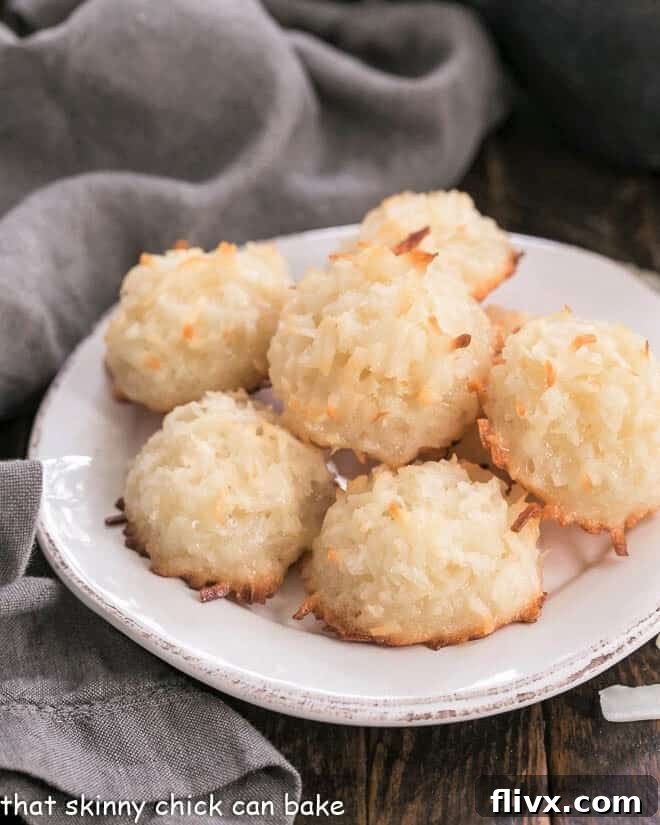
Mastering Your Macaroons: Essential Expert Tips
While this **Alice Medrich Macaroon Recipe** is relatively straightforward, a few expert tips can elevate your baking from good to extraordinary. If you’re accustomed to making a macaroon recipe with sweetened condensed milk, this method introduces an extra step of gently cooking the mixture. But I promise you, this brief effort is absolutely worth the time and will result in incomparably superior macaroons.
- The Double Boiler Method is Key: The most distinctive step in this recipe is gently heating the coconut-egg white mixture. This process allows the sugar to dissolve completely and slightly cooks the egg whites, contributing to the macaroons’ incredible chewiness and stability.
- PRO-Tip: Make a Makeshift Double Boiler: If you don’t own a traditional double boiler, don’t worry! You can easily create one at home. Simply fill a saucepan with about 1-2 inches of water and bring it to a simmer over medium heat. Place a heatproof glass or metal bowl over the saucepan, ensuring the bottom of the bowl does not touch the simmering water. The steam from the saucepan will gently heat the contents of the bowl. This indirect heat is crucial for slowly thickening the mixture without scrambling the egg whites.
- Stirring Until Opaque and Thickened: While heating the mixture over the double boiler, it’s imperative to stir frequently. This prevents the mixture from sticking and ensures even heating. Continue stirring for approximately 5 minutes, or until the mixture visibly thickens and becomes opaque, losing its initial transparency. This change in appearance indicates that the egg whites have properly cooked and the sugar has fully dissolved, creating the perfect base for your macaroons. Once this stage is reached, remove the bowl from the heat and allow the mixture to cool. Adequate cooling (about 30 minutes) is important before scooping, as it helps the macaroons hold their shape better during baking.
- Achieving Perfect Portions with a Cookie Scoop: For uniform baking and a professional appearance, use a cookie scoop to portion out your macaroon batter. A medium-sized cookie scoop (approximately 2 tablespoons) is ideal for creating consistently sized rounds. This not only makes the process quicker but also ensures all your macaroons bake evenly, preventing some from being overdone while others are undercooked. Place the scoops about 2 inches apart on a parchment-lined baking sheet to allow for slight spreading.
- The Art of Two-Stage Baking: This recipe employs a smart two-stage baking temperature to achieve the perfect golden-brown exterior and chewy interior.
- Initial High Heat (350°F / 175°C): Starting at a higher temperature for the first 5 minutes helps to set the macaroons quickly, creating a slightly crisp outer shell and encouraging the edges to brown beautifully.
- Reduced Heat (325°F / 160°C): After the initial blast of heat, decrease the oven temperature. This allows the macaroons to bake through gently without over-browning or becoming dry. Continue baking for an additional 10-15 minutes, or until the cookies are lightly browned all over with some deliciously darker, caramelized edges. Keep a close eye on them during this stage, as oven temperatures can vary.
- Parchment Paper is Your Best Friend: Always line your baking sheets with parchment paper. Macaroons can be sticky, and parchment paper ensures easy removal without any breakage, preserving their perfect shape. It also aids in even heat distribution.
- Cooling Completely: Once baked, allow the macaroons to cool completely on the baking sheet before transferring them to a wire rack. This allows them to firm up properly, enhancing their chewy texture and making them easier to handle.
I can confidently say that after experiencing the superior taste and texture of these Alice Medrich macaroons, I will never again resort to a recipe using sweetened condensed milk. These are truly the ultimate **Chewy Coconut Macaroons** – perfectly sweet, incredibly moist, and wonderfully chewy. Just spectacular! I’ve even had local foodie friends declare them the best macaroons they’ve ever tasted. So, to all coconut lovers out there, don’t hesitate! Give this remarkable recipe a try; you won’t be disappointed!
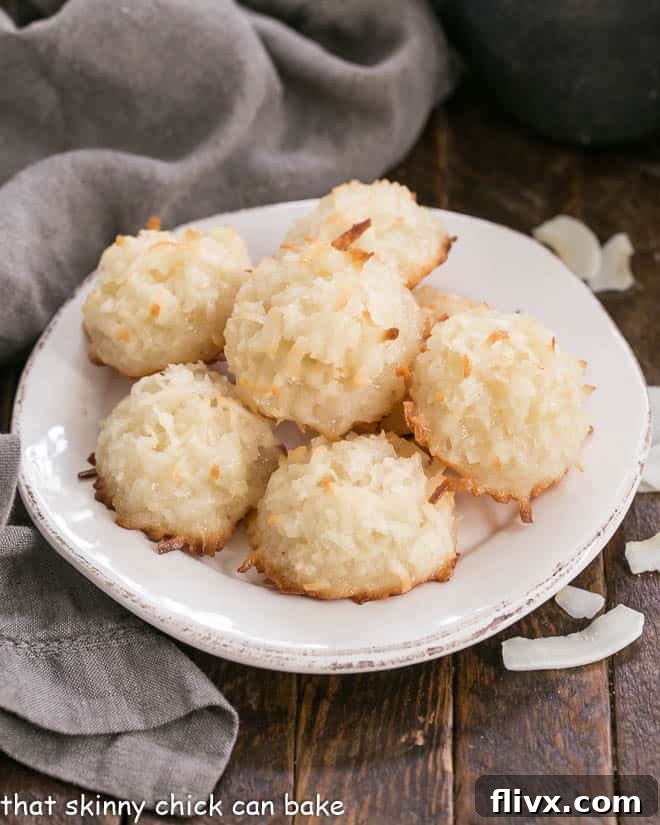
Frequently Asked Questions About Coconut Macaroons
These delicious coconut cookies have a decent shelf life, making them perfect for making ahead or enjoying over several days. If stored in an air-tight container at room temperature, they will remain fresh, moist, and chewy for up to a week. For longer storage, macaroons freeze exceptionally well. Place them in a single layer in an airtight freezer-safe container, separated by parchment paper if stacking, and they can be stored in the freezer for up to 3 months. Thaw them at room temperature before serving for the best texture.
It can be disappointing to find your beautiful macaroons a bit sticky, but several factors can contribute to this. First, high humidity in your storage environment can easily cause macaroons to absorb moisture and become sticky. Ensure they are stored in a cool, dry place. Other possibilities include over-whipping the egg whites, which can introduce too much air and lead to a less stable structure, or simply not baking them long enough. Underbaked macaroons retain too much moisture, resulting in a sticky texture. Make sure to bake until they are nicely golden brown with slightly darker edges. Don’t worry too much, though – even sticky macaroons are often still wonderfully delicious!
This is a common point of confusion, and while their names are similar, macaroons and macarons are distinctively different cookies:
Macaroons: These are chewy, often rustic-looking cookies primarily made with egg whites, sugar, and shredded coconut. Coconut is the defining ingredient; it’s not a macaroon without it. Many contemporary versions are made with sweetened condensed milk for convenience, creating an easy but often less nuanced cookie. However, the classic, truly authentic macaroons, like this recipe, rely on egg whites, yielding a superior chewy texture and rich coconut flavor. They are generally simpler to make and have a delightful, dense, and moist consistency.
Macarons: These are elegant, delicate French sandwich cookies made with a meringue base (egg whites, powdered sugar, and granulated sugar) and finely ground almond meal. Macarons are notoriously “fussy” to make, requiring precise techniques and attention to detail. The goal when baking macarons is for each cookie shell to develop a distinct “foot” or ruffled base, which indicates proper leavening. They come in a vast array of colors and flavors and are typically filled with ganache, buttercream, or fruit curd. The texture of a macaron shell is crisp on the outside, slightly chewy in the center, and not at all like the dense chewiness of a coconut macaroon.
Absolutely! Coconut and chocolate are a classic combination. You can either mix about half a cup of mini chocolate chips into the batter before scooping for chocolate chip macaroons, or, for an extra touch of elegance, dip the cooled macaroons in melted dark or milk chocolate. Simply melt your favorite chocolate (with a tiny bit of coconut oil for smoothness if desired), dip the bottoms or drizzle the tops, and let them set on parchment paper until firm. This adds another layer of flavor and makes them even more irresistible!
While sweetened shredded coconut is recommended for its moisture and flavor contribution to the classic chewy texture, you can use unsweetened shredded coconut. However, you might need to adjust the sugar content slightly, potentially adding an extra tablespoon or two to compensate for the lack of sweetness in the coconut. Also, keep in mind that unsweetened coconut can sometimes result in a slightly drier macaroon, so watch your baking time carefully to prevent over-drying.
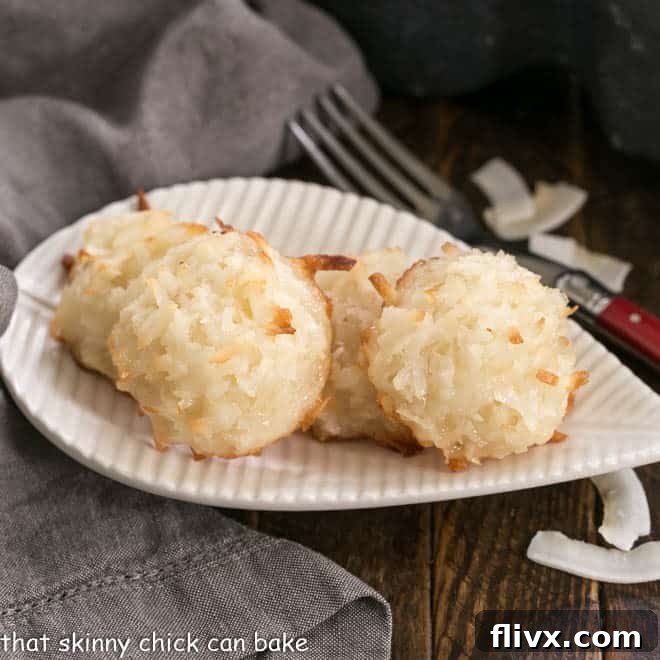
Explore More Coconut and Cookie Delights
If you’ve fallen in love with the luscious flavor of coconut, or if you’re always on the hunt for your next favorite cookie recipe, be sure to explore these other fantastic options:
- Banana Coconut Sweet Bread from Cravings of a Lunatic
- Decadent Coconut Cream Pie
- Irresistible Coconut White Chocolate Truffles
- Scrumptious Chewy Coconut Cookies
- Fluffy Coconut Cupcakes
- Divine Chocolate Dipped Macaroons
- Discover more incredible Cookie Recipes for every craving!
We love connecting with our readers! Stay in touch through social media @ Instagram, Facebook, and Pinterest. Don’t forget to tag us when you try one of our recipes! And if you truly love the results of this Classic Coconut Macaroons recipe, please consider giving it a 5-star rating in the recipe card below – your feedback helps us create more delicious content for you.
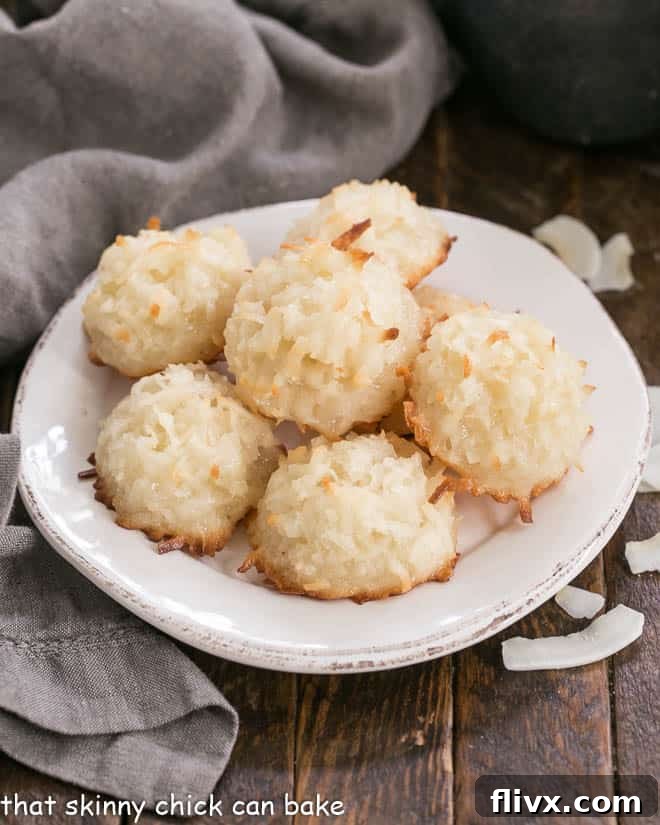
Classic Coconut Macaroons Recipe
15 minutes
30 minutes
45 minutes
16 cookies
This classic macaroon recipe from Alice Medrich is truly the best you’ll ever make, yielding perfectly chewy and sweet coconut delights!
Ingredients
- 4 large egg whites
- 3 cups sweetened shredded coconut (like Baker’s Angel Flake)
- ¾ cup granulated sugar
- 2 teaspoons pure vanilla extract
- ¼ teaspoon salt
Instructions
- Preheat your oven to 350ºF (175ºC).
- Line two large baking sheets with parchment paper. Set them aside.
- Prepare a makeshift double boiler by filling a skillet halfway with water and bringing it to a gentle simmer. In a heatproof bowl that fits snugly over the skillet without touching the water, combine all ingredients: egg whites, sweetened coconut, sugar, vanilla extract, and salt. Place the bowl over the simmering water.
- Cook the mixture, stirring frequently with a spatula or spoon, for about 5 minutes. Continue to stir until the mixture thickens and becomes opaque, losing its original transparency. This step helps dissolve the sugar and slightly cooks the egg whites, contributing to the macaroon’s chewy texture.
- Carefully remove the bowl from the water and let the mixture cool for approximately 30 minutes at room temperature. Cooling helps the macaroons hold their shape better.
- Once cooled, use a medium cookie scoop (about 2 tablespoons) to portion out rounds of the batter. Place these portions about 2 inches apart on your prepared parchment-lined baking sheets.
- Bake for the first 5 minutes at 350ºF (175ºC). After 5 minutes, decrease the oven temperature to 325ºF (160ºC) and continue baking for an additional 10-15 minutes, or until the cookies are lightly golden brown with some deliciously darker, caramelized edges.
- Remove from the oven and allow the macaroons to cool completely on the baking sheets before transferring them. This allows them to set and firm up, enhancing their perfect chewy texture.
Notes
Eggs separate best when they are cold, as the yolk is less likely to break. Once separated, allow the egg whites to come to room temperature before combining with other ingredients, as they will incorporate better.
Recommended Baking Essentials
As an Amazon Associate and member of other affiliate programs, I earn from qualifying purchases, helping to support this blog.
- OXO Good Grips Medium Cookie Scoop
- Reynolds Kitchens Non-Stick Baking Parchment Paper Sheets – 12×16 Inch, 22 Count
- USA Pan Bakeware Half Sheet Pan
Nutrition Information:
Yield:
16
Serving Size:
1 cookie
Amount Per Serving:
Calories: 115Total Fat: 4gSaturated Fat: 4gTrans Fat: 0gUnsaturated Fat: 0gCholesterol: 0mgSodium: 92mgCarbohydrates: 18gFiber: 2gSugar: 15gProtein: 1g
HOW MUCH DID YOU LOVE THIS RECIPE?
Please leave a comment on the blog or share a photo on Pinterest