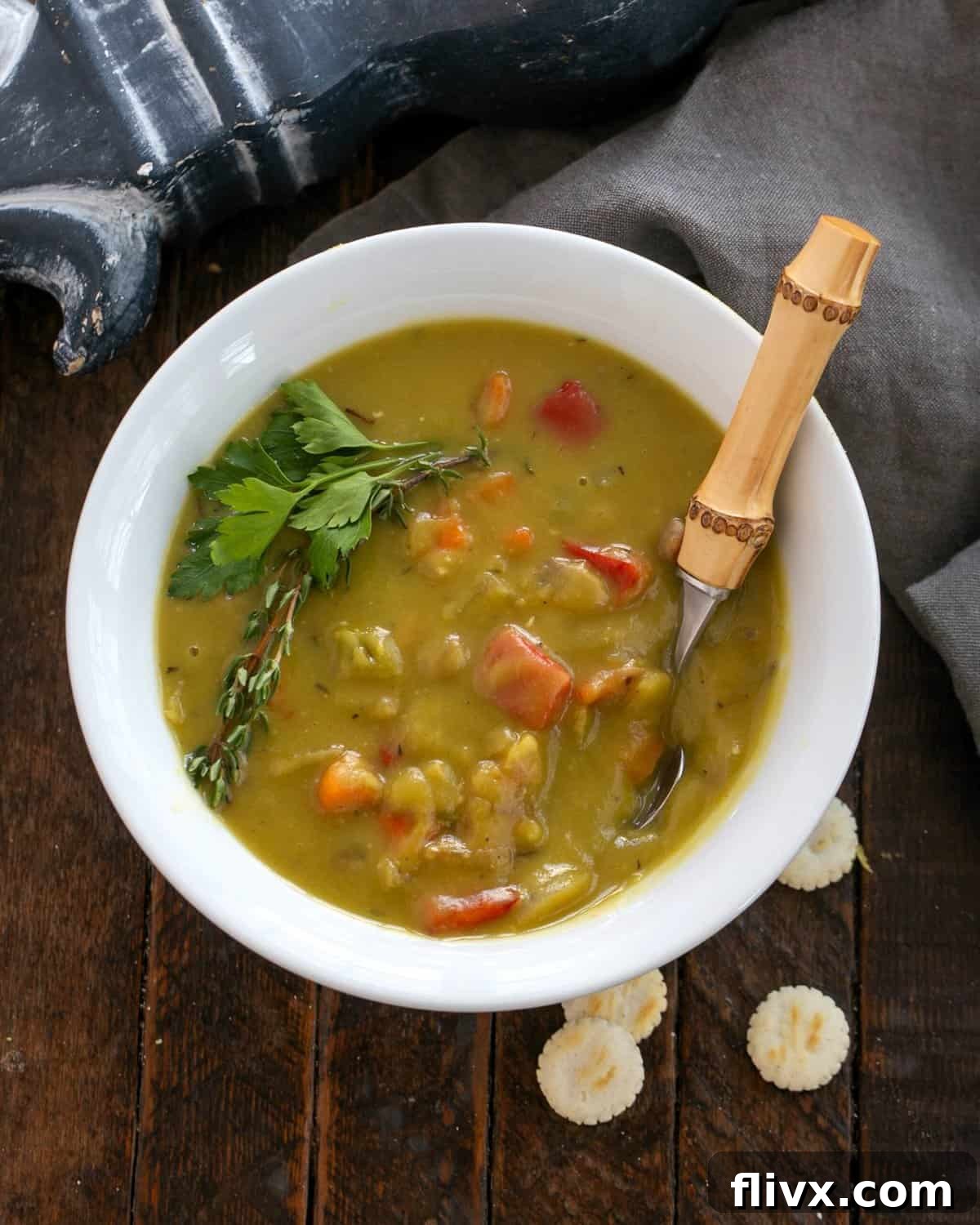
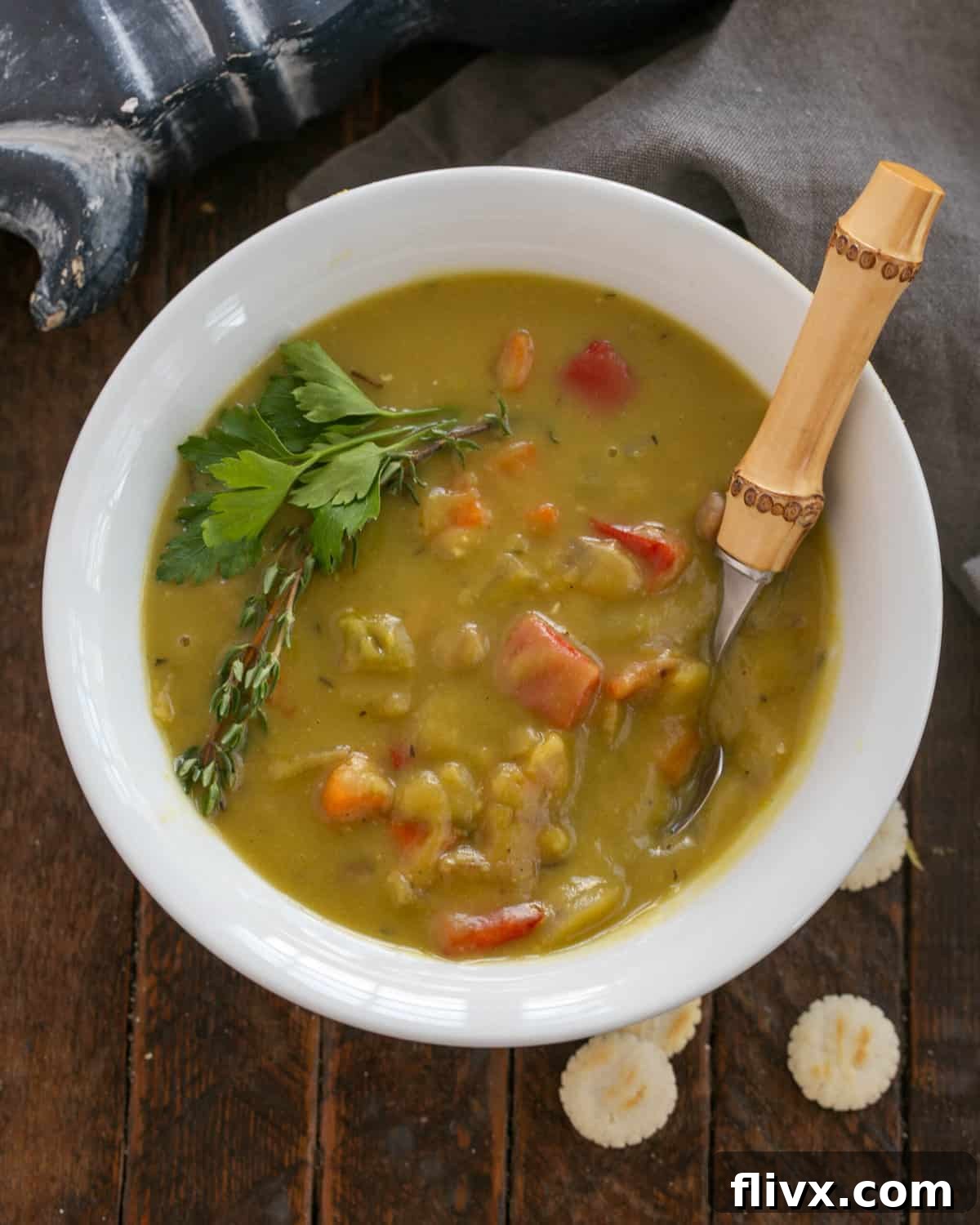
Welcome to the comforting embrace of homemade soup – a culinary tradition that warms the soul and delights the palate. Among the most cherished cold-weather recipes, a bowl of rich, savory Split Pea and Ham Soup stands out. This isn’t just any soup; it’s a testament to the magic that happens when simple, wholesome ingredients come together, especially when starting from scratch. Forget those bland seasoning packets; we’re diving into a recipe that promises depth, unparalleled flavor, and the kind of heartwarming satisfaction that only a truly homemade dish can deliver.
While this particular split pea and ham soup wasn’t a staple in my childhood kitchen – my father was famously devoted to navy bean soup – it has quickly become a beloved classic. After piecing together various trusted recipes and making excellent use of a forgotten ham bone from Easter, the result was nothing short of scrumptious. This recipe proves that sometimes, the most delicious meals are born from a little creativity and a desire to transform simple leftovers into something extraordinary. Get ready to discover your new favorite winter warmer, perfect for chilly evenings and family gatherings alike.
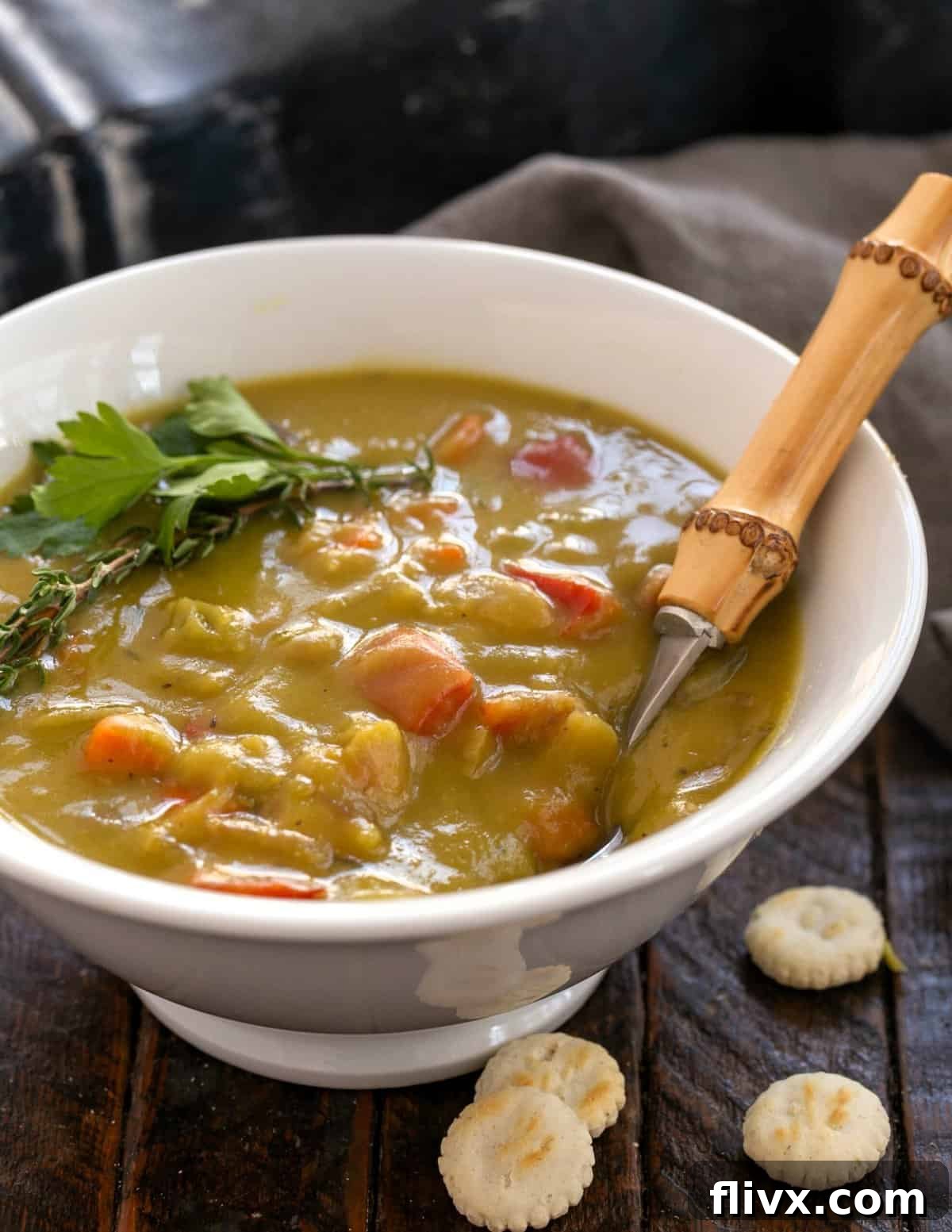
Why This Homemade Split Pea and Ham Soup Will Become Your New Favorite
There are countless reasons why this Split Pea and Ham Soup recipe deserves a prime spot in your culinary repertoire. It’s more than just a meal; it’s an experience – a journey into the heart of comfort food.
- Unforgettable Flavor Profile: Prepare to be genuinely surprised by the intense and delicious flavor of this pea soup. Unlike many store-bought or packet versions, crafting it from scratch allows for a robust development of taste that is both savory and incredibly satisfying. The slow simmering coaxes out complex notes that simply can’t be replicated with shortcuts.
- Ultimate Winter Comfort Food: As the days grow shorter and the temperatures drop, there’s nothing quite like a steaming bowl of homemade soup to provide warmth and solace. This split pea soup with ham embodies everything a comfort food should be: hearty, nourishing, and deeply comforting. It’s the perfect antidote to a cold day, bringing a sense of coziness and well-being with every spoonful.
- Clever Use of Leftovers: If you’re a fan of Sunday roasts or holiday hams, you’ll often find yourself with a ham bone lingering in the freezer. This recipe offers the absolute best way to utilize that leftover ham bone! It’s an economical and incredibly flavorful approach to cooking, ensuring no part of your delicious ham goes to waste. The bone is truly the secret ingredient for an unparalleled depth of flavor.
- Nutrient-Rich and Wholesome: Beyond its incredible taste, this soup is packed with nutritional benefits. Split peas are a fantastic source of plant-based protein, fiber, and essential minerals. When combined with a ham bone, the soup also benefits from collagen, amino acids, vitamins, and even essential fatty acids, transforming it into a truly wholesome meal that nourishes your body from the inside out.
- Simple, Yet Sophisticated: Don’t let the “from scratch” aspect intimidate you. While the flavors are sophisticated, the preparation itself is straightforward and accessible for home cooks of all skill levels. With simple steps and common ingredients, you’ll be able to create a gourmet-quality soup right in your own kitchen.
Essential Ingredients for Your Perfect Split Pea and Ham Soup
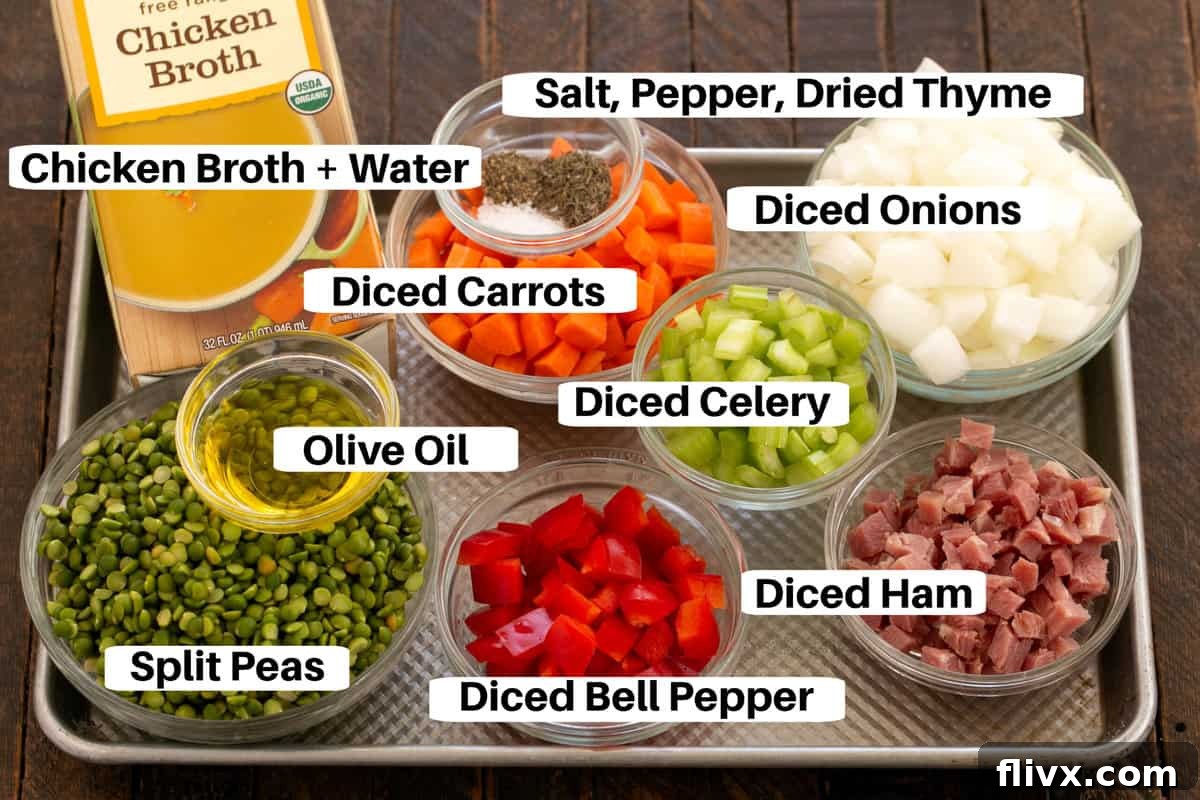
Creating an exceptionally flavorful split pea and ham soup begins with selecting the right ingredients. Each component plays a vital role in building the rich, layered taste that makes this soup so special. Here’s a closer look at what you’ll need and why:
- Kitchen Staples: These foundational ingredients form the aromatic base and seasoning.
- Salt and Freshly Ground Black Pepper: Essential for seasoning to taste. Remember to adjust at the end, especially if using salted broth and ham.
- Dried Thyme: This herb imparts an earthy, slightly minty flavor that pairs beautifully with peas and ham, adding a classic touch to the soup.
- Yellow or White Onion: Diced and sautéed, onions provide a sweet and savory aromatic foundation, caramelizing to add depth.
- Chicken Broth: The liquid base for our soup. I prefer using a good quality chicken broth or stock, like the Pacific brand, because it already contains a balanced level of saltiness and adds an extra layer of savory flavor. While you can use water, broth infuses the peas with deliciousness right from the start. If you opt for unsalted broth, you’ll need to be more generous with your salt adjustments later.
- Carrots: Peeled and uniformly diced, carrots contribute natural sweetness, a vibrant color, and a pleasant texture to the soup. They are a classic component of any mirepoix.
- Celery: Diced celery adds a subtle peppery, earthy flavor and another textural dimension. Along with onions and carrots, it forms the traditional aromatic base (soffritto).
- Green Split Peas: The star of our show! These dried, peeled, and split peas cook down to a creamy consistency, providing the signature texture of the soup. It’s crucial to rinse and drain them thoroughly before use. This removes any dust or debris and ensures a cleaner flavor.
- Diced Ham and/or Ham Bone: This is where the magic happens!
- Diced Ham: Whether it’s leftover ham from a holiday meal or a store-bought ham steak, diced ham adds wonderful salty, savory bites throughout the soup.
- Ham Bone (with meat still attached): Optional, but highly recommended. A meaty ham bone is the secret to an incredibly flavorful soup. As it simmers, it slowly releases its rich flavors, along with beneficial collagen, amino acids, vitamins, and even essential fatty acids, creating an unparalleled umami depth. Don’t discard it – this is liquid gold!
- Olive Oil: Used for sautéing the aromatics and ham, helping to develop their flavors through caramelization.
Mastering Your Homemade Split Pea and Ham Soup: Expert Tips for Success
Crafting a truly exceptional Split Pea and Ham Soup is straightforward, but a few key tips can elevate your results from good to absolutely outstanding. Pay attention to these details for a soup that’s rich in flavor and perfectly textured every time.
- PRO-Tip: Prepare Your Split Peas Properly: Before cooking, it’s essential to make sure to rinse and pick through your green split peas thoroughly. Occasionally, you might find a tiny stone, a shriveled pea, or other debris in the package. A quick rinse under cold water in a colander, followed by a visual inspection, ensures your soup will be smooth and enjoyable. This step also helps remove any residual starch that could make the soup cloudy.
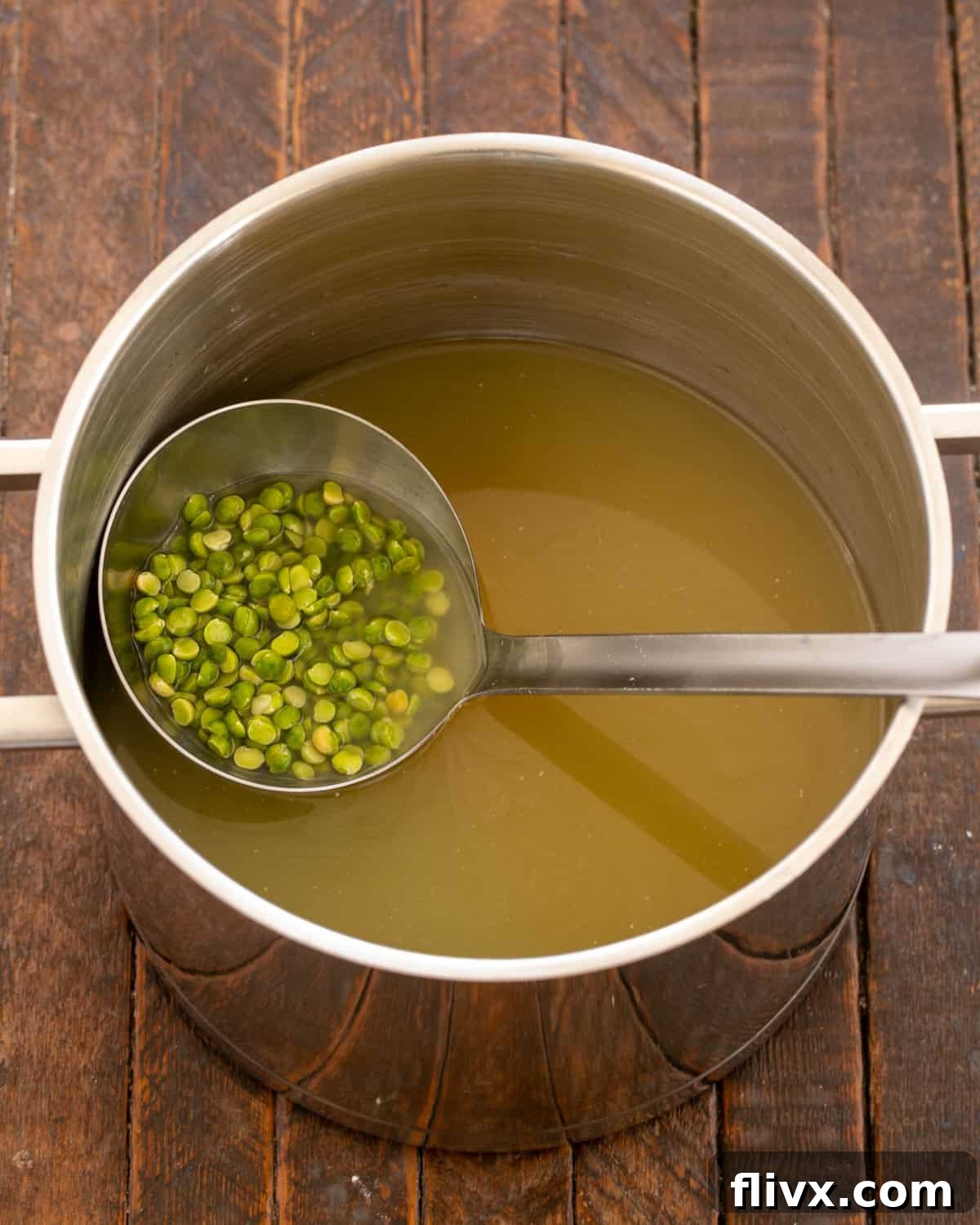
- The Foundation of Flavor: Cooking the Peas: The very first step to a delicious pea soup is to properly cook the peas. This process can take up to an hour, depending on the peas’ freshness and your desired consistency. While you can use water, I highly recommend using chicken stock or broth. Cooking the peas in broth infuses them with flavor right from the start, building a deeper, more complex base for your soup.
- Reserve the Broth: Once your peas are tender, strain them, but be sure to reserve the flavorful broth they cooked in. This liquid is packed with pea essence and will be added back to the soup later, contributing to its overall body and taste. Don’t discard this precious liquid!
- PRO-Tip: The Power of the Ham Bone: While diced ham adds wonderful texture and flavor, incorporating a meaty ham bone is truly optional but highly recommended. A ham bone, especially one with a good amount of meat still clinging to it, adds an incredible depth of umami and savory richness that diced ham alone simply cannot achieve. It slowly releases its complex flavors and beneficial nutrients as it simmers, transforming your soup into a culinary masterpiece.
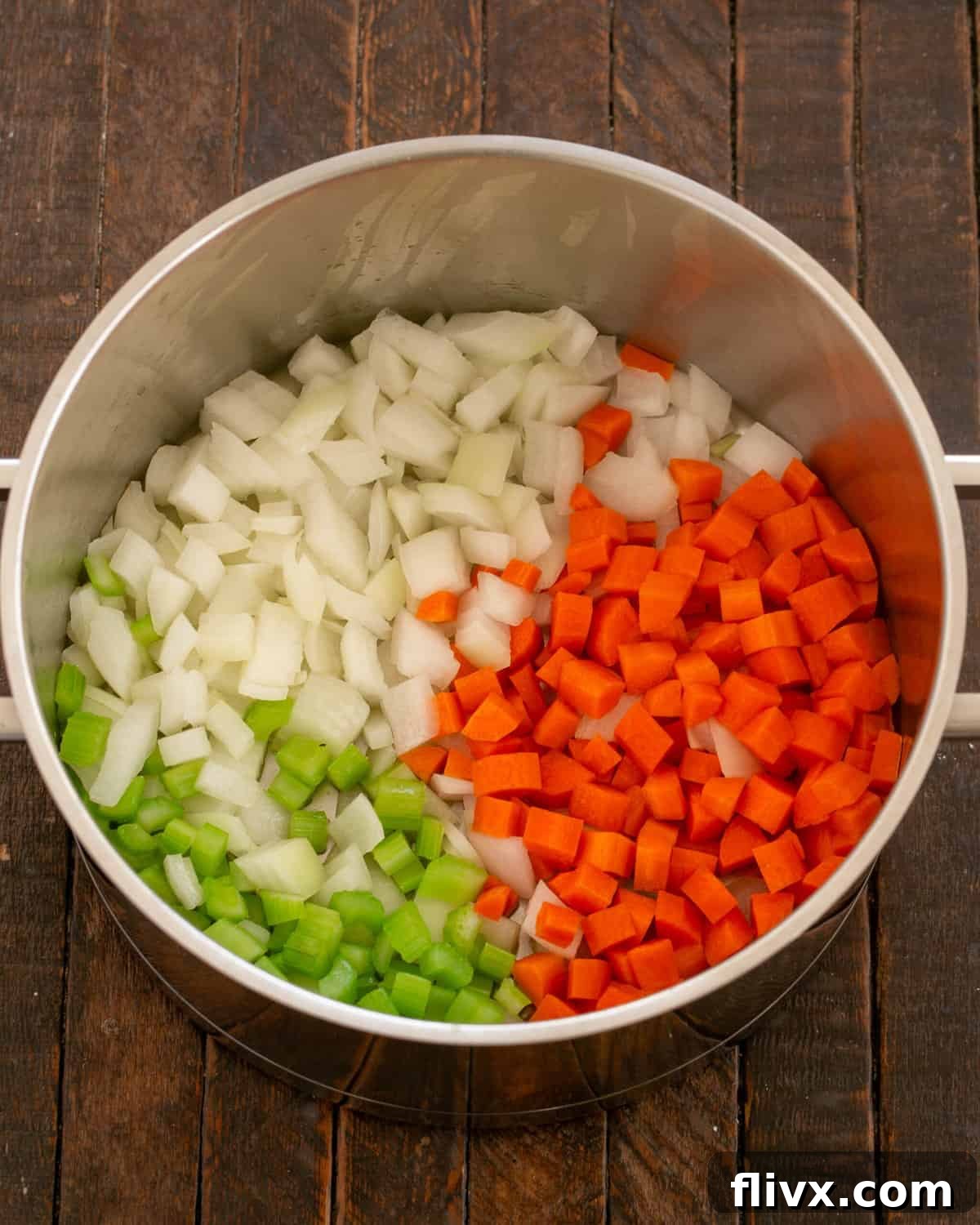
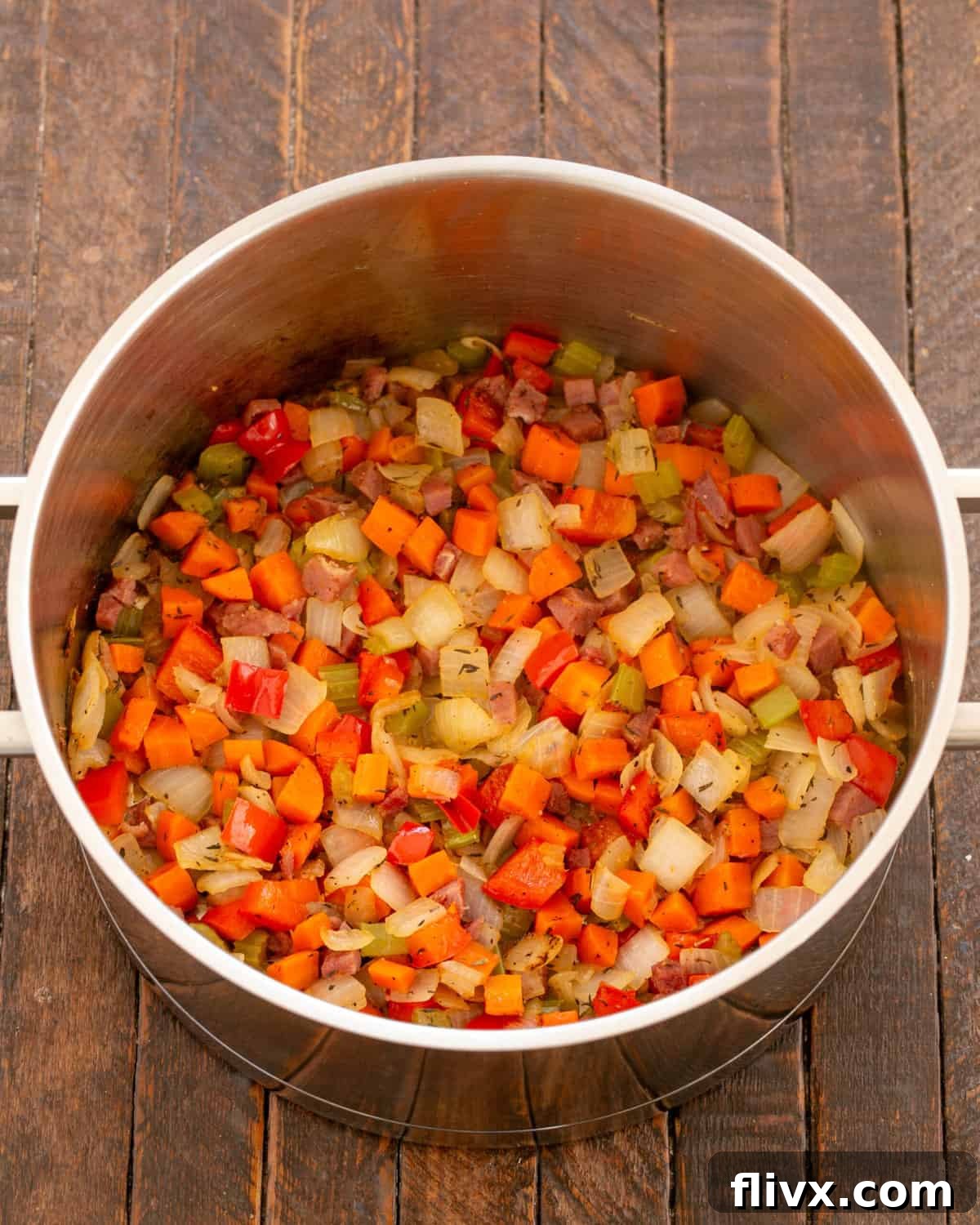
- Sautéing Aromatics for Maximum Flavor: Don’t skip the step of cooking your diced onion, carrots, celery, and any diced ham in olive oil before adding them to the soup. This process, known as sautéing, helps to increase their flavor significantly through caramelization. The natural sugars in the vegetables brown, creating rich, savory notes. Additionally, it helps evaporate some of their water content, concentrating their flavors and improving their texture in the final soup.
- Seasoning Strategy: Taste and Adjust: If you are using salted broth (like the Pacific brand mentioned), it’s wise to wait until the soup is fully cooked and the ham bone has had time to release its saltiness before adding additional seasoning. Taste the soup first, then gradually add salt and freshly ground pepper as needed. This prevents over-salting and allows you to achieve the perfect balance.
- No Leftover Ham? No Problem!: If you don’t have a leftover ham bone or diced ham, you can still make a fantastic soup! Purchase a chunk of pre-cooked ham from your deli or even use a thick slice of prosciutto. Dice it into small pieces and briefly sauté it in the skillet you used for the vegetables. This short sauté boosts its flavor and gives it a lovely texture before adding it to your soup. Alternatively, for a smoky flavor without ham, consider adding a pinch of smoked paprika.
- Achieving the Perfect Consistency: Split pea soup is traditionally thick and creamy. After pureeing, if you find your soup too thick, you can easily thin it with a little extra chicken broth or water. If it’s too thin, simmer it uncovered for a bit longer to allow some of the liquid to evaporate, or refer to the FAQ section for other thickening methods.
Step-by-Step Guide: Crafting Your Delicious Split Pea and Ham Soup
Follow these detailed steps to create a rich and heartwarming bowl of homemade Split Pea and Ham Soup. Each stage is designed to build layers of flavor, ensuring a truly exceptional result.
Frequently Asked Questions About Split Pea and Ham Soup
Split peas are a type of pea grown specifically for drying. Once harvested, they are dried, then typically peeled and split in half. This splitting process helps them cook much faster and more uniformly than whole dried peas, and they readily break down to create a thick, creamy consistency, which is ideal for soups and purées.
While the classic recipe is wonderful, there are many delicious additions you can make. Minced garlic, added during the sautéing of aromatics, will boost the savory notes. Other herbs like bay leaves (removed before serving), marjoram, or a pinch of rosemary can add complexity. For extra heartiness, chunks of new potatoes or sweet potatoes can be added during the last 20-30 minutes of simmering. Serving the soup with homemade croutons, crusty bread, or garlic bread is also highly recommended.
To make pea soup thicker, one of the easiest methods is to simply simmer it longer uncovered. This allows some of the liquid to evaporate, concentrating the soup. You can also whisk in some mashed potatoes (leftovers work perfectly) or create a slurry by mixing a tablespoon of cornstarch with an equal amount of cold water, then whisking it into the simmering soup and bringing it to a boil. To make it thinner, simply stir in additional chicken broth or water until it reaches your desired consistency.
Homemade split pea soup will keep beautifully when chilled in an airtight container in the refrigerator for 3-4 days. It’s also an excellent candidate for freezing! You can freeze it for up to 3 months in an airtight, freezer-safe container. When freezing, make sure to leave a little space at the top of the container – about an inch – to allow room for expansion as the soup freezes. Thaw overnight in the refrigerator and reheat gently on the stove.
Absolutely! To make a delicious vegetarian split pea soup, simply omit the ham and ham bone. Use vegetable broth instead of chicken broth. For added depth of flavor and a touch of smokiness, consider adding a teaspoon of smoked paprika, a dash of liquid smoke, or sautéing some mushrooms with your aromatics. You might also want to add a bay leaf or two while simmering the peas.
Yes, split pea soup is generally naturally gluten-free, provided all your ingredients are gluten-free. Split peas themselves are gluten-free, as are most broths, vegetables, and plain ham. Always double-check the labels of your chicken broth and any processed ham products to ensure they don’t contain hidden gluten-containing ingredients or cross-contamination warnings.
Explore More Delicious Soup Recipes
- Roasted Tomato Basil Soup from The Mediterranean Dish – A fresh, vibrant, and aromatic choice.
- Classic Navy Bean Soup with Ham – Another hearty and comforting bean soup, perfect for using up ham leftovers.
- Easy White Chicken Chili Recipe – A lighter yet equally satisfying chili, packed with flavor.
- Hearty Sausage Lentil Soup – A wholesome and robust soup featuring lentils and savory sausage.
- Discover more of my Best Soup Recipes for every season and occasion.
Stay connected with me and my culinary adventures through social media @ Instagram, Facebook, and Pinterest. Don’t forget to tag me when you try one of my recipes! Your feedback is invaluable, and if you love the results, please consider giving this recipe a 5-star rating in the recipe card below.
Ultimate Homemade Split Pea and Ham Soup
15 minutes
1 hour 15 minutes
1 hour 30 minutes
6 servings
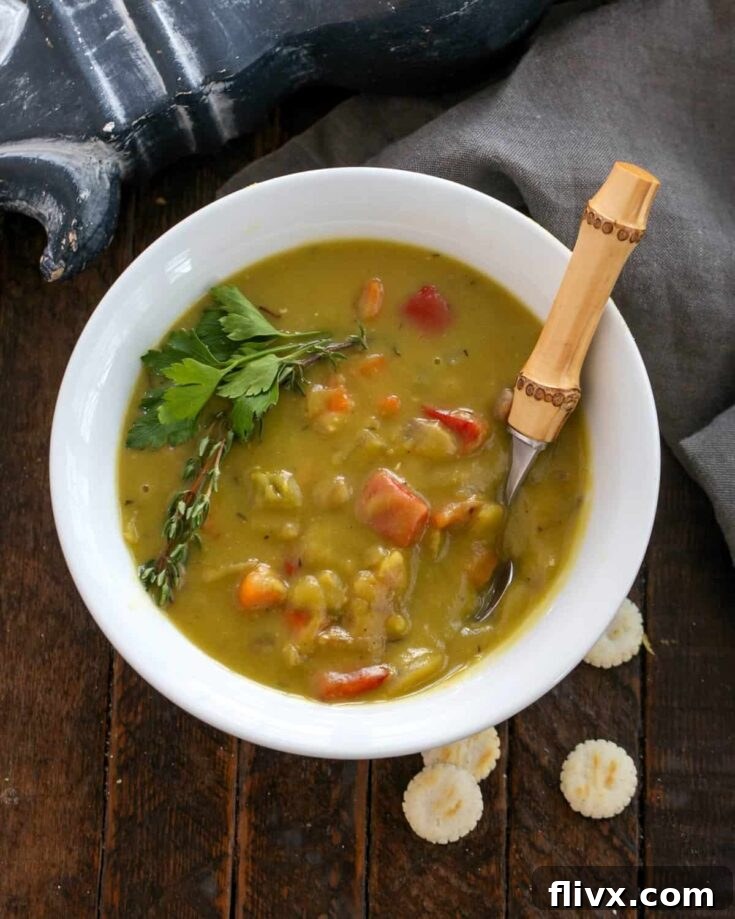
A hearty, flavorful, and soul-warming split pea soup featuring savory ham and fresh vegetables, perfect for any cold day.
Rated 5 out of 5 stars by 9 satisfied cooks!
Ingredients
- 1-2 tablespoons of olive oil
- 1 yellow or white onion, diced
- 4 carrots, peeled and diced
- 2 stalks of celery, trimmed and diced
- 2 cups green split peas, rinsed
- 4 cups chicken stock or broth
- 2 cups water
- 1 teaspoon dried thyme
- Salt and freshly ground pepper, to taste
- Meaty ham bone and/or 1 cup diced ham
Instructions
- Heat olive oil in a large pot or Dutch oven over medium heat. Add diced onion, carrots, celery, and diced ham (if using). Sauté, stirring occasionally, until the vegetables are tender and the ham is lightly browned, about 8-10 minutes. Set this mixture aside in a separate bowl.
- In the same pot (or a clean one), combine the thoroughly rinsed green split peas with chicken stock/broth and water. Bring the mixture to a gentle simmer. Cook, stirring occasionally, until the peas are very soft and starting to break down, about 45-60 minutes. Keep the lid slightly ajar during simmering.
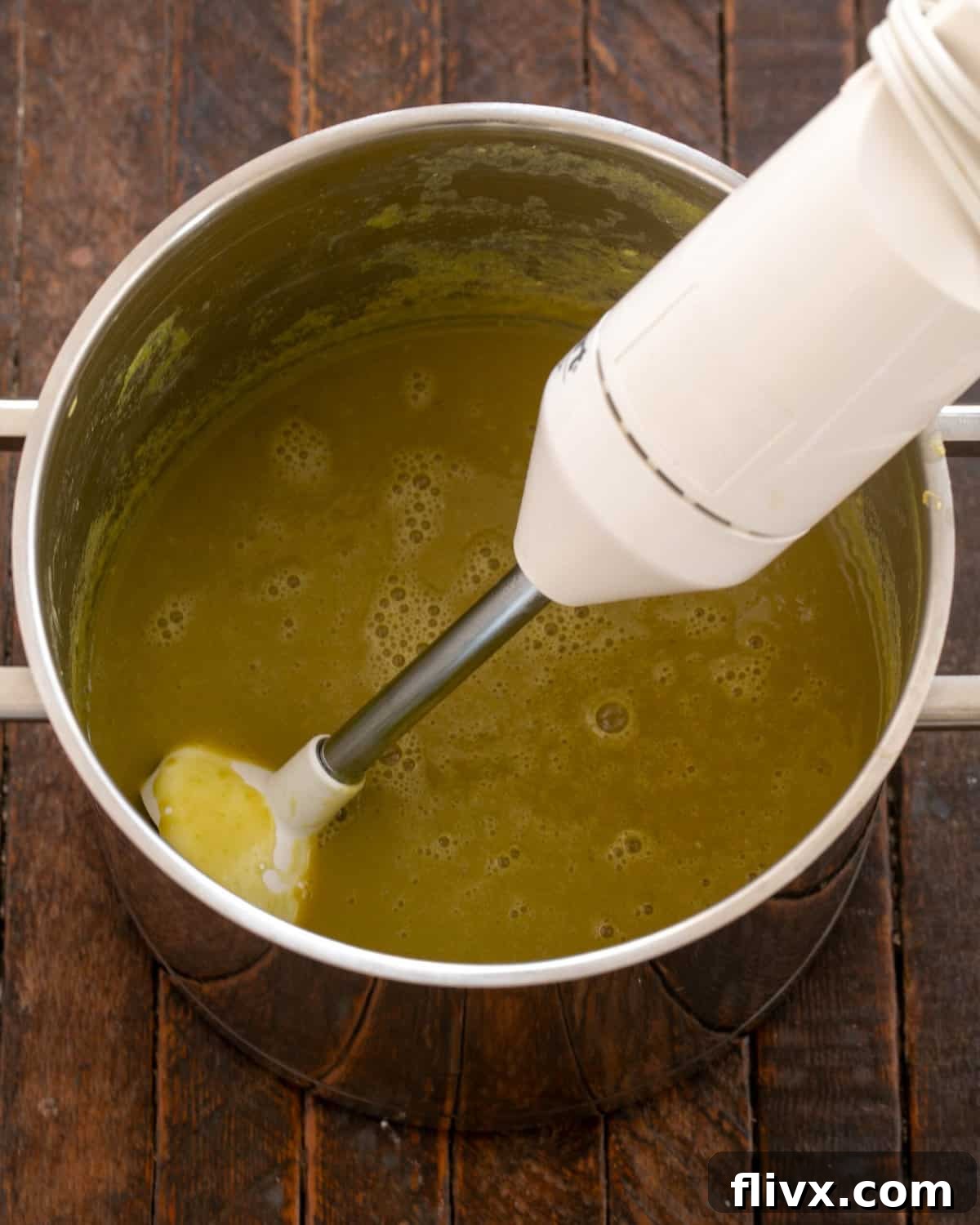
- Once the peas are soft, use an immersion blender to puree the soup directly in the pot until smooth and creamy. If you don’t have an immersion blender, carefully transfer the hot soup in batches to a standard blender and blend until smooth, then return it to the pot.
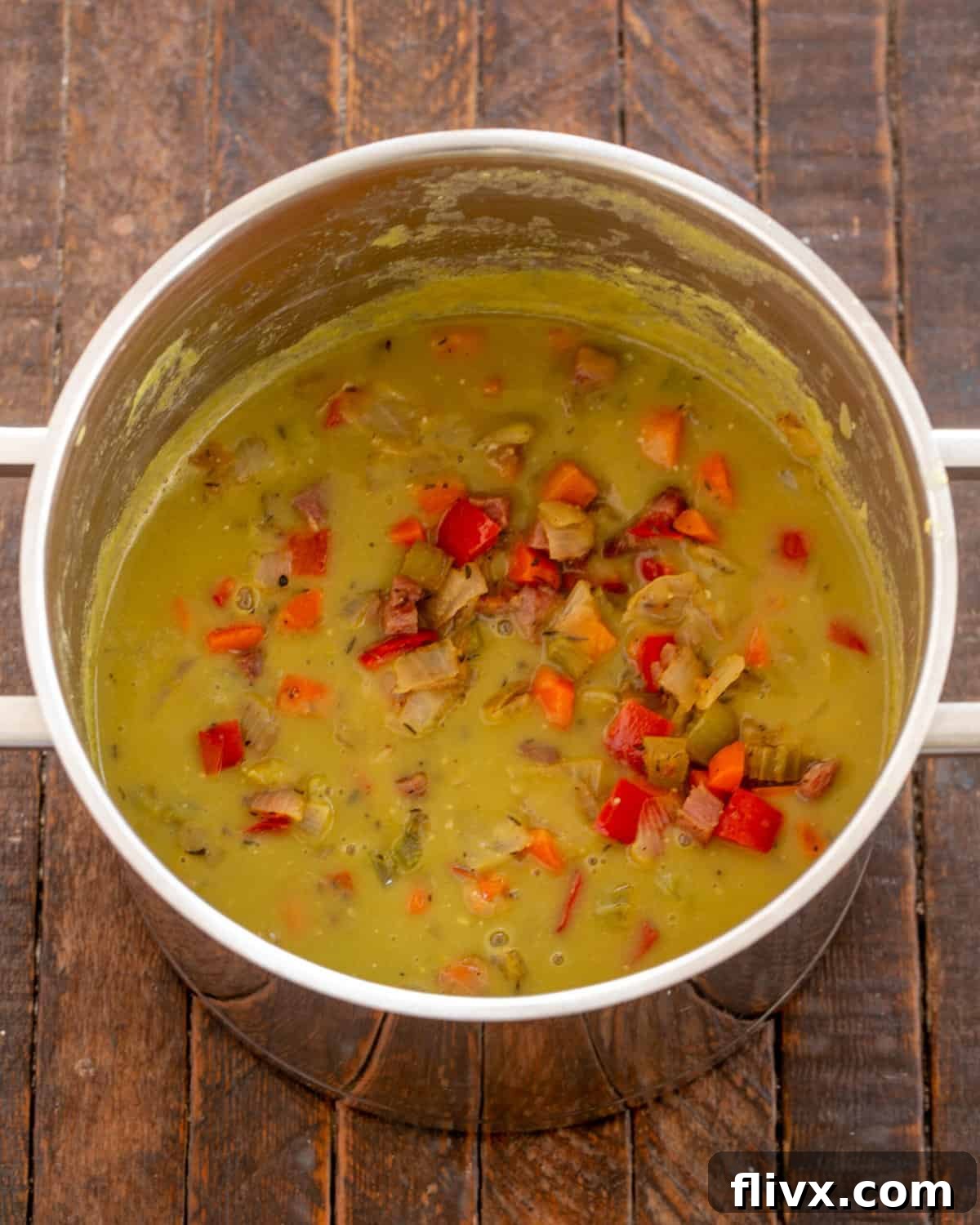
- Stir in the reserved cooked vegetables, diced ham (if any was set aside), the ham bone (if using), and dried thyme into the pureed pea soup.
- Bring the soup back to a gentle simmer. Continue to cook for at least another 30 minutes, or longer, to allow the ham bone to infuse maximum flavor into the soup and for all the ingredients to meld. If using a ham bone, remove it before serving. Pull off any remaining ham meat from the bone and shred it back into the soup; discard the bare bone.
- Taste the soup and adjust seasonings. Add salt and freshly ground black pepper to taste. Serve hot and enjoy this comforting homemade split pea and ham soup!
Notes
For added texture and heartiness, you may stir in cooked rice or small diced potatoes during the last 20 minutes of simmering.
If you prefer a thinner soup, gradually add more water or broth until you reach your desired consistency. To thicken the soup, simply simmer it longer uncovered to allow more liquid to evaporate.
This recipe is adapted from classic techniques, ensuring a rich and traditional flavor.
Recommended Products
As an Amazon Associate and member of other affiliate programs, I earn from qualifying purchases.
- Immersion Blender
- Heat-Resistant Silicone Spatula
- Large Nonstick Saute Pan with Lid
Nutrition Information:
Yield:
6
Serving Size:
1
Amount Per Serving (Approximate):
Calories: 271Total Fat: 10gSaturated Fat: 2gTrans Fat: 0gUnsaturated Fat: 7gCholesterol: 35mgSodium: 805mgCarbohydrates: 26gFiber: 7gSugar: 8gProtein: 21g
This nutritional information is provided as a courtesy and is an estimate only. Factors such as specific product types, brands purchased, and exact ingredient measurements can significantly alter the nutritional values. Online calculators may also yield different results. Therefore, this information should not be considered a substitute for professional nutrition advice. You are solely responsible for ensuring the accuracy of any nutritional information you obtain for your specific recipe.
HOW MUCH DID YOU LOVE THIS RECIPE?
Please leave a comment on the blog or share a photo on Pinterest