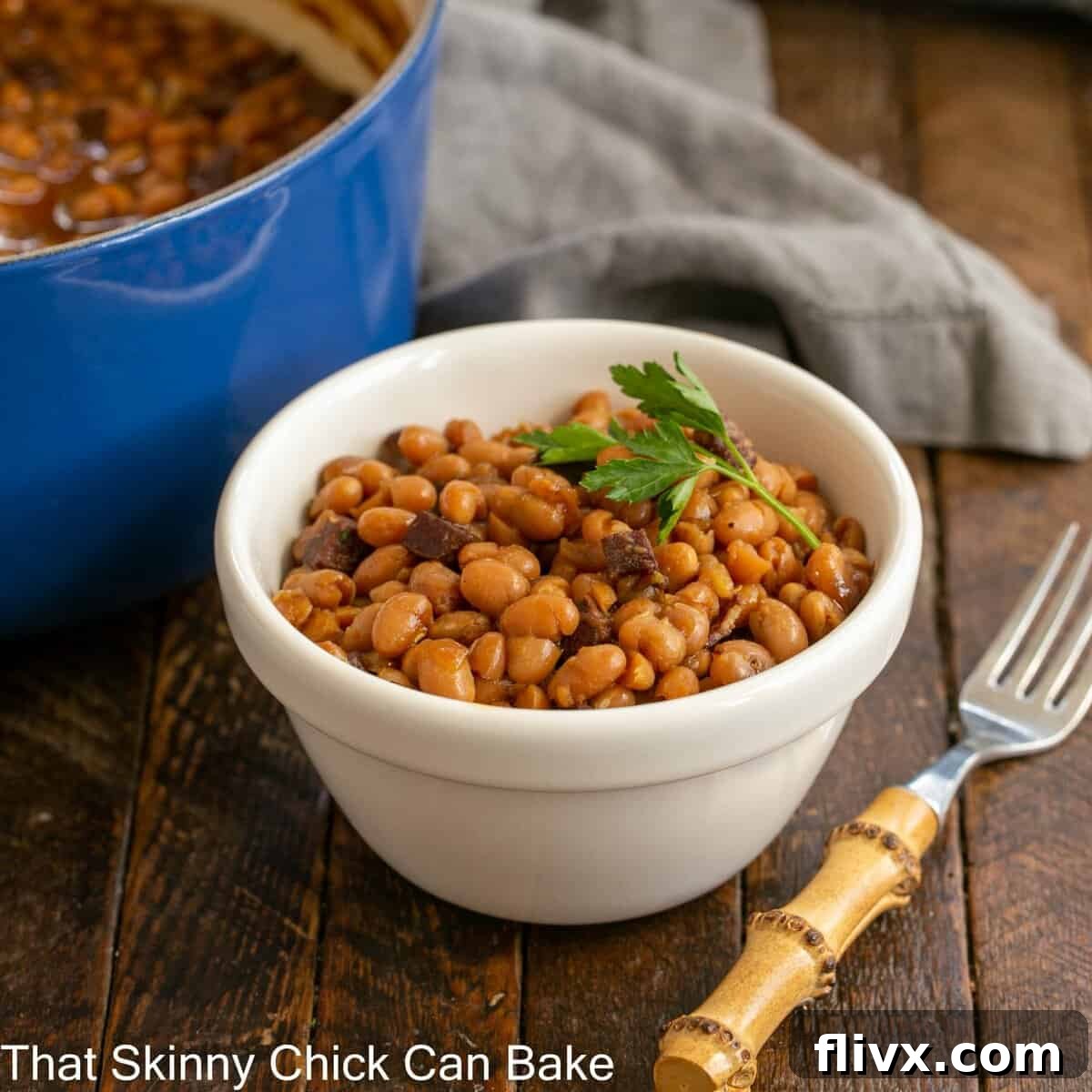
Homemade Baked Beans with Bacon: A quintessential American side dish, these sweet and savory baked beans are slow-cooked to perfection, creating a depth of flavor that simply cannot be replicated by store-bought cans. Bathed in a rich, molasses-infused sauce and studded with savory bacon, these beans are the ultimate accompaniment for your spring and summer grilling extravaganzas, potlucks, and family gatherings. Forget the shortcuts; it’s time to discover the unparalleled taste of Boston Baked Beans from Scratch.
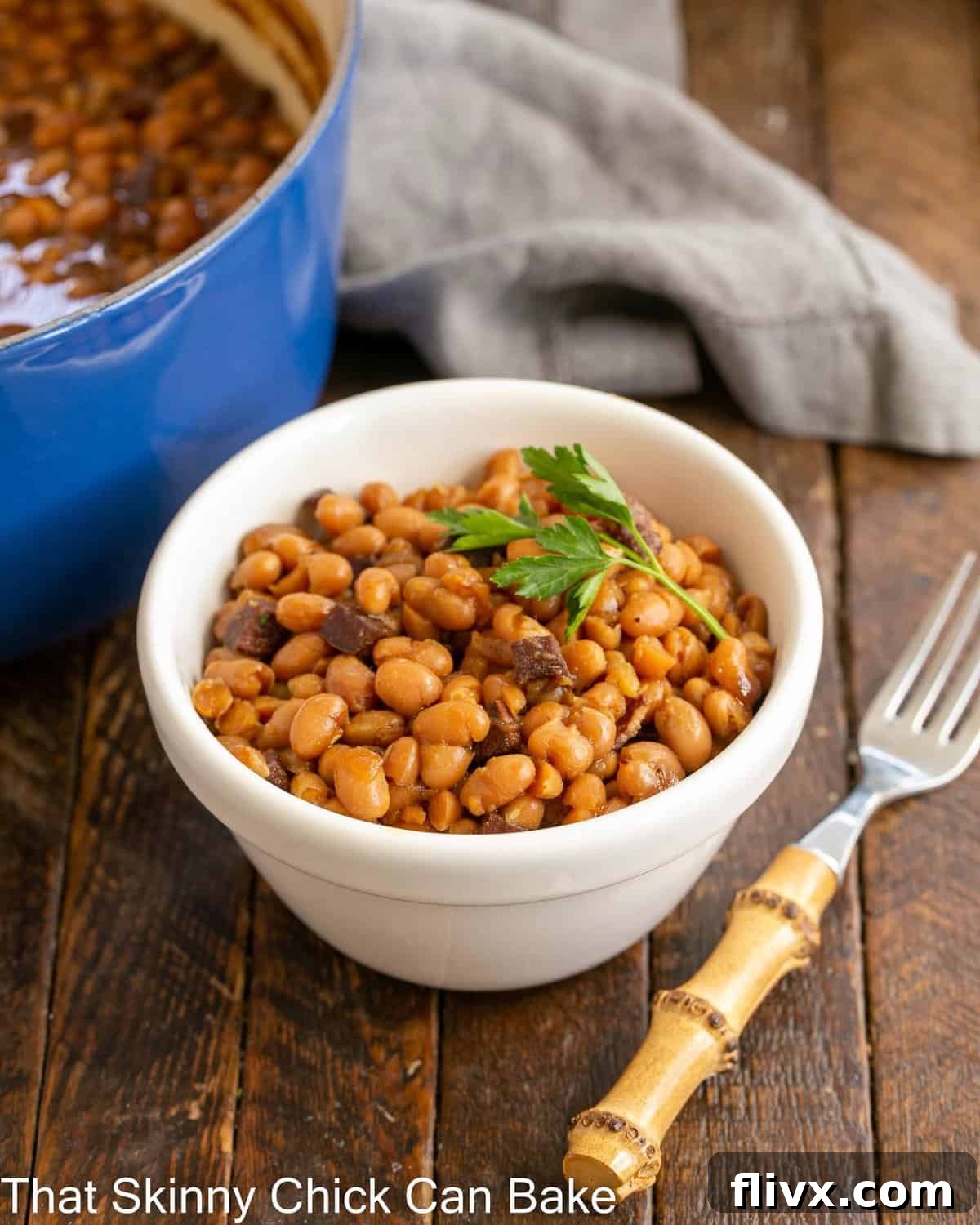
Why Homemade Boston Baked Beans Are a Must-Make
While opening a can of baked beans might seem like the easiest option, embarking on the journey of making them from scratch unlocks a world of flavor and satisfaction. Here’s why this recipe for homemade baked beans with bacon deserves a permanent spot in your culinary repertoire:
- Unrivaled Flavor Control: The greatest advantage of cooking from scratch is the ability to tailor the flavors precisely to your preference. Crave a richer sweetness? Add a touch more brown sugar. Prefer a tangier note? Adjust the dry mustard. This recipe empowers you to create baked beans that are perfectly balanced for your palate, a luxury canned versions simply don’t offer.
- A Unique Culinary Heritage: This particular recipe is a delightful adaptation of a classic found in the New York Times, originally focusing solely on molasses for sweetness. We’ve enhanced it with the addition of brown sugar, striking a perfect harmony between deep, earthy molasses and bright, caramel-like sweetness. It’s a testament to how traditional recipes can be thoughtfully refined to suit modern tastes.
- The Irresistible Umami Boost from Bacon: Cubes of crispy, savory bacon are more than just a garnish here; they are a cornerstone of the flavor profile. As the bacon renders and slowly bakes with the beans, it releases a wonderful umami, that mysterious fifth taste that adds incredible depth and richness to savory dishes. This infusion of smoky, salty goodness elevates these homemade baked beans far beyond the ordinary, making them truly unforgettable.
- No Preservatives, Pure Goodness: When you cook from scratch, you control every ingredient. This means no artificial preservatives, excessive sodium, or high-fructose corn syrup often found in commercial baked beans. Enjoy a wholesome dish made with natural ingredients you trust.
- Impress Your Guests: There’s a certain pride that comes with serving a dish made entirely from scratch. Your guests will undoubtedly appreciate the effort and the superior taste of these authentic Boston Baked Beans, making you the star of any potluck or barbecue.
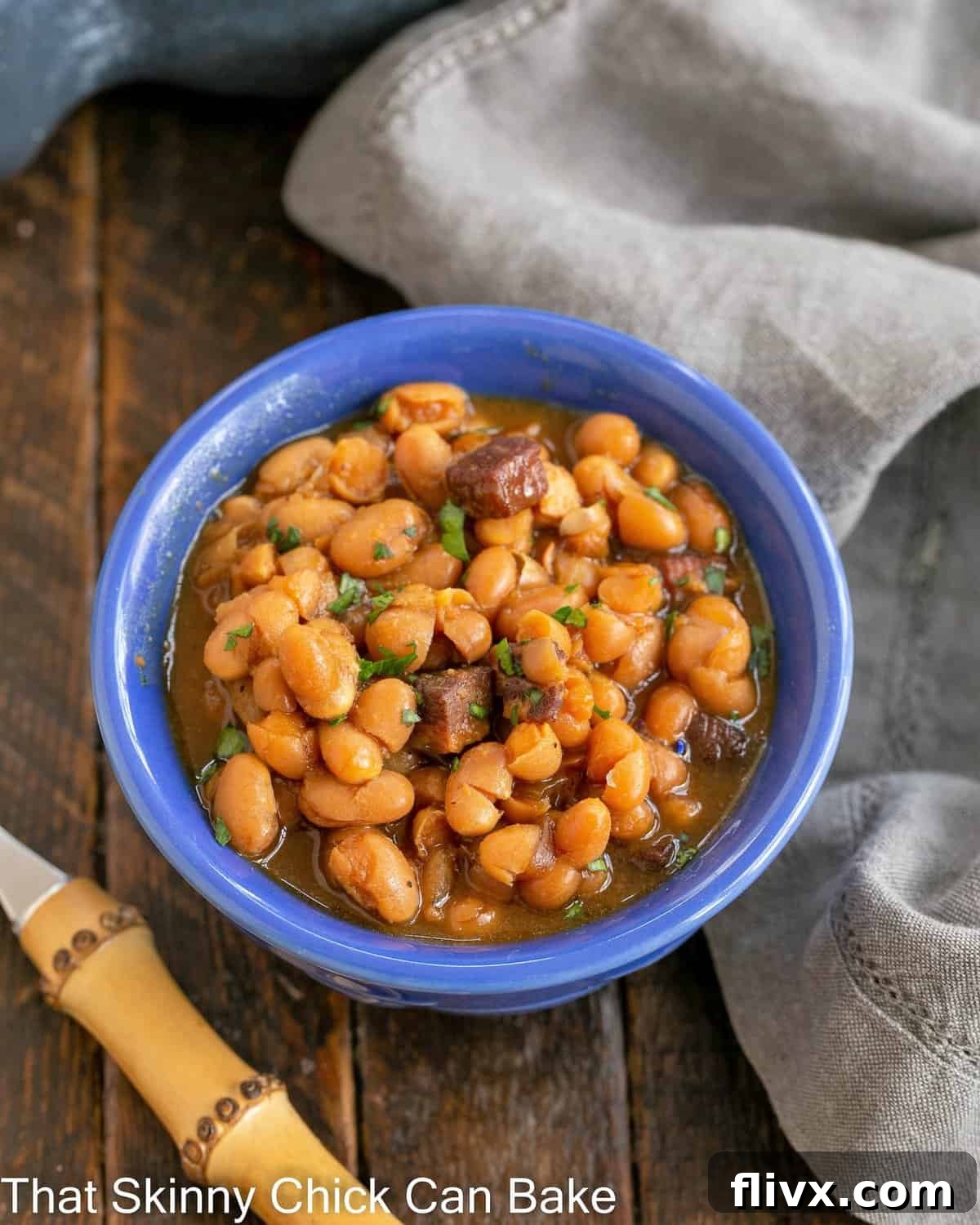
Mastering Your Homemade Baked Beans: Expert Tips
Crafting the perfect batch of homemade baked beans is an art, and these expert tips will guide you to success, ensuring your beans are tender, flavorful, and wonderfully saucy every time.
- Choosing the Right Beans: For truly authentic Boston Baked Beans, dried navy beans (also known as pea beans) are your best choice. Their small size and thin skins allow them to absorb flavors beautifully and become wonderfully creamy. However, if navy beans are hard to find, other thick-skinned beans that soften well during long cooking times, such as great northern beans or even small white beans, can be excellent substitutes. Kidney beans and pinto beans, while thicker, can also work if you enjoy a heartier texture.
- PRO-Tip for a Quicker Version: While dried beans offer the best texture and flavor, canned beans can be used for a faster preparation. If opting for canned beans, use four 15-ounce cans of drained white beans. Be gentle when stirring, as canned beans are often more fragile and can break apart easily. Adjust cooking time accordingly, as they won’t require the same long baking period.
- The Importance of Soaking Beans: Don’t skip this crucial step! Soaking dried beans for at least 6 hours, or ideally overnight, helps to rehydrate them, significantly reducing their cooking time and ensuring they cook evenly. It also helps to break down complex sugars, which can make the beans easier to digest. Always drain and rinse your soaked beans thoroughly before cooking.
- Enhancing Flavor with Cured Meats: Cubes of slab bacon are a classic choice, infusing the beans with a deep, smoky, and salty flavor that is simply irresistible. For a different twist, consider using leftover Easter ham, smoked ham hocks, or even a spicy chorizo sausage. Each will lend a unique character to your baked beans.
- PRO-Tip for Leftover Ham: If you have leftover ham from a holiday meal, it’s an ideal ingredient for flavoring your baked beans. Not only does it add a delicious savory punch, but it’s also a fantastic way to utilize holiday leftovers creatively.
- Gentle Stirring for Intact Beans: To prevent your beans from turning into a mushy paste, resist the urge to stir them too frequently or vigorously, especially during the long baking process. A gentle stir now and then to ensure even cooking and prevent sticking is sufficient.
- Achieving the Perfect Sauce Consistency: The natural starches released by the beans during cooking will naturally thicken the sauce. If, after the full cooking time, your baked beans are still too runny, you have a few options:
- Cornstarch Slurry: Mix a teaspoon or two of cornstarch with an equal amount of cold water until smooth. Stir this slurry into the beans and bring them to a gentle boil on the stovetop for a few minutes until thickened.
- Tomato Paste: A tablespoon or two of tomato paste can add both flavor and body to the sauce.
- Extended Simmering: Simply return the beans to the oven without the lid, or simmer gently on the stovetop, allowing the excess liquid to evaporate and the sauce to thicken further.
- Versatile Use: Beyond being a fantastic side, these baked beans can be the star of other dishes. Use them to make a hearty Beanie Weenie Casserole, or serve them alongside hot dogs and burgers for a classic American meal.
Ingredient Notes for Perfect Baked Beans
Each ingredient in this Boston Baked Beans recipe plays a crucial role in creating its signature sweet, savory, and smoky flavor profile. Understanding their individual contributions will help you achieve perfection.
- Navy Beans: As the cornerstone of this dish, navy beans (or “pea beans”) are small, oval, and quick-cooking. They are highly prized for their creamy texture and ability to absorb the rich flavors of the sauce. Using dried navy beans is not only more economical but also allows for a superior taste and texture compared to canned varieties. Remember to soak them for optimal results.
- Salt: Far more than just a seasoning, salt is a fundamental flavor enhancer. It brightens and balances the sweetness and savoriness, preventing the dish from tasting flat or bland. We use salt during both the initial cooking of the beans and at the end to adjust to taste.
- Slab Bacon: The star savory component, slab bacon is unsmoked, uncured pork belly cut into thick pieces. When cubed and rendered, it provides a deeply satisfying umami flavor, along with a pleasant smoky aroma and essential fat that enriches the entire dish. Its savory notes beautifully contrast the sweetness of the molasses and brown sugar. For alternatives, consider using ham (especially leftover holiday ham), salt pork, or even a flavorful smoked sausage like chorizo.
- Onion: A classic aromatic, the onion adds a foundational layer of sweetness and depth when sautéed until tender and lightly caramelized. It melds seamlessly with the other ingredients, providing a subtle savory backbone. For an extra layer of flavor, consider sautéing a clove or two of minced garlic alongside the onion for a garlicky baked bean twist.
- Molasses: This dark, viscous syrup is indispensable for authentic Boston Baked Beans. It imparts a unique, complex sweetness with deep, earthy, slightly smoky, and even a hint of bitterness, which adds incredible character and a rich, dark color to the sauce. Look for unsulphured molasses for the best flavor.
- Brown Sugar: Complementing the molasses, brown sugar adds a warm, caramel-like sweetness that is both comforting and familiar. It balances the strong notes of the molasses and dry mustard, contributing to the overall sweet-savory profile. You can adjust the amount to suit your desired level of sweetness.
- Dry Mustard: Don’t underestimate the power of dry mustard! It provides a pungent, slightly sharp, and subtly bitter counterpoint to the sweetness, cutting through the richness and adding complexity. It’s a classic ingredient in many baked bean recipes for a reason, providing that essential tangy kick.
- Black Pepper: Freshly ground black pepper offers a pungent heat and a subtle aroma with citrusy or piney undertones. It adds a gentle warmth and another layer of spice that enhances the overall flavor balance without overpowering the dish.
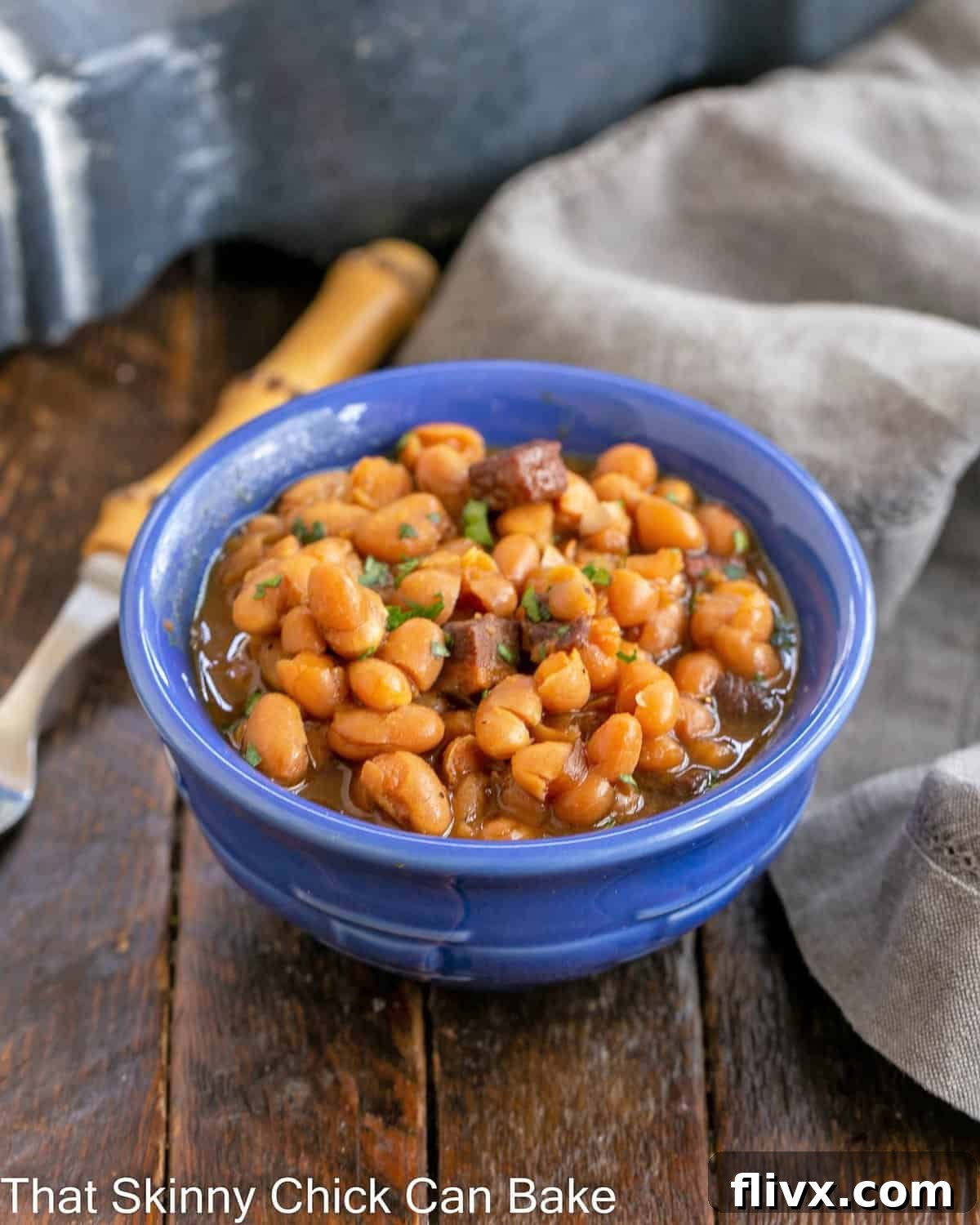
Frequently Asked Questions About Boston Baked Beans
Boston Baked Beans are a traditional New England dish primarily made from navy beans, slow-cooked in a sweet and savory sauce typically featuring molasses, brown sugar, and often flavored with salt pork or slab bacon. They earned their name from the Puritanical women of colonial Boston, who would prepare this hearty dish on Saturdays and keep it warm overnight to serve for breakfast and/or lunch on Sundays, respecting the Sabbath’s prohibition against cooking. This long, slow baking process resulted in exceptionally tender beans and a rich, deeply flavored sauce, making them a staple comfort food.
Navy beans, the primary ingredient, are nutritional powerhouses. They are naturally low in fat, exceptionally high in plant-based protein, and packed with dietary fiber, which is excellent for digestive health and helps keep you feeling full. They also provide essential micronutrients like iron, zinc, and folate. Legumes, including beans, are widely recognized for their potential to lower cardiovascular risk and stabilize blood sugar levels. However, it’s important to note that traditional baked beans recipes, like this one, include ingredients such as brown sugar, molasses, and bacon. While these contribute significantly to the delicious flavor, their sugar and fat content may counteract some of the inherent health benefits of the beans themselves if consumed in very large quantities. Enjoyed in moderation as part of a balanced meal, they are a wonderfully nutritious and satisfying dish.
Yes, baked beans freeze exceptionally well, making them a fantastic make-ahead meal or side dish. To freeze, allow the cooked beans to cool completely to room temperature. Transfer them into an airtight freezer-safe container or heavy-duty freezer bags, leaving a little headspace as liquids expand when frozen. They can be stored in the freezer for up to 6 months without significant loss of quality. To reheat frozen baked beans, the best method is to defrost them overnight in the refrigerator. Once thawed, gently reheat them on the stovetop over medium-low heat, stirring occasionally, for about 10-15 minutes, or until heated through. You might need to add a splash of water or broth if the sauce has thickened too much during freezing and reheating.
Homemade baked beans are incredibly versatile and pair beautifully with a wide array of dishes. They are a classic accompaniment to grilled meats like barbecue ribs, pulled pork, grilled chicken, and hot dogs or hamburgers. They also make a fantastic side for roasted turkey or ham. For a more casual meal, serve them alongside cornbread, coleslaw, or a fresh green salad. In New England, it’s common to enjoy them with brown bread and hot dogs, or even as part of a hearty Saturday night supper.
Absolutely! While bacon adds a wonderful depth, you can easily adapt this recipe to be vegetarian. Simply omit the slab bacon. To compensate for the lost savory and smoky flavors, you can add a touch of smoked paprika, liquid smoke (use sparingly), or a bit of vegetarian Worcestershire sauce. You might also consider sautéing some finely diced bell peppers along with the onion to add another layer of flavor and texture. The remaining ingredients are naturally vegetarian, ensuring you still get delicious, homemade baked beans.
You May Also Like These Bean Recipes:
- 7-Layer Bean Dip from Tastes Better from Scratch – A crowd-pleasing appetizer perfect for parties.
- Smoky Black Bean Dip – Another flavorful dip for your next gathering.
- Navy Bean Soup with Ham – A comforting and hearty soup, ideal for cooler weather.
- Sausage and Lentil Soup – A robust and wholesome soup packed with flavor.
- More of the Best Side Dish Recipes – Explore a collection of delectable sides to complete any meal.
Stay in touch through social media @ Instagram, Facebook, and Pinterest. Don’t forget to tag me when you try one of my recipes! And if you love the results, please give it a 5-star rating in the recipe card.
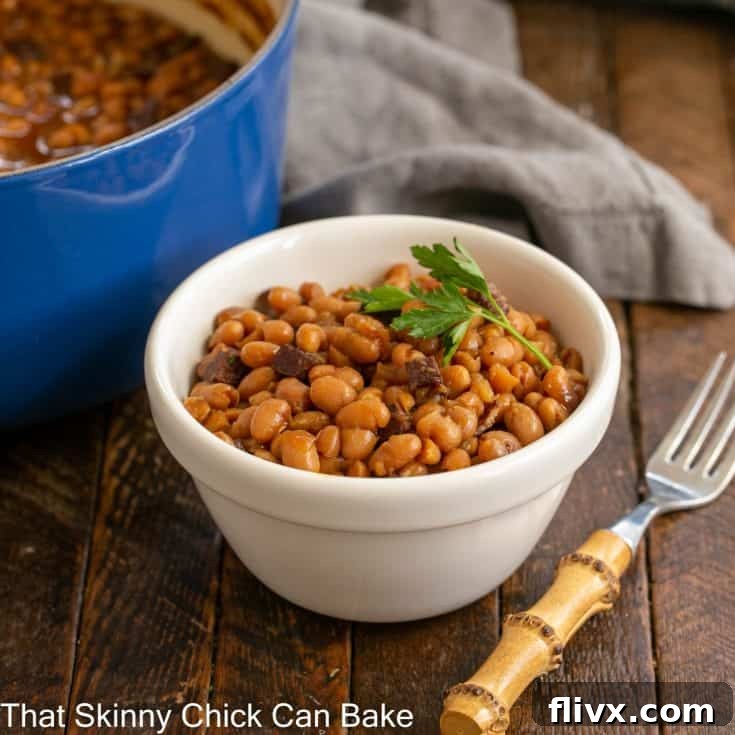
Classic Boston Baked Beans with Bacon
15 minutes
6 hours
6 hours
12 hours 15 minutes
8 servings
A truly classic baked beans recipe, slow-cooked to perfection and deeply flavored with savory bacon and rich molasses.
Ingredients
- 2 cups dried navy beans
- 3 teaspoons salt, divided
- 8 ounces slab bacon, cut into small cubes
- 1 medium white or yellow onion, chopped
- ⅓ cup molasses
- ⅓ cup brown sugar
- 2 teaspoons dry mustard
- ½ teaspoon freshly ground black pepper
Instructions for Homemade Baked Beans
- Soak the Beans: In a large bowl, cover the dried navy beans with plenty of cold water. Let them soak for a minimum of 6 hours, or ideally overnight, to rehydrate thoroughly.
- Pre-cook the Beans: After soaking, drain the beans completely and transfer them to a large Dutch oven with a lid. Add 1 teaspoon of salt and enough fresh water to cover the beans by at least 2 inches. Bring the water to a rolling boil, then reduce the heat to a simmer. Cook, stirring occasionally, until the beans are tender but still firm, about 40 minutes. They should not be falling apart.
- Drain and Prepare Aromatics: Carefully drain the pre-cooked beans into a colander, reserving some of the cooking liquid if desired for later adjustments. Place the empty Dutch oven back on the cooktop over medium-high heat.
- Cook Bacon and Onion: Add the cubed slab bacon to the hot Dutch oven. Cook, stirring occasionally, until the bacon is nicely browned and crispy, and has rendered its fat. Remove the bacon with a slotted spoon and set aside, leaving the rendered fat in the pot. Add the chopped onion to the bacon fat and cook until softened and translucent, beginning to caramelize, about 5-7 minutes.
- Combine Ingredients: Return the reserved, pre-cooked beans to the Dutch oven with the sautéed onions. In a separate small bowl, whisk together the molasses, brown sugar, dry mustard, and freshly ground black pepper until well combined. Pour this sweet and savory mixture over the beans in the pot.
- Prepare for Baking: Preheat your oven to 250°F (120°C).
- Slow Bake: Pour enough boiling water into the pot to fully cover the beans. Stir gently to combine all ingredients. Place the lid on the Dutch oven and transfer it to the preheated oven. Bake for approximately 4-5 hours, or until the beans are very tender and the sauce has begun to thicken beautifully. Check periodically and add more boiling water as needed to ensure the beans remain covered throughout the baking process.
- Thicken the Sauce & Finish: Once the beans are tender but still hold their shape (not mushy), remove the Dutch oven from the oven. Stir in the remaining salt, adjusting to taste. For a thicker sauce, remove the lid and return the pot to the oven for an additional 45 minutes, allowing the liquid to further reduce and the sauce to reach a rich, glazed consistency.
- Serve: Stir in the crispy bacon cubes (or reserved ham) just before serving. Enjoy your deeply flavorful, homemade Boston Baked Beans!
Notes on This Recipe
This recipe is adapted from a classic New York Times Cooking version, with adjustments to achieve a perfect balance of sweetness and savory depth for contemporary palates.
If you prefer an even thicker sauce at the end of the baking time, you can create a cornstarch slurry. Mix 2 teaspoons of cornstarch with 4 teaspoons of cold water until smooth. Stir this slurry into the hot baked beans and bring the mixture to a boil on the stovetop for a few minutes, stirring continuously, until the sauce visibly thickens. This will give you an extra glossy and rich consistency.
Recommended Products for This Recipe
As an Amazon Associate and member of other affiliate programs, I earn from qualifying purchases.
- Santoku Knife
- OXO Cutting Board
- Le Creuset Dutch Oven
Nutrition Information:
Yield:
8
Serving Size:
1
Amount Per Serving:
Calories: 325Total Fat: 11gSaturated Fat: 3gTrans Fat: 0gUnsaturated Fat: 7gCholesterol: 28mgSodium: 1278mgCarbohydrates: 41gFiber: 9gSugar: 19gProtein: 17g
Thatskinnychickcanbake.com occasionally offers nutritional information for recipes contained on this site. This information is provided as a courtesy and is an estimate only. This information comes from online calculators. Although thatskinnychickcanbake.com attempts to provide accurate nutritional information, these figures are only estimates.
Varying factors such as product types or brands purchased can change the nutritional information in any given recipe. Also, many recipes on thatskinnychickcanbake.com recommend toppings, which may or may not be listed as optional and nutritional information for these added toppings is not listed. Other factors may change the nutritional information such as when the salt amount is listed “to taste,” it is not calculated into the recipe as the amount will vary. Also, different online calculators can provide different results.
To obtain the most accurate representation of the nutritional information in any given recipe, you should calculate the nutritional information with the actual ingredients used in your recipe. You are solely responsible for ensuring that any nutritional information obtained is accurate.
HOW MUCH DID YOU LOVE THIS RECIPE?
Please leave a comment on the blog or share a photo on Pinterest