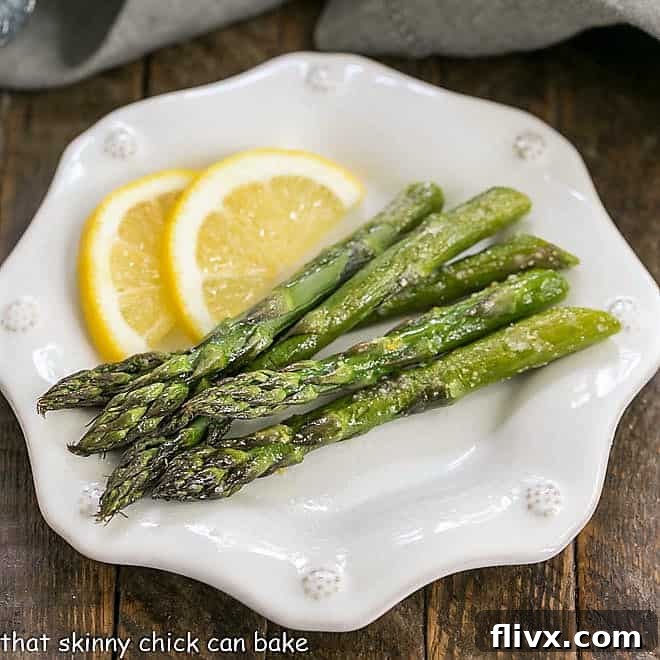
Prepare to transform your vegetable sides with this incredibly Easy Oven Roasted Asparagus recipe! Perfectly designed for those moments when fresh, seasonal asparagus is abundant and you need a quick, healthy, and undeniably delicious accompaniment to any meal.
Forget bland, steamed, or boiled asparagus. This one-pan technique elevates a simple vegetable into a culinary delight, making seasoning, cooking, and cleanup an absolute breeze. Roasting unlocks and concentrates the natural sugars and vibrant flavors of asparagus, delivering a tender-crisp texture and a subtly sweet taste that is simply irresistible. Whether you’re a novice cook or a seasoned chef, this recipe promises to become a staple in your kitchen for its simplicity and exceptional results.
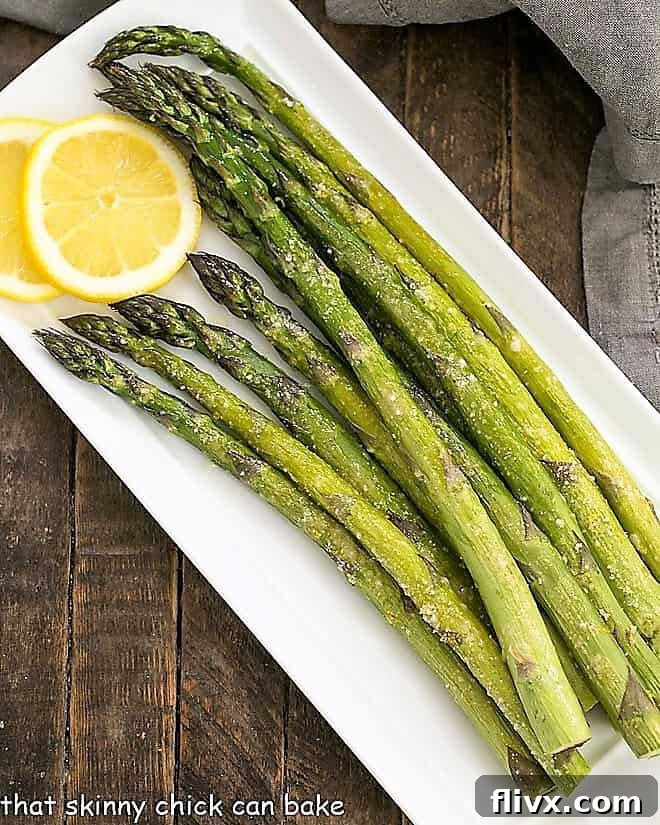
Why Roasting Asparagus is the Best Method
For years, many of us resorted to steaming or boiling asparagus, only to find its delicate flavors muted or washed away. If you’ve ever wondered how to get truly delicious asparagus, the answer lies in roasting. This straightforward technique isn’t just easy; it’s transformative, concentrating the flavors and bringing out the natural sweetness that often gets lost with other cooking methods.
- Enhanced Flavor Profile: Roasting initiates the Maillard reaction, a chemical process that browns the food and creates hundreds of new flavor compounds. This means a richer, deeper, and more complex taste compared to the subtle notes of steamed asparagus.
- Caramelization for Sweetness: The dry heat of the oven caramelizes the natural sugars in the asparagus, resulting in a slightly sweet and nutty flavor that is incredibly addictive. This natural sweetness is a stark contrast to the sometimes grassy or bitter notes that can emerge from boiling.
- Perfect Texture: Achieving that ideal tender-crisp texture is effortless with roasting. The stalks become tender throughout while retaining a slight bite, and the tips get deliciously crisp, never mushy or soggy.
- Simple & Hands-Off: Once prepped and in the oven, roasting requires minimal supervision, freeing you up to focus on other parts of your meal. It’s truly a “set it and forget it” method for a perfect side.
- Versatility: Roasted asparagus serves as a fantastic base for myriad flavor additions, from a simple squeeze of lemon to more elaborate toppings, making it adaptable to almost any cuisine or main course.
Indeed, almost every vegetable tastes better roasted! If you love this method, you’ll adore these Honey Balsamic Roasted Carrots, which similarly benefit from the magic of oven heat.
Ingredient Notes and Selection Tips
While the recipe itself is incredibly simple, the quality of your ingredients makes a significant difference in the final taste of your Easy Oven Roasted Asparagus. Here’s a closer look at what you’ll need and how to select the best.
- Fresh Asparagus: The star of the show! When selecting asparagus, look for vibrant green spears with firm, plump stems and tightly closed tips. Avoid any spears that look dull, limp, or have soft, open, or mushy tips – these are signs of aging. Thicker spears tend to be more fibrous and may require a longer cooking time or even a light peel at the base, while thinner spears cook quickly and are often more tender. Always trim the woody ends before roasting.
- Extra Virgin Olive Oil: This isn’t just for coating; it imparts flavor. Use a good quality extra virgin olive oil for its rich, fruity notes and its ability to help the asparagus brown beautifully. It also acts as a carrier for the seasonings.
- Kosher Salt: Kosher salt has a larger crystal size than table salt, which allows for more even distribution and a pleasant burst of salty flavor without being overpowering. It adheres better to the vegetables and is easier to control for seasoning.
- Fresh Garlic Powder: While optional, a touch of garlic powder adds a wonderful aromatic depth. Ensure your garlic powder is fresh for the best flavor; stale spices lose their potency.
- Fresh Lemon Zest: This is a non-negotiable for bright, fresh flavor! Always use fresh lemon zest, grating only the yellow part of the rind to avoid the bitter white pith. The oils in fresh zest provide an aromatic lift that dried lemon peel simply cannot replicate. It brightens the entire dish, cutting through any richness and enhancing the natural flavors of the asparagus.
- Parmesan Cheese (Optional but Recommended): For an extra layer of savory umami, freshly grated Parmigiano Reggiano is unparalleled. Its salty, nutty, and slightly sharp notes are fantastic with roasted asparagus. Steer clear of pre-grated Parmesan in a can; it often contains anti-caking agents and lacks the rich flavor of true Parmigiano Reggiano.
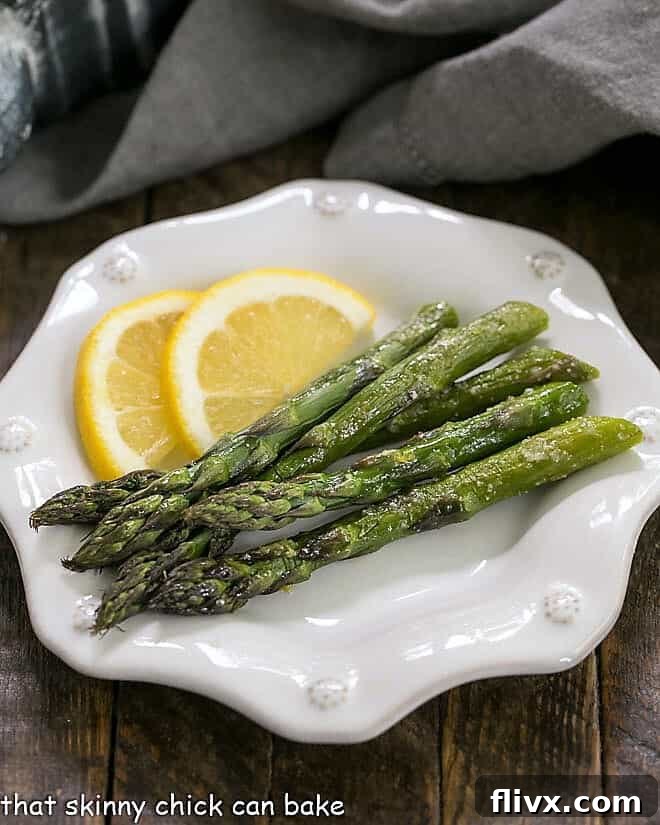
Expert Tips for Perfectly Roasted Asparagus
Achieving perfectly roasted asparagus every time is simple with a few insider tricks. These expert tips will ensure your asparagus is tender-crisp, flavorful, and a standout side dish.
- Adjust Roasting Time Based on Spear Thickness: This is perhaps the most crucial tip! Asparagus spears vary significantly in diameter with every purchase. Thin spears will cook much faster than thick ones. While a typical roasting time at 425ºF (220ºC) is about 12-15 minutes, very thin spears might be done in as little as 8-10 minutes, and extra-thick spears might take up to 18-20 minutes. Test for doneness by piercing a spear with a sharp knife; it should be tender but still have a slight snap.
- Don’t Overcrowd the Pan: For optimal roasting, give your asparagus space. Lay the spears in a single layer on a large, rimmed baking sheet. If the pan is too crowded, the asparagus will steam instead of roast, leading to a softer, less flavorful result. Use two pans if necessary.
- Ensure Even Oil Coating: A light, even coating of olive oil is essential for proper roasting and browning. After drizzling with oil, shake the pan back and forth vigorously, or use your hands, to ensure every spear is lightly coated. This helps transfer heat efficiently and crisp up the exterior.
- Embrace Easy Cleanup with Foil: For minimal fuss, line your rimmed baking sheet with aluminum foil or parchment paper before adding the asparagus. This prevents any caramelized bits from sticking to the pan, making cleanup a breeze.
- Flavor Variations and Topping Alternatives: While simple olive oil, salt, garlic powder, lemon zest, and Parmesan are delicious, feel free to get creative!
- Savory: Try a splash of soy sauce (reduce added salt), a pat of butter, crispy bacon bits, or toasted slivered almonds.
- Tangy: A drizzle of balsamic vinegar (after roasting to prevent burning), a squeeze of fresh lemon juice, or a sprinkle of red pepper flakes for a kick.
- Herbal: Freshly chopped herbs like parsley, chives, dill, or thyme added after roasting for vibrant color and aroma.
- Crunchy: Toasted buttered bread crumbs tossed over the top for added texture.
- Seasoning Strategy: Start with the basics (oil, salt). Add garlic powder, then lemon zest, and finally Parmesan (if using) about halfway through or towards the end of cooking to prevent the cheese from burning.
Frequently Asked Questions About Asparagus
Got questions about preparing, choosing, or storing asparagus? We’ve got you covered with detailed answers to ensure your asparagus experience is always top-notch.
Proper preparation is key to delicious roasted asparagus. First, rinse your asparagus spears thoroughly under cold water to remove any dirt or grit. Then, and this is crucial, pat them completely dry with a clean, absorbent dish towel. Any excess moisture will cause the asparagus to steam in the oven rather than roast, preventing that desirable tender-crisp texture and browned exterior.
Next, you’ll need to trim the woody ends. The easiest way to do this is to take one spear and gently bend it. It will naturally snap where the tough, fibrous part meets the more tender stalk. Use this snapped spear as a guide, lining it up with the rest of the bunch and cutting off the ends with a sharp knife. For thicker spears, some chefs, like Dorie Greenspan, recommend using a vegetable peeler to remove the fibrous outer coating from the bottom third of the spear for an even more tender result. This step is optional but can improve the eating experience of very thick asparagus.
Selecting high-quality fresh asparagus is the first step to a delicious dish. While asparagus is now available year-round in many places, its peak season is typically from April to June, when it’s at its freshest and most flavorful. Look for bright green (or sometimes purple-tinged) spears with firm, plump stems. Avoid any that appear dull, limp, or have visible wrinkles, as these are indicators that the asparagus is past its prime and will likely be tough or woody.
Pay close attention to the tips: they should be tightly closed, compact, and a vibrant green or purplish hue. Soft, splayed, or mushy tips are a definite sign of age and should be avoided. The thinner spears are often more tender, while thicker ones can be meatier but sometimes require peeling if the bottom is very fibrous. Smell the asparagus too; it should have a fresh, earthy scent. If it smells slightly off or sour, it’s best to pass.
Proper storage can extend the freshness of your asparagus by several days. The challenge lies in keeping the delicate tips dry while ensuring the stem ends remain moist. Upon bringing your asparagus home, trim about an inch off the bottom ends of the stalks. Then, you have two primary methods for storage:
Method 1: The “Asparagus Bouquet”
Stand the trimmed spears upright in a wide-mouth jar or glass filled with about an inch of water, similar to a bouquet of flowers. Cover the tips loosely with a plastic produce bag or plastic wrap to create a humid environment without trapping excessive moisture around the tips. Store this in the refrigerator. This method can keep asparagus fresh and crisp for up to 4-7 days.
Method 2: Damp Paper Towel Wrap
If you don’t have space for the bouquet method, trim the ends of the asparagus. Wrap only the trimmed ends in several layers of damp paper towels. Then, place the entire bundle in a resealable plastic bag or loosely in a paper bag in the crisper drawer of your refrigerator. Ensure the tips are not wet, as this can lead to spoilage. This method typically keeps asparagus fresh for 3-4 days. With either method, the fresher the asparagus was when purchased, the longer it will last in storage.
Delicious Pairings and Serving Suggestions
This Easy Oven Roasted Asparagus is incredibly versatile and makes a fantastic side dish for almost any meal. Its bright, savory flavor complements a wide range of main courses. Here are some ideas to inspire your next dinner:
- With Proteins: It’s the quintessential side for grilled or baked chicken, pan-seared fish (especially salmon or cod), roasted turkey, or a perfectly cooked steak. The fresh crunch of asparagus provides a lovely contrast to rich meats.
- Pasta Dishes: Toss freshly roasted asparagus into pasta with a light lemon-garlic sauce, or chop it and stir into a creamy risotto for added texture and nutrition.
- Salads: Chilled leftover roasted asparagus is wonderful in salads, adding a gourmet touch. Combine it with mixed greens, cherry tomatoes, and a light vinaigrette.
- Breakfast/Brunch: Don’t limit asparagus to dinner! It’s delicious alongside scrambled eggs, in frittatas, or as a vibrant addition to a breakfast burrito.
- Vegetarian Meals: A simple vegetarian meal could consist of roasted asparagus with quinoa, a baked sweet potato, or alongside a hearty lentil salad.
- Garnish: Use a few beautifully roasted spears as an elegant garnish for platters.
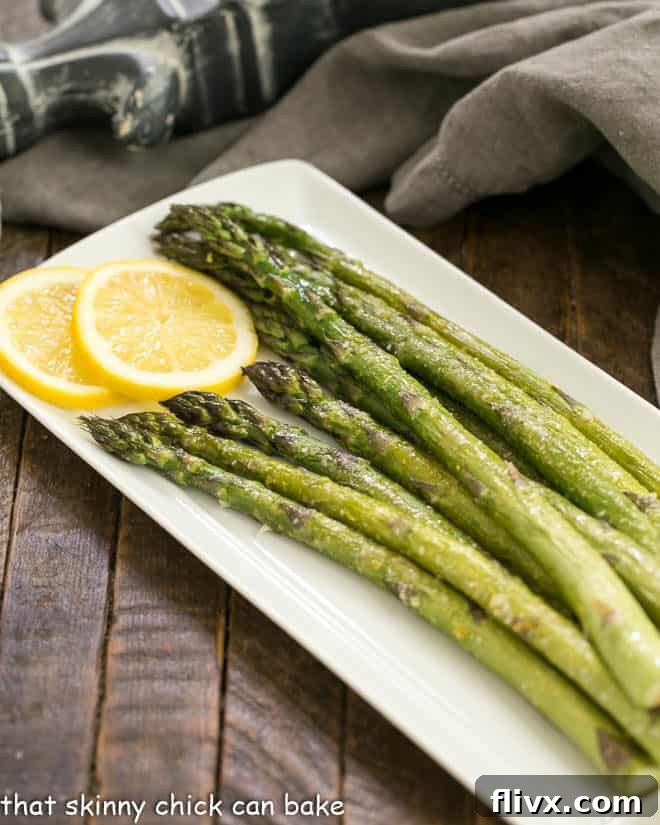
You May Also Like
- 4th of July Side Dishes from Cooking on the Ranch
- Green Bean and Bacon Bundles
- Roasted Asparagus with Balsamic Brown Butter
- Asian Stir-Fried Asparagus
- Mexican Corn Salad
- Summer Vegetable Salad
- Strawberry Bacon Brie Salad
- More Side Dish Recipes
Stay in touch through social media @ Instagram, Facebook, and Pinterest. Don’t forget to tag me when you try one of my recipes! And if you love the results, please give it a 5-star rating in the recipe card.
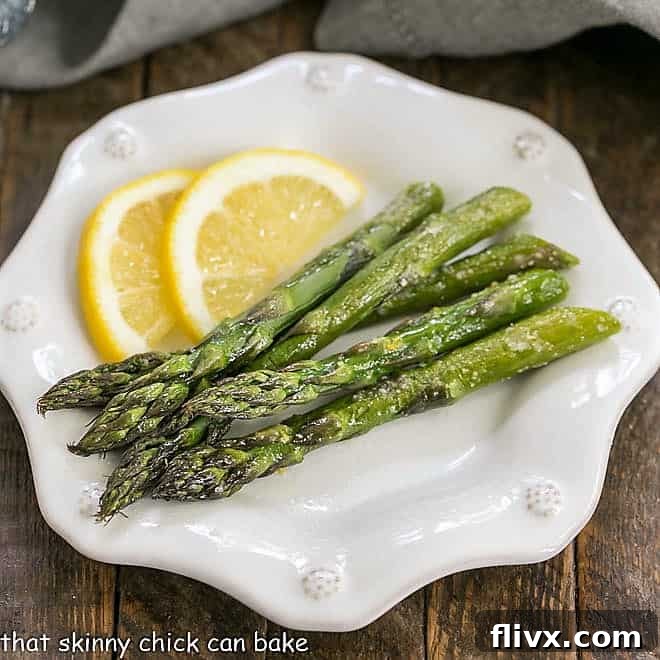
Easy Oven Roasted Asparagus Recipe
5 minutes
15 minutes
20 minutes
4 servings
An easy, tasty way to cook asparagus that enhances its natural flavor and provides a tender-crisp texture every time.
Rated 5 out of 5 stars based on 18 reviews.
Ingredients
- 1 pound fresh asparagus, ends trimmed
- 1 tablespoon extra virgin olive oil (you may need a bit more if your spears are very thin or you’re using a large pan)
- ¼-½ teaspoon kosher salt
- ½-1 teaspoon freshly grated lemon zest
- 2 or more pinches garlic powder
- 1 ½ tablespoons freshly grated Parmesan cheese (optional, but highly recommended)
Instructions
- Preheat Oven: Preheat your oven to 425 degrees Fahrenheit (220 degrees Celsius). This high temperature is crucial for achieving that perfect tender-crisp texture and slight caramelization.
- Prepare Pan: For easy cleanup, line a large, rimmed baking sheet with aluminum foil or parchment paper. Spread the trimmed asparagus spears out in a single layer on the prepared pan, ensuring they are not overcrowded.
- Oil & Coat: Drizzle the asparagus evenly with olive oil. Then, gently shake the pan back and forth, or use your hands, to ensure all the spears are lightly and uniformly coated in oil. This step is vital for even roasting and browning.
- Season Generously: Sprinkle the asparagus evenly with kosher salt, fresh lemon zest, and garlic powder. If using, add the freshly grated Parmesan cheese at this stage or during the last few minutes of baking to prevent it from burning.
- Roast to Perfection: Bake for 12 to 15 minutes, or until the spears are tender when pierced with a sharp knife, but still retain a slight crispness. Remember to adjust baking time based on the thickness of your asparagus; thinner spears will cook faster (8-10 minutes) while thicker ones will take longer (up to 18-20 minutes).
Notes
Adjust seasonings as needed depending on the size and quantity of your asparagus. Freshly ground black pepper can also be added for an extra layer of flavor.
Roasting time will vary. Thicker spears will require longer in the oven, potentially 18-20 minutes. Very thin spears may be fully cooked in as little as 8-10 minutes. Always check for tenderness with a fork or knife.
For an extra burst of freshness, squeeze a little fresh lemon juice over the hot roasted asparagus just before serving.
Recommended Products
As an Amazon Associate and member of other affiliate programs, I earn from qualifying purchases.
- Santoku Knife
- OXO Cutting Board
- USA Pan Bakeware Half Sheet Pan
Nutrition Information:
Yield:
4
Serving Size:
1
Amount Per Serving:
Calories: 64
Total Fat: 4g
Saturated Fat: 1g
Trans Fat: 0g
Unsaturated Fat: 3g
Cholesterol: 2mg
Sodium: 451mg
Carbohydrates: 5g
Fiber: 2g
Sugar: 1g
Protein: 3g
Health Benefits of Asparagus:
Asparagus is not just delicious; it’s also packed with nutrients! It’s an excellent source of fiber, vitamins K and A, folate, and antioxidants. With its low calorie and carbohydrate count, it’s a perfect addition to a healthy diet, supporting digestion and overall well-being. Roasting helps retain many of these beneficial compounds, making it a nutritious choice for your plate.
HOW MUCH DID YOU LOVE THIS RECIPE?
Please leave a comment on the blog or share a photo on Pinterest
Conclusion
In conclusion, this Easy Oven Roasted Asparagus recipe is more than just a side dish; it’s a testament to how simple techniques can yield extraordinary flavor. By embracing the power of roasting, you transform ordinary asparagus into a vibrant, tender-crisp vegetable bursting with natural sweetness and savory notes. Its quick preparation, minimal cleanup, and incredible versatility make it the perfect addition to almost any meal, any day of the week.
So, the next time fresh asparagus graces your kitchen, skip the steaming basket and head straight for the oven. You’ll be rewarded with a side dish that’s not only healthy and delicious but also incredibly satisfying. Give this recipe a try, and prepare to fall in love with roasted asparagus!