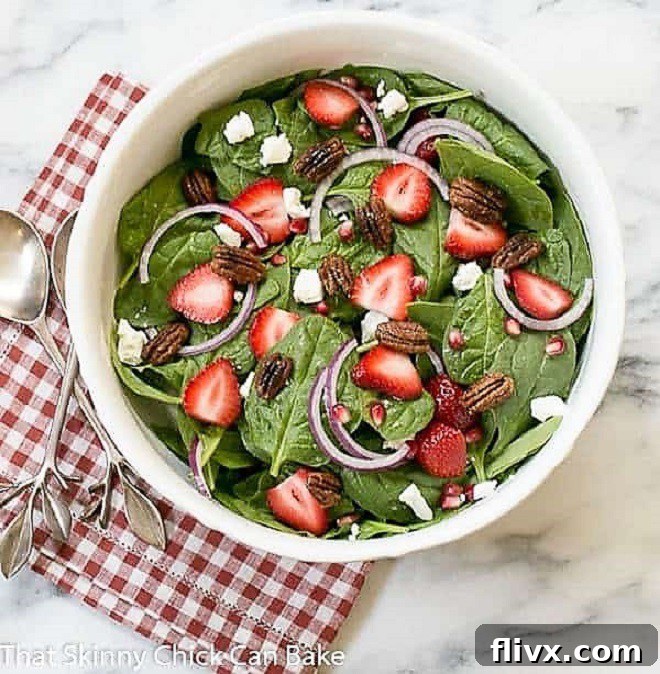
Welcome to a culinary masterpiece that promises to awaken your taste buds: the Spinach, Strawberry, Pomegranate, Feta Salad. This isn’t just any salad; it’s a symphony of flavors and textures, meticulously balanced to create a dish that’s both refreshingly light and deeply satisfying. Imagine crisp baby spinach, sweet strawberries, juicy pomegranate arils, and salty feta cheese, all brought together with a vibrant, homemade Balsamic Vinaigrette Recipe. Whether you’re seeking a show-stopping appetizer for guests, a healthy side dish, or a fulfilling main course, this salad delivers an unparalleled dining experience that will be remembered long after the last bite.
Why This Salad Is An Absolute Must-Make
This isn’t merely a collection of ingredients; it’s a carefully crafted experience that offers numerous compelling reasons to grace your table. Here’s why this particular salad deserves a permanent spot in your recipe repertoire:
- A Celebration of Seasonal Produce: This salad beautifully showcases the peak flavors of fresh strawberries and the jewel-like brilliance of pomegranates. It’s a fantastic way to utilize these incredible seasonal ingredients, turning them into a cohesive, delicious dish. If you often find yourself wondering what to do with those vibrant pomegranates at the market, look no further – this salad is your answer.
- The Ultimate Homemade Balsamic Vinaigrette: Forget store-bought dressings filled with artificial ingredients. Our classic balsamic vinaigrette recipe is incredibly easy to prepare and yields a dressing that’s superior in flavor and texture. Its sweet and tangy profile not only complements this salad perfectly but also serves as a versatile dressing for a myriad of other green salads, roasted vegetables, or even as a marinade. Learning this one dressing will elevate countless future meals.
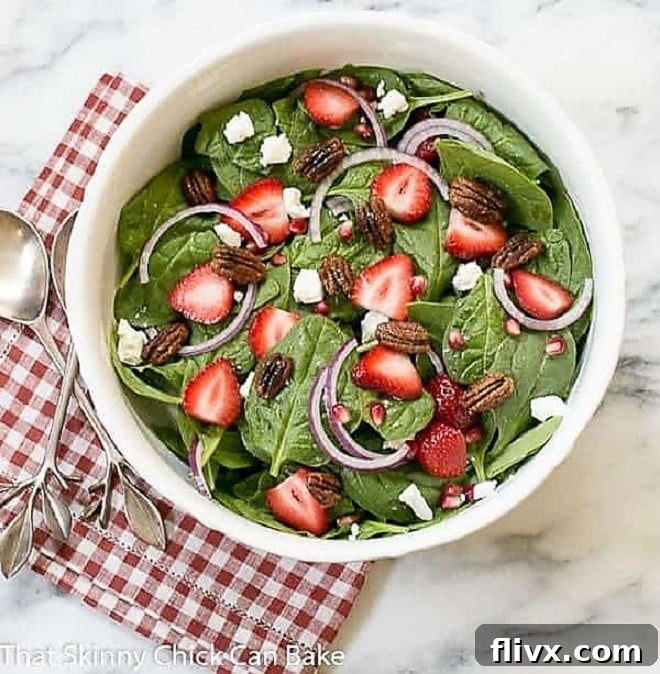
- A Harmonious Blend of Flavors and Textures: This salad truly has it all. The tender baby spinach provides a delicate base, while the sweet strawberries and tart pomegranate arils burst with fruity freshness. The crunchy sugared pecans add an irresistible textural contrast and a hint of caramelized sweetness, perfectly balancing the salty, creamy tang of the crumbled feta cheese. Each bite offers a delightful interplay of sweet, tangy, creamy, and sharp elements, ensuring a captivating culinary journey for every palate.
- Visually Stunning and Perfect for Any Occasion: With its striking palette of deep greens, ruby reds, and creamy whites, this salad is as pleasing to the eye as it is to the palate. It’s an elegant addition to any dinner party, holiday gathering, or special occasion, guaranteed to impress your guests. Yet, its straightforward preparation also makes it an ideal, healthy option for weeknight family dinners, proving that impressive doesn’t have to mean complicated.
- Health Benefits Galore: Beyond its incredible taste, this salad is packed with nutrients. Spinach is a powerhouse of vitamins and minerals, strawberries are rich in antioxidants, and pomegranates are celebrated for their anti-inflammatory properties. Combined with healthy fats from olive oil and pecans, this salad is a delicious way to nourish your body.
Essential Ingredients for Your Perfect Salad
Crafting an exceptional salad begins with selecting the finest ingredients. Here’s a detailed guide to each component, ensuring your Spinach, Strawberry, Pomegranate, Feta Salad is nothing short of spectacular:
- Kitchen Staples: Don’t underestimate the power of basic seasonings. A touch of sugar enhances the overall sweetness, while kosher salt and freshly ground black pepper are essential for seasoning both the salad and the vinaigrette, bringing all the flavors into harmony.
- Pecan Halves: These aren’t just any pecans! We recommend making sugared pecans to add an exquisite crunch and a delightful caramelized sweetness that truly elevates the salad. If pecans aren’t available, candied walnuts or almonds make excellent substitutes.
- Baby Spinach: Opt for baby spinach over mature leaves as it is more tender, has a milder flavor, and a softer texture. For ultimate convenience, purchase pre-washed and dried packaged baby spinach, saving you valuable prep time. Ensure it’s fresh and vibrant green.
- Red Onion: Thinly sliced red onion provides a pleasant sharpness and a pop of color. If you prefer a milder onion flavor, simply soak the slices in cold water for 10-15 minutes before adding them to the salad. This technique significantly reduces their pungency.
- Fresh Strawberries: Choose fragrant, bright red berries with no white or green around the stem, which indicates they were picked ripe. The leaves should appear fresh and green, and the berries themselves should be firm, free from soft spots or any signs of mold. Rinse gently and slice just before serving.
- Feta Cheese: For the best quality and flavor, always buy feta cheese in a block and crumble it yourself. Block feta tends to be creamier and more flavorful than pre-crumbled varieties, adding that essential salty, tangy creaminess to the salad.
- Small Pomegranate: The star of the show! Pomegranate arils (seeds) add a beautiful burst of color, a delightful crunch, and a tart-sweet flavor. While you can often buy pre-packaged pomegranate arils in the refrigerated produce section when in season, extracting them yourself from a whole pomegranate ensures maximum freshness and flavor. See our FAQ for easy extraction methods.
For the BEST Balsamic Vinaigrette:
- Balsamic Vinegar: This is arguably the most critical ingredient for your vinaigrette. Invest in good-quality, aged balsamic vinegar. A truly aged balsamic will be slightly syrupy in texture and offer a complex, sweet-tart flavor profile that cannot be replicated by cheaper varieties. The difference in taste is profound and well worth the investment.
- Dijon Mustard: A key ingredient not just for its subtle piquancy, but also for its crucial role in emulsifying the dressing. Brands like Grey Poupon are excellent choices. It helps to bind the oil and vinegar together, preventing separation and creating a smooth, velvety consistency.
- Fresh Garlic Clove: Minced fresh garlic provides an aromatic depth that powdered garlic simply cannot match. A garlic press makes quick work of mincing and ensures even distribution of flavor throughout the dressing.
- Extra Virgin Olive Oil: Just like balsamic vinegar, the quality of your olive oil matters immensely for a vinaigrette. Use a good quality extra virgin olive oil. Brands like California Olive Ranch are consistently excellent. Its fruity, peppery notes are essential for a robust and flavorful dressing.
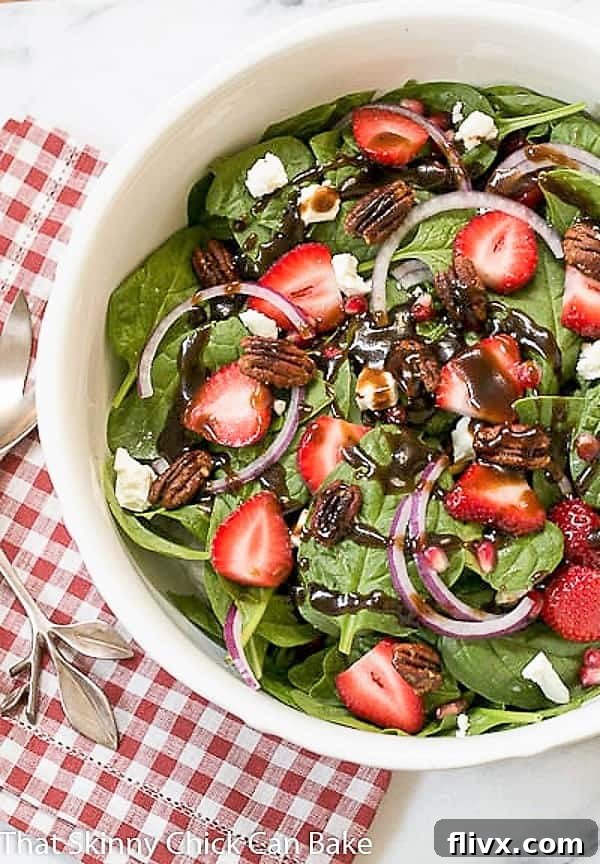
Crafting the Perfect Balsamic Vinaigrette
A truly great salad is defined by its dressing, and our homemade balsamic vinaigrette is remarkably simple to prepare, yet delivers an exceptional burst of flavor. Follow these steps for a dressing that’s consistently perfect:
- Choose Your Tool: We recommend using a Pyrex measuring cup or a medium bowl with a spout. The spout makes pouring the finished dressing into a storage jar effortless, and the side markings assist with accurate measuring. Alternatively, a mason jar with a tight-fitting lid works wonders for shaking.
- Combine the Base: Begin by adding your balsamic vinegar to the bowl or measuring cup. Follow with any seasonings (salt, pepper), Dijon mustard, and minced garlic. Whisk these ingredients together thoroughly until they are well combined. It’s crucial to mix these non-oil components first to ensure flavors are evenly distributed.
- PRO-Tip: The Balsamic Factor: The quality of your balsamic vinegar is paramount. Seek out an aged balsamic – typically aged for 12, 18, or 25 years. This aging process gives the vinegar a rich, complex sweetness and a slightly syrupy texture that provides incredible depth to your vinaigrette. A good balsamic will offer natural sweetness, often negating the need for added sugar or honey. If using a younger or less aged vinegar, you might consider adding a small amount of honey or maple syrup to achieve a similar balance of sweetness.
- Emulsification for Excellence: This is where the magic happens! With your vinegar mixture ready, slowly begin to drizzle in the extra virgin olive oil while continuously whisking. The key is a slow, steady stream. This gradual addition, coupled with constant agitation, allows the oil and vinegar to emulsify, creating a thick, cohesive dressing that won’t easily separate. This process results in a beautifully smooth and luscious texture that clings perfectly to your salad greens.
- PRO-Tip: The Power of Dijon: Beyond its tangy flavor, Dijon mustard plays a vital role in emulsification. The compounds in Dijon act as a natural emulsifier, helping to stabilize the dressing and prevent the oil and vinegar from separating. Even if you’re not a huge mustard fan, start with just a teaspoon; its contribution to the texture and overall balance of the vinaigrette is indispensable. It subtly enhances the flavor without overpowering it.
- Season to Taste: Once emulsified, taste your vinaigrette and adjust seasoning as needed. You might want more salt, pepper, or a touch more sweetness. Remember, the dressing should be vibrant and well-seasoned, as it will be coating milder ingredients.
So, grab your whisk and get ready to create a vinaigrette that transforms ordinary greens into an extraordinary meal. A high-quality, aged balsamic vinegar, perhaps an 18-year aged version from a specialty spice shop, truly makes all the difference.
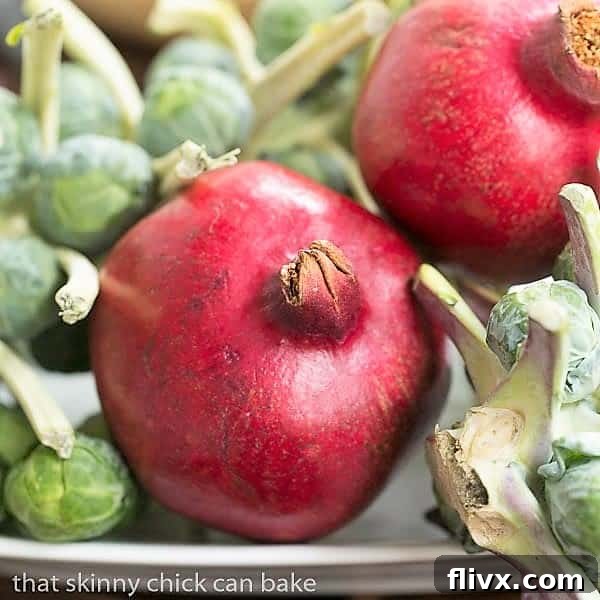
Beyond the Salad Bowl: Creative Ways to Use Pomegranates
While pomegranate arils are an undeniable star in this salad, their vibrant color and tart-sweet flavor make them incredibly versatile in the kitchen. Don’t let any leftover arils go to waste! Here are some inspiring ideas to incorporate pomegranates into more of your culinary creations:
- Elevate Your Fruit and Cheese Boards: Break open a pomegranate and artfully arrange its rosy arils alongside winter fruit trays featuring berries, pineapple, and kiwi. The gem-like seeds spilling from the cracked shell create an exquisite, opulent presentation. They also pair beautifully with a variety of cheeses, crackers, nuts, and slices of pear or apple on a sophisticated cheese board, adding both flavor and visual appeal.
- Sparkling Cocktails and Mocktails: Pomegranate arils make a gorgeous and delicious garnish for any drink utilizing pomegranate juice. Sprinkle them into a refreshing Pomegranate Cosmo, a festive Pomegranate Champagne Cocktail, or even sparkling water with a splash of lime for a non-alcoholic treat. They add a delightful pop of flavor and visual elegance.
- Breakfast and Brunch Boost: Brighten up your morning routine! Sprinkle fresh pomegranate arils over your breakfast yogurt, oatmeal, or granola for an added burst of flavor and texture. They also make a surprisingly delicious topping for avocado toast, adding a gourmet touch and a healthy dose of antioxidants to your favorite morning meal.
- Savory Dish Garnish: Pomegranates aren’t just for sweet applications. Their tartness beautifully cuts through rich, savory flavors. Use them to garnish grilled or roasted meats like chicken, lamb, or pork. The vibrant pop of red creates an appealing presentation and introduces a fresh, slightly acidic counterpoint. They can also be tossed into roasted vegetable medleys (like Brussels sprouts or root vegetables) for added color and flavor, or sprinkled over grain bowls for a touch of elegance.
Frequently Asked Questions About Pomegranates
Pomegranates can seem intimidating, but they’re incredibly rewarding once you know a few tricks. Here are answers to common questions:
How Do You Know When a Pomegranate is Ripe?
Determining ripeness for a pomegranate involves a few key indicators. First, observe its color; it can range from a deep red to a pink-blushed yellow. Crucially, you should not see any green, as this indicates it was picked too early and will not ripen further off the tree. A ripe pomegranate will feel dense and surprisingly heavy for its size, which signifies juicy arils inside. It won’t be perfectly round, often exhibiting a slightly squarish or hexagonal shape with flat sides. Give it a gentle squeeze; it should feel firm, not soft or spongy.
Can You Eat the Pomegranate Seeds?
Yes, absolutely! The tiny, edible seeds, which are technically known as arils, are the most prized part of the fruit. Each aril consists of a small, crunchy seed surrounded by a sweet, translucent, and vibrant red pulp. Both the pulp and the tiny seed inside are fully edible and packed with flavor and nutrients, including fiber. Don’t spit them out; enjoy the full texture and health benefits!
How Do You Get the Arils Out of a Pomegranate?
Extracting pomegranate arils might seem tricky, but there are a couple of straightforward methods. The goal is to minimize mess and maximize yield:
- The Water Method: First, gently slice off the crown (stem end) of the pomegranate. Then, score the fruit from the stem end down to the bottom, following the natural white membrane divisions if they are visible, or simply making 4-6 shallow cuts around the circumference. Place the scored pomegranate in a large bowl filled with cold water. Submerge the fruit and gently break it apart into sections. Under the water, use your fingers to separate the arils from the white pith. The arils will sink to the bottom, while the inedible pith will float, making it easy to skim off. This method prevents the juice from staining your hands or clothing.
- The Spoon Tapping Method: After removing the crown and scoring the pomegranate as above, hold one half of the pomegranate cut-side down over a bowl. Use the back of a sturdy spoon to firmly tap the exterior of the rind. The vibrations will encourage the arils to release and fall into the bowl below. You might need to gently pry open sections as you tap.
Both methods are effective; choose the one that feels most comfortable for you.
When Are Pomegranates in Season?
In the United States, pomegranates typically come into season in mid-September and remain available through early January, making them a popular fruit for fall and winter dishes and holiday celebrations. Globally, their seasonality can vary, but generally, they are a cool-weather fruit. Look for them fresh during these months for the best flavor and juiciness.
How Should I Store Pomegranates and Arils?
Whole, uncut pomegranates can be stored at room temperature for up to a week, or in the refrigerator for up to two months. If stored in a cool, dark place, they can last even longer. Once you’ve extracted the arils, store them in an airtight container in the refrigerator for up to 5-7 days. For longer storage, pomegranate arils can be frozen for several months. Simply spread them in a single layer on a baking sheet, freeze until solid, then transfer to a freezer-safe bag or container.
Recipe: Spinach, Strawberry, Pomegranate, Feta Salad with Balsamic Vinaigrette
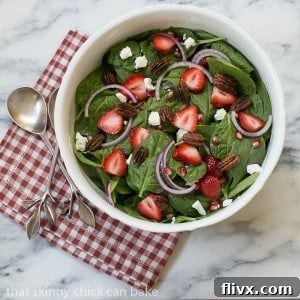
Spinach, Strawberry, Pomegranate, Feta Salad Recipe
10 minutes
5 minutes
15 minutes
4 servings
A lovely and vibrant salad bursting with fresh flavors, perfectly dressed with the most fabulous homemade balsamic vinaigrette.
Ingredients
- ½ cup sugared pecans (see instructions below)
- 1 tablespoon granulated sugar (for sugared pecans)
- 5 ounces fresh baby spinach
- ½ small red onion, very thinly sliced
- 8 ounces fresh sliced strawberries
- ½ cup crumbled Feta cheese
- Seeds (arils) from one small pomegranate
For the Best Balsamic Vinaigrette:
- 3 tablespoons premium, aged balsamic vinegar
- 2 teaspoons Dijon mustard
- 1 fresh garlic clove, minced
- ½ cup extra virgin olive oil
- ½ teaspoon kosher salt
- A pinch of freshly ground black pepper
Instructions
- Prepare Sugared Pecans: To make the sugared pecans, combine the pecan halves and 1 tablespoon of sugar in a nonstick sauté pan. Cook over medium heat, stirring frequently, until the sugar melts and evenly coats the pecans. Be careful not to burn them.
- Cool Pecans: Once coated and caramelized, remove the sugared pecans from the pan and spread them in a single layer on non-stick foil or parchment paper to cool completely. They will crisp up as they cool.
- Make the Vinaigrette: In a medium bowl or Pyrex measuring cup, whisk together the balsamic vinegar, Dijon mustard, and minced garlic until thoroughly combined.
- Emulsify the Dressing: While continuously whisking, slowly drizzle in the extra virgin olive oil in a steady, thin stream. Continue whisking until the dressing is well emulsified and has thickened to a smooth, cohesive consistency. Season the vinaigrette with kosher salt and freshly ground black pepper to taste.
- Assemble the Salad: In a large serving bowl, place the fresh baby spinach. Evenly top the spinach with the thinly sliced red onion, sliced strawberries, crumbled Feta cheese, pomegranate arils, and the cooled sugared pecans.
- Serve: Just before serving, generously drizzle the homemade balsamic vinaigrette over the salad. Toss gently to combine all the ingredients, ensuring everything is lightly coated with the dressing. Serve immediately for the best texture and flavor.
Notes
For an unparalleled vinaigrette, use the highest quality aged balsamic vinegar you can find. An 18-year aged balsamic is truly transformative.
If you find raw onions too sharp, mitigate their intensity by soaking the thinly sliced red onion in a bowl of cold water for about 10-15 minutes before adding them to the salad. Drain thoroughly before use.
This salad is best enjoyed fresh. If preparing ahead, keep the dressing separate and toss just before serving to prevent the spinach from wilting.
Nutrition Information:
Yield:
4
Serving Size:
1
Amount Per Serving (estimated):
Calories: 456
Total Fat: 37g
Saturated Fat: 7g
Trans Fat: 0g
Unsaturated Fat: 28g
Cholesterol: 17mg
Sodium: 572mg
Carbohydrates: 30g
Fiber: 6g
Sugar: 22g
Protein: 6g
Loved This Recipe?
We’d love to hear your thoughts! Please leave a comment on the blog or share a photo of your creation on Pinterest. Don’t forget to tag us!
You May Also Enjoy These Recipes
- Homemade Blue Cheese Salad Dressing
- Easy Honey French Salad Dressing
- Comforting Chicken Feta Casserole
- The Best Classic Cobb Salad Recipe
- Elegant Endive Cups with Blue Cheese and Raspberries
- Discover more of the Best Salad Recipes
Stay connected and be the first to know about new recipes by following us on social media! Find us on Instagram, Facebook, and Pinterest. Don’t forget to tag us when you try one of our delicious recipes! Your feedback and shared creations brighten our day. And if you adore the results, please consider giving this recipe a 5-star rating!