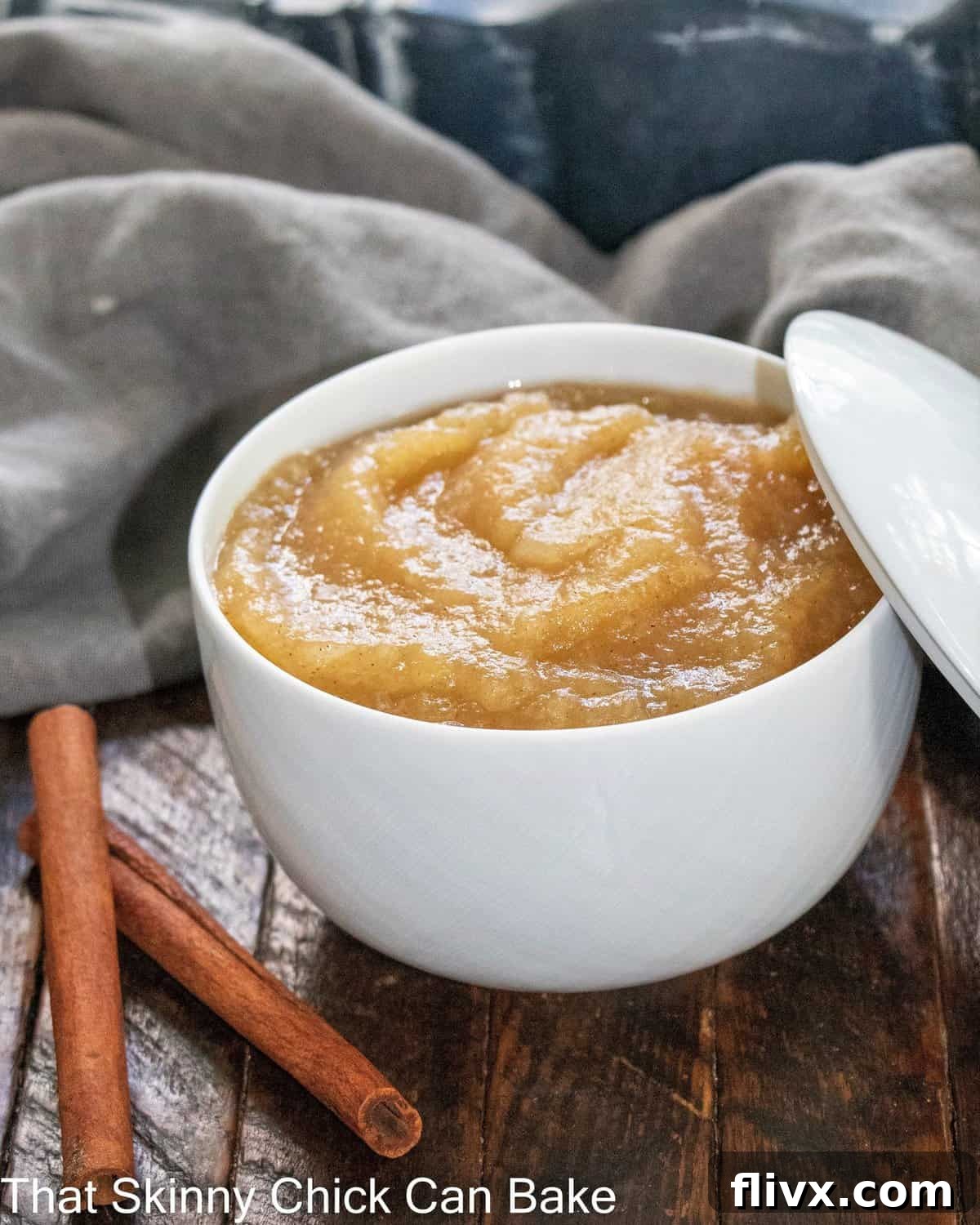
Homemade Cinnamon Spiced Applesauce: An Easy & Delicious Fall Tradition
Experience the delightful aroma and comforting taste of fall with our incredibly easy-to-make Homemade Applesauce. This classic Cinnamon Spiced Applesauce recipe is not only simple but also fully customizable, allowing you to tweak it to perfection for your unique taste buds. Forget store-bought versions filled with unnecessary additives; embrace the pure, wholesome goodness of apples crafted right in your own kitchen.
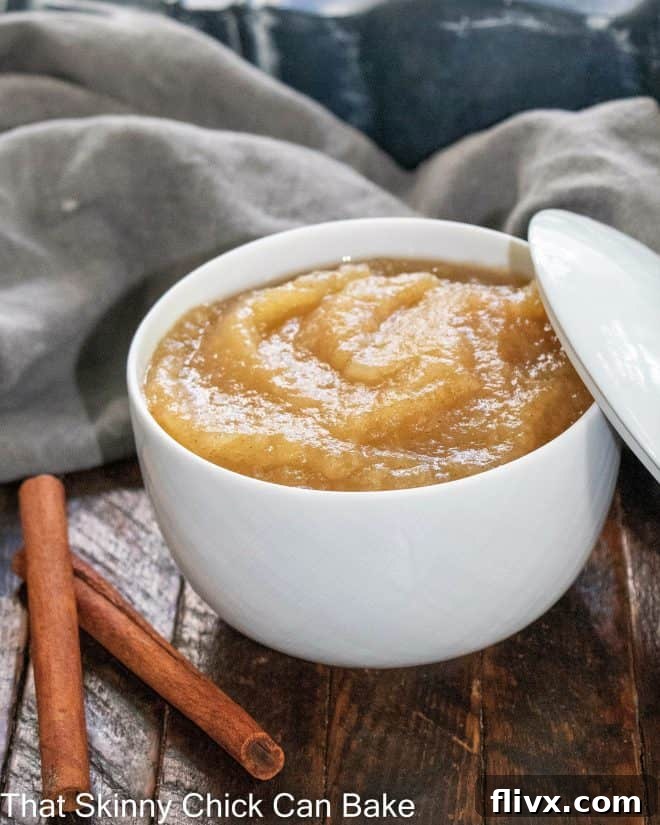
Why Homemade Applesauce is a Must-Try: Unlocking Pure Flavor and Health Benefits
Making your own applesauce is a rewarding culinary experience that offers numerous advantages over its store-bought counterparts. Here’s why you absolutely must try this recipe:
- Simple, Wholesome Ingredients: Our ingredient list is refreshingly short and sweet: fresh apples, a touch of sugar, a pinch of salt, and fragrant cinnamon. You know exactly what goes into your food, ensuring a pure and natural product.
- Tailored Sweetness & Spice: Unlike pre-made applesauce, you have complete control over the sweetness level. Whether you prefer it tart, mildly sweet, or rich and decadent, you can adjust the sugar to match your palate perfectly. The same goes for cinnamon; add just a whisper or a generous amount for a robust spice kick.
- No Unwanted Additives: Say goodbye to high-fructose corn syrup, artificial flavors, preservatives, and other unnecessary additives often found in commercial brands. Homemade applesauce is clean, natural, and free from anything you don’t want in your diet.
- Economical and Sustainable: Making applesauce from scratch can often be more cost-effective, especially when apples are in season. It’s also a fantastic way to use up an abundance of apples from a harvest or a trip to the orchard, reducing food waste.
- Unbeatable Freshness and Aroma: The taste of freshly made applesauce is unparalleled. Moreover, as the apples simmer gently on your stove, your home will be filled with the most incredible, comforting aroma of autumn – a natural air freshener that can’t be bought.
- Customizable Texture: Do you love your applesauce smooth and silky, or do you prefer it chunky with discernible pieces of apple? This adaptable recipe allows you to achieve your ideal texture with ease.
Craving a healthier option? Simply choose naturally sweeter apple varieties and reduce the added sugar. If a stronger cinnamon presence is what you desire, feel free to increase the amount. The beauty of this recipe lies in its flexibility. While I often use a mix of two apple types for a more complex flavor profile, any good cooking apple will yield delicious results.
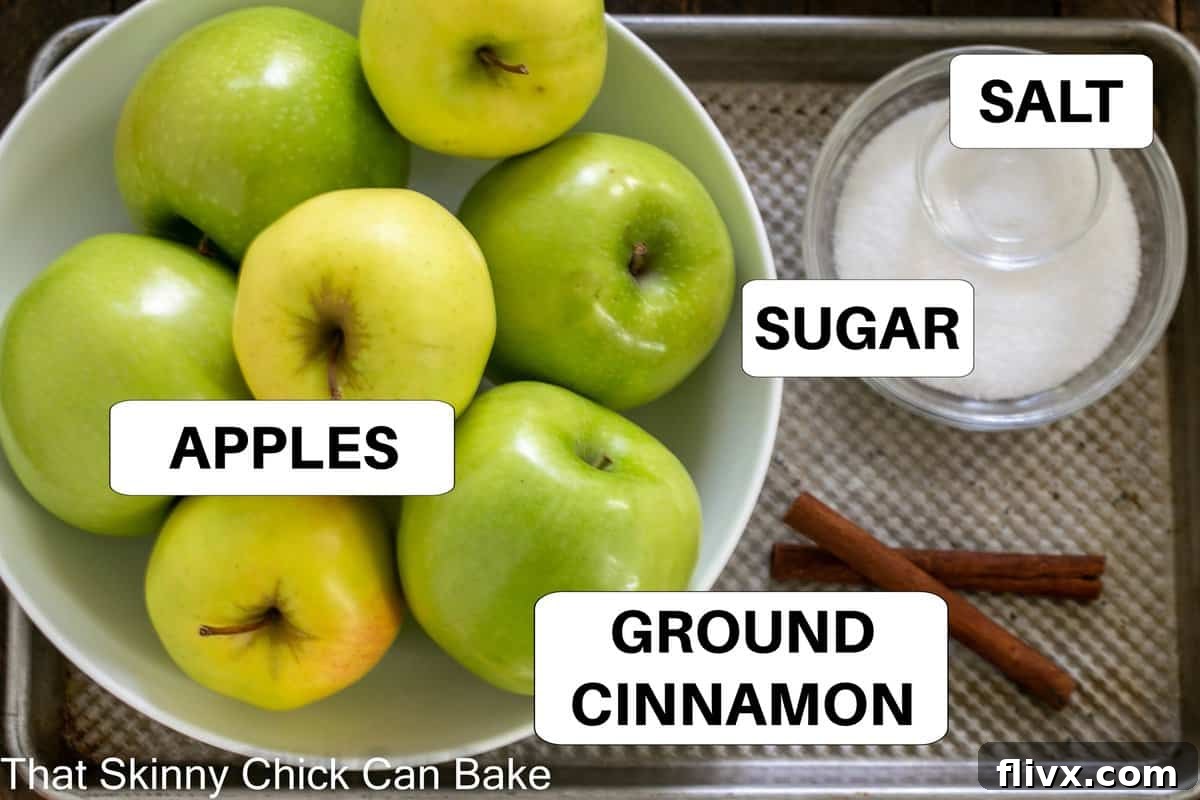
Essential Ingredients for Your Perfect Applesauce
Crafting the best homemade applesauce begins with understanding each ingredient and its role. Here’s a closer look at what you’ll need:
- Cooking Apples: The foundation of your applesauce! For a delightful depth of flavor, I highly recommend using a combination of apple varieties. My personal favorites are crisp, tart Granny Smiths paired with sweet, softer Golden Delicious apples. Other excellent choices include Fuji, Honeycrisp, McIntosh, Jonagold, Jonathan, and Cortland. Mixing and matching ensures a balanced flavor that’s not too sweet and not too tart, with a pleasant complexity.
- Water: This is crucial for creating steam, which helps the apples soften evenly and quickly without scorching. It also provides the initial liquid for the sauce.
- Sugar: Standard white granulated sugar is typically used. The amount is entirely up to you and the natural sweetness of your chosen apples. Start with less and add more to taste as the apples cook. You can also experiment with brown sugar for a richer, more caramel-like note, or even maple syrup for a natural sweetness.
- Salt: Often overlooked in sweet recipes, a small pinch of salt is a true flavor enhancer. It brightens the natural apple flavor and balances the sweetness, preventing the applesauce from tasting flat. Don’t skip it!
- Cinnamon: The star spice of this particular recipe. Ground cinnamon is convenient and effective. However, for an even richer, deeper flavor, consider adding a cinnamon stick or two to the pot while the apples cook. Remove the sticks before mashing for a smooth texture. Nutmeg, cloves, or allspice can also be added for more complex autumn spice profiles.
- Lemon Juice: A secret weapon for balancing flavors. If you find your applesauce tastes overly sweet, a splash of freshly squeezed lemon juice will introduce a bright, zesty counterpoint, making the overall flavor more vibrant and less cloying.
Step-by-Step Guide: Crafting Your Homemade Applesauce
Making homemade applesauce is surprisingly straightforward. Follow these simple steps for a truly delicious result:
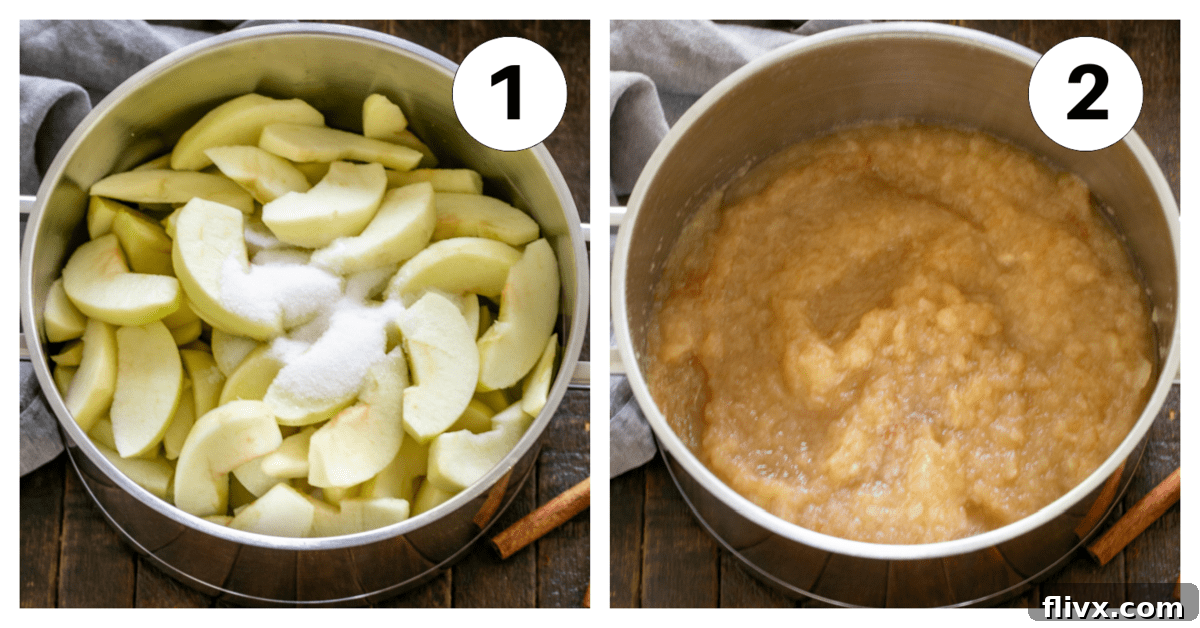
- Prepare and Simmer the Apples: Begin by peeling, coring, and slicing or chopping your chosen apples. The size of the pieces isn’t critical, as they will soften, but smaller pieces will cook faster. Place the prepared apples into a large, heavy-bottomed pot. Add the specified amount of water, sugar (start with half the recommended amount if you prefer less sweetness), and a pinch of salt. Bring the mixture to a gentle simmer over medium heat. Stir occasionally to ensure even cooking.
- Cook Until Tender: Continue to simmer, stirring frequently. As the apples soften, they will begin to break down. This process typically takes between 15-25 minutes, depending on the apple variety and the size of your apple pieces. You’ll know they’re ready when they are very tender and easily pierced with a fork.
- Mash to Desired Consistency: Once the apples are perfectly soft, remove the pot from the heat. Using a potato masher, begin mashing the apples directly in the pot. For a chunky applesauce, mash just enough to break down most of the pieces while leaving some larger chunks. For a smoother consistency, mash thoroughly. If you desire a perfectly smooth puree, you can transfer the mixture to a food processor or use an immersion blender (be careful of hot splatters!).
- Season and Adjust: After mashing, add the ground cinnamon. Stir it in well. Now is the crucial moment for tasting! Taste the applesauce and decide if you need more sugar or cinnamon. Add small amounts at a time, stirring well and tasting after each addition, until it perfectly suits your preference. If it tastes too sweet, a squeeze of fresh lemon juice can help balance the flavors beautifully.
Mastering Applesauce: Insider Tips for Success
Elevate your homemade applesauce from good to extraordinary with these expert tips:
- Apple Blends for Depth: As mentioned, utilizing at least two different types of apples is key to a more interesting and complex depth of flavor. My preferred combination is the sweet, softer Golden Delicious for its mild flavor and quick breakdown, paired with the firm, tart Granny Smiths for structure and a pleasant tang. This balance prevents the applesauce from being one-dimensional.
- Control Your Sweetness: Many store-bought applesauces list both high-fructose corn syrup AND regular corn syrup as primary ingredients. Opting for granulated white sugar at home gives you superior control over the sweetness level and avoids these processed ingredients. You can also explore natural sweeteners like honey or maple syrup for different flavor profiles.
- Texture Your Way: The beauty of homemade lies in customization. You can make the applesauce exactly the texture your family loves. When my children were younger, I’d mash it to a very smooth, almost pureed consistency. Now that they’re older, they enjoy it with delightful chunks of apple. Adjust your mashing technique to suit your preference.
- Slow Cooker Method: For a hands-off approach, consider making applesauce in a slow cooker. Simply combine all ingredients, cover, and cook on low for 4-6 hours or until apples are tender. Mash as desired. This method is fantastic for busy days and yields a wonderfully fragrant result.
- Freezing for Later: Applesauce freezes beautifully. Allow it to cool completely, then portion it into freezer-safe containers or bags. It will keep well in the freezer for up to 6 months, making it easy to enjoy homemade applesauce year-round.
Creative Ways to Enjoy Your Homemade Applesauce
Homemade applesauce is incredibly versatile and can be enjoyed in countless ways beyond just a simple snack. Here are some inspiring ideas:
- Classic Side Dish: Serve it as a traditional side dish, especially in the fall months. It pairs wonderfully with roasted pork, chicken, or duck, cutting through the richness with its fruity sweetness.
- Wholesome After-School Snack: A bowl of warm or chilled homemade applesauce is a nutritious and comforting snack for children and adults alike.
- Baking Ingredient: Applesauce is a fantastic natural sweetener and fat substitute in many baked goods. Use it in muffins, cakes, quick breads, and cookies to add moisture and flavor while reducing oil or sugar. Try it in our Chaussons aux Pommes, or French apple turnovers, for an authentic treat.
- Breakfast Topping: Spoon it over oatmeal, yogurt, pancakes, waffles, or French toast for a delicious and healthy boost to your morning meal.
- Healthy Dessert: Serve warm applesauce with a dollop of whipped cream, a sprinkle of granola, or a scoop of vanilla ice cream for a simple yet satisfying dessert.
- Baby Food: For little ones, homemade applesauce is a perfect first food – natural, pure, and easy to digest.
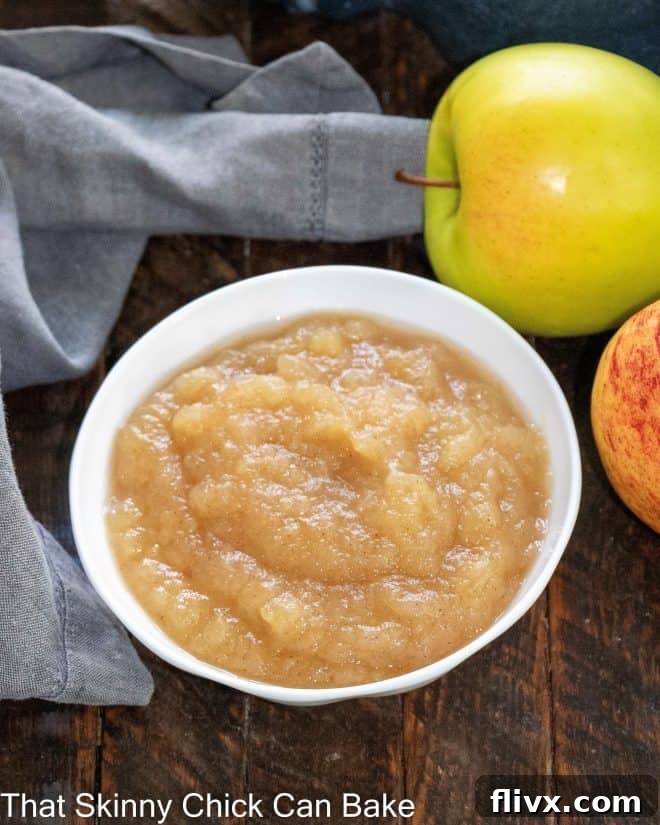
Frequently Asked Questions About Homemade Applesauce
For the most balanced and flavorful applesauce, I highly recommend using a combination of sweet and tart apples. My top choices are Granny Smith (for tartness and structure) and Golden Delicious (for sweetness and quick breakdown). Other excellent varieties include Fuji, Honeycrisp, McIntosh, Jonagold, Jonathan, and Cortland. Using more than one variety adds a delightful depth of flavor that a single apple type might lack.
If your homemade applesauce turns out runnier than you’d prefer, don’t fret! The solution is simple: just continue simmering it gently over low heat. Stir occasionally to prevent sticking and encourage evaporation of the excess liquid. Keep an eye on it, as it can thicken quickly once much of the water has cooked off, until it reaches your desired consistency. Be patient, and it will eventually thicken up.
While some recipes suggest using cornstarch to thicken applesauce, I generally prefer to achieve the right consistency by simply cooking the applesauce down and allowing the natural pectin in the apples to do its work. However, if you’re in a hurry or your applesauce is stubbornly thin, cornstarch can be an option. To use it effectively, create a “slurry” by mixing 1 tablespoon of cornstarch with 1 cup of cold water until smooth. For this recipe’s typical yield, half a tablespoon of cornstarch mixed in a half cup of water would likely be sufficient. Gradually whisk the slurry into the simmering applesauce, then continue to simmer for a few minutes until the mixture visibly thickens and the raw cornstarch flavor cooks out. Be careful not to add too much, as it can make the texture gummy.
Properly stored homemade applesauce can last in the refrigerator for up to 7-10 days in an airtight container. For longer storage, it can be frozen for up to 6 months in freezer-safe containers or bags. Thaw in the refrigerator overnight before use.
Absolutely! If you prefer sugar-free applesauce, simply omit the sugar from the recipe. Select naturally sweet apple varieties like Fuji, Honeycrisp, or Gala to maximize sweetness. You might also consider adding a touch of a natural sweetener like stevia or erythritol to taste, or a dash of vanilla extract to enhance the perceived sweetness without actual sugar.
Explore More Apple-Inspired Delights:
If you’ve fallen in love with homemade applesauce, you’ll surely enjoy these other wonderful apple recipes:
- Applesauce Cinnamon Oat Muffins from Barbara Bakes
- Old Fashioned Apple Cobbler
- Perfect Apple Pie
- Brown Sugar Apple Bread
- Cranberry Apple Bread
- How to Make a Rose Tart
- Plus, More delicious Side Dish Recipes
Stay in touch through social media @ Instagram, Facebook, and Pinterest. Don’t forget to tag me when you try one of my recipes! And if you love the results, please consider leaving a comment on the blog.
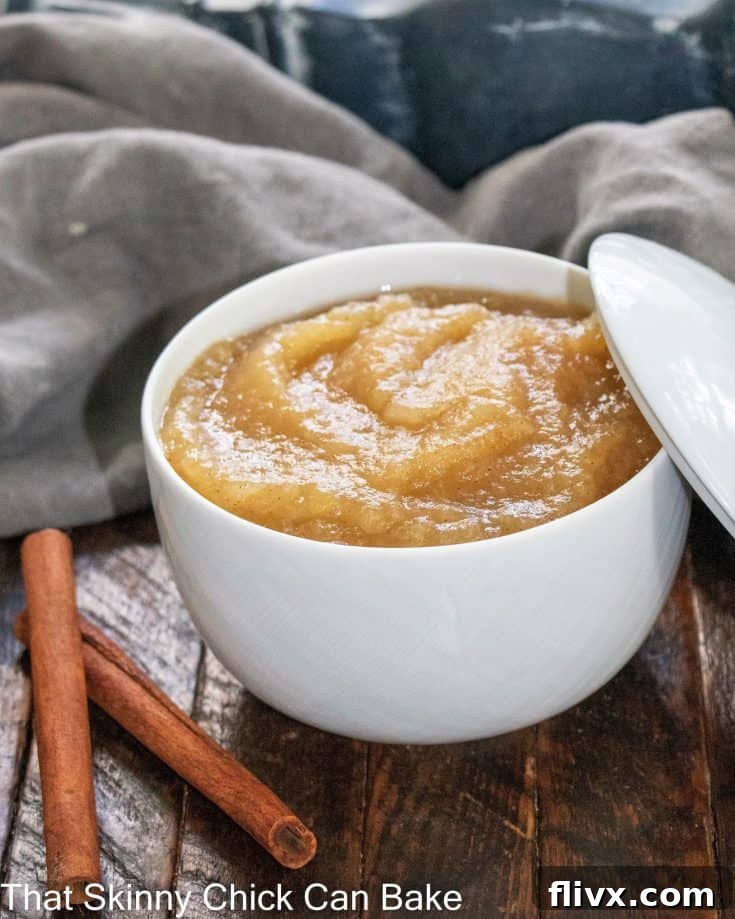
Cinnamon Spiced Applesauce
10 minutes
30 minutes
40 minutes
Approx. 3 cups (will vary depending on size of apples)
Making homemade applesauce is incredibly easy! This recipe lets you control the sweetness and cinnamon level to perfectly match your preferences, offering a healthier and tastier alternative to store-bought options.
Ingredients
- 8 cooking apples (e.g., 4 Granny Smiths and 4 Golden Delicious for best flavor)
- ½ cup water
- ½ cup granulated sugar (adjust to taste)
- A pinch of salt
- ½-1 teaspoon ground cinnamon, optional (or 1-2 cinnamon sticks)
- Fresh lemon juice, to taste, optional (for balancing sweetness)
Instructions
- Peel, core, and slice or chop your apples into uniform pieces. Place the prepared apples into a large saucepan with water, sugar (start with ½ cup, adjust later), and a pinch of salt.
- Bring the mixture to a simmer over medium heat. Stir frequently, and begin to mash the apples with a potato masher as they start to soften. Continue simmering until apples are very tender and easily mashed (about 20-30 minutes).
- Once the applesauce reaches your desired consistency (smooth or chunky), remove from heat. Taste for sweetness and add more sugar if desired, stirring until dissolved.
- Stir in the cinnamon (½ to 1 teaspoon, or more) and taste again. If the applesauce seems too sweet, add a small squeeze of fresh lemon juice to balance the flavors. Serve warm or chilled.
Notes
For an extra layer of flavor, you can add 1-2 whole cinnamon sticks to the pot while the apples are simmering, removing them before mashing. If your applesauce is too sweet, a small squeeze of lemon juice can magically balance the flavors without adding more sugar.
Recommended Kitchen Essentials
As an Amazon Associate and member of other affiliate programs, I earn from qualifying purchases.
- Potato Masher
- OXO Cutting Board
- OXO Vegetable Peeler
Nutrition Information:
Yield:
6 Servings
Serving Size:
1/2 cup
Approximate Amount Per Serving:
Calories: 192
Total Fat: 0g
Saturated Fat: 0g
Trans Fat: 0g
Unsaturated Fat: 0g
Cholesterol: 0mg
Sodium: 26mg
Carbohydrates: 51g
Fiber: 6g
Sugar: 42g
Protein: 1g
WE’D LOVE TO HEAR FROM YOU!
Did you try this recipe? We’d love to know your thoughts! Please leave a comment on the blog or share a photo of your delicious creation on Pinterest.