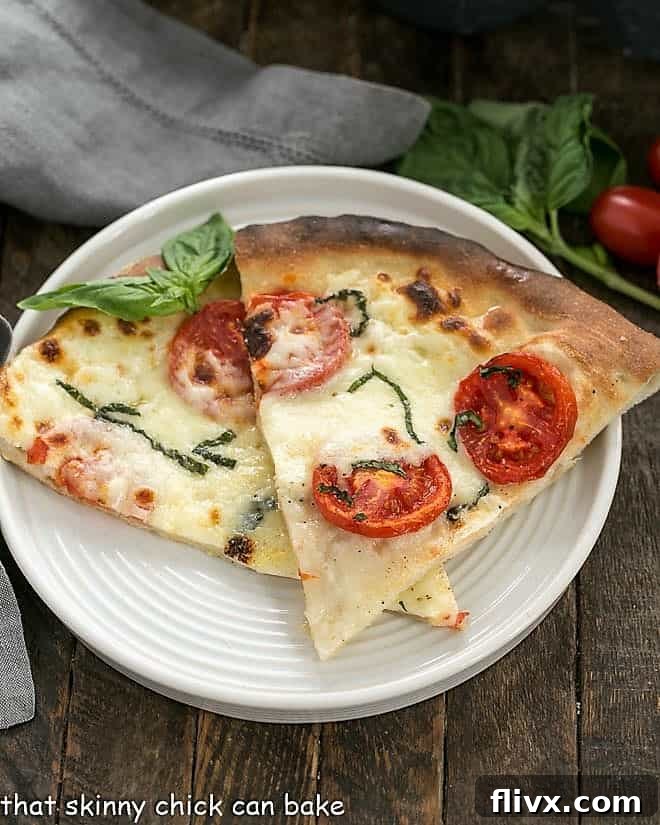
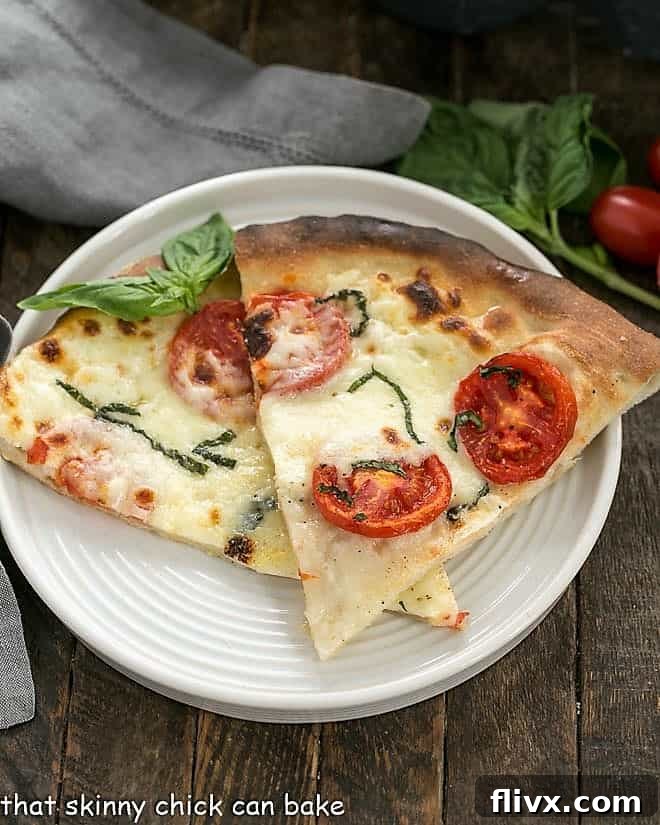
Transform your kitchen into an authentic Italian pizzeria with this incredibly simple, 5-ingredient homemade pizza dough recipe. Crafting your own pizza from scratch isn’t just easy; it’s an immensely rewarding culinary adventure that yields truly fabulous results. Imagine a crust so perfectly crisp yet wonderfully chewy, rivaling your favorite takeout. This classic pizza dough recipe is your secret weapon, promising restaurant-quality flavor and texture right from your oven. Get the whole family involved – especially the kids – and let them discover the magic of how a few basic ingredients and a quick-acting yeast can create a pizza that everyone will rave about.

Mastering the Classic Pizza Dough: Why Homemade is Best
There’s a special satisfaction that comes with creating something delicious from the ground up, and pizza dough is no exception. For many, figuring out crowd-pleasing meals can be a delightful challenge, especially when catering to diverse preferences. While store-bought pizza dough can be a convenient shortcut for busy weeknights, it often lacks the depth of flavor and unique texture that only a fresh, homemade crust can offer. I once relied on ready-made dough from places like Trader Joe’s for quick pizza Margherita nights, but a yearning for something truly exceptional led me to experiment with making my own.
The journey to crafting the perfect homemade pizza crust began with a simple goal: to create a dough that elevates a basic pizza Margherita into an extraordinary culinary experience. While a slow, overnight rise in the refrigerator allows for profound flavor development due to prolonged fermentation, life sometimes throws a curveball. Don’t worry if you’re pressed for time; a more traditional one-hour rise in a warm spot still produces a wonderfully light and flavorful dough. The key is understanding the yeast and giving it the right conditions to work its magic. This adaptable recipe ensures that even with a quicker rise, your pizza will boast an authentic taste that will transport you straight to Italy.
The Simple Art of Perfect Pizza Toppings
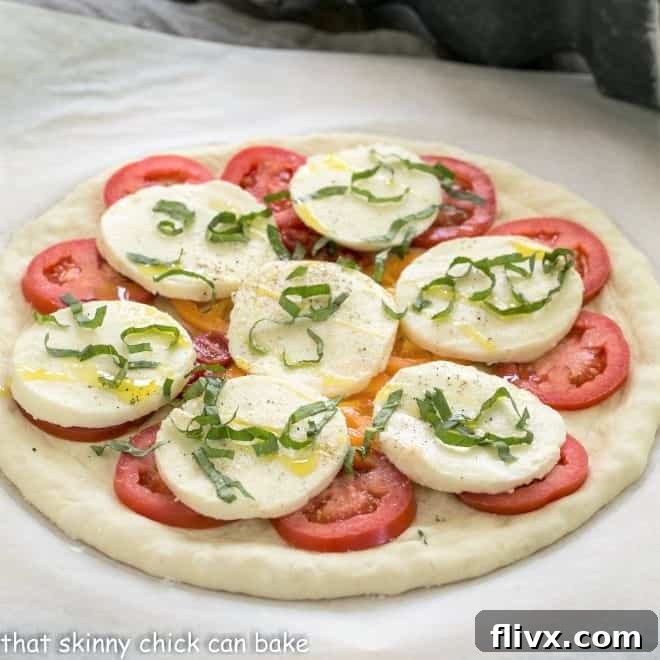
Once you have your incredible homemade pizza dough, the possibilities for toppings are endless. For a true classic experience, simplicity is often key, allowing the quality of your crust and ingredients to shine through. My go-to homemade pizza toppings for a simple yet elegant Margherita include thinly sliced Roma tomatoes, which I always drain thoroughly on paper towels to prevent a soggy crust. Fresh mozzarella, sliced or torn, provides that irresistible gooey texture and rich flavor. A vibrant chiffonade of fresh basil adds an aromatic finishing touch, complemented by a drizzle of high-quality extra virgin olive oil, a sprinkle of flaky kosher salt, and freshly ground black pepper. These are readily available ingredients that, when combined thoughtfully, create a symphony of flavors. Remember, less is often more, especially when your crust is this good!
How to Make Homemade Pizza Dough: A Step-by-Step Guide
Creating your own pizza dough from scratch is a rewarding process that’s far less intimidating than you might think. Follow these detailed steps to achieve a beautifully elastic, flavorful dough every time:
- Activate Your Yeast: The very first and crucial step is to ensure your active dry yeast is alive and ready to work. Always check the expiration date on the packaging. If you’re uncertain or using yeast from an opened jar, perform a quick test: gently sprinkle a teaspoon of yeast into about a quarter cup of warm (not hot!) water (around 105-115°F or 40-46°C) with a pinch of sugar. If, after 5-10 minutes, the mixture becomes foamy and bubbly, your yeast is active. If not, it’s best to discard it and use fresh yeast.
PRO-Tip: Did you know you can store active dry yeast in the freezer? Storing it in an airtight container in the freezer can extend its shelf life by years, ensuring you always have fresh yeast on hand! - Combine and Knead: Once your yeast is activated and ready, follow the recipe’s specific measurements for water, honey (or sugar), olive oil, flour, and salt. In a stand mixer, you can start by mixing the wet ingredients with the flour and salt using the paddle attachment until a shaggy dough forms. Then, switch to the dough hook attachment. Knead the dough on low speed for about 8-10 minutes, or until it’s smooth, elastic, and slightly sticky to the touch. The kneading process is vital for developing gluten, which gives pizza dough its characteristic chewiness and structure. If kneading by hand, be prepared for a good workout; it will take about 10-15 minutes of consistent kneading on a lightly floured surface.
- First Rise (Proofing): Transfer your well-kneaded dough to a lightly oiled mixing bowl, turning it once to coat all sides. Cover the bowl tightly with plastic wrap or a damp cloth. Allow the dough to proof (rise) in a warm spot until it has roughly doubled in size. An ideal temperature for proofing is around 85°F (29°C), which can often be achieved in a slightly warm oven (turned off, with just the light on) or a sunny spot in your kitchen. This typically takes about an hour. For an even richer, more complex flavor, you can opt for an overnight cold rise in the refrigerator. This slow fermentation process develops deeper notes in the dough. If using the cold rise method, remember to bring the dough back to room temperature for about 30-60 minutes before proceeding with shaping.
- Shape and Top: Unlike many yeast breads, pizza dough usually only requires one round of proofing. Once your dough has doubled, gently punch it down to release the air. This recipe yields enough for two pizzas, so divide the dough in half. To shape, you can either gently stretch the dough by hand or use a rolling pin. For a truly authentic, airy crust, try the hand-stretching method: drape the dough over the backs of your hands, using gravity and your knuckles to gently stretch and rotate it into a round. Once you have a roughly shaped circle, place it on a piece of parchment paper (this makes transferring to the oven much easier) and continue pressing and stretching with your fingers until you achieve your desired thickness and shape.
- Preheat Your Oven and Stone: For an exceptionally crispy crust, it’s crucial to preheat your oven to the highest possible temperature, ideally 500-550°F (260-290°C). If you have a pizza stone or steel, place it in the oven during the preheating phase. Allow at least 30-60 minutes for the stone to heat thoroughly and evenly distribute heat, which is essential for that perfect bottom crust crispness.
- Add Toppings and Bake: Carefully transfer your shaped dough, still on the parchment paper, to a pizza peel or a flat baking sheet. Add your desired toppings, ensuring they are evenly distributed.
PRO-Tip: Do not overload your pizza with too many toppings, as this can weigh down the crust and prevent it from crisping properly. Also, make sure any soft or watery ingredients, like tomatoes or mushrooms, are free of excess liquid. Slicing tomatoes very thin and draining them on paper towels can prevent a gummy crust. If your crust does turn out a little soft, don’t worry, it’ll still be delicious! Using the pizza peel, slide the pizza (with the parchment paper) onto the preheated pizza stone or into the oven. Bake for 8-15 minutes, or until the crust is golden brown, the cheese is bubbly and melted, and the toppings are cooked to your liking. - Cool and Serve: Once baked, use the pizza peel to carefully remove the pizza and parchment from the oven. Transfer it to a wire cooling rack for a few minutes before slicing. This allows air to circulate around the bottom of the crust, preventing it from becoming soggy and ensuring maximum crispness.
The end result of this process is a simple, yet profoundly satisfying meatless meal. The difference made by homemade pizza dough is truly remarkable, transforming a casual dish into an unforgettable culinary experience. I wholeheartedly encourage you to give this recipe a try; you won’t regret it!
Beyond the Basics: Tips for Perfect Pizza Dough Every Time
Understanding Your Ingredients
- Flour Choice: While all-purpose flour works, using bread flour with its higher protein content results in a chewier, more structured crust. If you can find ’00’ flour, often used for Neapolitan pizzas, it will give an incredibly tender and crisp result.
- Water Temperature: This is critical for yeast activation. Too cold, and the yeast won’t activate; too hot, and you’ll kill it. Use a thermometer to ensure your water is between 105-115°F (40-46°C).
- Salt: Don’t skip the salt! It enhances flavor, strengthens the gluten structure, and regulates yeast activity.
- Olive Oil: Adds richness, tenderness, and helps with browning.
Troubleshooting Common Pizza Dough Issues
- Dough is too sticky: This usually means you’ve added too much water or not enough flour. Gradually add a tablespoon of flour at a time while kneading until the dough is elastic and slightly sticky, but not unmanageable.
- Dough is too tough or dense: This can be caused by over-kneading, which develops too much gluten, or not allowing enough time for proofing. Ensure you stop kneading once the dough is elastic, and give it ample time to rise.
- Crust isn’t crispy: Factors include too much moisture from toppings, not preheating the oven and stone enough, or baking at too low a temperature. Ensure toppings are dry and your oven is screaming hot!
Storing Homemade Pizza Dough
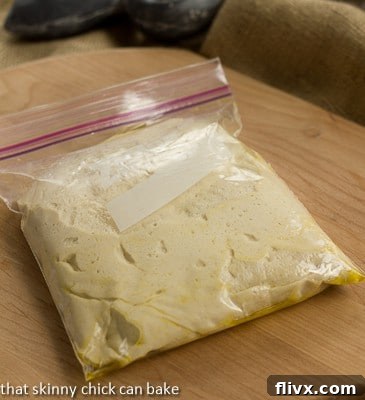
One of the best things about making your own pizza dough is the ability to prepare it ahead of time. After the first rise, you can store portions of the dough in individual oiled, airtight containers or freezer bags in the refrigerator for up to 3-5 days. For longer storage, you can freeze the dough for up to 2-3 months. When ready to use, simply thaw frozen dough overnight in the refrigerator, then bring it to room temperature before shaping and baking. This makes impromptu pizza nights incredibly easy and convenient.
More Delicious Pizza Recipes You’ll Love:
- BLT Pizza from Never Enough Thyme
- Pizza Margherita Recipe
- Homemade Sausage and Mushroom Pizza
- Easy Fig, Goat Cheese and Prosciutto Pizza
- Easy Pizza Casserole
- Fresh Fruit Pizza
- Apple Pie Pizza
- Discover even more Yeast Bread Recipes to expand your baking repertoire.
Classic Pizza Dough
20 minutes
1 hour
1 hour 20 minutes
2 pizza crusts
An easy recipe for a classic pizza dough made with yeast! Now your homemade pizza will taste like it came from a pizza parlor!
Ingredients
- 1 ½ cups warm water, 105-115 degrees (use a thermometer)
- 3 tablespoons honey
- 2 ¼ teaspoons active dry yeast, (one 1/4 ounce packet)
- 3 tablespoons olive oil (plus more to coat the bowl for the dough)
- 4 cups unbleached bread flour, preferred or all-purpose flour
- 1 tablespoon salt
Instructions
- Combine water, honey, yeast, and olive oil in a large bowl or the bowl of a stand mixer. Let the mixture rest for about 5-10 minutes; it should become foamy, indicating the yeast is active. In a separate bowl, whisk together the flour and salt. Add the dry ingredients to the wet ingredients in the stand mixer fitted with the dough hook (or mix by hand). Knead on low speed for 8-10 minutes (refer to your mixer’s instructions to prevent motor burnout) until the dough is elastic and slightly sticky. If kneading by hand, continue for 10-15 minutes.
- Lightly oil a clean mixing bowl. Place the dough in the bowl, turning it once to ensure all sides are coated with oil. Cover the bowl tightly with plastic wrap or a damp kitchen towel. Allow the dough to rise in a warm place until it has doubled in size, which typically takes about an hour. For an enhanced flavor profile, you can opt for an overnight rise in the refrigerator; if using this method, ensure the dough is brought back to room temperature before shaping.
- Once the dough has risen, gently punch it down to release the air. Divide the dough in half to make two pizza crusts. On a lightly floured surface or a piece of parchment paper, pat out each half of the dough into your desired pizza shape and thickness. Add your favorite toppings and bake as directed in your chosen pizza recipe, typically in a preheated oven at the highest possible temperature (500-550°F / 260-290°C) until the crust is golden and the cheese is bubbly.
Notes
Recipe adapted from Cuisine at Home.
This recipe makes enough for 2 pizzas, perfect for a family meal or leftovers!
Recommended Products for Your Pizza Night
As an Amazon Associate and member of other affiliate programs, I earn from qualifying purchases.
- Pizza Peel
- Reynolds Cookie Baking Sheets Non-Stick Parchment Paper, 25 Sheet, 4 Count
- Pizza Cutter
Nutrition Information:
Yield:
8
Serving Size:
1 Servings
Amount Per Serving:
Calories: 377Total Fat: 6gSaturated Fat: 1gTrans Fat: 0gUnsaturated Fat: 5gCholesterol: 0mgSodium: 798mgCarbohydrates: 69gFiber: 2gSugar: 7gProtein: 10g
HOW MUCH DID YOU LOVE THIS RECIPE?
Please leave a comment on the blog or share a photo on Pinterest