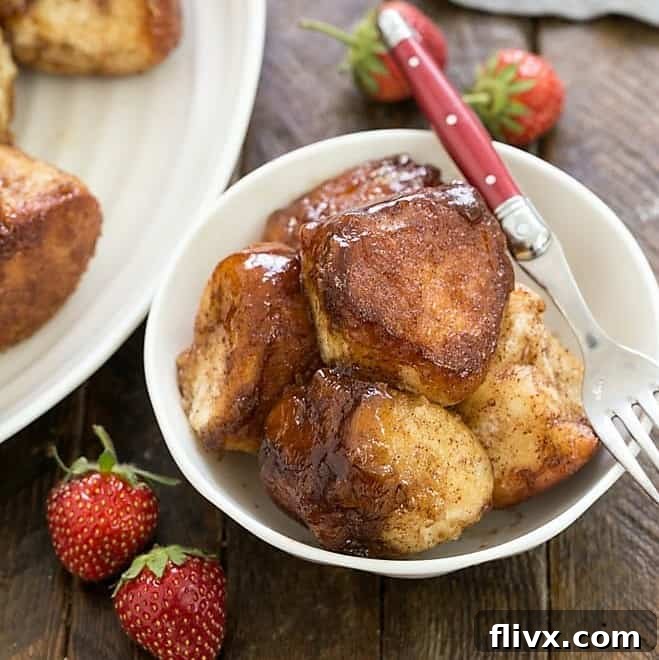
Indulge in the ultimate morning delight with this spectacular Homemade Monkey Bread Recipe – a truly outstanding, crowd-pleasing breakfast or brunch treat that promises to thrill your entire family and guests alike!
While convenient versions of monkey bread, often called bubble rolls, using pre-made dough and pudding mixes offer a quick fix, this exquisite Cinnamon Bread Recipe made entirely from scratch is undeniably worth every bit of effort. Each delightful, tender piece of dough is lovingly coated in a rich, buttery brown sugar mixture, baking into a luscious, irresistible caramel glaze that will leave you craving more.
Why This Homemade Monkey Bread is a Must-Try
Prepare to elevate your breakfast game! This From Scratch Monkey Bread isn’t just a recipe; it’s an experience. Here’s why it deserves a spot in your baking repertoire:
- Unforgettable Fun to Eat: Composed of dozens of individual, bite-sized rolls, this is the quintessential pull-apart bread. The interactive nature of grabbing a warm, gooey piece makes it incredibly addictive and a hit with all ages!
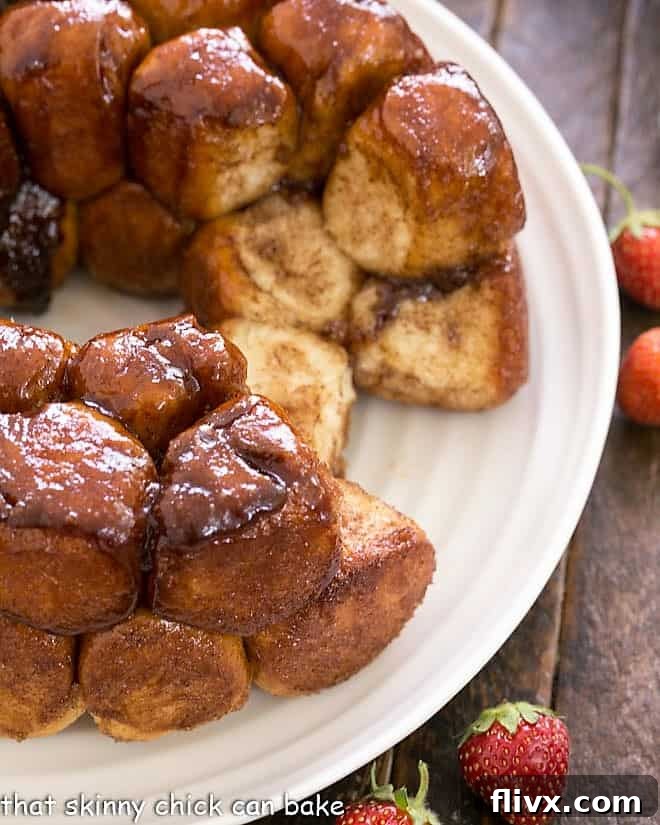
- Gooey Caramel Perfection: Each and every soft, fluffy roll is generously encased in a sweet, glistening caramel sauce. If you’re a fan of classic sticky buns, these cinnamon-sugar coated bubble rolls will not just rock your world—they’ll redefine your expectations. The rich, buttery glaze seeps into every crevice, creating pockets of pure bliss.
- Superior Flavor and Texture: While store-bought dough shortcuts exist, crafting this monkey bread from scratch yields a bread that’s infinitely more tender, flavorful, and aromatic. The homemade yeast dough provides a depth of character and a pillowy texture that simply can’t be replicated, making it the ultimate homemade treat.
- Aromatic Experience: The scent of warm cinnamon, sweet brown sugar, and rich yeast dough baking in your oven is an experience in itself. It’s the kind of aroma that makes your house feel like a home and draws everyone to the kitchen with eager anticipation.
- Perfect for Any Occasion: Whether it’s a festive holiday morning, a leisurely weekend brunch, or a special treat to share with loved ones, this Homemade Monkey Bread Recipe fits perfectly. It’s impressive enough for guests yet comforting enough for a cozy family gathering.
What Exactly is Monkey Bread?
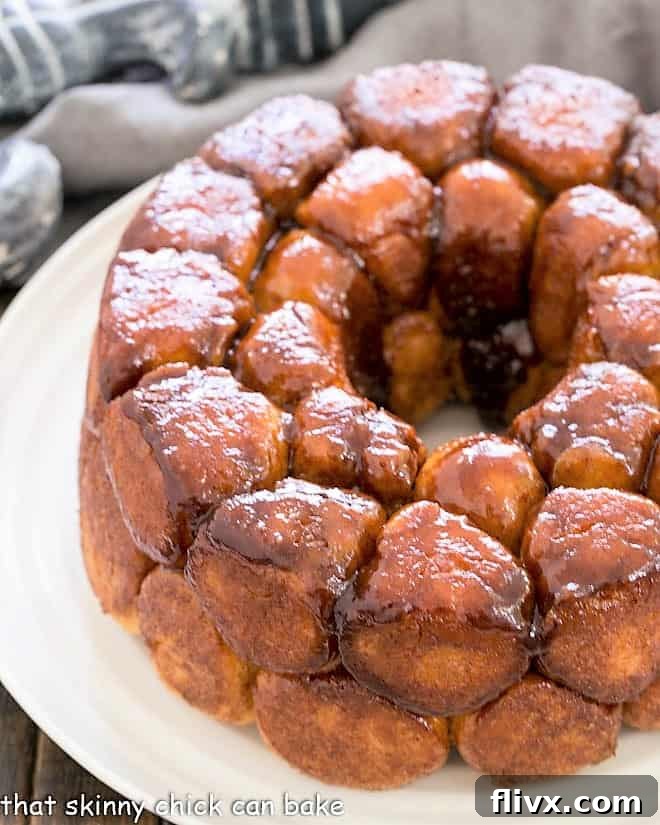
Monkey Bread, fondly known by various names such as Bubble Roll, Bubble Loaf, Pull-Apart Bread, or Pinch-Me Cake, is a delightful sweet yeast bread. Its characteristic structure is formed by arranging small, individual clumps of dough—typically dipped in melted butter and coated in cinnamon sugar—in three or four overlapping layers within a Bundt or tube pan. As it bakes, these dough pieces expand and fuse, creating a unified loaf that can be easily pulled apart into individual portions.
The whimsical name “Monkey Bread” originates from its unique eating style. Just like a monkey would pluck fruit from a tree, you eat this bread by pulling off individual pieces with your fingers, making it an incredibly fun and interactive culinary experience. While our focus here is on a sweet, cinnamon-infused version, monkey bread can also be made savory, incorporating herbs, cheese, and garlic. This particular recipe, however, offers a wonderfully fun and delicious twist on a classic cinnamon bread recipe, promising a burst of sweet, gooey flavor with every pull.
Mastering Homemade Monkey Bread From Scratch
Creating this magnificent From Scratch Monkey Bread is a rewarding endeavor that yields unparalleled results. Follow these essential tips to ensure a flawless, delectable outcome:
- Choose the Right Pan: Your choice of baking pan is crucial. My foremost tip for how to make monkey bread perfectly is to use a Bundt or Angel Food Cake Pan with a solid, one-piece bottom. If your pan has a removable bottom, the rich caramel sauce will inevitably leak into your oven during baking, creating a significant mess and potentially even a fire hazard. Opt for a sturdy, seamless pan to avoid this unfortunate scenario. (You’ll often find excellent one-piece tube pans specifically designed for this purpose, check the recommended products section in the recipe card for an affiliate link to a suitable option.)
- Non-Stick Advantage: While a non-stick pan is certainly a convenience, it’s not strictly necessary. If you don’t have one, simply ensure your chosen pan is thoroughly greased with softened butter or baking spray to prevent sticking and facilitate an easy release.
- The Art of Proofing: Proper dough rising (proofing) is vital for a light, airy texture. Avoid forcing the dough to rise in an oven that’s too hot; 85ºF (approx. 29ºC) is the ideal temperature goal. Many modern ovens come with a dedicated “proofing” setting, often preset to this perfect temperature. If your oven lacks this feature, a simple trick is to place a bowl of very hot water in the oven alongside your covered dough to gently raise the ambient temperature. Always use an oven thermometer to verify the temperature, ensuring it stays within the optimal range.
- Patience is Key: Forcing the dough to rise too quickly or at excessively high temperatures will compromise both the delicate flavor and the desired tender texture of your monkey bread. Allow the yeast to work its magic at its own pace within the recommended temperature range for the best results.
- Cooling for Caramel Retention: Once baked, resist the urge to immediately invert the monkey bread. Let it cool on a wire rack for at least 5 to 10 minutes before flipping it onto your serving plate. This crucial cooling period allows the molten caramel topping to set slightly, ensuring that it adheres beautifully to the bread and doesn’t all slide off, leaving the bread dry and the pan overflowing with sauce. If any glorious caramel remains in the pan, don’t waste it! Gently scrape it out and drizzle it over the inverted rolls for an extra layer of decadence.
Expert Tips for the Ultimate Pull-Apart Perfection
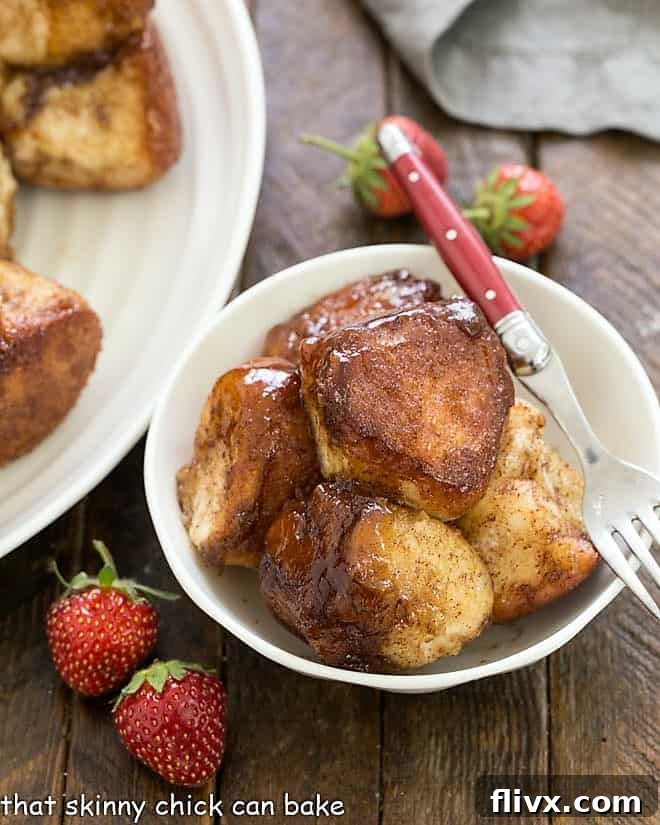
Imagine 64 perfectly formed balls of tender, yeasted dough, each lovingly dipped in melted butter and then rolled in a fragrant mixture of rich brown sugar and warm cinnamon. This meticulous process creates a sumptuous, gooey coating over every single piece of this incredible bubble roll, making it virtually impossible to stop at just one. Or two. This is truly one of the most addicting brunch treats you’ll ever encounter.
The very act of eating this bread explains its charming name. Just like a monkey, you’ll find yourself eagerly pulling off piece after piece, savoring every single bite of its sweet, caramelized goodness!
- Understanding Yeast: The heart of this bread is the yeast dough. PRO-Tip: When activating your yeast, be extremely careful not to add liquid (milk and water) that is over 120ºF (approx. 49ºC) to the mixture, as excessively hot liquid will kill the yeast, rendering it inactive. The ideal temperature range for activating yeast is between 110-120ºF (43-49ºC). Yeast is a living organism that thrives in a warm environment, feeding on sugar to produce carbon dioxide, which gives the bread its airy structure.
- The Art of Kneading: I personally love using my stand mixer with a dough hook to knead the dough, as it simplifies the process and ensures consistent results. However, if you’re using a lighter-duty mixer, be mindful of its motor; the vigorous workout from kneading can cause it to overheat, potentially damaging it. If you notice your mixer getting warm, give it a break, or consider kneading the dough by hand. Kneading by hand is always a fantastic option, offering a tactile connection to your baking.
- Achieving Uniform Dough Balls: PRO-Tip: For evenly sized dough balls that bake consistently, pat your risen dough into an 8×8-inch rectangle. Then, use a sharp knife or a bench scraper to divide it into 64 1×1-inch pieces. This simple trick ensures each piece of monkey bread is perfectly uniform in size and cooks beautifully.
- Optimal Proofing Environment: PRO-Tip: It’s best to proof your dough in a warm, humid environment. The ideal temperature for the second rise (after the dough balls are in the pan) should be between 80 and 90ºF (27-32ºC). Any hotter, and the dough will rise too quickly, negatively affecting the final texture and quality of the bread. A warm, humid environment helps the dough rise gently, creating a light and fluffy result.
- The Glorious Glaze (Optional but Recommended!): To ice or not to ice? That is the question! My family’s motto is “Everything tastes better with frosting!” A simple powdered sugar glaze not only adds another layer of delightful sweetness but also helps to seal in moisture, creating another melt-in-your-mouth component to this incredible treat. I’ve never heard a single complaint about this decision – only requests for more!
Frequently Asked Questions About Monkey Bread
The name “Monkey Bread” stems from its distinctive pull-apart nature. This sweet yeast bread is made by stacking small, individual pieces of dough—each typically coated in melted butter and then either cinnamon-sugar or savory ingredients—into a tube pan for baking. To enjoy it, you quite literally pluck a piece of dough from the loaf with your fingers, much like a monkey might pick at its food or groom another monkey. This fun, interactive eating style is what earned it its memorable moniker.
Monkey Bread goes by a variety of charming aliases, reflecting its widespread popularity and diverse regional interpretations. The first recipe I encountered, from a quaint cookbook I picked up in Sedona, Arizona, was simply called “Bubble Roll,” a name that has affectionately stuck with my family. Other common names include bubble bread, bubble loaf, pull-apart bread (a very descriptive name!), jumble bread, and even “pinch-me-cake” – all hinting at its playful, segment-by-segment consumption.
Beyond its warm, inviting flavor, cinnamon offers several potential health benefits. It is known to affect blood sugar levels, possibly lowering the body’s insulin resistance, which could be beneficial for individuals categorized as pre-diabetic or those managing blood sugar. Cinnamon is also a powerhouse of healthy antioxidants, which help protect your body’s cells from damage caused by free radicals. Furthermore, studies suggest cinnamon may improve “good” HDL cholesterol levels and potentially contribute to lowering “bad” LDL cholesterol and triglyceride numbers. Its natural antibacterial properties may even help decrease plaque development on teeth, and cinnamon oil has historically been used to alleviate tooth pain as a temporary remedy until professional dental care can be sought.
Absolutely! Monkey bread is a fantastic make-ahead option, perfect for stress-free mornings. After assembling the dough balls in the Bundt pan, cover it tightly with greased plastic wrap and refrigerate overnight (up to 12-18 hours). In the morning, take it out of the fridge and let it come to room temperature and complete its final rise (this could take 1-2 hours) before baking as directed. This allows you to wake up to freshly baked goodness without all the early morning fuss!
Yes, you can freeze monkey bread, though it’s usually best enjoyed fresh. To freeze, let the baked monkey bread cool completely, then wrap it tightly in plastic wrap and then aluminum foil. It can be frozen for up to 1-2 months. To reheat, thaw it overnight in the refrigerator, then warm it in a low oven (around 300°F / 150°C) until heated through and gooey again. Freezing individual baked pieces might also work well for quick snacks.
Explore More Delicious Breakfast & Brunch Ideas:
- Chocolate Chip Banana Bread from Barefeet in the Kitchen
- Cinnamon Crusted Pumpkin Bread
- Sugar Crusted Zucchini Bread
- Discover more of the Best Breakfast Recipes for every morning craving!
Stay connected and share your baking triumphs! Find me on social media @ Instagram, Facebook, and Pinterest. Don’t forget to tag me when you try one of my recipes! If you adore the results, please consider leaving a 5-star rating in the recipe card—it truly helps!
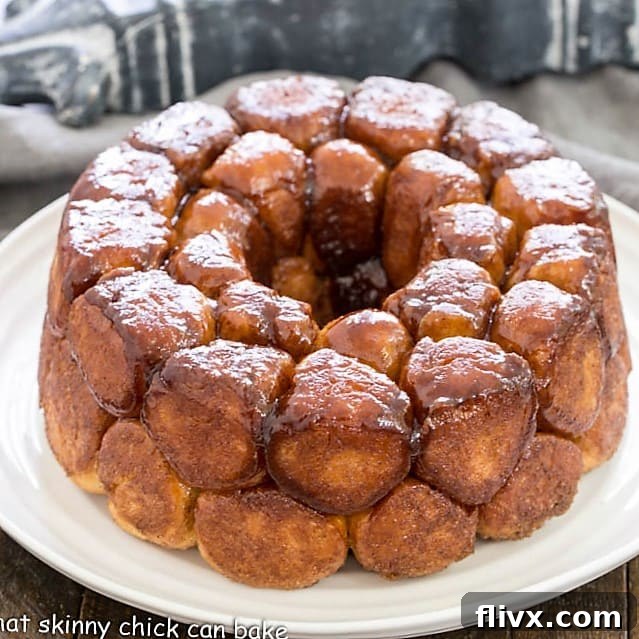
Homemade Monkey Bread Recipe
30 minutes
35 minutes
2 hours
3 hours 5 minutes
8 servings
Delightful yeast rolls generously coated in cinnamon sugar and baked to perfection with a rich, caramelly glaze for a magnificent breakfast or brunch treat that everyone will adore. This from-scratch recipe ensures the most tender and flavorful monkey bread.
Highly rated by over 60 bakers! This recipe consistently receives 5-star reviews for its irresistible flavor and texture.
Ingredients
For the Dough
- 4 tablespoons unsalted butter, divided (2 tablespoons softened for greasing the Bundt pan, 2 tablespoons melted for the dough)
- 1 cup warm milk (about 110ºF / 43-49ºC)
- ⅓ cup warm water (about 110ºF / 43-49ºC)
- ¼ cup granulated sugar
- 1 package rapid-rise yeast (or instant yeast, approximately 2 ¼ teaspoons)
- 3 ¼ cups all-purpose flour, plus additional for dusting work surface
- 2 teaspoons salt
For the Cinnamon Sugar Coating
- 1 cup packed light brown sugar
- 2 teaspoons ground cinnamon
- 8 tablespoons (1 stick) unsalted butter, melted
Optional Glaze:
- 1 cup confectioners’ sugar (sifted for an extra smooth glaze)
- 2 tablespoons milk (or cream)
Instructions for Homemade Monkey Bread
- Prepare Your Pan: Preheat your oven to a low 200ºF (93ºC), then immediately turn it off. This creates a slightly warm environment for proofing. Generously grease a 10-12 cup Bundt pan (ensure it has a solid bottom) with the 2 tablespoons of softened butter. Set the pan aside.
- Make the Dough: In a large liquid measuring cup, combine the warm milk, warm water, 2 tablespoons of melted butter, granulated sugar, and yeast. Stir gently and let it sit for 5-10 minutes until foamy, indicating the yeast is active. In the bowl of a stand mixer fitted with the dough hook attachment, combine the all-purpose flour and salt. With the mixer on low speed, slowly pour in the yeast mixture. Once the ingredients come together to form a shaggy dough, increase the speed to medium and continue to knead for 6 to 7 minutes until the dough is smooth and elastic.
- First Rise (Proofing): Remove the dough from the mixer bowl and gently shape it into a ball. Place it in a large bowl that has been lightly coated with cooking spray. Cover the bowl securely with greased plastic wrap. Place the covered bowl in your warm, turned-off oven (aim for about 85ºF / 29ºC) and let the dough rise until it has doubled in size, which typically takes about 1 hour.
- Prepare Coating: While the dough is undergoing its first rise, prepare the cinnamon-sugar coating. In one shallow bowl, whisk together the brown sugar and cinnamon. In a second shallow bowl, place the 8 tablespoons of melted butter. Set these aside.
- Shape the Dough: Once the dough has doubled, gently punch it down to release the air. Transfer the dough to a lightly floured work surface. Pat the dough into an even 8-inch by 8-inch square. Using a sharp knife or bench scraper, cut the dough into 64 equal 1×1-inch pieces.
- Coat and Layer: Take each small dough piece and roll it into a neat ball. Dip each ball thoroughly into the melted butter, ensuring it’s fully coated. Then, roll the butter-coated ball in the brown sugar and cinnamon mixture until completely covered. Carefully arrange the coated dough balls into the prepared Bundt pan. To ensure a beautiful presentation and even distribution, try to place the second layer of dough balls directly over the seams and gaps of the first layer. Continue layering until all dough balls are in the pan.
- Second Rise: Cover the filled Bundt pan loosely with greased plastic wrap. Return the pan to your slightly warm oven (still aiming for about 85ºF / 29ºC) for about 1 hour, or until the dough has risen approximately an inch above the sides of the pan. This second rise is crucial for light, fluffy monkey bread.
- Bake the Monkey Bread: Once the dough has risen sufficiently, remove the pan from the oven. Preheat your oven to 350ºF (175ºC). Bake the monkey bread for about 30 to 35 minutes, or until the top is a deep golden brown and the internal temperature reaches 200-205ºF (93-96ºC). A skewer inserted into the center should come out clean.
- Cool and Glaze: Allow the monkey bread to cool in the pan on a wire rack for at least 5 to 10 minutes. This allows the hot caramel sauce to thicken slightly and adhere to the bread. After 5-10 minutes, carefully invert the pan onto a serving plate. Let it cool for another 10 minutes before applying the glaze (if using). While the bread is cooling, whisk together the confectioners’ sugar and milk in a small bowl until completely smooth. Drizzle the glaze generously over the warm monkey bread. Serve warm and enjoy immediately!
Notes from the Kitchen
This recipe has been lovingly adapted from a trusted source, Cook’s Illustrated, ensuring its reliability and deliciousness.
Please note that the “Total Time” listed above does not include the essential dough proofing times, which are crucial for the bread’s texture and can add a couple of hours to the overall process. Plan accordingly to enjoy this wonderful homemade treat.
Recommended Baking Essentials
As an Amazon Associate and member of other affiliate programs, I earn from qualifying purchases, helping to support this blog.
- Nordic Ware Platinum Collection Angel Food Cake Pan (one-piece Bundt style)
- KitchenAid Professional 7-Quart Stand Mixer
- Pyrex Smart Essentials 3-Piece Mixing Bowl Set
Nutrition Information:
Yield:
8
Serving Size:
1
Amount Per Serving:
Calories: 523Total Fat: 18gSaturated Fat: 11gTrans Fat: 1gUnsaturated Fat: 6gCholesterol: 49mgSodium: 692mgCarbohydrates: 84gFiber: 2gSugar: 42gProtein: 7g
HOW MUCH DID YOU LOVE THIS RECIPE?
Please leave a comment on the blog or share a photo on Pinterest

Photo courtesy of my son, Tom, who loves to document our family foibles.
The (Humorous) Story Behind the Fire Truck & My First Monkey Bread Adventure
Have you ever experienced the heart-stopping moment when a fire truck, lights flashing and sirens blaring, races down your usually quiet street and grinds to a halt directly in front of your house? For me, this wasn’t a one-time occurrence, but a memorable saga that unfolded at least three times over a couple of decades. The initial episode, however, remains the most vivid – it was the very first time I attempted to bake a Cinnamon Monkey Bread Recipe.
My culinary journey with monkey bread began after a delightful trip to Sedona, Arizona, where I purchased a charming mini-cookbook from our bed and breakfast. The recipe, titled “Bubble Roll,” called for frozen roll dough, a box of butterscotch pudding mix, plenty of butter, and a generous amount of sugar. Eager to recreate the magic, I meticulously arranged the dough in the pan, topped it with the dry ingredients, allowed it to rise, and eagerly popped it into the oven. What my inexperienced self didn’t realize was that the two-piece angel food pan I was using had a removable bottom. A classic rookie mistake! Predictably, the sweet sugar syrup began to leak, cascading all over the bottom of my oven. Whoops, indeed!
In a moment of naive optimism, I believed the problem could be easily resolved. After all, what’s a little spilled sugar when you have a self-cleaning oven? I turned on the self-cleaning cycle and went about my day, confident in my solution. It wasn’t long, however, before one of my children reported an unsettling amount of smoke wafting from the kitchen. Then, my ever-observant husband suggested there might, in fact, be actual flames in our oven. The “queen of denial” in me initially dismissed these warnings, that is, until the smoke alarm began blaring its deafening alert, thereby notifying our local fire department that our home was potentially in jeopardy. Within minutes, the entire fire department arrived, ready for action.
“I was just baking,” I sheepishly explained to the fireman as he walked up our driveway, a look of amused bewilderment on his face. Eventually, I learned my lesson, albeit the hard way. Now, when something starts smoking in my oven (a rare, yet still occasional occurrence, I’m embarrassed to admit!), I’ve pre-emptively called my alarm company to instruct them to ignore any smoke signals originating from our address. But rest assured, you, dear reader, are far smarter than I was in my early baking days! When you embark on making this delicious homemade cinnamon monkey bread, armed with the knowledge of using a solid-bottom pan, your baking adventure will undoubtedly go off without a hitch! For those curious about my initial, fire-alarm-inducing attempt, it was an Easy Monkey Bread made with a box of butterscotch pudding mix – a testament to how far a recipe can evolve!