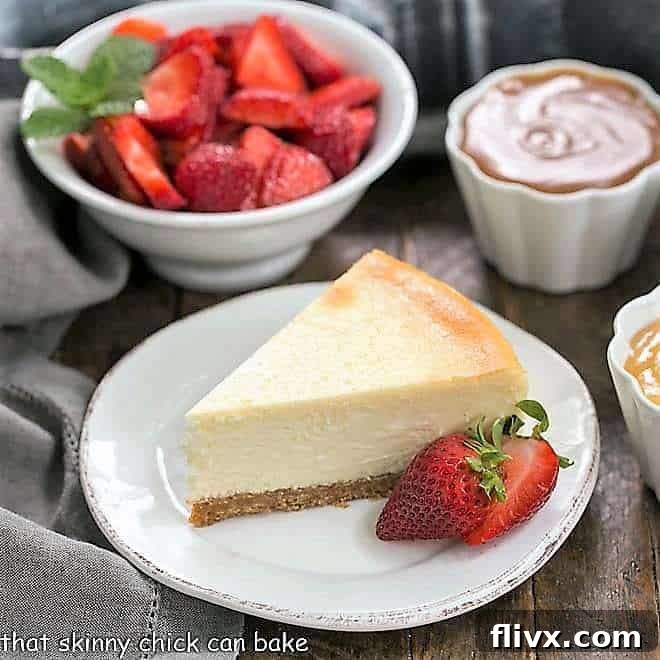
Welcome to the ultimate guide for creating a truly classic dessert that captivates every palate: the **Perfect Vanilla Cheesecake**. This isn’t just any cheesecake recipe; it’s a meticulously tested, foolproof method designed to help you achieve a velvety smooth, incredibly rich, and absolutely irresistible vanilla cheesecake every single time. Whether you’re a seasoned baker or new to the world of cheesecakes, our detailed instructions and expert tips will elevate your baking skills and ensure a show-stopping dessert for any occasion.
A quintessential **Vanilla Cheesecake Recipe** stands as a magnificent foundation, offering endless possibilities for culinary creativity. Imagine transforming this classic into an indulgent Oreo Cheesecake by simply adding a crushed Oreo crust and mixing generous chunks of cookies into the batter. Or, for a truly decadent treat, layer it with rich ganache, sprinkle on some chopped Twix bars, and finish with a luscious caramel drizzle to create a show-stopping Twix Cheesecake. The versatility of this vanilla base knows no bounds, making it a staple for every dessert enthusiast.
Why This Vanilla Cheesecake is a Must-Bake
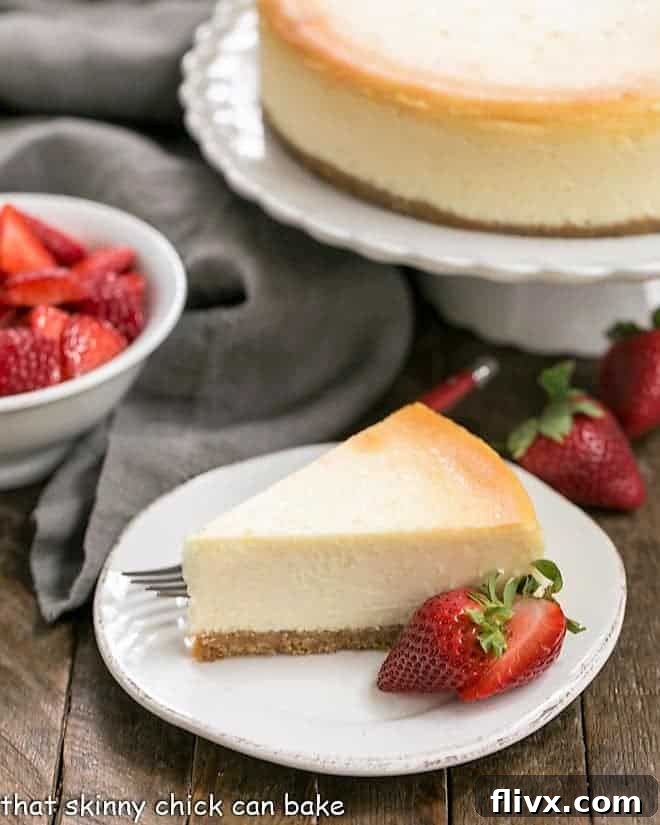
There are countless reasons why this **Classic Vanilla Cheesecake** should be at the top of your baking list. It’s more than just a dessert; it’s an experience, a celebration of simple yet profound flavors that bring joy to any gathering. When my friend Katie requested a vanilla cheesecake for her birthday celebration, I knew I had to deliver nothing short of perfection. What makes this particular recipe stand out? It’s the meticulous combination of a basic framework with subtle yet impactful twists, such as the strategic addition of cornstarch and a two-stage method for incorporating cream cheese, which together create an unparalleled texture and flavor profile.
- **Universally Adored Flavor:** Vanilla is truly one of the most beloved and comforting flavors in the culinary world. Its subtle sweetness and aromatic depth make it a crowd-pleaser that appeals to virtually everyone. This vanilla cheesecake harnesses that universal appeal, delivering a dessert that’s sophisticated yet approachable, satisfying both discerning palates and those who simply crave a classic treat.
- **The Ultimate Canvas for Customization:** A slice of this exquisite vanilla cheesecake is like a blank canvas, eagerly awaiting your creative touch. Its neutral yet rich flavor pairs beautifully with almost any topping. For fruit lovers, a medley of fresh berries or a vibrant berry compote adds a burst of freshness. Chocolate enthusiasts will adore a generous drizzle of warm fudge sauce and a dollop of freshly whipped cream. Caramel fans can indulge in a luxurious blanket of caramel sauce. The possibilities are truly endless, allowing you to tailor each serving to individual preferences.
- **A Versatile Base for Specialty Cheesecakes:** Beyond simple garnishes, this basic vanilla cheesecake recipe serves as an incredible foundation for more elaborate, indulgent creations. Whether you dream of a rich chocolate swirl cheesecake, a vibrant lemon raspberry cheesecake, or a playful candy bar-inspired dessert, this vanilla recipe provides the perfect creamy, stable base that can be easily adapted and enhanced. Mastering this recipe opens up a world of cheesecake experimentation and delicious discoveries.
- **Achieve Professional Results at Home:** With our well-tested recipe and comprehensive tips, you’ll bake a cheesecake that rivals those from your favorite patisserie. We guide you through every step, ensuring a smooth, dense, crack-free cheesecake that impresses with both its appearance and its unbelievably creamy texture.
Key Ingredients for Your Perfect Vanilla Cheesecake
Crafting the perfect vanilla cheesecake begins with understanding the role of each ingredient. Quality and preparation are paramount to achieving that coveted smooth, creamy texture and rich flavor. Here’s a closer look at the essential components for your cheesecake masterpiece:
-
**Pantry Staples:**
- **Granulated Sugar:** Provides the essential sweetness and contributes to the cheesecake’s structure.
- **Unsalted Butter (melted):** Binds the graham cracker crumbs together to form a firm, flavorful crust. Using unsalted butter allows you to control the overall sodium content.
- **Graham Cracker Crumbs:** The foundation of your crust. You have the option to purchase pre-crushed graham cracker crumbs for convenience, or you can easily make your own by pulsing whole graham crackers in a food processor until finely ground. A homemade crust often offers a fresher flavor.
-
**Full-Fat Cream Cheese (Block Style):** This is the star of your cheesecake, providing its signature tang and luxurious creaminess. It’s crucial to use full-fat, block-style cream cheese, not the spreadable kind in tubs, as the latter contains more water and can alter the texture.
**Preparation Tip:** Always ensure your cream cheese is at **room temperature** before mixing. This is vital for achieving a smooth, lump-free batter. Cold cream cheese will result in a clumpy mixture and overbeating, which can incorporate too much air. Take the cream cheese out of its packaging and let it rest on the counter for at least 1-2 hours (or until softened) before you begin. - **Cornstarch:** A secret weapon in many perfect cheesecake recipes. Cornstarch acts as a stabilizer, helping to bind the ingredients and prevent the dreaded cracks from forming on the surface of your cheesecake during baking and cooling. It contributes to a wonderfully smooth and dense consistency.
- **Pure Vanilla Extract:** The namesake flavor of our cheesecake! The quality of your vanilla extract significantly impacts the final taste. Always opt for **real vanilla extract**, not artificially flavored imitation vanilla. Brands like Nielsen-Massey are highly regarded for their rich, authentic vanilla flavor. For an even more profound vanilla experience, consider using vanilla bean paste.
-
**Extra-Large Eggs:** This recipe specifically calls for extra-large eggs, which add richness and help set the cheesecake batter. Using the correct size is important for the right balance of ingredients.
**Preparation Tip:** Like cream cheese, eggs should also be at **room temperature**. This ensures they incorporate smoothly and evenly into the batter, preventing overmixing and maintaining the cheesecake’s delicate texture. - **Heavy Whipping Cream:** An optional but highly recommended addition that takes the cheesecake’s texture to the next level. Heavy whipping cream introduces additional fat to the batter, resulting in an even richer, more decadent, and utterly creamy cheesecake. It contributes to a melt-in-your-mouth experience that truly elevates this dessert.
Mastering the Art of Cheesecake Baking: Expert Tips for Success
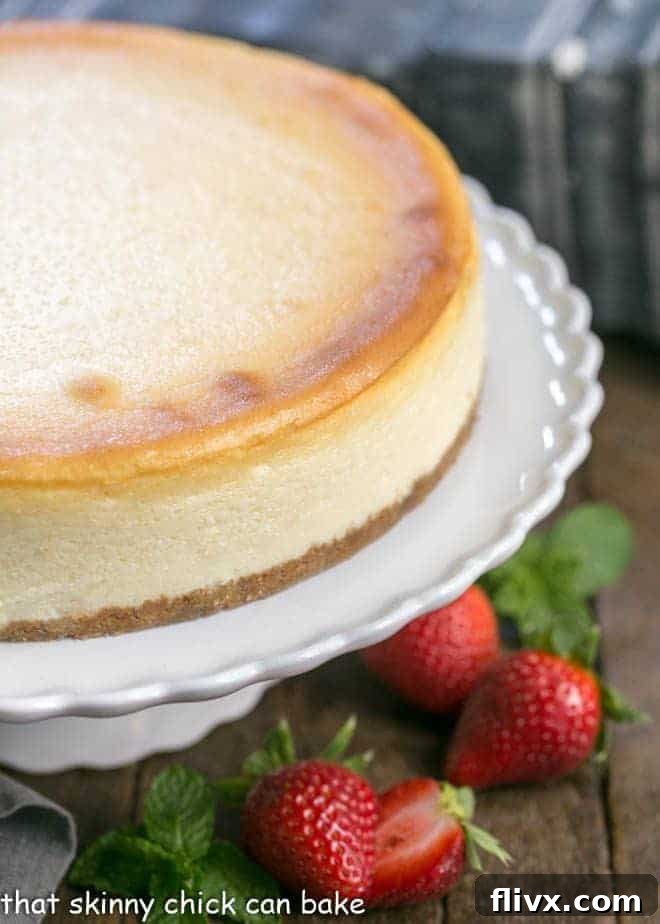
After countless cheesecakes baked and numerous recipes tested, I’ve compiled a list of invaluable tips and tricks that consistently lead to the best possible results. These “pro-tips” are the foundation for a perfectly smooth, creamy, and crack-free **homemade vanilla cheesecake**.
- **Room Temperature is Non-Negotiable:** This is perhaps the most crucial rule for any cheesecake. Ensure your cream cheese and eggs are at **room temperature** well in advance – ideally two hours before you plan to mix. Cold ingredients will lead to lumps in your batter and require more beating, which can incorporate excess air, a common culprit for cracked cheesecakes. My preferred choice for consistent, delicious results is Philadelphia brand cream cheese due to its reliable quality.
- **Speed Up Egg Tempering:** If you forget to take your eggs out in time, a quick trick is to place them in a bowl of hot (not boiling) water for 10-15 minutes. This gently warms them through, bringing them to room temperature faster without cooking them.
- **Use the Paddle Attachment for Smoothness:** **PRO-Tip:** When preparing your cheesecake batter with a stand mixer, always use the **paddle attachment**. The paddle attachment mixes ingredients thoroughly without incorporating too much air, which is essential for a dense, smooth cheesecake. A whisk attachment, while great for whipping, introduces too much air, leading to a lighter, more airy texture that is prone to cracking.
- **Incorporate Eggs Gently:** **PRO-Tip:** Add eggs to the batter one at a time, and only beat until each egg is *just combined*. Overmixing the eggs can lead to a soufflé-like texture and cracks during baking. Gentleness is key here.
- **The Magic of a Water Bath (Bain-Marie):** Baking your cheesecake in a water bath, also known as a bain-marie, is one of the most effective ways to prevent cracks. The water bath creates a moist, consistent, and stable temperature environment around the cheesecake, ensuring it bakes gently and evenly. This gradual baking process minimizes the temperature fluctuations that cause the cheesecake to expand and contract too quickly, leading to cracks.
- **Setting Up Your Bain-Marie:** A bain-marie is straightforward: simply place your springform pan (properly prepared) into a larger, shallow roasting pan. Carefully fill the larger pan with about one inch of very hot water before placing it in the oven. The steam created by the hot water provides that crucial moist heat.
- **Protect Your Springform Pan:** Before placing your springform pan into the water bath, it is absolutely essential to wrap the exterior thoroughly with **heavy-duty aluminum foil**. Use at least two layers, crimping them tightly around the base and sides. This creates a waterproof barrier, preventing any water from seeping into the pan and turning your crust soggy. There’s nothing worse than a perfectly baked cheesecake with a waterlogged crust!
- **Know When It’s Done (The Jiggle Test & Thermometer):** **PRO-Tip:** For those new to baking cheesecakes, knowing when it’s perfectly done can be tricky. The “jiggle test” is a great indicator: gently shake the pan. The edges should be set, but the center (about a 2-3 inch circle) should still have a slight jiggle, like gelatin. It will continue to set as it cools. For absolute precision, the internal temperature of a fully baked cheesecake should read **150°F (65°C)** when checked with an instant-read thermometer.
- **Cooling is Crucial:** Once baked, turn off the oven and prop the oven door open slightly, leaving the cheesecake inside for about an hour. This gradual cooling prevents drastic temperature changes that can cause cracks. After this, remove it from the oven and water bath and cool completely on a wire rack before chilling.
Serving Your Perfect Vanilla Cheesecake: Tips & Customization Ideas
Once your vanilla cheesecake is beautifully baked and perfectly chilled, the anticipation builds! Here are some final tips to ensure every slice is a dream and ideas for how to serve and customize it to perfection.
- **Chill Thoroughly for Best Texture:** **PRO-Tip:** While it’s tempting to dive in, cheesecakes taste best when **chilled overnight**. This allows the flavors to meld and the texture to firm up and achieve its optimal creamy density. Patience truly pays off!
- **Bring to Room Temperature Before Serving:** **PRO-Tip:** For the most luscious, melt-in-your-mouth texture, bring your cheesecake out of the refrigerator at least an hour before serving. An ice-cold cheesecake can taste dense and less flavorful, whereas one that has had time to slightly warm up will have a much creamier, more luxurious texture and more pronounced vanilla flavor.
- **Achieve Picture-Perfect Slices:** For the cleanest, most elegant slices, use a hot, dry knife. The best method is to run a thin, sharp knife under very hot water for a few seconds, then wipe it completely dry with a clean dishtowel before making each cut. Repeat this process for every slice. This technique ensures a smooth cut through the rich, creamy texture without dragging or tearing.
-
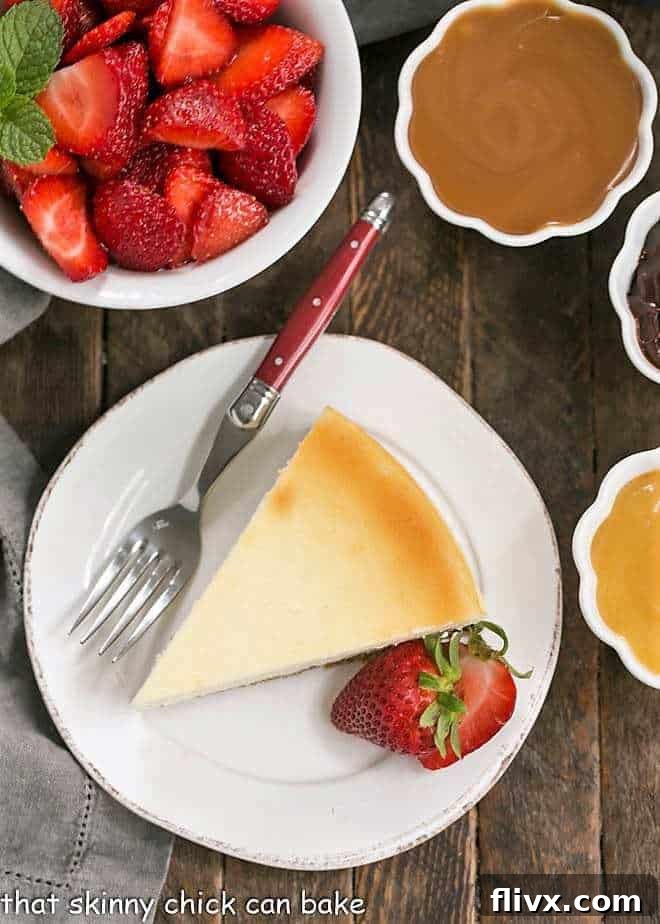
**Endless Topping Possibilities:** While this **creamy vanilla cheesecake** is utterly delicious on its own, offering a variety of toppings can elevate the experience and cater to diverse tastes. Consider these delightful options:
- **Fresh Fruit:** Sliced, sweetened strawberries, fresh raspberries, or a vibrant mix of blueberries with a dollop of tangy lemon curd.
- **Decadent Sauces:** Warm fudge sauce, rich chocolate ganache, or a silky caramel sauce.
- **Whipped Cream:** A classic and airy accompaniment, perhaps flavored with a touch of vanilla or a hint of citrus.
- You can even make your own Fresh Strawberry Sauce for a homemade touch.
- **Elevate with Vanilla Bean:** If you desire a truly gourmet **vanilla bean cheesecake**, simply substitute pure vanilla bean paste for the vanilla extract in the recipe. The distinctive black specks of vanilla bean are the unmistakable sign of an authentic, deeply vanilla-flavored dessert, adding both visual appeal and an intensified aroma. Remember, always use **pure vanilla extract** or paste, never imitation, for the best and most natural flavor.
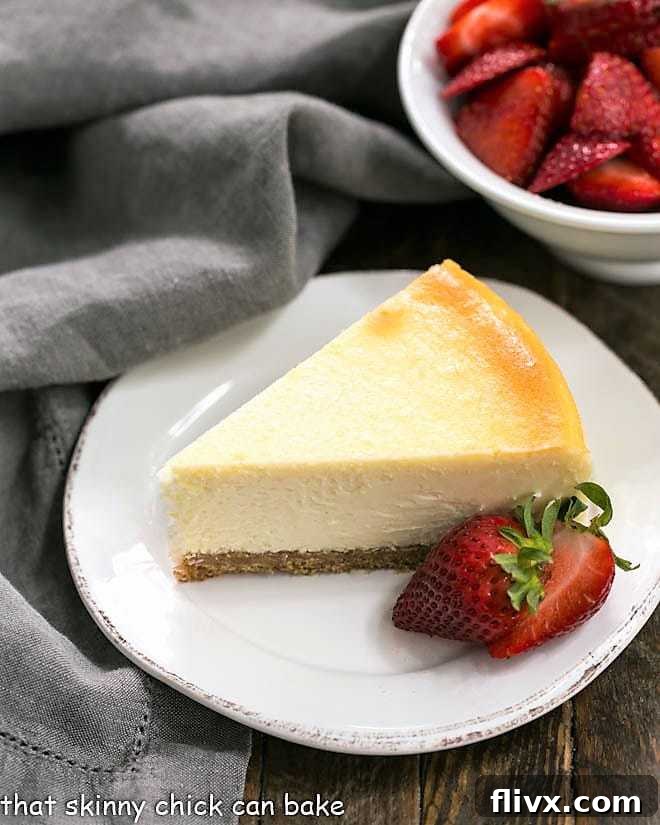
Frequently Asked Questions About Baking & Storing Cheesecake
While the aroma might be tempting, a cheesecake is not truly ready to eat immediately after baking. It requires a crucial chilling period for the flavors to fully develop and the texture to set properly. The cheesecake needs to cool completely to room temperature on a wire rack, which can take several hours, and then be chilled in the refrigerator for at least 4-6 hours. For the absolute best taste and firmest, creamiest texture, it is highly recommended to chill your cheesecake overnight. Planning ahead and baking your cheesecake the day before you intend to serve it will yield superior results.
To preserve its creamy texture and rich flavor, your cheesecake should always be stored covered and refrigerated. Tightly wrap the entire cheesecake or individual slices with plastic wrap to prevent it from drying out or absorbing other food odors in the fridge. Properly stored, a cheesecake will remain fresh and delicious for up to 3 days in the refrigerator. For longer storage, cheesecake freezes beautifully. Once completely cooled, you can freeze it in the springform pan (after removing the sides), wrapped first in a layer of plastic wrap and then a layer of heavy-duty aluminum foil. It can be stored this way for up to 3 months.
To defrost a frozen cheesecake, simply transfer it from the freezer to the refrigerator and allow it to thaw overnight. This slow, gradual thawing process helps maintain the cheesecake’s delicate texture. When defrosting, be mindful of condensation that can develop on the plastic wrap; try to prevent any drips from falling onto the top of your cheesecake, as this can affect its appearance. Once defrosted, it’s ready to serve after it has come to optimal room temperature.
Cheesecake cracks are common but often preventable. The primary causes are sudden temperature changes and overmixing. To prevent cracks, ensure all ingredients are at room temperature before mixing. Use a paddle attachment and mix only until just combined, especially when adding eggs, to avoid incorporating too much air. Baking in a water bath creates a moist, even baking environment, reducing stress on the cheesecake. Finally, allow the cheesecake to cool slowly by leaving it in the oven with the door ajar after baking before transferring to a wire rack and then the refrigerator.
Absolutely! To make a gluten-free vanilla cheesecake, simply substitute the graham cracker crust with a gluten-free alternative. You can use gluten-free graham crackers, crushed gluten-free vanilla wafers, or a simple nut-based crust (like almond flour and melted butter). The cheesecake filling itself is naturally gluten-free, so no other modifications are needed.
Explore More Decadent Cheesecake Recipes
If you’ve fallen in love with this Perfect Vanilla Cheesecake, you’ll surely want to explore other delightful cheesecake creations. Here are some more irresistible recipes to inspire your next baking adventure:
- Butterfinger Cheesecake from Life, Love, and Sugar
- Key Lime Icebox Cheesecake from Saving Room for Dessert
- Boston Cream Pie Cheesecake
- How to Make the Best Cheesecake
- Caramel Cheesecake with Caramel Toffee Topping
- Plus, all my Best Cheesecake Recipes for endless inspiration!
Stay connected with us for more delicious recipes and baking tips! Follow us on Instagram, Facebook, and Pinterest. We love seeing your creations, so don’t forget to tag us when you try one of our recipes! If you adore the results, please consider leaving a 5-star rating and a comment in the recipe card below – your feedback helps fellow bakers!
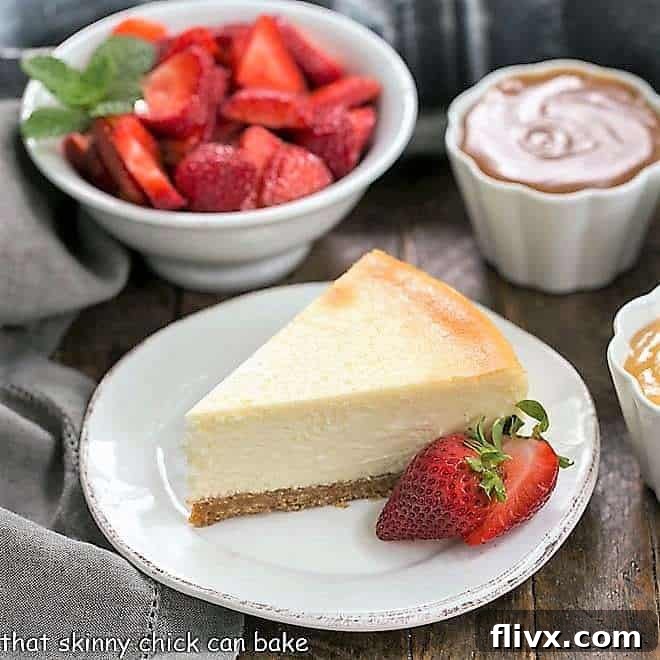
Perfect Vanilla Cheesecake
20 minutes
1 hour 23 minutes
1 hour 43 minutes
16 servings
Experience the pure bliss of a homemade classic: this vanilla cheesecake is unbelievably lush, wonderfully creamy, and utterly irresistible. It’s the perfect dessert for any celebration or just to treat yourself!
Ingredients
For the Graham Cracker Crust:
- **1 ½ cups** graham cracker crumbs (about 10-12 full graham crackers, finely crushed)
- **1 tablespoon** granulated sugar
- **6 tablespoons** unsalted butter, melted
For the Creamy Vanilla Cheesecake Filling:
- **Four 8-ounce packages** full-fat cream cheese, at room temperature (this is crucial for a smooth batter)
- **1 ⅔ cups** granulated sugar
- **¼ cup** cornstarch
- **1 tablespoon** pure vanilla extract (or vanilla bean paste for enhanced flavor)
- **2 extra-large eggs**, at room temperature (note: extra-large, not standard large eggs)
- **¾ cup** heavy whipping cream, at room temperature
Instructions for Baking Your Perfect Cheesecake
- **Prepare Oven & Pan:** Preheat your oven to 350°F (175°C). While the oven preheats, take a 9-inch springform pan and lightly grease the bottom and sides, preparing it for the crust.
- **Make the Crust:** In a medium bowl, combine the graham cracker crumbs, 1 tablespoon of sugar, and 6 tablespoons of melted butter. Mix thoroughly until the crumbs are evenly moistened and resemble wet sand. Press this mixture firmly and evenly into the bottom of the prepared 9-inch springform pan.
- **Bake and Cool the Crust:** Bake the crust in the preheated oven for 8 minutes. This brief bake helps to set the crust and makes it nice and firm. Remove the pan from the oven and let the crust cool completely on a wire rack while you prepare the filling.
- **Begin Cheesecake Batter (First Stage):** In the bowl of your stand mixer fitted with the paddle attachment, combine 1 package of the room temperature cream cheese, ⅓ cup of the granulated sugar (from the total 1⅔ cups), and all of the cornstarch. Beat on low speed for approximately 3 minutes, or until the mixture is completely creamy and smooth. Remember to stop and scrape down the sides and bottom of the bowl several times with a rubber spatula to ensure everything is well combined and no lumps remain.
- **Incorporate Remaining Cream Cheese (Second Stage):** Add the remaining three packages of cream cheese to the mixer, one package at a time. After each addition, beat on low speed just until incorporated, then scrape down the bowl thoroughly before adding the next. This two-stage method helps create an incredibly smooth, lump-free batter without overmixing.
- **Add Remaining Sugar and Vanilla:** Once all the cream cheese is incorporated, increase the mixer speed to medium-low. Gradually beat in the remaining granulated sugar until fully combined and the mixture is light and fluffy. Next, pour in the pure vanilla extract (or vanilla bean paste) and beat just until evenly distributed throughout the batter, ensuring that delightful vanilla flavor is infused.
- **Blend in Eggs Gently:** Reduce the mixer speed to low. Add the extra-large eggs, one at a time, beating only until each egg is *just combined* into the batter. It’s crucial not to overmix at this stage, as excessive air can lead to cracks in your baked cheesecake. Scrape down the bowl as needed between additions.
- **Fold in Heavy Cream:** Finally, pour in the heavy whipping cream. Beat on low speed just until it is completely blended into the cheesecake batter, resulting in a smooth, luxurious consistency. Avoid overmixing once again.
- **Prepare for Water Bath:** To protect your cheesecake from water seepage, wrap the exterior of your springform pan with two layers of heavy-duty aluminum foil. Ensure the foil goes all the way up the sides of the pan to create a secure, waterproof barrier. This step is essential for a perfect, non-soggy crust.
- **Fill the Pan:** Carefully spoon the prepared cheesecake batter over the cooled graham cracker crust in the springform pan. Use an offset spatula or the back of a spoon to gently smooth the top surface of the batter, ensuring an even finish.
- **Set Up Water Bath:** Place the foil-wrapped cheesecake pan into a larger, shallow roasting pan. Carefully pour very hot water into the larger pan until it comes about halfway (approximately 1 inch) up the side of the springform pan. This creates the essential water bath (bain-marie).
- **Bake to Perfection:** Transfer the entire setup (roasting pan with water bath and cheesecake) to your preheated oven. Bake for approximately 1¼ hours. The cheesecake is done when the edges are lightly golden brown, the top is a delicate light gold, and the center still has a slight jiggle (about 2-3 inches in the middle). If it appears too jiggly, bake for another 10 minutes, checking periodically.
- **Cool Gradually:** Once baked, turn off the oven, prop the oven door open slightly with a wooden spoon, and let the cheesecake cool inside the oven for 1 hour. This gradual cooling prevents sudden temperature changes that can cause cracks. After this, remove the cheesecake from the water bath and transfer it to a wire rack to cool completely in the pan for about 2 hours at room temperature. Then, chill it thoroughly in the refrigerator until it is completely cold and firm, ideally overnight.
- **Unmold and Serve:** Once the cheesecake is fully chilled, carefully remove the foil and then release the ring of the springform pan. If desired, you can transfer the cheesecake to a decorative serving plate.
- **Enjoy Your Masterpiece:** Slice and serve your beautiful vanilla cheesecake. It’s delicious plain, allowing the pure vanilla flavor to shine, or you can garnish slices with sweetened, fresh sliced strawberries, a rich chocolate or fudge sauce, or a dollop of whipped cream, perhaps mixed with a hint of lemon curd for an extra tang.
Chef’s Notes for Best Results
Ensuring your cream cheese and eggs are at perfect room temperature is the single most important tip for achieving an incredibly smooth, lump-free, and creamy cheesecake batter. This prevents overmixing and guarantees that luscious, velvety texture you desire.
For the most profound flavor development, allow your cheesecake to chill in the refrigerator for at least 8 hours, or preferably overnight, before serving. This patience will be greatly rewarded.
Recommended Baking Products
As an Amazon Associate and member of other affiliate programs, I earn from qualifying purchases.
- Baking Rack Cooling Rack Set of 2
- KitchenAid KSM150PSER Artisan Tilt-Head Stand Mixer with Pouring Shield, 5-Quart, Empire Red
- 9-inch springform pan
Nutrition Information:
Yield:
16
Serving Size:
1 slice
Approximate Amount Per Serving:
Calories: 426
Total Fat: 30g
Saturated Fat: 17g
Trans Fat: 0g
Unsaturated Fat: 10g
Cholesterol: 105mg
Sodium: 277mg
Carbohydrates: 36g
Fiber: 0g
Sugar: 27g
Protein: 5g
HOW MUCH DID YOU LOVE THIS RECIPE?
Please leave a comment on the blog or share a photo on Pinterest and tag us!