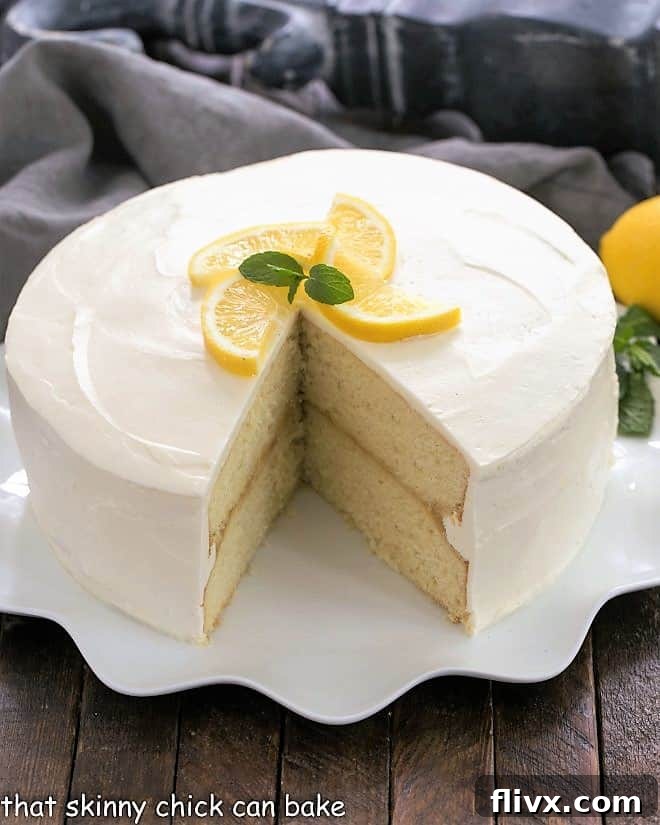
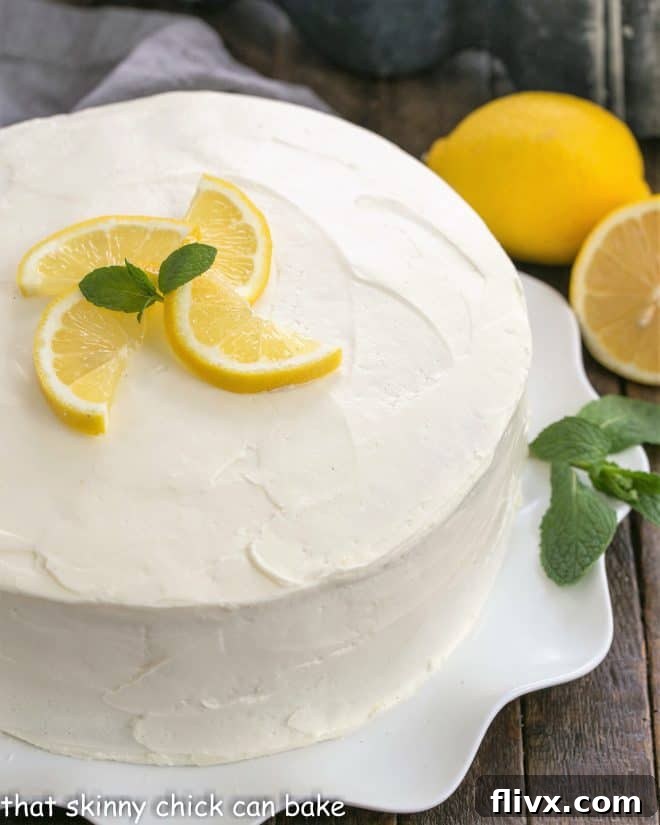
This **Lemon Layer Cake** is a truly unforgettable dessert, featuring delicate vanilla cake layers generously filled with luscious lemon curd and crowned with a light, airy Swiss meringue buttercream. It’s the ultimate indulgence for any lemon enthusiast and a showstopper for any celebration!
The request came from a dear friend, Gini, who was planning an extraordinary 90th birthday celebration for her beloved mother, the family matriarch. Knowing her mom wasn’t a fan of rich chocolate desserts, Gini wanted something bright, fresh, and undeniably special. Our unanimous decision? A spectacular **Lemon Layer Cake recipe** that would perfectly capture the joyous spirit of such a milestone occasion.
Why This Lemon Layer Cake is an Absolute Must-Try
This isn’t just any lemon cake; it’s a meticulously crafted culinary experience designed to delight every palate. Here’s why this **Lemon Layer Cake** deserves a place at your next special gathering or simply as a treat for yourself:
- A Citrus Lover’s Dream Come True: If the bright, tangy essence of lemon brings you joy, prepare to be utterly thrilled. This cake delivers an intense, natural lemon flavor that’s both refreshing and deeply satisfying. Each bite offers a burst of zesty goodness that only fresh lemons can provide.
- Harmonious Balance of Flavors: The star of the show, the tangy lemon curd, plays a crucial role in balancing the overall sweetness of the cake and frosting. Its vibrant acidity cuts through the richness, creating a dynamic and incredibly pleasing flavor profile that prevents the dessert from being overly cloying.
- An Introduction to Luxurious Swiss Meringue Buttercream: For those who haven’t yet experienced Swiss meringue buttercream, this cake serves as the perfect introduction to what many consider the most luxurious frosting in existence. Its unbelievably smooth, silky texture and lighter-than-air consistency are far less sweet than traditional American buttercreams, allowing the true flavors of the cake and curd to shine through. Prepare to be won over with your very first bite!
Gini, a truly wonderful cook and baker herself, found her plate overflowing with planning the entire celebratory dinner for her mother and siblings, who were all traveling from various corners of the country. With 11 children attending (spouses not included for this intimate gathering!), it was clear that this remarkable mother deserved an equally remarkable dessert. A bright, elegant **lemon dessert** was precisely what was needed, and I was absolutely delighted to step in and bake this monumental cake for a truly special occasion.
Crafting Your Dream Lemon Layer Cake with Zesty Lemon Curd
I was truly honored to contribute to such a meaningful 90th birthday celebration! The process of creating this magnificent **lemon layer cake** involves a few distinct, yet manageable, stages. Initially, I embraced a more elaborate approach, aiming for maximum impact, but have since developed a simplified method that yields equally stunning results without sacrificing flavor or elegance.
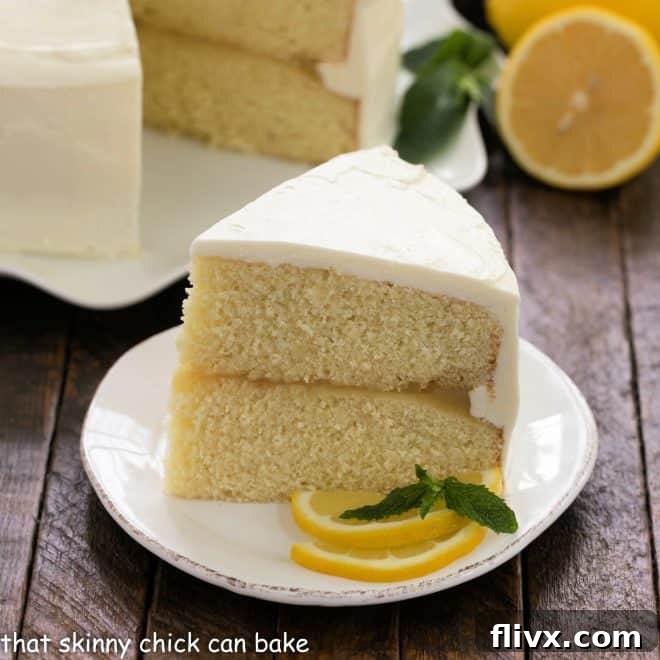
- My first rendition involved baking a classic two-layer vanilla cake, then carefully slicing each cake horizontally to create a total of four slender, exquisite layers. This technique offers an impressive visual and a delightful ratio of cake to filling.
- Next, I prepared a generous batch of vibrant homemade **lemon curd**, ensuring enough to generously fill three of those four layers. Crafted from fresh lemon juice, the bright, tart curd provided a magnificent contrast to the sweet cake and the upcoming luxurious frosting. The interplay of sweet and tart is truly what makes this cake sing.
- For subsequent bakes, I’ve simplified the process without compromising on deliciousness. Instead of meticulously splitting layers, I now often prepare a two-layer cake and opt for a high-quality, premium store-bought lemon curd. This offers a fantastic shortcut for busy bakers, allowing you to achieve an outstanding cake with less effort. Rest assured, the detailed directions below encompass both the homemade lemon curd and a two-layer cake recipe, giving you the flexibility to choose your preferred approach.
- Finally, a dreamy, buttery Swiss meringue buttercream, delicately flavored with a touch of vanilla (and an optional hint of lemon extract for an extra citrusy kick), was whipped to perfection. This glorious frosting not only binds the layers but also crowns the cake with its signature smooth, elegant finish. The result was a truly beautiful and irresistibly delicious **lemon curd layer cake**!
Mastering the Art of Layering a Cake with Lemon Curd
When assembling your **lemon layer cake**, paying attention to how you apply the lemon curd filling is key to a beautiful and stable final product. One common mistake that can lead to a messy presentation is spreading the lemon curd right to the very edge of your cake layer. If you do this, the weight of the subsequent cake layer and frosting will inevitably cause the curd to ooze out the sides, creating a sticky situation.
To prevent this, the best practice is to leave a half-inch gap, or a slight border, between the side of the cake and where you spread the lemon curd. This strategic gap provides crucial room for the curd to spread slightly under pressure without escaping the cake’s perimeter. Should any small amount of curd still manage to escape, it can be easily cleaned up with an offset spatula before you apply your final frosting layers, ensuring a pristine finish.
Achieving Stability: How to Stack a Layer Cake Like a Pro
Stacking a layered cake might seem daunting, but with a few simple techniques, you can ensure a stable, professional-looking result every time. Proper stacking is fundamental, especially for taller cakes or those with generous fillings like our **Lemon Layer Cake**.
Begin by placing your first cake layer, top side down, onto your chosen cake plate or stand. This creates a perfectly flat base, which is essential for stability. Next, to keep your cake stand spotless during the frosting process, gently tuck thin strips of wax or parchment paper around the perimeter of the cake. These strips will catch any errant frosting, and once you’re done, you can simply pull them away for a perfectly clean presentation.
Now, it’s time for the first layer of frosting. Depending on the total amount of frosting you have prepared, spread about 1/2 to 3/4 cup evenly over the top of this bottom layer. Aim for an even thickness across the surface. Once the frosting is applied, carefully place your second cake layer on top, this time with its top side facing up. This positions the two flat, bottom sides of the cake layers in the middle, contributing to the overall stability and an even height. From here, you can continue stacking with additional layers and fillings as desired, then proceed to frost the entire cake, starting with a crumb coat for a smooth finish.
Unlocking the Secrets: Tips for Making the Perfect Swiss Meringue Buttercream Frosting
Swiss Meringue Buttercream (SMB) is, without a doubt, one of my all-time favorite frosting recipes. Its light, silky texture and less-sweet profile make it incredibly versatile and truly luxurious. While it has a reputation for being a bit tricky, don’t be deterred! Mastering SMB is incredibly rewarding, and with these tips and tricks, you’ll be whipping up outrageously delicious frosting in no time. If you’re feeling less adventurous, feel free to substitute with a classic American buttercream or even a rich cream cheese frosting, but I highly encourage you to give SMB a try.
- The Golden Rule: Absolute Cleanliness and No Grease: This is arguably the most critical tip for successful meringue. Both your egg whites and all your mixing equipment – the bowl, whisk attachment, and any spatulas – must be scrupulously clean and completely free of any trace of grease or egg yolk (which contains fat). Even a tiny speck of fat will prevent the egg whites from whipping up into stiff, stable peaks, leaving you with a sad, soupy mess. Ensure everything is sparkling clean before you begin.
- Optimal Egg Preparation: Cold to Separate, Room Temp to Whip: For the best results, separate your eggs when they are cold; the whites are firmer and less likely to break. However, egg whites whip best and achieve maximum volume when they are at room temperature. A smart method is the “three-bowl approach”: crack an egg into a small bowl, carefully separate the yolk, then transfer the clean egg white to your main mixing bowl. Keep a third bowl for the yolks. This way, if a yolk breaks into a white, you only contaminate one egg white, not your entire batch.
- Precision is Key: Your Instant-Read Thermometer is Essential: A reliable instant-read thermometer is an indispensable tool for Swiss meringue buttercream. The egg white and sugar mixture must be gently heated over a double boiler to a precise temperature of 160ºF (71ºC). This temperature is crucial for two reasons: it ensures the sugar fully dissolves, resulting in a smooth, non-gritty frosting, and it safely pasteurizes the egg whites, eliminating any potential pathogens. Do not skip this step or guess the temperature.
- Mastering the Double Boiler Technique: This heating process is typically done in a double boiler. If you don’t have one, a clever trick is to use the heatproof bowl of your stand mixer and place it directly over a medium saucepan filled with about 2 inches of simmering water. The most important detail here is that the bottom of your mixing bowl should not touch the simmering water. The steam is what gently and evenly heats the egg white mixture, preventing it from scrambling.
- Heating and Testing for Sugar Dissolution: Cook the egg whites and sugar over the simmering water, whisking constantly. This gentle agitation helps the sugar dissolve evenly. Continue whisking until the mixture reaches 160ºF, which typically takes about 4-5 minutes. To double-check that all the sugar crystals have dissolved, carefully rub a small amount of the mixture between two of your fingers. If you feel any grittiness, it needs to be cooked a little longer until perfectly smooth.
- Whipping to Perfection: Stiff Peaks and Cool Bowl: Once the mixture reaches temperature and the sugar is dissolved, carefully remove the bowl from the heat. If you’re using a separate heatproof bowl, transfer the mixture to the bowl of your stand mixer. Attach the whisk attachment and begin beating on medium-high speed for approximately 10 minutes. During this time, the mixture will transform into glossy, thick, and stiff peaks. Crucially, the bottom of the mixing bowl should feel completely cool to the touch. This indicates that the meringue has cooled sufficiently, which is essential for proper butter incorporation.
- Incorporating the Butter: The Magic Transformation: Switch from the whisk attachment to the paddle attachment. This is where the magic happens! Begin adding your **room temperature butter**, one tablespoon at a time, allowing each addition to be fully incorporated into the meringue before adding the next. The mixture might look curdled, soupy, or even like cottage cheese at various stages – don’t panic! This is normal. Continue beating on medium speed, and it will eventually come together into a beautifully smooth, fluffy, and stable buttercream. Once all the butter is mixed in, turn the mixer down to low and gently mix in your desired flavorings, such as vanilla extract or an additional touch of lemon extract. Sample, swoon, and get ready to frost your glorious cake!
If You Love Lemon Desserts, Here Are a Few More Favorites!
Lemon’s versatility in desserts is simply unmatched, offering a delightful balance of sweet and tart that refreshes the palate. If you’ve fallen in love with the vibrant flavors of this **Lemon Layer Cake**, you’ll surely appreciate these other delightful lemon-infused creations:
- Strawberry Lemon Blondies from The View from Great Island
- Lemon Layer Cake with Lemon Curd Filling (A sister recipe, perhaps for another day!)
- Butter and Rum Crepes with Lemon Curd Filling
- Strawberry Lemon Tart
- Lemon on a Cloud
- Explore more of the Best Dessert Recipes
This recipe was initially shared in September 2015 and has been thoughtfully updated with enhanced photos, refined text, and a perfected recipe in 2020 to ensure the best possible baking experience for you.
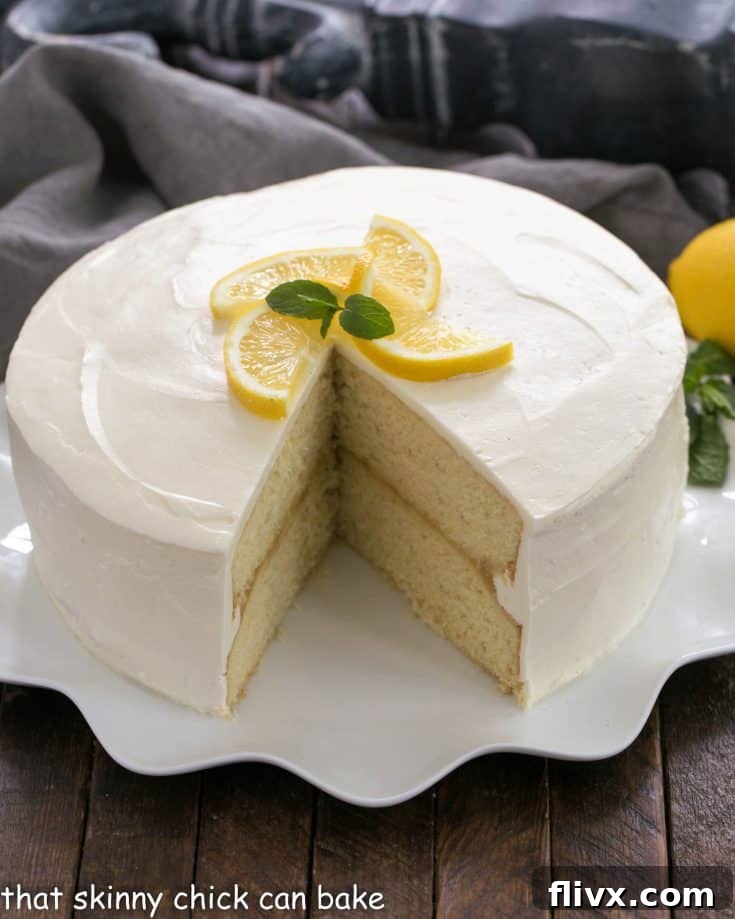
Lemon Layer Cake
30 minutes
40 minutes
1 hour 10 minutes
16 servings
A luscious four layer cake filled with lemon curd and topped with a Swiss meringue.
Ingredients
Lemon Curd (or use a store-bought lemon curd):
- 1 cup fresh lemon juice
- 1 teaspoon unflavored gelatin (I used Knox brand)
- 1 1⁄2 cups sugar
- 1⁄8 teaspoon salt
- 4 eggs
- 6 egg yolks, (reserve egg whites for cake)
- 8 tablespoons unsalted butter cubes and frozen
Cake:
- 2 1⁄4 cups cake flour
- 1 cup whole milk, room temperature
- 6 egg whites, room temperature
- 2 teaspoons vanilla extract
- 1 3⁄4 cups sugar
- 4 teaspoons baking powder
- 1 teaspoon salt
- 12 tablespoons unsalted butter, softened, but still cool
Swiss Meringue Frosting
- 3 egg whites
- 1 cup sugar
- 3/4 cup butter, at room temperature
- 1/2 teaspoon lemon extract or 1 teaspoon vanilla extract
Instructions
Filling:
- Measure 1 tablespoon lemon juice into a small bowl; sprinkle gelatin over the top.
- Heat remaining lemon juice, sugar, and salt in a saucepan over medium-high heat, stirring occasionally until sugar dissolves and the mixture is hot, but not boiling.
- Whisk eggs and yolks in a large non-reactive bowl.
- Whisking constantly, slowly pour hot lemon-sugar mixture into eggs, then return mixture to saucepan.
- Cook over medium-low heat, stirring constantly until mixture reaches 170°, about 4-6 minutes.
- Immediately remove from heat and stir in gelatin mixture until dissolved. Stir in frozen butter until incorporated.
- Pour filling through a fine-meshed strainer into a bowl.
- Cover surface with plastic wrap; refrigerate until firm enough to spread, about 4 hours.
Cake:
- Preheat oven to 350°.
- Grease and flour two 9-inch cake pans and line with parchment paper.
- In a medium bowl, whisk together whites and vanilla.
- In a mixer bowl, combine flour, sugar, baking powder, and salt; mix at slow speed.
- Add butter one piece at a time, continue to beat until mixture resembles moist crumbs, and no visible butter chunks.
- Add all but 1 cup of milk mixture to crumbs and beat at medium speed until mixture is pale and fluffy, about 1 1/2 minutes.
- With the mixer running, add remaining 1/2 cup milk mixture, beat 1 minute more.
- Divide batter evenly between cake pans.
- Bake 23-25 minutes or until a toothpick inserted in center of cakes comes out clean.
- Cool cakes in pan 10 minutes then remove from pan onto a greased wire rack, remove parchment paper, invert again and cool completely.
- When the layers are cool, place the first cake layer on a serving plate.
- Spread 1 cup of the lemon filling evenly on top of the cake, leaving a 1/2-inch border around the perimeter.
- Place the top layer on the cake, and smooth out any filling that may have leaked from the layers.
Swiss Meringue Buttercream:
- Combine the egg whites and sugar in a mixer bowl or heatproof bowl. Set over a medium saucepan filled with 2-inches of simmering water.
- Cook stirring constantly until mixture reaches 160°, 5-10 minutes.
- Transfer mixture to mixer bowl (if needed) with the whisk attachment and beat on medium-high speed until glossy, stiff peaks form and mixture is no longer warm about 10 minutes.
- Switch to the paddle attachment. Slowly add butter, one tablespoon at a time, making sure it’s incorporated before adding the next tablespoon.
- Place the first cake layer on a serving plate.
- Spread 1 cup of the lemon filling evenly on top of the cake, leaving a 1/2-inch border around the perimeter.
- Place the top layer on the cake, smooth out any filling that may have leaked from the layers.
- Note: If you made the homemade lemon curd, you can put a second layer on top of the cake and only frost the sides.
- Spread icing on the cake.
Notes
Adapted from Southern Living
Nutrition Information:
Yield:
16
Serving Size:
1 slice
Amount Per Serving:
Calories: 469Total Fat: 18gSaturated Fat: 10gTrans Fat: 0gUnsaturated Fat: 7gCholesterol: 155mgSodium: 329mgCarbohydrates: 72gFiber: 0gSugar: 56gProtein: 7g
HOW MUCH DID YOU LOVE THIS RECIPE?
Please leave a comment on the blog or share a photo on Pinterest