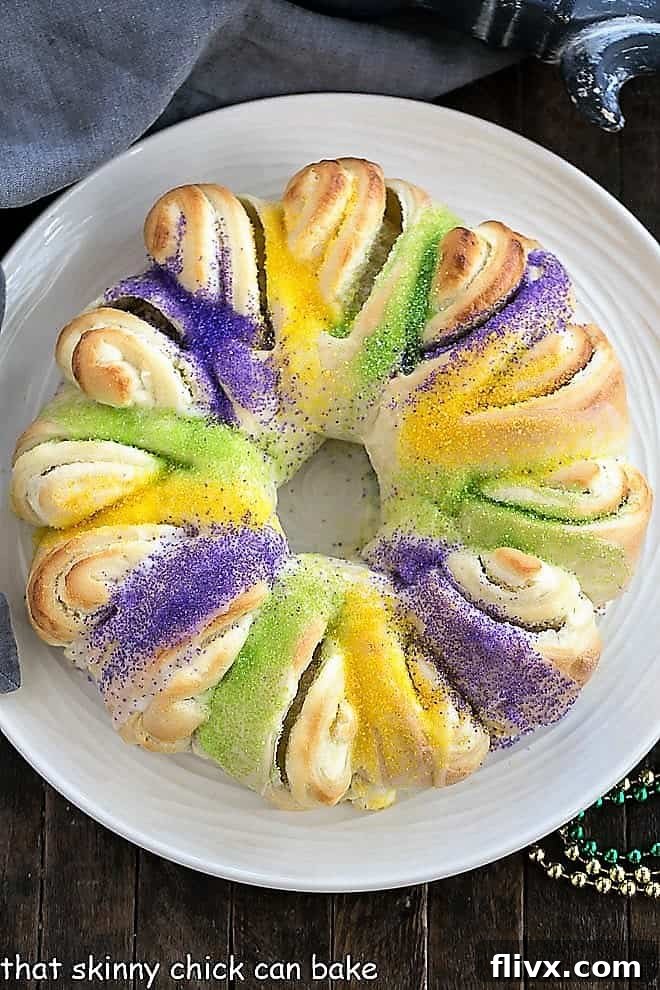
Welcome the vibrant spirit of Mardi Gras into your kitchen with this incredibly Easy King Cake Recipe! This delightful treat is a simplified twist on a cherished family favorite, our Cream Cheese Tea Roll, ingeniously crafted with convenient frozen bread dough. Forget complex yeast baking; this semi-homemade approach makes whipping up a festive King Cake astonishingly simple, perfect for anyone looking to celebrate Fat Tuesday without the fuss. Prepare to dazzle your taste buds and impress your guests with a beautifully adorned King Cake that’s bursting with flavor and tradition, all with minimal effort.
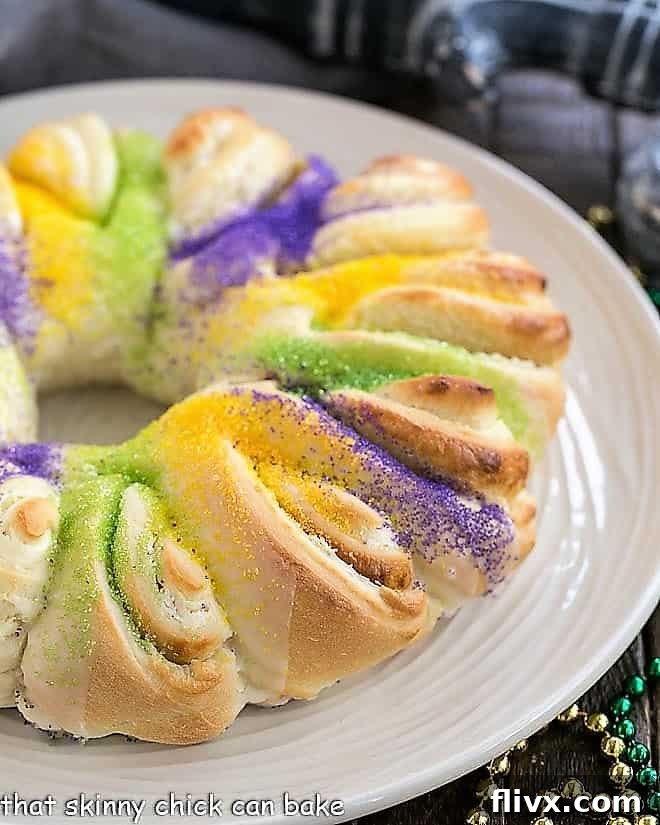
This show-stopping King’s Cake is more than just a dessert; it’s a centerpiece for your Mardi Gras festivities. Each bite reveals a luscious, sweetened cream cheese filling encased in soft, golden dough, baked to perfection. The crowning glory comes after baking, when it’s generously drizzled with a sweet glaze and adorned with bold yellow, green, and purple sanding sugars—the iconic colors of Mardi Gras. To complete the ultimate holiday celebration, don’t forget the traditional addition of a tiny King Cake Baby, promising good fortune to its lucky finder!
Why You’ll Love Making This Easy King Cake
There are countless reasons why this particular King Cake recipe stands out as a must-make for your Mardi Gras celebrations or any festive occasion. It perfectly blends convenience with an authentic, indulgent experience, making it accessible to even novice bakers.
- Effortlessly Simple Semi-Homemade Recipe: The ingenious use of frozen bread dough transforms a typically time-consuming baking project into an incredibly manageable one. This recipe allows you to achieve the rich, pillowy texture of a traditional King Cake without the hassle of preparing yeast dough from scratch. It’s perfect for busy schedules, ensuring you can still enjoy a homemade treat without spending hours in the kitchen.
- The Quintessential Mardi Gras Dessert: This Easy King Cake Recipe is designed to embody the true spirit of Mardi Gras. From its vibrant yellow, green, and purple sugars—symbolizing power, faith, and justice—to its celebratory ring shape, every element shouts “Laissez les bons temps rouler!” It’s not just a dessert; it’s an edible piece of culture, bringing joy and a touch of New Orleans festivity right to your home.
- A Delicious Indulgence Before Lent: Mardi Gras, or Fat Tuesday, is traditionally a day of indulgence before the fasting period of Lent begins. What better way to revel in the last moments of culinary delight than with a slice of this sweet, cream cheese-filled cake? Its rich flavors and decadent frosting make it the perfect pre-Lenten treat, providing a satisfying sweetness that will be deeply appreciated.
- Guaranteed Crowd-Pleaser and Memorable Centerpiece: Beyond its ease and symbolic significance, this King Cake is simply irresistible. The combination of soft dough, creamy filling, and sweet glaze appeals to all ages. Its striking appearance makes it a stunning centerpiece for any gathering, sparking conversations and creating lasting memories. Plus, the tradition of finding the hidden baby adds an exciting, interactive element that everyone will adore.
Essential Ingredient Notes for Your Perfect King Cake
Crafting this delicious King Cake begins with understanding the role of each ingredient. While many are common kitchen staples, paying attention to specific details can elevate your final product from good to unforgettable.
- Frozen Bread Dough: This is your secret weapon for ease! I highly recommend using a quality brand like Rhodes frozen bread dough, which thaws beautifully and bakes up wonderfully soft. Remember to plan ahead and defrost it in the refrigerator overnight. Proper thawing ensures the dough is pliable and easy to work with, mimicking fresh dough without the extensive preparation.
- Cream Cheese: Crucial for the rich, smooth filling. Always bring your cream cheese to room temperature before you begin mixing. This prevents lumps, allowing it to blend seamlessly with the sugar and butter for a silky-smooth, irresistible filling. Cold cream cheese will result in a clumpy texture that’s difficult to spread evenly.
- Lemon Juice: Freshly squeezed lemon juice is paramount here. Its bright, zesty notes cut through the richness of the cream cheese filling, providing a delightful balance and preventing the cake from being overly sweet. Bottled lemon juice simply won’t offer the same vibrant flavor.
- Powdered Sugar (Confectioners’ Sugar): Essential for both the filling and the glaze. For the smoothest, most professional-looking frosting, always sift your powdered sugar. This removes any small lumps and ensures a consistently smooth texture, making your glaze effortlessly pourable and lump-free.
- Unsalted Butter: Ensure your butter is at room temperature for both the filling and the glaze. Softened butter creams beautifully with sugar, incorporating air for a light, fluffy texture in the filling and a smooth consistency in the glaze.
- Vanilla Extract: Opt for high-quality, pure vanilla extract over artificially flavored alternatives. Real vanilla adds a warm, aromatic depth that artificial versions cannot replicate, enhancing the overall flavor profile of your King Cake.
- Gold, Green, and Purple Sanding Sugars: These aren’t just any sprinkles; sanding sugars have a coarser, sparkling texture that truly pops and adheres well to wet icing. They are the traditional colors of Mardi Gras, each carrying symbolic meaning: gold for power, green for faith, and purple for justice. Be sure to sprinkle them over the frosting immediately after application, before it begins to set, to ensure they stick beautifully and create that signature festive look.
Expert Tips for Crafting Your Perfect Easy King Cake
Even with a semi-homemade recipe, a few insider tips can elevate your King Cake from good to extraordinary. Whether you’re a seasoned baker or a beginner, these expert insights will guide you to a truly magnificent Mardi Gras treat, ensuring a seamless and enjoyable baking experience.
- Mastering Your Frozen Dough: The foundation of this easy King Cake is the frozen bread dough. The most critical step is proper thawing. For best results, simply unwrap your frozen loaf, place it in a greased bowl (or a Zipoc bag to prevent drying), and let it defrost slowly in the refrigerator overnight. This gentle thawing process helps the yeast activate gradually, resulting in a more pliable and easy-to-handle dough. If you’re short on time, you can try a quicker thaw by placing the wrapped dough in a warm (not hot) oven that has been turned off after being briefly heated, or in a bowl of warm water, but be cautious not to overheat, which can kill the yeast.
- PRO-Tip: Soft Cream Cheese is Key: For a flawlessly smooth and lump-free cream cheese filling, ensure your cream cheese has been at room temperature for at least 30 minutes, or even an hour. It should be soft enough to easily indent with your finger. If it’s too cold, it will be hard to incorporate with the sugar and butter, leading to a clumpy filling that won’t spread evenly and could tear your delicate dough.
- Effortless Rolling and Cleanup: To simplify the rolling process and keep your kitchen tidy, I highly recommend using a Large Silpat Baking Mat (affiliate link). Lightly dust it with flour, roll out your dough to the desired dimensions (approx. 16×12 inches), spread the filling, and then roll it up. The mat makes transferring the dough to your baking sheet a breeze. Once done, simply fold the silicone mat and shake any excess flour directly into the trash for incredibly easy cleanup—a huge bonus during festive baking!
- Precise Filling Application: When spreading the cream cheese filling over the rolled dough, be sure to leave a small border (about ½ to 1 inch) around the perimeter, especially along the top and bottom edges. This prevents the filling from oozing out excessively when you roll the dough. Aim for an even layer of filling across the dough, ensuring every bite of your King Cake is perfectly balanced with cream cheese goodness.
- The Art of Rolling and Shaping: Roll the dough tightly, just as you would for cinnamon rolls, to create a uniform spiral. Once rolled, gently bring the two ends together to form a seamless ring. Pinch and press the dough ends firmly to seal them completely, preventing the ring from separating during baking. While achieving a perfectly symmetrical ring can be challenging, don’t fret; any slight imperfections only add to its homemade charm! If your filling doesn’t reach the very ends, you can trim them for a neater appearance.
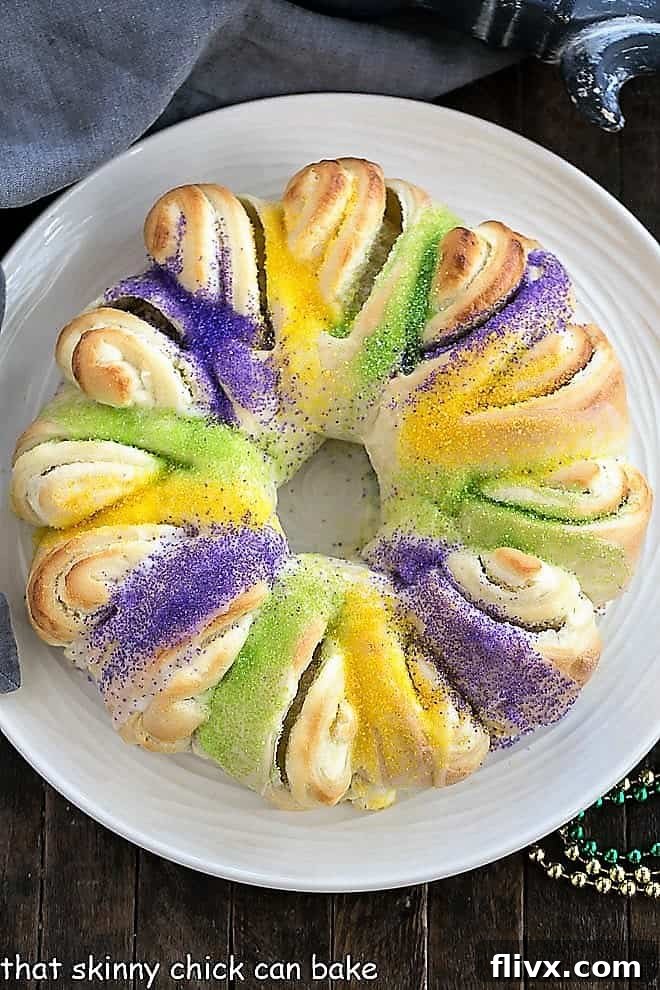
- PRO-Tip: Strategic Cuts for Visual Appeal: After shaping the ring, use a sharp knife to make cuts from the outside edge inward, stopping about ⅞ of the way through the dough at 1½-inch intervals. The goal is to create separate sections without cutting all the way through the bottom. Evenly spaced slices will yield the most attractive results. This technique allows you to twist each section later, revealing the beautiful cream cheese swirl.
- Twist and Reveal: Once you’ve made your cuts, carefully take each section and twist it gently so that the swirl of dough and cream cheese filling faces upwards. The sections will naturally overlap, creating the signature braided or twisted appearance of a King Cake. Go around the entire ring once, making small adjustments as needed to ensure an even and appealing display of the filling.
- PRO-Tip: The King Cake Baby Tradition: The hidden baby is a central part of the King Cake fun! If you have an oven-safe plastic baby figurine, you can tuck it into the cake before baking. However, if you’re unsure about its heat resistance, or if it’s not food-safe, it’s safer to insert the baby into the cooled cake after it comes out of the oven.
- PRO-Tip: Baby Safety First: Always monitor children when serving King Cake with a hidden baby to prevent choking hazards. It’s also a good idea to mark the baby’s location with a toothpick before serving. This way, you know which slice contains the baby, allowing you to discreetly guide the piece to an adult or simply be aware, ensuring everyone enjoys the tradition safely. If you don’t have a plastic baby, a large dried bean or a coin wrapped in foil makes a charming and traditional alternative.
- Proofing for Perfection: After shaping and twisting, loosely cover your King Cake with plastic wrap and let it rise in a warm, draft-free spot for about an hour. This proofing period allows the dough to relax and expand, resulting in a lighter, fluffier texture once baked. The dough should look visibly puffier and feel soft to the touch.
- Baking and Cooling: Preheat your oven to 350°F (175°C) and bake the cake for 20-25 minutes, or until it’s golden brown and cooked through. The internal temperature should be around 190-200°F (88-93°C) if you use a thermometer. Allow the cake to cool completely on a wire rack before icing. Icing a warm cake will cause the glaze to melt and run off, creating a messy result.
- Icing and Decorating: Prepare your glaze by whisking or beating the ingredients until smooth, adding milk gradually to achieve a pourable, yet thick, consistency. Brush the glaze over the cooled cake, focusing on one section at a time. Immediately after applying the glaze to each section, sprinkle it generously with the gold, green, and purple sanding sugars, alternating colors to create the iconic Mardi Gras stripe pattern. Work quickly, as the glaze sets fast, and you want the sugars to adhere perfectly.
- Making Ahead & Storage: This King Cake can be made a day in advance. Store the un-iced cake covered at room temperature. Glaze and decorate just before serving for the freshest look and best sugar adhesion. Leftovers can be stored covered in the refrigerator for up to 2-3 days, though it’s best enjoyed fresh.
I recently sent the leftover King Cake home with my youngest son to share with his roommates, and apparently, it vanished in no time! I genuinely hope you find the time to create this delightful Semi-Homemade King Cake this year and share its joy with your loved ones. Laissez les bons temps rouler!
Frequently Asked Questions About King Cake
A King Cake is a festive baked good, deeply rooted in Christian traditions, particularly observed during the Epiphany and Mardi Gras seasons. Historically, as a child, our King Cake was served on Epiphany (January 6th), which marks the twelfth and final day of Christmas, commemorating the arrival of the Three Wise Men (kings) to visit the baby Jesus. The name “King Cake” thus appropriately honors these biblical figures. My mom would often bake a foil-wrapped coin or dried bean into the cake, a tradition that added an element of surprise and good fortune.
Today, the King Cake is most famously associated with Mardi Gras, or Fat Tuesday, the indulgent celebration held the day before Ash Wednesday and the start of Lent. While its prominence has shifted, it’s perfectly acceptable to enjoy a King Cake anytime from Epiphany through Mardi Gras. These celebratory cakes are widely available in grocery stores across the United States, particularly in Southern regions, and come in various forms. They can be made from rich, eggy brioche dough, lighter puff pastry, or even denser cake-like bases, often filled with sweetened cream cheese (as in this recipe), cinnamon sugar, fruit compotes, or chocolate. Regardless of the variation, the King Cake remains a vibrant symbol of festivity and communal sharing.
The distinctive and vibrant colors adorning most traditional King Cakes are not merely decorative; they carry profound symbolic meaning within the Mardi Gras tradition. The trio of colors—gold, green, and purple—were officially designated in 1892 for the Rex organization, one of New Orleans’ most prominent Mardi Gras krewes, during their parade. Each color represents a specific virtue:
- Gold (Yellow): Symbolizes Power. It represents royalty, wealth, and the earthly treasures brought by the wise men to baby Jesus.
- Green: Symbolizes Faith. It signifies hope, prosperity, and the Christian faith, particularly relevant during the Lenten season that follows Mardi Gras.
- Purple: Symbolizes Justice. This regal color denotes righteousness, nobility, and the justice of God.
In addition to the colors, the King Cake’s iconic ring or oval shape also holds symbolism. It is believed to represent a crown, honoring the kings, and also signifies the unity and eternal nature of faith, without a beginning or an end.
The tradition of placing a tiny plastic baby figurine (or sometimes a dried bean or coin) inside the King Cake is one of its most unique and engaging customs. This baby typically represents the baby Jesus, symbolizing the Epiphany. The person who finds the baby in their slice of King Cake is considered incredibly lucky and is believed to be blessed with good fortune, prosperity, or even royalty for the coming year. This moment of discovery often elicits joyful shouts and excitement during a gathering.
Beyond personal blessings, finding the baby also comes with a traditional responsibility: the lucky individual is typically tasked with hosting the next King Cake party or providing the King Cake for the following year’s Mardi Gras celebration. This tradition ensures the continuation of the festivities and fosters a sense of community and shared enjoyment. It’s a delightful way to keep the spirit of Mardi Gras alive from year to year, adding a playful and interactive element to the dessert.
More Mardi Gras Inspired Delights You May Also Like:
If you’re looking to complete your Mardi Gras feast or simply craving more flavors from the Big Easy, explore these fantastic recipes:
- Bananas Foster – An incredibly easy, flambéed New Orleans dessert that’s divine served warm over vanilla ice cream. Pure magic in a pan!
- Chicken Jambalaya Soup – Experience the soulful flavors of Louisiana in a comforting, spicy, and incredibly flavorful soup.
- Sausage and Chicken Gumbo – A hearty and delectable Louisiana classic, perfect for a warming meal.
- Plus, don’t miss these Polish Paczki or Polish Doughnuts from Cravings of a Lunatic – a common and incredibly delicious Fat Tuesday treat in many cultures!
Stay in touch and share your culinary creations with me through social media! Find me @ Instagram, Facebook, and Pinterest. Don’t forget to tag me when you try one of my recipes! If you adore the results, please consider leaving a 5-star rating in the recipe card below—your feedback helps others discover these wonderful dishes.
Easy King Cake
30 minutes
25 minutes
55 minutes
8 servings
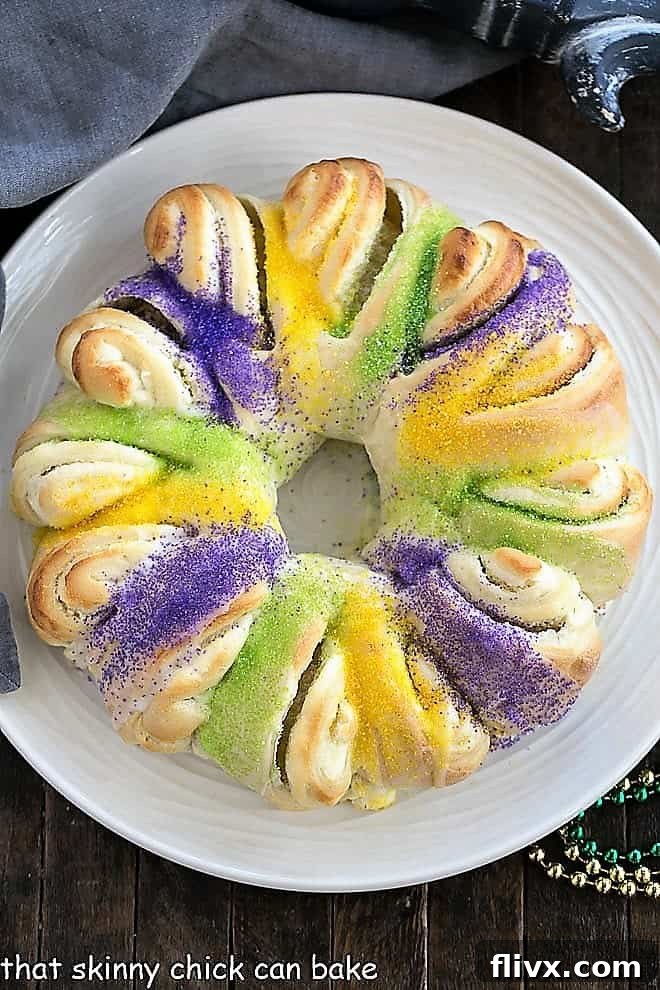
A delightful semi-homemade King Cake, featuring a sweet cream cheese filling, gracefully iced, and vibrantly decorated with traditional Mardi Gras colored sugars.
Ingredients
- 1 loaf frozen bread dough, defrosted in the refrigerator overnight
Filling:
- 8 ounces cream cheese, at room temperature
- ¼ cup sugar
- 1 teaspoon lemon juice
- 1 tablespoon butter, at room temperature
Glaze:
- 1 cup powdered sugar
- 1 tablespoon butter, at room temperature
- ½ teaspoon vanilla
- 1+ tablespoons milk
- Gold, green and purple sanding sugars
Instructions
- Roll dough into an approximate 16 x 12 inch rectangle.
- Spread the prepared cream cheese filling evenly on top of the dough. Then, carefully roll up the dough as you would for cinnamon rolls, starting from one long side.
- Take the rolled dough and gently form it into a ring by joining the two ends together. Pinch the ends firmly to seal them, creating a continuous circle.
- Using a sharp knife, make cuts every 1 ½ inches or so, going about ¾ of the way through the ring (from the outside towards the middle). Aim for about 12 sections for even color distribution.
- Twist each individual section on its side so that the vibrant layers of filling and dough are prominently displayed upwards.
- Loosely cover the shaped cake with plastic wrap and let it rise in a warm, draft-free spot for approximately 1 hour, or until visibly puffy.
- Preheat your oven to 350ºF (175°C). Bake the King Cake for 20-25 minutes, or until golden brown. Allow to cool completely on a wire rack before icing.
- While the cake cools, whisk or beat together all glaze ingredients, adding enough milk gradually until you achieve a smooth, pourable glaze consistency.
- Brush the glaze over the cooled bread, working one section at a time and trying to avoid the exposed filling.
- Before the glaze on each section dries, generously sprinkle the glaze with the gold, green, and purple sanding sugars, alternating colors to create the traditional Mardi Gras stripes.
- Allow the glaze and sugars to set completely before slicing and serving your festive King Cake.
Notes
Add a king cake baby (plastic figurine, dried bean, or foil-wrapped coin) before or after baking, as desired. If a baby is hidden in the cake, it is crucial to monitor children during serving to prevent choking hazards. Mark the baby’s exact location with a toothpick to ensure everyone is aware of which slice contains the surprise.
If preparing this King Cake ahead of time, store the un-iced cake tightly covered in the refrigerator. For the best flavor and appearance, allow it to come to room temperature for an hour or two before serving, then glaze and decorate just before presentation.
Recommended Products
As an Amazon Associate and member of other affiliate programs, I earn from qualifying purchases.
- Small Offset Spatula
- Small Offset Spatula
- French Rolling Pin
Nutrition Information:
Yield:
8
Serving Size:
1 slice
Amount Per Serving:
Calories: 206Total Fat: 13gSaturated Fat: 8gTrans Fat: 0gUnsaturated Fat: 4gCholesterol: 36mgSodium: 113mgCarbohydrates: 22gFiber: 0gSugar: 21gProtein: 2g
HOW MUCH DID YOU LOVE THIS RECIPE?
Please leave a comment on the blog or share a photo on Pinterest